
Reviewed · HISTORICAL TOURS
Historical Hitler Walking Tour of Vienna
Vienna’s grand boulevards and palace squares can make its Nazi past feel far away. This 2.5-hour walk brings that past into the open, linking Hitler’s early years, the 1938 Anschluss, wartime destruction, and the murder of Austria’s Jewish population to familiar places in the city center. You move from the Vienna State Opera to Heldenplatz, then on to memorials and the concealed Stadttempel Synagogue.
I like the tour’s clear focus on Vienna rather than a general World War II lecture, and I like the way it connects political events with art, architecture, and daily city life. Guides including Dieter, Wolfgang, Stephan, and Charles have been praised for careful storytelling, strong English, and the use of maps or photographs on a tablet. The main drawback is simple: you are outside for much of the afternoon, and the subject matter is grim.
Key points to know before booking
- The route begins at the Albertina and ends near Schwedenplatz, close to U1 and U4 trains and many restaurants.
- The Vienna State Opera and rejected art school put Hitler’s early life into local context, rather than treating him only as a wartime figure.
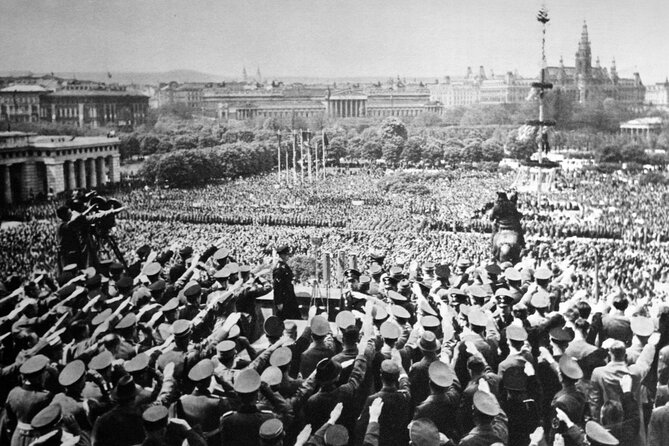
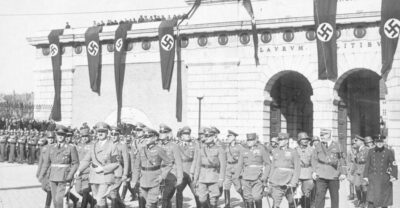
- Heldenplatz is the emotional center of the walk, where Hitler addressed a huge crowd after the Anschluss in 1938.
- Judenplatz and Morzinplatz confront the persecution of Austrian Jews through memorials and the site of the former Gestapo headquarters.
- The tour is conducted in English, with a maximum of 25 people and an average duration of about two and a half hours.
- Comfortable shoes and weather protection matter, since the route involves steady walking and several outdoor explanations.
Why Hitler’s Vienna is worth seeing on foot
This tour is not a parade of Hitler memorabilia, and that is a good thing. It looks at the city that shaped his early ideas, then follows the damage those ideas helped unleash. You see how culture, antisemitism, political loyalty, and public memory are tied to places you might otherwise pass without a second thought.
The title can create a slightly different expectation. If you want a detailed military tour of World War II, this is not quite that. The focus is Hitler’s relationship with Vienna and Austria, the rise of National Socialism, the Anschluss, the city’s Jewish community, and the way Vienna remembers the period today.
That makes the walk useful even if you already know the broad outline of Hitler’s life. The guide’s job is to connect dates and events to streets, buildings, sculptures, and squares. The result is less about collecting facts and more about understanding how a city responded to political pressure and mass violence.
More history walks in Vienna:
- Vienna: Time Travel and Magic Vienna History Tour
★ 4.6 · 3,879 reviews - Vienna: World War II Historical Walking Tour
★ 4.8 · 1,772 reviews - Vienna Historic Center Small Group Walking Tour
★ 5.0 · 1,746 reviews
Starting at the State Opera
Meet your guide outside the Albertina Museum at Albertinaplatz for the 2:30 p.m. start. This is a busy central area, so arrive a little early and make sure you have the guide’s contact details. One person was left behind at the meeting point, which shows why it is wise to confirm the group before it moves off.
The first stop is the Vienna State Opera. Opened in 1869 with Mozart’s Don Giovanni in the presence of Emperor Franz Joseph and Empress Elisabeth, the opera house represents Vienna’s old imperial confidence and its international arts scene.
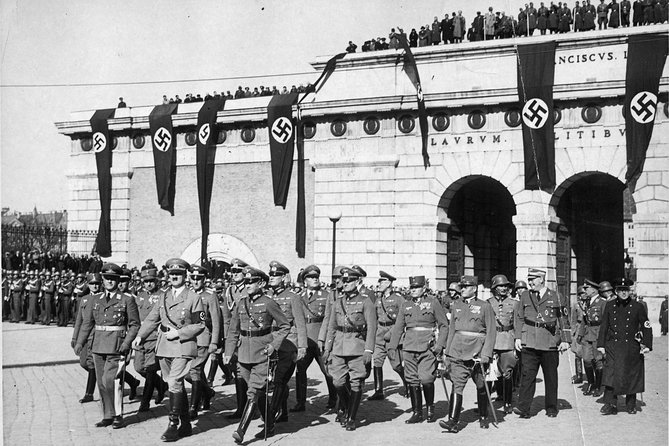
The guide then explains how quickly that world changed after the Anschluss in 1938. Hitler visited the opera house that year, and artists and employees were forced to leave, persecuted, or murdered. Some works could no longer be performed under National Socialist rule.
This is a strong opening because it gives the subject a cultural dimension. The Nazi takeover did not only alter borders and governments. It changed who could work, who could perform, what audiences could hear, and which people were treated as unwelcome in their own city.
You spend about 10 minutes here. Admission is not required, and the explanation takes place outside, so your view of the interior will depend on whether you visit separately.
The war memorial at Albertinaplatz
From the opera, the walk continues to the Memorial Against War and Fascism. Austrian sculptor Alfred Hrdlicka created this group of works, installed at Albertinaplatz in 1988. The memorial is dedicated to victims of war and fascism and is meant to confront Austria’s darkest period.
This stop matters because it addresses memory, not just history. The sculptures are direct and uncomfortable. They do not turn the past into a polished story, and the guide can explain how public remembrance developed in Austria after the war.
You have about 10 minutes here. The location is central and easy to reach, but it is also open and exposed. In winter, wind can make the stop feel longer than the clock suggests.
Hitler’s rejected application to art school
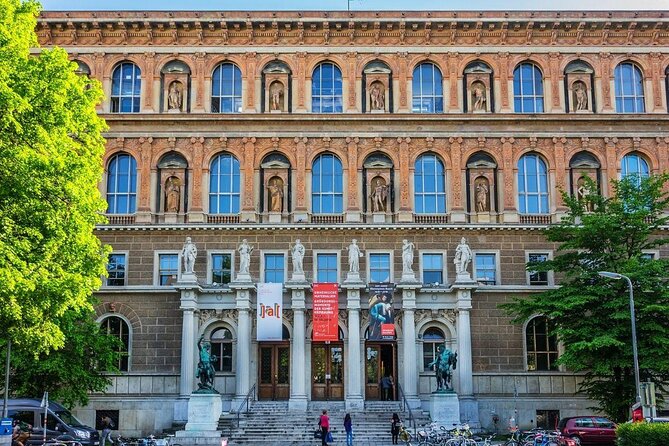
The next stop is the Akademie der bildenden Künste, the art school that did not accept Hitler as a student. This detail is often used as a neat explanation for his later path, but a good guide should treat it with care.
The rejection did not single-handedly create the dictator. It is one part of a larger story about ambition, failure, poverty, politics, and the antisemitic climate of early twentieth-century Vienna. The tour uses the school as a doorway into Hitler’s early years and the city he experienced before becoming a national political figure.
I find this part useful because it prevents the tour from starting in 1938. You are asked to consider the young man before power, while keeping the later consequences firmly in view. The stop lasts around 10 minutes and is viewed from outside.
More walking tours in Vienna:
- Vienna: Guided Walking Tour of City Center Highlights
★ 4.7 · 4,989 reviews - Vienna: Vienna Central Cemetery Guided Walking Tour
★ 4.8 · 3,307 reviews - Vienna: Guided Walking Tour of City Highlights & Hidden Gems
★ 4.9 · 2,180 reviews - Vienna: Viennese Underworld Guided Walking Tour
★ 4.7 · 1,865 reviews
Heldenplatz and the March 1938 speech
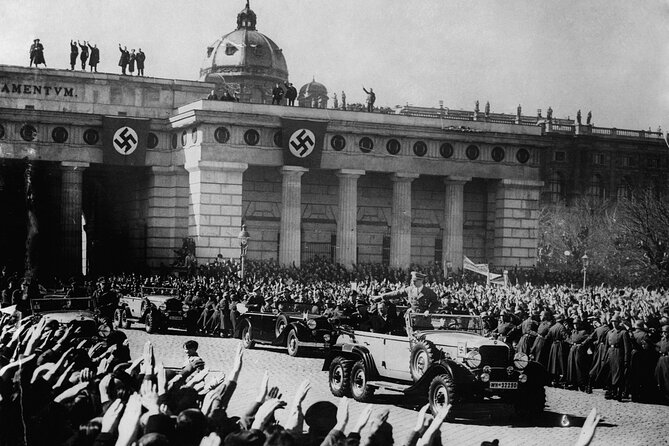
Heldenplatz is the walk’s most powerful public setting. From the square, the guide discusses Hitler’s speech from the balcony of the Neue Hofburg on March 15, 1938, after Germany annexed Austria.
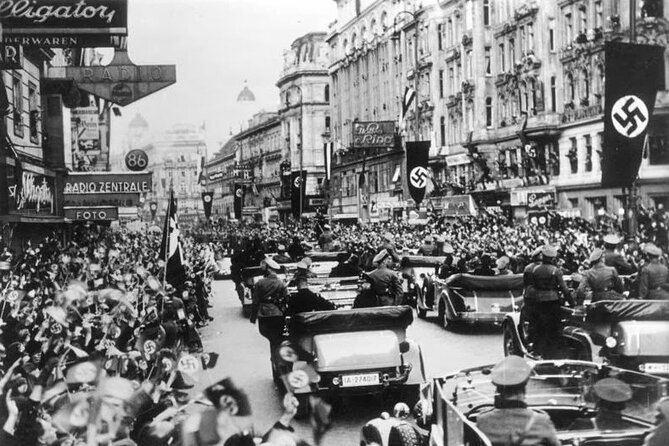
The square became a symbol of the National Socialist seizure of power and of the broad public approval that accompanied it. That point is important. Austria’s past cannot be explained only as a story of foreign occupation. Many Austrians supported or accepted the Anschluss, and the public scene at Heldenplatz remains a painful reminder of that fact.
The square also helps you understand the scale of political theater. It is spacious, ceremonial, and surrounded by buildings tied to imperial authority. The guide can show how the setting turned a political event into a mass spectacle.
Plan for another 10-minute stop, though the discussion may feel longer because this is one of the central moments of the route. If you want photographs, take them respectfully. This is a place of remembrance, not a stage for Nazi imagery or jokes.
Judenplatz and the murdered Jewish community
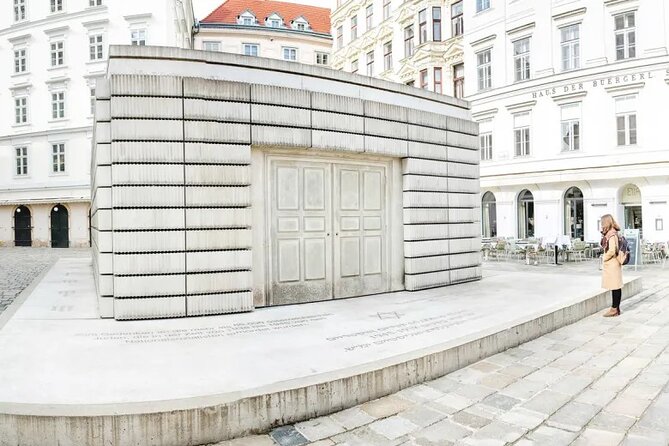
The route then crosses the historic center to Judenplatz, where the Holocaust Memorial for Austrian Jewish victims records the murder of more than 65,000 Austrian Jews between 1938 and 1945.
The memorial is often called the Nameless Library. Its sealed shelves suggest books that cannot be read and lives that cannot be restored. You do not need a long museum visit to feel the force of the place. The guide’s explanation gives the memorial a human and political setting, showing how persecution developed and how Jewish life in Vienna was destroyed.
This is a serious stop, and the tone should be serious. The walk also touches on tragic choices made by Jewish Austrians, including suicides by people trying to avoid deportation. That detail can be hard to hear, but it helps show that persecution was not a single event. It was a tightening set of laws, threats, arrests, forced movement, and murder.
The memorial stop takes about 10 minutes. If you want more time with the site, you may wish to return after the tour, since the group will continue on its schedule.
Morzinplatz and the former Hotel Metropole
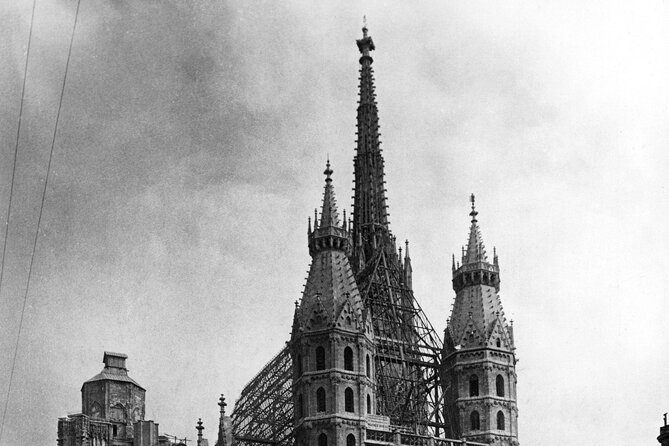
At Morzinplatz, the guide explains the site of the former Hotel Metropole. What had been a luxury hotel became one of the Gestapo’s most brutal headquarters during the Third Reich.
The memorial here changes the scale of the story again. Heldenplatz shows mass politics. Judenplatz recalls an entire community. Morzinplatz points to interrogation, detention, and terror carried out through an institution in the middle of Vienna.
This is one reason the walk works better than a simple list of famous Nazi locations. The stops show different parts of the system: public approval, cultural control, antisemitic persecution, and organized police violence.
Allow about 10 minutes. The site is outdoors, and the visible remains or memorial do not provide the full physical presence of the former building. Much of the value comes from the guide’s explanation.
The synagogue concealed behind apartment buildings
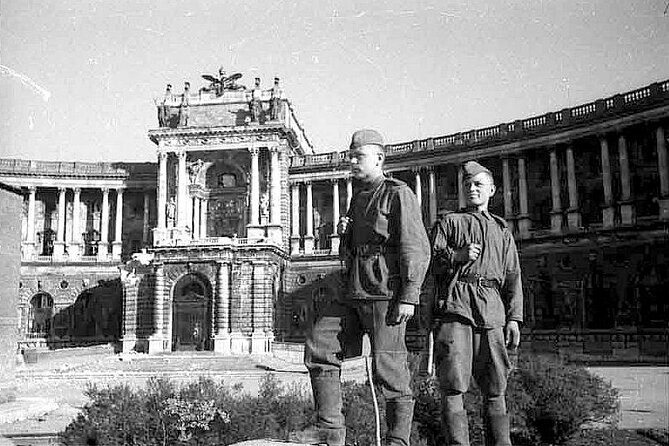
The final listed stop is the Infopoint Jewish Vienna near the Seitenstettentempel, Vienna’s main synagogue. The synagogue is not presented openly on the street. It sits behind a five-story apartment building, with the entrance reached through the street building.
The reason goes back to regulations requiring non-Catholic places of worship to be concealed from street view. The synagogue’s position is a quiet architectural reminder of earlier religious restrictions, long before the Nazi period.
The building also helps explain why Vienna’s Jewish history can be easy to miss. A grand public monument may announce itself, but a place of worship can be tucked behind ordinary housing. The guide points out the inscription above the entrance, Come to his gates with thanksgiving, to his courts with praise.
You will not simply walk through the synagogue as part of this outdoor tour. Treat the site as an active place of worship and follow your guide’s instructions about where to stand and how to behave.
The route, pace, and group size
The tour ends near Schwedenplatz, a few minutes from U1 and U4 stations. That is convenient if you are heading elsewhere in Vienna, and it gives you an easy choice for dinner. Schwedenplatz has many restaurants, so the end point works well for an evening meal.
The walking is described as easy, but two and a half hours on city streets still requires moderate fitness. You should wear comfortable shoes, bring water, and dress for changing weather. Vienna can be sunny, cold, windy, or wet in the same afternoon, so pack sunblock and a raincoat or umbrella.
The maximum group size is 25. That is not a private tour, but it is small enough for a guide to manage if the group stays together. One practical weakness is that busy meeting points can make it hard to identify the guide. Confirm the group before departure, and do not lag behind when the route begins.
Some guides use a tablet with photographs and maps. That is especially helpful when discussing the 1938 speech, buildings that have changed, or places where the wartime structures no longer exist. Reports of the audio device are mixed, so stand close enough to hear clearly.
The guides make the difference
The strongest part of this experience is the guide’s delivery. Dieter is described as a thoughtful, well-read historian who gives the tour a calm pace and looks after the group. Wolfgang is praised for philosophical questions and for keeping the focus on Austria. Stephan has used an iPad with maps and images, while Charles has been noted for adding detail even for people who already know the broad story.
These names do not guarantee who will lead your departure. Still, they give you a useful sense of the standard to expect: serious subject matter, clear English, and a guide who can answer questions without turning the walk into a lecture.
The best guides also understand that this topic needs balance. Hitler’s Vienna should not become a story of one rejected art student who somehow caused everything. The tour is strongest when it examines the wider political and social setting, including antisemitism, Austria’s response to the Anschluss, and the long process of facing responsibility after 1945.
Is $32.65 good value?
At $32.65 per person, the price is reasonable for a 2.5-hour guided walk in central Vienna. You are paying for a licensed guide and a focused route, not for museum admission, food, transport, or hotel pickup.
The value depends on how much context you want. If you simply want to see Vienna’s famous buildings, a free self-guided walk may be enough. If you want someone to explain what happened at each place, answer questions, and connect the sites into one story, the fee is easier to justify.
The tour also covers ground you might not connect on your own. You see an opera house, an art academy, imperial buildings, public squares, Jewish memorials, and the former Gestapo site. The route is not just a collection of plaques. Its value lies in the links between them.
The current rating is 4.8 out of 5 from 887 ratings, with 96 percent recommending it. That strong response matches the tour’s main strengths, but you should still book with the right expectations. It is an outdoor history walk, not a theatrical reenactment or a museum tour.
Who should book this walk?
I would choose it if you are interested in modern European history, Jewish Vienna, political propaganda, or the way cities remember dictatorship. It also suits anyone who wants to understand Austria’s role in the Nazi period rather than treating the country as a passive backdrop.
You do not need to be an expert. The guides build the story from Hitler’s early years through 1938 and the Holocaust, using places you can see. But you should be comfortable with difficult material, including murder, persecution, Gestapo violence, and public support for the Anschluss.
I would not make this your first choice if you have limited mobility, dislike walking in poor weather, or want a light introduction to Vienna. You can manage the route with moderate fitness, but the subject and the outdoor format require attention and stamina.
Book at least a day ahead if possible. The experience is often reserved about 25 days before the date, which suggests that popular departures can fill. Free cancellation is available up to 24 hours before the start time. If poor weather or too few bookings cause cancellation, you are offered another date or a full refund.
Should you book the Historical Hitler Walking Tour of Vienna?
Book it if you want a serious, place-based explanation of Hitler’s connection to Vienna and Austria’s path into National Socialism. The most memorable sections are Heldenplatz, Judenplatz, and Morzinplatz, but the opening at the opera and the stop at the rejected art school give the story needed context.
The main caution is the title. This is not a narrow tour of Hitler’s personal movements, and it is not a full military history of World War II. It is a thoughtful walk through Vienna’s political, cultural, and Jewish history during a period of terrible change.
Bring good shoes, warm layers or rain gear, and enough patience for a difficult subject. If that sounds like your kind of afternoon, $32.65 buys a useful, well-organized way to see a less comfortable side of Vienna.
FAQ
Where does the Historical Hitler Walking Tour of Vienna begin?
The tour begins at Albertinaplatz, outside the Albertina Museum, in central Vienna.
What time does the tour start?
The scheduled start time is 2:30 p.m.
Where does the tour finish?
The walk ends near Schwedenplatz, a few minutes from the U1 and U4 underground lines.
How long is the tour?
The tour lasts approximately two hours and 30 minutes.
What language is the tour offered in?
The tour is offered in English.
What is included in the price?
A licensed and informed guide is included.
Are food, drinks, and hotel transfers included?
No. Food, drinks, hotel pickup, and hotel drop-off are not included.
How many people can join the tour?
The group can include a maximum of 25 people.
What should I bring?
Wear comfortable shoes and clothing. Water, sunblock, and a raincoat or umbrella are recommended because Vienna’s weather can change quickly.
Can I cancel for a refund?
You can cancel at least 24 hours before the start time for a full refund. Cancellations or changes made less than 24 hours before the start time are not accepted for a refund.
Just reviewed in Vienna
- World War II History Vienna Old Town Private Walking Tour★ 4.8 · 9 reviews
- Vienna: Wine Tasting E-Bike Tour★ 4.9 · 46 reviews
- Vienna: Winery and Wine Tasting Tour with a Wine Expert★ 5.0 · 5 reviews
- Vienna: Unforgettable Private City Tour★ 5.0 · 7 reviews
- Vienna Urban Art Tour: Explore a different side of Vienna!★ 3.8 · 14 reviews
- Vienna: Concert by the Vienna Baroque Orchestra★ 4.6 · 56 reviews
- Vienna: Sunday Brunch Danube Cruise & Live Music★ 4.2 · 42 reviews
- Vienna Supreme Orchestra at Palais Niederösterreich★ 4.8 · 10 reviews
Historical Tours, compared.
Vienna Historic Center Small Group Walking Tour
Read our review →
Time Travel-Magic Vienna History Tour Ticket
Read our review →
Skip-the-Line Schonbrunn Palace Guided Tour and Vienna Historical City Tour
Read our review →
Vienna Mozart Concert in Historical Costumes at the Musikverein
Read our review →

Vienna Classical Concert – Strauss in Historic 1837 Hall
Read our review →Browse the lists this tour appears in