
Reviewed · VIENNA OLD TOWN WALKING TOURS
World War II History Vienna Old Town Private Walking Tour
The most striking part of this tour is how much wartime history remains visible beneath Vienna’s polished imperial center. You begin at the former Gestapo headquarters site and finish near the Vienna State Opera, with Nazi terror memorials, Holocaust remembrance, and wartime damage woven into the walk.
I like the private format because you can ask direct questions, and I like the route’s clear historical arc, from Franz Ferdinand’s assassination through Hitler’s annexation of Austria and the bombing of Vienna. Guides such as Peter, Sanda, Alexander, and Frau Heuberger have led tours praised for patient explanations and flexible pacing.
The main consideration is price: at $214 per person, this is a serious spend for two hours. It makes the most sense for a small group that values a private guide, a chosen language, and the chance to shape the discussion around its own interests.
Key points to know before you book
- Begin at Morzinplatz: The tour starts at the memorial to victims of Nazi terror, near the former Gestapo headquarters in Vienna.
- Follow a clear wartime timeline: Your guide connects WWI, Austrofascism, Hitler’s annexation of Austria, the Holocaust, and the 1945 liberation.
- See major Old Town landmarks: The route includes Hofburg, Heldenplatz, Burggarten, St. Stephen’s Cathedral, and the Vienna State Opera area.
- Expect a private conversation: Groups range from 1 to 25 people per guide, with extra guides arranged for larger parties.
- Choose from many languages: English, German, Italian, French, Spanish, Russian, Polish, Chinese, Japanese, Croatian, Portuguese, and Arabic are available.
- Wear proper walking shoes: This is a two-hour outdoor walk, and weather protection matters.
Starting at Morzinplatz, where Vienna confronts Nazi terror
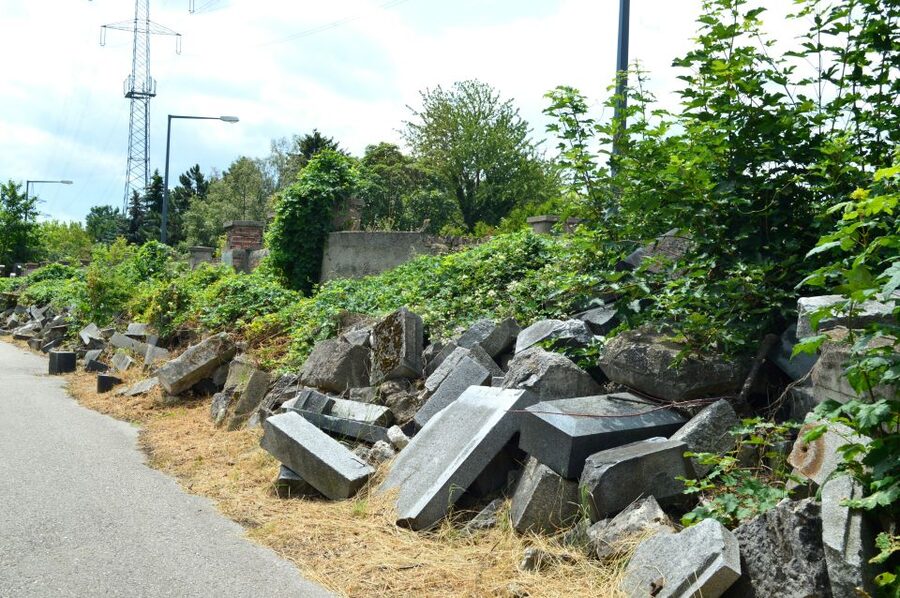
I appreciate that this walk does not begin with a grand palace or an easy postcard view. It starts at Denkmal der Opfer des Faschismus on Morzinplatz, a memorial for victims of Nazi terror.
The location carries a hard historical fact. The former Hotel Metropol stood here, and in 1939 the building was used as the Gestapo headquarters in Vienna. Your guide uses this first stop to establish the Austrian setting: Nazi rule was not simply something imposed from far away. Austria was annexed into Nazi Germany, and Vienna became an important center of repression.
That makes the opening useful. You are not asked to memorize a list of dates before seeing anything. Instead, the place under your feet gives the first point of reference. From there, the guide can explain how political power, propaganda, police terror, and public life changed during the period.
The memorial itself is also a reminder that this is not a tour built around military hardware or battlefield drama. The focus is on people, institutions, political choices, and the fate of civilians. If you want a tour centered on tanks, weapons, or military strategy, this will not be the right fit.
More old town walks in Vienna:
- Vienna: Guided Walking Tour of City Center Highlights
★ 4.7 · 4,989 reviews - Vienna Historic Center Small Group Walking Tour
★ 5.0 · 1,746 reviews - Vienna: Old Town Sightseeing Tour in a Vintage-Style E-Car
★ 4.5 · 1,107 reviews
Understanding the road from Franz Ferdinand to World War II
The tour sets World War II within the larger story of World War I. That matters in Vienna, since the assassination of Archduke Franz Ferdinand in 1914 took place in Sarajevo and helped trigger the conflict that reshaped the Habsburg world.
Your guide explains the timeline, causes, and consequences of both wars. In a two-hour walk, you should not expect a university course, but the format can give you a useful framework for the monuments and buildings you see afterward.
The discussion includes the collapse of the Austro-Hungarian Empire, the political uncertainty that followed, and the conditions that allowed authoritarian movements to gain ground. Austrofascism is part of the story, helping you understand that Austria’s political path before the Nazi annexation was not simple or tidy.
This wider context is one of the tour’s strongest features. You learn that WWII did not arrive as an isolated event. It grew from earlier conflict, political crisis, economic pressure, nationalism, and dictatorship. A good guide can keep those links clear without turning the walk into a flood of names.
The tour also addresses Adolf Hitler, Ernst Kaltenbrunner, and other Austrian Nazis. Their inclusion helps place Austrian responsibility within the story. You hear about the people who helped shape or enforce Nazi rule, rather than treating the period as an abstract German problem that merely happened to affect Vienna.
Walking through the Inner Stadt and wartime Vienna
After Morzinplatz, the route continues through Vienna’s Inner Stadt, or Old Town. This is where the tour’s subject creates an interesting contrast. You are walking through some of the city’s most elegant streets, yet the guide points out how those same streets functioned under dictatorship and occupation.
You learn about daily life and political propaganda in German-occupied Austria. The emphasis on ordinary life is important. It can show how public messages, official ceremonies, fear, and silence shaped what people saw and heard each day.
I would pay close attention to the buildings along the way. One benefit of a private guide is that you can stop and ask why a particular facade, courtyard, plaque, or street matters. A short group tour often has to keep moving. Here, the guide can spend more time on a point that catches your interest.
The route also passes several remembrance stones. These small markers can be easy to miss when you walk alone. They connect individual Jewish residents to specific locations and help turn the Holocaust from a broad historical subject into a story tied to Vienna’s streets.
The walk is not described as a visit inside museums or historic rooms. Most sightseeing is from outside, and the experience depends heavily on the guide’s storytelling. That is worth knowing before you book. You are paying for interpretation and personal attention, not for admission to a collection of indoor exhibits.
The Holocaust Memorial and the city’s Jewish history
The Holocaust Memorial is one of the most important stops on the route. It gives the discussion a central place of remembrance within the Old Town, rather than treating the persecution and murder of Vienna’s Jewish population as a side topic.
Your guide discusses the tragic fate of Jewish citizens and connects the memorial with the remembrance stones seen along the route. That pairing works well. The large memorial gives you a public place for reflection, while the smaller stones point toward individuals and addresses.
I find this part of the walk especially valuable for first-time visitors to Vienna. The city’s imperial image can dominate a short stay, with palaces, music, and grand architecture filling the schedule. This tour adds the difficult chapters that are just as important to understanding modern Austria.
The subject matter is serious, so the pace and tone matter. One of the guides, Frau Heuberger, was praised for balancing explanation with breaks during very hot weather. That detail is practical: the best history walk is not one where you are too tired, overheated, or distracted to listen.
Families should also consider the age and attention span of their children. Peter was able to work patiently with a group traveling with a two-year-old, but the content itself concerns war, persecution, and mass murder. Parents will need to decide how much of that material suits their children.
More history walks in Vienna:
- Vienna: Time Travel and Magic Vienna History Tour
★ 4.6 · 3,879 reviews - Vienna: World War II Historical Walking Tour
★ 4.8 · 1,772 reviews - Time Travel-Magic Vienna History Tour Ticket
★ 4.5 · 1,099 reviews - Skip-the-Line Schonbrunn Palace Guided Tour and Vienna Historical City Tour
★ 3.5 · 940 reviews
Hofburg, Heldenplatz, and the imperial setting
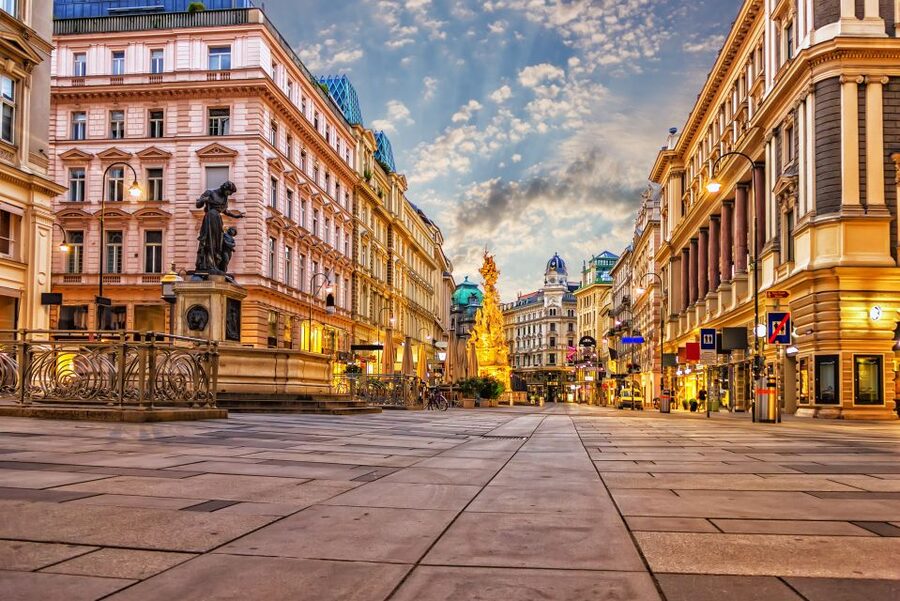
The Hofburg complex appears as an exterior stop. This is not a palace interior tour, so you should not expect access to imperial apartments or a separate museum visit.
The value here is the political setting. Hofburg represents the Habsburg monarchy and the older imperial order. Nearby Heldenplatz links that earlier world with the modern political history of Austria. Your guide uses the setting to explain how the city’s imperial identity was reshaped by WWI, authoritarian politics, Nazi rule, and the war’s aftermath.
You also see the Memorial Crypt dedicated to victims of World War I and World War II in Heldenplatz. This gives the walk another chance to compare public remembrance across different conflicts. The guide can help you consider who is remembered, how memorials speak, and how Austria has dealt with painful parts of its past.
The Monument to Emperor Franz Joseph I in Burggarten adds another piece of the prewar story. It is not a WWII site in itself, but it helps place the later events against the long imperial background.
This sequence makes the tour more than a string of unrelated markers. Morzinplatz, the Holocaust Memorial, Hofburg, Heldenplatz, and Burggarten each represent a different layer of Vienna’s political past. The route asks you to read the city as a place where old power, new ideology, and public memory occupy the same center.
St. Stephen’s Cathedral and the visual clues in the Old Town
St. Stephen’s Cathedral is included as one of the major sights seen during the walk. The description does not promise an interior visit, so plan to view it as part of the outdoor route unless your guide confirms otherwise.
The cathedral gives the tour a strong visual anchor. Its importance is not only architectural. It helps show how wartime events unfolded in a city defined by religious, political, and civic landmarks.
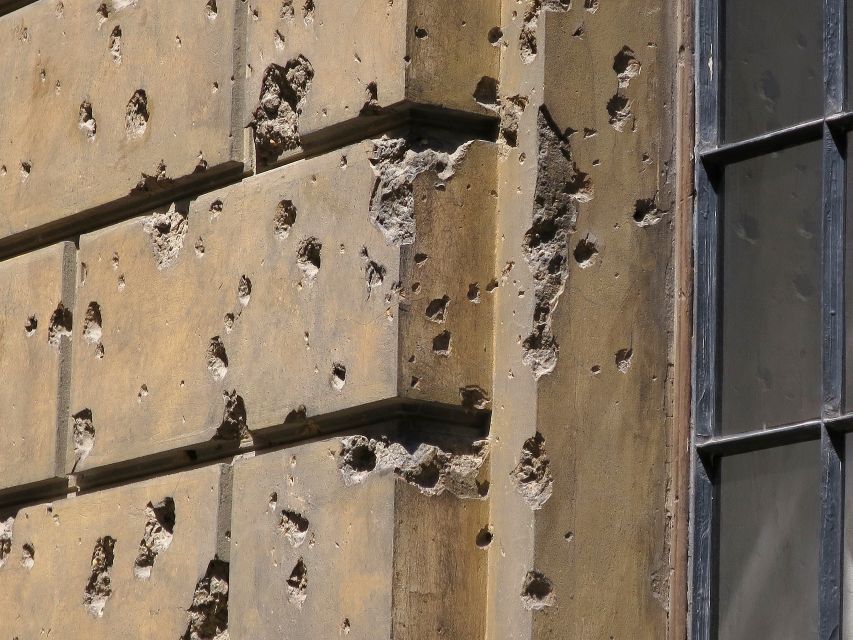
Your guide can also point out the way historical evidence survives in the built environment. The tour specifically focuses on architectural witnesses that you might miss on your own. That is a useful distinction. Vienna does not always display its wartime past in large, obvious signs. Sometimes the clue is a memorial, a stone, or a building detail that requires explanation.
I would not expect every stop to feel dramatic. Some of the most useful moments may be short pauses on ordinary streets. The payoff comes from learning what to notice, then continuing to see the city with sharper eyes after the tour ends.
Ending near the Vienna State Opera and the 1945 bombing
The tour ends at the Monument Against War and Fascism near the Vienna State Opera. This gives the route a direct connection to the war’s destruction and its aftermath.
The Opera House was heavily damaged by the 1945 bombing. Ending here brings the story back to physical destruction after the earlier stops focused on political repression, persecution, and public memory.
The monument itself gives the guide a chance to discuss war and fascism in broader terms. It is a fitting final stop because the walk has moved from the machinery of terror to the consequences left in the city and in public remembrance.
There is also a practical benefit to this finish. The Vienna State Opera is a well-known Old Town landmark, so you can easily orient yourself after the tour. The walk does not end at an obscure outlying site. You finish in a central part of Vienna, close to one of the city’s best-known buildings.
What $214 per person buys you
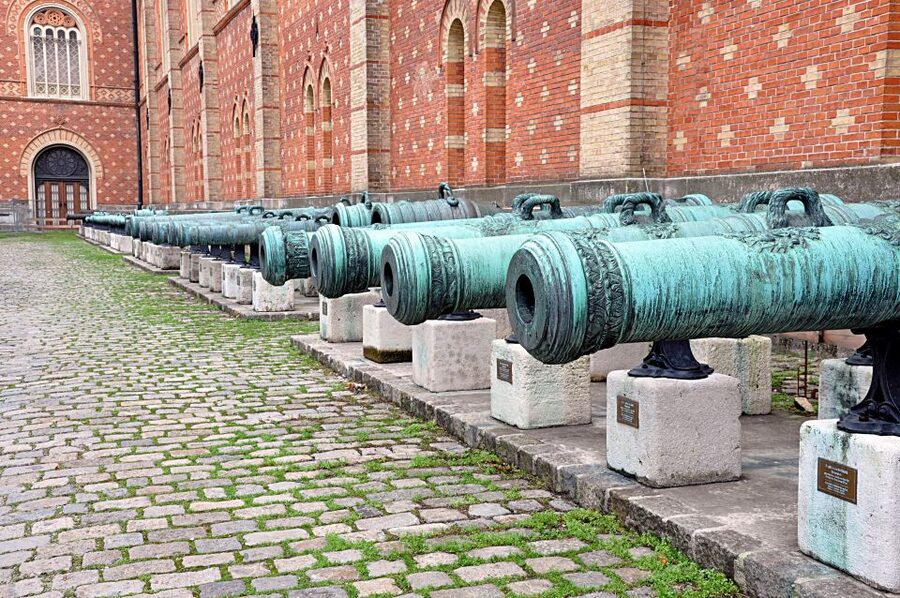
At $214 per person, this is expensive for a two-hour walking tour. The value depends on how many people share the cost and how much you want personal attention.
For one or two people, the price may feel steep compared with a standard group walk. For a family or private party, the calculation can look better, especially if you want the tour in a particular language and prefer not to follow a fixed group pace.
The private format allows you to ask about subjects that matter to you. You might want more on Austrian Nazis, Jewish Vienna, military events, architecture, or the postwar period. You can also ask the guide to slow down for questions or clarify a point without worrying about holding up a large public group.
The available languages are a real advantage: English, German, Italian, French, Spanish, Russian, Polish, Chinese, Japanese, Croatian, Portuguese, and Arabic. The guide assigned to your booking will depend on availability, but the experience is designed for a language of your choice.
The group limit is 1 to 25 people per guide. For groups larger than that, additional guides are arranged and the price increases. I would ask about the final group arrangement before booking if you are traveling with a large party.
The tour lasts two hours, which is long enough for a focused introduction but short enough to fit around other Vienna plans. It is not long enough to cover every wartime site in the city. Think of it as a strong Old Town orientation, not a complete WWII itinerary.
Timing, weather, and walking comfort
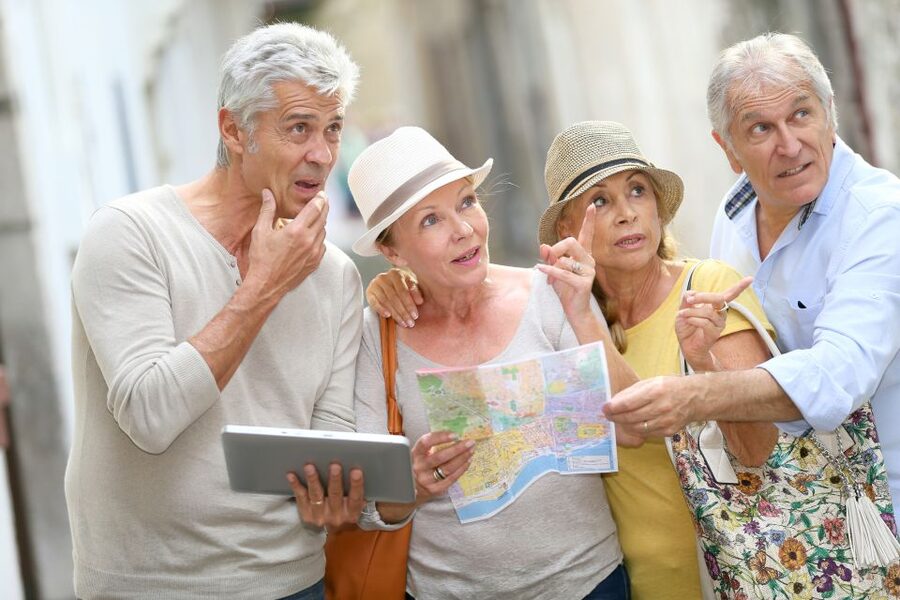
You will be outside for the full walking route, so comfortable shoes are essential. Dress for the weather, and remember that Vienna’s open squares can feel very different from shaded streets.
Heat deserves particular attention. A guide has successfully adjusted the pace and built in pauses during a hot day, but weather still affects the experience. If you can choose a starting time, check availability for a cooler part of the day.
The tour is private, but it is still a walking tour. Anyone who needs frequent rest should tell the guide at the beginning. The route includes city streets and public areas, and the supplied information does not promise a specific accessibility setup or step-free route.
Check your email the day before for important instructions. You can cancel up to 24 hours ahead for a full refund, and the reserve-now, pay-later option keeps your schedule flexible.
Who will get the most from this Vienna walk
I would recommend this tour to you if you want to understand how WWI and WWII changed Vienna, rather than simply collect photographs of famous buildings. It suits history-minded visitors who appreciate context and want to ask questions.
It is also a good choice for families, couples, or friend groups with different interests. A private guide can adjust the conversation, and the example of Peter’s patient pacing with a family and young child suggests that the format can work well with children when parents are comfortable with the subject.
The tour may not suit you if you want museum interiors, a long military lecture, or a broad survey of every WWII site in Vienna. It is also less appealing if you prefer a low-cost group walk.
The guide quality matters a great deal. The guides who have led this experience include Peter, Sanda, Alexander, and Frau Heuberger. Sanda was praised for professionalism, Alexander for an especially strong tour, and Frau Heuberger for responding to individual interests and managing breaks well. Those details point to a flexible style, though your assigned guide may be different.
Should you book this private WWII tour?
Book it if you want a focused, serious introduction to Vienna’s wartime past and will use the private format. The route covers important places, the historical timeline is well chosen, and the Old Town setting lets you connect grand landmarks with Nazi terror, the Holocaust, and wartime destruction.
At $214 per person, I would book it for a small group that can share the cost or for a visitor who places a high value on a chosen language and one-to-one questions. If price matters most, look for a standard group tour instead.
For the best experience, wear walking shoes, protect yourself from the weather, and arrive ready to discuss difficult subjects. Vienna’s beautiful center does not tell its whole story by itself. This walk helps you see the parts that are easier to miss.
FAQ
How long does the World War II History Vienna Old Town Private Walking Tour last?
The tour lasts two hours.
Where does the tour begin?
Meet your guide in front of Denkmal der Opfer des Faschismus, the Memorial to the Victims of Nazi Terror, at Morzinplatz 4, 1010 Vienna.
Where does the tour end?
The walk ends at the Monument Against War and Fascism near the Vienna State Opera.
Is the tour private?
Yes. It is offered as a private group tour, with 1 to 25 people per guide. Larger groups require additional guides and a higher price.
Which languages are available?
The tour is available in English, German, Italian, French, Spanish, Russian, Polish, Chinese, Japanese, Croatian, Portuguese, and Arabic.
Does the tour enter Hofburg or other buildings?
The Hofburg is viewed from the outside. The supplied tour details do not include interior admission to Hofburg or other buildings.
What should I wear for the tour?
Wear comfortable shoes and dress appropriately for the weather, since the experience is a walking tour held outdoors.
More walking tours in Vienna
- Vienna: Vienna Central Cemetery Guided Walking Tour
★ 4.8 · 3,307 reviews - Vienna: Guided Walking Tour of City Highlights & Hidden Gems
★ 4.9 · 2,180 reviews - Vienna: Viennese Underworld Guided Walking Tour
★ 4.7 · 1,865 reviews - Vienna: Private Walking Tour with a Local Guide
★ 4.6 · 1,420 reviews
Just reviewed in Vienna
- Vienna: Winery and Wine Tasting Tour with a Wine Expert★ 5.0 · 5 reviews
- Vienna: Wine Tasting E-Bike Tour★ 4.9 · 46 reviews
- Vienna: Unforgettable Private City Tour★ 5.0 · 7 reviews
- Vienna Urban Art Tour: Explore a different side of Vienna!★ 3.8 · 14 reviews
- Vienna: Concert by the Vienna Baroque Orchestra★ 4.6 · 56 reviews
- Vienna: Sunday Brunch Danube Cruise & Live Music★ 4.2 · 42 reviews
- Vienna Supreme Orchestra at Palais Niederösterreich★ 4.8 · 10 reviews
- Vienna: Swarovski DIY Workshop Experience★ 5.0 · 9 reviews
Vienna Old Town Walking Tours, compared.
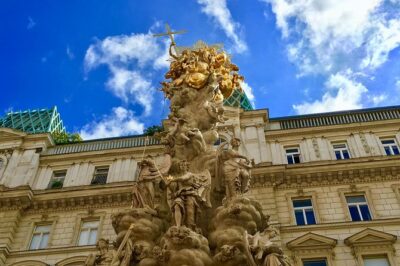
Vienna Historic Center Small Group Walking Tour
Read our review →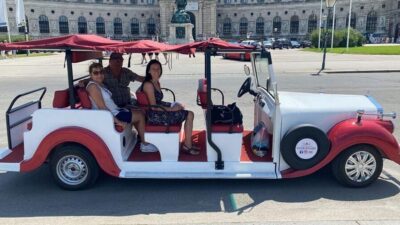
Exclusive Vienna Old Town Highlights Walking Tour (max. 6 persons)
Read our review →
Browse the lists this tour appears in