
Reviewed · HISTORICAL TOURS
Time Travel-Magic Vienna History Tour Ticket
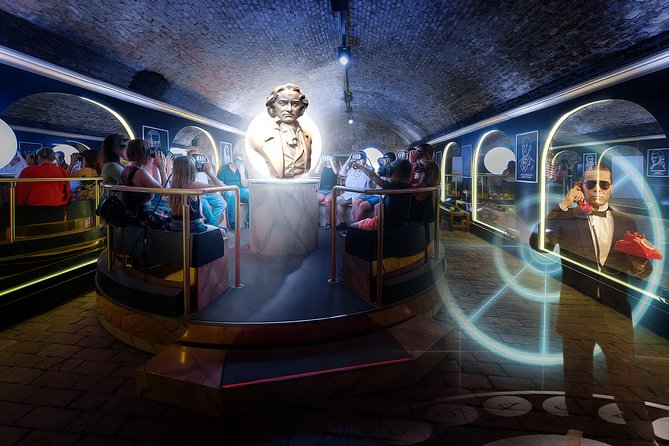
Vienna’s history arrives here by 5D cinema, virtual reality, animatronics and theatrical sets, rather than through glass cases and long wall panels. In about an hour, you move from the Roman camp of Vindobona to the Habsburg court, a plague pit, Mozart and Strauss, an air raid shelter, and a magical carriage ride back to modern Vienna.
I like the quick pace and the variety of the presentation. I also like that the show gives you a useful first sketch of Vienna before you tackle the Hofburg, Schönbrunn, St. Stephen’s Cathedral and the city’s museums. The main drawback is its simple, playful approach. If you want a careful, detailed account of Austrian history, this will feel more like an entertaining introduction than a serious history lesson.
Key points to know before you go
- Roman Vienna comes first: You travel back to Vindobona, the Roman camp that helped shape the city’s early story.
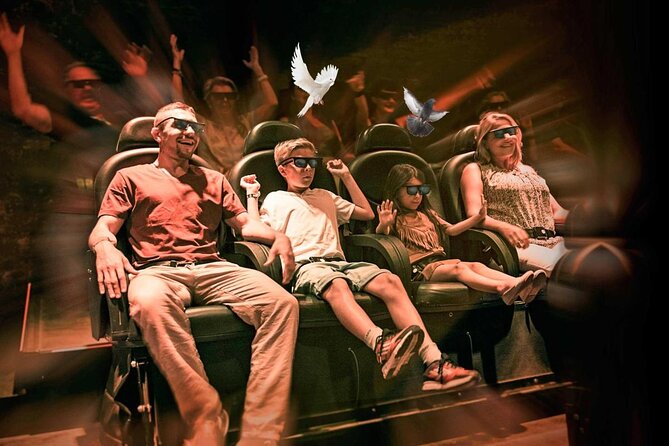
- The format keeps changing: Video, VR, wax figures, robotics, hologram-style effects and simulated rides break up the hour.
- The air raid shelter is one of the strongest scenes: It gives World War II a more direct, thought-provoking treatment than the lighter sections.
- English is handled by audio guide: German commentary is translated through headphones into English and nine other languages.
- Families are the natural audience: Children and teens have plenty to watch and do, though very young visitors may find some scenes spooky.
- The price suits a short indoor activity: At $27.76 per person, it is reasonable if you value entertainment, weather protection and a quick city overview.
From Michaelerkloster to Roman Vindobona
Time Travel Vienna takes place in the old vaults of the 400-year-old Michaelerkloster, close to the center of Vienna. That setting matters. You are not entering a modern cinema or a large museum hall. The historic underground rooms help create the feeling that the city’s past is beneath your feet.
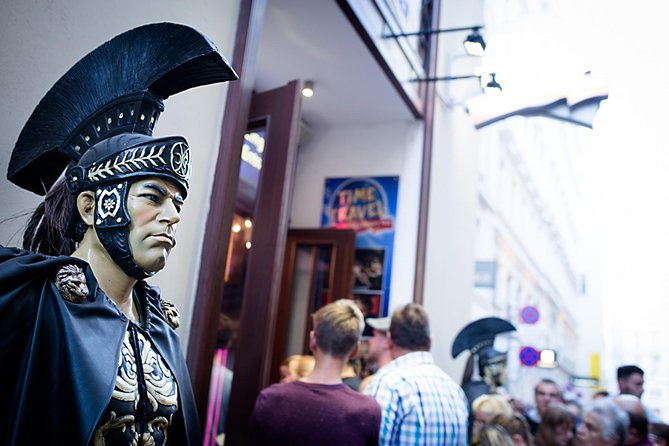
The experience begins with Vienna in its Roman period. Vindobona was the Roman military camp in the area, and the presentation uses special effects to place you in that early chapter. This is not a long archaeological lecture. You get a brisk sense of how Roman Vienna fits into the city’s story, then move on.
I find this opening useful for first-time visitors because it gives you a basic timeline. Vienna can otherwise feel like a city made almost entirely of Baroque palaces and imperial buildings. The Roman section reminds you that the story began long before the Habsburgs.
The format is guided and accompanied, with a group size of up to 32 people. That is small enough to keep the experience moving without creating the feel of a huge crowd, though the shared format means you do not set your own pace. You go from one scene to the next as part of the group.
More history walks in Vienna:
- Vienna: Time Travel and Magic Vienna History Tour
★ 4.6 · 3,879 reviews - Vienna: World War II Historical Walking Tour
★ 4.8 · 1,772 reviews - Vienna Historic Center Small Group Walking Tour
★ 5.0 · 1,746 reviews
The plague pit and medieval Vienna
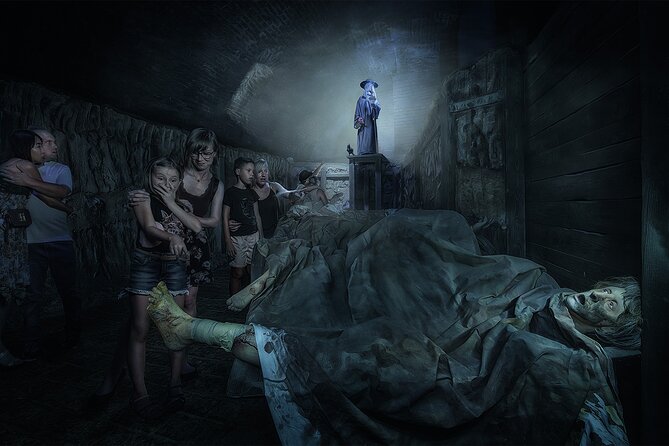
The next chapters turn darker. You follow Vienna into the medieval period and encounter a plague pit. The presentation uses atmosphere and theatrical effects to suggest what life was like during one of the city’s hardest periods.
This section is a good reminder that Vienna’s past is not only palaces, music and elegant coffeehouses. The show places royal splendor beside disease, fear and ordinary hardship. It does so quickly, but the contrast helps the larger story make sense.
Some scenes may feel intense for younger children. The experience is designed for a broad audience, yet it does include dark historical material and simulated effects. If your child is easily frightened, keep that in mind. One practical advantage is that you can treat the event as a light history lesson rather than a solemn memorial visit, but the tone does shift from playful to unsettling at points.
The history here is intentionally simplified. You will not leave with a detailed account of medieval government, public health or daily life. You will leave with a memorable outline of how the city changed and survived.
Habsburg emperors in a fast-moving show
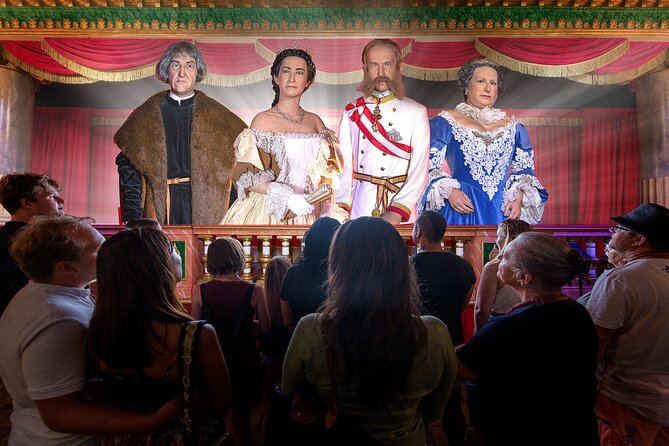
The Habsburg section brings Vienna’s imperial past to the front. The show follows the dynasty and gives you a sense of the court, its personalities and its influence on the city.
This part is especially useful before visiting the Hofburg. The Hofburg complex can seem confusing at first, with its courtyards, museums and layers of imperial history. Time Travel Vienna gives you a short introduction to the people and power behind those buildings.
Do not expect the same level of detail you would find in the Imperial Apartments or the Sisi Museum. The presentation favors broad strokes and visual scenes. You may get a clearer feel for the Habsburg era than a list of dates would provide, but you will still need a proper palace visit if you want the full story.
I like this approach for a first day in Vienna. You can use the show to decide which historical sites deserve more of your time. It gives you context without asking you to spend half a day reading labels.
Mozart, Strauss and the spinning waltz car
Vienna’s musical heritage gets its own lively treatment. You meet Mozart and Strauss through theatrical presentation, then take a simulated ride in a spinning waltz car.
This is one of the lighter, more playful sections, and it helps explain why music is so closely tied to Vienna’s identity. The ride is not a concert and should not replace an evening of classical music, but it gives you a quick, entertaining look at the city’s musical image.
The changing media is the point. One moment you are watching a video, then you are looking at figures or a digital scene, and soon you are part of a simulated ride. That variety is why the experience works well for families and teens. It also helps adults who might lose interest during a straight lecture.
The ride may not appeal to everyone. If you prefer quiet museums and carefully presented objects, the spinning effect and theatrical style may feel a little silly. I would see it as a short amusement-park-style history scene, not an authentic recreation of a Viennese ball.
A few more Vienna outings worth weighing up
- Vienna: Classic Ensemble Vienna in St. Peter’s Church Ticket
★ 4.7 · 4,819 reviews - Vienna Kunsthistorisches Museum Day Admission Ticket
★ 4.6 · 3,690 reviews - Vienna: Tickets for Mozarthaus Vienna with Audio Guide
★ 4.2 · 2,344 reviews - Vienna: Skip-the-Line Entrance Ticket to the Danube Tower
★ 4.5 · 2,303 reviews
The World War II air raid shelter
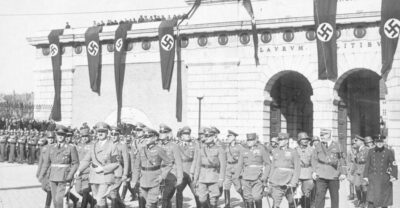
The World War II section takes you into an original air raid shelter. The shelter experience is among the most serious parts of the show, and the simulated raid gives the period a physical sense that a short film alone might not provide.
This section is valuable because it brings Vienna’s twentieth-century history into a program otherwise focused on Romans, emperors and composers. It also helps correct the postcard image of Vienna as a city untouched by modern conflict.
At the same time, the treatment is brief. If World War II history is a main reason for your visit, you will need other sites and museums for a fuller account. The attraction offers a glimpse rather than a complete explanation of Austria’s wartime role and experience.
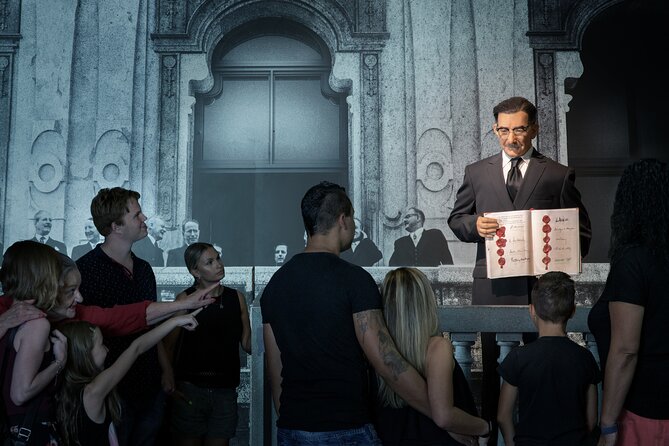
The final historical note includes Leopold Figl’s famous declaration that Austria is free. The show uses the moment to move from wartime Vienna toward the modern country. It is a compact ending to a section that carries more weight than the comedy and special effects around it.
Virtual fiaker ride back to the present
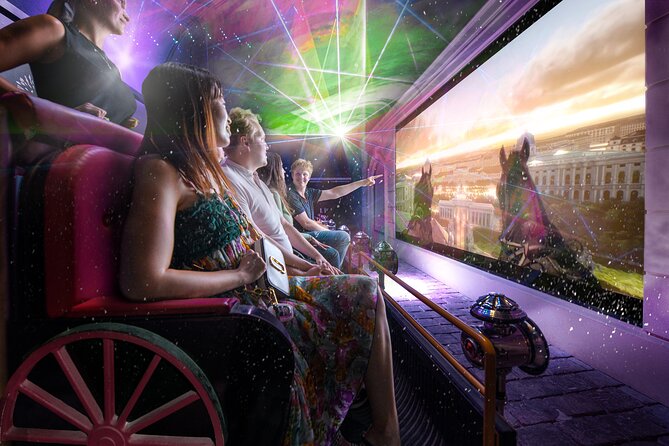
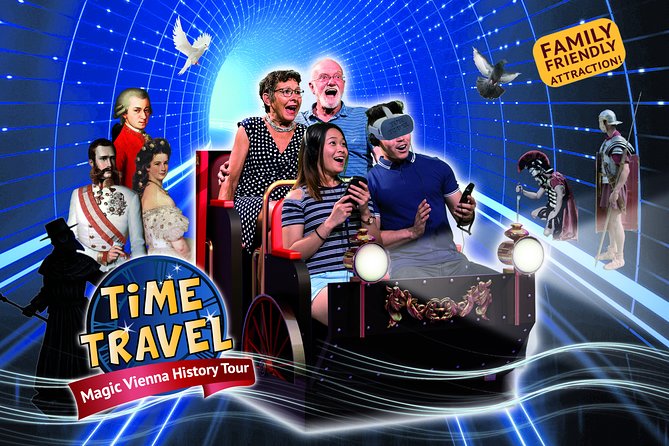
Near the end, a magical carriage ride brings you back to the present. You also see major Vienna landmarks through a virtual fiaker ride, giving you a city tour without leaving the building.
This is a clever way to finish. A real horse-drawn carriage ride costs much more and follows a different route, while this version gives you a quick visual sweep of Vienna’s famous sights. It is not a substitute for walking the streets, but it may help you recognize landmarks when you see them later.
I would pay attention to the city layout during this part. The show moves quickly, yet the virtual ride can help connect separate places in your mind. Afterward, you may have a better idea of how the historic center fits together.
The virtual ride is also useful when rain, cold or fatigue makes outdoor sightseeing less appealing. It gives you an indoor break while keeping the focus on Vienna.
What the technology adds
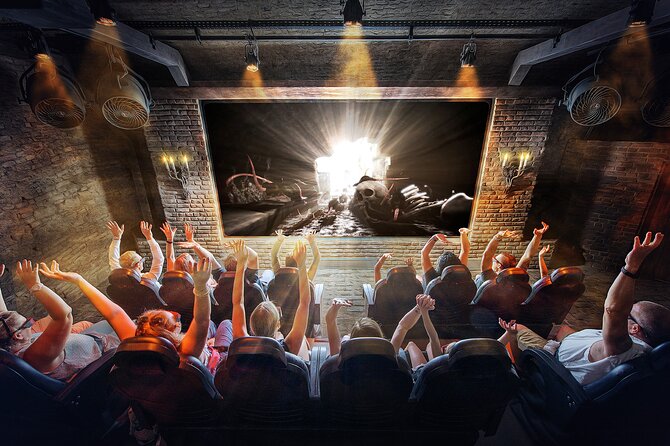
The technology is not included just for decoration. The 5D cinema adds motion and sensory effects, while VR places you inside a short scene. Animatronics, wax figures, video and robotics give the historical characters a physical presence.
The mix works best when you want history in small portions. You are rarely looking at one type of presentation for long, so the hour feels active. Several visitors have found the 5D cinema and VR sections especially memorable, and I can see why: they turn abstract dates into something you can see and feel.
Still, technology can only carry the story so far. Special effects may help you remember a scene, but they do not explain every cause, consequence or debate. The show is strongest as a starting point. Use it to build interest, then follow up at the Hofburg, Schönbrunn Palace, the House of Music or another more detailed site.
The audio system also matters. German commentary is available live, with simultaneous translation through headphones. English is included, along with Spanish, Italian, French, Japanese, Chinese, Russian, Hungarian, Polish and Czech. This makes the experience practical for mixed-language groups, though background noise from an excited group can make audio translation harder to follow.
Is $27.76 a fair price?
At $27.76 per person, this is not the cheapest hour in Vienna. You can walk through several central streets for free, and some museums offer more historical material for a similar cost.
The value comes from the format. You are paying for a guided production in historic vaults, multiple special effects, VR, a 5D cinema, simulated rides and a translated audio system. If you are traveling with children or teens, the entertainment may make the price easier to justify than a traditional museum visit.
For adults who want scholarly depth, the value is less clear. You are buying a lively overview, not a complete account of Vienna’s history. I would book it when you have a short stay, need an indoor activity or want a shared family experience that introduces the city before more serious sightseeing.
The show is about an hour long, though some visitors have allowed closer to 1.5 hours for the full outing. Since it is near public transportation and close to central sights, you can fit it between other activities without giving up a whole day.
Who will enjoy this most?
I would recommend Time Travel Vienna most strongly to families, first-time visitors and anyone who learns better from moving pictures than from museum labels. Children can follow the visual scenes, and adults still pick up useful facts about Roman Vienna, the Habsburgs, music and wartime history.
It also suits a short city break. If you have only a day or two, the show gives you a fast outline of Vienna’s past. You can then choose which palaces, churches or museums deserve a longer visit.
Older children and teenagers are likely to get the most from the VR and simulated scenes. Some younger children may find the plague section or air raid sequence frightening. The attraction does not allow animals, so plan accordingly if you are traveling with a pet.
The experience is less suitable if you want a slow, quiet visit or detailed historical analysis. It is also not ideal for someone who dislikes motion-based effects, theatrical staging or a group format.
Booking, timing and cancellation
A mobile ticket is provided, and the experience is offered in English through the audio system. Confirmation is received at booking, and the activity is near public transportation.
Book ahead if your schedule is tight. It is commonly reserved about ten days before the visit, which suggests that popular time slots can fill. If you need to change a booking, confirm the new time directly with Time Travel Vienna as well as through the booking platform. A changed time shown in one system may not always reach the attraction.
Free cancellation is available up to 24 hours before the start time for a full refund. Changes or cancellations inside that 24-hour window are not accepted or refunded. The cut-off follows Vienna local time.
Should you book Time Travel Vienna?
Book it if you want a fun, compact introduction to Vienna with VR, special effects and a few memorable historical scenes. It is particularly good for families, teens, short visits and rainy-day planning.
Skip it if you want a serious museum experience or a detailed account of World War II and the Habsburg period. For most people, the best use of this attraction is as a beginning: spend an hour getting the broad story, then visit Vienna’s palaces, churches and museums with a better sense of what you are seeing.
FAQ
How long does Time Travel Vienna last?
The experience lasts about one hour. Some people allow up to 1.5 hours for the complete visit.
What languages are available?
German live commentary is available, with simultaneous translation through headphones. Audio guides are available in English, Spanish, Italian, French, Japanese, Chinese, Russian, Hungarian, Polish and Czech.
What does the ticket include?
The ticket includes admission to Time Travel Vienna, including the Vienna History Show and its special effects, VR, 5D cinema, animatronics and simulated rides.
Is hotel pickup included?
No. Hotel pickup and drop-off are not included.
Is food or drink included?
No. Food and drinks are not included.
Is the experience suitable for children?
Yes. The presentation is designed for families and includes visual effects, VR, simulated rides and interactive scenes. Some sections, including the plague pit and air raid shelter, may feel frightening to younger children.
Are animals allowed?
No. Animals are not allowed at Time Travel Vienna.
How many people can join the experience?
The activity has a maximum group size of 32 people.
Can I cancel for a refund?
Yes. You can cancel at least 24 hours before the start time for a full refund. Cancellations or changes made less than 24 hours before the experience are not accepted and are not refunded.
Just reviewed in Vienna
- World War II History Vienna Old Town Private Walking Tour★ 4.8 · 9 reviews
- Vienna: Wine Tasting E-Bike Tour★ 4.9 · 46 reviews
- Vienna: Winery and Wine Tasting Tour with a Wine Expert★ 5.0 · 5 reviews
- Vienna: Unforgettable Private City Tour★ 5.0 · 7 reviews
- Vienna Urban Art Tour: Explore a different side of Vienna!★ 3.8 · 14 reviews
- Vienna: Concert by the Vienna Baroque Orchestra★ 4.6 · 56 reviews
- Vienna: Sunday Brunch Danube Cruise & Live Music★ 4.2 · 42 reviews
- Vienna Supreme Orchestra at Palais Niederösterreich★ 4.8 · 10 reviews
Historical Tours, compared.
Vienna Historic Center Small Group Walking Tour
Read our review →
Skip-the-Line Schonbrunn Palace Guided Tour and Vienna Historical City Tour
Read our review →
Vienna Mozart Concert in Historical Costumes at the Musikverein
Read our review →
Historical Hitler Walking Tour of Vienna
Read our review →
Vienna Classical Concert – Strauss in Historic 1837 Hall
Read our review →Browse the lists this tour appears in