
Reviewed · HISTORICAL TOURS
Vienna: History Highlight Walking Tour
Vienna’s grand center can feel like a book with its pages sealed shut. This two-hour walking tour opens it as you go, linking Roman remains, Habsburg power, imperial ceremony, wartime damage, and everyday city life. You move from Michaelerplatz to St. Stephen’s Cathedral, with stories filling in what the grand facades leave out.
I like the route’s strong sense of place and its useful mix of famous sights and easy-to-miss details. I also like the guides’ style: Herbert is often praised for his humor, historical depth, visual aids, and practical tips, while Wolfgang is also named as an engaging guide. The main drawback is that the tour moves quickly, and entrance fees to places such as the Imperial Treasury or Imperial Crypt are not included.
Key points to know before you book
- Roman ruins begin the story: The tour starts at Michaelerplatz, where excavations help explain why Vienna grew in this spot.
- The Hofburg gets real context: You learn how the vast palace grounds worked and which rulers shaped the city.
- Imperial ceremony comes with unusual details: The route covers Habsburg weddings, the Imperial Treasury, and burial customs.
- Vienna’s darker chapters are included: The Albertina and Monument Against War and Fascism introduce the city’s wartime history.
- The small group matters: Guides can answer questions and tailor examples more easily than on a large coach tour.
- The finish is practical: You end near St. Stephen’s Cathedral, a useful point for continuing your sightseeing.
Why this route works as a first look at Vienna
The tour follows a compact central-Vienna route rather than scattering you across the city. That matters because you spend your two hours learning how places connect, not waiting for transport or crossing long stretches between unrelated sights.
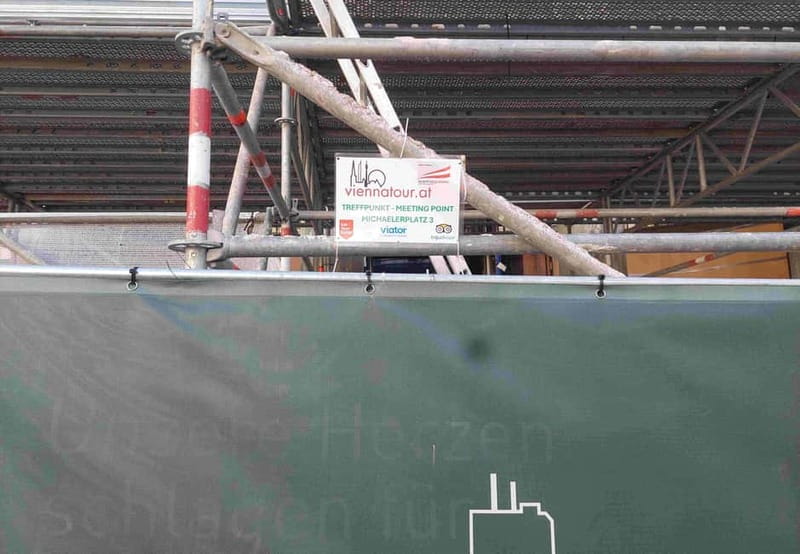
You begin at Michaelerplatz 3, in front of Loos Haus, close to the Herrengasse station on U3. Look for the building with Raiffeisenbank on its facade. The meeting point sits between Kohlmarkt and Herrengasse and is about a three-minute walk from the metro station.
The starting location is well chosen. Michaelerplatz brings together layers of Vienna in one open space, so the tour can begin with Roman Vienna and the practical question of why a castle was built here. It is a better opening than simply meeting beside a palace gate because you start with the city’s origins, not only its imperial image.
You should arrive ready to walk and listen. Large bags and luggage are not allowed, and the tour runs in all weather. Wear shoes that feel good on city streets, and bring suitable clothing if rain or cold is in the forecast.
More history walks in Vienna:
- Vienna: Time Travel and Magic Vienna History Tour
★ 4.6 · 3,879 reviews - Vienna: World War II Historical Walking Tour
★ 4.8 · 1,772 reviews - Vienna Historic Center Small Group Walking Tour
★ 5.0 · 1,746 reviews
Michaelerplatz and the Roman beginnings of Vienna
At the Michaelerplatz excavations, your guide introduces the earlier settlement beneath the imperial center. This is where the tour begins to explain Vienna as a strategic place, rather than presenting the city as a collection of pretty buildings.
The appeal here is the contrast. Above ground, you see elegant architecture and the approach to the Hofburg. Below and around it, the excavations point to much older layers. A guide can make that change in time easier to grasp, especially if Roman history is not the main reason you came to Vienna.
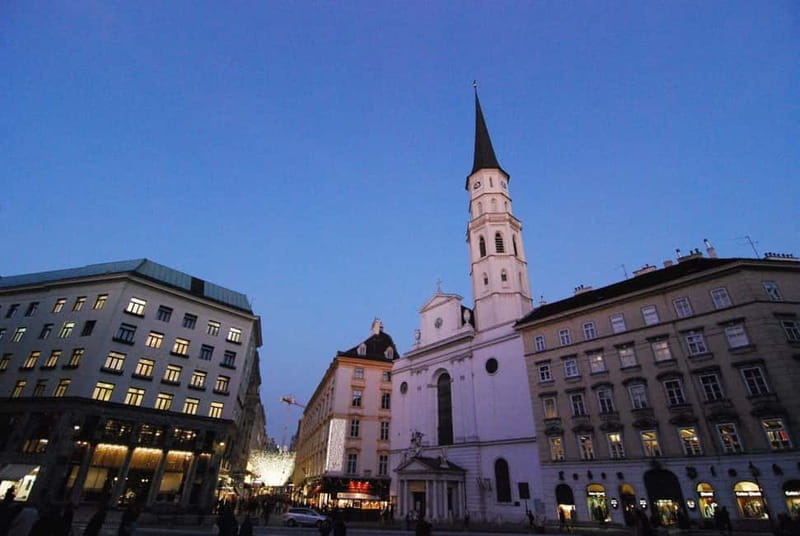
You then visit St. Michael’s Church, described as Vienna’s third-oldest church. Its combination of three architectural styles gives you an early lesson in how the city changed over time. Instead of treating architecture as decoration, the guide connects different forms to different periods.
The church is one of the places where a short tour can be especially useful. You may notice the building without knowing what to look for. The guide’s explanation gives you a way to read its facade and understand why several styles appear together.
The Hofburg, Heroes’ Square, and the machinery of empire
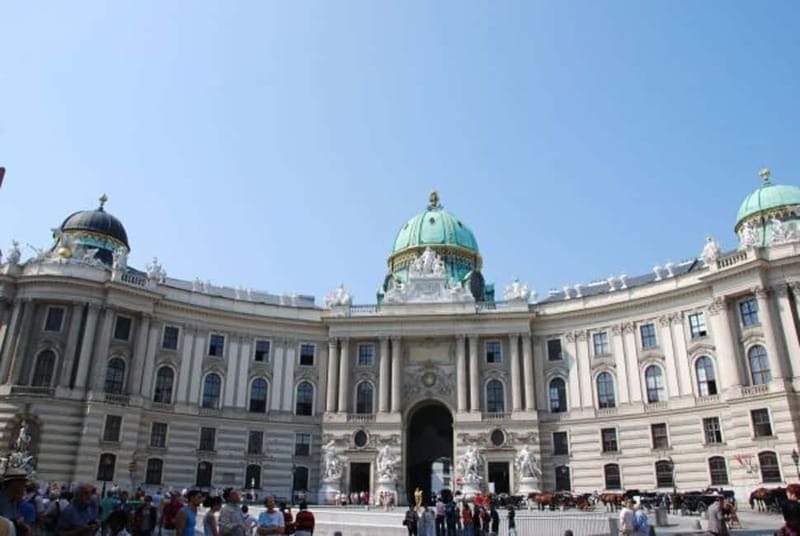
The Hofburg Palace is the route’s main historical anchor. The complex covers 555,000 square meters, a number large enough to sound abstract until you see how far the palace grounds extend. Your guide explains what the enormous area meant and how the palace functioned as the center of Habsburg rule.
This is not a palace tour focused on rooms and furnishings. You stay outside and learn how power was organized around the buildings, courtyards, monuments, and ceremonial spaces. That approach suits a two-hour introduction because it gives you a map of the imperial district before you decide which interiors deserve your time and money.
Heroes’ Square is another strong stop. Its size is part of the message, and your guide explains what lies behind the facades and why the open space mattered. The square can look like a grand photo stop when you first arrive. With context, it becomes a place where architecture, ceremony, and political ambition meet.
The guides also discuss important rulers connected to Vienna. This helps prevent the usual problem of imperial sightseeing, where you remember names but not their role in the city. If you plan to visit museums or palace interiors later, this part of the tour gives you a useful framework.
The Imperial Treasury and the cost of going inside
The Imperial Treasury is included in the discussion, but not in the tour price. That distinction is important. The walking tour tells you why the treasury matters and what you might find there, while any visit inside requires a separate entrance fee.
For a first visit, this advice can save time. Vienna offers many museums and imperial sites, and it is easy to buy tickets without knowing which ones fit your interests. A guide can explain the treasury’s place in the wider story, helping you decide if it deserves a separate visit.
At $33 per person, the tour is priced as a guided orientation rather than an admission package. I consider that fair if you want a strong historical base and practical suggestions for the rest of your stay. It is less appealing if you want extended time inside museums or expect entry tickets to be covered.
The tour can also help you plan your day. One participant used the information from the walk to visit the treasury later with better preparation. That is the real value of the experience: it can make later sightseeing more focused instead of simply adding another set of facts.
More walking tours in Vienna:
- Vienna: Guided Walking Tour of City Center Highlights
★ 4.7 · 4,989 reviews - Vienna: Vienna Central Cemetery Guided Walking Tour
★ 4.8 · 3,307 reviews - Vienna: Guided Walking Tour of City Highlights & Hidden Gems
★ 4.9 · 2,180 reviews - Vienna: Viennese Underworld Guided Walking Tour
★ 4.7 · 1,865 reviews
The Austrian National Library and Joseph II
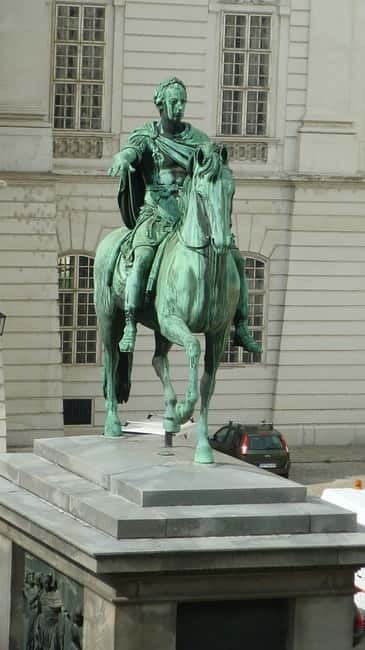
As you pass the Austrian National Library, the tour points out its state room and the symbol on the roof. You also learn why the square is named after Emperor Joseph II. These details are easy to miss when you are busy photographing the building or trying to keep up with a group.
This section works well for visitors who enjoy the small clues of a city. A roof symbol, a square name, or a sculptural detail may seem minor on its own. Together, these clues show how Vienna’s public spaces preserve political messages and imperial memory.
The library is also a good example of the route’s limits. You see and discuss the building, but entrance is not included. If you want to examine the state room in detail, plan a separate visit and allow extra time beyond the two-hour walk.
Habsburg weddings, missing grooms, and the Imperial Crypt
The church associated with Habsburg weddings adds a more personal side to dynastic history. The guide explains why royal marriages mattered and why, in some cases, the groom was not even present. That unusual detail makes the subject easier to remember than a list of treaties and family connections.
The church is closed on Sundays and public holidays, so you should not expect access on those days. The tour can still explain the site from outside, but the experience will be different if you hoped to enter.
At the Imperial Crypt, the focus shifts to Habsburg burial customs. The tour explains the dynasty’s unusual burial ritual and the meaning behind it. This is the kind of subject that benefits from a guide because the practice is not obvious from the street, and the crypt’s importance can be lost if you only see it as another historic doorway.
The crypt also shows how Vienna’s imperial story was shaped by ceremony at every stage, from marriage to burial. That gives the palace district a more human scale, even though the buildings themselves are immense.
Albertina, wartime memory, and the State Opera
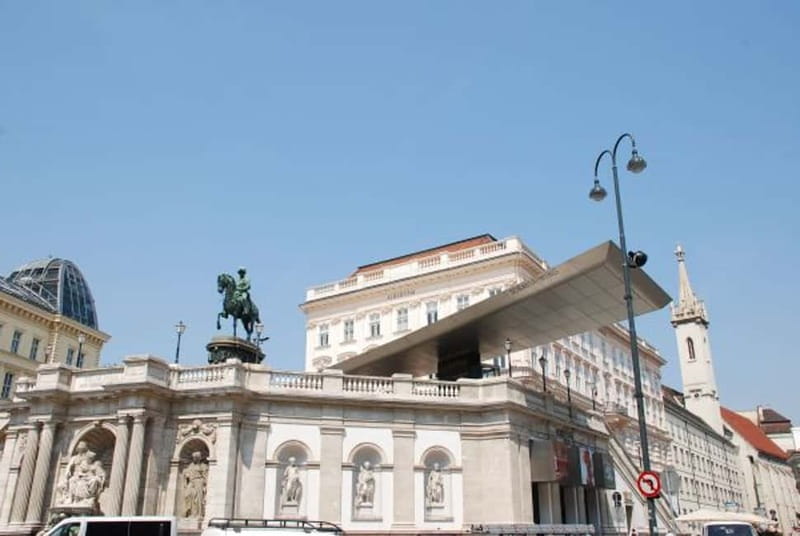
The walk does not present Vienna as an endlessly polished imperial capital. At the Albertina and the Monument Against War and Fascism, the guide addresses the city’s darker years and the horrors of the Second World War.
The Albertina is also introduced as home to the world’s largest graphical collection. You will not tour its galleries during this activity, and admission is separate, but the stop gives you a reason to consider the museum beyond its famous terrace and central location.
The Monument Against War and Fascism changes the tone of the route. After the palaces, churches, and ceremonial squares, you confront a public reminder of destruction and political violence. I value this part because it keeps the tour from turning Vienna into a costume drama about emperors and elegant cafes.
Guides such as Herbert have used images on an iPad to show how some buildings looked after the Second World War. That can be especially helpful here. The damage is not always easy to picture when modern Vienna looks so carefully restored.
You then reach the State Opera and learn why the Hotel Sacher now occupies the site of the old Carinthian Gate Theatre. This is a compact but useful example of how the modern city sits on top of earlier buildings and institutions.
Neuer Markt, the Providentia Fountain, and local anecdotes
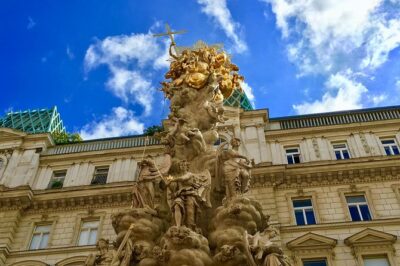
At Neuer Markt, the Providentia Fountain provides another chance to hear a story that you might otherwise walk past. The tour includes anecdotes about the fountain, adding a lighter note after the wartime memorial.
That balance is one of the route’s strengths. The guides do not treat every stop as a lecture. Humor and odd details help the history stick, especially during a fast walk through a district packed with grand buildings.
The tour’s most praised quality is its delivery. Guides are described as friendly, funny, and able to explain architecture without making the material heavy. Herbert, in particular, is repeatedly singled out for connecting with different people in the group and adjusting examples to their interests.
Small groups make that style more effective. You can ask about a building, a museum, or a local custom without interrupting a large crowd. Group size can vary, but the activity is conducted in a small group, and some departures may feel almost private.
St. Stephen’s Cathedral and a useful finish
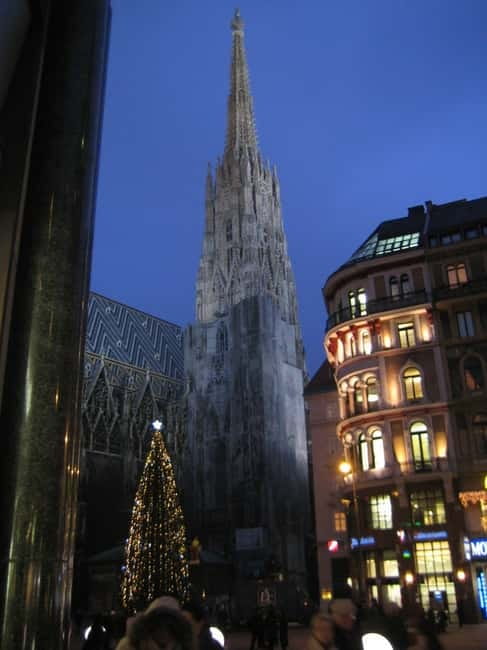
The walk ends near St. Stephen’s Cathedral at Stephansplatz. This is Vienna’s landmark and a logical place to finish, since you can continue exploring the cathedral area afterward.
The guide discusses the cathedral’s partial destruction during the Second World War and challenges at least one version of the story commonly taught in school. That final point captures the tour’s approach: familiar landmarks are treated as questions to investigate, not just facts to memorize.
The stated meeting information also says the activity ends back at the meeting point, while the route description places the finish at St. Stephen’s Cathedral and Stephansplatz. Since the listed drop-off location is Stephansplatz 8A, confirm the exact ending point when you book if you need to meet transport or connect to another timed activity.
Who will get the most from the two hours
I would choose this tour early in a Vienna visit. Several parts of the route help you decide which museums, churches, and imperial sites deserve more of your limited time. The guide can also offer practical suggestions for the rest of your stay, including local attractions and seasonal details such as the Lipizzaner performances.
It suits adults and children aged 12 or older who enjoy stories, architecture, and city history. It is not suitable for children under 12 or for people with mobility impairments. The route involves walking through central streets and stopping at outdoor sites, so anyone who tires easily should consider that before booking.
The English and German departures make the tour accessible to many visitors. If you book in English, guides such as Herbert have been praised for combining clear explanations with humor. German is also available, and Wolfgang is among the guides associated with the experience.
The tour is not a fit if you want a relaxed museum visit, lots of free time for photographs, or a fully indoor activity. It is also not ideal if you dislike walking in uncertain weather. The tour operates in all weather, and video and audio recording are not allowed.
Is $33 good value?
At $33, you are paying for two hours of live explanation, route planning, and local interpretation. You are not paying for entry to the Imperial Treasury, Imperial Crypt, Austrian National Library, Albertina, or other interiors.
I think the price works best for first-time visitors who want to understand what they are seeing. Vienna’s center is easy to walk through but not always easy to interpret. A good guide can show you why a square matters, what a roof symbol means, and how a royal custom shaped the city.
The high rating of 4.9 from 602 reviews supports the idea that the experience is consistently well received, especially for guide quality. The strongest pattern is not one particular building. It is the combination of historical detail, humor, small-group conversation, and useful advice for the rest of your visit.
Free cancellation up to 24 hours before the tour and the reserve-now, pay-later option make it easier to fit into a changing itinerary. Still, check the available start times before planning museum visits around it.
Should you book the Vienna History Highlight Walking Tour?
Book it if you want a lively, well-organized introduction to central Vienna, especially at the beginning of your stay. You will see the main imperial sights, learn how Roman Vienna fits into the story, confront the city’s wartime past, and finish at St. Stephen’s Cathedral.
I would skip it only if you need step-free access, are traveling with children under 12, or want admission to the attractions included in the price. For everyone else, the combination of a compact route, small-group format, strong guides such as Herbert and Wolfgang, and practical follow-up advice makes $33 a sensible spend.
FAQ
How long does the Vienna History Highlight Walking Tour last?
The tour lasts two hours. Starting times depend on availability when you book.
Where does the tour start?
It starts in front of Loos Haus at Michaelerplatz 3 in Vienna’s 1010 district. The meeting point is about a three-minute walk from Herrengasse metro station on line U3. Look for the building with Raiffeisenbank on the facade.
Where does the tour finish?
The route finishes near St. Stephen’s Cathedral at Stephansplatz. The listed drop-off address is Stephansplatz 8A. The meeting information also describes the activity as ending back at the meeting point, so confirm the final location when booking.
Which languages are available?
The tour is offered in English and German.
Are entrance fees included?
No. Entrance fees are not included in the $33 price. The tour discusses places including the Imperial Treasury, Austrian National Library, Albertina, and Imperial Crypt, but visits inside require separate admission.
Is the tour suitable for children or people with mobility impairments?
The tour is not suitable for children under 12 or for people with mobility impairments. It takes place outdoors and runs in all weather conditions.
Just reviewed in Vienna
- World War II History Vienna Old Town Private Walking Tour★ 4.8 · 9 reviews
- Vienna: Wine Tasting E-Bike Tour★ 4.9 · 46 reviews
- Vienna: Winery and Wine Tasting Tour with a Wine Expert★ 5.0 · 5 reviews
- Vienna: Unforgettable Private City Tour★ 5.0 · 7 reviews
- Vienna Urban Art Tour: Explore a different side of Vienna!★ 3.8 · 14 reviews
- Vienna: Concert by the Vienna Baroque Orchestra★ 4.6 · 56 reviews
- Vienna: Sunday Brunch Danube Cruise & Live Music★ 4.2 · 42 reviews
- Vienna Supreme Orchestra at Palais Niederösterreich★ 4.8 · 10 reviews
Historical Tours, compared.
Vienna Historic Center Small Group Walking Tour
Read our review →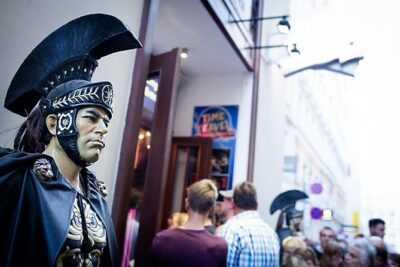
Time Travel-Magic Vienna History Tour Ticket
Read our review →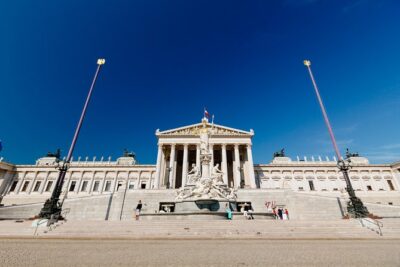
Skip-the-Line Schonbrunn Palace Guided Tour and Vienna Historical City Tour
Read our review →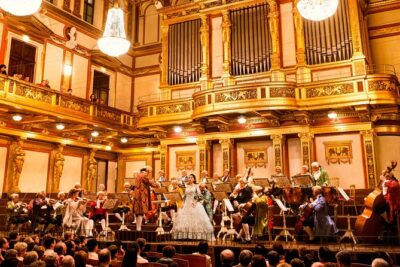
Vienna Mozart Concert in Historical Costumes at the Musikverein
Read our review →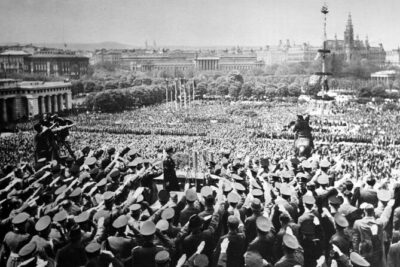
Historical Hitler Walking Tour of Vienna
Read our review →

Vienna Classical Concert – Strauss in Historic 1837 Hall
Read our review →Browse the lists this tour appears in