
Reviewed · VIENNA OLD TOWN WALKING TOURS
Vienna: Romantic Old Town 2-Hour Discovery Tour
Vienna’s old town is more than St. Stephen’s Cathedral and grand imperial streets. This two-hour private walk starts at the Anchor Clock and follows the less obvious threads of the city: Roman roots, Greek merchants, Jewish life, Baroque church politics, animal legends, and cramped medieval lanes. It is a quick way to see how many cities Vienna contains within one center.
I like the strong local focus, especially the Greek Quarter and the old university district. I also like that guides such as Wolfgang Auinger and Max have been praised for lively, well-structured explanations and for showing corners you might pass without noticing. The main drawback is the price: $352 for up to seven people is good value for a full group, but expensive for one or two guests.
Key points at a glance
- Six connected themes: Romans, Jews and traders, Greek history, architecture, legends, the old university, and back courtyards.
- A useful starting point: Meet at the Anchor Clock on Hoher Markt, one of Vienna’s most layered squares.
- Private format: The price covers a group of up to seven, with a private guide rather than a large public crowd.
- Strong guide feedback: Wolfgang Auinger and Max are singled out for clear, engaging presentations and close attention to small details.
- Many language choices: English, German, French, Spanish, Italian, Portuguese, Russian, Dutch, Chinese, Japanese, Arabic, and Korean are listed, though some languages require advance contact.
- Short but concentrated: Two hours gives you a strong introduction, not a full survey of every major Vienna sight.
A two-hour walk through Vienna’s less obvious center
This experience is built around six topics rather than a simple march from one famous building to the next. That matters because Vienna’s center can feel polished and grand at first glance, yet its most interesting stories often sit behind a facade, under a fountain, or in a narrow side street.
You begin at the Anchor Clock, at Hoher Markt. Arrive 10 minutes early. This is not just a convenient meeting point. Hoher Markt has drawn politicians, architects, merchants, and tradesmen for centuries, making it a fitting place to start a tour about the layers beneath modern Vienna.
The route is primarily an old-town walk. You should expect frequent stops for stories and close looks at buildings, rather than a long-distance sightseeing trek. The two-hour length works well early in a Vienna visit, when you want a sense of place before tackling museums and palaces.
More old town walks in Vienna:
- Vienna: Guided Walking Tour of City Center Highlights
★ 4.7 · 4,989 reviews - Vienna Historic Center Small Group Walking Tour
★ 5.0 · 1,746 reviews - Vienna: Old Town Sightseeing Tour in a Vintage-Style E-Car
★ 4.5 · 1,107 reviews
Hoher Markt, where trade and power meet
The first theme brings together Romans, Jews, and traders. Hoher Markt is presented as a meeting place shaped by commerce and political ambition, not merely as a pretty square.
Three details give this opening section real interest. You’ll hear about Vienna’s oldest building, the city’s first public waterworks, and the Anchor Clock itself. The clock has surprises built into its design, so this is a good moment to look up and inspect the structure instead of treating it as background decoration.
This stop also sets the tone for the whole tour. Vienna’s old center is not one clean historical period. Roman foundations, medieval religious life, Jewish communities, merchant activity, and later civic improvements overlap in the same small area.
I find this especially useful for first-time visitors because it provides a framework for the rest of the walk. You begin to understand why Vienna’s streets can feel imperial in one direction and medieval in the next. The drawback is that the square can be visually busy, so stay close to the guide and listen carefully during the opening explanation.
The Greek Quarter beside the Danube
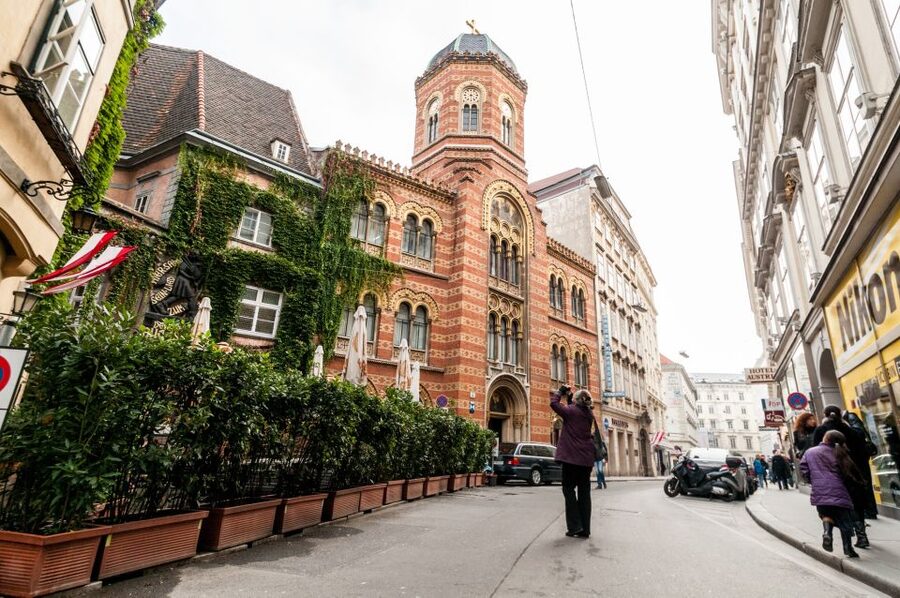
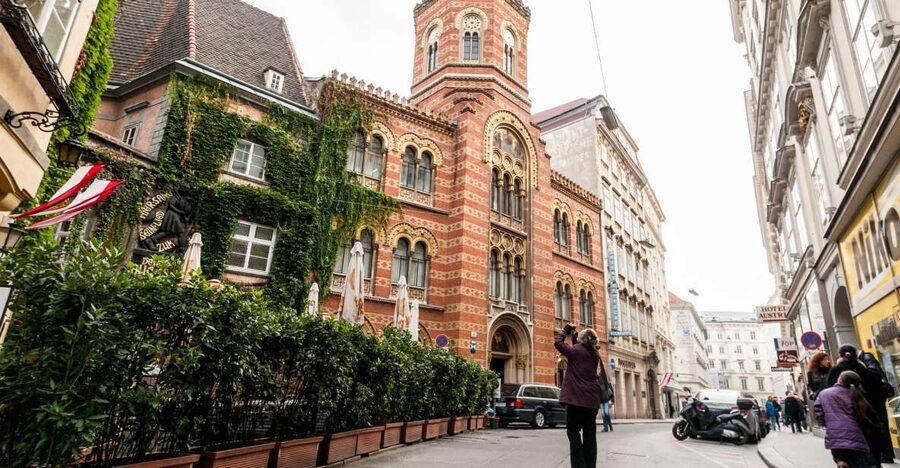
The second theme moves into Vienna’s Greek Quarter, located near the innermost arm of the Danube River. This neighborhood was shaped by trade over many centuries, and its story is tied to both Ottoman conflict and the Greek struggle for independence.
This is one of the tour’s more unusual features. Many short Vienna walks stay with Habsburg rulers, composers, and palace facades. Here, you get a different view of the city, one shaped by merchants and political movements from southeastern Europe.
The Greek Quarter also helps you picture Vienna as a crossroads. Traders brought goods, languages, religions, and political ideas into the city. The area’s history is not presented as a distant footnote. The tour points out traces that remain in the streets and buildings.
You should expect this portion to be more about context and observation than entering a long list of formal attractions. That can be a plus if you prefer streets with local texture to a checklist of famous interiors. It can also feel less dramatic if you want grand rooms and major monuments at every stop.
Vienna’s architectural mix in a few streets
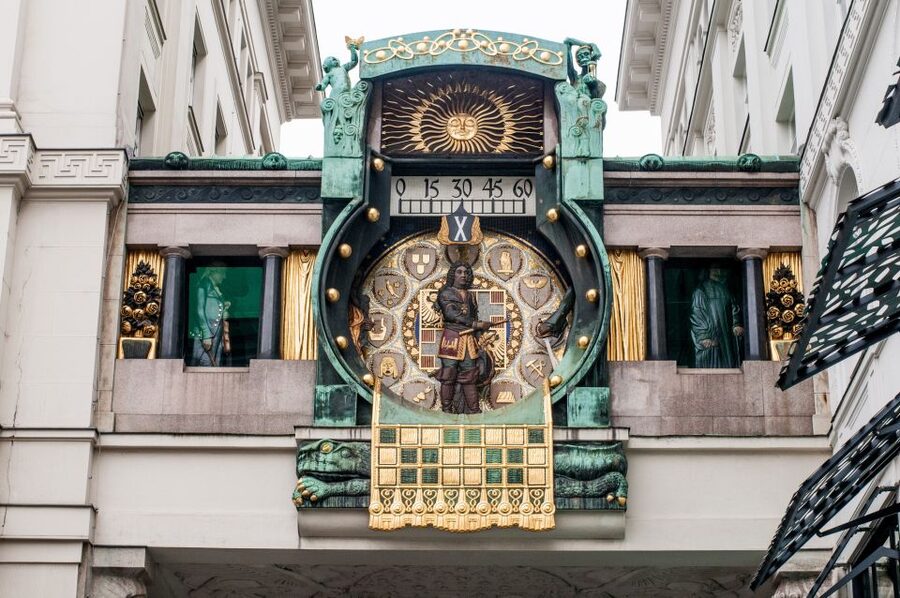
The architectural section is a compact lesson in how Vienna changed over time. In a short walk, you may see Gothic residential towers, medieval paving, Renaissance courtyards, Baroque city palaces, Rococo rows of houses, grand Gründerzeit buildings, and elegant Art Nouveau details.
The value here is not simply naming styles. A good guide helps you compare them. Look at how a building meets the street, how much decoration appears around windows and doorways, and how the scale changes from a medieval lane to a later boulevard.
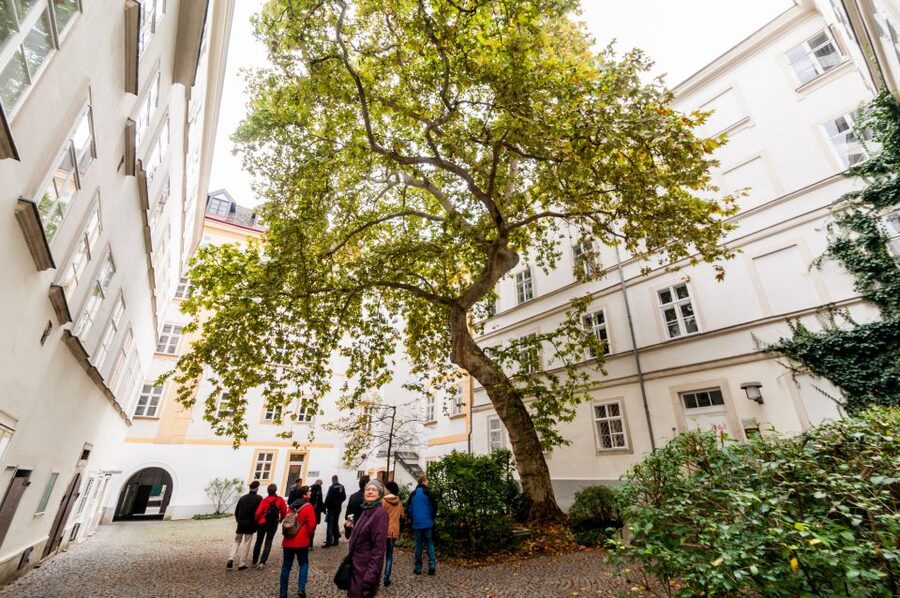
The walk also draws attention to back courtyards. From the street, Vienna’s old buildings can look formal and finished. Inside, their courtyards reveal another side of city life, with different patterns of access, light, work, and residence.
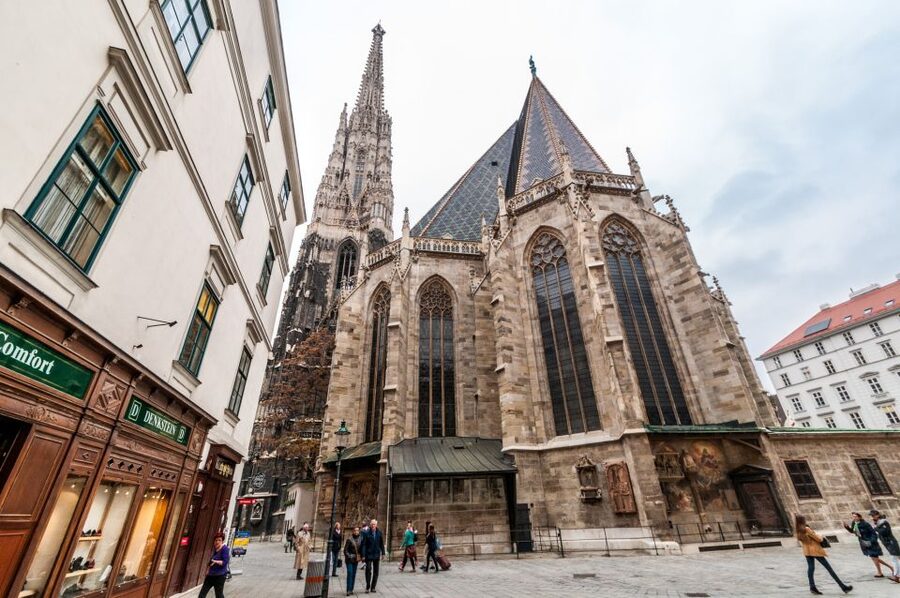
Max was praised for showing many details in the old town, especially in areas northeast of and behind the cathedral. That description is useful when setting expectations. This is not primarily a cathedral interior tour. Much of the appeal comes from what lies around and behind the most famous landmarks.
If architecture is your main interest, this may be the strongest part of the experience. If you already know Vienna’s building styles well, you may find the overview brisk after only two hours.
A few more Vienna outings worth weighing up
- Vienna: 2 Hours Sightseeing Walking Tour
★ 4.8 · 332 reviews - Vienna: 2-Hour Historical Crimes Guided Walking Tour
★ 4.8 · 130 reviews - Vienna: Jewish Life in Leopoldstadt 2-Hour Walking Tour
★ 4.9 · 109 reviews - Vienna: 2-Hour Street Art Tour
★ 4.5 · 76 reviews
Myths, animals, and the stories on the walls
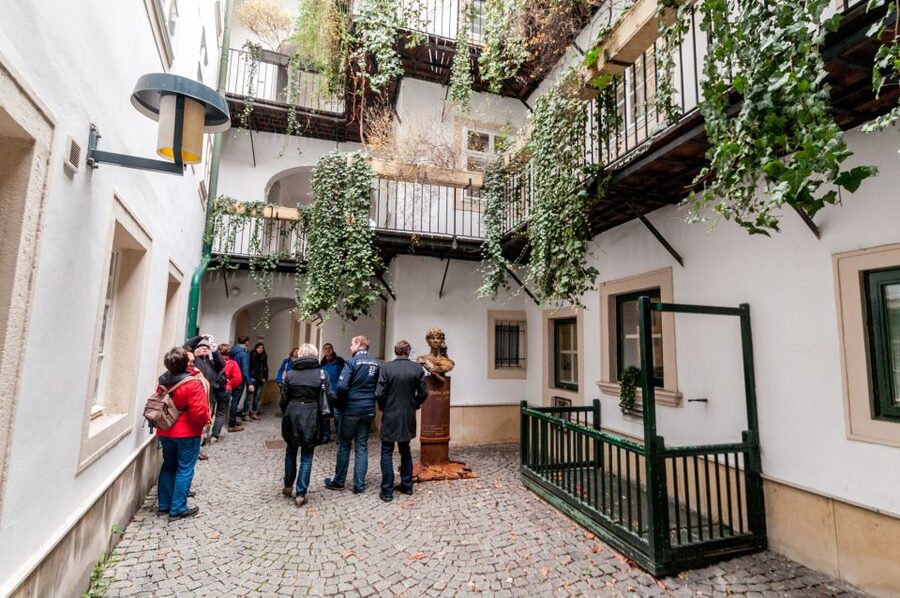
Vienna’s old streets come with plenty of legends. The tour looks at stories created to explain unusual places, buildings, and events, while also separating folklore from what can be supported as fact.
Animals play an important role in these tales. You’ll find them carved into facades and placed on fountains, where they serve as clues to old beliefs and civic symbolism. This gives you a practical way to keep looking after the guide has moved on. A lion, bird, horse, or other creature may not be decorative filler. It may connect to a story the city has carried for generations.
I like this part because legends make a walking tour stick in your memory. Dates and architectural labels can blur together, but an odd animal on a fountain or a strange tale attached to a building gives you something concrete to spot.
The balance matters, though. Legends should be treated as stories, not as proven history. The tour specifically considers the gap between myth and reality, which makes this section more useful than a string of spooky anecdotes.
The Jesuit quarter and the old university
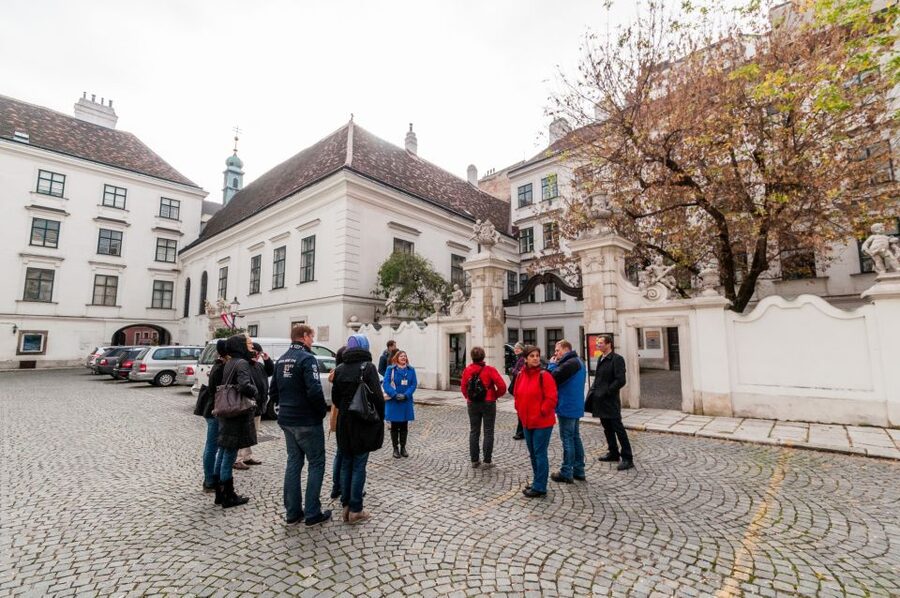
The old university quarter is sealed off from traffic and sits in the center of the old town. Its calm setting makes a nice change from streets where trams, cars, and pedestrians compete for space.
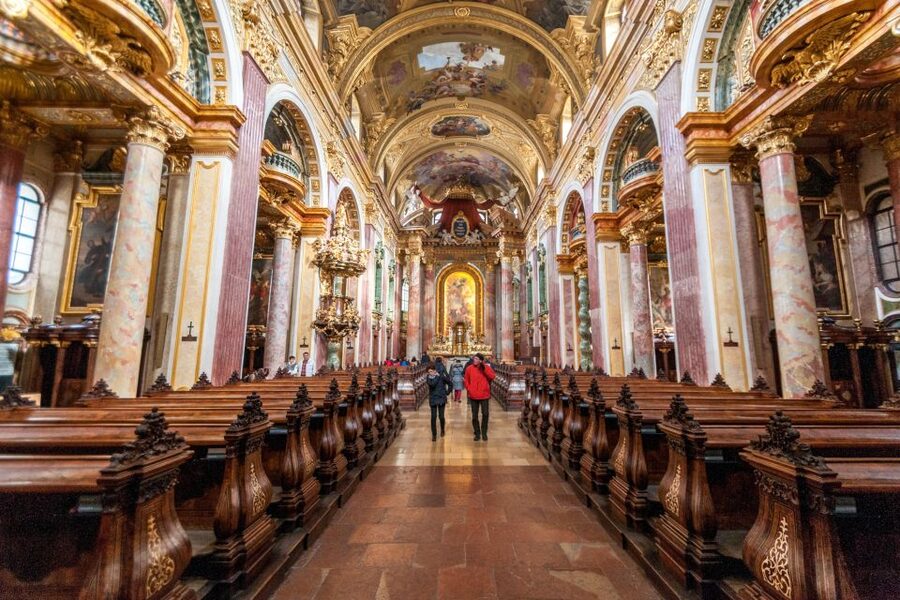
The Jesuit quarter leads to the Jesuit Church, seen from the square by its fountain. The church interior is described as a display of Baroque exuberance and church power. It also reflects rivalry between painters and architects, an appealing detail for anyone who likes the human disputes behind great buildings.
This is a chance to look beyond decoration. Baroque churches were designed to impress, persuade, and shape the emotions of people inside them. The decoration was part of a wider contest over influence, faith, artistic skill, and public attention.
The tour does not present this as a separate ticketed church visit. You should expect an exterior-based explanation and a look toward the interior from the square, rather than a guaranteed extended visit inside. That distinction is worth knowing if entering the church is high on your list.
Narrow lanes and the reality behind grand Vienna
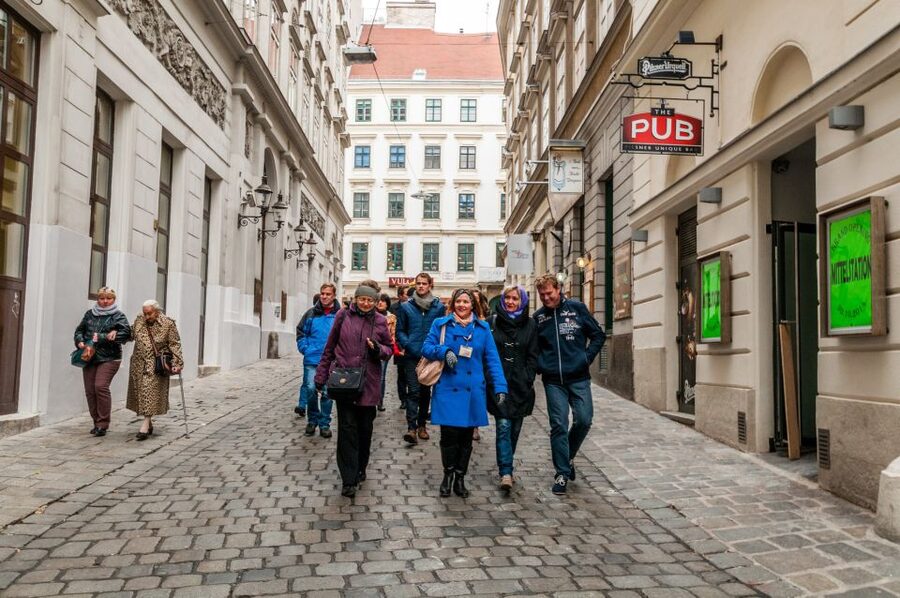
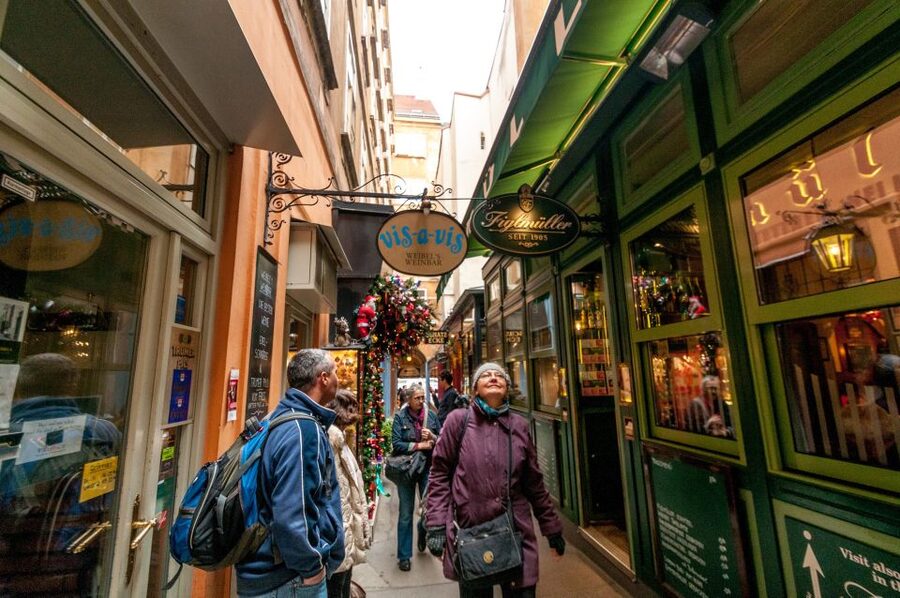
The final theme turns to Vienna’s winding streets and back courtyards. These lanes are often narrow, irregular, and far from the straight ceremonial avenues associated with imperial Vienna.
The guide uses the street plan to help you imagine daily life in the Middle Ages. Poor hygiene, cramped housing, and limited privacy were normal parts of urban living. Even opening a window could expose you to unpleasant sights and smells, a sharp contrast to the tidy appearance of the city today.
This is where the tour’s practical storytelling pays off. You are not only looking at old paving and walls. You are asked to picture how people moved, lived, traded, and dealt with one another in a tightly packed city.
Back courtyards can be easy to miss because they are often reached through ordinary entrances. Stay alert when the guide points them out. These spaces may tell you more about historic housing than a grand facade does.
The tour’s focus on narrow streets also means comfortable shoes matter. The walk lasts two hours, and old-town paving can make a leisurely route more tiring than its distance suggests. The supplied information does not give an accessibility assessment, so ask the operator directly if uneven surfaces or walking pace are a concern.
Guide style and the private-group advantage
The experience is sold as a private tour, with room for up to seven people. That format changes the value calculation. A group of six or seven divides the $352 cost into a reasonable per-person price for two hours of personal guiding. For one or two people, the same fee becomes a serious splurge.
A private group also lets you ask about the details that catch your eye. You might want more on Greek merchants, Baroque competition, Jewish history, or the meanings of animals on buildings. A large public group rarely gives you as much room to steer the conversation.
Guide style will shape the experience. Wolfgang Auinger received especially warm praise for an interesting and charming presentation. Max was noted for clear speaking, motivation, and detailed coverage of the old town. One lower rating praised the route but found the guide too talkative and more focused on Viennese humor than firm historical material.
That is a fair warning. Some people love local jokes and personality. Others want a tight sequence of dates, names, and architectural facts. When booking, state your preferred language and tell the operator what kind of explanation you want. Another language may be possible by request, and the available group-tour languages include Arabic and Korean in addition to the main listed options.
Is $352 a sensible price?
The price is $352 per group of up to seven. For a full group, that is about $50 per person. For four people, it is about $88 each. For two, it is $176 each, and for one person it is a premium purchase.
I would judge the value by how much you care about interpretation. The route itself covers public streets and squares, so you are not paying for entry to a series of costly attractions. You are paying for a guide who connects small details into a readable story.
That can be worthwhile in Vienna, where a building’s importance is not always clear from its exterior. The Anchor Clock, Greek Quarter, Jesuit quarter, courtyards, and architectural styles make more sense when someone explains how they fit together.
The price works best for families, friends, or a small group that wants a private pace. If you are alone or watching every euro, choose a less expensive group walk and spend your money on a museum or church interior. If you have only one free morning and want a tailored introduction, the private format has a stronger case.
Food and refreshments are not included. Plan to eat before or after, rather than expecting a café stop to be part of the two-hour route.
Practical details before you book
Meet at the Anchor Clock, Hoher Markt, 1010 Vienna. Arrive 10 minutes before the start time so the group can leave promptly.
The tour lasts two hours, with starting times depending on availability. A live guide is provided, and the tour can be arranged for a private group. The listed languages include German, Spanish, Chinese, Dutch, English, French, Italian, Japanese, Portuguese, and Russian. Group tours also list Arabic and Korean, so contact the operator if you need a language not shown during booking.
You can cancel up to 24 hours before the start for a full refund. Reserve now and pay later is also available, which helps if your Vienna schedule is still shifting.
The experience is described as skipping the ticket line, but its main focus is a walking route through public parts of the old town. Do not book it mainly for guaranteed priority entry into a major interior.
Who should book this Vienna walk?
I would choose this tour for a first visit, especially if you want more than a parade of famous names. It suits people who enjoy architecture, urban history, legends, and the small clues that make an old city readable.
It is also a good fit for families or friends sharing the cost. A private guide can adjust the conversation, and the two-hour length is manageable when you are fitting several sights into one day.
I would hesitate if you want a museum-heavy experience, a long visit inside the Jesuit Church, or a detailed treatment of every major Vienna monument. This tour is about streets, facades, courtyards, and connections. Its best moments may be the things you would otherwise walk past.
If the cost fits your group, book it early in your Vienna stay. You will then recognize the city’s architectural shifts and historical clues during later walks. If you are traveling alone, compare the private price with a public walking tour before committing.
FAQ
Where does the tour meet?
The meeting point is the Anchor Clock at Hoher Markt, 1010 Vienna.
How early should I arrive?
Arrive 10 minutes before the scheduled start time.
How long does the tour last?
The tour lasts two hours.
Is the tour private?
A private group is available, and the price covers a group of up to seven people.
What languages are available?
Listed languages include German, Spanish, Chinese, Dutch, English, French, Italian, Japanese, Portuguese, and Russian. Group tours also list Arabic and Korean. Contact the tour operator if you want to book another language.
Is food included?
No. Food and refreshments are not included.
Can I cancel for a refund?
Yes. You can cancel up to 24 hours in advance for a full refund. Reserve now and pay later is also available.
Should you book it?
Book this walk if you want Vienna explained through its side streets, trading communities, architectural changes, church politics, and local legends. The strongest case is for a small group that can share the $352 price and ask the guide to tailor the discussion.
Skip it if you want only headline sights or if the private cost is too high for your party. For the right group, though, this is a smart old-town introduction, with enough detail to make Vienna’s famous center feel less like a postcard and more like a lived-in city.
Just reviewed in Vienna
- World War II History Vienna Old Town Private Walking Tour★ 4.8 · 9 reviews
- Vienna: Wine Tasting E-Bike Tour★ 4.9 · 46 reviews
- Vienna: Winery and Wine Tasting Tour with a Wine Expert★ 5.0 · 5 reviews
- Vienna: Unforgettable Private City Tour★ 5.0 · 7 reviews
- Vienna Urban Art Tour: Explore a different side of Vienna!★ 3.8 · 14 reviews
- Vienna: Concert by the Vienna Baroque Orchestra★ 4.6 · 56 reviews
- Vienna: Sunday Brunch Danube Cruise & Live Music★ 4.2 · 42 reviews
- Vienna Supreme Orchestra at Palais Niederösterreich★ 4.8 · 10 reviews
Vienna Old Town Walking Tours, compared.
Vienna Historic Center Small Group Walking Tour
Read our review →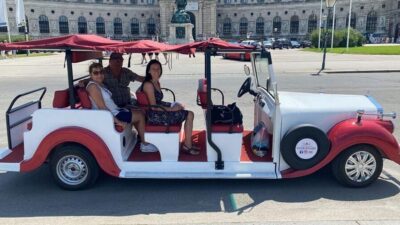
Exclusive Vienna Old Town Highlights Walking Tour (max. 6 persons)
Read our review →
Browse the lists this tour appears in