
Reviewed · VIENNA OLD TOWN WALKING TOURS
Vienna Historic Center Small Group Walking Tour
Vienna’s historic center is compact, but it is packed with palaces, churches, monuments, and grand public buildings. This 2.5-hour walking tour gives you a clear route through that imperial core, from Maria-Theresien-Platz to St. Stephen’s Cathedral, with guides such as Dace, Giselle, Gabriela, and Beatrice adding history, humor, and useful local advice.
I like the 15-person limit, which makes it easier to hear the guide and ask questions. I also like the personal extras: suggestions for cafés and restaurants, occasional images shown on an iPad, and the use of audio devices so the guide’s voice does not vanish in a crowded square.
The main consideration is simple: this is mostly an outdoor sightseeing tour. You will look at many important buildings from the outside, but museum admissions are not included, and the walk can be long, with one reported outing reaching about 14,000 steps.
Key points to know before booking
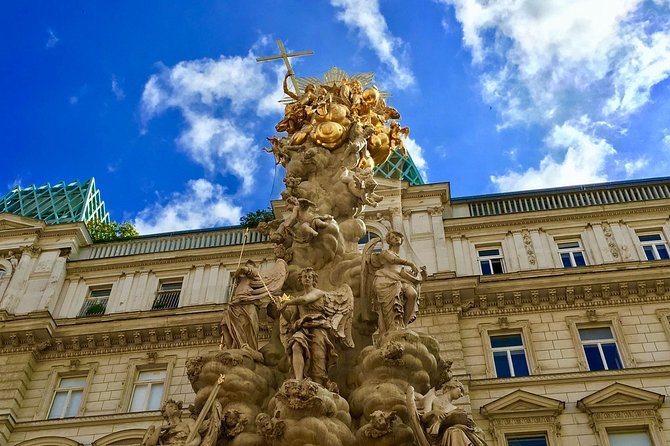
- A compact route with major sights: See the Ringstrasse, Hofburg Palace, Rathaus, Volksgarten, Graben, and St. Stephen’s Cathedral in one outing.
- Small group, capped at 15: The size suits travelers who want to ask questions and keep close to the guide.
- Mostly outdoor sightseeing: The tour explains buildings, monuments, and city history but does not include museum entry.
- Useful for a first day: The route helps you choose which palaces, museums, churches, cafés, and neighborhoods to explore later.
- A history-led walk: Expect plenty about the Habsburgs, composers, scientists, political figures, and modern Austria.
- Comfortable shoes are essential: The route covers a lot of ground, and Vienna’s polished streets do not make a long walk any shorter.
Why this tour works well on your first day
I like starting a Vienna visit with a walk through the old center. It gives you a mental map before you spend time inside the museums, and it helps you understand why the Hofburg, Ringstrasse, and St. Stephen’s Cathedral matter to the city.
The route also links different chapters of Vienna rather than focusing only on imperial glamour. You hear about Maria Theresa, the Habsburg court, Adolf Hitler’s announcement of Austria’s annexation from the New Castle balcony, Beethoven, Sigmund Freud, Lise Meitner, coffeehouse culture, and modern government. That range gives the walk more substance than a simple parade of pretty façades.
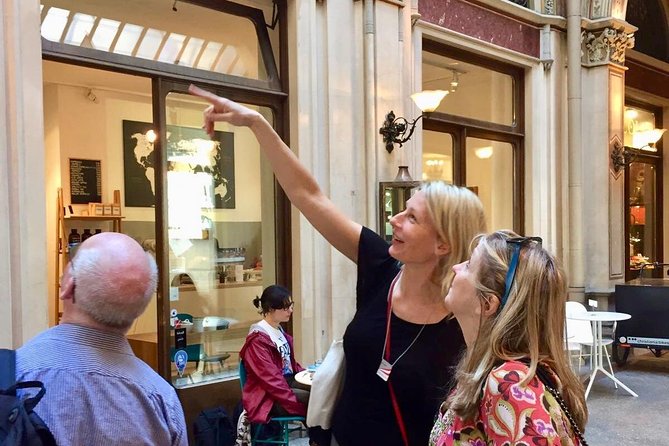
The small group matters. With no more than 15 people, you can usually stay close enough to hear the guide and ask about something that catches your eye. The audio devices are another practical touch, especially around busy roads and open squares.
The guides receive particularly strong praise for clear explanations and humor. Dace is described as warm, funny, and good at adding personal stories. Giselle is praised for her energy, organization, and recommendations for food and sightseeing. Gabriela is noted for keeping people comfortable in cold weather, while Beatrice is described as passionate about Vienna’s story.
More old town walks in Vienna:
- Vienna: Guided Walking Tour of City Center Highlights
★ 4.7 · 4,989 reviews - Vienna: Old Town Sightseeing Tour in a Vintage-Style E-Car
★ 4.5 · 1,107 reviews - Vienna: 30-Minute Fiaker Ride in the Old Town
★ 4.5 · 1,092 reviews
Maria-Theresien-Platz and the Ringstrasse
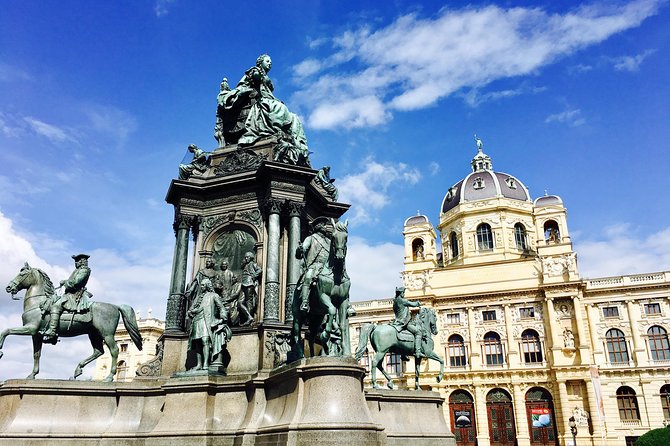
The meeting point is Maria-Theresien-Platz, a broad square between the Ringstrasse and the MuseumsQuartier. Two matching monumental buildings face each other here: the Natural History Museum and the Kunsthistorisches Museum, or Museum of Art History.
The square’s centerpiece is the monument to Empress Maria Theresa. It is not just a statue of one ruler. The monument includes a large cast of figures connected with her reign, including the composer Wolfgang Amadeus Mozart. Your guide uses the square to introduce Vienna’s imperial culture and the city’s love of grand public architecture.
The tour also begins beside the Kunsthistorisches Museum. You will see the building and hear about its royal art collection, but the ticket does not take you inside. If you want to visit the museum later, this is a good point to note its entrance and return on your own.
From here, the walk reaches the Ringstrasse, the broad boulevard built after Vienna’s medieval walls were removed in the 19th century. Along this ring are buildings in Classical, Gothic, Renaissance, and Baroque styles. The route brings you past major institutions rather than asking you to enter them, so pay attention to the guide’s explanation of how the boulevard reshaped the city.
Hofburg Palace, Burgtor, and Heroes Square
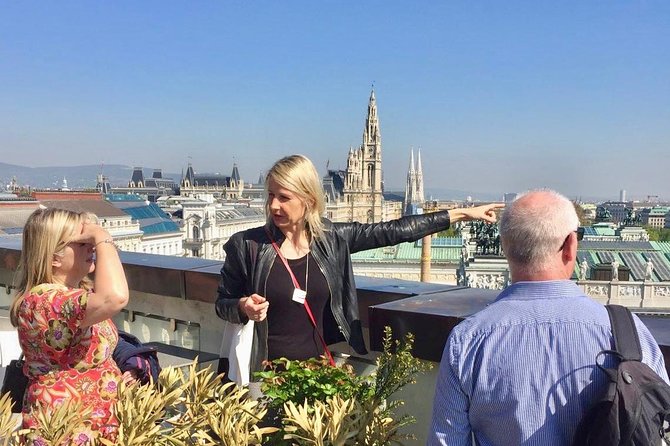
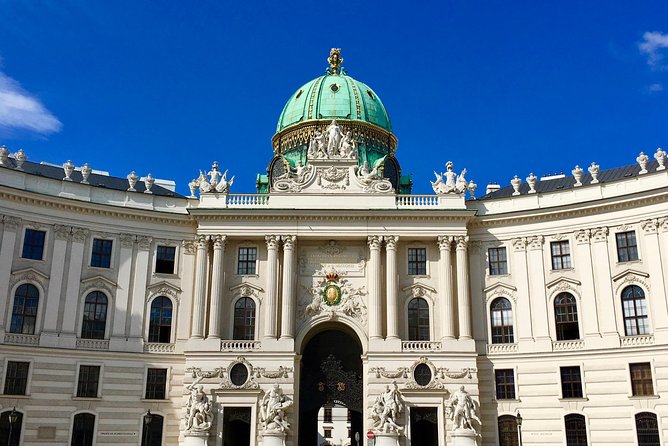
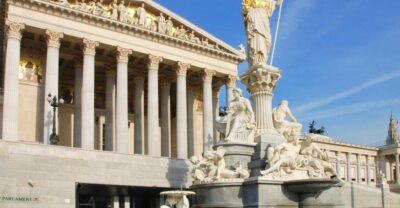
The Burgtor is a neoclassical gate built after the Napoleonic Wars. It leads toward the Hofburg, the enormous former residence of the Habsburg rulers and a long-running center of Austrian power.
The Hofburg is not one tidy palace. It is a collection of wings, courtyards, façades, and institutions built and altered over centuries. The guide helps connect those pieces, explaining court life, imperial personalities, and the palace’s continuing role in Austria.
You pass the New Castle, which now contains several museums and collections, including the World Museum, the Imperial Armoury, and the National Library. The balcony here also carries a darker 20th-century story: Adolf Hitler proclaimed the Anschluss, or annexation of Austria into Nazi Germany, from this location.
That balance is one of the better features of the tour. Vienna is easy to present as a city of waltzes, palaces, and elegant cafés. A useful guide also explains the political decisions and painful events that shaped the city.
Nearby Heroes Square, or Heldenplatz, is a large open space beside the palace. It was formed after the old bastion was demolished during the Napoleonic Wars. The open setting gives you room to see the relationship between the Hofburg buildings and the city around them.
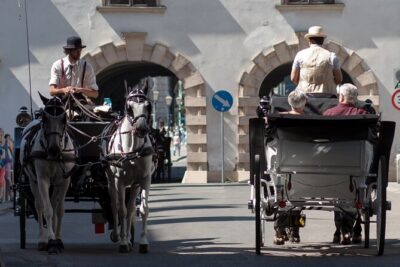
The route also touches on the Austrian National Library and the Baroque Winter Riding School. The riding school is associated with the Lipizzan horses and their performances and training. You should not assume that this walk includes a horse show or a palace tour, but the guide can point out where those experiences take place.
Churches, court life, and Vienna’s public buildings
St. Michael’s Church dates back to 1220 and has a notably old atmosphere compared with the grander imperial buildings nearby. The tour allows about five minutes here, so you should think of it as a focused stop rather than a long church visit.
The route also passes the office of Austria’s Federal Chancellor and Vienna’s Rathaus, the neo-Gothic City Hall. Rathaus is both an impressive architectural sight and the seat of Vienna’s government. The guide explains how the city’s public institutions fit into the Ringstrasse plan.
The route includes the Burgtheater, one of Vienna’s major theaters. Even if you do not attend a performance, its location and exterior help explain the importance of theater, music, and court culture in the city.
The Volksgarten provides a short change of pace. At its center is the Theseus Temple, a small neoclassical structure inspired by the Hephaisteion in Athens. The park also has a connection with Vienna’s music and café traditions, including performances associated with Johann Strauss.
One unusual stop is the Beethoven Pasqualatihaus, a former residence of Ludwig van Beethoven on the old fortification ramp. The stop is brief, but it adds a personal link to the city’s musical past. Vienna’s composers are not confined to concert halls here. Their former homes and working places are woven into the streets you walk.
More history walks in Vienna:
- Vienna: Time Travel and Magic Vienna History Tour
★ 4.6 · 3,879 reviews - Vienna: World War II Historical Walking Tour
★ 4.8 · 1,772 reviews - Time Travel-Magic Vienna History Tour Ticket
★ 4.5 · 1,099 reviews - Skip-the-Line Schonbrunn Palace Guided Tour and Vienna Historical City Tour
★ 3.5 · 940 reviews
University of Vienna and the city’s intellectual life
The University of Vienna adds another layer to the tour. Here, the guide connects Vienna’s academic tradition with figures such as Sigmund Freud and Lise Meitner, the Jewish physicist whose work helped change modern science.
This part is valuable if you want more than imperial anecdotes. Vienna’s identity also comes from its writers, scientists, doctors, artists, and political thinkers. The walk gives you a short introduction to that side of the city without pretending that a few minutes can explain it all.
The nearby Palais Ferstel once housed the Austro-Hungarian National Bank and the Stock Exchange. The building is another reminder that Vienna’s grand architecture was built for finance, government, education, and culture, not just royal display.
Freyung, one of the oldest squares in the center, has a smaller and more intimate feel than the Ringstrasse. The route then touches on Vienna’s famous coffeehouse tradition, where writers, composers, architects, painters, psychoanalysts, and revolutionaries gathered over coffee, cake, and cigars.
Some tours may include access to a church or another indoor location, such as a palace, university, or café, depending on the day. Treat these as possible additions, not guaranteed admissions. The firm rule is that the tour does not enter museums.
Graben, Kohlmarkt, and the final approach
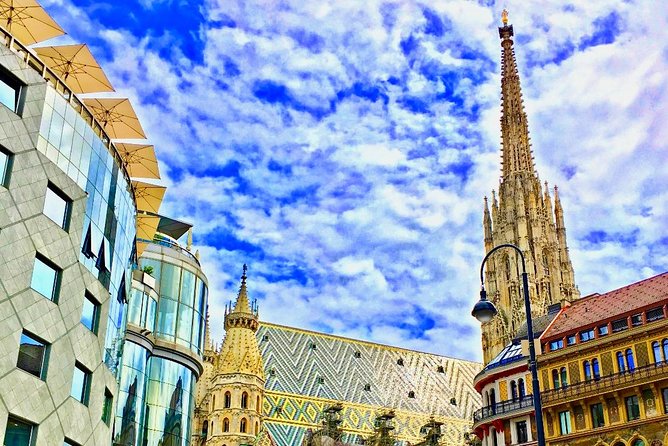
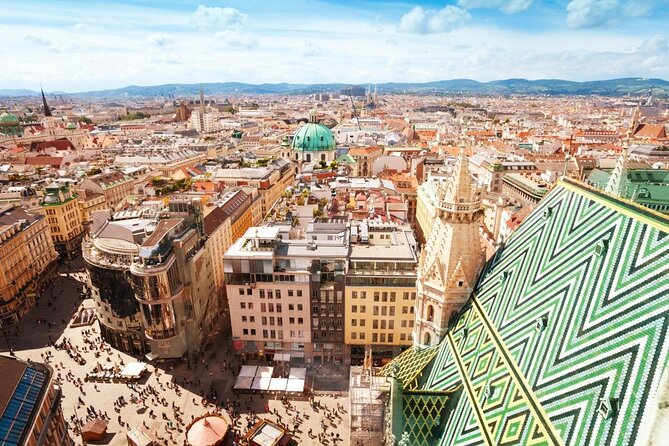
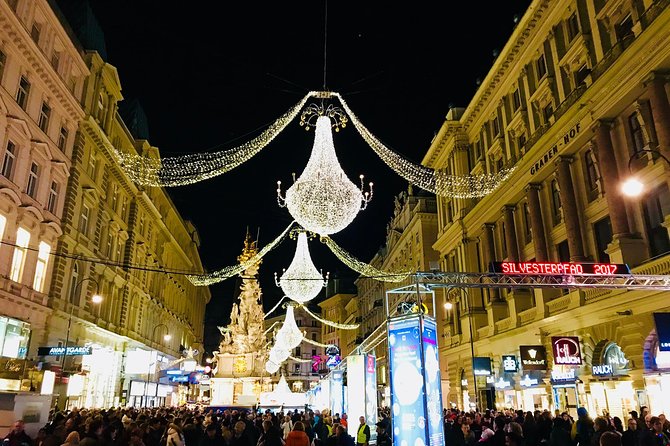
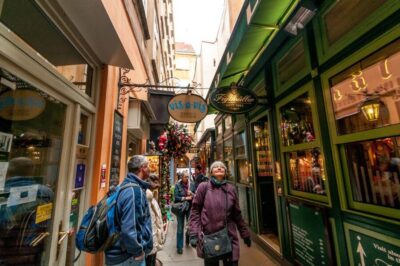
Graben and Kohlmarkt form one of Vienna’s most elegant pedestrian areas. The streets are lined with historic façades, shops, cafés, and monuments, and they lead naturally toward Stephansplatz.
This section shows modern city life layered over the old center. You can admire the architecture, notice the shopping streets, and listen to the guide explain how these routes connect the Hofburg area with the cathedral.
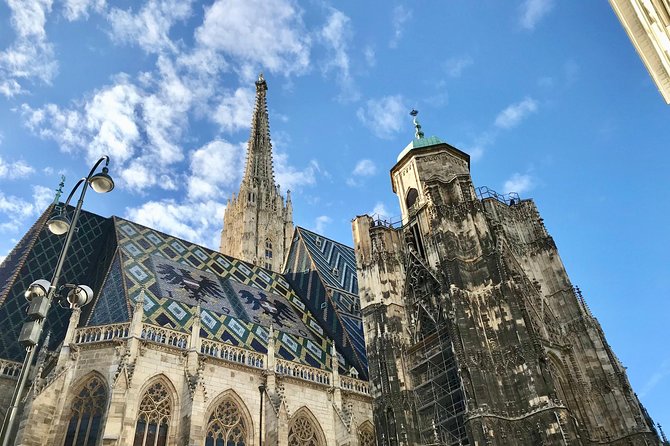
Stephansplatz is the heart of central Vienna. The square is lively and often crowded, so the audio devices are useful here. The final stop is St. Stephen’s Cathedral, Vienna’s most famous landmark and one of the clearest symbols of the city.
The tour ends at the cathedral, not with a formal visit inside. That is convenient because you can continue exploring at your own pace, enter the cathedral if you choose, find a café, or use the square as a base for the rest of your day.
How much walking should you expect?
The tour lasts about two hours and 30 minutes, but the time passes through a long chain of stops. You move from Maria-Theresien-Platz around the Ringstrasse and Hofburg area, through parks and public squares, and into the old center.
Wear comfortable shoes. A report of roughly 14,000 steps gives you a useful idea of how active the route can feel, though the exact distance will vary with the group and the guide’s pace.
This is not a good choice if walking is difficult. The activity notes call for moderate physical fitness and do not recommend the tour for people with walking disorders. You should also dress for the forecast. On cold days, a good guide may pause in places where the group can warm up, but the experience remains largely outdoors.
Vienna’s weather can change, and the tour requires suitable conditions. If poor weather causes cancellation, you are offered another date or a full refund.
What $72.56 buys you
At $72.56 per person, this is not the cheapest way to see Vienna’s center. You can walk past many of these buildings on your own for free.
The price makes more sense if you value interpretation. You are paying for a planned route, a certified local guide, a small group, audio equipment, cultural context, and practical suggestions for cafés and restaurants. You also avoid spending your first day wondering which grand building is which.
The value depends heavily on your expectations. If you want to enter the Kunsthistorisches Museum, tour the Hofburg rooms, or visit several paid attractions, this tour will feel limited because admissions are not included. If you want a clear introduction before choosing those paid sights later, the price is easier to justify.
The strongest benefit is the guide’s ability to connect small details. A monument, a former residence, a palace balcony, and a coffeehouse become part of one larger story. That is hard to reproduce with a map alone, though an independent visitor who has already studied Vienna may prefer to spend the money on admission tickets.
Who should book this walk?
I would choose this tour for a first visit, a short stay, or the opening morning of a longer Vienna trip. It is especially useful if you want historical background before visiting museums and palaces on your own.
It also suits people who like a teaching-style walk. The guide talks often, shares dates and personalities, and explains political and cultural connections. The best guides add humor, personal observations, and images to keep the information from becoming a list of names.
You should think twice if you want a hands-on activity or lots of interior visits. The route is primarily about seeing the outside of Vienna’s major sights and understanding them. The experience is not designed around tastings, performances, museum entry, or a long café break, though a guide may suggest places such as Demel and may sometimes arrange a short indoor stop.
Solo visitors, couples, families with older children, and small groups can all fit comfortably into the format. The maximum of 15 people gives you more contact with the guide than a large coach tour, while still keeping the price below many private tours.
Practical details before you go
You meet at Maria-Theresien-Platz in central Vienna at the start time you select. Several start times are available, which helps if you have a museum booking, train arrival, or evening concert to work around.
The tour ends at Stephansplatz, beside St. Stephen’s Cathedral. From there, you are well placed to continue around the old center, visit the cathedral, shop along Graben, or stop for coffee.
Confirmation is provided at booking, and a mobile ticket is available. Public transport is nearby, and service animals are allowed.
Cancellation is free up to 24 hours before the start time for a full refund. Changes or cancellations inside that 24-hour window are not accepted for a refund. The tour also requires a minimum number of participants, so if that minimum is not reached, you are offered another option or a full refund.
Should you book the Vienna Historic Center walk?
Book it if you want a well-organized first look at central Vienna, especially with a guide who can explain the Habsburgs, music, science, politics, and café culture in one continuous route.
Skip it if your main goal is to spend two and a half hours inside museums and palaces. You will see those buildings, but you generally will not go in.
For most first-time visitors who want bearings, useful recommendations, and a lively explanation of Vienna’s center, the small group and strong guiding make this a sensible opening activity. Just bring good shoes, dress for the weather, and remember that the cathedral is the beginning of your independent exploring, not the final paid attraction of the tour.
FAQ
Where does the Vienna Historic Center Walking Tour begin?
The tour begins at Maria-Theresien-Platz in central Vienna, Austria.
Where does the tour end?
It ends at Stephansplatz, beside St. Stephen’s Cathedral in the historic center.
How long does the tour last?
The tour lasts approximately two hours and 30 minutes.
How large is the group?
The tour has a maximum of 15 participants.
Is museum admission included?
No. The tour does not visit the inside of any museum, and museum admission is not included.
Is the tour offered in English?
Yes. The tour is offered in English.
What happens if the weather is poor?
The experience requires good weather. If it is canceled because of poor weather, you are offered another date or a full refund.
More walking tours in Vienna
- Vienna: Vienna Central Cemetery Guided Walking Tour
★ 4.8 · 3,307 reviews - Vienna: Guided Walking Tour of City Highlights & Hidden Gems
★ 4.9 · 2,180 reviews - Vienna: Viennese Underworld Guided Walking Tour
★ 4.7 · 1,865 reviews - Vienna: Private Walking Tour with a Local Guide
★ 4.6 · 1,420 reviews
Just reviewed in Vienna
- World War II History Vienna Old Town Private Walking Tour★ 4.8 · 9 reviews
- Vienna: Wine Tasting E-Bike Tour★ 4.9 · 46 reviews
- Vienna: Winery and Wine Tasting Tour with a Wine Expert★ 5.0 · 5 reviews
- Vienna: Unforgettable Private City Tour★ 5.0 · 7 reviews
- Vienna Urban Art Tour: Explore a different side of Vienna!★ 3.8 · 14 reviews
- Vienna: Concert by the Vienna Baroque Orchestra★ 4.6 · 56 reviews
- Vienna: Sunday Brunch Danube Cruise & Live Music★ 4.2 · 42 reviews
- Vienna Supreme Orchestra at Palais Niederösterreich★ 4.8 · 10 reviews
Vienna Old Town Walking Tours, compared.
Exclusive Vienna Old Town Highlights Walking Tour (max. 6 persons)
Read our review →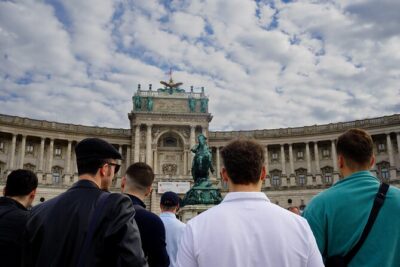
Browse the lists this tour appears in