
Reviewed · VIENNA OLD TOWN WALKING TOURS
Vienna: City Highlights Guided Walking Tour & Old Town
Vienna’s center reveals its best stories on foot, from Roman foundations and medieval lanes to Habsburg palace courtyards and the grand finish at St. Stephen’s Cathedral. This two-hour tour also slips through passageways and courtyards that are easy to miss when you explore alone.
I like the clear historical sweep, and I like the mix of famous sights with quieter corners. The walk is priced at $25 per person, which is fair for a licensed local guide and a useful first look at central Vienna. The main caution is pace: one two-hour walk cannot explain everything Vienna offers, and one Italian-language rating found the information lighter than the city deserves.
Key points
- Roman and medieval Vienna: Connect ancient Roman traces with the city’s medieval past.
- Jewish history: Walk through the area of Vienna’s former medieval Jewish quarter.
- Hofburg surroundings: Hear how the Habsburg residence works today as a museum and civic center.
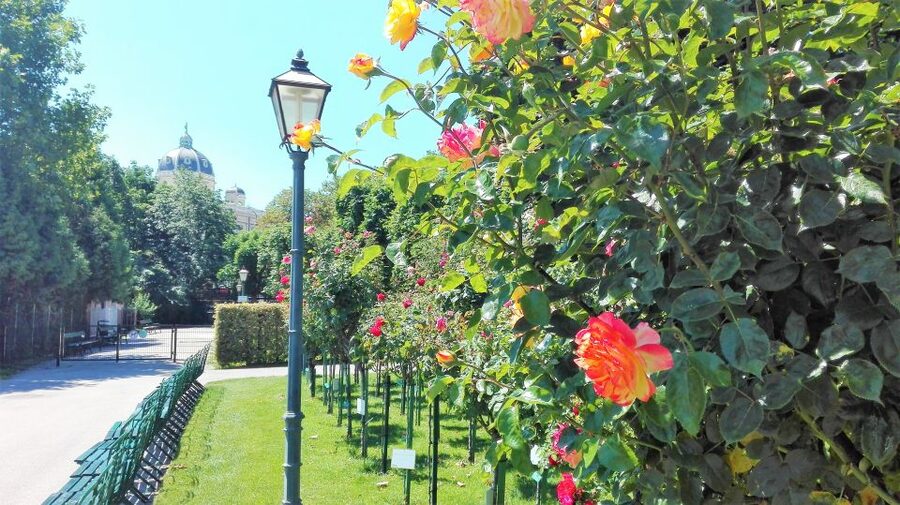
- Palace gardens: Stroll among about 3,000 rose bushes in the former palace gardens.
- Vienna food stories: Learn about Sacher cake and other local cakes worth trying.
- A practical finish: End near Stephansplatz and St. Stephen’s Cathedral, right in the old town.
A two-hour introduction to Vienna’s old town
This is a walking tour for getting your bearings quickly. You stay in Vienna’s historical center, moving between major sights and smaller lanes rather than spending time on a bus or waiting in lines at indoor attractions.
The route gives you a broad outline of Vienna. You hear about the Roman period, the Middle Ages, Jewish history, the Habsburgs, the Ring Street, palace gardens, and local cake traditions. That range is useful if you have just arrived and want a framework for later exploring.
You should think of this as an orientation walk, not a full historical course. A two-hour schedule leaves little room for long stops inside museums or detailed visits to churches and monuments. The value comes from connecting places as you walk between them.
The tour is led by a licensed local guide and is offered in English or Italian. The supplied information names Astrid Stangl as the experience provider, but it does not identify the individual guide for each departure.
More sightseeing tours of Vienna:
- Vienna: Hop-On Hop-Off Sightseeing Bus Tour in 19 Languages
★ 4.2 · 4,518 reviews - Vienna PASS: All incl. Sightseeing Pass for 85+ Attractions
★ 4.3 · 3,067 reviews - Vienna: Guided Walking Tour of City Highlights & Hidden Gems
★ 4.9 · 2,180 reviews
Starting near the Roman Museum or the art gallery
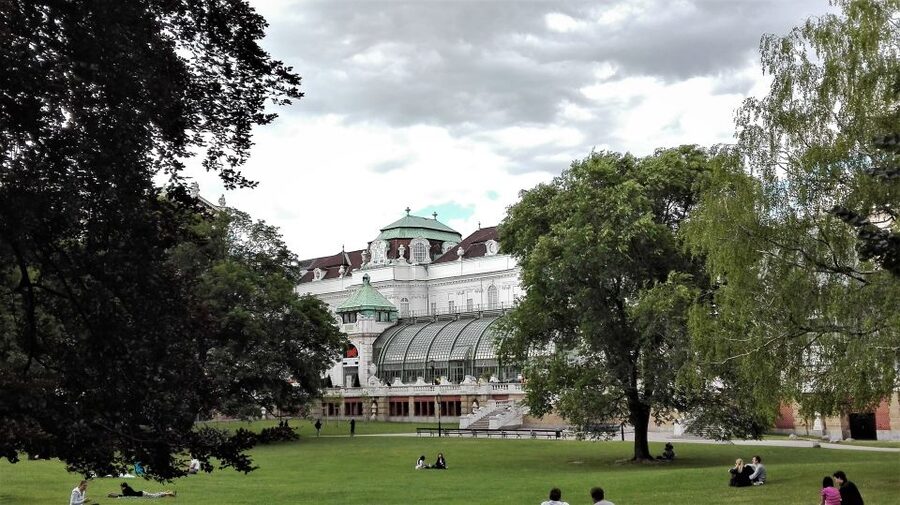
There are two possible starting points, depending on the option you book: Art Gallery Carré d’artistes Wien or the Wien Museum Römermuseum. Check your confirmation carefully, since the meeting point can vary.
The Roman Museum starting point fits the theme of the walk. Vienna’s central story did not begin with the Habsburgs. Roman settlement formed an early layer beneath the later medieval and imperial city, and the tour uses that past as part of its opening context.
If you begin near the art gallery, you are still positioned in the central city and ready to move into the old town. The two meeting choices make it especially important to arrive at the correct address. I would allow extra time for finding the meeting point, since the activity takes place in a busy central area and the walk starts at a specific time.
Roman traces and medieval streets
The first historical section links Vienna’s ancient past to the medieval city. You learn how the center developed over time, rather than seeing each building as an isolated monument.
That approach helps you read Vienna’s streets. Ancient Roman foundations, medieval routes, later palace construction, and grand nineteenth-century planning all sit close together. You may not leave with every date memorized, but you should understand why the city center has such a layered appearance.
The medieval portion is one of the strongest reasons to take the walk. Vienna can look polished and imperial at first glance, yet its older story appears in narrow lanes, passageways, and irregular courtyards. Your guide points out these details while explaining how the city grew.
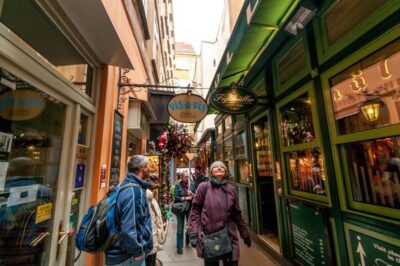
The route includes picturesque passageways and at least one lesser-seen courtyard. These places are not grand attractions with ticket booths. Their value is that they give you a quieter view of the center and show how much of Vienna’s character sits just off the main streets.
The medieval Jewish quarter
The walk also crosses the area of Vienna’s medieval Jewish quarter. This adds an important part of the city’s story that is easy to overlook if your visit focuses only on palaces and churches.
The topic gives the old town more depth. You are not simply moving from one pretty building to another. You are learning how different communities shaped the city and how Vienna’s medieval center functioned.
The supplied details do not promise an indoor museum visit or a long stop at a specific memorial. Expect historical explanation while walking through the area. If Jewish history is a main reason for your visit, use this tour as an introduction and plan a separate visit to any museum or memorial you want to explore in detail.
More old town walks in Vienna:
- Vienna: Guided Walking Tour of City Center Highlights
★ 4.7 · 4,989 reviews - Vienna Historic Center Small Group Walking Tour
★ 5.0 · 1,746 reviews - Vienna: Old Town Sightseeing Tour in a Vintage-Style E-Car
★ 4.5 · 1,107 reviews - Vienna: 30-Minute Fiaker Ride in the Old Town
★ 4.5 · 1,092 reviews
The Hofburg and the Habsburg court
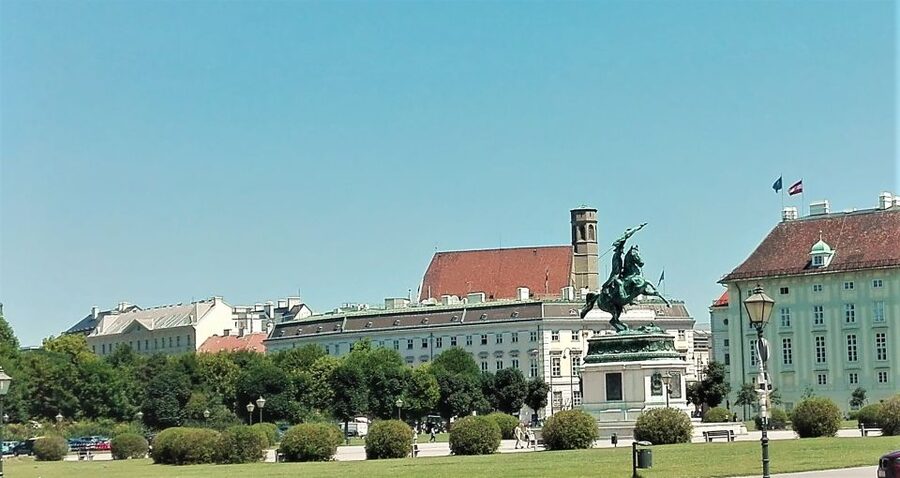
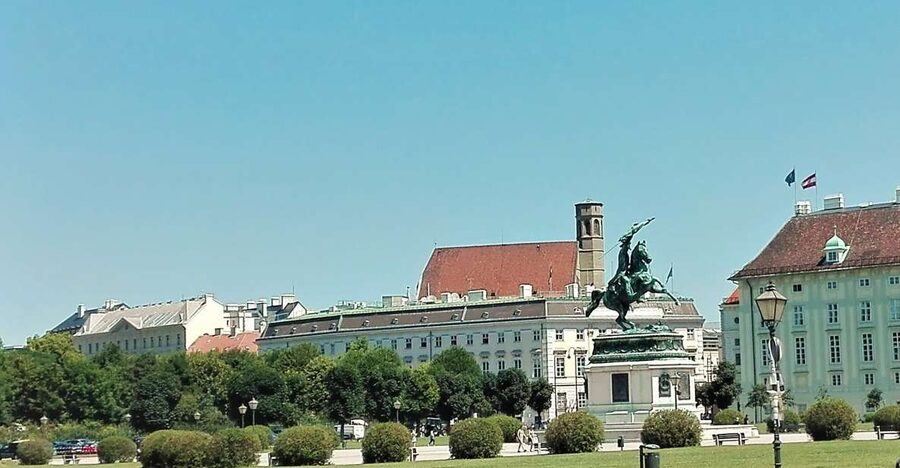
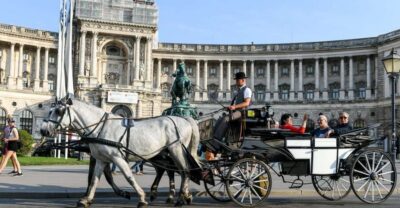
The Hofburg section shifts the focus from medieval Vienna to the Habsburg era. The palace was the residence of the Habsburgs and now contains several museums and other uses.
This is a useful place to hear both the personal and practical side of imperial power. The guide explains stories connected with former residents and points out how the complex functions today. You get context for the buildings instead of only a grand façade.
The Hofburg area is large and can feel confusing on a first visit. A walking explanation helps you understand that the palace is not one simple building with one purpose. It is a group of spaces shaped by different periods and later adapted for modern use.
Do not expect admission to the Hofburg museums to be included. The experience is a guided walk around the area, with history and orientation rather than an indoor palace tour.
Palace gardens and 3,000 roses
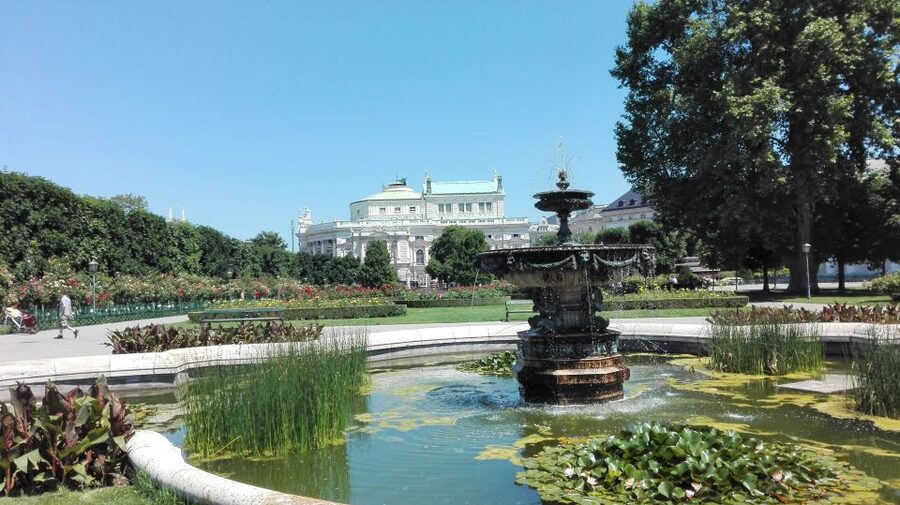
The route continues through former palace gardens, where you can pause among about 3,000 rose bushes. This is one of the walk’s pleasant changes of pace.
After Roman ruins, medieval lanes, and imperial buildings, the gardens offer room to breathe. The emphasis is not only on architecture. You also get a short outdoor break and a chance to take photographs away from the tighter streets of the old town.
The roses are a seasonal detail, so the exact appearance of the gardens can vary during the year. The information promises the gardens and the rose bushes, but it does not give a specific blooming period. If flowers are especially important to you, keep your expectations flexible.
This stop also shows how the Habsburg spaces were designed for more than government and ceremony. Gardens offered air, color, and a setting for court life. You get that sense without needing a long formal garden visit.
Ring Street and Vienna’s grand public face
The walk includes stories about the famous Ring Street and its impressive buildings. The Ring Street is central to understanding Vienna’s later image as a grand European capital.
You will hear about the buildings and the history behind the street as part of the walking route. The tour does not list interior visits, so the focus is on the urban setting and the guide’s explanation.
This part works well after the old town sections. You can compare the tighter medieval center with the wider, more formal imperial city. That contrast helps explain why Vienna feels both old and ceremonious within a fairly compact area.
Because the tour is only two hours, the Ring Street discussion will be selective. If you want detailed information on every major building, you will need more time elsewhere. Still, the overview can help you choose which buildings deserve a closer look during the rest of your stay.
Sacher cake, Capuchin Crypt, and everyday Vienna
The tour brings in food as well as architecture, with the story of Vienna’s famous Sacher cake and suggestions for other cakes to try. This is a small detail, but it makes the walk more useful for the rest of your visit.
Vienna’s café traditions are part of the city’s identity, and a quick explanation gives you a better reason to stop for cake later. The tour does not include a tasting, so budget separately for any café visit.
You also pass the Capuchin Crypt, the Habsburg family crypt. It is an important stop because it shows a different side of imperial Vienna. The palace tells you how the ruling family lived and governed. The crypt points to how the family was remembered after death.
Again, the route passes by the site rather than promising entry. If you want to see the interior, check the opening details and arrange that separately. The walk still gives you a useful location and historical connection.
Finishing at St. Stephen’s Cathedral
The tour ends at Vienna’s best-known landmark, St. Stephen’s Cathedral, in the heart of the old town. The listed end points are Stephansplatz and Schulerstraße in the 1010 district, with Stephansplatz appearing as the main finish.
This is a smart ending. Stephansplatz is central, easy to recognize, and well placed for continuing your day. You can stop for photographs, explore nearby streets, visit the cathedral if you choose, or use the square as your next reference point.
The cathedral itself is not listed as an interior visit. You should expect to see and discuss the landmark, not enter as part of the included tour. That distinction matters if you are comparing this walk with a cathedral tour.
The finish also gives the route a satisfying shape. You begin with Vienna’s early history and end beside the city’s most famous symbol. Along the way, you have covered medieval society, Jewish history, Habsburg power, gardens, public architecture, and local food.
What the $25 price gives you
At $25 per person, the tour offers reasonable value if you want a guided introduction to central Vienna. You are paying for two hours with a licensed local guide, not for museum tickets, food, or transport.
The price makes sense for a first day in the city. A guide can connect places that might otherwise seem unrelated, and the route includes several subjects in a short period. The walk also gives you ideas for what to do afterward, from cake stops to palace museums and the cathedral.
The value is lower if you already know Vienna’s center well or want detailed access to interiors. You will need additional time and separate admission for museums, the Capuchin Crypt, or the cathedral if you wish to go inside.
The overall listed rating is 4.5 from 36 ratings. The one detailed Italian-language assessment gives three out of five and describes the guide as kind and helpful, while finding the information less extensive than Vienna deserves. That is a fair warning: expect a friendly overview, but do not book this as an exhaustive lecture.
Walking comfort, language, and access
Wear comfortable shoes. The experience covers the historic center on foot, with passageways, courtyards, palace areas, and city streets included in the route.
The activity is listed as wheelchair accessible. Since the route includes walking through historic areas, confirm any specific mobility needs when booking, especially because the exact starting point depends on the selected option.
English and Italian are available. Choose the language in which you can best follow historical explanations, since the guide’s commentary is the main part of what you are buying.
The tour lasts two hours, with several possible starting times shown through availability. A short walk like this works well early in your stay, before you have filled your head with disconnected facts. It can also work on a later day if you want a final look at the center, but first-time visitors will gain the most.
Who should book this Vienna walk?
I would choose this tour if you want a compact introduction to Vienna’s center and prefer stories while walking rather than a long indoor visit. It suits first-time visitors, short-stay visitors, and anyone who wants help spotting smaller lanes and courtyards.
It is also a good fit if you care about more than imperial palaces. The Roman period, medieval Vienna, Jewish history, food traditions, and palace gardens all receive space on the route.
I would look elsewhere if you want a specialist tour focused on one subject, a cathedral interior visit, or a detailed museum experience. The two-hour format requires a broad approach, and the available information supports that expectation.
Book it if $25 feels worthwhile for a guided orientation and you can walk comfortably for two hours. Skip it if you already have a strong plan for the old town and prefer to spend the money on admission to the Hofburg museums, the Capuchin Crypt, or a café stop. For many visitors, the best use is on the first day, when the route can turn Vienna’s center into a place you understand rather than a series of handsome façades.
FAQ
How long does the Vienna walking tour last?
The tour lasts two hours.
What languages are available?
The live guide service is available in English and Italian.
Where does the tour start?
The starting point depends on the option booked. The listed choices are Art Gallery Carré d’artistes Wien and the Wien Museum Römermuseum.
Where does the tour end?
The listed ending locations are Stephansplatz and Schulerstraße, 1010 Wien, with Stephansplatz listed as the main area.
Is St. Stephen’s Cathedral visited during the tour?
The route ends at St. Stephen’s Cathedral. The information does not state that entry into the cathedral is included.
Does the tour enter the Hofburg Palace?
The tour explores the surroundings of the Hofburg and explains its past and present use. Entry into the palace museums is not listed as included.
Is the tour wheelchair accessible?
Yes, the activity is listed as wheelchair accessible.
What should I bring?
Bring comfortable shoes, since the experience is a walking tour through Vienna’s historical center.
More walking tours in Vienna
- Vienna: Vienna Central Cemetery Guided Walking Tour
★ 4.8 · 3,307 reviews - Vienna: Viennese Underworld Guided Walking Tour
★ 4.7 · 1,865 reviews - Vienna: World War II Historical Walking Tour
★ 4.8 · 1,772 reviews - Vienna: Private Walking Tour with a Local Guide
★ 4.6 · 1,420 reviews
Just reviewed in Vienna
- World War II History Vienna Old Town Private Walking Tour★ 4.8 · 9 reviews
- Vienna: Wine Tasting E-Bike Tour★ 4.9 · 46 reviews
- Vienna: Winery and Wine Tasting Tour with a Wine Expert★ 5.0 · 5 reviews
- Vienna: Unforgettable Private City Tour★ 5.0 · 7 reviews
- Vienna Urban Art Tour: Explore a different side of Vienna!★ 3.8 · 14 reviews
- Vienna: Concert by the Vienna Baroque Orchestra★ 4.6 · 56 reviews
- Vienna: Sunday Brunch Danube Cruise & Live Music★ 4.2 · 42 reviews
- Vienna Supreme Orchestra at Palais Niederösterreich★ 4.8 · 10 reviews
Vienna Old Town Walking Tours, compared.
Vienna Historic Center Small Group Walking Tour
Read our review →
Exclusive Vienna Old Town Highlights Walking Tour (max. 6 persons)
Read our review →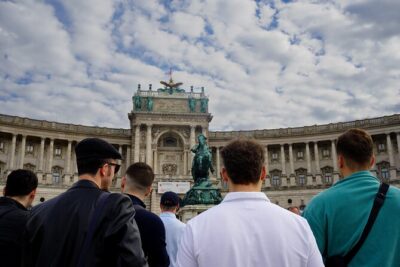
Browse the lists this tour appears in