
Reviewed · WALKING TOURS
Vienna: Highlights Walking Tour with a Local Guide
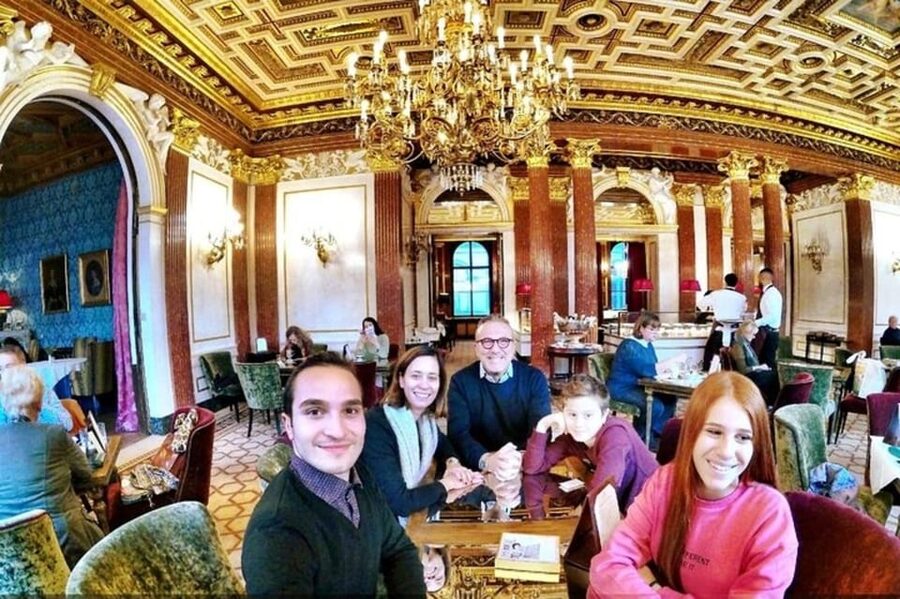
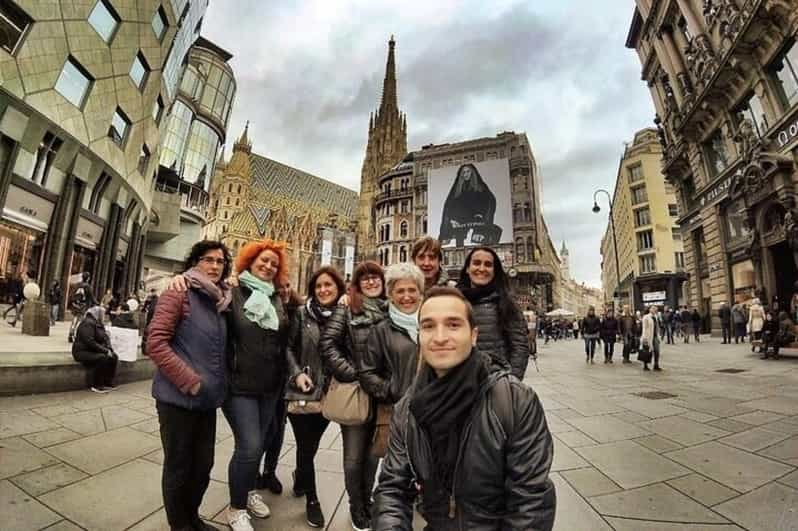
Vienna’s imperial center is best understood on foot, and this three-hour walk gives you a tidy introduction to the city’s grandest sights. I like the way it links Maria-Theresien-Platz with the Hofburg, Burgtor, and Ringstrasse, and I like that the guide adds the stories that turn large palaces and formal squares into places with meaning. A guide named Hugo has also been praised for sharing useful cafe and restaurant tips, a welcome bonus in a city where choosing where to eat can take some guesswork.
The tour is a good value at $38 per person, especially if you are new to Vienna and want a clear orientation before exploring alone. The main limitation is that the experience is primarily a walking and exterior sightseeing tour. You should not expect a full museum visit, and Spanish-language availability has caused serious problems for some bookings, so confirm your language before you pay.
Key points to know before booking
- Maria-Theresien-Platz begins the grand tour: Two major museums face the Empress Maria Theresa monument across one of Vienna’s most impressive open spaces.
- The Ringstrasse connects the main sights: You will hear how old defensive walls gave way to a ceremonial boulevard lined with City Hall, Parliament, Burgtheater, and Vienna State University.
- Burgtor links Vienna to the Napoleonic era: This neoclassical gate commemorates the defeat of Napoleon by Vienna and its allies.
- The Hofburg section is more than palace scenery: Neue Burg and Heldenplatz introduce the political and imperial center of the city.
- The experience is guide-led, not museum-led: Expect photo stops and explanations, with the Kunsthistorisches Museum viewed from its grand exterior rather than a confirmed interior visit.
- Guide quality matters: Gulam, Hugo, and Nathalie have each been singled out for humor, clear explanations, and an engaging approach.
Why this walk works as a first look at Vienna
Vienna can feel formal at first. Its center is filled with enormous buildings, wide boulevards, statues, courtyards, and palace fronts. Without context, you may see a lot of stone and leave with only a vague idea of how the pieces fit together.
This tour gives you that basic map. Starting at Babenbergerstraße 9, you move through the imperial heart of the city instead of spending three hours on disconnected photo stops. The route brings together the Hofburg complex, the Ringstrasse, Maria-Theresien-Platz, Burgtor, and the Kunsthistorisches Museum.
I especially like this kind of tour early in a Vienna visit. You can learn which sights deserve a later indoor visit, understand the layout of the old center, and get a first set of ideas for cafes and restaurants. Several guides have also added humor to the history, which helps keep the formal architecture from feeling heavy.
The three-hour length is long enough for useful detail but short enough to fit around another major activity. You will be walking for the full period, with stops for explanations, photographs, and sightseeing. Wear shoes that can handle city pavement and plan for changing weather.
More walking tours in Vienna:
- Vienna: Guided Walking Tour of City Center Highlights
★ 4.7 · 4,989 reviews - Vienna: Vienna Central Cemetery Guided Walking Tour
★ 4.8 · 3,307 reviews - Vienna: Guided Walking Tour of City Highlights & Hidden Gems
★ 4.9 · 2,180 reviews
Beginning at Neue Burg and the Hofburg
The tour starts near Babenbergerstraße 9 and moves toward Neue Burg, part of the Hofburg complex. This is one of the best places to begin because the Hofburg is not a single palace that you enter through one obvious door. It is a large group of buildings created and altered over many years.
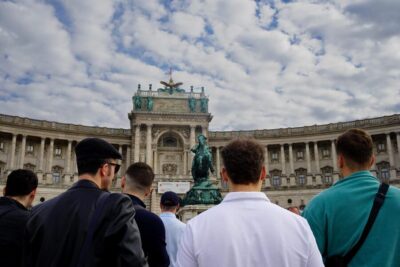
Neue Burg gives you the grand, formal side of the imperial complex. Its broad curved front helps explain the scale of Habsburg power, while the surrounding open spaces offer room for the guide to point out how the palace district developed.
The stop is listed for around 30 minutes, including a photo stop, guided commentary, and walking. That should give you time to take in the architecture without turning the visit into a rushed snapshot.
You should keep your expectations clear here. The tour provides an outside introduction to Neue Burg and the Hofburg cultural area. It does not state that interior palace rooms or collections are included, so you will need a separate ticket and visit if you want to see the Hofburg’s indoor attractions.
A curious Danube stop in the route
The planned route also includes a stop identified as the Danube in Austria. The supplied details do not explain exactly which stretch of the river you will see or how the stop connects physically to the central walking route.
That makes this one part of the experience worth clarifying before departure. Ask the guide or provider how the Danube segment is handled, especially if you are trying to understand the route in advance. You can expect a photo stop, sightseeing, and commentary, but the available information does not promise a specific viewpoint or river activity.
This is a useful reminder that the tour is designed around general orientation rather than a tightly detailed specialist route. Most of the named highlights are firmly tied to Vienna’s central monuments. The Danube entry is less specific.
Burgtor and the memory of Napoleon
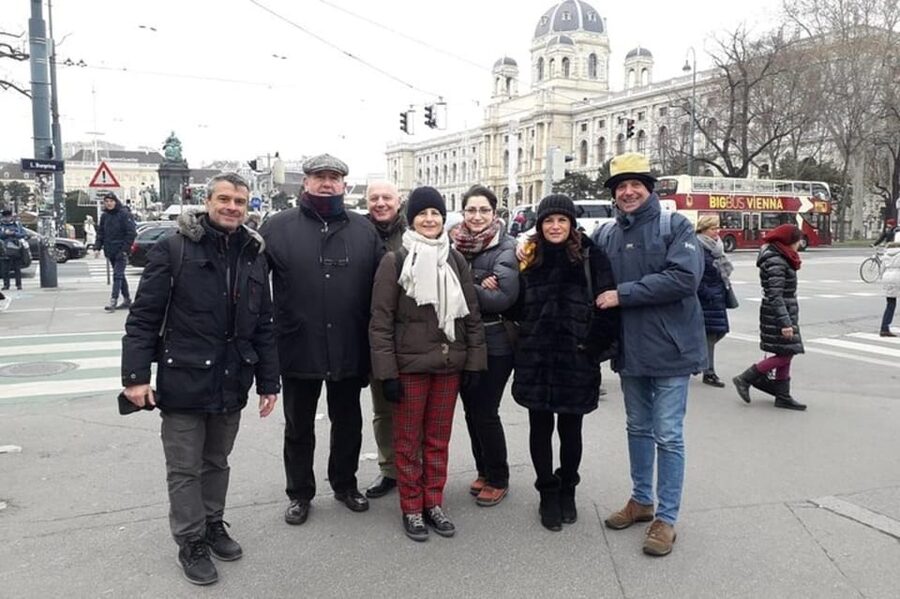
Burgtor is one of the more interesting stops because it looks like a grand gateway but also carries a military story. The neoclassical arch formed part of the old defensive edge of Vienna and commemorates the defeat of Napoleon by Vienna and its allies.
A guide can make this stop more meaningful than a quick photograph. You will see how Vienna’s defenses once marked the city boundary, then consider how the same area later became part of a ceremonial imperial center.
The gate also helps you read Vienna’s changing priorities. Medieval fortifications were not simply preserved as walls around a small city. Much of that defensive system was replaced or reshaped as Vienna expanded and adopted the Ringstrasse as a grand public boulevard.
Allow yourself a moment to look beyond the arch itself. Notice the way the gate relates to the Hofburg and Heldenplatz. The value here is not a long stop inside a monument, but the connection between war, empire, and city planning.
A few more Vienna outings worth weighing up
- Vienna Spanish Riding School Guided Tour
★ 4.7 · 6,765 reviews - Vienna: Tickets for Mozarthaus Vienna with Audio Guide
★ 4.2 · 2,344 reviews - Vienna: Viennese Underworld Guided Walking Tour
★ 4.7 · 1,865 reviews - Classic Vienna: 3-Hour Guided Bike Tour
★ 4.7 · 1,846 reviews
Kunsthistorisches Museum from the outside
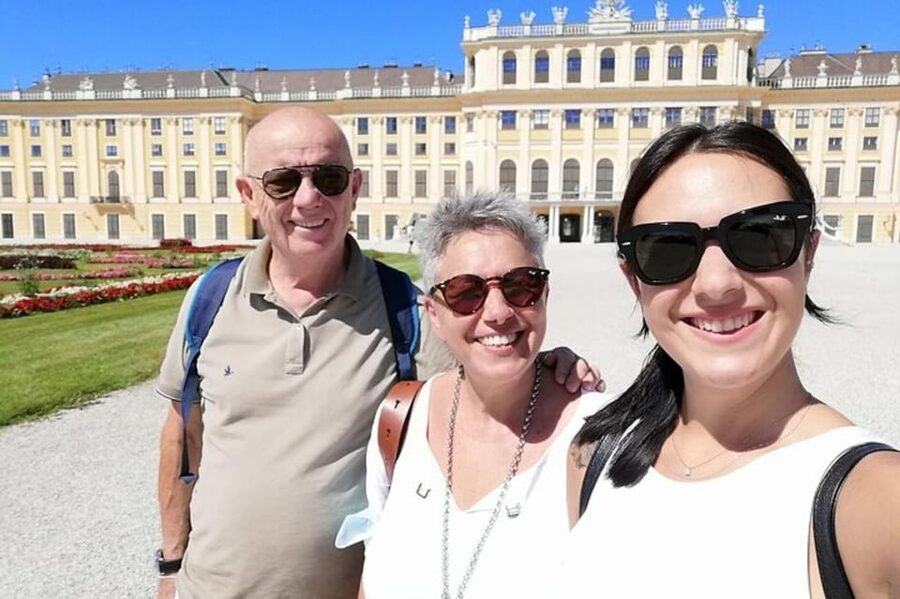
The Kunsthistorisches Museum is one of Vienna’s great museum buildings, with a palatial exterior designed to match the status of the imperial art collection inside. It is a fitting stop on a highlights walk because the building itself tells you how seriously the Habsburg court treated art and display.
The experience includes a photo stop and guided sightseeing at the museum. The information provided does not confirm admission, an interior tour, or time to see the galleries, so treat this as an architectural introduction.
That is not a minor distinction. The museum deserves a separate visit if you want to spend time with its paintings, decorative arts, and royal collections. A three-hour city walk can tell you why the building matters, but it cannot replace a proper museum visit.
I like seeing the museum in relation to Maria-Theresien-Platz. Across the square, the Natural History Museum presents a matching exterior. Together, the two buildings create one of Vienna’s clearest examples of planned imperial grandeur.
Maria-Theresien-Platz and its paired museums
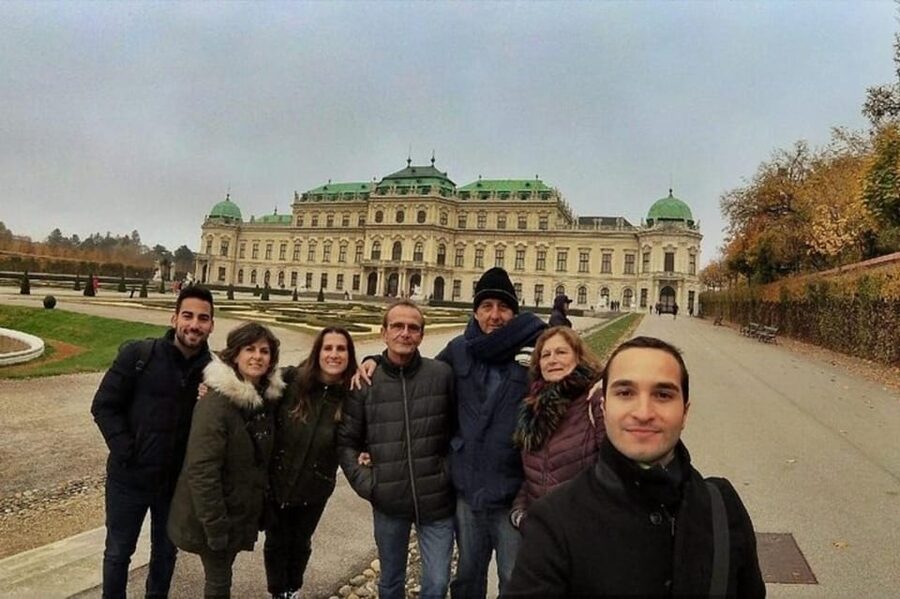
Maria-Theresien-Platz is among the most satisfying open spaces on the route. The Natural History Museum and Kunsthistorisches Museum face each other across the square, with the large monument to Empress Maria Theresa at the center.
The arrangement feels deliberate and theatrical. It gives you a clear view of how architecture, public space, and royal memory worked together. The guide can explain the square’s past while you look from one matching museum facade to the other.
This is also a practical place for photographs. You can frame the central monument with either museum behind it, then take in the full scale of the square. If you want to return later, both museums are easy to identify from here.
The tour’s six main segments are each listed at about 30 minutes. That does not mean you will remain frozen in one spot for half an hour. The time includes walking between nearby sights, commentary, and photo opportunities. The pace should suit most people who are comfortable with a steady urban walk, but you may find it tiring if you need frequent breaks.
Following the Ringstrasse’s architectural parade
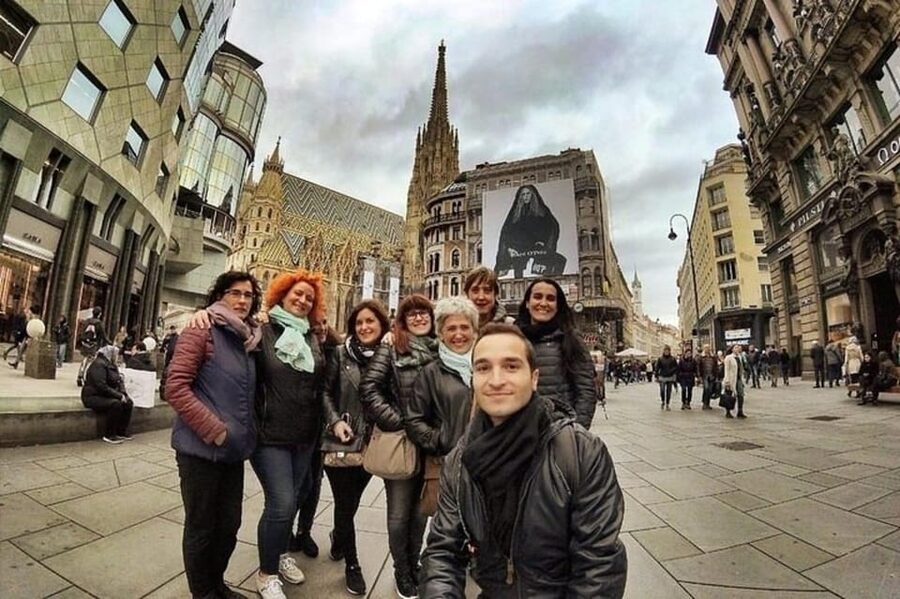
The Ringstrasse is the route’s organizing idea. Built where medieval fortifications once helped protect Vienna, it became a broad boulevard lined with public buildings and imperial-era architecture.
Your guide points out important buildings such as City Hall, Parliament, Burgtheater, and Vienna State University. These structures represent different architectural styles, which is part of the fun. Vienna did not build the boulevard in one plain style. Its designers used classical, Gothic, Renaissance, and other references to give each institution a distinct public face.
A guide is useful here because the buildings can blur together when you are moving past them on your own. City Hall, Parliament, and the Burgtheater each have a different civic role, and their placement along the boulevard says something about how Vienna presented itself in the nineteenth century.
The Ringstrasse stop is also a good point to ask questions. If a building catches your eye, ask what it is used for and why it was built in that style. The tour is live and guide-led, so your experience will depend in part on how much conversation your group creates.
St. Michael’s Church and the older Vienna
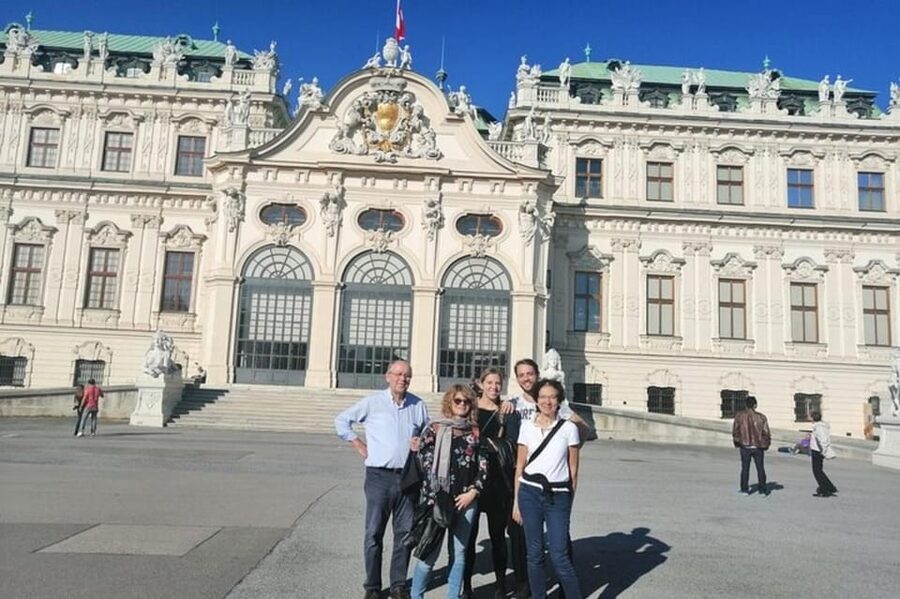
St. Michael’s Church provides a useful contrast to the imperial buildings around it. It is one of Vienna’s oldest churches and is described as Romanesque, though the building’s long life includes later changes.
The church helps you see that Vienna did not begin with the Ringstrasse or the grand Habsburg expansions. Older religious buildings remain woven into the later palace district, giving the center several historical layers within a short walk.
The available route description places the church near the end of the experience, after the Hofburg and Heldenplatz. The church is an atmospheric final stop, but the supplied details do not promise an interior visit or a religious service. Expect guided sightseeing and historical context rather than a full church tour.
This is one of the tour’s better contrasts: broad imperial spaces on one side, an old church with a much longer story on the other. You finish with a stronger sense that Vienna is not just a city of palaces.
Heldenplatz and the final view of the Hofburg
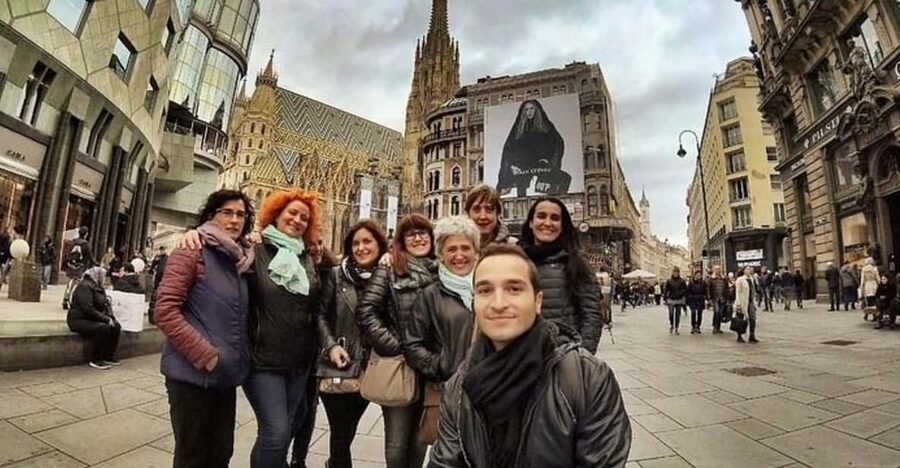
Heldenplatz is an open public square tied closely to Vienna’s political and imperial past. Its position beside the Hofburg makes it an important final setting for the tour.
The square gives you room to step back from the buildings and see how the palace complex, Neue Burg, and surrounding ceremonial spaces relate to each other. After the narrower focus of gates, museums, and church architecture, Heldenplatz offers a broad closing view.
A guide can also help you handle the difficult parts of Vienna’s past with care. The information supplied for this tour does not list every historical topic covered, so you should not assume a detailed political-history lecture. Still, the setting itself makes Heldenplatz a worthwhile stop for understanding how public space was used by rulers and later by the wider city.
Guides, languages, and the human side of the tour
The experience is available in English, French, and Spanish, with private groups offered as an option. Named guides associated with highly praised tours include Gulam, Hugo, and Nathalie.
Gulam has been described as informative and funny, with enough historical detail to keep the walk entertaining. Hugo is noted for humor as well as practical cafe and restaurant suggestions. Nathalie has been praised for sharing Vienna’s heritage, culture, food, and history with energy and warmth.
Those details matter because a walking tour rises or falls on the guide. The same route can feel dry with a script-reading guide and lively with someone who responds to questions and relates monuments to everyday life.
There is also a clear warning for Spanish-speaking groups. At least two recent bookings in Spanish were canceled very late because no Spanish-speaking guide was available. One group was offered a partial refund to switch to English, but that did not work because most of the party did not speak English. If Spanish is essential for your group, confirm the language directly and do not assume that selecting it guarantees a guide.
Is $38 a fair price?
At $38 per person, this is reasonably priced for a three-hour guided walk through central Vienna. You are paying for a live guide, a planned route, and the chance to ask questions rather than simply following an audio app.
The value is strongest if you are visiting Vienna for the first time, want an overview before choosing museums, or prefer learning the city through stories and architecture. It is also attractive for solo visitors and small groups who want structure without committing to a full-day excursion.
The value is weaker if you already know the Hofburg and Ringstrasse well, or if your main goal is to spend hours inside the Kunsthistorisches Museum. Museum admission is not listed among the inclusions, and the tour is not designed as an in-depth interior visit.
You can cancel up to 24 hours in advance for a full refund, and the reserve-now, pay-later option keeps your plans flexible. The tour is listed as wheelchair accessible, though a person with specific mobility needs should still confirm the exact route and stopping arrangements.
Who should book this Vienna walk?
I would choose this tour for a first or second day in Vienna. It gives you a practical city-center framework and shows you which grand buildings you may want to revisit at a slower pace.
It suits you best if you enjoy architecture, imperial history, public squares, and live explanation. It is also a good match if you want a short orientation rather than a full-day museum program.
I would hesitate if you need a guaranteed Spanish-language experience without further confirmation, or if you expect entry into every building named along the route. The tour offers sightseeing and guided commentary, not a collection of full indoor visits.
FAQ
Where does the tour begin?
Meet your guide at Babenbergerstraße 9 in Vienna.
How long does the walking tour last?
The tour lasts three hours.
Which languages are available?
The live guide is available in English, French, and Spanish. Spanish-speaking groups should confirm availability because some bookings have had last-minute guide changes or cancellations.
Is the tour private or shared?
You can select a private group option. A group walking tour is also available, depending on the option you choose.
Does the price include museum admission?
The listed inclusions cover the walking tour and guide. Museum admission is not included in the stated information, so expect the Kunsthistorisches Museum to be a guided exterior and photo stop unless your booking says otherwise.
Is the tour wheelchair accessible?
Yes, the activity is listed as wheelchair accessible. You can still confirm the specific route and stopping points if you have particular accessibility needs.
Should you book it?
Book this walk if you want a well-organized introduction to Vienna’s imperial center for $38. The route covers the city’s major visual markers, and a good guide can add the humor, food tips, and historical links that make the architecture easier to understand.
Before booking, confirm the guide language and remember that this is an outdoor highlights tour, not a museum pass. With those expectations in place, it is a sensible way to get your bearings fast and decide where to spend the rest of your Vienna visit.
Just reviewed in Vienna
- World War II History Vienna Old Town Private Walking Tour★ 4.8 · 9 reviews
- Vienna: Wine Tasting E-Bike Tour★ 4.9 · 46 reviews
- Vienna: Winery and Wine Tasting Tour with a Wine Expert★ 5.0 · 5 reviews
- Vienna: Unforgettable Private City Tour★ 5.0 · 7 reviews
- Vienna Urban Art Tour: Explore a different side of Vienna!★ 3.8 · 14 reviews
- Vienna: Concert by the Vienna Baroque Orchestra★ 4.6 · 56 reviews
- Vienna: Sunday Brunch Danube Cruise & Live Music★ 4.2 · 42 reviews
- Vienna Supreme Orchestra at Palais Niederösterreich★ 4.8 · 10 reviews
Walking Tours, compared.
Guided Walking Tour of City Highlights & Hidden Gems
Read our review →
Vienna Historic Center Small Group Walking Tour
Read our review →
Browse the lists this tour appears in