
Reviewed · BELVEDERE PALACE TOURS
Private Klimt & Vienna Art Walk — From Baroque to Secession
Vienna’s artistic story comes into focus on this private walk, which links Klimt’s Kiss at the Belvedere with the Beethoven Frieze at the Secession Building. Along the way, you move from Prince Eugene’s Baroque palace gardens to Otto Wagner’s Art Nouveau metro station and the grand Musikverein.
I like the private format, since the guide can adjust the pace and answer questions without a large group slowing things down. I also like the useful citywide sweep: you see major sights, ride the Metro if needed, and connect art with Vienna’s political and social past. The main drawback is that admission fees are extra, and four hours of walking can be demanding.
Key points to know before booking
- Klimt’s Kiss is the star attraction: The Belvedere visit gives you a direct look at Vienna’s most famous painting, with skip-the-line assistance included but museum admission priced separately.
- The tour links two Klimt works: At the Secession Building, you see the Beethoven Frieze, a very different work from the gilded romance of The Kiss.
- You cover a lot of Vienna: Belvedere, Schwarzenbergplatz, Karlskirche, Karlsplatz, the Musikverein, Secession, and Naschmarkt fit into one half-day.
- Walter is the main personality to consider: His art and history talks are highly detailed, but he also shares personal political views and uses humor that may not suit everyone.
- Pickup keeps the morning simple: Collection is offered from hotels, holiday rentals, Vienna’s main train stations, and the Reichsbrücke pier.
- Private means flexible, not effortless: The guide can slow down for a group member, but you still need moderate fitness and comfortable shoes.
From gilded romance to rebellious Art Nouveau
This tour works because it treats Vienna as more than a collection of museums. You begin with the Baroque world of Prince Eugene, move through the imperial city’s grand avenues, and finish with the artistic rebellion of around 1900.
That change matters. Klimt did not appear out of nowhere. His work grew from a city filled with court ceremony, Catholic decoration, wealthy patrons, new construction, and artists eager to break old rules. A good guide can help you see why a golden painting at the Belvedere and a strange, symbolic wall frieze at the Secession belong in the same story.
You meet at 9:30 in the morning or 2:00 in the afternoon. Pickup is available at hotels and holiday rentals in Vienna, the Reichsbrücke pier, Vienna Hauptbahnhof, and Vienna Westbahnhof. Other meeting points can be arranged.
The tour is private for your group, with up to eight people. That is a useful size for an art tour. You can stop to ask why a painting looks the way it does, or request more context about a building, without waiting for a coach group to move on.
More Belvedere and Klimt visits:
- Entry Ticket Upper Belvedere, Klimt’s Kiss & Permanent Collection
★ 4.5 · 831 reviews - Vienna: Lower Belvedere Entry Ticket & Temporary Exhibitions
★ 4.1 · 275 reviews - Vienna: Belvedere Palace Skip-the-Line Tour
★ 4.9 · 197 reviews
Belvedere Palace and Klimt’s Kiss
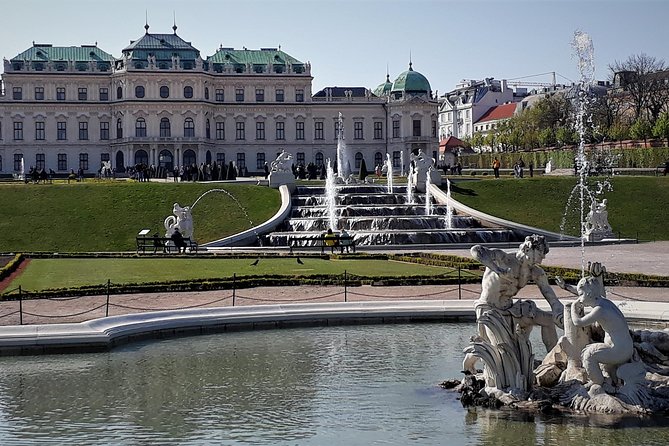
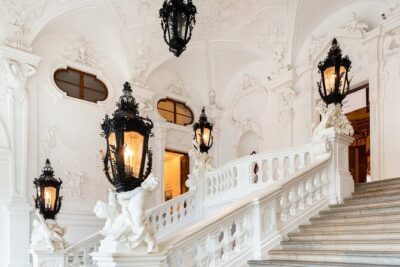
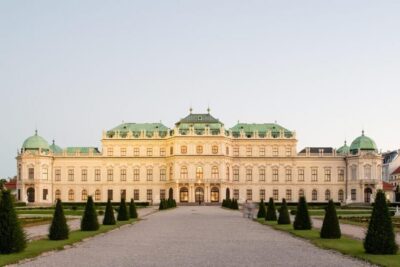
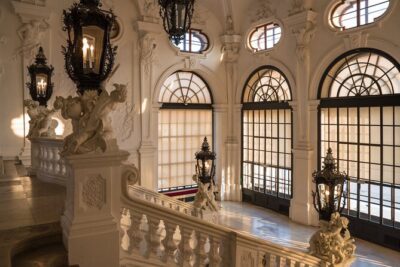
The first major stop is the Belvedere Museum. Its wrought-iron gates open toward one of Vienna’s finest Baroque garden settings, with the Upper Belvedere placed above the Lower Belvedere on a carefully arranged slope.
The gardens were designed to impress from a distance. As you walk downhill, the guide explains the three levels and the visual tricks that make the palace seem more grand and spacious. Fountains, terraces, and views work together in a setting shaped by the taste of Prince Eugene of Savoy.
The guide also points out how Prince Eugene brought some of the courtly style associated with Versailles to Vienna, though on a smaller scale. The garden room and honor court at the Lower Belvedere help you understand that this was not just a house. It was a stage for power, ceremony, and display.
The main reason to come is the Upper Belvedere collection, home to Gustav Klimt’s The Kiss. The work is easy to recognize from reproductions, but seeing it in the museum gives the painting a different weight. The gold surface, patterned clothing, and intimate pose occupy a real room rather than a postcard.
The visit is listed at about 40 minutes. That is enough for a focused look at Klimt and the building, but not enough for a leisurely survey of every gallery. If you want a full museum visit, plan separate time before or after the tour.
Admission to the Upper Belvedere is not included. Skip-the-line service is included, which can be valuable at a popular museum, but it does not mean the museum ticket costs nothing. Confirm the current ticket arrangements when booking so you know exactly what you need to purchase.
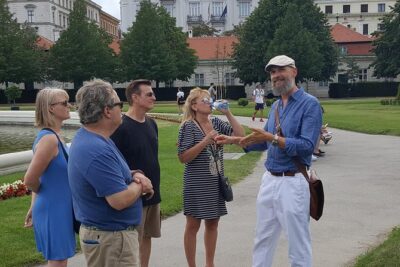
The guide’s role here is one of the strongest parts of the experience. Walter, who leads many of these tours, explains Klimt’s life, his friends, and the artistic setting around him. The best comments connect the painting to Vienna around 1900 instead of treating it as an isolated golden object.
Schwarzenbergplatz and Vienna’s imperial scale
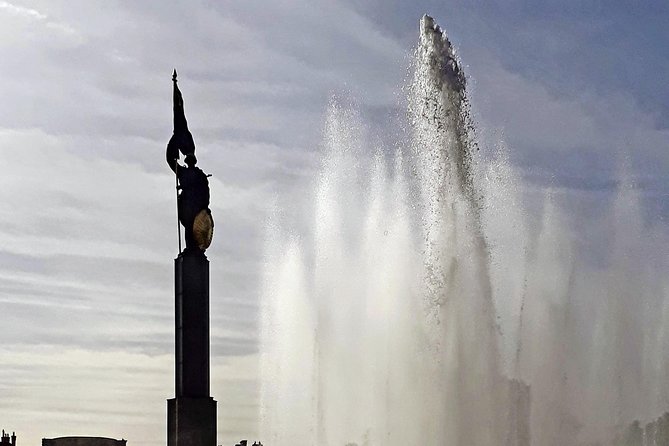
After the palace, the route heads toward Schwarzenbergplatz. This broad square is dominated by the Soviet Memorial and surrounded by buildings from Vienna’s building boom at the end of the 19th century.
It is a good pause between the two museums. The square lets you see how Vienna changed from a court city into a modern capital. Grand facades, traffic routes, monuments, and political symbols share the same space.
The Soviet Memorial adds another layer. Its presence offers a chance to discuss the postwar period and Austria’s position between East and West. This is also where the guide’s personal approach becomes important. Walter is comfortable discussing politics and Austria’s sometimes skeptical attitude toward NATO and Russia.
Some people will enjoy that extra context. Others may prefer a tour that keeps personal political opinions out of the conversation. The company openly allows its guides to share views as part of a private experience, so you should book with that in mind. If you want strictly neutral commentary, this may not be your ideal match.
Karlskirche, Karlsplatz, and the year 1900
Karlskirche provides the next major change in style. This grand Baroque church was built to impress and helps set the mood for Vienna’s 18th-century glory.
You may not spend a long time inside, but even from outside the church gives the route a strong visual anchor. Its scale and decoration show the confidence of the Habsburg era. The guide uses it to explain the period before Klimt, which makes the later Art Nouveau buildings easier to understand.
At Karlsplatz, the Otto Wagner metro station offers a sharp contrast. It is functional transport architecture, yet its ornament and proportions make it a work of art. Built around 1900, the station reflects Vienna’s interest in clean lines, new materials, and modern urban life, while still retaining decorative detail.
This is one of the tour’s most useful connections. You do not simply see a palace, then a museum, then a metro stop. You watch Vienna change its mind about what beauty should look like.
The route also passes the Musikverein, home of the Vienna Philharmonic. Its Great Hall, often called the Golden Hall, is famous for its acoustics and formal interior. This stop helps show how music, architecture, court culture, and public prestige all worked together in the city.
A concert is not part of the tour, and the description does not promise an interior visit. Treat it as an exterior and city-history stop unless your guide tells you otherwise.
More walking tours in Vienna:
- Vienna: Guided Walking Tour of City Center Highlights
★ 4.7 · 4,989 reviews - Vienna: Vienna Central Cemetery Guided Walking Tour
★ 4.8 · 3,307 reviews - Vienna: Guided Walking Tour of City Highlights & Hidden Gems
★ 4.9 · 2,180 reviews - Vienna: Viennese Underworld Guided Walking Tour
★ 4.7 · 1,865 reviews
The Secession Building and the Beethoven Frieze
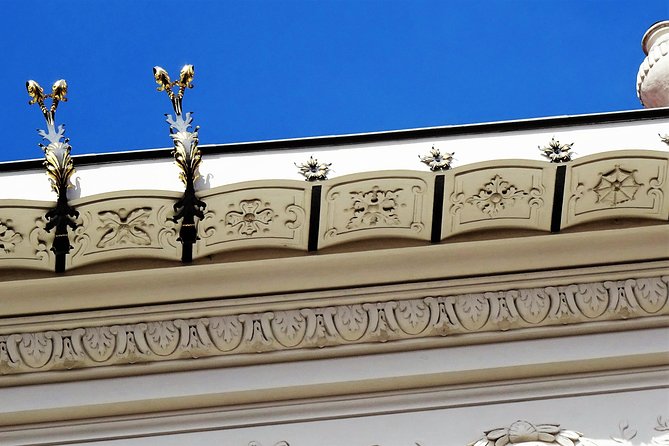
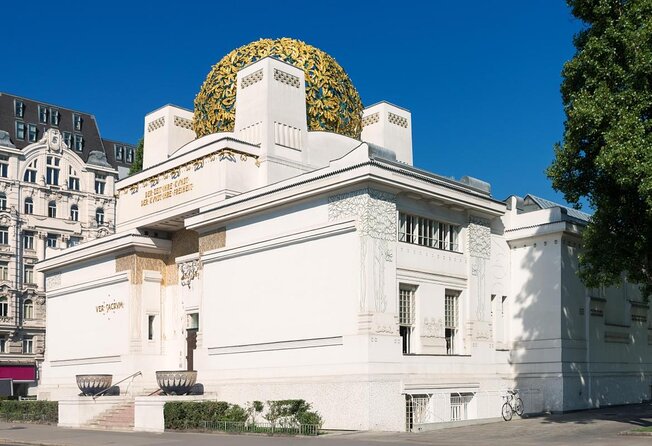
The Secession Building is the tour’s second essential art stop. Its dome of gilded laurel leaves and unusual white exterior announce a break with Vienna’s established art institutions.
The building was created by artists who wanted freedom from the traditional fine-art establishment. In that sense, it is not just a museum. It is an architectural statement about artistic independence.
Inside, Klimt’s Beethoven Frieze gives you a very different experience from The Kiss. The painting was made directly on the walls for an exhibition celebrating Beethoven. It uses light materials and was intended for the exhibition rather than as a conventional permanent canvas.
The subject moves through a symbolic search for happiness and ends with what the tour describes as a kiss to the world. The work is longer, stranger, and more allegorical than the Belvedere painting. You need time to look at its figures and symbols rather than simply admire its surface.
Admission to the Secession is not included. Allow for that extra cost when comparing the tour with a self-guided visit. The benefit here is the explanation. Without context, the Beethoven Frieze can feel puzzling. With a guide, its imagery and purpose become easier to follow.
Several people who have taken this route singled out the Beethoven Frieze as a highlight. I can see why. The Kiss is the famous image, but the Secession visit gives you a better sense of Klimt as an ambitious artist working within a larger movement.
Naschmarkt and the final stretch
The walk finishes near the Naschmarkt. In its current form, the market dates to 1915 and combines food stalls with an international range of cooking.
This is not presented as a full food tour, and lunch is not included. Still, it is a practical place to end. You can stop for a snack, arrange an outdoor meal, or continue exploring on your own.
The market also gives the route a more everyday ending. You have seen palaces, monuments, churches, concert halls, and museums. At Naschmarkt, Vienna becomes a place to eat and meet rather than a city designed only for imperial display.
Ask your guide about the best way to continue from the market, especially if you have an afternoon reservation elsewhere. The tour’s timing can shift with walking speed, museum access, weather, and questions.
How much walking and public transport to expect
This is a walking tour with a fair amount of ground to cover. You need moderate physical fitness, and comfortable shoes are essential. One review describes the walking and duration as well balanced, while another notes that a second walking tour on the same day made the pace feel more difficult.
The route may use the Vienna Metro, particularly when that helps link the main sights. Public transportation is not included, so carry a ticket or be prepared to buy one. The Metro ride is not just a transfer. The guide may use it to explain Vienna’s transport system, architecture, and city development.
The private setup helps if one person in your group walks more slowly. Walter has adjusted the pace for a group member before, and the guide’s response suggests that adapting to the group is part of the service.
Still, do not book this expecting a gentle museum visit. You are moving between districts and styles. In wet weather, the outdoor sections become less comfortable, though the route can still work if you dress properly.
The guides and their style
Walter is the guide most closely associated with the experience, while Wolfgang has also led it. Both are presented as Austria-licensed guides, and the strongest praise centers on their command of art, Austrian history, and the connections between the two.
Walter’s style is closer to a lecturer than a casual companion. That can be a major advantage if you want a serious explanation of Klimt, Freud’s Vienna, Art Nouveau, and the political setting around the city’s monuments.
His delivery is not for everyone. His humor can feel dated, including jokes that some people may find uncomfortable. He also shares personal opinions on political subjects. I would not call that a hidden issue, since it is part of how the private tour is presented, but it is worth considering before you book.
The upside is that the conversation can go beyond standard sightseeing. You can ask about Austria’s relationship with its neighbors, the Soviet period, artistic rebellion, or the reasons Vienna looks the way it does. The downside is that the guide’s personality may occupy more space than you want.
Price, admissions, and overall value
The price is $372.47 per group of up to eight people. For a full group, that is a sensible private-tour price because the cost is shared rather than charged per person. For one or two people, the per-person cost is much higher.
You also need to budget for admissions to the Upper Belvedere and Secession Building. Public transportation and personal expenses are extra. That means the advertised group price is not the full cost of the half-day.
The value depends on what you want. If you only want to see The Kiss, buying a museum ticket and visiting independently will cost less. If you want someone to explain the painting, place it beside the Beethoven Frieze, arrange the route through several parts of Vienna, and collect you from your hotel, the private format makes more sense.
A group of four to eight art-minded people gets the best financial value. A couple may still find it worthwhile if they care about Klimt and want a detailed introduction to Vienna rather than a quick photo stop.
The tour is also efficient. In about four hours, you cover several major sights that would require more planning on your own. You will not study every room in every museum, but you will get a connected half-day rather than a series of unrelated visits.
Who should book this Vienna art walk
Book it if you want:
- A focused introduction to Klimt and Vienna around 1900
- A private guide who can answer detailed questions
- Hotel, train station, or pier pickup
- A tour that links Baroque architecture with Art Nouveau
- A practical first look at the Belvedere, Secession, Karlsplatz, and Naschmarkt
- A guide comfortable discussing politics and personal interpretation
Think twice if you want:
- A quiet, strictly neutral tour
- A slow museum visit with lots of free time
- No extra admission costs
- Minimal walking
- A guide whose humor and opinions stay completely in the background
The free cancellation policy allows cancellation up to 24 hours before the start for a full refund. Changes or cancellations inside that period are not accepted for a refund.
Should you book it?
I would book this tour if Klimt is a major reason you are visiting Vienna and you want the painting explained within the city that produced it. The pairing of The Kiss and the Beethoven Frieze is especially worthwhile, and the Baroque-to-Art-Nouveau route gives the half-day a clear purpose.
I would choose a different option if you want only museum time, dislike political discussion, or have limited mobility. For an art-focused group of four or more, the private price is easier to justify. For a couple, book it for the guide’s interpretation and the efficient route, not simply for entry to the two museums.
FAQ
How long does the tour last?
The tour lasts approximately four hours. The individual stops and total timing can vary with walking pace, museum access, weather, and questions.
What time does the tour start?
You can choose a 9:30 a.m. start or a 2:00 p.m. start.
Is hotel pickup available?
Yes. Pickup is offered from hotels and vacation rentals in Vienna, the Reichsbrücke pier, Vienna Hauptbahnhof, and Vienna Westbahnhof. Other meeting points can be arranged.
Are museum admissions included?
No. Admission to the Upper Belvedere and the Secession Building is not included. Skip-the-line assistance is included.
Is public transportation included?
No. Public transportation is not included, even if the route uses the Vienna Metro.
How many people can join the private tour?
The tour is private and is offered for one group of up to eight people. Only your group participates.
Just reviewed in Vienna
- World War II History Vienna Old Town Private Walking Tour★ 4.8 · 9 reviews
- Vienna: Wine Tasting E-Bike Tour★ 4.9 · 46 reviews
- Vienna: Winery and Wine Tasting Tour with a Wine Expert★ 5.0 · 5 reviews
- Vienna: Unforgettable Private City Tour★ 5.0 · 7 reviews
- Vienna Urban Art Tour: Explore a different side of Vienna!★ 3.8 · 14 reviews
- Vienna: Concert by the Vienna Baroque Orchestra★ 4.6 · 56 reviews
- Vienna: Sunday Brunch Danube Cruise & Live Music★ 4.2 · 42 reviews
- Vienna Supreme Orchestra at Palais Niederösterreich★ 4.8 · 10 reviews
Belvedere Palace Tours, compared.
Entry Ticket Upper Belvedere, Klimt’s Kiss & Permanent Collection
Read our review →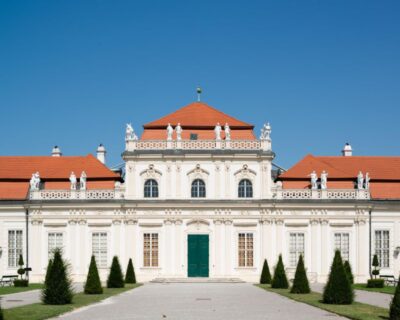
Skip-the-line Upper Belvedere Tickets and Guided Tour Vienna
Read our review →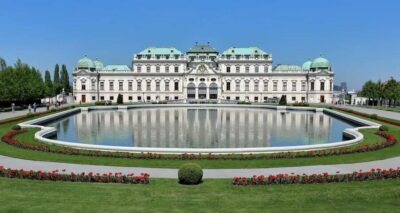
Belvedere Palace and Museum Tour
Read our review →Skip-the-line Upper Belvedere Tickets and Guided Tour Vienna
Read our review →
Browse the lists this tour appears in