
Reviewed · JEWISH VIENNA TOURS
Vienna: Jewish Life in Leopoldstadt 2-Hour Walking Tour
Leopoldstadt holds some of Vienna’s most important Jewish stories, yet many visitors pass through without looking beyond the grand center. This two-hour walk traces old and new Jewish life between the Danube Canal and the district itself, bringing attention to former synagogues, community institutions, and the memorial plaques called the Path of Remembrance.
I like the focus on places rather than a classroom lecture, and I like the price: $25 buys a certified guide and a concentrated look at a part of Vienna that many sightseeing routes skip. The main limitation is clear: the tour is in German, and synagogue entry, food, drinks, and transfers are not included.
Key points at a glance
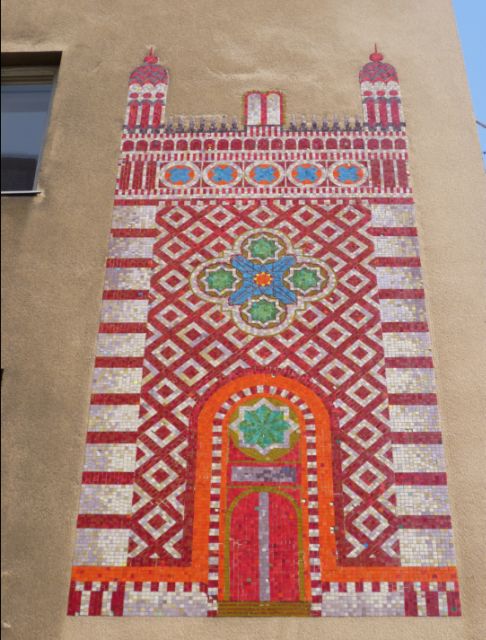
- Leopoldstadt’s former Jewish center: See how the district once supported a large Jewish community and many religious and social institutions.
- A walk beyond central Vienna: The route leaves the usual tourist circuit for the area between the Danube Canal and Leopoldstadt.
- Past and present together: Learn about Jewish life at the start of the 20th century, then consider how Jewish people live in Vienna today.
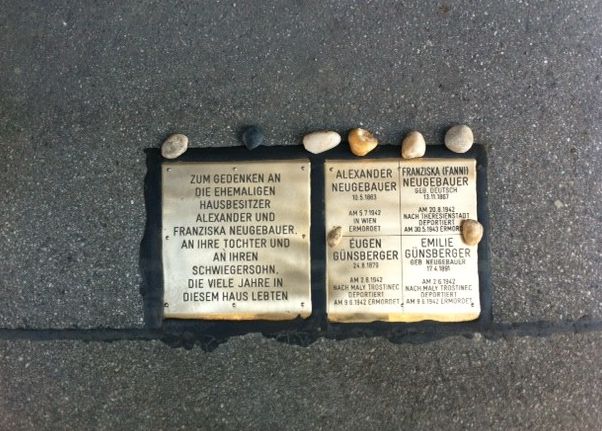
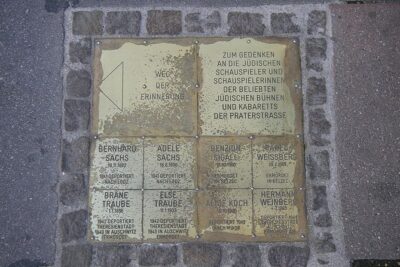
- The Path of Remembrance: Commemorative plaques give the walk a visible, street-level connection to memory and loss.
- German-speaking guidance: The tour is led in German by a certified guide, with Frau Timmermann praised for her commitment and knowledge.
- Simple access: Meet outside the U2 Taborstraße station at Obere Augartenstraße 74. The tour is wheelchair accessible.
Why Leopoldstadt gives this walk its meaning
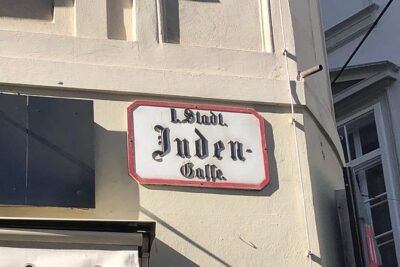
Leopoldstadt is not simply a convenient backdrop. The district, located between the Danube Canal and the Danube, was once a major center of Jewish life in Vienna. That makes it a useful place to understand how a community functioned in daily life, not only how it is remembered after the Second World War.
The walk focuses on the beginning of the 20th century, when Jewish life shaped the district’s religious, social, and community institutions. You are not being shown only one isolated monument. Instead, the route helps you connect houses of worship with the wider network of institutions that supported community life.
That approach is one of the tour’s strongest features. A synagogue tells you about worship. A district tells you more. Streets, buildings, plaques, and public spaces can show where people lived, gathered, organized, and belonged.
You should also expect a serious tone. The subject includes the destruction of Jewish life during the Nazi period and the continuing work of remembrance. This is not a light city stroll with a few historical facts added for color. It asks you to pay attention to what once existed, what disappeared, and what remains today.
More Jewish Vienna walks:
- Jewish Vienna: City Synagogue Guided Tour
★ 4.6 · 208 reviews - Vienna: Jewish Museum Vienna and Museum Judenplatz Tickets
★ 4.5 · 170 reviews - Jewish Vienna Walking Tour
★ 5.0 · 36 reviews
Starting at Taborstraße and entering the district
The meeting point is outside the U2 station at Taborstraße, at Obere Augartenstraße 74. This is practical for visitors because you can reach the start by Vienna’s underground system rather than arranging a taxi or private transfer.
Arrive with enough time to find the correct exit. The instructions specify the Taborstraße exit, so do not simply leave the station at the first opening and assume you are in the right place. The tour does not include transfers, but the central meeting point keeps that extra cost out of the $25 price.
From here, the guide sets the geographic stage. You learn how the area between the Danube Canal and Leopoldstadt fits into Vienna and why this district became such an important place for Jewish life. That orientation matters. Without it, the later plaques and buildings could feel like scattered points. With it, you can read the area as a former community center.
The walk is wheelchair accessible, which is useful for anyone who needs a route designed with access in mind. Still, a walking tour means you should wear comfortable shoes and prepare for two hours on foot. The supplied details confirm accessibility, but they do not specify the exact surface, rest stops, or restroom arrangements.
Following Jewish life in early 20th-century Vienna
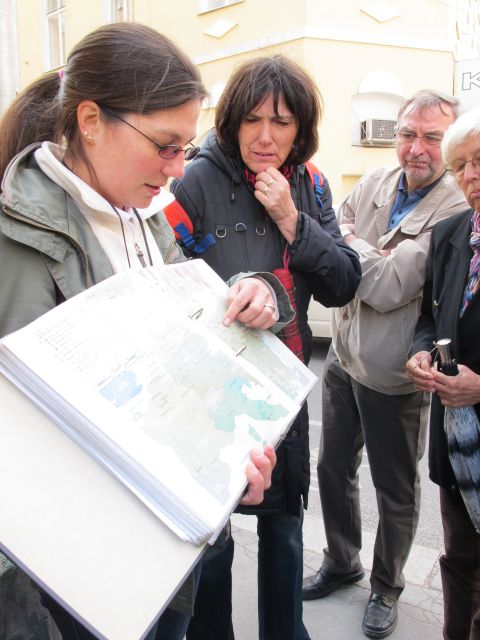
A central part of the route looks at Jewish life at the beginning of the 20th century. The guide explains which social and community institutions shaped Leopoldstadt and how houses of worship fitted into everyday life.
This is where the tour can offer more than a standard list of famous buildings. You are encouraged to think about the district as a living network. Religious buildings were important, but so were the institutions that supported families, education, charity, social contact, and communal identity.
The information provided does not name every stop or promise entry into particular buildings. That is worth keeping in mind when you book. You should expect to learn about former synagogues and houses of worship from the street, not to tour their interiors. Synagogue entry is not included, and no indoor admission is listed.
For many people, that will be a fair trade. The $25 fee goes toward the guide’s interpretation and the route through the neighborhood. If your main goal is to sit inside an active synagogue or see a detailed interior, this is not the right product on its own. If you want context for the district and its lost institutions, the street-based format makes sense.
The former houses of worship
The tour pays special attention to the magnificent houses of worship that existed before the Second World War. The wording suggests a focus on what once stood in the district, not simply on surviving religious buildings.
That distinction is important in Vienna. A walk through Leopoldstadt can show you how much of a community has been erased or changed. A building may survive in altered form, a plaque may mark a place that no longer looks as it once did, or a street may carry a memory that is easy to miss without explanation.
Your guide’s job here is to supply the missing layer. You see the present street, then learn how it connected to the Jewish community before the war. This helps you avoid a common problem with memorial sightseeing: looking at a marker without understanding the daily life behind it.
The tour description does not promise photographs, archival displays, or reconstructed interiors. I would book it for spoken explanation and on-site context. You will get the most from it if you are willing to pause, listen, and picture the district as it was rather than expecting a museum-style presentation.
More walking tours in Vienna:
- Vienna: Guided Walking Tour of City Center Highlights
★ 4.7 · 4,989 reviews - Vienna: Vienna Central Cemetery Guided Walking Tour
★ 4.8 · 3,307 reviews - Vienna: Guided Walking Tour of City Highlights & Hidden Gems
★ 4.9 · 2,180 reviews - Vienna: Viennese Underworld Guided Walking Tour
★ 4.7 · 1,865 reviews
The Path of Remembrance
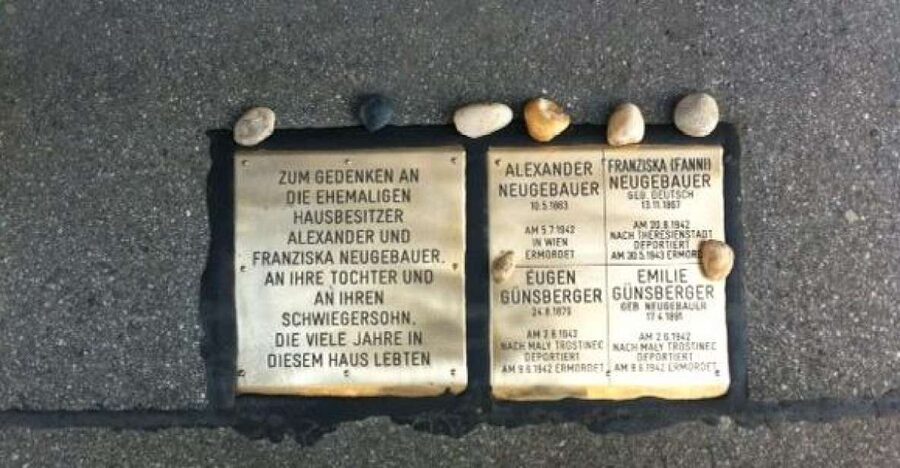
The commemorative plaques marked Path of Remembrance add a clear thread to the route. They turn remembrance into something you encounter along the pavement and building fronts, rather than something confined to one museum or memorial site.
For you, this means the walk has a practical visual structure. The plaques help identify places connected with Jewish life and persecution, while the guide explains why those points matter. They also show how public memory is placed into an ordinary neighborhood.
The route’s subject can be painful, but the plaques give it a human scale. You move from one location to another and consider the people and institutions connected to each address. That can make the past feel less abstract than a broad lecture about Vienna during the war.
The available details do not say how many plaques you will see or identify every inscription. Do not book expecting a fixed checklist of named memorials. Book it for a guided interpretation of the Path of Remembrance within Leopoldstadt.
From vanished institutions to Jewish life today
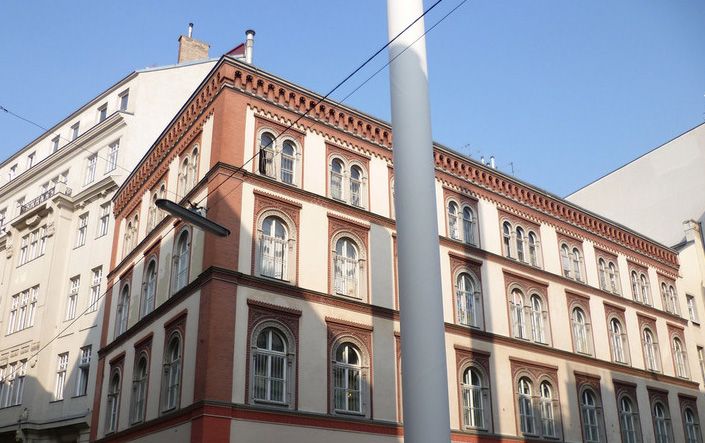
The experience does not stop before the Second World War. It also addresses how Jewish people live in Vienna today. That gives the walk a needed present-day frame.
A tour focused only on destruction can leave you with the impression that Jewish life in Vienna belongs entirely to the past. This route instead connects the former center of Jewish life with the community that exists now. The details are not extensive enough to promise a full survey of current institutions, so you should expect an introduction rather than a complete account of contemporary Jewish Vienna.
That balance is one of the most useful parts of the experience. You learn about what was lost, but you also hear that Jewish life continues. For a first introduction, that is more honest and useful than treating Leopoldstadt as a memorial district frozen in time.
The route is especially suitable if you have already seen Vienna’s imperial center and want a different way to understand the city. It shifts attention away from palaces and grand avenues and toward community, memory, and the consequences of political violence.
The guide and the German-language format
The tour includes a certified guide, and the language is German. That is the most important booking consideration.
If you understand German comfortably, the format should work well. The feedback attached to the experience gives special emphasis to clear facts, background, strong structure, and competent delivery. Frau Timmermann is singled out as a highly committed guide with substantial knowledge, while other comments describe the presentation as informative and engaging.
Those details point to a guide-led experience rather than a simple walk with a few memorized stops. The strongest value comes from the explanation between locations: why the district mattered, how its institutions fit together, and how to read the memorial markers.
If German is not one of your working languages, do not assume the tour will include English or another translation. The listed language is German only. That single point may decide the booking for you.
Is two hours enough?
Two hours is a sensible length for this subject. It gives the guide time to explain the district without turning the outing into a full-day commitment.
A shorter walk might leave too little room for the social and religious background. A much longer tour could feel heavy, especially with the difficult wartime material. At two hours, you receive a focused introduction that can fit into a wider Vienna itinerary.
You should not expect every aspect of Jewish Vienna to be covered. The tour is centered on Leopoldstadt, early 20th-century Jewish life, former houses of worship, the Path of Remembrance, and Jewish life today. It is not presented as a complete citywide survey.
That limited scope is a strength if you want depth in one district. It is a limitation if you have only one day in Vienna and want a broad overview of every Jewish site in the city.
What $25 gets you
At $25 per person, the price is reasonable for a two-hour guided city walk, particularly because it includes a certified guide and a focused subject. You are paying for local explanation and route design, not transportation or admission tickets.
The value improves if you care about context. A self-guided walk might show you plaques and streets, but it would not necessarily explain how Jewish religious, social, and community institutions connected across Leopoldstadt.
The price is less attractive if you are looking for indoor visits or a large number of formal attractions. There is no synagogue entry, no food or drink, and no transfer included. Those omissions are not surprises, but they should shape your expectations.
The experience also offers free cancellation up to 24 hours before the start and a reserve-now, pay-later option. That gives you some flexibility when building a Vienna schedule. Starting times vary, so check availability before committing to a particular day.
Who should book this walk?
I would recommend it to you if you want a thoughtful neighborhood tour, can follow German, and have an interest in Jewish life before and after the Second World War. It suits visitors who prefer street-level context to a fast parade of famous sights.
It is also a good choice after seeing Vienna’s main center. Leopoldstadt offers a different view of the city, and the route helps you understand why an ordinary-looking district can carry such weight.
Families with older children may find the two-hour length manageable, but the subject is serious. You should decide based on your child’s comfort with wartime persecution and memorial topics.
I would hesitate if you need English guidance, want to enter a synagogue, or prefer a relaxed sightseeing walk with little historical discussion. The tour is focused, German-language, and memorial in tone.
The 4.9 rating from 109 bookings supports the sense that the experience is well structured and informative. The most praised qualities are the factual background, the clear organization, and the guide’s commitment, especially in the feedback about Frau Timmermann. Those are exactly the qualities that matter on a walk where much of the significance is not obvious from the street.
My booking recommendation
Book this tour if you want to understand how Jewish life shaped Leopoldstadt, not merely locate a memorial. At $25, it offers a focused introduction with a certified German-speaking guide and a route that links prewar institutions, former houses of worship, remembrance plaques, and Jewish life today.
Skip it if you need English, expect synagogue interiors, or want a broad Vienna sightseeing tour. For the right audience, though, this is a practical way to see a less familiar part of the city and give its streets the context they deserve.
FAQ
Where does the Jewish Life in Leopoldstadt tour meet?
Meet outside the U2 Taborstraße station at Obere Augartenstraße 74, using the Taborstraße exit.
How long does the tour last?
The walking tour lasts two hours.
What language is the tour conducted in?
The listed tour language is German, with a live German-speaking guide.
Is the tour wheelchair accessible?
Yes, the activity is listed as wheelchair accessible.
Is synagogue entry included?
No. Entry to synagogues is not included in the tour.
What does the $25 price include?
The price includes a certified tour guide. Transfers, food, and drinks are not included.
Can I cancel the booking?
Yes. You can cancel up to 24 hours in advance for a full refund. You can also reserve now and pay later.
More 2-Hour Experiences in Vienna
- Vienna: Romantic Old Town 2-Hour Discovery Tour
★ 4.7 · 816 reviews - Vienna: 2 Hours Sightseeing Walking Tour
★ 4.8 · 332 reviews - Vienna: 2-Hour Historical Crimes Guided Walking Tour
★ 4.8 · 130 reviews - Vienna: 2-Hour Street Art Tour
★ 4.5 · 76 reviews
Just reviewed in Vienna
- World War II History Vienna Old Town Private Walking Tour★ 4.8 · 9 reviews
- Vienna: Wine Tasting E-Bike Tour★ 4.9 · 46 reviews
- Vienna: Winery and Wine Tasting Tour with a Wine Expert★ 5.0 · 5 reviews
- Vienna: Concert by the Vienna Baroque Orchestra★ 4.6 · 56 reviews
- Vienna: Unforgettable Private City Tour★ 5.0 · 7 reviews
- Vienna Urban Art Tour: Explore a different side of Vienna!★ 3.8 · 14 reviews
- Vienna: Sunday Brunch Danube Cruise & Live Music★ 4.2 · 42 reviews
- Vienna Supreme Orchestra at Palais Niederösterreich★ 4.8 · 10 reviews
Jewish Vienna Tours, compared.
The Cultural Heritage of Jewish Vienna walking tour
Read our review →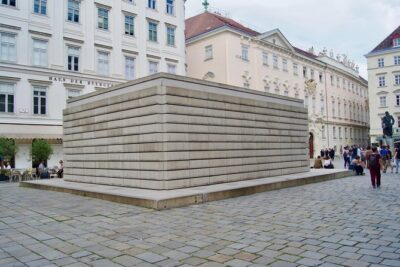
Browse the lists this tour appears in