
Reviewed · VIENNA CITY SIGHTSEEING TOURS
Vienna: Sightseeing Tour in a 1920s Classic Style Car
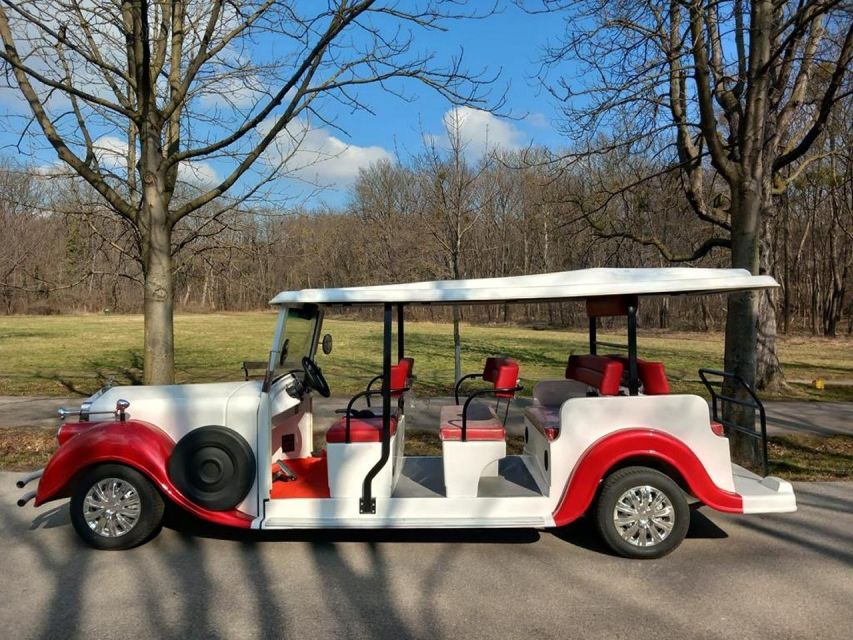
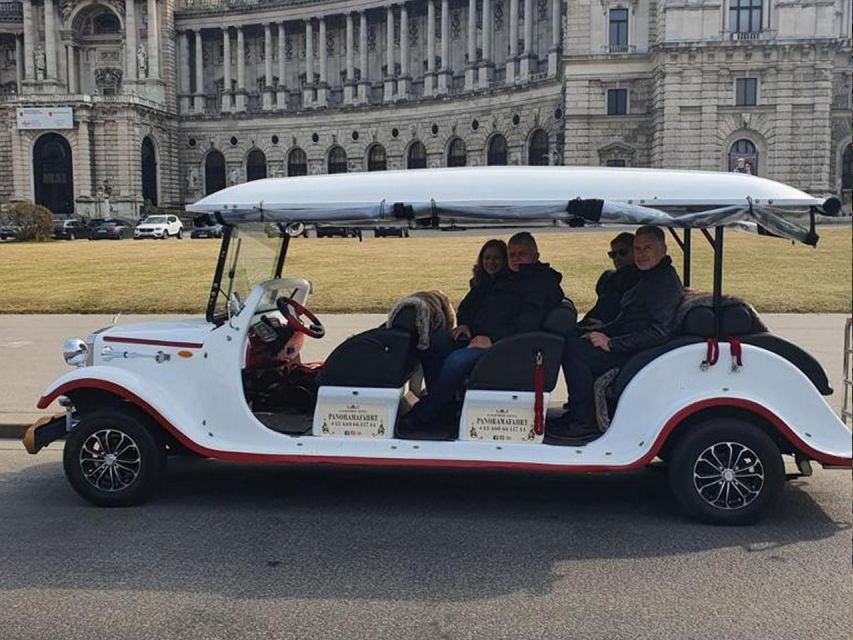
Vienna’s grand center is made for a slow look, and this private electric old-timer tour gives you one without the effort of a long walk. In 60 minutes, you roll past the opera, Hofburg, Ringstrasse, museums, palaces, cafés, and St. Stephen’s Cathedral in a weather-protected car styled like a 1920s classic.
I especially like two things here: the whole group stays together, with room for up to 10 people, and the electric vehicle lets you enjoy the old-car feel without exhaust fumes. The one-hour route also packs in a useful first look at central Vienna. The drawback is simple: this is a sightseeing overview, not a stop-and-enter tour, and the price is harder to justify for one or two people.
- A private electric classic car gives you a nostalgic ride without engine fumes.
- The Ringstrasse circuit covers many of Vienna’s grandest buildings in one hour.
- A driver-guide speaks English or German and provides live commentary during the ride.
- The route works in poor weather, making it a practical option on a wet or chilly day.
- Up to 10 people share one vehicle, so the price can work well for families and small groups.
- The tour begins and ends in central Vienna, but the supplied meeting details list two different locations, so confirm the exact pickup point before setting out.
Vienna sightseeing with a 1920s look and modern electric power
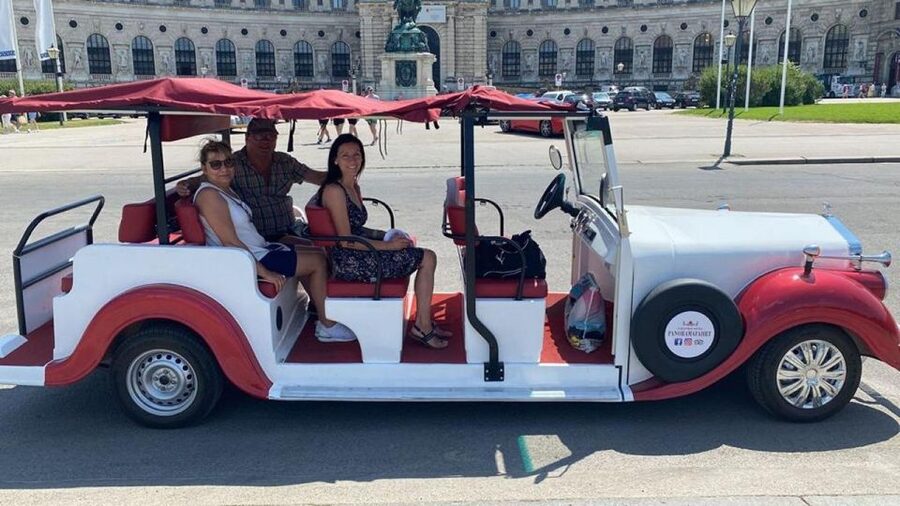
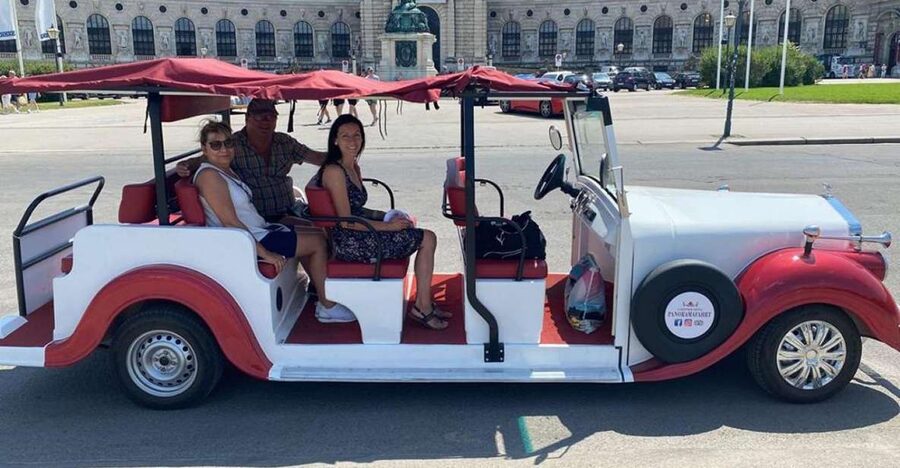
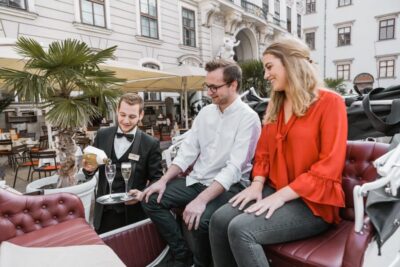
This is not a horse-drawn carriage ride and not a standard hop-on, hop-off bus. You sit in a small, old-fashioned electric vehicle designed to recall a 1920s car, then travel through Vienna’s central streets with a driver providing live commentary.
That combination matters. You get the visual charm of a classic car, but the ride is emission-free. You also avoid the physical work of covering the same ground on foot. For a first afternoon in Vienna, a family reunion, or a wet-weather backup plan, that can be useful.
The group is private, with space for as many as 10 people. That makes the experience feel more personal than a large coach tour, though the small vehicle may feel close-packed if your party fills every seat. The driver handles the route and commentary, so you can concentrate on the buildings rather than on maps and street signs.
The available guide languages are English and German. One guide named in the feedback is Manuel, who was praised for bringing humor and historical background to the ride. Another birthday group received a cheerful musical surprise near the end, which suggests that the driver may respond to the mood of your party rather than simply recite a script. Do not book this expecting a private concert, but the tone appears friendly rather than stiff.
The first stretch: Albertina, opera house, and the Ringstrasse
The route begins in the area around the Albertina, one of Vienna’s best-known art institutions. You will not pay an admission fee as part of this outing, and the tour does not include interior visits. Instead, the point is to see the city’s major façades and hear how they fit into Vienna’s story.
From there, the car passes the old city wall area and the Vienna State Opera. The opera house sits at a key point on the Ringstrasse, the grand boulevard that circles the historic center. The route description calls it the world’s longest boulevard street, a promotional description rather than a fact you need to rely on, but the important point is clear: the Ringstrasse is Vienna’s great showcase of imperial-era public buildings.
You then pass the Goethe Monument, Schiller Monument, and Academy of Fine Arts. These stops are best appreciated from the street. If you care deeply about art or literature, you will want separate time inside the museums and collections. If your aim is to understand Vienna’s visual character quickly, the car gives you a useful string of landmarks without asking you to cross broad avenues on foot.
The early part of the ride also includes Burggarten, the Palm House, and the Butterfly House. The Palm House is a graceful glass structure beside the palace gardens, while the Butterfly House offers an indoor attraction of its own. The car passes these places, but entry is not included, so treat them as markers for a later visit rather than included activities.
More sightseeing tours of Vienna:
- Vienna: Hop-On Hop-Off Sightseeing Bus Tour in 19 Languages
★ 4.2 · 4,518 reviews - Vienna PASS: All incl. Sightseeing Pass for 85+ Attractions
★ 4.3 · 3,067 reviews - Vienna: Guided Walking Tour of City Highlights & Hidden Gems
★ 4.9 · 2,180 reviews
Hofburg and Heldenplatz, Vienna’s ceremonial center
The route then moves into the Hofburg area, where Vienna’s imperial past is most visible. You pass the Mozart Monument, the New Burgtor, Heldenplatz, the Hofburg complex, the Austrian National Library, and the Weltmuseum.
This is one of the strongest parts of the tour because the sights sit close together but represent different sides of the city. Heldenplatz is a broad ceremonial square framed by the Hofburg. The New Burgtor gives the area a formal entrance, while the palace buildings spread into a large complex of museums, official rooms, and public institutions.
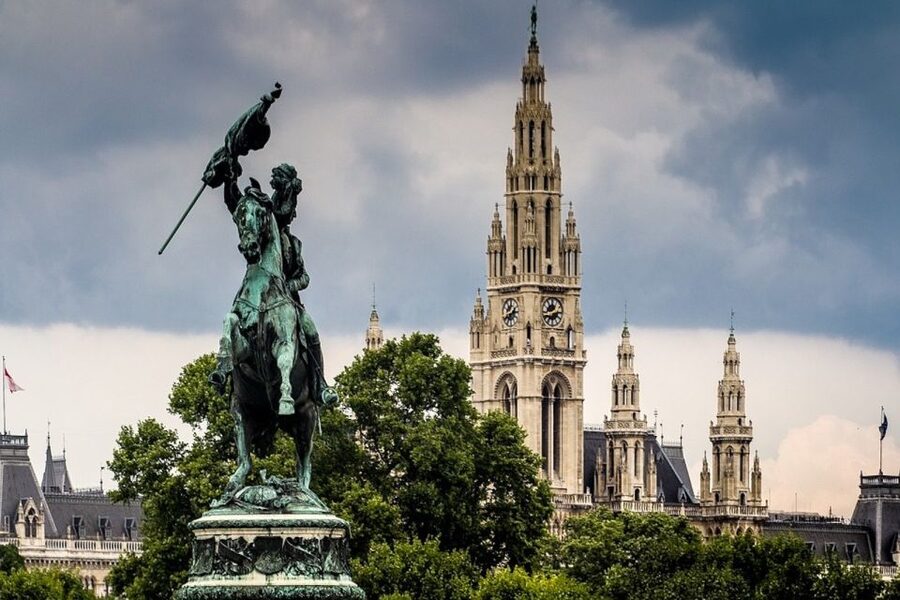
The route also passes the presidential palace and statues of Prince Eugene, Archduke Charles, and Maria Theresa. Your driver can help place these names in context, which is valuable when the streets present one monument after another. Without some explanation, Vienna’s statues can become a blur of figures in military coats and royal dress.
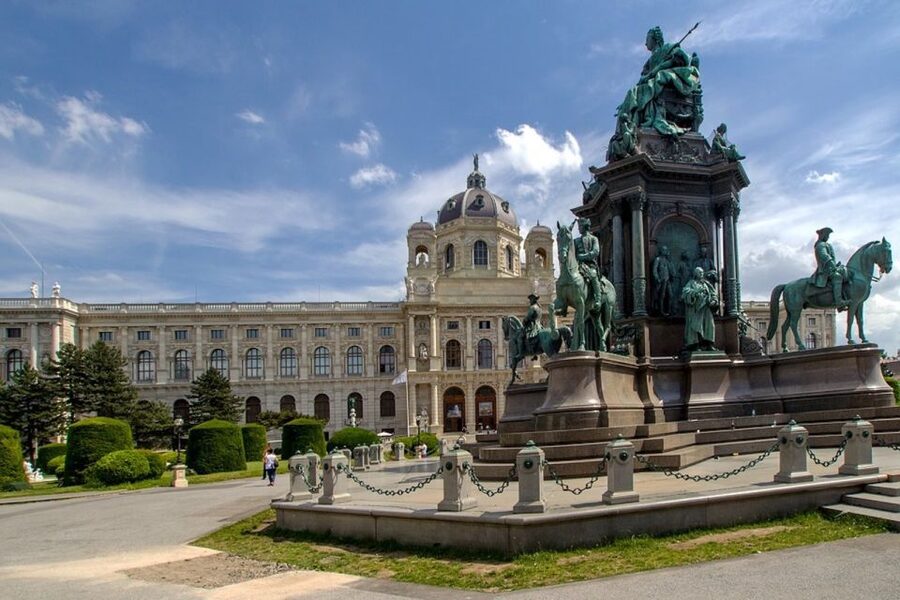
You will also see the Natural History Museum and the Kunsthistorisches Museum, facing each other across Maria-Theresien-Platz. These are major museums and deserve far more than a passing view if you plan to enter them. The sightseeing ride lets you note their grand scale and decide which one deserves your museum time later.
The limitation is unavoidable. You will see a lot, but you will not linger. If photography is important to you, have your camera ready before the vehicle reaches each major group of buildings. The car’s pace is designed for an overview, not for carefully framed architectural studies.
Palaces, cafés, and old streets around the city center
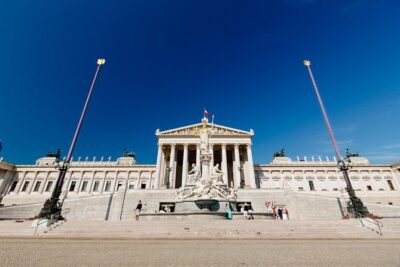
After the Hofburg area, the car continues past Palais Epstein, the Parliament, the Burgtheater, Vienna City Hall, and the University. This stretch shows how the Ringstrasse combines government, culture, education, and public ceremony within a short distance.
The Parliament and Burgtheater are especially useful landmarks for understanding the boulevard. The Parliament represents civic government, while the Burgtheater remains one of Vienna’s major cultural institutions. City Hall and the University add to the sequence of grand public façades.
The Liebenberg Monument and an old section of the city wall follow. From there, the route turns toward a more intimate set of central streets and palaces. You pass the Drei Mädel Haus, one of Beethoven’s houses, Palais Daum Kinsky, Palais Harrach, and Palais Ferstel with Café Central.
This part of the ride is a reminder that Vienna is not only imperial squares and monumental avenues. Its central streets also contain courtyards, aristocratic palaces, historic cafés, and reminders of composers who lived and worked in the city. Café Central is one of the most famous café addresses in Vienna, though your ticket does not include a table or refreshments.
The route continues through Am Hof, past the Hohe Brücke and Salzgries, then along Marc-Aurel-Strasse and Hoher Markt. These streets give you a closer sense of the old center. Hoher Markt is associated with the Anker Clock and the Marriage Fountain, both included in the sightseeing sequence.
I like this change of scale. The Ringstrasse gives you broad views and imposing façades. The older inner streets feel tighter and more layered. From an enclosed car, you can cover both without repeatedly stopping to check directions.
Anker Clock, St. Stephen’s Cathedral, and the final loop
The Anker Clock is one of the route’s most distinctive urban details. It sits above a historic passage and is known for its moving figures. The tour does not promise a timed performance, so you should not plan your schedule around seeing the figures move, but the clock is worth spotting as the car passes.
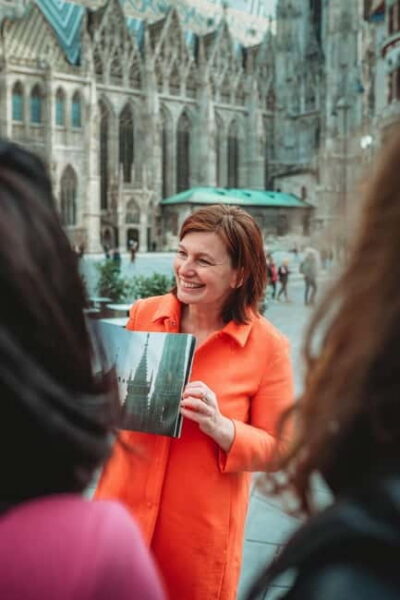
The route then reaches St. Stephen’s Cathedral, or Stephansdom, the visual heart of Vienna’s old center. Its patterned roof and tall tower are among the city’s most recognizable sights. Again, the vehicle provides an exterior view only. If you want to enter, climb, attend a service, or see the cathedral treasury, you will need a separate visit and admission arrangements.
From St. Stephen’s, the car moves along Wollzeile toward Stadtpark. You pass the Johann Strauss Monument, Kursalon Hübner, Schwarzenbergplatz, and Café Schwarzenberg. This section brings music, parkland, cafés, and ceremonial architecture together.
The Johann Strauss Monument is a natural highlight for music lovers. Vienna’s musical identity is not limited to concert halls, and seeing the monument helps connect the city’s public spaces with its composers. Kursalon Hübner is another important music-related building, while Café Schwarzenberg continues the café tradition that shapes central Vienna.
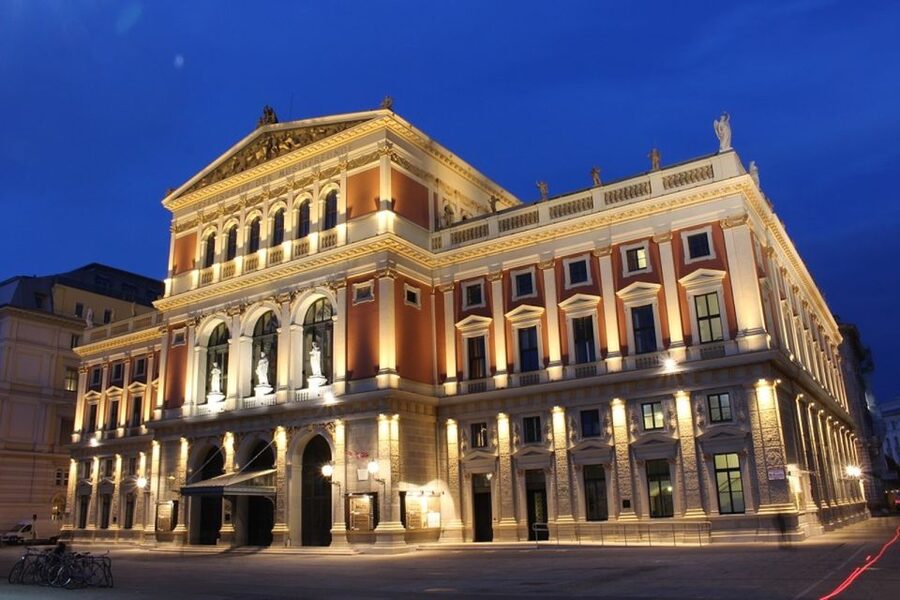
The final stretch includes the Musikverein, Hotel Imperial, Grand Hotel, Hotel Bristol, the State Opera, and Hotel Sacher before returning to the starting area. The Musikverein is famous for its concert performances and ornate interior, while the hotels and Hotel Sacher show Vienna’s polished grand-hotel tradition.
You finish near the Albertina area according to the route description. The supplied tour details also identify Herrengasse 12, by the Radisson Blu, as the start and finish point. Since those two meeting descriptions do not match, confirm the exact location directly when booking. This is the one practical detail I would not leave to chance, especially if you have a tight dinner or train schedule.
A different sort of day out in Vienna:
- Vienna: Vivaldi’s Four Seasons Concert in Karlskirche
★ 4.7 · 14,951 reviews - Vienna: Skip-the-cashier-desk-line Giant Ferris Wheel Ride
★ 4.5 · 7,859 reviews - Vienna: Schönbrunn Palace & Gardens Skip-the-Line Tour
★ 4.7 · 7,739 reviews - Vienna: Light of Creation Votive Church Immersive Light Show
★ 4.8 · 6,779 reviews
What the one-hour timing really means
One hour is enough to get your bearings, but not enough to study each attraction. The route lists more than 50 sights, so the tour moves at a steady sightseeing pace. You should think of it as a guided city circuit rather than a collection of stops.
That short length is a benefit if you have limited time. It can fit before lunch, after checking in, or between museum visits. It also suits children and older family members who may not want a long walking tour.
The same timing creates the main tradeoff. You may pass a building just as you begin to understand why it matters. If the commentary sparks your interest in the Hofburg, a museum, or a café, note the location and return later on foot.
The driver’s style matters a great deal in a tour this compressed. The feedback describes explanations that were neither too long nor too thin, with enough history to produce unexpected moments of recognition even for people who already lived in Vienna. The most praised qualities are clear information, humor, and a relaxed delivery. Manuel is specifically named as a guide who added fun and historical context.
Price, group size, and who gets the best value
The price is $282 for a private group of up to 10 people. For a full group, that works out to $28.20 per person. For four people, it becomes $70.50 each, and for two people, $141 each. The value changes sharply with group size.
I would consider it a reasonable splurge for a family or group of friends that wants to stay together in a private vehicle. It is less compelling for a solo visitor or couple who could take a public tram, walk the center, or join a less costly shared sightseeing option.
The price pays for privacy, the classic-car setting, live commentary, and weather protection. It does not cover admissions, food, or time inside any of the museums, palaces, churches, or attractions you pass. You are paying for access to a comfortable moving viewpoint and a driver-guide, not a series of guided entrances.
The electric vehicle also adds a small but meaningful benefit. You get the old-timer appearance without the fumes of a traditional motor vehicle. That will matter most if you are sensitive to exhaust or simply like the idea of a more considerate city ride.
Weather, comfort, and practical expectations
The vehicle is promoted as suitable for sightseeing in any weather. That makes it a useful choice on a rainy day, when a long walk around the Ringstrasse loses some of its charm. It can also help on a cold day when you want to see the center without spending an hour exposed to the elements.
Weather protection does not mean every condition will feel equally pleasant. Since exact seating, windows, and heating details are not provided, you should confirm any specific comfort needs before booking. A group of 10 may also have less personal room than a smaller party.
The tour is private, which removes the worry of sharing the ride with strangers. It also means your group can enjoy the same commentary and views together. If your party includes children, grandparents, or someone who tires easily, this can be more practical than a walking circuit.
The ride is not a replacement for walking altogether. Vienna’s best small details appear in courtyards, side streets, church interiors, and café rooms. Use the car to see the broad pattern, then choose two or three places to revisit at street level.
Who should book this Vienna old-timer tour?
I would recommend it most strongly to a group of four to 10 people, especially families with mixed ages. It is also a good first-day activity if you want a quick orientation before deciding where to spend the rest of your time.
It suits visitors who like history in manageable portions. The guide explains what you are seeing, but the hour does not demand the concentration of a long museum tour. The informal style described in the feedback should appeal to you if you prefer a human, conversational guide rather than a rigid script.
It is less suitable if you want to enter major attractions, stop for long photographs, or explore one neighborhood in detail. You should also compare the price carefully if only one or two people are traveling.
The flexible booking terms add some practical value. You can cancel up to 24 hours before the tour for a full refund, and the reserve-now, pay-later option lets you hold a place without paying immediately. Starting times depend on availability, so check the schedule before building the rest of your day around it.
Should you book it?
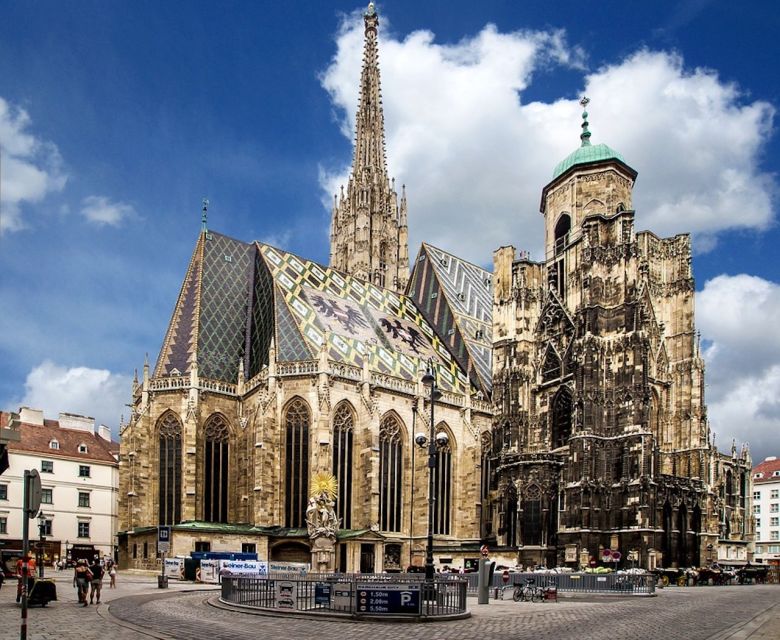
Book this tour if you want a private, weather-protected introduction to central Vienna and can fill much of the vehicle. The electric 1920s-style car gives the familiar sightseeing circuit a more memorable setting, and the route covers an impressive number of landmarks in one hour.
Skip it if you are traveling alone, watching every euro, or hoping to tour the interiors of the Hofburg, museums, cathedral, or concert buildings. In that case, put the money toward admissions and explore the center on foot.
For families, small groups, and first-time visitors, I see the strongest value in using this as an orientation ride. Keep your camera ready, listen for places you want to revisit, and confirm the meeting point because the supplied directions name both Cafe Mozart by the Albertina and Herrengasse 12 by the Radisson Blu. With that detail settled, this is a pleasant way to see Vienna’s grand center without exhausting your feet.
FAQ
How long is the Vienna old-timer tour?
The tour lasts 60 minutes.
How many people can join the private tour?
The private vehicle can accommodate a group of up to 10 people.
What languages are available?
The live driver-guide commentary is available in English and German.
Does the tour include admission to the museums or attractions?
No. Admission fees are not included, and the tour is designed as an exterior sightseeing circuit.
Is the tour available in poor weather?
Yes. The experience is intended to let you sightsee regardless of the weather.
Where does the tour start and finish?
The tour information gives Cafe Mozart at Albertinaplatz 2 as the start and end point, while another meeting detail lists Herrengasse 12 by the Radisson Blu. Confirm the exact location before your tour.
Just reviewed in Vienna
- World War II History Vienna Old Town Private Walking Tour★ 4.8 · 9 reviews
- Vienna: Wine Tasting E-Bike Tour★ 4.9 · 46 reviews
- Vienna: Winery and Wine Tasting Tour with a Wine Expert★ 5.0 · 5 reviews
- Vienna: Unforgettable Private City Tour★ 5.0 · 7 reviews
- Vienna Urban Art Tour: Explore a different side of Vienna!★ 3.8 · 14 reviews
- Vienna: Concert by the Vienna Baroque Orchestra★ 4.6 · 56 reviews
- Vienna: Sunday Brunch Danube Cruise & Live Music★ 4.2 · 42 reviews
- Vienna Supreme Orchestra at Palais Niederösterreich★ 4.8 · 10 reviews
Vienna City Sightseeing Tours, compared.
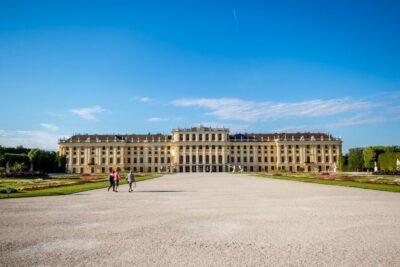
Vienna PASS: All incl. Sightseeing Pass for 85+ Attractions
Read our review →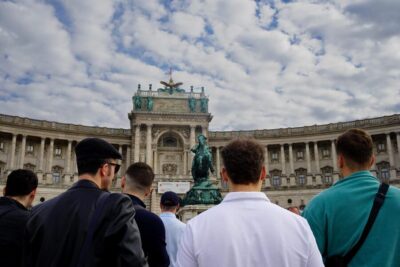
Guided Walking Tour of City Highlights & Hidden Gems
Read our review →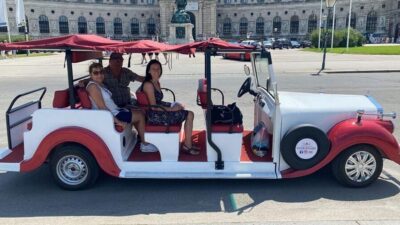
Skip-the-Line Schonbrunn Palace Guided Tour and Vienna Historical City Tour
Read our review →
Browse the lists this tour appears in