
Reviewed · WALKING TOURS
Vienna: Courtyards & Hidden Places Walking Tour
Vienna’s grand sights are easy to find. The better stories often sit behind them, in quiet courtyards, narrow lanes, and old buildings with odd names. This two-hour walking tour links the famous center with places many visitors pass without noticing, including Ballgasse, Blutgasse, the Franciscan Church and Monastery, and the old university district.
I like two things here. First, the tour gives you more than a quick look at St. Stephen’s Cathedral, placing the landmark in the wider story of Vienna. Second, the guide brings in everyday details, from traditional Viennese food to old photographs of the city after World War II. The main consideration is pace and access: you walk outdoors in all weather, large bags are not allowed, and the route is not suitable for children under 12 or people using wheelchairs.
Key points to know before you book
- Quiet courtyards and narrow lanes: See parts of Vienna’s old center that are easy to miss on a standard sightseeing walk.
- Mozart beyond the legend: Visit his final residence and hear a more grounded account of his life.
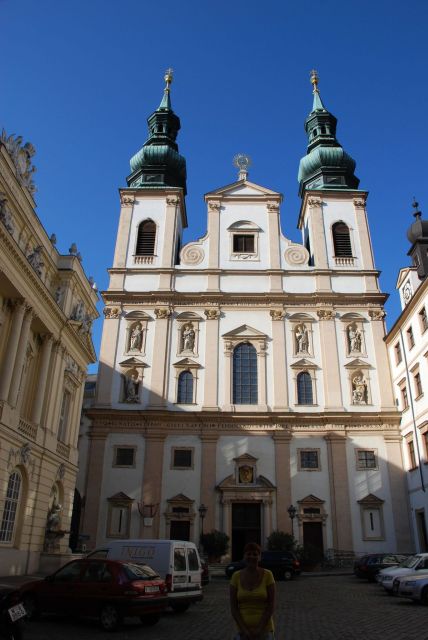
- A useful mix of famous and overlooked sights: St. Stephen’s Cathedral shares the route with Blutgasse, Ballgasse, the Jesuit Church, and the Franciscan Monastery.
- Food and city life: Learn about traditional Viennese cuisine as part of the city’s social story.
- Small-group format: The walk is conducted in a small group, making it easier to follow the guide and ask questions.
- Plan for outdoor walking: Bring weather protection, leave large luggage behind, and wear shoes suited to old city streets.
Vienna’s famous center, seen from the side streets
The tour begins in the historic heart of Vienna, with the exact meeting point depending on the option you book. The supplied starting information lists a Bankomat location, while the meeting point may change, so check your booking details carefully before setting out.
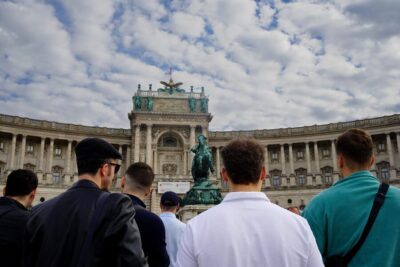
From there, you head toward Stephansplatz and St. Stephen’s Cathedral. This is the obvious headline stop, but the walk does not treat the cathedral as the whole show. You get context about the building and its place in Vienna, then move into the smaller streets around it.
That change of scale is the main pleasure of the outing. One minute you are near one of Vienna’s best-known landmarks. A short walk later, you are looking at a courtyard, an old façade, or a lane whose name carries a story. The center feels less like a collection of postcard sights and more like a lived-in old neighborhood.
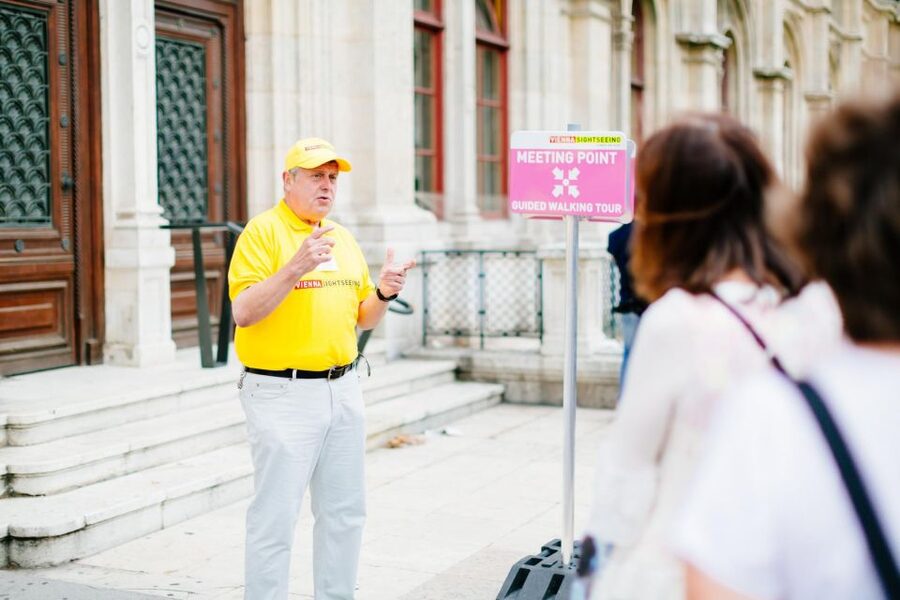
The guide speaks English or German, and the tour is led by a certified Vienna guide. The operator is Viennatour Herbert Stojaspal. Recent guide-led walks have been described as clear, lively, and full of stories about famous people and ordinary city life. The style seems particularly suited to you if you prefer explanation and conversation over a rapid list of dates.
More walking tours in Vienna:
- Vienna: Guided Walking Tour of City Center Highlights
★ 4.7 · 4,989 reviews - Vienna: Vienna Central Cemetery Guided Walking Tour
★ 4.8 · 3,307 reviews - Vienna: Guided Walking Tour of City Highlights & Hidden Gems
★ 4.9 · 2,180 reviews
St. Stephen’s Cathedral as your starting point
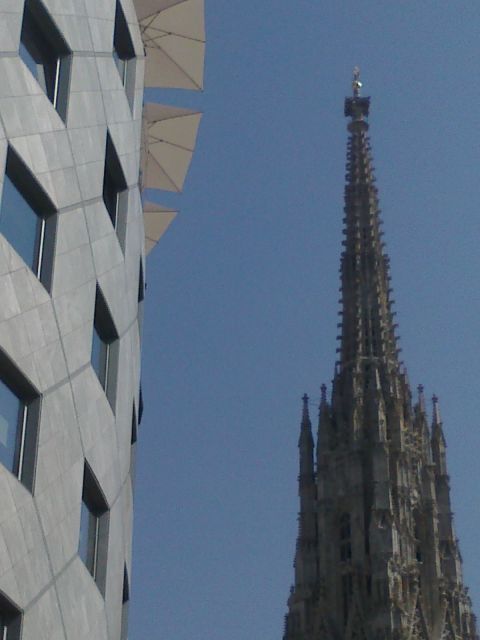
St. Stephen’s Cathedral is one of the places you should see in Vienna, and this tour gives it a proper place in the route. You learn about the cathedral during a guided stop, then use the surrounding streets to understand how the historic center developed around it.
Do not book this experience expecting a long cathedral interior tour. One piece of direct feedback points out that the walk spends more time visiting several courtyards than discussing the cathedral. I see that as a useful warning rather than a flaw. If your main goal is detailed church architecture, choose a dedicated cathedral visit. If you want the cathedral as an anchor for a wider city walk, this format makes sense.
The setting also helps you read Vienna’s center more closely. Grand buildings face public squares, while smaller entrances lead to courtyards and older residential spaces. The contrast between public display and private life is one of the tour’s strongest themes.
Mozart’s final residence and the man behind the myth
Mozart’s final residence is among the most recognizable stops on the route. The point is not simply to attach another Mozart address to your sightseeing list. The guide uses the location to explain the truth of his life, moving beyond the polished image of the musical genius that often fills souvenir shops and city narratives.
That promise matters because Vienna can sometimes turn Mozart into a logo. A good explanation gives you a person, a working musician, and a resident of the city, not just a powdered-wig image. The tour’s wider focus on famous personalities fits well here, especially if you want a little social context with your music history.
You should also know that this is a walking stop, not a separate museum admission experience based on the information provided. The value comes from the guide’s interpretation and the connection between the address, the surrounding streets, and Mozart’s final period in Vienna.
Ballgasse, Blutgasse, and the pleasure of odd street names
Ballgasse and Blutgasse bring the walk into the kind of compact old-center streets that are easy to overlook when you rush between major sights. Their names alone invite questions, and the guide uses these lanes to tell stories about earlier Vienna.
This is where the tour feels most distinctive. A standard city introduction often takes you from palace to church to museum. Here, you pause over the texture of the old center: entrances, courtyards, street plans, and the stories attached to places that do not always appear in headline sightseeing programs.
Blutgasse is especially important to the route because it helps shift attention away from the open squares and onto the older passages behind them. You may find the lanes quieter and more intimate than the areas around Stephansplatz, though the exact atmosphere depends on the time and conditions of your walk.
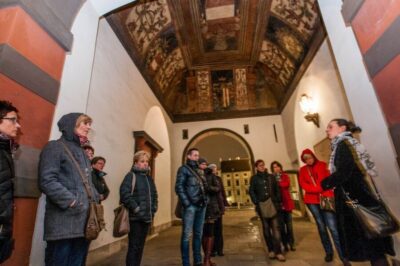
The route includes several courtyards. Some are calm, enclosed spaces tucked behind street fronts. Others connect to grand residences and institutional buildings. These stops give you a useful sense of how Vienna’s old center worked as both a public stage and a place where people lived, worked, and moved through narrow passages.
A different sort of day out in Vienna:
- Vienna: Vivaldi’s Four Seasons Concert in Karlskirche
★ 4.7 · 14,951 reviews - Vienna: Skip-the-cashier-desk-line Giant Ferris Wheel Ride
★ 4.5 · 7,859 reviews - Vienna: Schönbrunn Palace & Gardens Skip-the-Line Tour
★ 4.7 · 7,739 reviews - Vienna: Light of Creation Votive Church Immersive Light Show
★ 4.8 · 6,779 reviews
Palais Neupauer-Breuner and the Deutsches Haus
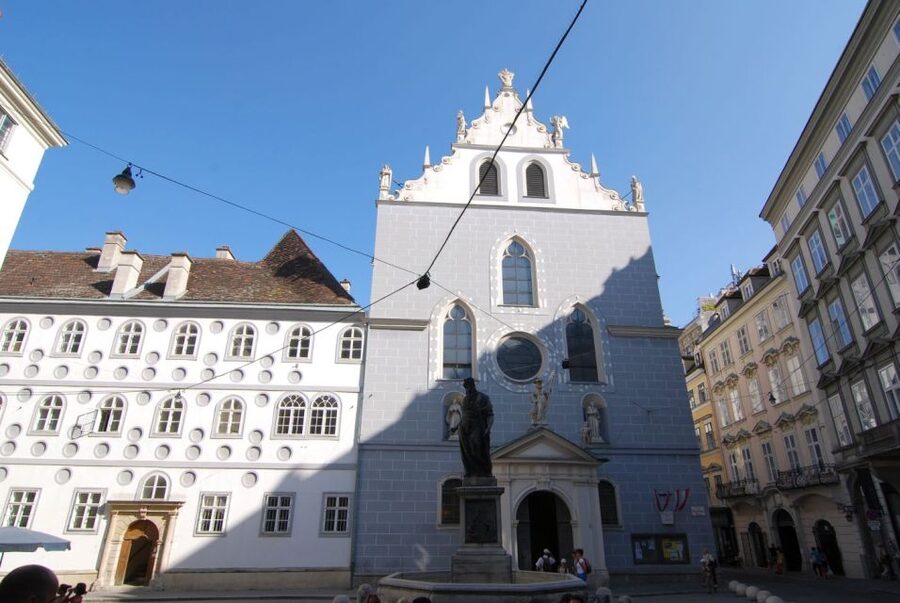
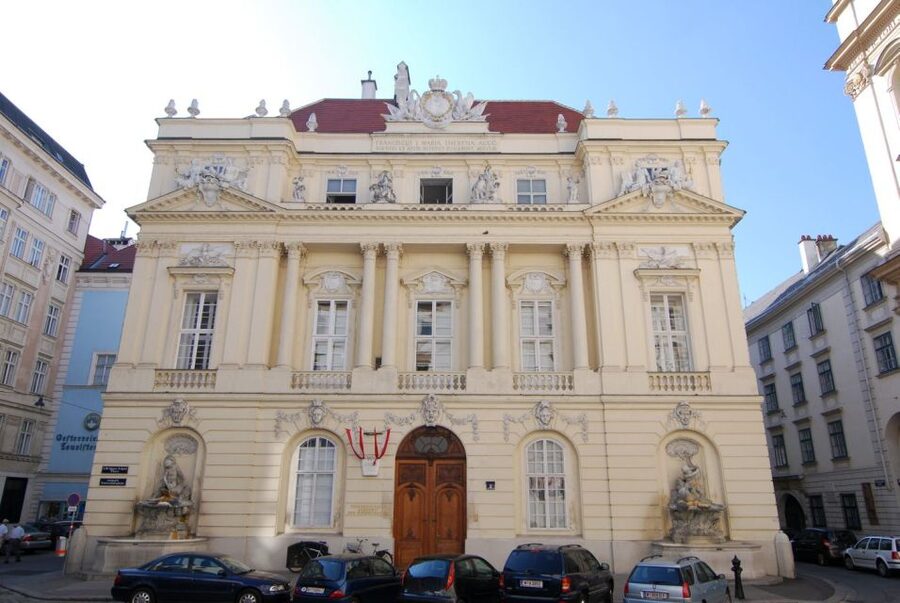
The Palais Neupauer-Breuner adds a dose of aristocratic architecture to the walk. The building is part of the route’s larger lesson: Vienna’s center is not just a set of isolated monuments. Its palaces, houses, religious buildings, and courtyards sit close together, revealing the different layers of urban life.
You also see the Deutsches Haus. The supplied details do not promise an interior visit, so think of this as an architectural and historical stop from the street. The guide’s job is to connect the building to the story of the neighborhood and explain what you are seeing before moving on.
I like this approach for a first or second day in Vienna. You do not need to memorize every architectural term. You simply begin to notice how façades, gateways, courtyards, and street widths tell you something about the people and institutions that shaped the center.
The Franciscan Church and Monastery
The Franciscan Church and Monastery provides another change of mood. The route moves from palatial and residential architecture into a religious setting, giving you a chance to see a quieter side of the old city.
The stop also shows why this tour works better as a story walk than as a checklist. Churches in Vienna are not only art objects. They are part of the city’s daily and institutional life. A guide can explain that connection in a few minutes, helping you understand why so many religious buildings remain woven into the center’s streets.
As with the other stops, the available information does not promise a long interior visit or a special admission. You should expect guided sightseeing around the church and monastery as part of the walking route.
Viennese food stories among the old streets
Traditional Viennese cuisine is included in the conversation, which adds welcome everyday context. Food gives you another way to understand the city. You hear not only about buildings and historic figures, but also about what people ate and how eating belongs to Vienna’s identity.
This is not a cooking class or a food tasting tour. No meal or tasting is listed as included. Treat the food discussion as practical background that may help you choose what to order later during your stay.
That distinction matters. At $34 per person, the price covers a guided city walk, not lunch. I think the value is strongest if you want orientation, local stories, and a route that connects major sights with overlooked corners. If you are mainly seeking food samples, this is not the right booking.
The old university district and Jesuit Church
The walk continues toward the old university district and the Jesuit Church. These stops broaden the story from aristocratic homes and famous residents to education, religion, and public institutions.
The old university area is useful because it shows another side of Vienna’s historic center. The city was shaped not only by rulers and composers, but also by teaching, scholarship, and religious life. You get a better feel for the range of institutions packed into a relatively compact area.
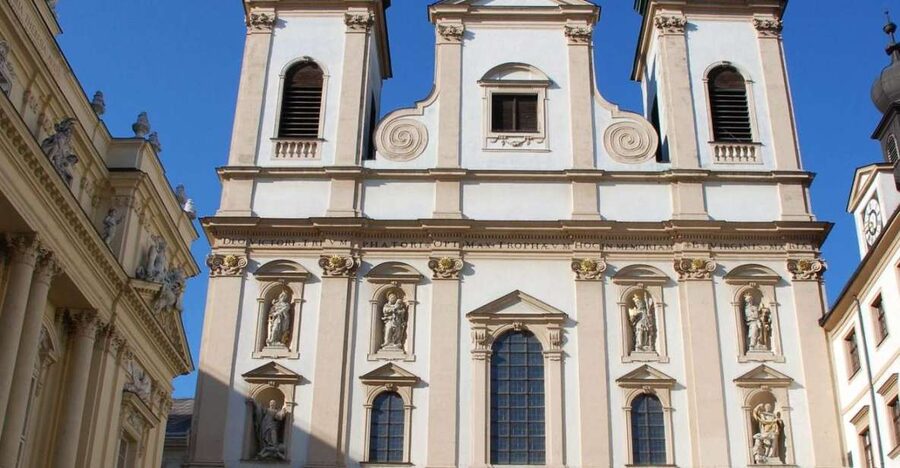
The Jesuit Church adds another impressive religious landmark to the route. Again, the tour is not sold as a specialist art or architecture lecture, so you should expect a guided explanation rather than exhaustive detail. The benefit is the sequence: after seeing homes, courtyards, palaces, and lanes, you see how major institutions fit into the same urban fabric.
The old city wall and Vienna after World War II
The old city wall provides a reminder that Vienna’s current streets sit on top of an older defensive and urban plan. This is the kind of detail that can be hard to notice without a guide. A wall is not always visible as a dramatic ruin, but its former presence still helps explain the shape of the center.
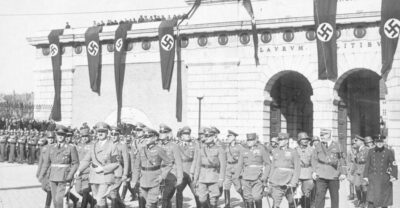
The tour also uses photographs and stories to discuss Vienna after World War II, including images of bomb damage. That material adds needed weight to the walk. Vienna is often presented through imperial elegance, music, cafés, and polished façades. The city also experienced destruction and a difficult modern history, and seeing that side keeps the tour from becoming a costume drama.
I particularly value this balance. The guide can point out beauty while also showing that the city changed, suffered, and rebuilt. You leave with a more honest picture of Vienna than a tour focused only on palaces and famous names.
How the two-hour format works
Two hours is long enough to cover a good stretch of the center without turning the outing into an all-day commitment. You get a focused introduction that can help you decide where to return later, perhaps for a longer church visit, a museum stop, or a meal.
The route is not a seated experience. You walk through streets and courtyards in all weather, and the tour runs with a small group. Wear comfortable shoes and bring suitable protection for rain, wind, or sun. Large bags and luggage are not allowed, and audio recording is prohibited.
The route ends at Dr.-Karl-Lueger-Platz 3 in Vienna, according to the supplied drop-off information. There is no hotel pickup or drop-off. The two-hour length and central route make it easy to fit into a day of sightseeing, but you should leave room for the fact that the meeting location can vary by booking option.
Is $34 a fair price?
At $34 per person, this is a reasonable price for a certified guide leading a small-group, two-hour walk through central Vienna. You are paying for interpretation, not transport, food, or entry tickets.
The value improves if you are new to Vienna or have already seen the major landmarks and want more texture. The route includes several named sights, but its real benefit is the connection between them. A guide can show you why a quiet courtyard, a narrow lane, or an old institutional building matters.
The price may feel less attractive if you want a cathedral-only visit, a food tour with tastings, or a long specialist lecture on Mozart. It is also not the right choice if walking access is a concern. But for a compact introduction to the old center, the mix of famous landmarks and lesser-known spaces is solid.
Who should take this walking tour?
I would choose this tour for first-time visitors who want to get their bearings without spending half a day on a large sightseeing program. It also suits repeat visitors who already know Stephansplatz and want to see how the streets around it fit together.
History fans should enjoy the range of subjects: Mozart, religious buildings, old walls, city damage after World War II, famous residents, and everyday food traditions. Architecture fans will appreciate the shift between cathedral, palace, monastery, courtyard, and narrow lane.
The tour is less suitable for children under 12, wheelchair users, and people with mobility impairments. Since the walk runs in all weather and large bags are forbidden, plan lightly. English and German are available, and the small-group format should help if you want to ask questions.
Should you book it?
Book this tour if you want Vienna’s old center explained through its side streets, not just photographed from the main square. The strongest parts are the courtyards, local legends, Mozart’s final residence, and the balance between elegant architecture and the city’s harder modern history.
Skip it if your priority is a long cathedral interior visit, food tastings, or a fully accessible route. For most able walkers who have two hours and want a personal introduction to central Vienna, $34 is a fair exchange for a compact route full of useful context.
FAQ
How long does the Vienna courtyards tour last?
The tour lasts two hours.
What languages are available?
The live guide speaks English or German.
What sights are included?
The route includes St. Stephen’s Cathedral, Stephansplatz, Mozart’s final residence, Ballgasse, Blutgasse, the Franciscan Church and Monastery, Palais Neupauer-Breuner, the Deutsches Haus, the old university district, the Jesuit Church, and the old city wall.
Is this tour suitable for children?
No. The tour is not suitable for children under 12.
Is the route wheelchair accessible?
No. The activity is not suitable for wheelchair users or people with mobility impairments.
Does the tour run in bad weather?
Yes. The tour takes place in all weather conditions.
Are food, pickup, or luggage storage included?
No food, hotel pickup, or drop-off is included. Large bags and luggage are not allowed on the tour.
Just reviewed in Vienna
- World War II History Vienna Old Town Private Walking Tour★ 4.8 · 9 reviews
- Vienna: Wine Tasting E-Bike Tour★ 4.9 · 46 reviews
- Vienna: Winery and Wine Tasting Tour with a Wine Expert★ 5.0 · 5 reviews
- Vienna: Unforgettable Private City Tour★ 5.0 · 7 reviews
- Vienna Urban Art Tour: Explore a different side of Vienna!★ 3.8 · 14 reviews
- Vienna: Concert by the Vienna Baroque Orchestra★ 4.6 · 56 reviews
- Vienna: Sunday Brunch Danube Cruise & Live Music★ 4.2 · 42 reviews
- Vienna Supreme Orchestra at Palais Niederösterreich★ 4.8 · 10 reviews
Walking Tours, compared.
Guided Walking Tour of City Highlights & Hidden Gems
Read our review →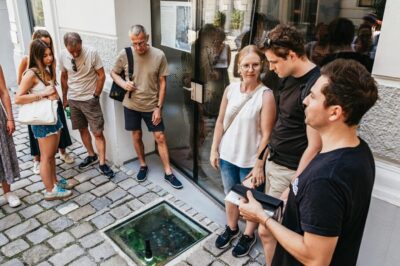
Vienna Historic Center Small Group Walking Tour
Read our review →
Browse the lists this tour appears in