
Reviewed · WALKING TOURS
Vienna Art Nouveau Walking Tour
Vienna’s metro was not built as a plain transport system. Otto Wagner treated it as a citywide work of art, giving stations, pavilions, and iron details a clear Art Nouveau identity. This tour follows that idea from the elegant Karlsplatz pavilion to the emperor’s private station at Hietzing.
I like the way the tour connects urban planning with architecture, so you see why Vienna needed a metro as its population grew. I also like the chance to enter Secession House and see Klimt’s Beethoven Frieze, though the €9.50 admission fee is extra.
The main consideration is pace. The route includes plenty of walking, and one guest described walking miles. That suits curious city explorers, but it may feel demanding if you want a short, easy architecture stroll.
Key points to know before you book
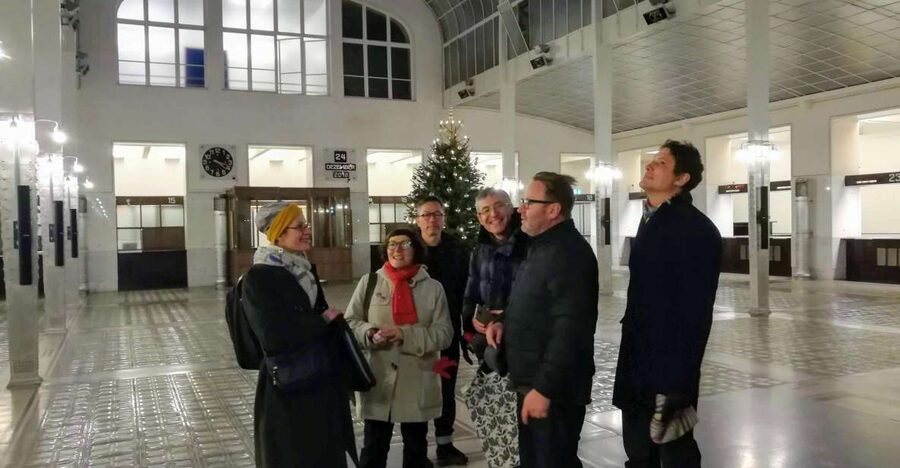
- Otto Wagner designed more than stations: You’ll see how his Art Nouveau ideas shaped metro entrances, apartment buildings, public offices, and imperial architecture.
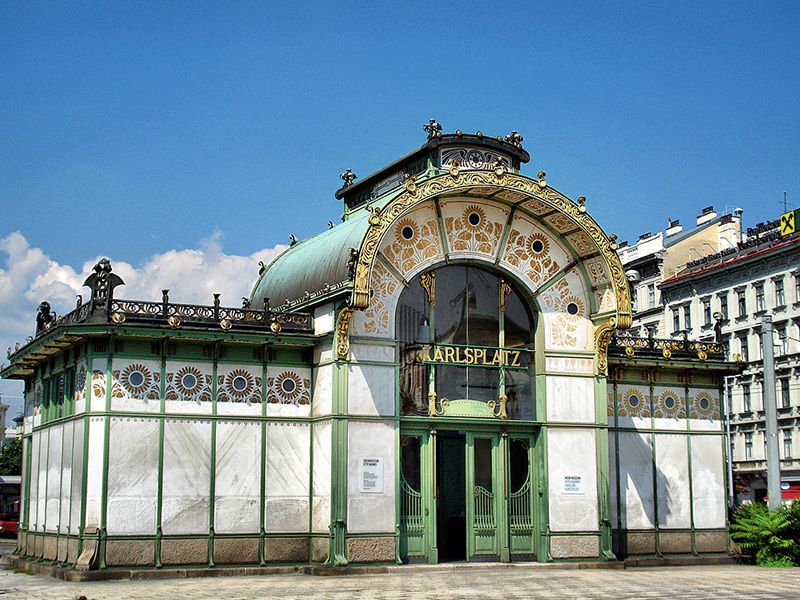
- The Karlsplatz pavilion is the visual starting point: This graceful former metro structure introduces Wagner’s approach before the walking begins.
- Secession House adds Klimt to the route: Tuesday through Sunday, you can visit the building and its famous Beethoven Frieze for an additional fee.
- The imperial Hietzing station has a political purpose: Built for the emperor, it also showed that the monarchy supported Vienna’s controversial new metro.
- The guide shapes the experience: English-speaking historians such as Wolfgang, Peter, and Giuseppina have led tours, with private and small-group options available.
- The price reflects specialist attention: At $176 per person, this is not a casual sightseeing walk, but a focused architecture tour with room for questions and discussion.
Why Vienna’s metro became an Art Nouveau project
By the late 19th century, Vienna was expanding fast. People were moving into the suburbs, and the city needed a modern way to connect those outer districts with the center and the Ringstrasse.
The answer was a new metro system. Otto Wagner was chosen to plan its design, and he did not treat the stations as leftover spaces between engineering problems. He wanted them to be easy to recognize, practical, and unmistakably modern.
That choice matters when you take this tour. You are not simply looking at pretty floral decoration. You are tracing a civic project that helped organize a growing city while also presenting Vienna as a modern European capital.
Wagner worked in the international Art Nouveau style, called Jugendstil in German-speaking countries. His designs used repeated patterns, metal, glass, marble, and carefully placed ornament. The result was decorative without being stuck in the past.
Your guide explains the ideas behind those choices as you move through the city. You’ll consider why certain materials were favored, how Art Nouveau differed from older historic styles, and how Wagner adjusted the same design language for stations, homes, banks, and royalty.
More walking tours in Vienna:
- Vienna: Guided Walking Tour of City Center Highlights
★ 4.7 · 4,989 reviews - Vienna: Vienna Central Cemetery Guided Walking Tour
★ 4.8 · 3,307 reviews - Vienna: Guided Walking Tour of City Highlights & Hidden Gems
★ 4.9 · 2,180 reviews
Start at Café Museum, then meet Wagner at Karlsplatz
The meeting point is Café Museum at Operngasse 7 in Vienna’s 1st district. Depending on the selected option, the starting point may vary, so check your booking details before setting out.
Café Museum is a sensible place to begin. It puts you near Karlsplatz and the central sights, while the café itself fits the period atmosphere of the tour. From there, the guide takes you toward the Wien Museum Otto Wagner Pavilion Karlsplatz.
The pavilion is one of the tour’s most attractive opening stops. Its curved form, light-colored surfaces, metal details, and restrained ornament show Wagner using modern design for public transport. It looks more like a small civic monument than a humble entrance to a railway system.
You’ll visit the small Wagner Museum inside the pavilion, where the early discussion of Vienna’s metro and Art Nouveau begins. Admission to the pavilion is not included, so budget for that separately.
This first stop is useful because it gives you a visual vocabulary for the rest of the walk. Once your guide points out the shapes, materials, and decorative habits Wagner favored, you can spot related ideas elsewhere in Vienna instead of seeing each building as an isolated attraction.
Stadtpark and Kettenbrücke reveal the working metro
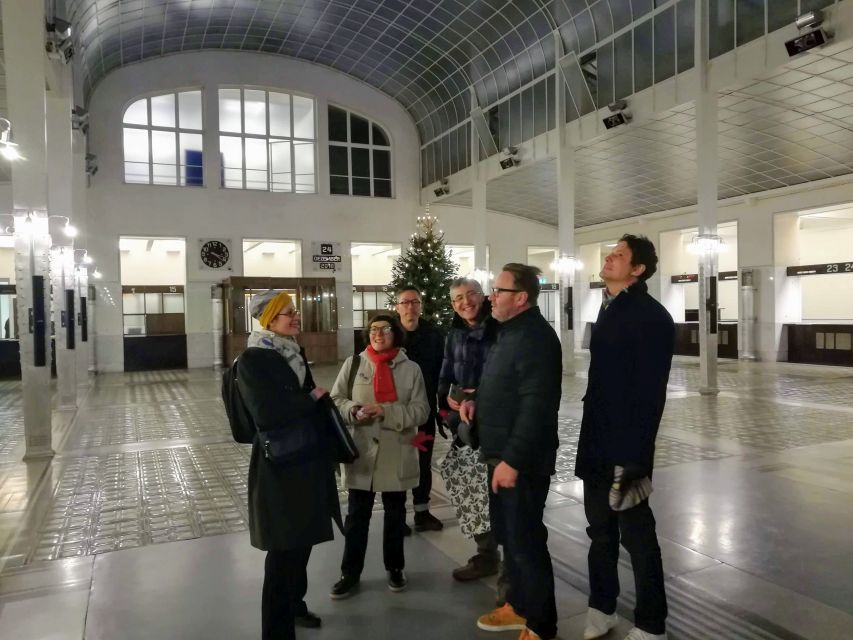
The route continues to the Stadtpark station, described as the best-preserved original metro station still in use. This is where the design becomes especially interesting because the building still has a daily transport function.
You can see how Wagner tried to make public infrastructure elegant without making it confusing. The station’s appearance helped passengers identify the new system, while its details gave Vienna a shared visual style.
The next metro stop is Kettenbrücke station. The journey between the stations is part of the lesson, not just a way to save your feet. You experience the network as it was intended, connecting major parts of the city and showing how the metro changed movement through Vienna.
The tour description gives the walking portion a duration of about two and a half hours, while the activity is sold as a three-hour experience. In practical terms, plan on roughly three hours overall, with some variation depending on questions, group size, and the time spent at the stops.
You should wear comfortable shoes. The route includes several buildings and metro locations, and one private tour guest specifically described walking miles. The guide may adjust the discussion to your interests, but this is still an active city walk rather than a sit-down lecture.
Secession House brings Klimt and Viennese Jugendstil into focus
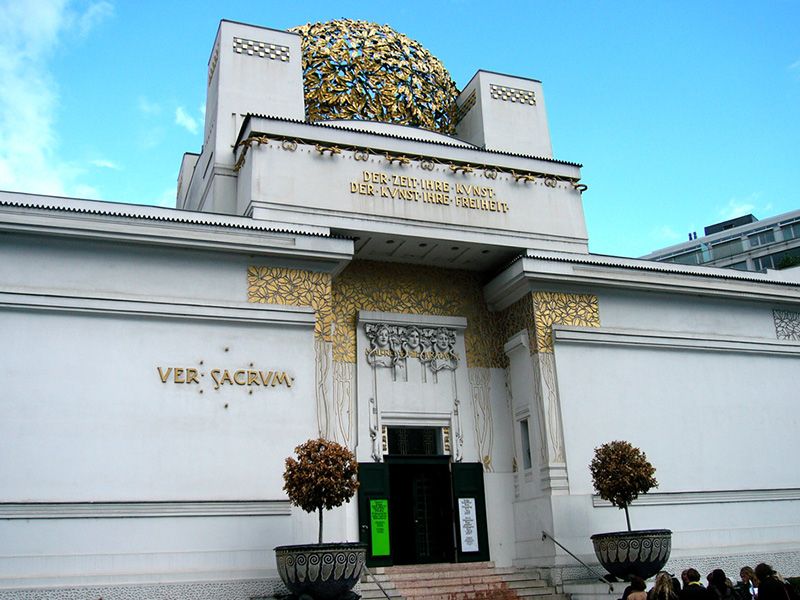
Along the way, you’ll reach the Secession Building, one of the clearest symbols of Viennese Jugendstil. Its famous dome of gilded leaf forms makes it easy to recognize, but the building’s importance goes beyond its unusual exterior.
Secession artists wanted a new direction in art and architecture. The building became their calling card, with a style that rejected the usual habit of copying older periods. Your guide uses the building to explain the ideals behind Art Nouveau and the symbols its artists preferred.
From Tuesday through Sunday, the tour includes a visit inside Secession House to see Gustave Klimt’s Beethoven Frieze. Admission is extra, priced at €9.50 for adults and €6 for students and seniors. The guide helps you pay, which is handy, but you should still bring the additional amount.
The Beethoven Frieze is a strong reason to choose this tour over a general city walk. You get the exterior, the artistic setting, and an explanation of how the work fits into Vienna’s turn-of-the-century culture.
If your tour falls on a Monday, do not assume the interior visit will be available. The supplied details specifically mention the Tuesday to Sunday schedule, so confirm the day before booking if Klimt is a priority.
A different sort of day out in Vienna:
- Vienna: Vivaldi’s Four Seasons Concert in Karlskirche
★ 4.7 · 14,951 reviews - Vienna: Skip-the-cashier-desk-line Giant Ferris Wheel Ride
★ 4.5 · 7,859 reviews - Vienna: Schönbrunn Palace & Gardens Skip-the-Line Tour
★ 4.7 · 7,739 reviews - Vienna: Light of Creation Votive Church Immersive Light Show
★ 4.8 · 6,779 reviews
Otto Wagner’s apartment buildings show Art Nouveau at home
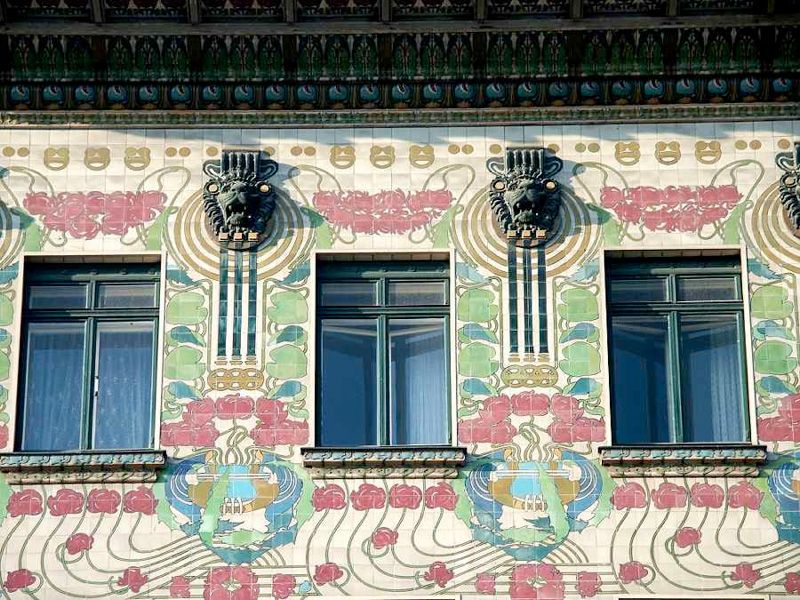
The walk also includes two apartment houses designed by Otto Wagner. These stops help you see how the style worked in ordinary urban life, not only in public stations or exhibition buildings.
Wagner’s apartment architecture is valuable because it shows the tension within Art Nouveau. The buildings could be decorative, but they also had to work as homes in a dense city. Facades, windows, surfaces, and patterns were part of a larger effort to make modern city living more attractive.
Your guide points out the details that are easy to miss on your own. That may include the materials, repeated forms, or small symbolic elements that connect private housing with the larger design program of Vienna.
This is one reason a specialist guide adds value. Without context, you might walk past an apartment building and notice only an ornate facade. With the right explanation, you can connect it to Wagner’s wider work and understand why the same designer mattered to both transport and domestic architecture.
The Postsparkasse adds a practical modern building
The itinerary includes the Österreichische Postsparkasse, or Austrian Postal Savings Bank. This is another important Wagner building and a useful contrast with the metro stations.
A bank had a different job from a railway station. It needed to look trustworthy, efficient, and modern. Wagner used materials and decorative details to create that impression without simply dressing the building in old-fashioned ornament.
The stop broadens the tour beyond a single architectural category. You’ll see how ideas first associated with Art Nouveau could serve a financial institution and a growing administrative city.
It also gives the guide another chance to discuss Otto Wagner’s design philosophy. Art Nouveau was not just a collection of curving lines and plant forms. It was tied to a belief that modern buildings should express their own age rather than pretend to be ancient.
Hietzing’s imperial station changes the tone
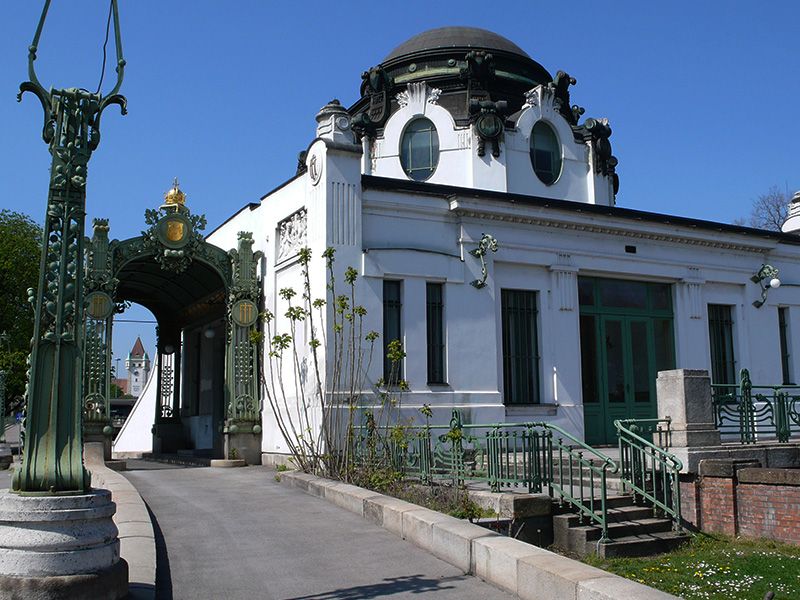
The final major stop is Otto Wagner Hofpavillon Hietzing, also known as the imperial station. It was built outside Schönbrunn solely for the emperor’s use.
This is the crown piece of the metro route. The building was not made for everyday commuters, and its purpose was openly symbolic. It showed critics of Vienna’s metro that the emperor supported the new system.
That political message gives the station a different character from Stadtpark or Kettenbrücke. Wagner had to take the generally bourgeois Art Nouveau style and give it imperial weight. The result shows how the same design language could move from public infrastructure to monarchy without losing its modern identity.
I find this contrast especially helpful. You can compare the practical stations with the grander imperial setting and ask how decoration changes when the user is the emperor instead of the general public.
The Hietzing pavilion also brings the tour’s main idea into focus. Vienna’s metro was engineering, transport, public policy, and visual identity all at once. Wagner’s work helped make the system feel like part of the city’s character.
What the guide adds to the buildings
This tour depends heavily on the guide. The listed guide language is English, and the experience is offered privately or in small groups, which can make a real difference at architectural sites.
Wolfgang has been praised for enthusiasm and for tailoring the walk to a two-person group. Peter has handled broad questions about Austrian history, city architecture, and even less obvious religious buildings such as former Jewish synagogues. Giuseppina has been described as friendly, attentive, and well versed in Art Nouveau.
Those individual guides will not all be available for every departure, so treat the names as examples rather than a guarantee. The useful point is that the tour can become a conversation rather than a fixed speech, especially in a private or small group.
That format suits you if you want to ask why Wagner selected a certain material, how the metro changed Vienna, or how Art Nouveau relates to the city’s political climate. It is less suitable if you prefer to move quickly from one photo stop to another with little explanation.
Is $176 per person fair value?
At $176 per person, this is a costly walking tour. You are paying for about three hours, an English-speaking historian, a focused route, and the option of a private or small-group format. Admissions to the Otto Wagner Pavilion and Secession House are extra.
The price makes more sense if architecture is a main reason you are visiting Vienna. You get several connected examples of Wagner’s work, access to specialist interpretation, and a route that combines buildings with actual metro travel.
It makes less sense if you only want to see the outside of Secession House or take a general introduction to Vienna. You could visit several central buildings independently, though you would lose the guided explanation linking them to the metro and to Wagner’s wider aims.
The flexibility also has some value. You can cancel up to 24 hours before the tour for a full refund, and the reserve-now, pay-later option lets you hold a place without paying at once. Those terms are useful when your Vienna schedule is still shifting.
Who should take this Vienna architecture walk?
I would recommend it most strongly to you if you enjoy buildings, city planning, and the story behind familiar sights. It is also a good fit if you have already seen Vienna’s major imperial attractions and want to understand the city’s modern turn around 1900.
The tour suits couples and small groups particularly well. A private booking can give you more room to shape the discussion, and the route seems to reward questions.
You should think twice if you have limited mobility or dislike long walks. The route includes several outdoor stops, metro stations, and city streets. The supplied details do not give specific accessibility information, so ask the provider before booking if that matters for you.
It is also worth checking the day of the week. The Secession House interior and Beethoven Frieze are specifically included Tuesday through Sunday, with the admission fee paid separately.
Should you book it?
Book this tour if you want a focused, expert-led look at Vienna’s Art Nouveau, especially Otto Wagner’s role in creating a recognizable modern metro system. The strongest parts are the Karlsplatz pavilion, the working stations, Secession House, and the imperial Hietzing station, all tied together by one clear theme.
Skip it if you want a light stroll, dislike extra admission fees, or are mainly interested in Vienna’s palaces and classical music. For the right reader, though, the price buys more than a checklist of buildings. It gives you a way to read Vienna’s streets, stations, and facades with sharper eyes.
FAQ
How long does the Vienna Art Nouveau Walking Tour last?
The activity is listed as three hours. The detailed route describes the guided walk as about two and a half hours, so you should plan for roughly three hours overall.
Where does the tour meet?
The stated meeting point is Café Museum at Operngasse 7, A-1010 Vienna. The exact starting place can depend on the option you select, so check your booking information.
What language is the tour in?
The live tour guide speaks English.
Is the tour private or shared?
You can choose between private and small-group options.
Is admission to the Otto Wagner Pavilion included?
No. Admission to the Otto Wagner Pavilion is not included in the tour price.
Is admission to Secession House included?
No. The admission fee is €9.50 for adults and €6 for students and seniors.
Can I see Klimt’s Beethoven Frieze?
Yes, on tours from Tuesday through Sunday, the visit to Secession House includes the chance to see Gustave Klimt’s Beethoven Frieze. The entrance fee is extra, and the guide helps you pay.
Can I cancel the tour?
You can cancel up to 24 hours in advance for a full refund. The reserve-now, pay-later option also allows you to book without paying immediately.
Just reviewed in Vienna
- World War II History Vienna Old Town Private Walking Tour★ 4.8 · 9 reviews
- Vienna: Wine Tasting E-Bike Tour★ 4.9 · 46 reviews
- Vienna: Winery and Wine Tasting Tour with a Wine Expert★ 5.0 · 5 reviews
- Vienna: Concert by the Vienna Baroque Orchestra★ 4.6 · 56 reviews
- Vienna: Unforgettable Private City Tour★ 5.0 · 7 reviews
- Vienna Urban Art Tour: Explore a different side of Vienna!★ 3.8 · 14 reviews
- Vienna: Sunday Brunch Danube Cruise & Live Music★ 4.2 · 42 reviews
- Vienna Supreme Orchestra at Palais Niederösterreich★ 4.8 · 10 reviews
Walking Tours, compared.
Guided Walking Tour of City Highlights & Hidden Gems
Read our review →
Vienna Historic Center Small Group Walking Tour
Read our review →
Browse the lists this tour appears in