Reviewed · TOURS
Street Art Tour in Vienna
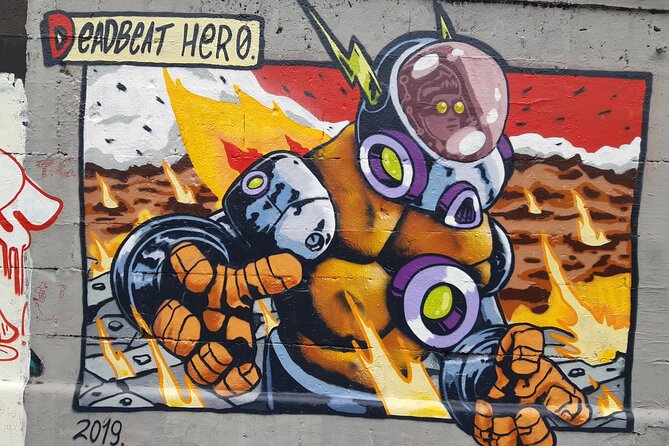
Vienna’s street art scene is not confined to a polished gallery. It runs along the Danube Canal, under bridges, around old industrial sites, and across walls that may be painted over by the time you return. This tour gives you a guide who can explain the artists, local crews, and unwritten rules behind what you see.
I like the off-center route, which takes you beyond Vienna’s grand palaces and museum quarter. I also like the chance to learn how to spot an artist’s signature style, while stopping for local on-the-go food and drinks is a pleasant option if you want to make the walk feel more local.
The main caution is that the route can lean heavily toward tagging and changing wall pieces. One guide may favor the Danube Canal, while another may adjust the walk around personal favorites, so the art you see is not entirely fixed.
Key points to know before you book
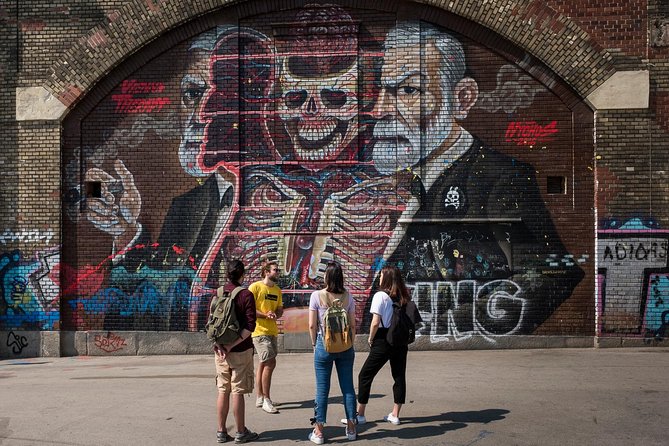
- The Danube Canal is the main event: Expect roughly an hour of legal and illegal walls, tags, and large pieces along the water.
- The route begins at Spittelau: You start near the district heating plant and its famous chimney, then move toward Das Werk and central Vienna.
- Guide style matters: Tobi is one named guide who has stepped in for the scheduled guide and built a more personal route around favorite works.
- The art changes constantly: Friedensbrücke pieces are often painted over, so the walk can look different from one visit to the next.
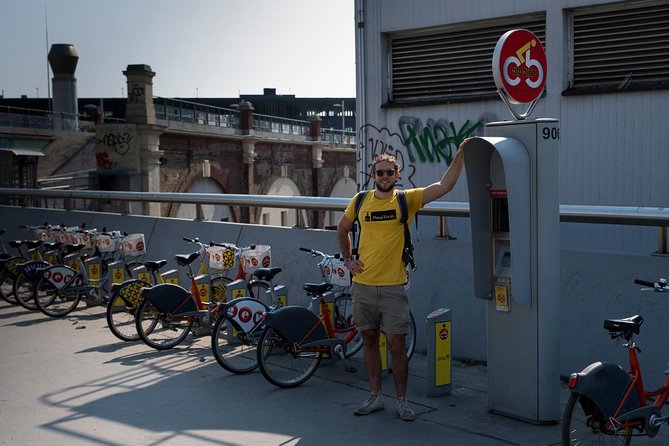
- You pay extra for snacks and transport: Food and drinks are not included, and getting to or from the attractions costs about €2.20 each way.
- Plan for a proper walk: The tour lasts about two to two and a half hours, operates in all weather conditions, and suits people with moderate fitness.
Vienna beyond the palace facades
Vienna is famous for imperial buildings, classical music, coffeehouses, and carefully preserved streets. This walk shows you a less tidy but equally revealing side of the city. You move through places where artists work quickly, crews mark territory, and public walls become temporary galleries.
The tour costs about $46.96 per person. That is not a bargain for a simple city walk, but the value depends on how much interpretation you want. If you already know Vienna’s artists and can identify styles on your own, you may find the price harder to justify. If you want a local person to explain the difference between a mural, a tag, a crew piece, and an illegal work, the guide adds the part you cannot get from strolling beside the canal alone.
The group is capped at 20 people. That is large enough to create a social walk but still manageable for a guide explaining details on city walls. Smaller groups may feel more personal, as happened with one group of six ranging in age from 18 to 80.
The guide can also add value beyond street art. Tobi, specifically, is described as offering suggestions for other things to do in Vienna and sharing general information about the city. That makes the tour useful early in your stay, when you can still use those tips.
A few more Vienna outings worth weighing up
- Vienna: 2-Hour Street Art Tour
★ 4.5 · 76 reviews
Starting beside Spittelau’s famous chimney
Meet at the district heating plant in Spittelau, in Vienna’s 9th district. The plant is known for its unusual, colorful chimney, and the first 15 minutes set the tone for the walk. You see several illegal pieces, hear about the worldwide street art scene, and get an introduction to the suburban setting around the plant.
This is a useful opening because it puts street art beside working city infrastructure. You are not beginning in a formal exhibition space. You are looking at art in a place shaped by utility, transport, and everyday urban life.
Do not expect a long stop here. The point is to get your bearings and understand that street art belongs to more than the central tourist streets. If you want a tour devoted only to large finished murals, this first section may feel modest. If you like seeing how art appears in ordinary neighborhoods, it makes a good start.
Wear shoes suited to a sustained walk. The tour is not described as strenuous, but the two-hour-plus duration calls for moderate fitness, and you will be outside throughout.
Das Werk and Vienna’s local hall of fame
The next stop is Das Werk, where the tour spends about 30 minutes. It is presented as a hall of fame for Vienna’s street art scene, with work connected to artists such as Roa, Nycos, Stratton, and Lugosi’s, along with other local names.
This is one of the more useful stops for people who are new to the subject. A wall full of images can seem random if you do not know who made them or how artists use repeated forms. A guide can help you connect a piece to an artist, a crew, or a particular way of working.
Das Werk also gives you a point of comparison. After seeing illegal pieces at Spittelau, you can consider how a more recognized wall or gathering place functions within the scene. The tour includes both legal and nonlegal work, which matters because the setting, scale, and lifespan of a piece can change depending on permission.
The art itself may not match your taste. Street art includes polished murals, rough tags, lettering, character work, and pieces that can look unfinished to an untrained eye. This tour is strongest when you approach it with curiosity rather than expecting every wall to look like a postcard.
An hour beside the Danube Canal
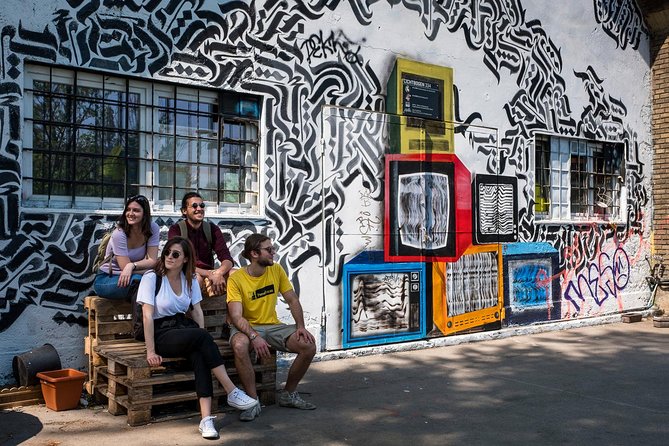
The longest stop is the Danube Canal, with about one hour devoted to its walls. The canal is the route’s central outdoor gallery, and you pass both legal and illegal pieces while learning about tagging, local artists, and the idea of a hall of fame.
This is where the tour can feel most rewarding, but also where expectations matter most. The canal offers a lot to look at, yet not all of it is large-scale mural art. Tags and quick pieces are part of the scene. If you only want carefully painted images with clear subjects, you may find parts of this walk repetitive.
I like the canal section because it explains the art as an ongoing process rather than a collection of frozen monuments. A wall may change between visits. A piece can be added, altered, or covered. That means the route has a sense of motion, but it also means the exact work advertised by memory or photographs may no longer be there.
The guide’s explanation is particularly important here. Without context, a line of tags may look like visual noise. With context, you begin to notice placement, repetition, lettering, and the way artists sign their work. The tour aims to teach you how to recognize styles and unique signatures, so you can continue spotting them after the walk ends.
One practical point: the route can be adapted. Tobi has taken a group away from the canal to show favorite pieces elsewhere, even though the canal is a regular part of the planned walk. That flexibility can produce a better personal experience, but it also means you should not treat the route as a fixed checklist.
A different sort of day out in Vienna:
- Vienna: Vivaldi’s Four Seasons Concert in Karlskirche
★ 4.7 · 14,951 reviews - Vienna: Skip-the-cashier-desk-line Giant Ferris Wheel Ride
★ 4.5 · 7,859 reviews - Vienna: Schönbrunn Palace & Gardens Skip-the-Line Tour
★ 4.7 · 7,739 reviews - Vienna: Light of Creation Votive Church Immersive Light Show
★ 4.8 · 6,779 reviews
Friedensbrücke and art that may vanish
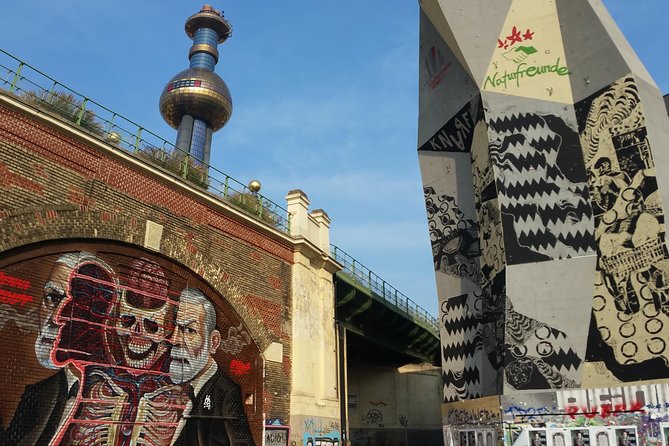
At Friedensbrücke, the tour spends about 30 minutes looking at work from the TS90 local crew, an octopus by Manuel Muriel, and other pieces along the route. This is one of the best places to understand how temporary Vienna’s street art can be.
The octopus gives you a clear example of a distinct image that is easier to remember than a wall of lettering. The TS90 work adds a local crew angle, helping you see that the scene is not just a collection of solo artists passing through town.
The warning here is important: pieces around Friedensbrücke are often overpainted. If you return later, you may find something new in the same place. I see this as part of the appeal, but it can disappoint you if you arrive expecting a particular photographed work.
Ask your guide about the pieces that have changed. The history of what was there can be as interesting as what remains. A wall that looks plain today may have been a key stop a year earlier, while a fresh piece may disappear before your next visit.
Finishing near Schottenring and Flex
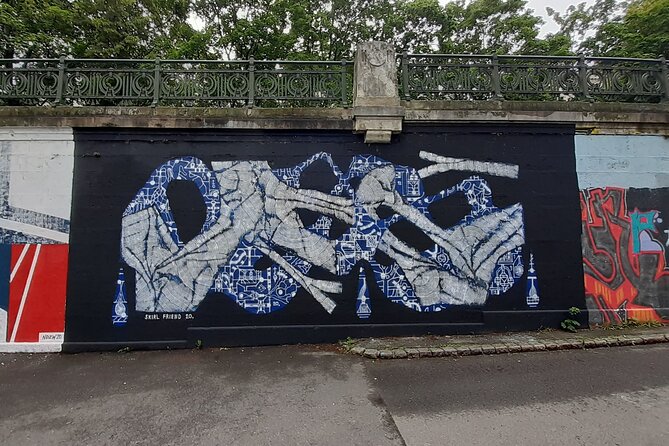
The walk ends near Schottenring U-Bahn station, close to the club Flex and the Danube Canal. The final 15 minutes bring more pieces and leave you in an area with restaurants and cozy cafes.
This is a practical ending. You are not dropped in an isolated suburb with no easy way onward. You can use the nearby underground station, continue walking along the canal, or stop for food and a drink.
The final section also serves as a recap. By this point, you should have seen enough different work to start identifying styles and signatures. That is a better measure of success than counting murals. The goal is to give you a new way to read Vienna’s walls after the guide has gone.
The end point is not the same as the start. Plan your day around that. You will need to arrange your own transport to Spittelau and from Schottenring, with transport listed at about €2.20 each way. The meeting point and ending point are both near public transportation, which keeps the logistics simple.
Food, drinks, and what you actually pay
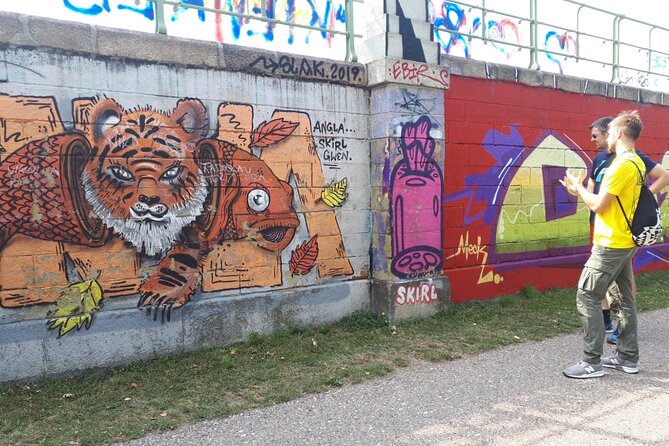
The tour highlights local on-the-go staples such as Austrian sausage, beer, and wine, but food and drinks are not included in the price. Think of these as optional additions rather than part of the ticket.
That can be useful. You choose how much to spend and whether you want a snack during or after the walk. It also means the $46.96 price does not cover every cost connected with the outing. Add public transport and anything you buy along the way.
For a two-hour to two-and-a-half-hour guided walk, the price makes the most sense if you care about the subject and want interpretation. You are paying for a local guide, tour escort, and access to a route that you might not understand fully on your own. You are not paying for admissions, since the stops are viewed from public areas and do not require entry tickets.
I would compare it with a standard city walking tour. If your main goal is Vienna’s imperial center, this is not the right substitute. If you have already seen the Ringstrasse and want an urban art angle, the price becomes easier to defend.
Guide personality can shape the whole walk
The named guide information is limited, but Tobi is specifically identified as a guide who has led the tour when another guide became ill. His approach was more personal, favoring art pieces he liked rather than following the canal route exactly.
That detail tells you something useful about the format. This is not a fully scripted museum visit with every stop locked in place. The guide’s interests and knowledge can influence what you see. One person may spend more time on the Danube Canal, while another may point out favorite works elsewhere.
That flexibility can work in your favor, especially if you enjoy conversation and want city tips alongside art. It can also create uneven results if you expect a precise list of major murals. Before the walk begins, it is reasonable to ask how closely the guide plans to follow the advertised route.
The strongest guide contribution is helping you look. Once someone points out the difference between a tag, a crew mark, and a more developed piece, the city becomes easier to read. You may start noticing signatures and repeated styles on your own during the rest of your Vienna stay.
Who will enjoy this walk most
I would recommend this tour to you if you have already seen Vienna’s major sights or want to balance palace interiors with working-city neighborhoods. It is also a good fit for anyone interested in contemporary art, local creative scenes, photography, or the way public space changes.
The tour can suit a mixed-age group. A group ranging from 18 to 80 completed the walk successfully, and the two-hour pace leaves room for explanation rather than rushing from wall to wall.
You may want to skip it if you dislike long outdoor walks, have little interest in tags, or want only large, finished murals. The route contains illegal work and changing pieces, and the canal section may feel less impressive if your definition of street art is limited to giant painted scenes.
The tour operates in all weather conditions, so dress for the forecast. The cancellation terms say that poor weather may lead to a new date or a full refund, but you should still arrive prepared for an outdoor activity unless the operator confirms a change.
Should you book the Street Art Tour in Vienna?
Book it if you want an informed introduction to Vienna’s less formal art scene and like the idea of learning how to recognize artists and styles. The best parts are the canal walls, Das Werk, the changing work at Friedensbrücke, and the guide’s local perspective.
Go in expecting a living wall scene, not a parade of perfect murals. Since tags and overpainted pieces are part of the route, your enjoyment will depend on how open you are to the full range of street art. If you want a fixed route, ask about the day’s plan. If you want a flexible walk with local insight, the format should suit you well.
FAQ
Where does the Street Art Tour in Vienna start?
The tour starts at the District Heating Plant Spittelau in Vienna’s 9th district, at Spittelau, 1090 Vienna.
Where does the tour finish?
It finishes near Schottenring U-Bahn station, close to the Danube Canal and the club Flex, at Franz-Josefs-Kai L, 1010 Vienna.
How long does the tour last?
The walk lasts approximately two to two and a half hours.
Is transportation included?
No. Transportation to and from the attractions is not included. The listed cost is about €2.20 one way.
Are food and drinks included?
No. Food and drinks are extra, although the tour may include opportunities to try Austrian sausage, beer, and wine.
Is the tour offered in English?
Yes. The tour is offered in English and includes a local guide, professional guide, and tour escort or host.
What happens if the weather is poor?
If the experience is canceled because of poor weather, you can be offered another date or a full refund. The tour operates in all weather conditions, so dress appropriately unless you receive notice of a cancellation.
Just reviewed in Vienna
- World War II History Vienna Old Town Private Walking Tour★ 4.8 · 9 reviews
- Vienna: Wine Tasting E-Bike Tour★ 4.9 · 46 reviews
- Vienna: Winery and Wine Tasting Tour with a Wine Expert★ 5.0 · 5 reviews
- Vienna: Unforgettable Private City Tour★ 5.0 · 7 reviews
- Vienna Urban Art Tour: Explore a different side of Vienna!★ 3.8 · 14 reviews
- Vienna: Concert by the Vienna Baroque Orchestra★ 4.6 · 56 reviews
- Vienna: Sunday Brunch Danube Cruise & Live Music★ 4.2 · 42 reviews
- Vienna Supreme Orchestra at Palais Niederösterreich★ 4.8 · 10 reviews
Tours, compared.


Skip-the-Line Sisi Museum, Hofburg and Gardens Tour
Read our review →
Guided Walking Tour of City Highlights & Hidden Gems
Read our review →