
Reviewed · WALKING TOURS
Private World War II Walking Tour in Vienna
Vienna’s WWII story is not tucked away in one museum. It is written into the grand squares, memorials, churches, and political symbols of the old town. This private walking tour connects those places with the rise of Adolf Hitler, the Nazi party, the war years, and Vienna’s uneasy postwar memory.
I like the private format, since your guide can spend more time on the subjects that interest you instead of following a fixed group script. I also like the chance to meet guides such as Lisa, Nando, Reinhard, or Hernando, whose warmth, humor, and command of the subject are repeatedly praised. The main drawback is that this is a serious history walk, not a broad sightseeing tour, and two and a half hours on foot can feel long in poor weather.
Key points to know before booking
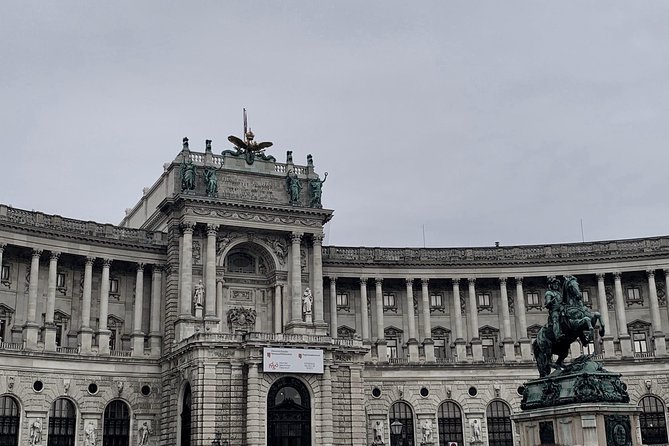
- Heldenplatz puts Nazi Vienna in the city center: This major square is one of the tour’s most important stops for understanding Hitler’s connection to Vienna and the Nazi takeover.
- Jewish Square adds a human and moral dimension: You will consider Vienna’s Jewish past and the persecution that shaped the city during WWII.
- The private group can include up to 15 people: You are not joining a large public crowd, and the guide can adjust the pace and conversation.
- The route mixes WWII with older Vienna: St. Stephen’s Cathedral and the Karl Lueger Monument help place the war in a longer political and cultural story.
- The walk lasts about two and a half hours: Wear sensible shoes and prepare to spend the full time outdoors, with stops along the way.
- English is the tour language: Guides are praised for clear English, lively presentation, and the ability to handle detailed questions.
Vienna’s WWII story begins in the old town
This experience works because Vienna’s WWII past is not separate from the city you came to see. You can admire imperial buildings and Gothic stonework while also learning how the same streets were used for political theater, exclusion, propaganda, and remembrance.
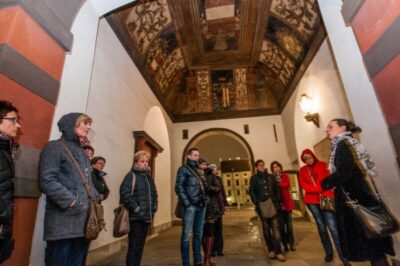
A state-certified guide leads the walk through the inner city, explaining Vienna before, during, and after WWII. That three-part approach matters. If you only discuss the war years, the story can feel like a string of dates. By setting the conflict within Vienna’s earlier politics and later memory, the guide can show how ideas and public symbols changed over time.
You will also have room for questions. Nando has been praised for handling detailed questions from well-read history enthusiasts, while Hernando is noted for adding wider facts about Vienna alongside the WWII material. Lisa is described as lively and personable, with excellent English and a good sense of humor. Guide assignments can vary, so treat those names as examples of the team rather than a promise that one particular person will lead your tour.
The tone is another strength. This is difficult material, but the guide is expected to present it with care. One particularly useful description of the experience points to history told with grace and humility. That is the right approach for a subject involving dictatorship, antisemitism, war, and mass suffering.
More walking tours in Vienna:
- Vienna: Guided Walking Tour of City Center Highlights
★ 4.7 · 4,989 reviews - Vienna: Vienna Central Cemetery Guided Walking Tour
★ 4.8 · 3,307 reviews - Vienna: Guided Walking Tour of City Highlights & Hidden Gems
★ 4.9 · 2,180 reviews
Starting at Helmut-Zilk-Platz
The listed meeting point is Helmut-Zilk-Platz, near Albertinaplatz in Vienna’s first district. If your hotel is in the inner city, the guide can meet you there instead and begin from your accommodation. If you are staying outside the central area, you receive the exact meeting location before the tour.
This is practical for a private walk. You do not need to spend the morning finding a distant departure point, and an inner-city hotel pickup can help families or older visitors get started without extra planning. Still, confirm the meeting details carefully, since the exact starting arrangement depends on your hotel location.
The central setting also gives the guide a useful opening. Vienna’s old town is compact enough for a walking route, but full of layers. You may begin with the city as it appears today, then gradually connect familiar streets and grand buildings to the political events of the twentieth century.
The tour is advertised at about two hours and 30 minutes. Some tours can run close to three hours, especially when the group asks questions or spends longer at a stop. That flexibility is one of the benefits of a private booking, but it also means you should not schedule another tight appointment immediately afterward.
Heldenplatz and the public theater of power
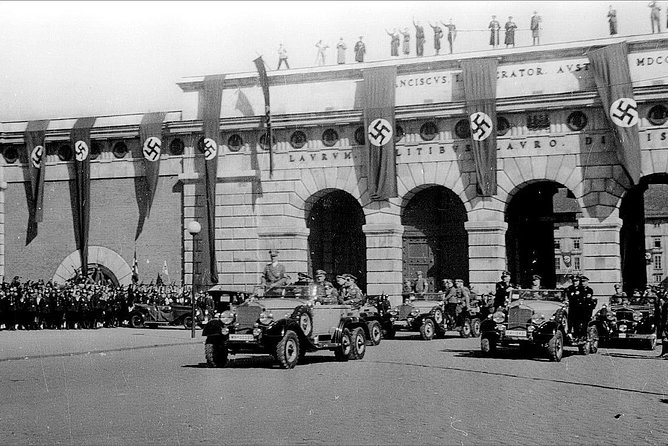
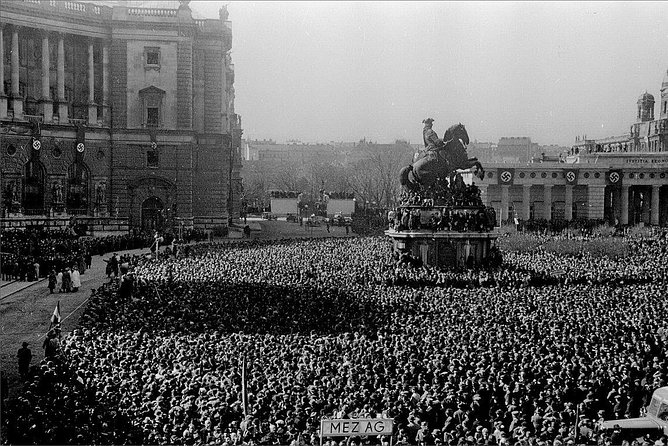
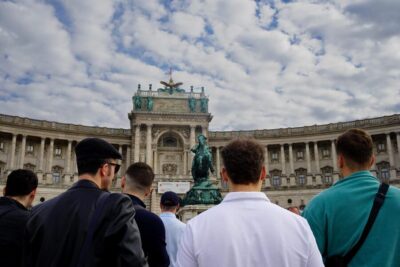
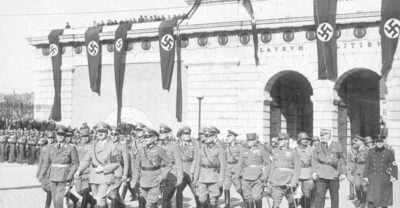
Heldenplatz is likely to be the emotional center of the tour. This broad square in front of Vienna’s Hofburg is closely linked with Hitler’s public appearance in Vienna after the German annexation of Austria in 1938. Your guide uses the setting to explain Hitler’s early connection to the city and the rise of the Nazi party.
The value here is visual. You are not looking at a distant photograph in a textbook. You are standing in the same civic space where political power was displayed before a huge crowd. The scale of the square helps explain how architecture and public gatherings could be used to create a sense of authority and mass loyalty.
The guide can also place Austrian events within the larger story of the German Nazi regime. That distinction is important. Vienna was not merely a passive backdrop, and a good explanation should help you understand local participation, political pressure, and the ways the city responded before, during, and after the war.
Expect this stop to involve discussion rather than an indoor exhibit. There is no indication that admission to a museum or special site is included. You are paying for the guide’s interpretation of the place, so the quality of the conversation matters more than a long list of monuments.
Jewish Square and the cost of forgetting
Jewish Square, or Judenplatz, brings the tour into a more personal and painful part of Vienna’s story. The square is associated with Vienna’s Jewish community and its persecution under Nazi rule. It is also a place where the city’s medieval past and twentieth-century memory meet.
This stop is important because WWII history can become too focused on military events and political leaders. Jewish Square shifts attention toward people, community, loss, and remembrance. Your guide can help explain why memorials occupy public space and how Vienna has faced, or struggled to face, its past.
The private format is especially useful here. You may want to ask about the meaning of a memorial, the history of Vienna’s Jewish population, or how the city’s memory has changed. A large group often makes such questions harder to ask. With only your party, the guide can spend more or less time here according to your interest.
The subject requires a respectful tone. The guide team has received praise for presenting difficult history with humility, which is exactly what you want at this stop. It is not a place for rushed sightseeing or cheerful photo stops. Give yourself room to listen.
A few more Vienna outings worth weighing up
- Vienna: Private Walking Tour with a Local Guide
★ 4.6 · 1,420 reviews - Vienna: Private Walking Tour with a Guide
★ 4.7 · 962 reviews - Vienna: Wine Tasting Experience in a Private Wine Cellar
★ 4.8 · 413 reviews - Private Day Tour Trip Salzburg Hallstatt and Melk from Vienna
★ 5.0 · 388 reviews
St. Stephen’s Cathedral in a city shaped by centuries
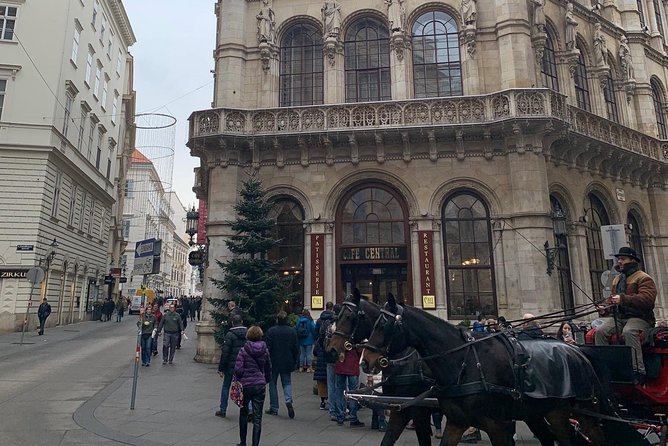
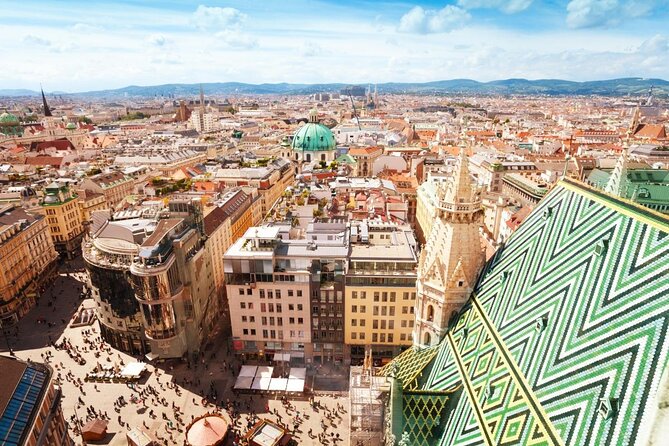
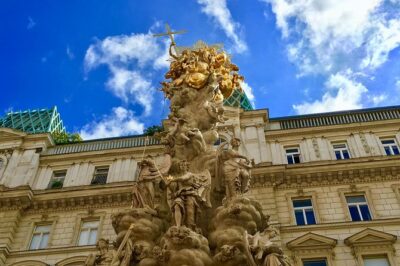
The Gothic cathedral in the heart of the old city, St. Stephen’s Cathedral, gives the walk a broader frame. The building itself is older than WWII by many centuries, but that is the point. Vienna’s wartime story took place in a city with long religious, political, and cultural traditions.
The listed end point is St. Stephen’s Cathedral at Stephansplatz. Depending on the guide’s route and the group’s pace, the cathedral may function as a final landmark as well as a discussion stop. It is a convenient place to finish because you are close to public transportation, shops, cafés, and other central sights.
You should not expect the tour fee to include a cathedral interior visit. The experience is a walking tour with a private guide, and no entrance tickets are listed among the inclusions. If entering the cathedral matters to you, ask about it before booking rather than assuming it is part of the route.
Even from outside, the cathedral helps explain how Vienna’s identity is layered. The guide can move from medieval power and imperial tradition to twentieth-century nationalism and war. That wider view keeps the WWII discussion from feeling isolated from the city around you.
The Karl Lueger Monument and the politics before Hitler
The Karl Lueger Monument adds a useful complication to the story. Lueger was a former mayor of Vienna associated with antisemitic politics. His place in the city’s public memory raises questions about how societies honor, question, or reinterpret political figures from the past.
This is an especially worthwhile stop for anyone interested in how the conditions around WWII developed. Hitler’s rise did not happen in a vacuum, and the guide can use Lueger’s legacy to discuss older political currents in Vienna without pretending that every earlier figure or movement had the same aims.
The monument also gives the tour a present-day angle. You are not only learning what happened before and during the war. You are considering how Vienna deals with symbols that remain visible after the political world that created them has changed.
Since the tour is private, you can ask for more context here if political history interests you. If your group prefers the military side of WWII, you can signal that too. The itinerary is designed to be adapted to your interests and pace, within the time available.
A private tour that can follow your questions
The strongest practical reason to choose this experience is the private setup. Your group alone takes part, with space for up to 15 people. That makes it suitable for a family, a group of friends, or a school or professional group that wants one shared conversation.
Private does not automatically mean personalized, so tell the guide what you want at the start. You might ask for more about Hitler’s Vienna, Jewish history, political ideology, monuments, wartime destruction, or postwar memory. The guide can then place greater weight on those subjects.
The format also helps if your group has mixed interests. One person may want military facts, another may care about architecture, and another may want to understand present-day remembrance. An English-speaking guide can connect those threads without forcing everyone into a rigid lecture.
The group limit of 15 is generous. A party of two or four will feel much more intimate than a full group of 15. If you are booking for the maximum number, remember that a larger private party can move more slowly and may make it harder for everyone to hear equally in busy streets.
How the price works for a group
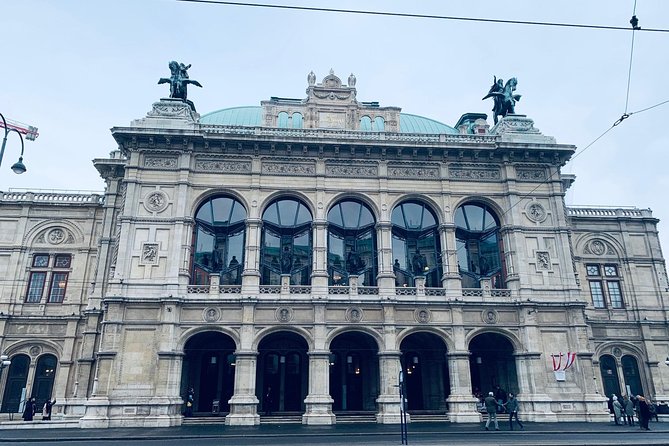
The listed price is $451.79 per group, with up to 15 people included. That can be expensive for one or two people, but the calculation changes quickly as the group grows. Split among 10 people, it works out to roughly $45 per person. For 15, it is about $30 per person.
You are paying for a private, state-certified guide for roughly two and a half hours. No admission tickets, food, or transport are listed as included, so the value rests on the guide’s knowledge, the route, and the ability to shape the discussion around your group.
For history enthusiasts, the price can make sense because a strong guide adds context you would not get by simply walking from square to square. For a couple on a tight budget, a small-group or self-guided option might cost less. I would choose this tour when the history is a main reason for your visit, not as a general introduction to every major sight in Vienna.
Weather, walking, and practical planning
This is an outdoor walking experience. Wear comfortable shoes, and bring a coat or umbrella if the forecast looks uncertain. One group continued in rainy weather with jackets and umbrellas and found the nearly three-hour walk manageable, but you should decide for yourself how comfortable you are outdoors.
The tour is offered in English and is near public transportation. Most people can participate, and service animals are allowed. The information provided does not describe a fully step-free route, so if you have mobility concerns, ask the provider about the path before booking.
Confirmation arrives at booking. Free cancellation is available up to 24 hours before the start time. If you cancel or make changes inside that 24-hour window, you should not expect a refund or accepted alteration.
Who will get the most from this walk
I would recommend this tour to you if you like history explained at street level and want to ask questions as you go. It is particularly suited to people who already know some European history and want a guide who can add local context rather than repeat only the most basic facts.
It also fits families with older children, provided they are ready for serious subject matter and a long walk. The private setting gives you more control over pace and attention than a large public group.
I would be more cautious if you want a fast overview of Vienna’s palaces, cafés, and major art collections. This route touches important old-town sights, but WWII and political history are the focus. You will not get a full tour of Vienna’s general attractions in 150 minutes.
Should you book the Vienna WWII walking tour?
Book it if you want to understand how Vienna’s streets connect to the rise of Nazism, the persecution of Jewish residents, and the city’s later effort to confront its past. Heldenplatz, Jewish Square, the cathedral, and the Karl Lueger Monument create a strong route, and the private format lets you ask serious questions without holding back a public group.
I would book this early if your dates are fixed, since the experience is often reserved well in advance. At $451.79, it is best value for a group or for people who place a high price on a personal guide. For a small party seeking only light sightseeing, it may feel costly.
FAQ
How long does the private WWII walking tour last?
The tour lasts approximately two hours and 30 minutes. It may run closer to three hours when the group asks questions or spends extra time at stops.
Where does the tour start?
The listed starting point is Helmut-Zilk-Platz near Albertinaplatz in Vienna’s first district. If your hotel is in the inner city, the guide can meet you there.
Where does the tour end?
The listed end point is St. Stephen’s Cathedral at Stephansplatz 3 in Vienna’s first district.
Which places are visited?
The route includes Heldenplatz, Jewish Square, a Gothic cathedral in the city center, and the Karl Lueger Monument. The guide also discusses Vienna before, during, and after WWII.
How many people can join the private tour?
The price covers one private group of up to 15 people. Only your group takes part.
Is the tour offered in English?
Yes. The experience is offered in English with a private guide. Guides named in the tour information include Lisa, Nando, Marco, Reinhard, Christopher, and Hernando, though a specific guide is not guaranteed.
Just reviewed in Vienna
- World War II History Vienna Old Town Private Walking Tour★ 4.8 · 9 reviews
- Vienna: Wine Tasting E-Bike Tour★ 4.9 · 46 reviews
- Vienna: Winery and Wine Tasting Tour with a Wine Expert★ 5.0 · 5 reviews
- Vienna: Unforgettable Private City Tour★ 5.0 · 7 reviews
- Vienna Urban Art Tour: Explore a different side of Vienna!★ 3.8 · 14 reviews
- Vienna: Concert by the Vienna Baroque Orchestra★ 4.6 · 56 reviews
- Vienna: Sunday Brunch Danube Cruise & Live Music★ 4.2 · 42 reviews
- Vienna Supreme Orchestra at Palais Niederösterreich★ 4.8 · 10 reviews
Walking Tours, compared.
Guided Walking Tour of City Highlights & Hidden Gems
Read our review →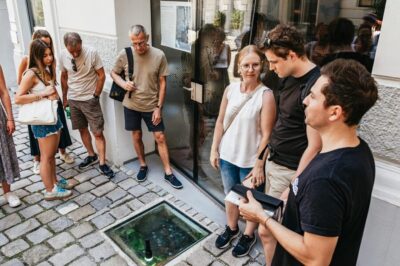
Vienna Historic Center Small Group Walking Tour
Read our review →
Browse the lists this tour appears in