
Reviewed · WALKING TOURS
Private Vienna Walking Tour
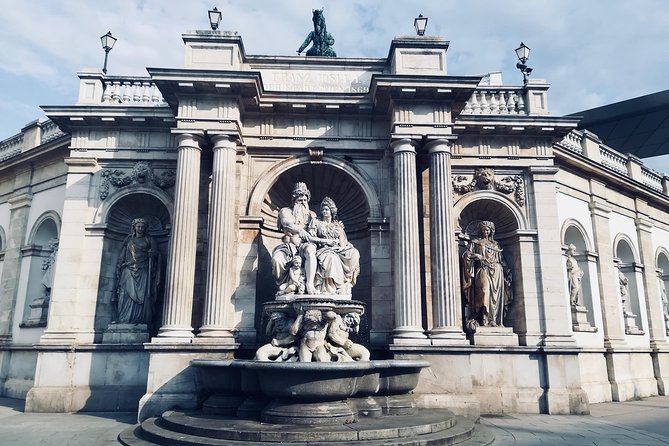
Vienna’s grand center is compact enough to see on foot, and this private tour gives you a brisk introduction to its imperial palaces, grand squares, churches, gardens, and old streets in one outing. Guides such as Lisa, Marco, Claudia, and Hernando bring different personalities, but the strongest feedback centers on lively storytelling and an ability to adjust the walk to the group.
I like the private format, which lets you ask questions, slow down for children or older walkers, and shape the final stop around your interests. I also like the practical help: guides have suggested restaurants, Christmas markets, tucked-away streets, and later train connections to Schönbrunn.
The main consideration is time. Two to three hours is enough for a valuable orientation, but not for serious interior visits or a full treatment of Vienna’s art and history. A few visitors found the pace rushed or the explanation too general, so tell your guide early what you most want from the walk.
Key points at a glance
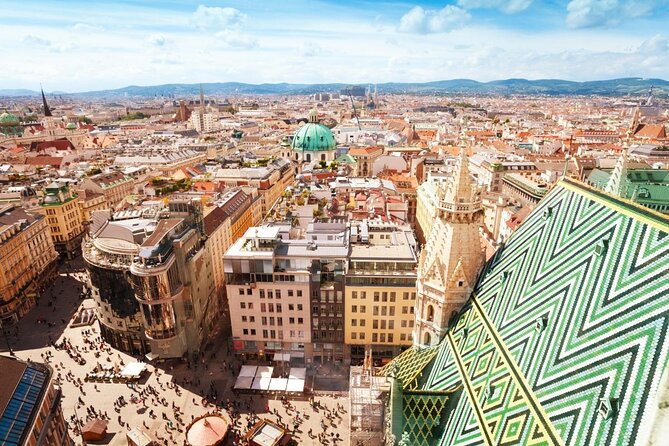
- A compact First District route: See St. Stephen’s Cathedral, the State Opera, Hofburg, Heldenplatz, Graben, Jewish Square, Burggarten, and Volksgarten.
- Private attention for up to 15 people: Your group does not share the guide with strangers, though a group of 15 will feel less personal than a couple or family of six.
- Hotel pickup in postal code 1010: If your hotel is in Vienna’s inner city, the guide can meet you there. Other meeting arrangements are confirmed before the tour.
- Guide quality shapes the experience: Lisa, Marco, Claudia, and Hernando have all led this walk, with the strongest praise going to energetic, flexible storytelling.
- No regular admission tickets are included: The route focuses on seeing the major buildings and public spaces from outside unless another arrangement is made.
- Good first-day orientation: Use it to decide which museums, palaces, restaurants, and neighborhoods deserve your later time.
A fast, useful introduction to Vienna’s First District
This is the kind of walk I like to take near the beginning of a Vienna visit. The route brings together the city’s biggest names without making you spend your first day studying a map or sorting out which Habsburg building is which.
You begin at Helmut-Zilk-Platz, or at your central hotel if you are staying in the 1010 postal district. The exact end point can change with your interests and the time of day, which is useful if you want to finish near lunch, shopping, another attraction, or public transportation.
The listed route takes about two hours, while the advertised duration is two to three hours. That difference matters. You should plan for a walking introduction rather than a slow museum-style visit. The guide will likely keep you moving between public squares and landmarks, stopping for explanations, photographs, and questions.
The tour is conducted in English. It is private, so only your own party joins the activity. That makes a real difference for families, couples, and small groups who do not want to follow a fixed script. A group of 15 can book under the same price, but the guide will have to address a larger crowd, and it may be harder for everyone to hear or ask questions.
More walking tours in Vienna:
- Vienna: Guided Walking Tour of City Center Highlights
★ 4.7 · 4,989 reviews - Vienna: Vienna Central Cemetery Guided Walking Tour
★ 4.8 · 3,307 reviews - Vienna: Guided Walking Tour of City Highlights & Hidden Gems
★ 4.9 · 2,180 reviews
St. Stephen’s Cathedral and the medieval heart of Vienna
St. Stephen’s Cathedral is one of the clearest starting points for understanding central Vienna. Its Gothic form anchors the city center, and the busy streets around it show how the medieval core has become a modern shopping and meeting district.
Your guide can give the cathedral a place in the larger story of Vienna rather than treating it as an isolated church. You will also have a chance to get your bearings before the route moves toward the palaces and ceremonial spaces.
The important practical point is that this is an outdoor walking tour with free admission listed for the stops. Do not book it expecting an included cathedral visit or a guided interior tour. If you want to go inside, see the towers, or spend time with the interior art, plan that as a separate visit.
From here, the route moves through central shopping streets toward the Graben. This section is easy to reach and visually impressive, but it can also be crowded and distracting. Stay close to your guide, especially with children or a large family group.
The Graben and the Plague Column
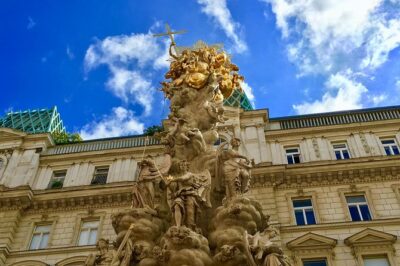
The Graben is one of Vienna’s most recognizable central streets. It combines elegant architecture, shops, cafés, and a large Baroque plague column, officially the Pestsäule, erected after the plague epidemic of 1679.
This is a good place for a guide to explain how public monuments in Vienna combine religion, royal power, and civic memory. The column is not simply decoration. Its size and position make it part of the city’s public story.
You will probably spend more time listening and looking than walking here. The Graben is also a useful orientation point, since it links St. Stephen’s Cathedral with other major areas of the First District.
If shopping is not your interest, do not worry. The value of this part is the architecture and the connection between everyday city life and imperial Vienna. If shopping is your interest, ask the guide where the walk finishes or request suggestions for later.
The Vienna State Opera and the grand route west
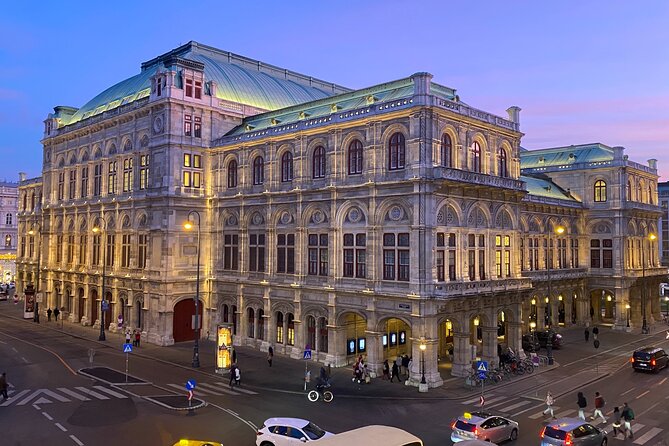
The Vienna State Opera introduces another side of the city: music, court ceremony, and the public image of imperial Austria. The building is an important exterior stop even if you are not attending a performance.
A guide can help you read the Opera as part of Vienna’s wider cultural identity. The route does not include a performance or regular ticket, so think of this stop as an architectural and historical explanation rather than a backstage visit.
This is also one of the places where the guide’s style matters. Several guides have been praised for making facts entertaining through stories, historical gossip, and personal energy. That approach can keep a family engaged, especially when children might otherwise lose interest in dates and dynasties.
Still, the information may not be equally detailed with every guide. One less satisfied visitor felt the commentary stayed too broad and moved on before enough historical and cultural detail had been provided. If you want architecture, music history, or a specific period covered in depth, say so at the start.
A few more Vienna outings worth weighing up
- Vienna: Private Walking Tour with a Local Guide
★ 4.6 · 1,420 reviews - Vienna: Private Walking Tour with a Guide
★ 4.7 · 962 reviews - Vienna: Wine Tasting Experience in a Private Wine Cellar
★ 4.8 · 413 reviews - Private Day Tour Trip Salzburg Hallstatt and Melk from Vienna
★ 5.0 · 388 reviews
Hofburg Imperial Palace and Heldenplatz
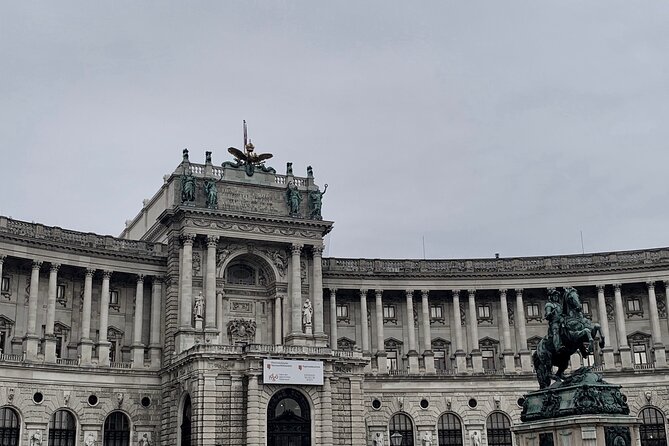
The Hofburg is the tour’s largest historical subject. This vast palace complex was the Habsburg seat for centuries and remains one of the defining places in Vienna.
You will see the palace in the context of Heldenplatz, or Heroes’ Square. The square’s open scale makes it easier to understand how the Habsburg rulers presented power in public. It also gives the guide room to connect the buildings, ceremonies, political history, and changing role of the Austrian state.
This stop can be especially valuable if you are new to Vienna. The city contains so many imperial buildings that the palace complex can blur into the next grand façade. A good guide gives you a simple framework: what belonged to the court, how the empire worked, and why Vienna looks the way it does.
The tradeoff is that the Hofburg requires much more than a few minutes to explore properly. The complex contains museums and formal rooms, but this walking experience does not list interior admission as part of the price. I would use the tour to decide if you want to return for a dedicated palace visit.
Heldenplatz is also one of the places where the guide’s personal command of history becomes important. Lisa has been praised for connecting with both adults and young children, while Marco has been singled out for explaining history, architecture, culture, and smaller facts in an easy conversational way.
Jewish Square and Vienna’s layered past
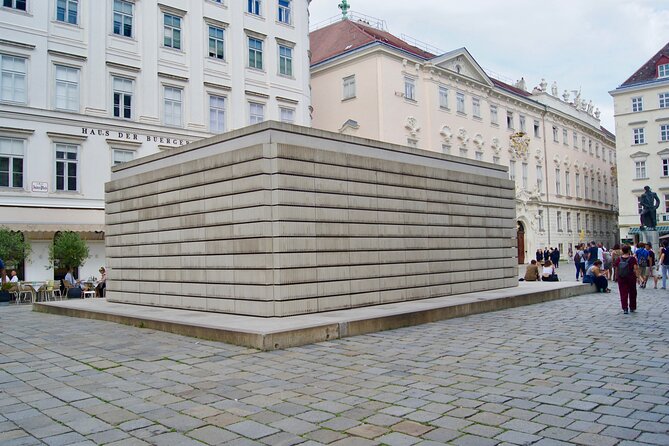
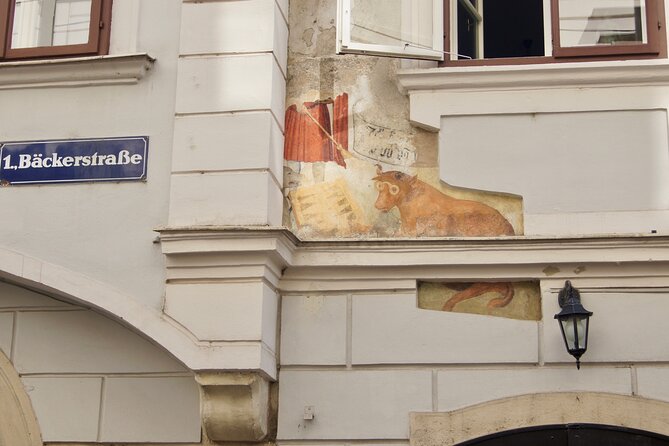
Jewish Square, or Judenplatz, adds a more serious and less purely imperial part of the city’s story. It is an important stop because Vienna cannot be understood through palaces, music, and Baroque churches alone.
The square allows the guide to discuss the Jewish community’s long presence in Vienna and the forces that shaped its history. The stop broadens the walk beyond royal architecture and gives you a chance to ask about the city’s social and religious past.
The depth of this explanation can vary. If this subject matters to you, tell the guide you would like time for it rather than letting the route become a quick photo stop. A two-hour walk has limits, and a private tour gives you a better chance to set priorities.
This is one reason I prefer taking a private walk early in a visit. You can identify museums or memorial sites that deserve a longer, quieter visit later, rather than trying to absorb every subject on the spot.
Burggarten, the Mozart statue, and Volksgarten
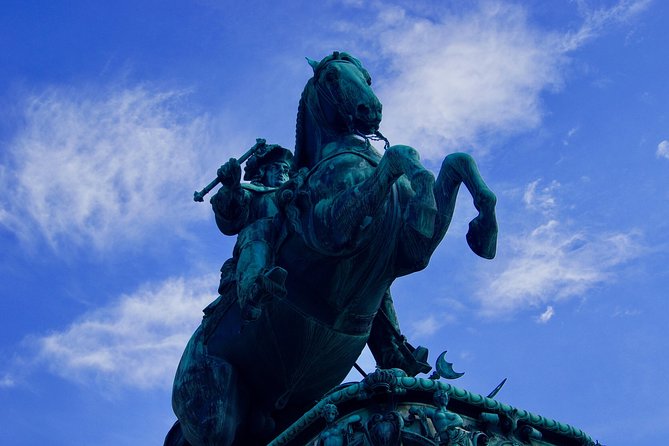
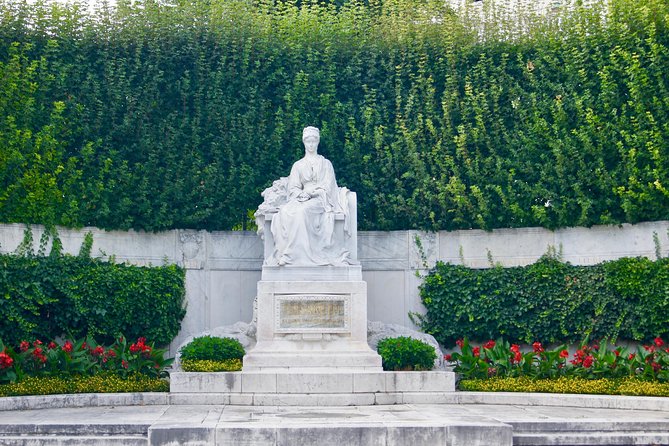
The final green spaces add a welcome change from stone streets and palace façades. Burggarten is associated with the former imperial grounds and is home to the well-known Mozart monument. It is a natural place to pause, take photographs, and hear about Vienna’s musical image.
The Mozart statue is not the same as attending a concert or visiting a museum, but it gives the guide a chance to explain how Vienna presents its composers and musical past. If your group enjoys music, ask for recommendations for a later performance or museum visit. Specific event advice is not guaranteed, but guides have been praised for offering useful suggestions beyond the scheduled route.
Volksgarten, the People’s Garden, provides another view of central Vienna. Its formal planting and public character show how former court spaces became part of the everyday city.
These gardens can also help balance the walking pace. Families and older adults may appreciate the chance to slow down, and the guide can adjust the route when needed. One older couple specifically valued a pace that worked for people in their 60s and 70s, while families with young children found the storytelling accessible.
What the private format really adds
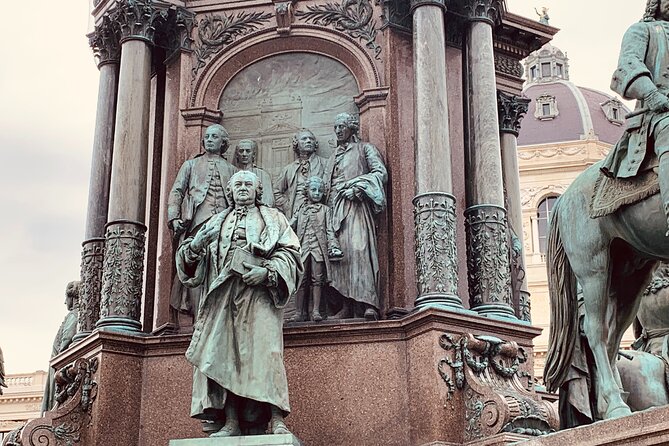
The private setup is not just a smaller version of a group tour. It changes how you can use the time.
With a couple, you can ask for more detail about architecture, political history, music, or food. With children, you can ask the guide to keep the stories shorter and more vivid. With a company group, the tour can function as a team activity, and one group of 15 found that both local participants and people from the United States gained something from the walk.
There is a limit, though. The advertised price is $452.56 for a group of up to 15, not per person. For two people, that works out to $226.28 each. For six people, it is about $75.43 per person. At the full group size, it is about $30.17 per person.
That makes the tour easier to justify for a family or group of friends. For one or two people, the premium is substantial, but you are paying for privacy, flexibility, and direct access to the guide rather than just a list of sights.
The best value comes when you use the guide actively. Ask questions. Mention mobility needs. Say if you care more about the Habsburgs than shopping, or Jewish Vienna more than Mozart. A private tour works best when you help shape it.
Guide personalities and the importance of setting expectations
The experience is not tied to one named guide every time. Lisa, Marco, Claudia, and Hernando are among the guides associated with the walk, so you should not assume that a particular person will lead your booking unless the provider confirms it.
Lisa receives especially strong praise for energy, humor, historical stories, and connecting with children. Marco is described as warm and exceptionally broad in his coverage of Vienna’s history, culture, and architecture. Claudia has been praised for finding less-used streets, adding local context, and helping with later train plans. Hernando has been described as informative and entertaining, though one person wanted greater depth from his presentation.
That range tells you something useful. The guide can make or break a short city walk, and your expectations should be clear from the beginning. If you want a tightly structured history lecture, say so. If you want a relaxed overview with restaurant and market suggestions, say that instead.
The overall rating is 4.9 from 58 ratings, and 97 percent of customers recommend the experience. Those numbers point to a strong record, but they do not remove the normal variation that comes with different guides, group interests, and walking pace.
Pickup, meeting points, and timing
The standard starting point is Helmut-Zilk-Platz in the 1010 area of Vienna. If your hotel is in the First District, with postal code 1010, pickup is offered directly at the hotel.
If you stay outside the inner city, the provider contacts you before the tour to confirm the meeting location. Do not assume that hotel pickup applies outside 1010. You will receive confirmation at booking, and the end point is set according to your interests and the time of day.
The route is close to public transportation, and most people can take part. Service animals are allowed. Since this is a walking tour, wear comfortable shoes and allow enough time for pauses, photographs, and city traffic, even though the listed duration is relatively short.
Free cancellation is available up to 24 hours before the start time for a full refund. Changes or cancellations inside that 24-hour window are not accepted for a refund.
Who should book this Vienna walk?
I would recommend it most strongly for:
- First-time visitors who want a clear map of central Vienna
- Families that need a flexible pace and age-appropriate stories
- Small groups who can share the fixed price
- Adults who want recommendations for restaurants, markets, museums, or later outings
- Visitors with only a short window in the First District
- People who prefer conversation and questions to a large scheduled group
I would be more cautious if you want to spend substantial time inside the Hofburg, cathedral, Opera, or museums. This tour shows you the central sights and explains their place in Vienna, but it is not a substitute for dedicated admission visits.
Should you book the Private Vienna Walking Tour?
Book it if you want a strong first look at Vienna’s center and value a guide who can adjust the walk to your group. The combination of major landmarks, private attention, central pickup, and practical local advice makes the fixed price reasonable for a family or larger party.
For two people, compare the cost with a shared walking tour before deciding. For a group of six or more, the per-person price becomes much easier to defend.
I would book it early in your stay, then use the guide’s suggestions to plan the rest of your Vienna visit. Ask for the guide and subject focus you prefer, confirm pickup if your hotel is outside 1010, and treat the walk as a well-told orientation rather than a complete study of every building.
FAQ
How long does the Private Vienna Walking Tour last?
The advertised duration is approximately two to three hours. The listed route itself is described as taking about two hours, so you should allow for some variation based on questions, pace, and the group’s interests.
What sights are included?
The route includes St. Stephen’s Cathedral, the Vienna State Opera, Heldenplatz, Hofburg Imperial Palace, the Graben and Plague Column, Jewish Square, Burggarten, the Mozart statue, and Volksgarten, along with additional central sights.
Is the tour private?
Yes. Only your group participates, with a maximum group size of 15 people.
What language is the tour offered in?
The tour is offered in English.
Is hotel pickup available?
Pickup is available if your hotel is in Vienna’s First District, postal code 1010. If your hotel is outside the inner city, the provider contacts you before the tour to confirm the meeting place.
Are entrance tickets included?
The listed stops have free admission, and the experience does not list paid entrance tickets as included. Plan on seeing the main buildings and public spaces as part of the walking route unless another arrangement is confirmed.
What is the cancellation policy?
You can cancel up to 24 hours before the start time for a full refund. Cancellations or changes made less than 24 hours before the tour are not accepted for a refund.
Just reviewed in Vienna
- World War II History Vienna Old Town Private Walking Tour★ 4.8 · 9 reviews
- Vienna: Wine Tasting E-Bike Tour★ 4.9 · 46 reviews
- Vienna: Winery and Wine Tasting Tour with a Wine Expert★ 5.0 · 5 reviews
- Vienna: Unforgettable Private City Tour★ 5.0 · 7 reviews
- Vienna Urban Art Tour: Explore a different side of Vienna!★ 3.8 · 14 reviews
- Vienna: Concert by the Vienna Baroque Orchestra★ 4.6 · 56 reviews
- Vienna: Swarovski DIY Workshop Experience★ 5.0 · 9 reviews
- Vienna: Sunday Brunch Danube Cruise & Live Music★ 4.2 · 42 reviews
Walking Tours, compared.
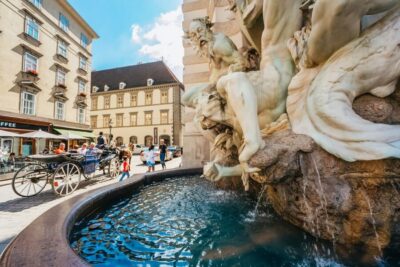
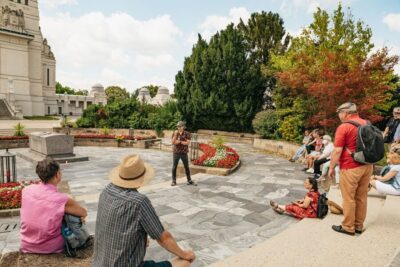
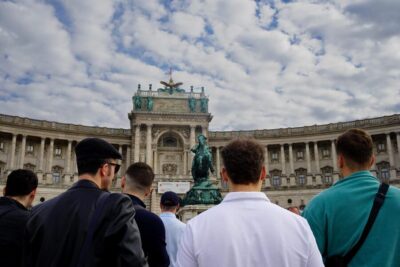
Guided Walking Tour of City Highlights & Hidden Gems
Read our review →
Vienna Historic Center Small Group Walking Tour
Read our review →
Browse the lists this tour appears in