
Reviewed · WALKING TOURS
Private Vienna Art Nouveau Walking Tour
Vienna’s Art Nouveau is at its best when you know where to look. This private walk connects the gilded Secession Building, Otto Wagner’s elegant metro architecture, apartment houses, a postal bank, and the food stalls of Naschmarkt into one clear story about artists breaking away from old rules. The buildings are the main event, but a strong guide makes their ideas easier to see.
I like the private format, especially if your group wants to ask plenty of questions or adjust the pace. I also like the route’s mix of grand façades and working city spaces, from Karlsplatz to a former metro station and Stadtpark. The main drawback is cost: $490 for up to 10 people can be fair for a full group, but expensive for one or two guests, and museum admission is extra.
Key points to know before booking
- Klimt’s Beethoven Frieze: The Secession Building includes Gustav Klimt’s famous work, with a separate admission fee.
- Otto Wagner’s Vienna: Karlsplatz, the Postsparkasse, and the former Stadtbahn stations show how one architect shaped the city’s modern look.
- A genuinely private experience: Only your group takes part, so questions and pacing can be tailored to your interests.
- Three hours on foot: The route covers several central sites, with short stops and a practical city walk between them.
- Guides with art backgrounds: Barbara, Wolfgang, and Annelie are among the guides named in past feedback, each praised for clear explanations and friendly discussion.
- Extra costs matter: Food, drinks, museum tickets, and hotel pickup and drop-off are not included.
Why Vienna Art Nouveau deserves a dedicated walk
Vienna’s Art Nouveau, known locally as Jugendstil and closely tied to the Vienna Secession, is easy to miss. You can spend days admiring imperial palaces and Ringstraße monuments without noticing the cleaner lines, floral details, metalwork, mosaics, and unusual materials that mark the city’s modern movement.
This tour gives those details a framework. Instead of treating each building as an isolated photo stop, your guide can explain how artists and architects challenged Vienna’s established art institutions in the late 19th century. The Secession Building provides the artistic starting point, while Otto Wagner’s stations and civic buildings show how similar ideas moved into everyday city life.
That connection is the real value. You are not simply looking at pretty façades. You are seeing how Vienna tried to become a modern capital while still surrounded by imperial traditions.
The private setup helps here. If you already know Klimt, you can ask about architecture or the Secession movement. If the subject is new to you, a guide such as Wolfgang or Annelie can slow down and build the story from the beginning. Barbara was also praised for answering varied questions about Vienna’s past and present, which is useful when your interests extend beyond design.
More walking tours in Vienna:
- Vienna: Guided Walking Tour of City Center Highlights
★ 4.7 · 4,989 reviews - Vienna: Vienna Central Cemetery Guided Walking Tour
★ 4.8 · 3,307 reviews - Vienna: Guided Walking Tour of City Highlights & Hidden Gems
★ 4.9 · 2,180 reviews
Starting with Klimt at the Secession Building
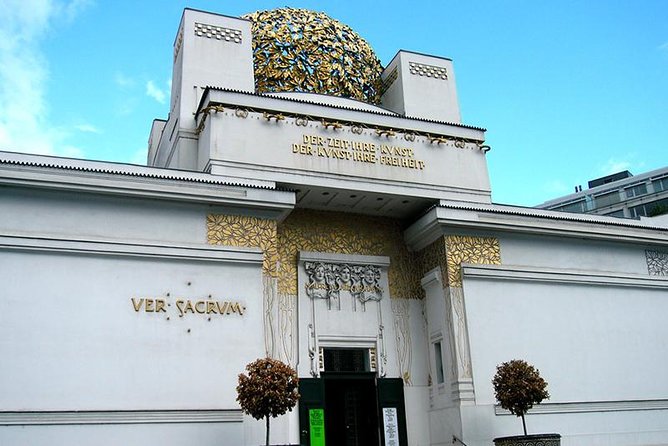
The Secession Building is one of the tour’s strongest opening stops. Completed in 1898 by Joseph Maria Olbrich, it was built as an exhibition hall for artists who had broken away from Vienna’s established fine-art institution.
Its most famous feature is the ornate dome, often described by its unusual decorative form. The building itself was meant to make a statement before you even entered: this was a new kind of art space for a new kind of art.
Inside, you can see Gustav Klimt’s Beethoven Frieze. The work was created for one of the original Secession exhibitions and presents a dramatic interpretation of Beethoven’s Ninth Symphony through symbolic figures and scenes. Even if you are not an art specialist, the scale and strange, powerful imagery make this a worthwhile stop.
Admission is not included. From Tuesday through Sunday, entry to the Secession House to see the Beethoven Frieze costs €9.50 for adults and €6 for students and seniors. Your guide helps with payment, which keeps the visit simple, but you should budget for it before booking.
The stated visit lasts about 30 minutes. That is enough to see the building and focus on the frieze, though it is not a long museum session. If Klimt is your main reason for booking, tell your guide at the start so you can make the most of the time.
Stadtpark and Vienna’s public face
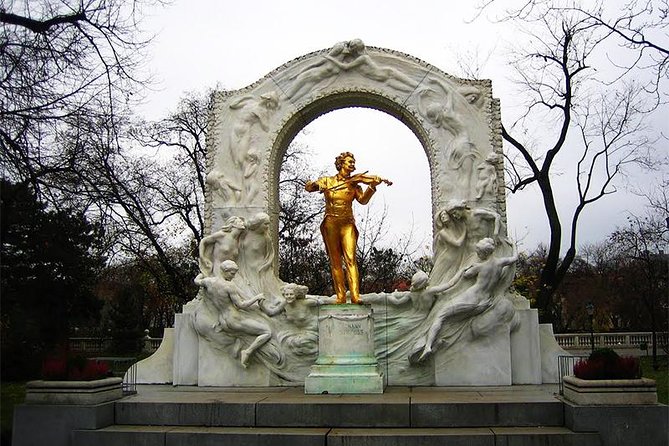
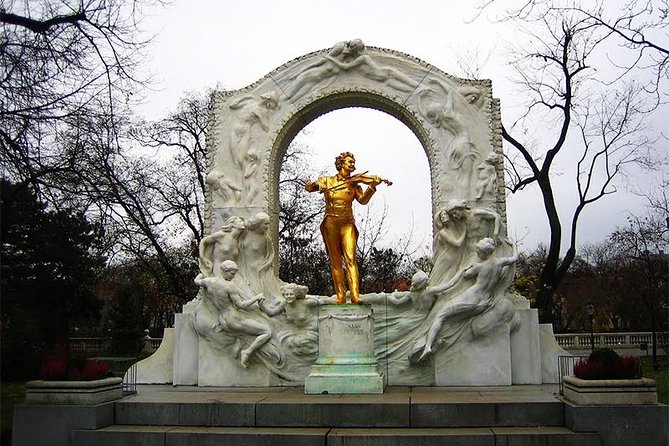
The walk continues to Stadtpark, a large municipal park extending from the Ringstraße toward Heumarkt. The stop is planned for about 15 minutes and has no admission charge.
This is a shorter pause, but it gives the tour a change of rhythm. After the intense visual program of the Secession Building, you get an open public space and a chance to consider how Vienna’s artistic identity appears outside galleries and exhibition halls.
Do not expect Stadtpark to be a major Art Nouveau museum stop. Its value here is contextual. It helps connect the central city’s ceremonial spaces with the urban improvements and public works that made Vienna a modern metropolis.
Because this is a walking tour, the park also gives you a chance to reset your feet. The tour covers several sites in three hours, so short stops like this matter.
Karlsplatz, where Otto Wagner’s stations become art
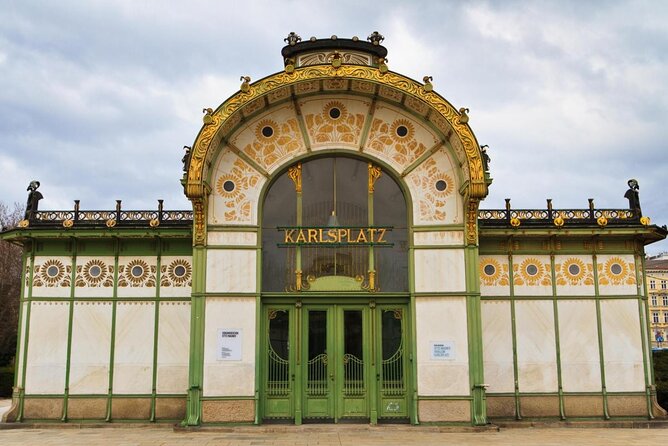
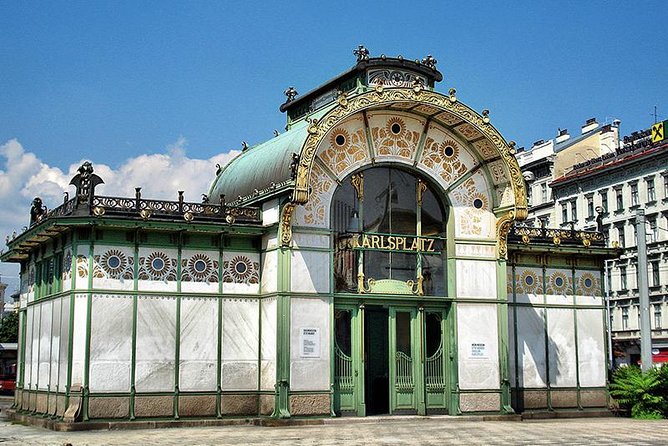
Karlsplatz is one of the most rewarding parts of the route. The former Karlsplatz Stadtbahn Station buildings were designed by Otto Wagner, with Joseph Maria Olbrich also connected to the design, and they are among Vienna’s clearest examples of Jugendstil architecture.
Wagner worked with the Viennese Transport Commission, and his approach treated public transport buildings as important pieces of the city rather than plain utility structures. That idea is easy to understand at Karlsplatz. A station entrance becomes a designed object, with careful proportions and decorative details suited to a prominent urban setting.
The stop is scheduled for about 20 minutes. Your guide can point out the details that are easy to miss when you are simply crossing the square or catching public transport. This is one place where an expert explanation pays off, since the architecture is close to daily city life rather than isolated behind museum doors.
The tour also includes the Otto Wagner Pavillon Karlsplatz, a former 1898 station building that now presents an exhibit about Wagner’s life and work. The planned visit lasts about 15 minutes.
The pavilion is open as a museum from April through October. Admission is €5 for general entry, or €4 for senior citizens, students, Vienna Card holders, and people with disabilities. Outside the museum season, the stop may be appreciated mainly from the exterior, so check the timing if this is important to you.
A few more Vienna outings worth weighing up
- Vienna: Private Walking Tour with a Local Guide
★ 4.6 · 1,420 reviews - Vienna: Private Walking Tour with a Guide
★ 4.7 · 962 reviews - Vienna: Wine Tasting Experience in a Private Wine Cellar
★ 4.8 · 413 reviews - Private Day Tour Trip Salzburg Hallstatt and Melk from Vienna
★ 5.0 · 388 reviews
The Postsparkasse: practical architecture with a modern edge
The Austrian Postal Savings Bank, or Postsparkasse, is another major Wagner work. It is regarded as an important building of the Vienna Secession and shows how modern design could serve a serious public purpose.
The building is not just a decorative façade. Its importance comes from the way Wagner applied a new visual language to a financial institution. The tour allows about 25 minutes here, enough for your guide to explain the building’s place in Vienna’s architectural development and to draw your attention to its distinctive design.
There is no admission fee listed for this stop. That helps the overall value, since the two museum visits can add €14.50 for an adult visiting both the Secession House and the Otto Wagner Pavillon during the applicable periods.
For architecture enthusiasts, Postsparkasse may be one of the tour’s most useful stops. The Secession Building is more immediately theatrical, but Postsparkasse shows how the movement reached into the practical machinery of city life.
Naschmarkt brings the tour back to daily Vienna
The final listed stop is Naschmarkt, Vienna’s best-known culinary market. It has around 120 market stands and restaurants, and the tour allows about 10 minutes here.
This is a brief introduction, not a food tour. Food and drinks are not included, and there is not enough time in the scheduled itinerary for a leisurely meal unless you continue on your own afterward.
Still, Naschmarkt is a smart place to finish. You have spent the morning or afternoon looking at artistic ideals, civic buildings, and public transport design. The market returns you to ordinary Vienna, with shopping, eating, and city movement all happening around you.
The itinerary also refers to a series of Art Nouveau stations and two apartment houses designed by Otto Wagner, along with a tiny metro stop built for the Emperor. The named stops supplied for the tour focus on the Secession Building, Karlsplatz, the Pavillon, Postsparkasse, Stadtpark, and Naschmarkt. Since the exact order and time spent at additional exterior sites may vary, ask your guide at the start which buildings are included on your date.
What three hours feels like
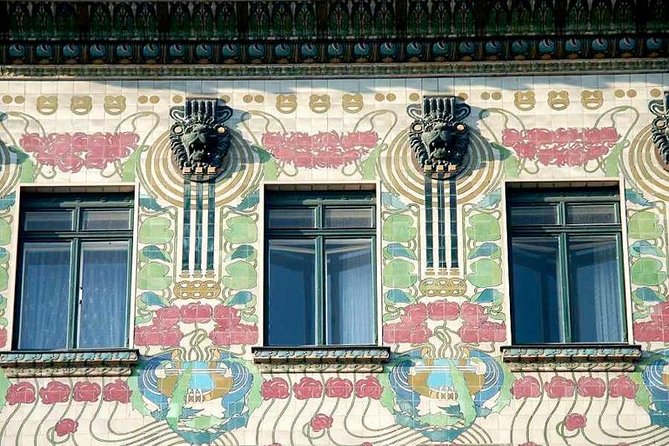
Three hours is a useful length for this subject. A shorter walk could show you one or two buildings but would struggle to connect Klimt, the Secession movement, Wagner, public transport, and central Vienna. A much longer architecture walk might suit specialists, but it could feel heavy if you are new to the topic.
The route includes several scheduled stops ranging from 10 to 30 minutes. That means you should expect a steady outing rather than long periods inside museums. The walking itself links the sites and gives you a better sense of how these buildings sit within the city.
Wear comfortable shoes. The experience is on foot, and the tour moves between multiple central locations. It is near public transportation, which is useful for reaching the start or continuing after the finish.
The meeting point is Operngasse 7 in Vienna’s first district. Hotel pickup and drop-off are not included, even though pickup is listed among the available features, so confirm the exact arrangement before you go. The mobile ticket is convenient, and booking confirmation is provided at the time of reservation.
Most people can take part, and only your group participates. The listing does not promise a fully step-free route, so anyone with particular mobility needs should ask the provider for current route details.
Is $490 good value for a private group?
The price is $490 per group of up to 10 people. For a full group, that works out to $49 per person before admission fees. For two people, the cost is $245 each, which is a very different calculation.
I would consider this good value for a family or group of friends who want a dedicated guide and have a real interest in art or architecture. You are paying for the guide’s time, private attention, and the ability to ask questions without sharing the walk with strangers.
For a couple on a tight budget, the price is harder to justify. Vienna offers plenty of free exterior architecture to see independently, including Karlsplatz and the Postsparkasse. The private guide becomes worthwhile when you want the background, the connections between buildings, and help understanding what you are looking at.
Remember to add the museum fees. The Secession House costs €9.50 for adults from Tuesday through Sunday, and the Otto Wagner Pavillon costs €5 during its April to October opening period. Food and drinks are extra as well.
The tour is often booked about 11 days ahead on average. That is not a rule, but it is sensible to reserve in advance if you need a particular date or want to fit the walk around museum visits.
The guide can make or break the experience
This tour depends heavily on the guide. The subject has enough detail to become dry if it is delivered as a list of dates and architects. It becomes much more enjoyable when the guide explains why these artists rebelled, how Wagner approached public design, and where Vienna’s old and new styles meet.
The guides named for this experience include Barbara, Wolfgang, and Annelie. Barbara is described as thorough, pleasant, and comfortable answering questions about both art and the city. Wolfgang led a December 2024 walk that helped a newcomer to the movement understand the subject. Annelie is praised for her command of Vienna Secessionism and Vienna itself.
Those details suggest a useful range of guiding styles, but your assigned guide may be different. If you have a particular interest in Klimt, transport design, apartment architecture, or Vienna’s history, mention it when arranging the tour. A private format gives you a better chance of shaping the conversation around what you actually want to learn.
Who should book this Vienna walking tour?
I would recommend it most strongly to:
- Art and architecture enthusiasts who want more than exterior photographs
- First-time visitors who want a clear introduction to Vienna Secessionism
- Families or groups able to share the $490 cost
- Visitors interested in Klimt who also want to understand the wider movement
- Repeat visitors looking for a different side of central Vienna
- Anyone who prefers a private guide to a fixed group tour
I would be more cautious if you want a food-focused outing, a long museum visit, or a low-cost introduction to Vienna. Naschmarkt is only a short stop, and the museum admissions are extra. You also need to be comfortable walking between several central locations.
The cancellation policy is friendly: you can cancel for a full refund up to 24 hours before the start time. Changes or cancellations made less than 24 hours ahead are not accepted for a refund.
Should you book it?
Book this tour if you want Vienna’s Art Nouveau explained rather than simply photographed. The Secession Building and Klimt’s Beethoven Frieze provide a memorable start, while Karlsplatz, the Otto Wagner Pavillon, and Postsparkasse show how the same modern ideas shaped public buildings and transport.
The decision comes down to group size and interest. At $490, the tour makes the most sense when shared by several people, especially if you value a private conversation with a guide such as Barbara, Wolfgang, or Annelie. For a small group watching every euro, see the exterior sites independently and spend the savings on one museum admission.
FAQ
How long is the Private Vienna Art Nouveau Walking Tour?
The tour lasts approximately three hours.
Is this a private tour?
Yes. Only your group participates, with a maximum of 10 people.
What sites are included?
The route includes the Secession Building, Stadtpark, Karlsplatz, the Otto Wagner Pavillon Karlsplatz, Postsparkasse, and Naschmarkt. The experience also focuses on Vienna’s Art Nouveau metro stations and iconic buildings.
Is admission to the museums included?
No. Admission to the Secession House and Otto Wagner Pavillon is extra. From April through October, the Pavillon costs €5 for general admission, with reduced admission of €4 for eligible visitors. Secession House admission is €9.50 for adults and €6 for students and seniors from Tuesday through Sunday.
Are food, drinks, and hotel transfers included?
No. Food and drinks are not included, and hotel pickup and drop-off are not included.
Where does the tour start, and can I cancel?
The meeting point is Operngasse 7, 1010 Vienna. You can cancel up to 24 hours before the experience for a full refund.
Just reviewed in Vienna
- World War II History Vienna Old Town Private Walking Tour★ 4.8 · 9 reviews
- Vienna: Wine Tasting E-Bike Tour★ 4.9 · 46 reviews
- Vienna: Winery and Wine Tasting Tour with a Wine Expert★ 5.0 · 5 reviews
- Vienna: Unforgettable Private City Tour★ 5.0 · 7 reviews
- Vienna Urban Art Tour: Explore a different side of Vienna!★ 3.8 · 14 reviews
- Vienna: Concert by the Vienna Baroque Orchestra★ 4.6 · 56 reviews
- Vienna: Swarovski DIY Workshop Experience★ 5.0 · 9 reviews
- Vienna: Sunday Brunch Danube Cruise & Live Music★ 4.2 · 42 reviews
Walking Tours, compared.
Guided Walking Tour of City Highlights & Hidden Gems
Read our review →
Vienna Historic Center Small Group Walking Tour
Read our review →
Browse the lists this tour appears in