
Reviewed · WALKING TOURS
Private Hidden Vienna Walk — Stories Behind Quiet Corners
Vienna’s best stories often sit just beyond the grand boulevards. This private walk links the massive old city walls, a basilisk mural, Mozart’s former music room, Jewish Vienna, St Stephen’s Cathedral, and a secret rooftop view into one compact route through the center. The small corners are the point, but you still get major sights along the way.
I like the way the tour connects architecture with people and events, rather than treating Vienna as a parade of pretty facades. I also like the doorstep pickup and private format, which let guides such as Walter, Sabine, Brigitte, Hannes, and Daniela adjust the route to your interests. The main caution is simple: this is a real walking tour, averaging about 8,000 steps, and it may move too quickly for anyone with serious mobility limits.
Key points at a glance
- Start with Vienna’s old defenses: Stubentor shows how imposing the city walls once were.
- Follow the city’s stranger stories: Look for the basilisk mural on Schönlaterngasse and hear how the legend took hold.
- Mix famous sights with quiet corners: St Stephen’s Cathedral, Judenplatz, side streets, courtyards, and historic passages all fit into the route.
- Hear Vienna through its musicians: The Sala Terrena connects the tour with Mozart’s time in the city, while Beethoven and other musical figures enter the wider story.
- Expect a flexible private walk: Your guide can respond to questions, previous sightseeing, and interests within the three-hour period.
- Plan for steady walking: Comfortable shoes matter, and limited mobility should be discussed before booking.
Why this private Vienna walk feels different
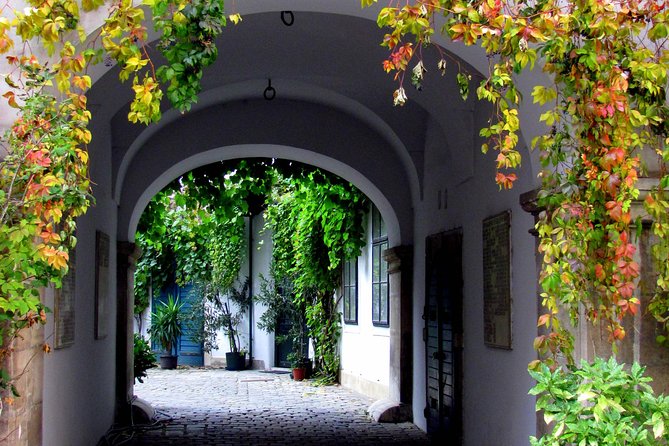
Many city walks in Vienna focus on the same grand sequence: the Hofburg, St Stephen’s Cathedral, the opera house, and perhaps a coffeehouse. This route takes a less obvious path while still bringing you to several major sights. You get the pleasure of finding a quiet passage, then the satisfaction of understanding how it connects to the larger city.
The private setup matters here. With up to 10 people in your own group, you are not trying to hear a guide over a crowd or follow a flag through a busy square. Guides can stop for questions and shift emphasis. If you already toured the main palaces, the walk can lean toward side streets and local stories. If Vienna is new to you, the guide can add more of the city’s basic framework.
Previous visitors have had walks with Walter, Sabine, Brigitte, Hannes, and Daniela. The repeated strengths are clear: strong English, humor, local recommendations, and the ability to adjust the route. Walter is especially associated with lively explanations of history and architecture, while Brigitte and Sabine are often praised for adapting the pace or focus to the group.
Still, flexibility has limits. Three hours is not enough for long interior visits at every major building, and the route is not designed as a slow, seated introduction to Vienna. If you want to linger in every church, rest often, or avoid stairs altogether, ask for a different plan before the day begins.
More walking tours in Vienna:
- Vienna: Guided Walking Tour of City Center Highlights
★ 4.7 · 4,989 reviews - Vienna: Vienna Central Cemetery Guided Walking Tour
★ 4.8 · 3,307 reviews - Vienna: Guided Walking Tour of City Highlights & Hidden Gems
★ 4.9 · 2,180 reviews
Stubentor and the city walls
The walk begins at Stubentor U, one of Vienna’s eastern gates. This is a smart starting point because it gives you a physical sense of the city’s former defenses before the route turns toward churches, palaces, and narrow lanes.
The walls were massive, and the guide uses the remaining setting to explain how restricted and protected the old city once was. It is a short stop, about 10 minutes, but it gives the rest of the walk a useful frame. Vienna’s center was not always an open collection of elegant streets. It was a fortified urban core with controlled points of entry.
Because the tour begins at a public transit stop, you can reach it without private transport. Pickup from a hotel, restaurant, train station, or another location in Vienna can also be arranged. If you are arriving from a river cruise, the provider lists the A-Rosa meeting point at Handelskai 265, though the pier itself can involve extra walking.
The Jesuit Church and Vienna’s theatrical side
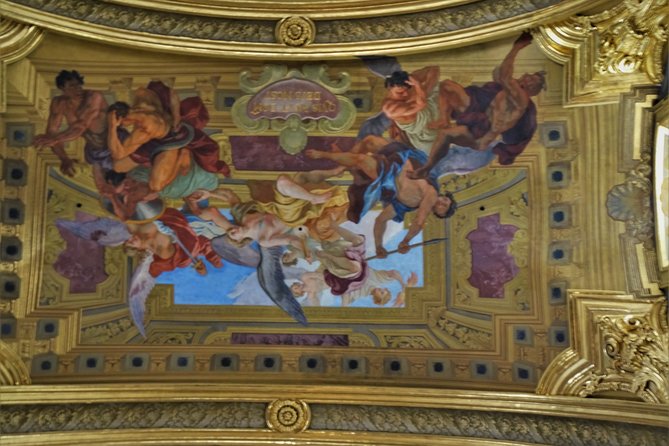
The Church of the Jesuits is one of the walk’s most rewarding early stops. The guide does not simply point out the facade and move on. Instead, you look at how the decoration and architecture express a spiritual idea.
That approach is useful in Vienna, where churches often function as visual arguments. Painted surfaces, elaborate ornament, and carefully arranged space were meant to shape the way people felt and understood faith. The stop lasts about 10 minutes, so you should expect an explanation and a focused look rather than a long period of quiet sightseeing.
This is also where a private guide can help. You can ask why a detail was placed where it was, how the church fits into Vienna’s religious life, or how the building compares with others you have already seen. The supplied tour details do not promise a special interior program or reserved entry, so think of this as a guided architectural visit rather than a full church tour.
The basilisk mural on Schönlaterngasse
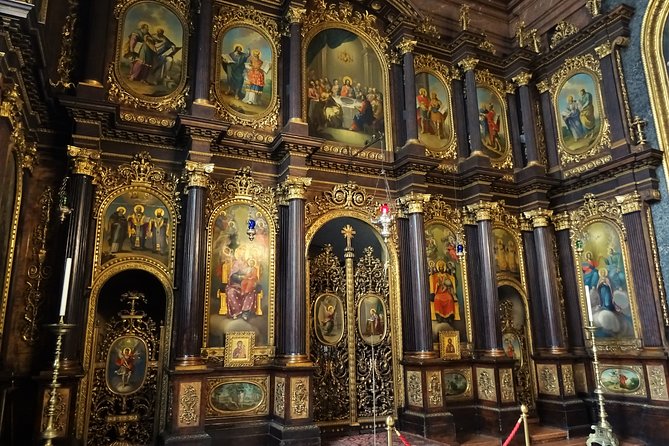
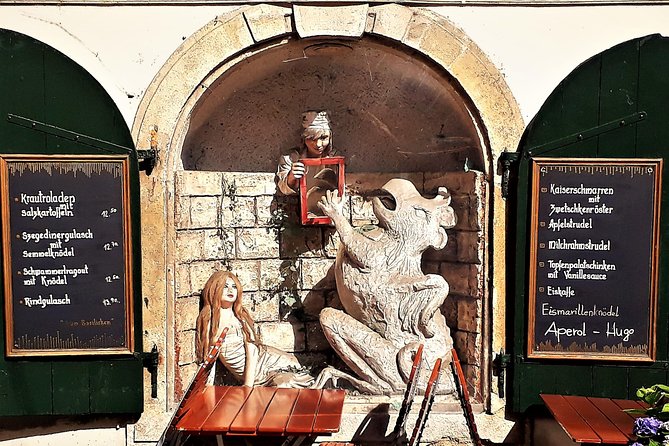
Vienna has plenty of imperial stories, but the basilisk legend adds a welcome bit of folklore. On Schönlaterngasse, you see a mural illustrating the tale of a basilisk said to have frightened people in the city.
The story gives the narrow lane a different mood. Instead of looking only at dates and rulers, you get a local tale tied to an actual place and image. It is the sort of stop you could easily miss while walking from one grand sight to another.
The nearby address is also linked with Vienna’s famous schnitzel tradition. The listed details note that the establishment has been associated with the city’s best-known schnitzel since 1905. The experience does not include a meal, so treat this as a useful place-name and food-history note, not a restaurant reservation.
A few more Vienna outings worth weighing up
- Vienna: Private Walking Tour with a Local Guide
★ 4.6 · 1,420 reviews - Vienna: Private Walking Tour with a Guide
★ 4.7 · 962 reviews - Vienna: Wine Tasting Experience in a Private Wine Cellar
★ 4.8 · 413 reviews - Private Day Tour Trip Salzburg Hallstatt and Melk from Vienna
★ 5.0 · 388 reviews
Mozart at the Sala Terrena
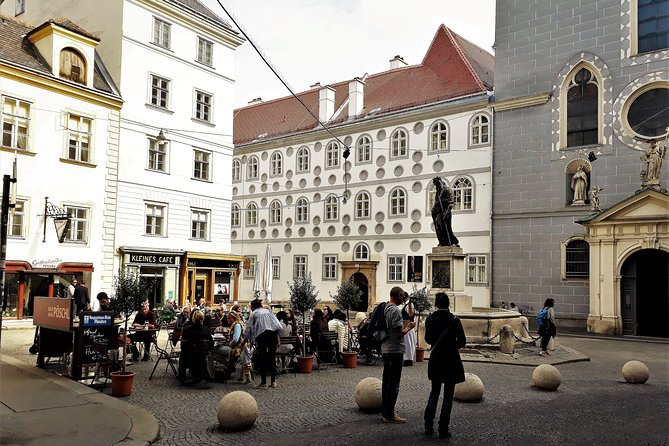
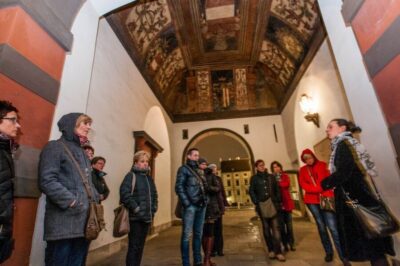
At the Sala Terrena in the Deutschordenshaus, the focus shifts to music. Mozart played here while living in the house of the Teutonic Order in 1781, and this small setting helps turn a familiar name into a real part of Vienna’s streets.
The stop takes around 10 minutes. You are not signing up for a concert, and the listing does not promise a performance. The value comes from placing Mozart’s life in a specific building and linking music with the city’s religious and aristocratic institutions.
The wider conversation can include Beethoven and the ways both composers lived and worked in Vienna. If you are interested in music, ask your guide to give this part more time. If you are more interested in architecture or social history, the private format allows the emphasis to shift.
St Stephen’s Cathedral from the outside and inside
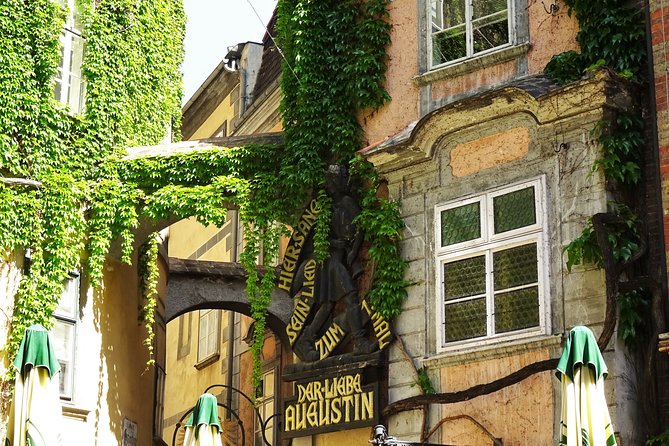
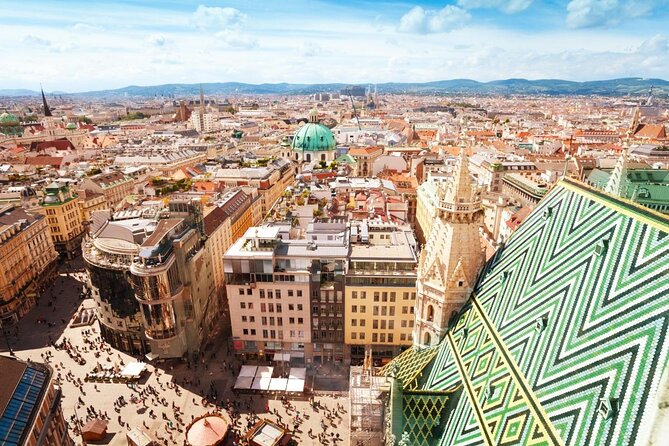
St Stephen’s Cathedral is the route’s major landmark. The walk uses it differently from a standard photo stop. First, your guide explains selected exterior details, helping you read the building rather than simply admire its size. Then you have time for a look inside.
The scheduled stop is about 15 minutes, which tells you something important. This is an orientation visit, not an extensive cathedral tour. You may see the interior, but you should not expect time for every chapel, artwork, or quiet corner.
That short timing can work well if you are using the walk to get your bearings and plan to return later. It can feel rushed if St Stephen’s is your main reason for booking. One past experience made this limitation painfully clear when a group did not have enough time to enter the main part of the cathedral. Set your expectations early and tell the guide if you want the church to receive more attention.
Judenplatz and the Holocaust Memorial
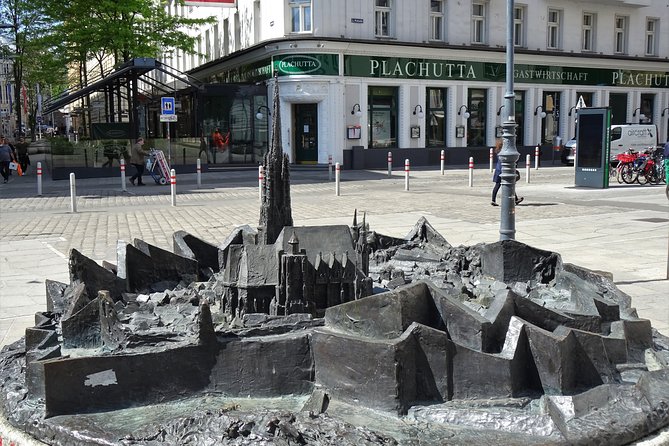
Judenplatz brings a more serious turn. The square and its Holocaust Memorial tell a story reaching across roughly 700 years of Jewish life in Vienna. The setting is atmospheric, but this is not a decorative stop. It asks you to consider the city’s Jewish community, its place in Vienna, and the destruction remembered here.
The stop is planned for about 10 minutes. That is enough for context and explanation, but not for a detailed study of every aspect of Jewish Vienna. You can make the most of it by asking your guide to explain what you are seeing and how the square fits into the city’s longer story.
I value the inclusion of this site because it keeps the walk from becoming a string of imperial anecdotes. Vienna’s past includes creativity, privilege, conflict, prejudice, and loss. Judenplatz gives the route moral weight and historical balance.
Café Central, Ferstel Passage, and an odd political coincidence

The walk then moves toward Café Central and the Ferstel Passage. These places show another side of old Vienna: elegant interiors, coffeehouse culture, intellectual life, and the habit of lingering over conversation.
The guide also points out where Trotsky and Stalin were in Vienna without becoming friends. It is a small human detail, but it helps make the period feel less like a list of famous names. Political history often turns on people sharing the same city without sharing the same future.
Café Central can be busy, and the tour does not include a reserved table or coffee. If you want to eat or sit there afterward, plan separate time. The walk gives you the setting and the story, not a guaranteed café experience.
Palais Daun-Kinsky and the city of aristocrats
Palais Daun-Kinsky offers a look at Vienna’s grand Baroque face. Count Wirich Philipp von Daun commissioned the palace, and construction began in 1713 under architect Johann Lucas von Hildebrandt.
The building also connects to Prince Józef Poniatowski, a Polish general and Marshal of France, who was born there in 1763. That detail widens the story beyond Austria. Vienna’s palaces were tied to a much larger European network of rulers, soldiers, diplomats, and noble families.
The scheduled stop is about 10 minutes. You will learn what the palace represents and see its place in the city, but the tour does not promise an extensive interior visit. If you want to enter specific palaces, museums, or historic rooms, ask in advance about adjusting the route.
Rathausplatz and Café Landtmann
The final listed stop is Rathausplatz, beside Vienna’s grand city hall. Nearby Café Landtmann is linked with Sigmund Freud, who favored the café. This gives the final section a pleasing change of subject, moving from imperial power and church decoration toward civic life, psychology, and café culture.
Rathausplatz can host events and may feel more open and active than the quieter lanes earlier in the walk. The guide can help you place the city hall within Vienna’s public life, while Café Landtmann adds a familiar local institution to the story.
The route’s final impression is not just old stone. It is Vienna as a place where musicians, politicians, religious orders, writers, doctors, and ordinary coffee drinkers crossed paths.
The secret rooftop and the value of the private format
A secret rooftop viewpoint is one of the tour’s most appealing features. The exact location is not specified, and access may depend on local conditions, but the promise is clear: you get a higher view of Vienna without booking a separate observation deck.
This kind of stop gives the walk a visual pause. After examining lanes, doorways, murals, and church details at ground level, you can see how the center fits together from above. It also adds something a standard street route may not provide.
The private format makes the entire experience more useful. You can tell Walter, Sabine, Brigitte, Hannes, or Daniela that you care most about music, Jewish Vienna, food, architecture, or modern city life. The guide may not be able to rebuild the route from scratch, but the experience is designed to respond to your interests.
Price, walking effort, and practical value
The price is $344.80 per group of up to 10 people. For a full group, that is excellent value per person. For one or two people, it is a premium purchase, but you are paying for a private licensed Austria Guide, doorstep pickup options, and a three-hour conversation shaped around your group.
There is no transport between attractions included. That is not a serious issue for the central route, but you should account for getting to the starting point and returning afterward. The walk is offered in the morning or afternoon, giving you room to fit it around a museum visit, meal, or train schedule.
The tour requires moderate physical fitness. The provider gives an average of about 8,000 steps, and some locations may involve stairs. Service animals are allowed, but pets are not permitted in certain areas. If stairs, distance, or standing are difficult for you, be direct before booking. One group had a poor experience after a serious mobility mismatch, and the lesson is practical: a private tour can adjust emphasis, but it cannot turn a three-hour walking route into a seated excursion.
Confirmation is sent within 48 hours, subject to availability. Free cancellation is available up to 24 hours before the start time. This is useful if your plans are still shifting, but changes made inside that window are not accepted.
Who should book this Vienna walk
I would choose this tour if you have more than one day in Vienna, are returning to the city, or want a first visit with more texture than a standard highlights route. It is also a good fit for a small family or friend group that wants to ask questions without slowing a larger group.
You will get the most from it if you enjoy stories attached to exact places. The basilisk mural, Mozart’s music room, the Judenplatz memorial, the political coincidence near Ferstel Passage, and Freud’s café all reward curiosity.
I would not make it my first choice if you have only a few hours and need a fast sweep of every major sight. I would also avoid it if your group cannot manage steady walking. In that case, ask the provider about a shorter or less demanding option.
Should you book it?
Book it if you want Vienna explained through side streets, local stories, architecture, music, and difficult history, with a guide who can respond to your interests. The combination of major sights and less obvious stops gives you a fuller sense of the old center than a simple landmark checklist.
Skip it if you mainly want long interior visits, frequent seated breaks, or transport between sights. For everyone else, especially repeat visitors and curious first-timers, this is a thoughtful way to spend three hours in central Vienna.
FAQ
How long is the Private Hidden Vienna Walk?
The walk lasts approximately three hours.
How much does the tour cost?
The price is $344.80 per group, with up to 10 people included.
Is the tour private?
Yes. Only your group participates in the activity.
Can the guide pick us up?
Pickup can be arranged from a hotel, restaurant, train station, or another location within Vienna. Other meeting points can also be arranged.
Is the tour offered in English?
Yes. The experience is offered in English.
What sights are included?
The route includes Stubentor, the Church of the Jesuits, Schönlaterngasse and its basilisk mural, the Sala Terrena in the Deutschordenshaus, St Stephen’s Cathedral, Judenplatz and its Holocaust Memorial, Café Central, Ferstel Passage, Palais Daun-Kinsky, and Rathausplatz.
Does the tour include the inside of St Stephen’s Cathedral?
The itinerary allows time for a look inside, but the listed stop is about 15 minutes. It is not presented as an extended cathedral visit.
Is the secret rooftop guaranteed?
A secret rooftop viewpoint is listed as a highlight, but no exact location or access conditions are provided.
How physically demanding is the walk?
You should have a moderate level of physical fitness. The walk averages about 8,000 steps, and some locations may include stairs.
Can I cancel for a full refund?
Yes. You can cancel at least 24 hours before the start time for a full refund. Cancellations or changes made less than 24 hours before the start time are not accepted for a refund.
Just reviewed in Vienna
- World War II History Vienna Old Town Private Walking Tour★ 4.8 · 9 reviews
- Vienna: Wine Tasting E-Bike Tour★ 4.9 · 46 reviews
- Vienna: Winery and Wine Tasting Tour with a Wine Expert★ 5.0 · 5 reviews
- Vienna: Unforgettable Private City Tour★ 5.0 · 7 reviews
- Vienna Urban Art Tour: Explore a different side of Vienna!★ 3.8 · 14 reviews
- Vienna: Concert by the Vienna Baroque Orchestra★ 4.6 · 56 reviews
- Vienna: Sunday Brunch Danube Cruise & Live Music★ 4.2 · 42 reviews
- Vienna Supreme Orchestra at Palais Niederösterreich★ 4.8 · 10 reviews
Walking Tours, compared.
Guided Walking Tour of City Highlights & Hidden Gems
Read our review →
Vienna Historic Center Small Group Walking Tour
Read our review →
Browse the lists this tour appears in