Reviewed · TOURS
Future Bus Tours – Vienna’s highlights bus tour with virtual reality
The most unusual part of this Vienna tour is not the bus ride. It is the set of four virtual reality scenes that place you beside Austrian rulers, inside historic settings, and even at a private concert in the State Opera. You see the city in front of you, then put on a headset and shift into its past.
I like the compact route and the comfortable air-conditioned bus. In about an hour, you cover the Hofburg area, Ringstrasse, Rathaus, Votivkirche, MuseumsQuartier, and the Opera without planning a complicated walk. The main thing to consider is the language setup: the tour advertises several languages, but one Japanese-speaking participant found only German and English available, so check your language before booking.
Key points to know before booking
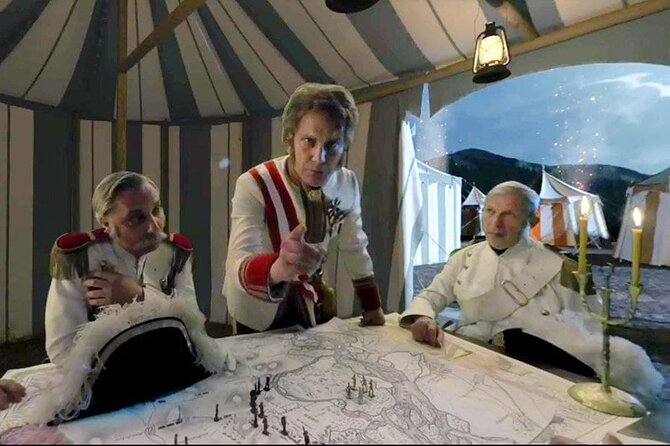
- Four VR stops add a modern twist: Scenes at Heldenplatz, Rathaus and the theatre area, Votivkirche, and the State Opera turn a standard city ride into a short historical show.
- The route packs in central Vienna: You pass the Hofburg, Maria Theresia Square, Ringstrasse, Parliament, City Hall, University of Vienna, MuseumsQuartier, and other major sights.
- The ride lasts about one hour: It works well early in a Vienna visit, especially if you want an overview before exploring on foot.
- The group is limited to 18 people: That is a small enough size for a more orderly headset experience.
- The audio guide has a language caveat: The tour information refers to seven audio languages and also lists nine tour languages, so confirm the exact option you need.
- The price is $32.10 per person: You are paying for transport, commentary, and the VR production, not entry to Vienna’s museums or palaces.
A quick ride through Vienna’s imperial center
This is a sightseeing tour for people who want to cover ground without giving up a little imagination. The bus takes you around central Vienna, while the headsets add short scenes that explain the people and events tied to the buildings outside your window.
I like the balance. You are not spending a full day inside museums, and you are not simply circling the city with a guide pointing out façades. The virtual scenes give the route a clear theme: Vienna’s rulers, its grand public buildings, and the stories behind them.
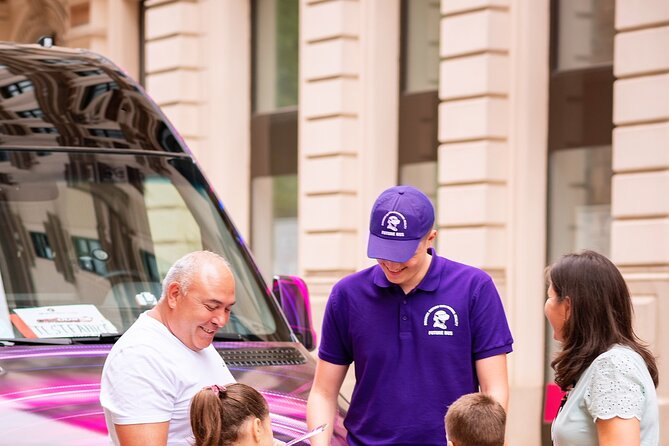
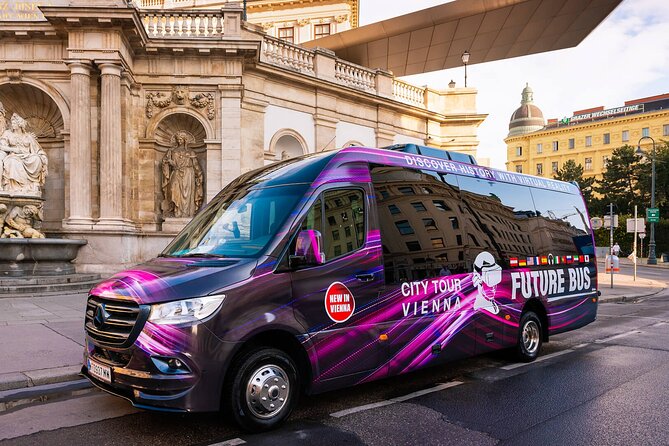
The ride begins at Operngasse 4, beside Albertinaplatz and close to the Vienna State Opera. You receive instructions for the audio and VR equipment before the bus sets off. The tour ends back at the same meeting point, which makes it easy to fit into a day of sightseeing.
The vehicle is air-conditioned, and the group limit is 18 people. That matters here because everyone needs to hear the commentary and use the headset at the right moments. The ride is also a useful choice if you have limited time, want to rest your feet, or prefer an overview before choosing which places deserve a longer visit.
Still deciding? These Vienna outings turn up in the same shortlists.
- Vienna: Vivaldi’s Four Seasons Concert in Karlskirche
★ 4.7 · 14,951 reviews - Vienna: Skip-the-cashier-desk-line Giant Ferris Wheel Ride
★ 4.5 · 7,859 reviews - Vienna: Schönbrunn Palace & Gardens Skip-the-Line Tour
★ 4.7 · 7,739 reviews
Heldenplatz and the Hofburg: rulers in the headset
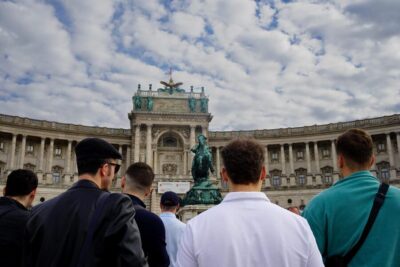
The first major stop is Heldenplatz, the broad square in front of the Hofburg. This is one of the best places in Vienna to begin an imperial story because the square opens directly toward the former palace complex.
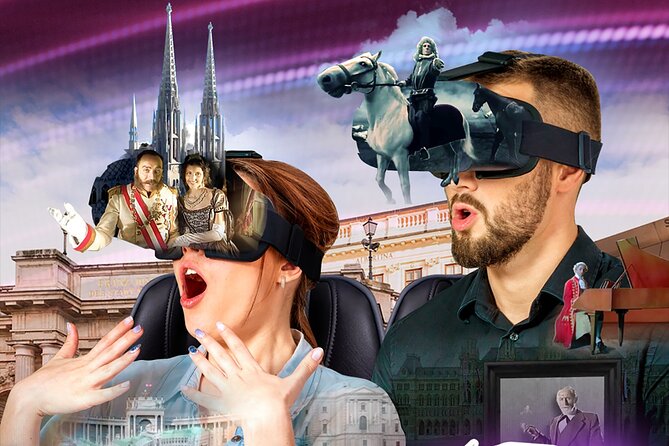
Here, the VR presentation introduces three major Austrian figures: two generals and an empress. The experience uses actors and historical scenes rather than asking you to absorb dates from a lecture. That approach has been one of the most praised parts of the tour, especially for people who enjoy seeing the past acted out in three dimensions.
You should not expect a full palace visit at this stop. The admission ticket to the Hofburg is not included, and the tour focuses on the outside setting and the VR presentation. That is a useful distinction if you were hoping to enter the imperial apartments or museums.
From Heldenplatz, you can also look across toward Maria Theresia Square. The large monument to Maria Theresia gives the next historical figure a strong setting. The audio commentary and headset help explain her place in Austrian history, while the physical monument reminds you that Vienna’s imperial story is displayed openly in its public squares.
Rathaus, the Ringstrasse, and Vienna’s great public buildings
The route continues along the Ringstrasse, the grand boulevard that frames much of Vienna’s central district. You pass the Vienna State Opera, Parliament, City Hall, the University of Vienna, and other major buildings. Even if you have already seen photographs of them, the bus gives you a quick sense of how they relate to one another.
At Rathaus, Vienna’s City Hall, the tour adds another VR scene. The information provided points to an important personality whose office was nearby and whose favorite café was across the street. The exact name is not supplied, so you should treat this as a historical character revealed during the presentation rather than something to research in advance.
The Rathaus area also brings you close to the Burgtheater, one of Vienna’s best-known theatres. The bus stops near the theatre and the Volksgarten, where the rose gardens are a notable sight in season. Café Landtmann is across the street, adding a classic Viennese café reference to the stop.
This part of the ride is good for orientation. You see how the public institutions, theatres, cafés, gardens, and imperial spaces fit together. The drawback is time. You are passing several buildings in quick succession, so you will not have the chance to study architectural details or enter any of them.
Votivkirche and the assassination story
The third VR stop is at Votivkirche, a striking Neo-Gothic church near the Ringstrasse. It is one of the more distinctive buildings on the route, with tall spires and a very different look from the imperial façades around the Hofburg.
The VR story connects the church to an assassination attempt. That gives the stop a clear dramatic hook and helps explain why the building was created. It is a smart choice for a one-hour tour because the church is visually memorable, yet it may be missed by people who spend their time around the Opera and Hofburg.
Again, the experience is primarily an exterior visit with audio and virtual material. Admission is not included. If Votivkirche becomes one of your favorite sights, you will need to return separately for a closer look.
The timing is short, with roughly 10 minutes allocated to the major stops. That is enough to hear the presentation and view the site, but not enough for an unhurried architectural study. I would treat this stop as an introduction, not a substitute for visiting the church on foot.
A different sort of day out in Vienna:
- Vienna: Light of Creation Votive Church Immersive Light Show
★ 4.8 · 6,779 reviews - Vienna Spanish Riding School Guided Tour
★ 4.7 · 6,765 reviews - Vienna: Classical Concert in the World-Famous Musikverein
★ 4.6 · 6,673 reviews - Vienna: Skip-the-Line Sisi Museum, Hofburg and Gardens Tour
★ 4.8 · 5,918 reviews
MuseumsQuartier and the wider central route
After the Ringstrasse section, the bus leaves the main boulevard and passes through other central parts of Vienna. MuseumsQuartier is one of the named areas along the way, known for its museums and modern cultural setting.
This change of scenery helps the ride feel less repetitive. You move from imperial squares and government buildings toward a more contemporary part of central Vienna. The tour does not include museum entry, so think of this as a quick look at the district rather than a cultural visit in itself.
The route also passes other sights and monuments before returning toward the State Opera. Because the journey lasts only about an hour, the value comes from the number of places you can identify and revisit later. Keep a note of the buildings that catch your attention, then return on foot when you have more time.
I find this approach more useful than trying to treat every passing building as a major stop. The bus provides a map in your head. You then decide which places deserve a closer visit.
The State Opera finale and its virtual concert
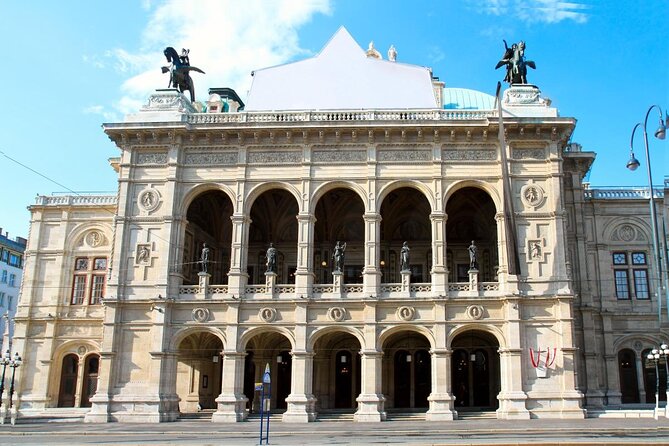
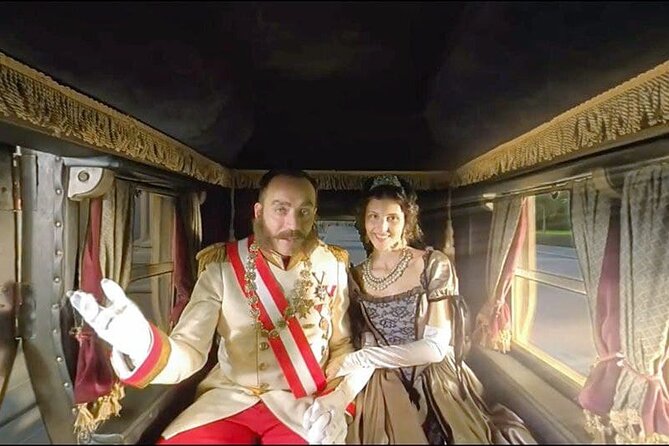
The final VR scene takes place back near the Vienna State Opera and Albertinaplatz, where the tour began. Here you meet one of Vienna’s most iconic emperors and his wife, followed by a private virtual concert inside the opera house.
That ending gives the tour a theatrical finish. The Opera is already one of the most recognizable buildings in Vienna, so seeing it through the headset adds something beyond the usual exterior photo stop. It also connects the city’s imperial past with its continuing reputation for music and performance.
You should not confuse the virtual concert with a live opera ticket. The attraction is the headset presentation, and admission to the Opera itself is not included. Still, for someone deciding whether to spend more time around the building, this can make the sight feel more personal and memorable.
The tour then returns to Operngasse 4. Since the end point is the same as the start, you can continue toward Albertina, the Opera, or other central sights without arranging another ride.
How the virtual reality works in practice
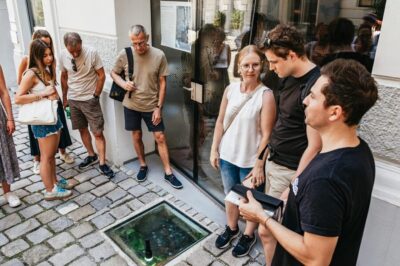
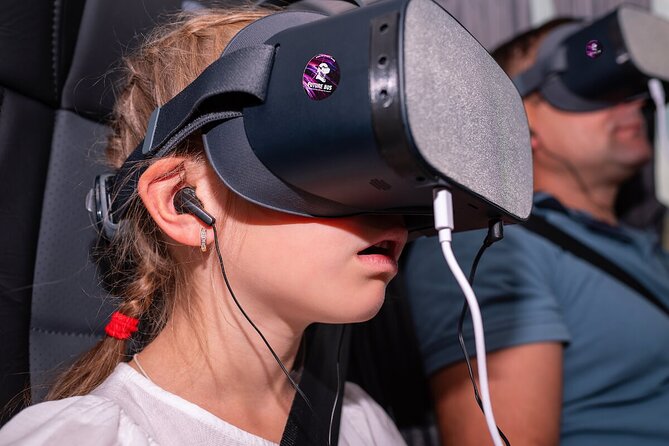
The headsets are provided, and you receive instructions at the beginning. At the four designated points, you put on the equipment and watch a scene connected to the place outside.
The strongest appeal is the change in viewpoint. Instead of only hearing that an emperor, empress, general, or historical event belongs to a building, you see actors portray scenes from the past in a three-dimensional setting. The presentation has been described as fun, unusual, and effective at bringing history to life.
The VR component also gives the tour a different mood from a conventional hop-on sightseeing bus. You do not get off repeatedly to wander around, but you do pause for short, focused presentations. That makes the experience a good fit if you prefer a guided story to a list of building names.
There are limits. The headset cannot replace standing inside the Hofburg, walking through the Opera, or examining Votivkirche at close range. If you dislike screens, motion-based equipment, or a tightly timed group activity, the novelty may wear off quickly.
Audio languages and an important booking check
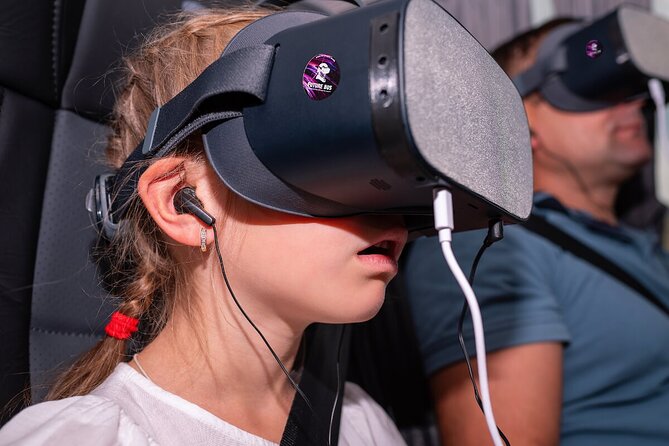
The tour information gives two different language counts. The highlights refer to nine tour languages, while the general description says the audio guide is available in seven languages. A Japanese-language booking also resulted in German and English audio only.
That does not mean the tour is always limited to those two languages. It does mean you should confirm the available audio language before paying, especially if understanding the historical detail is central to your decision. The VR scenes may be visually clear, but the historical context depends heavily on the narration.
The content is also available in German and English, based on the language experience provided. If you are comfortable with either, this concern is less important. If not, ask the operator to confirm the exact language for your departure date.
Is $32.10 a fair price?
At $32.10 per person, this is not the cheapest way to see Vienna’s center. You are paying more than the cost of simply walking along the Ringstrasse, but you are also getting a reserved seat in an air-conditioned vehicle, an audio guide, and four VR presentations.
The value is strongest when you want an efficient introduction. In one hour, you cover several districts and major buildings that could take much longer to connect on foot. It is also useful on a hot, cold, or rainy day, when a comfortable ride has real value.
The price is less convincing if you already know central Vienna well or plan to visit every site independently. The tour does not include admission to the Hofburg, Votivkirche, Rathaus, the Opera, or museums. You are buying interpretation and convenience rather than access.
I would also factor in the small group limit. With a maximum of 18 people, the experience should be easier to follow than a large coach tour, though the supplied information does not promise a particular bus layout or seat assignment.
Who should book this Vienna tour?
I would recommend it to first-time visitors who want a quick orientation, families and older visitors who prefer to limit walking, and anyone curious about a modern way to present imperial history. The VR scenes are the main reason to choose this tour over an ordinary city circuit.
It also suits visitors with only a short window in central Vienna. Since the tour starts and ends near Albertinaplatz, you can place it between other activities in the inner city.
I would be more cautious if you want long stops, museum entry, or a deeply detailed architectural tour. The schedule moves quickly, and several important sights are viewed from the bus or outside.
The cancellation terms are practical: you can cancel for a full refund up to 24 hours before the start time. Changes or cancellations inside that 24-hour window are not accepted for a refund.
Should you book Future Bus Tours?
Book it if you want a fast, comfortable introduction to Vienna with a genuine visual twist. The four VR scenes, especially the ruler presentations and virtual Opera concert, give the ride a purpose beyond checking buildings off a list.
Skip it if your priority is entering palaces, museums, churches, or the Opera. You will see many of those places, but admission is not part of the experience. Before booking, confirm the audio language you need. If the language works for you, $32.10 is a reasonable price for a one-hour overview that combines central Vienna, historical storytelling, and an unusual VR format.
FAQ
Where does the Vienna VR bus tour start?
It starts at Operngasse 4, 1010 Vienna, beside Albertinaplatz and near the Vienna State Opera.
Where does the tour end?
The tour ends back at the original meeting point at Operngasse 4.
How long does the experience last?
The tour lasts approximately one hour.
How many virtual reality stops are included?
The experience includes four VR stops. They connect to Heldenplatz, the Rathaus and theatre area, Votivkirche, and the Vienna State Opera.
What sights can I see from the bus?
The route includes Heldenplatz, the Hofburg entrance, Maria Theresia Square, Rathaus, the Ringstrasse, the State Opera, Parliament, the University of Vienna, Votivkirche, MuseumsQuartier, and other central landmarks.
Is the audio guide available in different languages?
Yes. The tour information refers to several language options, with one section listing seven audio languages and another listing nine tour languages. Since one Japanese-language booking had only German and English available, confirm your required language before booking.
Is admission to the buildings included?
No. Admission tickets to places such as the Hofburg, Votivkirche, Rathaus, the Opera, and museums are not included. The tour provides the bus ride, audio content, and virtual reality presentations.
Just reviewed in Vienna
- World War II History Vienna Old Town Private Walking Tour★ 4.8 · 9 reviews
- Vienna: Wine Tasting E-Bike Tour★ 4.9 · 46 reviews
- Vienna: Winery and Wine Tasting Tour with a Wine Expert★ 5.0 · 5 reviews
- Vienna: Unforgettable Private City Tour★ 5.0 · 7 reviews
- Vienna Urban Art Tour: Explore a different side of Vienna!★ 3.8 · 14 reviews
- Vienna: Concert by the Vienna Baroque Orchestra★ 4.6 · 56 reviews
- Vienna: Sunday Brunch Danube Cruise & Live Music★ 4.2 · 42 reviews
- Vienna Supreme Orchestra at Palais Niederösterreich★ 4.8 · 10 reviews
Tours, compared.

Skip-the-Line Sisi Museum, Hofburg and Gardens Tour
Read our review →
Guided Walking Tour of City Highlights & Hidden Gems
Read our review →