

Reviewed · WALKING TOURS
An Introduction to Vienna Walking Tour
Vienna’s story comes into focus on foot, from the Habsburg palace at Michaelerplatz to the Secession building and the grand Ringstrasse. I like the way this small-group walk links imperial power, modern art, music, architecture, and ordinary city life instead of treating Vienna as one long parade of palaces. I also like that guides such as Katarina, Annelie, Wolfgang, and Ilse bring personal knowledge and practical advice, from coffeehouses to schnitzel.
The main consideration is price. At $181.02 per person, this is costly for a 2.5-hour walk, especially since entrance tickets, food, drinks, and hotel transfers are not included. You are paying for a very small group and a historian guide, not for paid admission to the sights.
Key points to know before booking
- Hofburg begins the story: Start at Michaelerplatz beside the Habsburg palace and learn how Vienna’s rulers shaped the city.
- Secession adds a modern edge: Klimt, Mahler, and turn-of-the-century artistic rebellion balance the imperial sights.
- Small groups matter: Bookings allow up to six people, with a maximum group size of eight.
- Good first-day choice: The route gives you a useful map of central Vienna and ideas for exploring on your own.
- Local advice is part of the value: Guides have suggested less crowded places for Sacher torte, schnitzel, sausages, coffee, and further sightseeing.
- Expect an exterior-focused walk: The route passes major buildings, but admission fees and interior visits are not included.
Why this walk works best early in your Vienna stay
A first walk in Vienna should answer a simple question: how do the palace, church, boulevard, museums, cafés, and shopping streets fit together? This tour does that well. In two and a half hours, you move through the historic center and along the Ringstrasse, building a mental map before you set off alone.
The route also gives you several versions of Vienna at once. The Hofburg shows dynastic power. Stephansdom represents the city’s religious center. The Secession building points to artistic rebellion. Naschmarkt brings in food and daily life. The result is not just a checklist of famous buildings.
I would schedule it on your first full day if possible. Guides have been especially useful with follow-up suggestions, including places to eat, cafés to try, and sights to add later. That advice can save you from spending the rest of the trip in the most obvious queues.
The guide makes a big difference. Names associated with especially strong tours include Katarina, Annelie, Wolfgang, Ilse, Ilsa, Christina, Angelika, Elisabeth, and Billie. You cannot assume you will receive a particular guide, but the experience depends heavily on the person leading it. The best guides use questions, stories, architecture, and local experience rather than reciting dates.
More walking tours in Vienna:
- Vienna: Guided Walking Tour of City Center Highlights
★ 4.7 · 4,989 reviews - Vienna: Vienna Central Cemetery Guided Walking Tour
★ 4.8 · 3,307 reviews - Vienna: Guided Walking Tour of City Highlights & Hidden Gems
★ 4.9 · 2,180 reviews
Michaelerplatz and the Habsburg seat of power
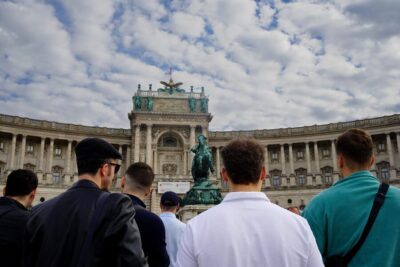
The walk begins at Café Hawelka on Dorotheergasse, near Michaelerplatz. This is a central, easy-to-reach starting point, and the café gives the meeting place a distinctly Viennese feel. From here, the Hofburg dominates the scene.
The palace was the Habsburg seat of power from the 13th century. That long span gives the guide plenty to explain: how the complex grew, how rulers used it, and how Vienna became the center of a large empire. You will see the palace from outside, so do not book this walk expecting admission to imperial apartments or museum collections.
This opening stop is valuable because it establishes the political story behind much of central Vienna. The city’s grand scale was not accidental. It reflects centuries of monarchy, ceremony, administration, and court life.
A good guide also helps you notice the less obvious details around the square. The tour is not only about naming the Hofburg. It is about understanding why the palace occupies this place and how nearby streets relate to it.
Loos House and Vienna’s architectural arguments
Clockwise from the Hofburg, the route passes the green and gray Loos House, designed by Adolf Loos. Its plain facade caused a stir beside the more decorated imperial buildings. That contrast makes it one of the most useful stops for understanding Vienna’s changing taste.
Here you get a quick lesson in architectural conflict. Imperial Vienna favored display and ornament, while early modern architects questioned how much decoration a building needed. The Loos House helps show that Vienna was not frozen in its royal past. It was also a city arguing about modern life.
This is one reason I prefer a guide-led walk to simply following a map. A building can look ordinary until someone explains why it caused trouble. You may pass it quickly on your own without realizing its place in Vienna’s artistic story.
Stephansdom, the city’s great landmark
Stephansdom is Austria’s national architectural icon and one of the central sights on the walk. The cathedral’s scale and position make it an obvious orientation point in the old city.
The guide connects the church to Vienna’s wider story, not just to religious architecture. Its presence helps explain the importance of the medieval center and the way major streets lead toward it. You will see the cathedral as part of the city rather than as an isolated photo stop.
The experience described here is a walking tour, not a cathedral admission visit. If you want to climb a tower, enter paid areas, or spend time inside, plan that separately. The tour can help you decide what deserves a return visit, but it does not include food, drinks, or entry tickets.
A different sort of day out in Vienna:
- Vienna: Vivaldi’s Four Seasons Concert in Karlskirche
★ 4.7 · 14,951 reviews - Vienna: Skip-the-cashier-desk-line Giant Ferris Wheel Ride
★ 4.5 · 7,859 reviews - Vienna: Schönbrunn Palace & Gardens Skip-the-Line Tour
★ 4.7 · 7,739 reviews - Vienna: Light of Creation Votive Church Immersive Light Show
★ 4.8 · 6,779 reviews
Kohlmarkt, Graben, and a reminder of the plague
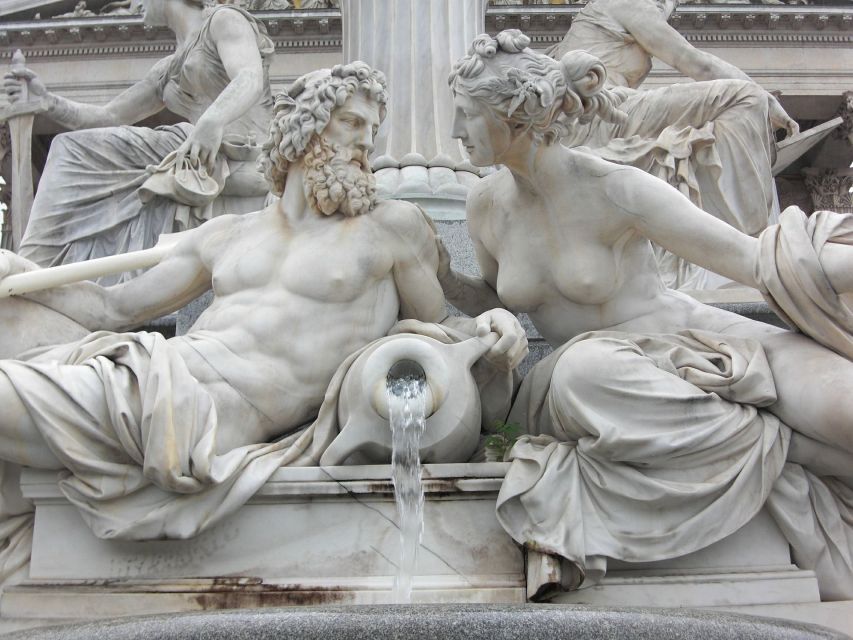
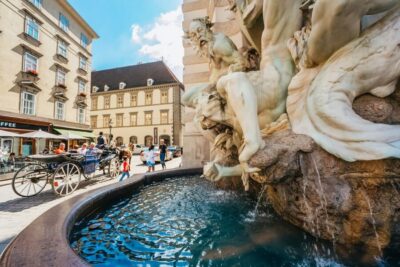
From the Hofburg area, the walk reaches Kohlmarkt and the Graben, now among Vienna’s most fashionable shopping streets. This section shows the polished side of the city, with luxury shops and grand urban spaces.
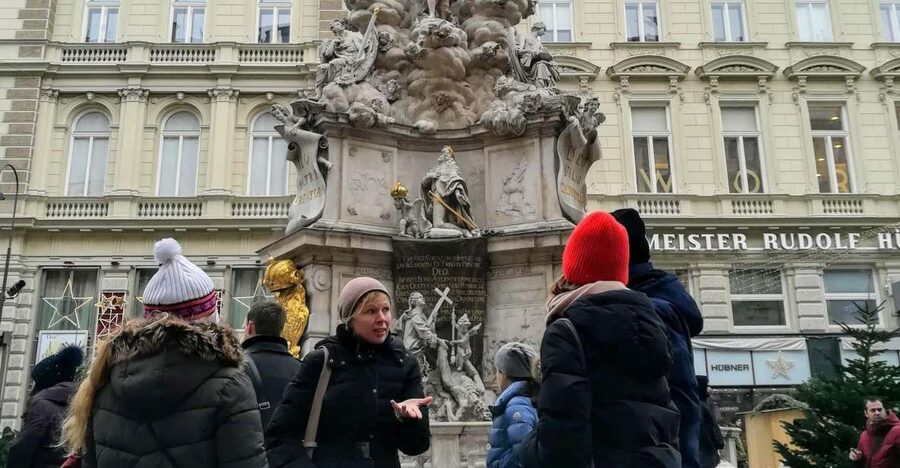
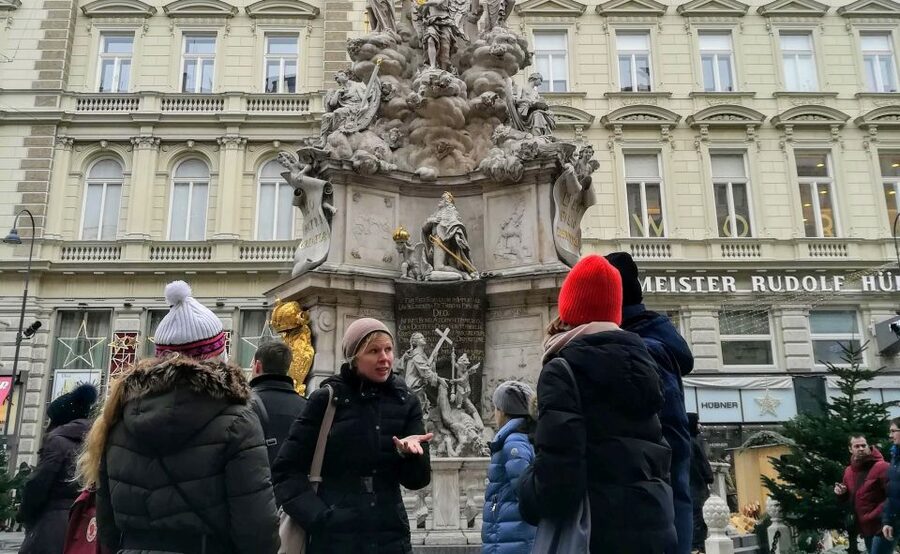
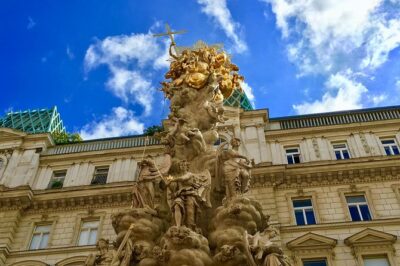
The Graben also carries a darker reminder of the past: the plague column, built to commemorate the 17th-century bubonic plague outbreak. It is an important stop because it keeps the city’s elegance from becoming too tidy. Vienna’s public spaces reflect both wealth and hardship.
A guide can give this monument human scale. Instead of seeing it as another decorated column, you can consider what epidemic disease meant for an earlier city and why rulers commissioned public memorials. The route regularly shifts between beauty and difficult history, which is one of its strengths.
Ringstrasse, palaces, and the city’s grand 19th-century plan
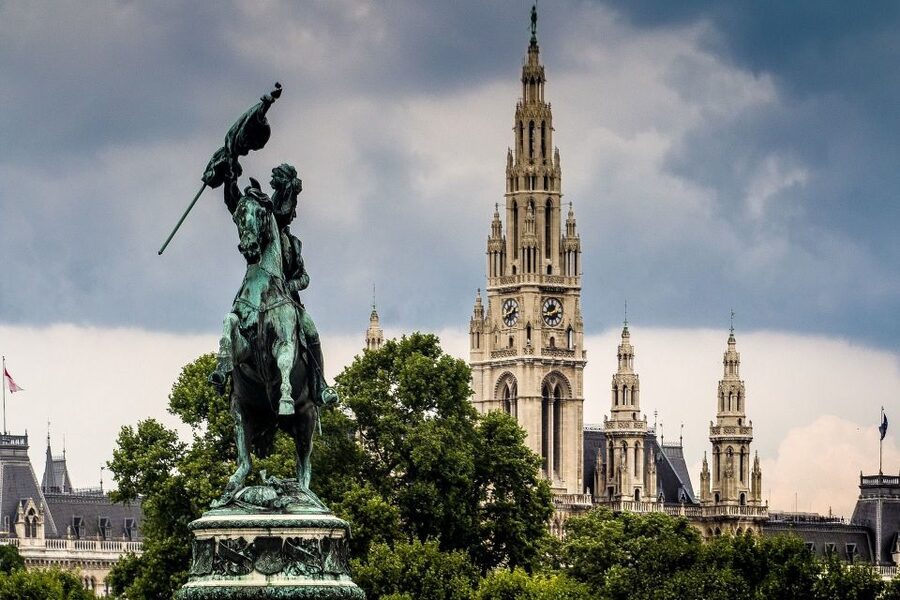
The walk continues along the Ringstrasse, the broad boulevard built in the middle of the 19th century. Many luxury hotels later occupied former palaces along this grand route, and the architecture reflects Vienna’s ambition during a major period of urban change.
This is where the tour widens beyond the old center. You begin to see Vienna as a planned imperial capital, not merely a collection of medieval lanes. Buildings along the boulevard tell you how the city presented itself to residents, officials, aristocrats, and international visitors.
The route is especially useful for architecture fans, but you do not need technical training to enjoy it. A strong guide points out styles, explains why the buildings were placed here, and connects architecture to politics and social life.
The Ringstrasse can also be busy and spread out. You are walking outdoors for the full tour, and the pace includes regular stops for explanation. Comfortable shoes are a sensible choice, and poor weather may affect your enjoyment. One guide continued through heavy rain and wind, but you should still dress for conditions rather than count on luck.
Maria-Theresien-Platz and Vienna’s museum quarter
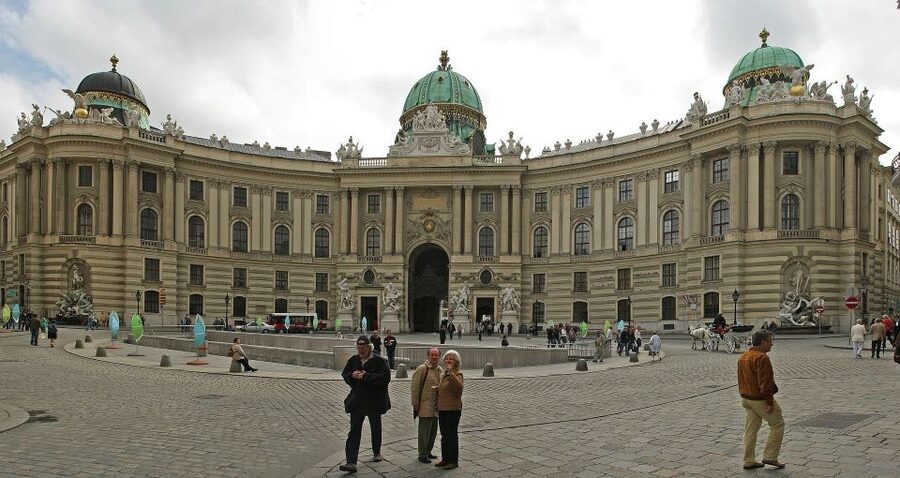
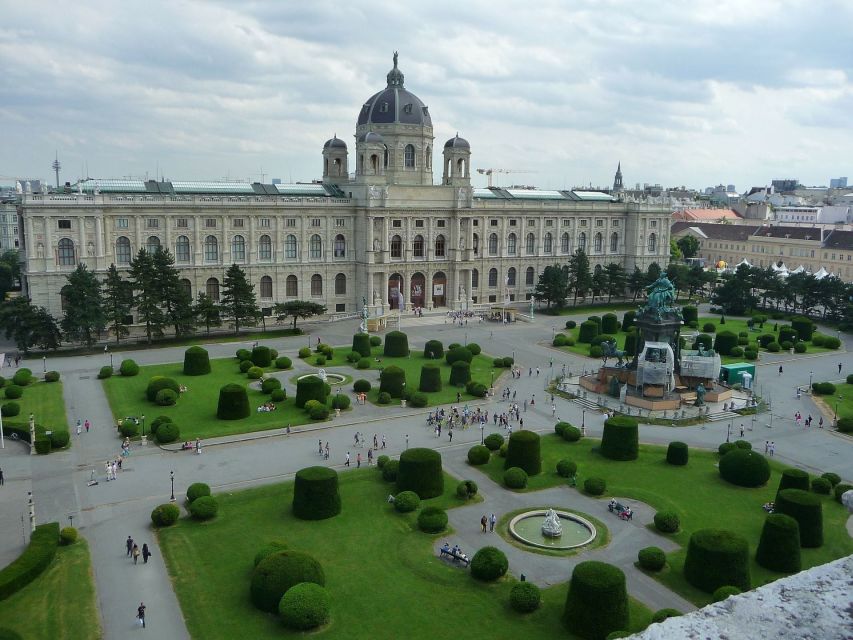
Maria-Theresien-Platz contains the city’s largest concentration of museums. The square gives the tour another useful contrast: the imperial project is now tied to art, education, and public culture.
The guide can help you choose which museums deserve your limited time. Since the walk does not include museum admission, this is more of a preview and orientation stop than a full museum visit. That can be helpful if Vienna is one stop on a longer European trip and you need to make choices.
You will also see how the square works as part of the city’s grand design. Its scale can be hard to understand from a quick photograph. Standing there with the surrounding buildings in view makes the planning and political ambition easier to grasp.
The Secession building and Vienna around 1900
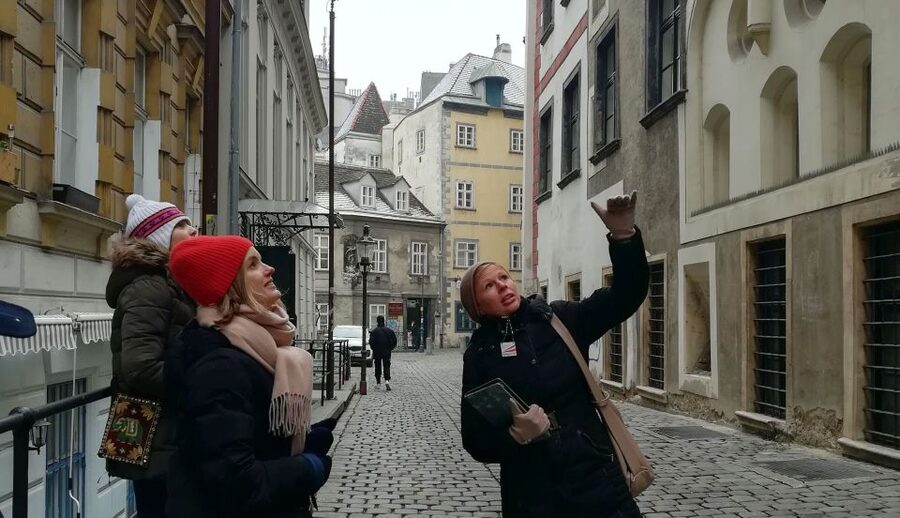
The Secession building brings the tour into Vienna’s turn-of-the-century avant-garde. Its connection to artists such as Gustav Klimt and composer Gustav Mahler shows a city moving away from strict imperial tradition and toward new forms of art and music.
This is one of the most distinctive parts of the route. The Hofburg and Ringstrasse explain official Vienna. The Secession explains the city that challenged official taste. The building itself is a clear sign that Vienna around 1900 was not only a place of court ceremony. It was also a center of argument, experimentation, and cultural change.
The stop can be especially rewarding if you enjoy Klimt, music, or architectural history. It also helps connect Vienna’s famous cultural reputation to specific people and movements rather than leaving it as a vague claim about art.
Naschmarkt and the everyday side of the city
The walk passes Naschmarkt, Vienna’s traditional food market. This is where the route shifts from palaces and monuments to shopping, eating, and meeting friends.
The market is not presented as a food tasting experience, so you should not expect included samples or a meal. Food and drinks are not part of the price unless specifically stated. Still, passing through Naschmarkt gives you a practical place to return after the tour.
Guides have also offered useful food advice elsewhere in the city, including suggestions for schnitzel, sausages, and Viennese sweets. One guide directed a couple toward alternatives to the Sacher Hotel for Sacher torte, helping them avoid a long wait at a famous but often crowded address. These tips may be a real part of the tour’s value if you enjoy eating well without relying only on the most famous names.
Stories that turn buildings into a city
The strongest part of this experience is not the number of stops. It is the way a skilled historian links them. Guides have discussed the Habsburg dynasty, the kidnapping of Richard the Lion Hearted, wartime suffering, civilian deaths, bomb damage, architecture, music, housing, and ordinary life.
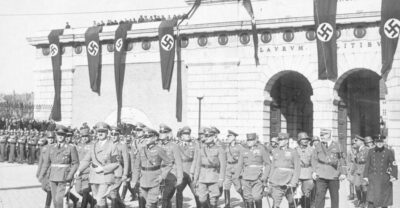
The subject matter is not always cheerful. Vienna’s past includes war, persecution, plague, political power, and painful memorials. One guide pointed out locations tied to wartime bombing and civilians killed during the conflict. This is useful history, but you should expect more than light palace trivia.
At the same time, the tour can be warm and personal. Guides have used Mozart and Haydn music, shared Sisi’s favorite candies, and offered snacks or local details that do not appear in standard guidebooks. Those touches are not guaranteed, but they show the kind of flexible, human approach the company aims for.
Some guides also adjust the pace and focus. Christina was praised for flexibility, and Ilse and Katarina for encouraging questions and explaining details clearly. If your group has different interests or language needs, ask questions early. One guide slowed down and spoke clearly for a member who had limited English.
Small group value at $181.02
The price is the hardest part to judge. At $181.02 per person, the tour costs much more than a large public walking tour. You do not receive transport, meals, museum admission, or hotel pickup.
What you do receive is a 2.5-hour guided walk with a historian and a maximum of eight people. Bookings allow up to six people, which means the final group may be even smaller. Several tours have ended up with only one couple or one person, creating something close to a private tour without a separate private-tour booking.
That small size changes the experience. You can ask about a building you just passed, request more detail on music or wartime history, and hear restaurant advice suited to your plans. A large group may cover the same major sights, but it is less likely to offer that level of conversation.
The value depends on how you travel. If you want the cheapest way to see Vienna’s main landmarks, choose a larger group. If you want an academic guide, a flexible pace, and direct attention, the higher price can make sense. One past opinion considered the cost too high for a walking tour, and that is a fair concern. You should book this for the guide and small group, not because the route includes costly attractions.
Practical details for a smooth walk
The tour is offered in English and confirmed at booking. It starts at Café Hawelka, Dorotheergasse 6, in Vienna’s 1010 district, and ends somewhere in Vienna rather than returning to the starting café.
The meeting point is near public transportation. Hotel pickup and drop-off are not included, so you need to reach the café yourself and arrange your own way onward. Most people can take part, but remember that this is a walking experience lasting about two and a half hours.
Free cancellation is available if you cancel at least 24 hours before the local start time. Changes or cancellations inside that window are not accepted for a refund.
Who should book this Vienna walk?
I would choose this tour if you are visiting Vienna for the first time, want historical context, or prefer conversation over a scripted procession. It suits people who like architecture, imperial history, music, art, and practical city advice in one outing.
It is also a good fit for a short Vienna stay. You can see major landmarks, learn how they connect, and use the guide’s suggestions to plan the rest of your time.
I would hesitate if your budget is tight or if you mainly want interior visits. The route includes important buildings, but admission is not included. I would also compare it with a cheaper large-group walk if you do not care about group size or individual questions.
Should you book it?
Book this tour if you value a historian guide and a small group more than the lowest possible price. The best guides, including Katarina, Annelie, Wolfgang, and Ilse, turn central Vienna into a connected story and often add practical advice you can use that same day.
Skip it if $181.02 feels too high for an outdoor overview or if you want extensive time inside museums and palaces. For most first-time visitors who want to get their bearings quickly and understand why Vienna looks the way it does, this is a strong, personal introduction.
FAQ
How long is the Vienna walking tour?
The guided walk lasts approximately 2 hours and 30 minutes.
What language is the tour offered in?
The tour is offered in English.
Where does the tour begin?
The meeting point is Café Hawelka at Dorotheergasse 6, 1010 Wien, Austria.
Where does the tour end?
The tour ends in Vienna. A specific ending location is not provided.
How many people can join the tour?
A booking can include up to six people, and the total activity has a maximum of eight participants.
Are food, drinks, or admission tickets included?
No. Food and drinks are not included unless specifically stated, and admission tickets are not listed as included. Hotel pickup and drop-off are also not included.
Can I cancel for a full refund?
Yes. You can cancel at least 24 hours before the experience start time for a full refund. Cancellations or changes made less than 24 hours before the local start time are not accepted for a refund.
Just reviewed in Vienna
- World War II History Vienna Old Town Private Walking Tour★ 4.8 · 9 reviews
- Vienna: Wine Tasting E-Bike Tour★ 4.9 · 46 reviews
- Vienna: Winery and Wine Tasting Tour with a Wine Expert★ 5.0 · 5 reviews
- Vienna: Unforgettable Private City Tour★ 5.0 · 7 reviews
- Vienna Urban Art Tour: Explore a different side of Vienna!★ 3.8 · 14 reviews
- Vienna: Concert by the Vienna Baroque Orchestra★ 4.6 · 56 reviews
- Vienna: Sunday Brunch Danube Cruise & Live Music★ 4.2 · 42 reviews
- Vienna Supreme Orchestra at Palais Niederösterreich★ 4.8 · 10 reviews
Walking Tours, compared.
Guided Walking Tour of City Highlights & Hidden Gems
Read our review →
Vienna Historic Center Small Group Walking Tour
Read our review →
Browse the lists this tour appears in