
Reviewed · BELVEDERE PALACE TOURS
Private Tour of Viennese Art in the Leopold Museum: Klimt, Schiele, Kokoschka
Vienna’s Leopold Museum is the place to confront the city’s most provocative modern art. This private tour focuses on Klimt, Schiele, and Kokoschka, with an art historian helping you look past pretty surfaces and into the arguments their work still raises. I like the private format and the focus on Schiele, whose drawings and paintings can still make you squirm.
I also like that the tour connects art with history and science, rather than treating each painting as an isolated masterpiece. The main catch is simple: museum admission is not included, so you must buy your ticket separately before the guided visit.
Key points at a glance
- Private group of up to six: You get the guide’s attention instead of sharing the conversation with a large crowd.
- About 2 hours 15 minutes: Long enough for a serious museum visit without turning into an all-day art marathon.
- Klimt, Schiele, and Kokoschka: The tour centers on three major figures in Viennese modern art.
- Schiele’s provocative work: Expect discussion of nudity, sexuality, censorship, and the uneasy line between art and pornography.
- English-speaking art historian: The guide supplies context and interpretation rather than simply pointing out famous names.
- Admission costs extra: Plan for the museum ticket separately from the tour price.
Why the Leopold Museum is the right setting
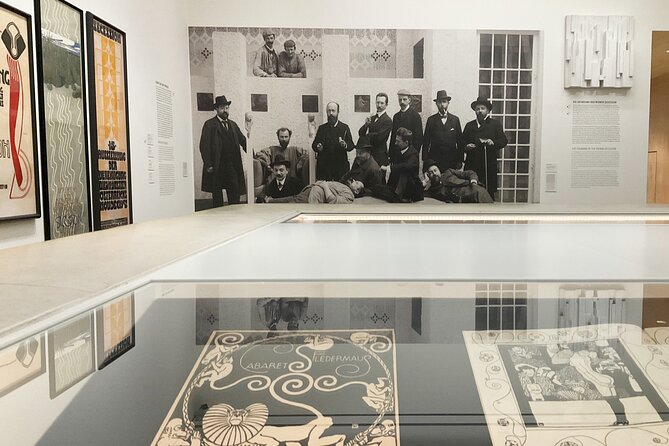
The Leopold Museum sits inside Vienna’s MuseumsQuartier, a compact cultural district where several major museums share the same central setting. You meet at Museumsplatz 1, directly at the Leopold Museum, and the tour ends at the same place.
That arrangement is useful. You do not spend part of your appointment walking across Vienna or trying to find several scattered galleries. The museum is the main event, and the nearby MuseumsQuartier makes it easy to continue your afternoon with another cultural stop if you still have energy.
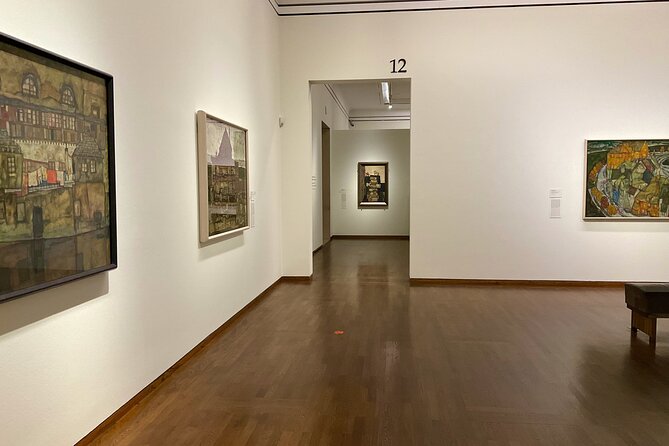
The museum is especially important for anyone interested in early twentieth-century Viennese art. Its permanent exhibition includes a major presentation of Egon Schiele’s work, and this tour uses that collection as a way to discuss the city’s artistic changes and the meaning of modern art in its own time.
I would not approach this as a quick hit of famous paintings. The point is to understand why these works caused discomfort, excitement, and argument. The idea of the nowness of art is central here: art should feel connected to the present, even when it unsettles polite taste.
More Belvedere and Klimt visits:
- Entry Ticket Upper Belvedere, Klimt’s Kiss & Permanent Collection
★ 4.5 · 831 reviews - Vienna: Lower Belvedere Entry Ticket & Temporary Exhibitions
★ 4.1 · 275 reviews - Vienna: Belvedere Palace Skip-the-Line Tour
★ 4.9 · 197 reviews
Klimt, Schiele, and Kokoschka in one conversation
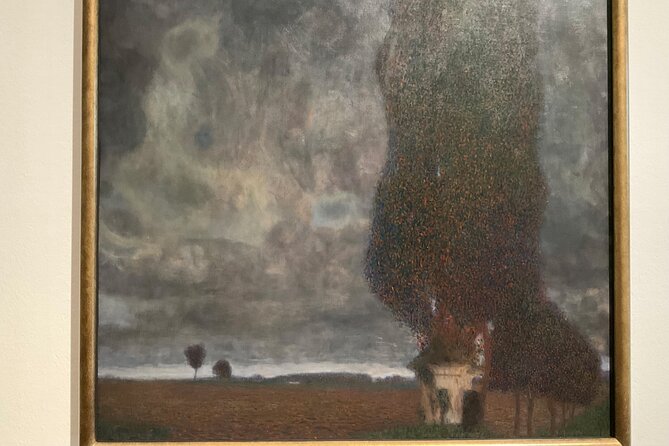
Gustav Klimt, Egon Schiele, and Oskar Kokoschka are often grouped together under the broad heading of Viennese modernism. That label is useful, but it can also flatten their differences. A private guide can help you see where their concerns overlap and where their work takes sharply different paths.
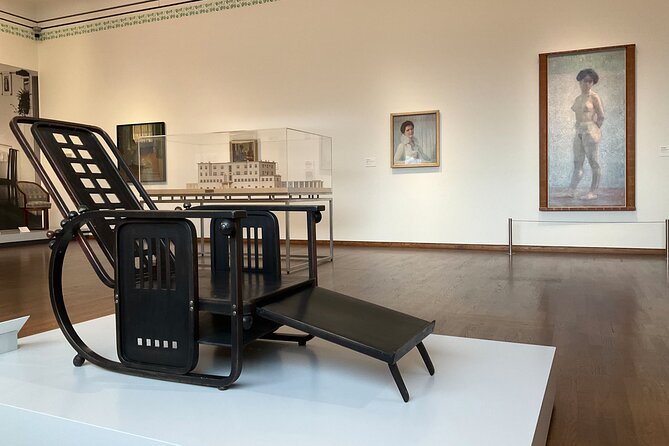
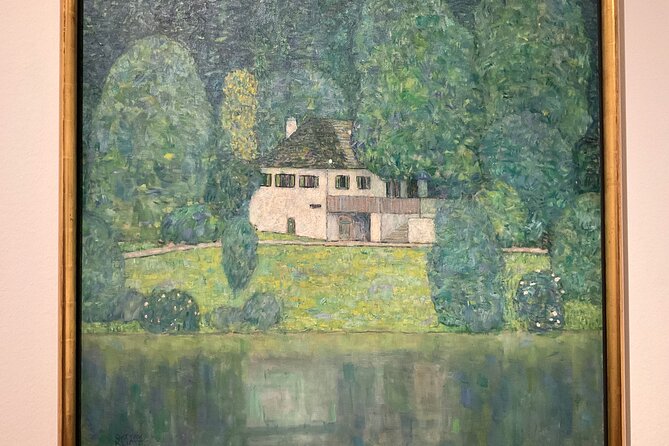
Klimt is often the easiest entry point. His decorative surfaces and sensual subjects draw the eye first. A good discussion can then move beyond the gold and ornament to ask how he treated the human body, intimacy, and social expectations.
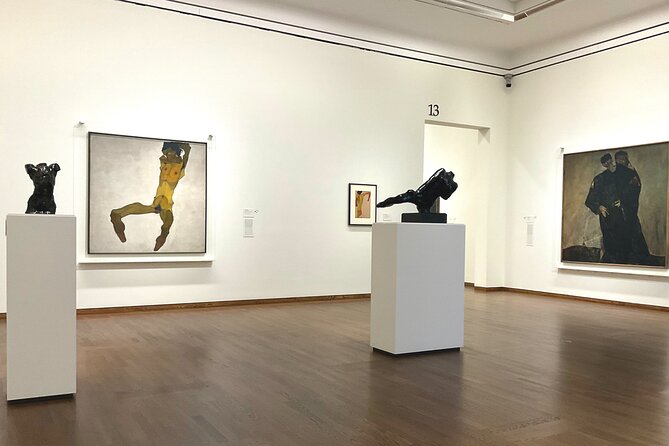
Schiele demands a different response. His bodies can look angular, exposed, and psychologically raw. The museum’s Schiele holdings allow the tour to focus on the artist’s willingness to show awkwardness, sexuality, vulnerability, and tension rather than smoothing them away.
Kokoschka adds another voice to the story. He helps widen the discussion beyond decoration and scandal into questions of expression, personality, and the ways artists tried to show inner life. The precise works covered depend on the guide’s route and the museum display, but the three names give the visit a clear structure.
I like this combination because it gives you a useful comparison. You are not simply shown one famous painting after another. You are encouraged to notice how each artist handled the body, emotion, identity, and the pressure to make art that felt current.
Schiele’s difficult questions
The Schiele section is likely to be the most challenging part of the visit. His exhibitionist works still invite strong reactions, partly because they refuse to keep the human body at a comfortable distance.
The key issue is the line between pornography and art. That is not a tidy question with one correct answer, and the tour does not need to pretend otherwise. Instead, you can expect discussion of why some images provoke unease, how artistic intention affects interpretation, and why a work that once shocked its audience may still trouble viewers now.
This is where a professional art historian can make a real difference. Without context, Schiele’s work can seem merely sensational. With careful explanation, you can start to see the choices behind the poses, lines, and exposed bodies.
Still, this subject is not for everyone. If you prefer gentle museum visits with little discussion of sexuality or controversy, the Leopold’s Schiele rooms may feel intense. The tour is better suited to adults and older students who want to wrestle with difficult material rather than avoid it.
The experience is also a good fit for art lovers who enjoy disagreement. You do not have to admire every work. In fact, the strongest part of the visit may be discovering why a painting bothers you and then having a guide give you language for that reaction.
What the art, history, and science connection adds
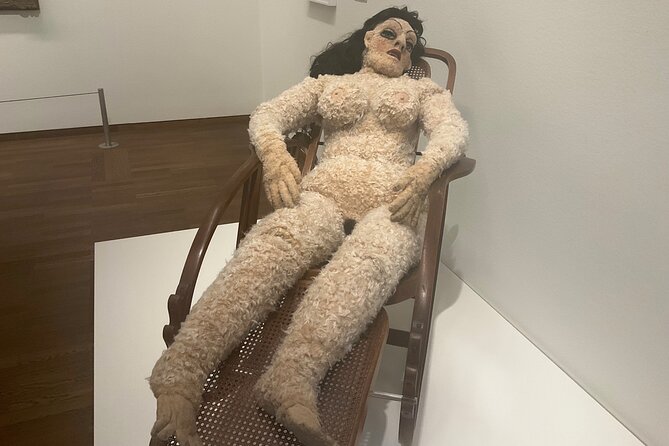
One of the tour’s stated aims is to show how history and science helped define Vienna’s art scene. That promise matters because modern art did not appear in a vacuum. Artists responded to the ideas, pressures, and discoveries around them.
The tour’s value comes from making those connections visible while you are standing in front of the art. Instead of treating historical context as a lecture before the museum, the guide can use the objects on the walls to show how new ways of thinking affected artistic choices.
Science is especially useful as a discussion point because it encourages you to look at the body and the mind in new ways. In Schiele’s work, the body is not presented only as an ideal object. It can appear tense, strange, exposed, or psychologically charged. That makes scientific and social ideas relevant to the way you read the image.
History adds another layer. Art can be both a product of its time and a challenge to that time. The artists on this tour were not simply decorating Vienna. They were testing what could be shown, said, and felt in public.
You should expect interpretation rather than a list of dates. The guide is there to help you connect visual details with larger questions. That is especially helpful if you know the names Klimt and Schiele but are less familiar with the ideas around their work.
More art museum tickets in Vienna:
- Vienna Kunsthistorisches Museum Day Admission Ticket
★ 4.6 · 3,690 reviews - Tickets for the Albertina Exhibitions
★ 4.7 · 2,126 reviews - Combo Ticket: Kunsthistorisches Museum & Imperial Treasury
★ 4.7 · 785 reviews - Skip the Line: Kunsthistorisches Museum Vienna Entrance Ticket
★ 4.5 · 466 reviews
A closer look at the two-hour route
The visit is listed at about 2 hours 15 minutes, with roughly 2 hours 14 minutes assigned to the Leopold Museum. The extra minute at the MuseumsQuartier reflects the fact that the museum is located there, not a separate sightseeing stop with its own tour program.
That timing gives the guide room to slow down. In a large museum, two hours can disappear quickly, but a focused route is more useful than trying to see everything. You should expect the attention to remain on the Viennese art themes promised by the tour.
The first stage is meeting at the Leopold Museum. Since the meeting point and ending point are the same, the logistics are straightforward. The activity is near public transportation, so you can reach the museum without building an elaborate plan around it.
Inside, the guide leads you through the relevant displays and explains the artists in relation to one another. The tour is not a self-guided audio route. You can ask questions, pause over a difficult piece, and steer the discussion toward the subjects that interest your group.
The final stage returns you to the meeting point. This is handy if you have another appointment afterward, since you do not need to collect your group at a different exit or district.
What a private guide changes
The private format is the strongest practical feature here. The price is $378.71 per group of up to six people, not per person. If six people join, the cost works out to about $63.12 per person before museum admission. For two people, the per-person price is much higher, so group size matters.
A private tour gives you control over the pace. If one person in your group is fascinated by Schiele’s treatment of the body, you can stay with that subject. If another wants more background on Klimt or Kokoschka, you can ask for the balance to shift.
That flexibility is hard to get on a large group tour. A general guide may need to keep moving, even when a painting has sparked a useful question. Here, the tour is designed for your group alone, which makes conversation a central part of the experience.
The guide is described as a professional art historian, and the tour is offered in English. That should suit visitors who want interpretation rather than a simple orientation. The guide’s role is especially important with this collection because the art can be easy to admire at a distance but harder to understand in context.
The price is harder to justify for one or two people. You are paying for privacy, specialist guidance, and the chance to shape the conversation. If you mainly want to see the museum’s key works and read the wall labels, buying admission alone will cost less. If you want a focused discussion with your own group, the private rate becomes more reasonable when divided among several people.
Museum admission and planning details
Admission is not included, so account for that extra cost when comparing this experience with other museum tours. The tour price covers the professional art historian guide, while the museum entry ticket must be handled separately.
You receive confirmation at the time of booking, and the activity accepts a mobile ticket. The meeting point is the Leopold Museum at Museumsplatz 1, 1070 Vienna, Austria.
The tour is available in English. Most people can participate, and the experience is near public transportation. No special participation limits are provided beyond the private group size of up to six, so you should check any personal needs directly before booking if you require additional arrangements.
The cancellation policy is forgiving if your plans remain flexible. You can cancel for a full refund up to 24 hours before the start time. Cancellations or changes made less than 24 hours in advance are not accepted for a refund, and the cut-off follows local Vienna time.
Who will get the most from this visit
I would choose this tour for a small group with a real interest in art, especially if you want more than a checklist of famous names. It works well for friends, couples, families with older children, students, or anyone who prefers conversation to a fixed script.
It is also a smart choice if Schiele interests you but you are not sure how to approach his work. His images can provoke quick reactions. A guide helps turn those reactions into a more thoughtful look at composition, expression, sexuality, and public taste.
The tour may be less suitable if you want a broad survey of all Vienna’s museums or a general city history walk. Nearly all of the time is devoted to the Leopold Museum, with the MuseumsQuartier serving mainly as the museum’s setting.
You should also consider your group’s comfort with mature themes. The focus on Schiele includes discussion of the line between pornography and art, and the works themselves may be provocative. That subject is part of the experience, not an incidental detail.
My verdict on value and experience
The best part of this tour is its focus. Klimt, Schiele, and Kokoschka give the visit a strong center, while the private format lets the guide explain why their art mattered and why it can still feel controversial.
The main weakness is the added museum admission and the high total cost for a very small party. At $378.71 for up to six people, the math works much better when you fill most of the places. You also need to be comfortable spending more than two hours on a single museum and on art that can be sexually frank or unsettling.
For me, the experience makes the most sense when you want a serious, guided look at Viennese modern art rather than a fast museum stop. The professional art historian, English-language format, and private group setting all support that goal.
Should you book this Leopold Museum tour?
Book it if you want a personal discussion of Klimt, Schiele, and Kokoschka, especially if your group enjoys art that raises hard questions. It is a strong choice for up to six people because the fixed group price becomes easier to share.
Skip it if you only want casual sightseeing, if you are watching every euro, or if Schiele’s mature themes are likely to make your group uncomfortable. In that case, visit the museum independently and spend your money elsewhere.
For art lovers who want to understand why Viennese modern art still feels urgent, this private visit offers a clear, focused way into the Leopold Museum.
FAQ
How long does the private Leopold Museum tour last?
The tour lasts approximately 2 hours and 15 minutes. Nearly all of that time is devoted to the Leopold Museum.
Is museum admission included in the tour price?
No. The museum admission ticket is not included and must be purchased separately.
How many people can join the private tour?
The tour is private for your group, with up to six people permitted.
What language is the tour offered in?
The experience is offered in English.
Where does the tour begin and end?
It begins at the Leopold Museum, Museumsplatz 1, 1070 Vienna, Austria, and ends back at the meeting point.
Can I cancel for a full refund?
Yes. You can cancel at least 24 hours before the start time for a full refund. Changes or cancellations made less than 24 hours before the start time are not accepted for a refund.
More museums and galleries in Vienna
- Vienna: Skip-the-Line Sisi Museum, Hofburg and Gardens Tour
★ 4.8 · 5,918 reviews - Sigmund Freud Museum Ticket
★ 4.6 · 1,668 reviews - Vienna: St. Stephen’s Cathedral & Dom Museum Wien Tickets
★ 4.5 · 1,652 reviews - Vienna: Hofburg and Empress Sisi Museum Guided Tour
★ 4.7 · 1,460 reviews
Just reviewed in Vienna
- World War II History Vienna Old Town Private Walking Tour★ 4.8 · 9 reviews
- Vienna: Wine Tasting E-Bike Tour★ 4.9 · 46 reviews
- Vienna: Winery and Wine Tasting Tour with a Wine Expert★ 5.0 · 5 reviews
- Vienna: Unforgettable Private City Tour★ 5.0 · 7 reviews
- Vienna Urban Art Tour: Explore a different side of Vienna!★ 3.8 · 14 reviews
- Vienna: Concert by the Vienna Baroque Orchestra★ 4.6 · 56 reviews
- Vienna: Sunday Brunch Danube Cruise & Live Music★ 4.2 · 42 reviews
- Vienna Supreme Orchestra at Palais Niederösterreich★ 4.8 · 10 reviews
Belvedere Palace Tours, compared.
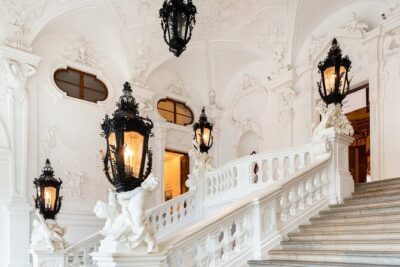
Entry Ticket Upper Belvedere, Klimt’s Kiss & Permanent Collection
Read our review →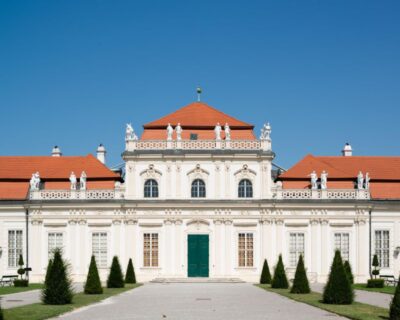
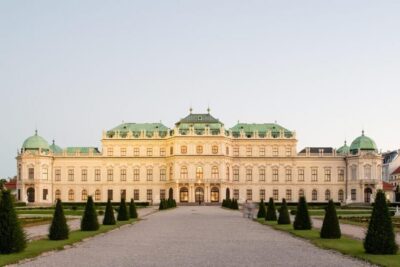
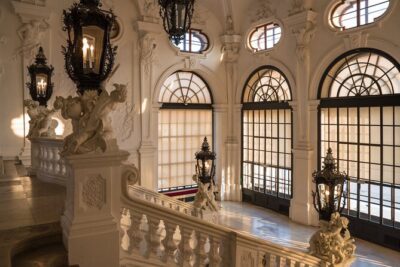
Skip-the-line Upper Belvedere Tickets and Guided Tour Vienna
Read our review →
Belvedere Palace and Museum Tour
Read our review →Skip-the-line Upper Belvedere Tickets and Guided Tour Vienna
Read our review →
Browse the lists this tour appears in