
Reviewed · WALKING TOURS
Vienna: City of Music Private Walking Tour
Vienna’s music story comes alive when you stand in the places where Mozart, Beethoven, Haydn, Salieri, and Vivaldi worked, worshiped, performed, and argued with the city’s ruling class. This private walk adds music clips on headphones to the sights, so you hear the works while learning where they belong.
I like the private format, which lets your guide adjust the pace and explain things in plain language. I also like the flat price for up to 10 people, making this more sensible for a family or group than paying separate per-person fees. The main drawback is that admission to Mozarthaus, the State Opera, and Pasqualati House is not included, and most stops are viewed from outside.
Key points to know before booking
- Hear music as you walk: Selected Viennese masterpieces play on headphones during the tour, adding sound to the streets and monuments.
- Follow Mozart and Beethoven: The route links Mozarthaus, Beethoven’s statue, Pasqualati House, St. Stephen’s Cathedral, the State Opera, and the Hofburg.
- Private for up to 10 people: Your group has its own English-speaking guide, with room for questions and a flexible pace.
- Hotel or flat pickup is available: You can also meet at Café Mozart on Albertinaplatz if you prefer a central starting point.
- Plan for three hours on foot: The route covers central Vienna, with roughly 20 minutes at most named stops and 45 minutes in the Inner City.
- Best value for groups: At $564.72 per group, the cost works out better when shared by several people, though it is a serious expense for one or two.
Why Vienna works so well as a music tour
Vienna is not simply a city with a few famous composers attached to it. Its central streets connect churches, palaces, concert halls, aristocratic homes, and apartments where musicians actually lived and worked. That makes a walking tour useful here: the distance between the names in your guidebook becomes a real, understandable route.
This experience focuses on the classical era, especially Mozart and Beethoven, while also bringing in Haydn, Salieri, Vivaldi, and Archduke Rudolph. You are not only told who composed a piece. You learn how music fit into church life, court life, public performance, and personal relationships.
The headphones are a smart touch. A lecture about music can become abstract after a while, especially if you do not read scores or know much about classical music. Hearing a selection while standing near the place connected to it gives the tour a clearer shape. You do not need formal musical training to follow along.
The private setup matters, too. A guide can stop to answer your particular questions, spend more time on Mozart if that is your interest, or explain Beethoven’s personality without trying to keep a large group moving. The published feedback gives special praise to guides who made the subject personal, used photos of the composers, and shared stories that brought the music to life. Annelie is one guide specifically praised for this warm, personal approach.
More walking tours in Vienna:
- Vienna: Guided Walking Tour of City Center Highlights
★ 4.7 · 4,989 reviews - Vienna: Vienna Central Cemetery Guided Walking Tour
★ 4.8 · 3,307 reviews - Vienna: Guided Walking Tour of City Highlights & Hidden Gems
★ 4.9 · 2,180 reviews
St. Stephen’s Cathedral and Vienna’s sacred sound
The tour begins at St. Stephen’s Cathedral, or Stephansdom, one of Vienna’s most recognizable buildings. You spend about 20 minutes here, learning how the cathedral served as an important performance setting in earlier centuries.
This is a good opening because it places music inside the religious world that supported so much European composition. Haydn, Mozart, Salieri, and Vivaldi are all connected to the cathedral’s musical story. You begin to see that Vienna’s music was not confined to concert halls. Churches were working performance spaces, and major composers moved through them as performers, teachers, and composers.
There is no admission charge for this stop, according to the tour details. The emphasis is on the exterior setting and its musical connections rather than a long interior visit. If you want a full look inside the cathedral, you may need to return on your own at another time.
Mozarthaus and the years of Figaro
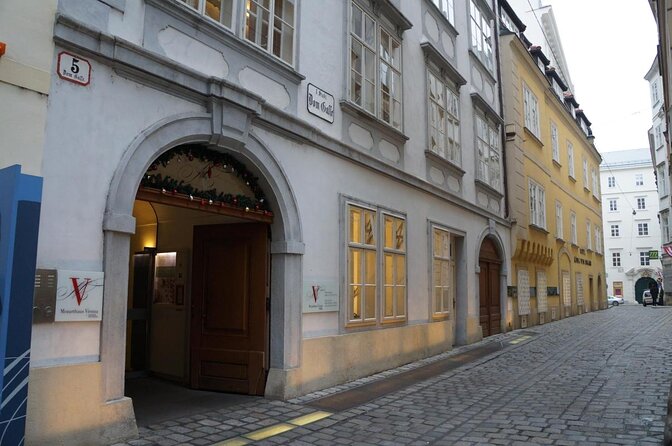
The walk continues to Figaro House, now known as Mozarthaus Vienna. Mozart lived here from 1784 to 1787, a highly productive period when he wrote some of his best-known operas and instrumental works.
You spend about 20 minutes at this stop. The tour takes you by the building, while entry to Mozarthaus is not included. That distinction is important. You get the location and the story as part of the walk, but you should not assume that the museum visit is built into the price.
For many people, this is the most satisfying Mozart stop because the address is tied to a defined period of his life rather than a vague connection to the city. You can picture Mozart working in one place for several years, composing major pieces while living in the center of Vienna.
If you are a serious Mozart fan, you may want to return later and pay for the interior exhibition. If you are more interested in the city’s overall music story, the outside visit may be enough, especially since the guide connects it to other composers and sites rather than treating it as an isolated museum stop.
Beethoven’s statue and a restless home life
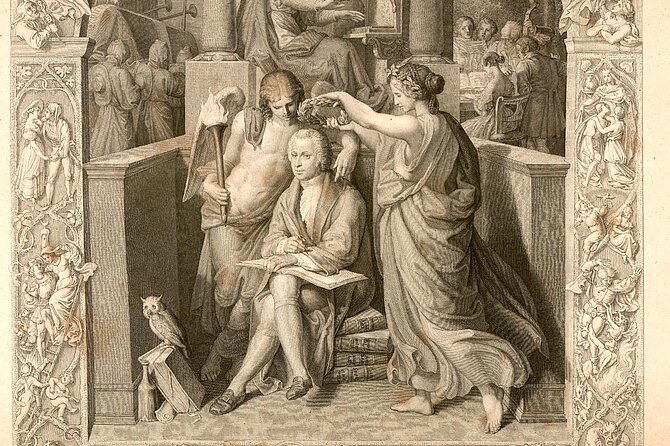
The Beethoven stop adds a different tone. Instead of focusing only on a famous work, your guide explains Beethoven’s unstable life in Vienna and his habit of moving from apartment to apartment. He lived in roughly 60 different residences in the city.
You spend about 20 minutes by his monument. There is no admission fee, so this is another stop where the value comes from the guide’s explanation rather than from entering a paid attraction.
The number of apartments gives you a useful way to think about Beethoven. He was not a settled court composer living comfortably in one grand address. His life was marked by personal strain, changing relationships, and a constant search for the right place to work. His music marks the high point of the Classical period and points toward important changes in the Romantic era.
This is also where a private guide can help. If you already know Beethoven’s music, you can ask about the contrast between his public reputation and his difficult daily life. If you know little about him, the apartment story gives you a simple starting point.
A few more Vienna outings worth weighing up
- Vienna: Private Walking Tour with a Local Guide
★ 4.6 · 1,420 reviews - Vienna: Private Walking Tour with a Guide
★ 4.7 · 962 reviews - Vienna: Wine Tasting Experience in a Private Wine Cellar
★ 4.8 · 413 reviews - Private Day Tour Trip Salzburg Hallstatt and Melk from Vienna
★ 5.0 · 388 reviews
The State Opera and Vienna’s musical present
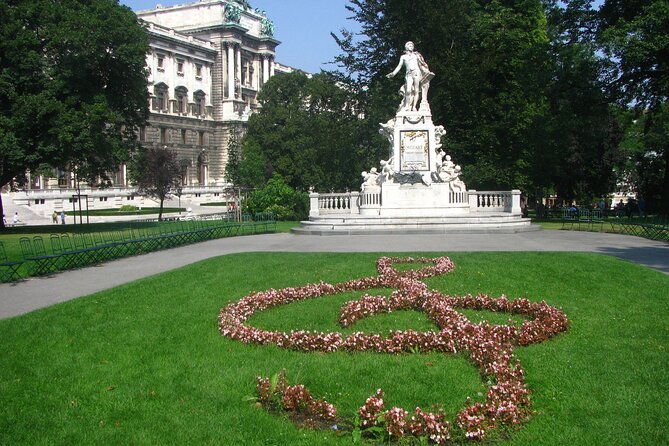
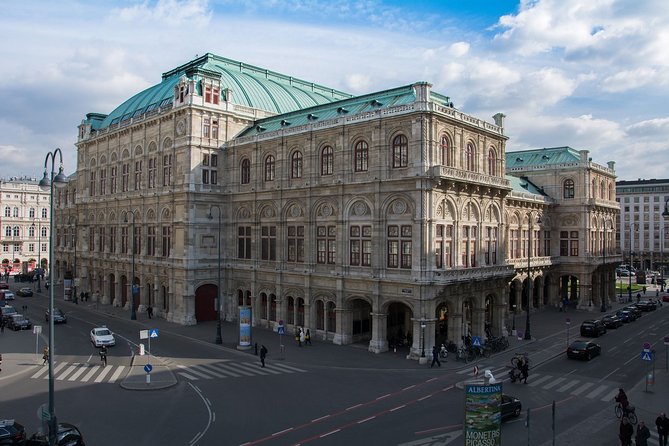
Outside the Wiener Staatsoper, the tour turns from historic composers to Vienna’s continuing role as a major music city. You consider the State Opera and the nearby Musikverein concert hall, associated with the Vienna Philharmonic.
This stop takes about 20 minutes. Admission to the State Opera is not included, so the tour does not replace an opera performance or a guided interior visit. It does, however, explain why these buildings remain important to Vienna’s musical identity.
I like this part because it keeps the experience from becoming a parade of dead composers and old addresses. Vienna’s musical life did not end with Mozart or Beethoven. The State Opera and Musikverein remain active performance venues, and the city’s reputation still rests on live music as well as history.
Do not book this walk expecting to attend a performance during the tour. The provided schedule is a walking route with explanations and recorded music. If you want an opera or concert, arrange that separately.
Mölker-Bastei and Beethoven’s Pasqualati House
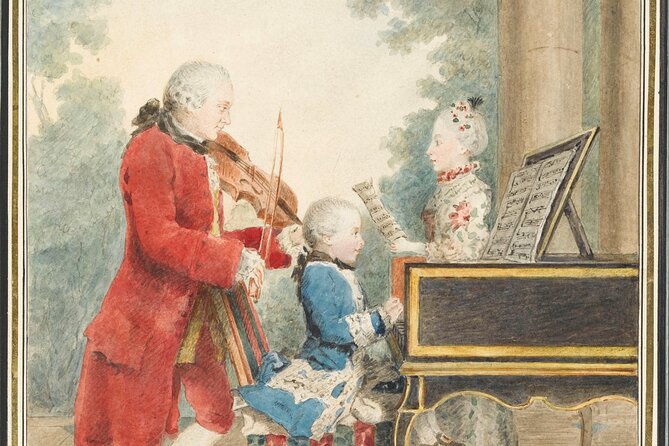
At Mölker-Bastei, you pass another Beethoven address, Pasqualati House, located opposite the University of Vienna. Beethoven stayed in this building during several periods of his life.
The stop lasts about 20 minutes, and entry is not included. Again, the guide’s interpretation is the heart of the visit. The building gives you a physical point for discussing Beethoven’s working life, his repeated moves, and the way his music changed the direction of European composition.
This stop works especially well after the statue because the two places reinforce one another. You first hear about Beethoven’s unsettled life, then see one of the addresses connected to it. The route does not pretend that one apartment explains everything. Instead, it shows how scattered his Vienna life was.
If you want to enter Pasqualati House, check the separate admission arrangements before assuming you can do so during the three-hour walk. The tour price does not include that ticket.
The Hofburg and Beethoven’s aristocratic circle
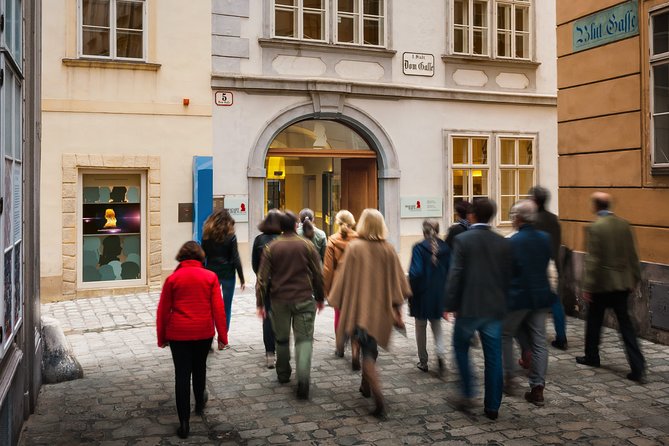
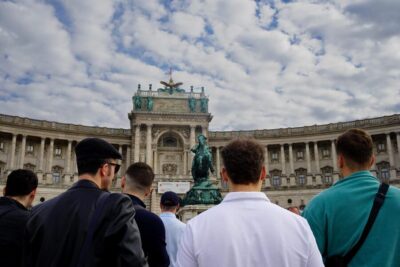
The walk ends at the Hofburg, the former Habsburg residence. Here, the subject shifts to Beethoven’s relationship with the aristocracy, especially Archduke Rudolph, the youngest son of Emperor Leopold II.
Beethoven’s dealings with the nobility were not always easy, but Rudolph became one of his close friends, supporters, and patrons. Rudolph took piano lessons with Beethoven, and Beethoven dedicated the Missa Solemnis to him. That connection shows how music, teaching, friendship, money, and court power overlapped in Vienna.
This final stop gives the tour a strong ending because it links the composer’s personal life to the larger structure of imperial Vienna. Music was not created in isolation. It depended on churches, audiences, publishers, patrons, students, and powerful families.
You spend about 20 minutes here. Admission is not included, and the visit is mainly about the Hofburg’s connection to Beethoven and Rudolph rather than a broad palace tour.
Forty-five minutes of music in the Inner City
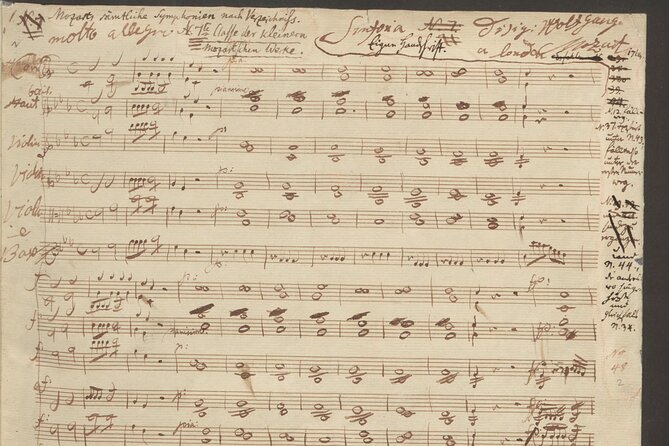
The final 45-minute portion of the route takes place around Vienna’s Inner City. Throughout the walk, you pause to hear selections of Viennese music through headphones while looking at the places tied to the composers.
This is the feature that separates the experience from a standard historical walk. A guide can tell you that a composition matters, but hearing it at the right point gives you a better sense of mood, style, and place. The music also gives the group a short rest from talking and walking.
The tour is likely to work well for people who describe themselves as non-experts. One strong piece of feedback came from someone with little classical music training who still found the experience easy to follow. That is a useful sign: you do not need to know the difference between every period or composer before booking.
The guide may also show photographs of the people you are discussing. That personal detail helps turn names into recognizable figures, especially when the route covers several composers in a short time.
What the three-hour format feels like
The listed stops total about three hours, with many of the named locations receiving roughly 20 minutes each. The Inner City portion receives about 45 minutes, and the entire route is walked.
That pacing is brisk enough to cover a lot, but it does not give you long museum visits. Think of the tour as a guided introduction to central Vienna’s music story, not as seven full attractions in one morning or afternoon.
Wear comfortable shoes and keep the day flexible around the walk. Public transport may be needed to reach some sites, depending on where you begin, and those tram or metro tickets are not included. Your guide can help you purchase a ticket if you do not already have a pass.
You can choose a morning or afternoon departure. That makes it easier to fit around an opera, concert, museum visit, or meal. Hotel or holiday-flat pickup is offered, and a central meeting point is available at Café Mozart, Albertinaplatz 2.
Price, group size, and overall value
The price is $564.72 per group of up to 10 people. That is expensive for a solo visitor or couple, but the calculation changes quickly with a larger party. Ten people would pay about $56 each if the group were full, while two people would carry the full cost between them.
The flat fee also buys privacy. You are not joining a large public group, and your guide can respond to your questions instead of delivering only a set speech. For a family with mixed interests, that flexibility may be worth more than a cheaper group walk.
The price does not include admission to Mozarthaus, the State Opera, or Pasqualati House. It also does not include public transport tickets if you need them. Keep those extra costs in mind, particularly if you intend to return for the interiors.
A strong point in the feedback is the guide’s ability to make the route personal. People praised Annelie’s enthusiasm, the use of personal stories, photos, and music during the walk. That matters more here than a long list of dates. The quality of the experience depends heavily on how well your assigned guide connects the places.
Who should book this Vienna music walk
I would recommend this experience to:
- Families or friend groups of up to 10 who can share the private fee
- Adults who want a focused introduction to Mozart and Beethoven
- People who enjoy classical music but do not have formal training
- Visitors who want a central walking tour with hotel or flat pickup
- Anyone who prefers stories, sound clips, and real addresses over a museum-only visit
- Repeat visitors looking for a more focused theme than a general city tour
I would be more cautious if you want long visits inside the cathedral, Mozarthaus, State Opera, or Pasqualati House. The route gives you context and outside access, but several admissions cost extra and the timing is limited.
This is also not the best choice if you dislike walking or want an evening performance included. The experience is a three-hour daytime walk, with recorded music and explanations rather than live opera or a concert.
Booking details worth knowing
Confirmation arrives at booking. You receive your historian guide’s photo, phone number, and biography, which makes the meeting simpler, especially when using hotel or holiday-flat pickup.
The tour is offered in English, and most people can participate. It runs near public transport, though tram and metro fares are separate. Free cancellation is available if you cancel at least 24 hours before the local start time. Cancellations or changes made inside that window are not accepted for a refund.
The tour is often booked well ahead, with an average lead time of 111 days. That is a useful warning for a fixed Vienna itinerary, especially if you need a morning or afternoon slot on a particular date.
Should you book it?
Book this tour if you want Vienna’s music story explained through actual streets, homes, churches, monuments, and palace connections. The headphone music, private guide, and composer-focused route give it more feeling than a basic monument walk.
The best value comes with four to 10 people. Couples may still find it worthwhile if music is a main reason for visiting Vienna, but should compare the cost with a regular group tour. Also budget for any museum admissions you want to add.
For a non-expert, this is a friendly way into classical music. For a serious enthusiast, it provides useful locations and personal context, though you may want separate time for the interiors and a live performance. If that balance fits your plans, this private walk is a thoughtful and practical choice.
FAQ
How long does the Vienna City of Music Private Walking Tour last?
The tour lasts approximately three hours.
How much does the tour cost?
The price is $564.72 per group, with up to 10 people included.
Is the tour private?
Yes. Only your group participates in the private activity.
What language is the tour offered in?
The tour is offered in English.
Can the guide pick me up at my hotel?
Yes. Pickup is offered at your hotel or holiday flat. You can also meet the guide at Café Mozart, Albertinaplatz 2.
Are morning and afternoon departures available?
Yes. You can choose a morning or afternoon departure.
Are admission tickets included?
Admission is listed as free at St. Stephen’s Cathedral, Beethoven’s statue, and the Inner City portion. Tickets for Mozarthaus Vienna, the State Opera, and Pasqualati House are not included.
Can I cancel for a full refund?
Yes. You can cancel at least 24 hours before the experience’s local start time for a full refund. Changes or cancellations made less than 24 hours before the start are not accepted for a refund.
Just reviewed in Vienna
- World War II History Vienna Old Town Private Walking Tour★ 4.8 · 9 reviews
- Vienna: Wine Tasting E-Bike Tour★ 4.9 · 46 reviews
- Vienna: Winery and Wine Tasting Tour with a Wine Expert★ 5.0 · 5 reviews
- Vienna: Unforgettable Private City Tour★ 5.0 · 7 reviews
- Vienna Urban Art Tour: Explore a different side of Vienna!★ 3.8 · 14 reviews
- Vienna: Concert by the Vienna Baroque Orchestra★ 4.6 · 56 reviews
- Vienna: Sunday Brunch Danube Cruise & Live Music★ 4.2 · 42 reviews
- Vienna Supreme Orchestra at Palais Niederösterreich★ 4.8 · 10 reviews
Walking Tours, compared.
Guided Walking Tour of City Highlights & Hidden Gems
Read our review →
Vienna Historic Center Small Group Walking Tour
Read our review →
Browse the lists this tour appears in