
Reviewed · WALKING TOURS
Vienna Art Nouveau Walking Tour
Vienna’s Art Nouveau is not confined to one grand museum. It runs through the city’s transport system, apartment blocks, river channels, and imperial architecture. This walking tour connects those pieces, beginning near Karlsplatz and ending with Otto Wagner’s remarkable station at Schönbrunn.
I like the small group limit of eight, which gives the guide room to answer questions and adjust the pace. I also like the way the tour links design to city planning, especially the artificial river channel beside Stadtpark station. The main drawback is price: at $180.04 per person, this is a serious spend for about two and a half hours, before some entrance fees.
The strongest guides bring real academic weight without turning the walk into a lecture. Jan, Stefan, Suzanne, Ilse, Angelina, and Wolfgang Augsten are among the guides associated with especially warm feedback. On a rainy day, one guide even offered a car ride to reduce the time spent outside, though you should not assume that option is part of every tour.
Key points to know before booking
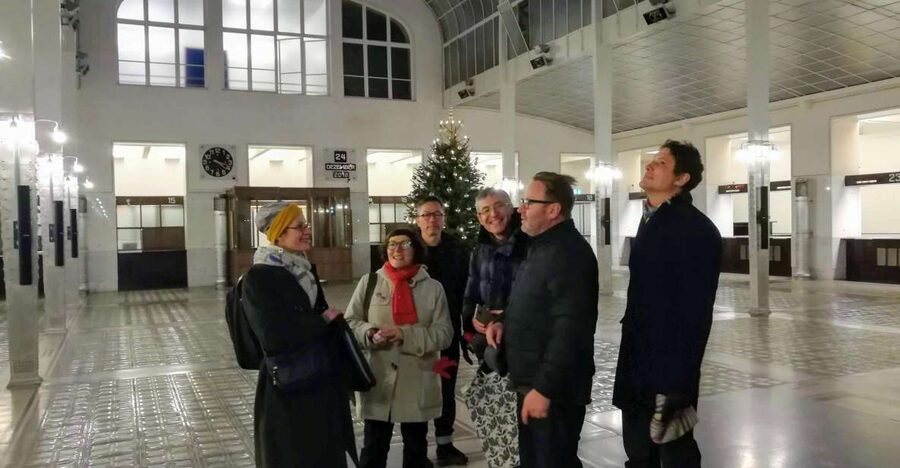
- Otto Wagner’s metro stations are the central theme: You see how public transport became part of Vienna’s artistic identity.
- The Secession building adds Klimt: Tuesday through Sunday, you can pay extra to see the Beethoven Frieze.
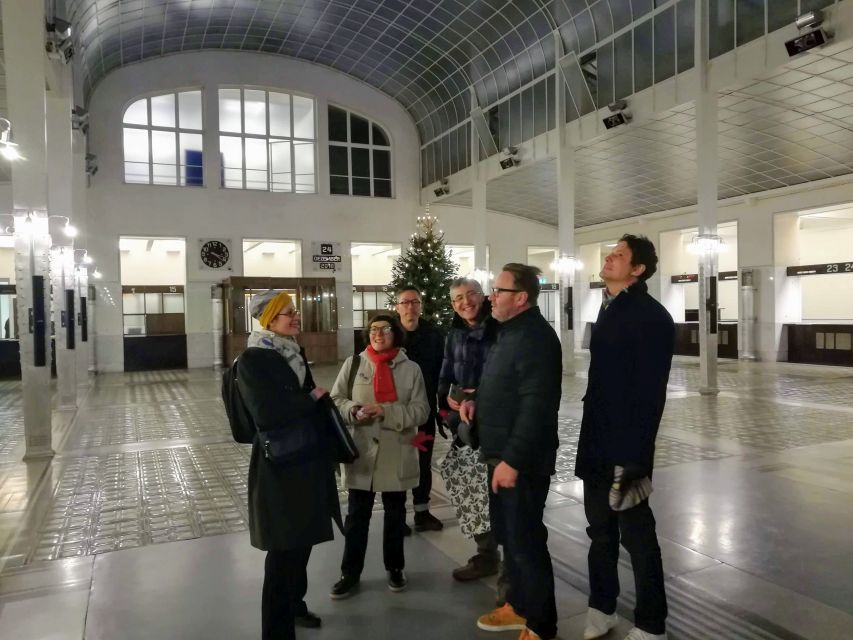
- The group is capped at eight people: That makes questions and personal adjustments much easier.
- The Emperor’s station is the dramatic finish: Wagner adapted a modern, bourgeois style for imperial use.
- This is best for art and architecture fans: The guide explains symbols, materials, city planning, and the Secession movement.
- Budget for extra admissions: The Otto Wagner Pavilion and Secession House can cost more than the tour price.
Why Vienna’s subway belongs in an Art Nouveau tour
Vienna’s Jugendstil, the German-speaking version of Art Nouveau, was not just a style for decorative façades. Around 1900, artists and architects were trying to shape modern life itself. Public transport offered Otto Wagner a chance to bring good design to ordinary city movement, not only to palaces and private homes.
That idea gives this tour a useful focus. You are not simply walking past pretty buildings and taking photographs. You are looking at how a new railway system changed the city, how engineers dealt with a real waterway, and how one architect used similar forms for both public stations and an imperial client.
The tour is described as lasting about two and a half hours, though parts of the plan refer to three hours. Either way, this is a concentrated outing rather than a full-day architectural survey. You will cover several sites, use the metro for the final section, and spend much of the time listening to explanations outdoors.
The meeting point is at Operngasse 7 in central Vienna. The route then takes you toward Karlsplatz, Stadtpark, Kettenbrücke, and finally the imperial station near Schönbrunn. Wear comfortable shoes, and check the forecast. Vienna’s weather can make an outdoor architecture tour feel much longer than it looks on paper.
More walking tours in Vienna:
- Vienna: Guided Walking Tour of City Center Highlights
★ 4.7 · 4,989 reviews - Vienna: Vienna Central Cemetery Guided Walking Tour
★ 4.8 · 3,307 reviews - Vienna: Guided Walking Tour of City Highlights & Hidden Gems
★ 4.9 · 2,180 reviews
Karlsplatz and the Otto Wagner Pavilion
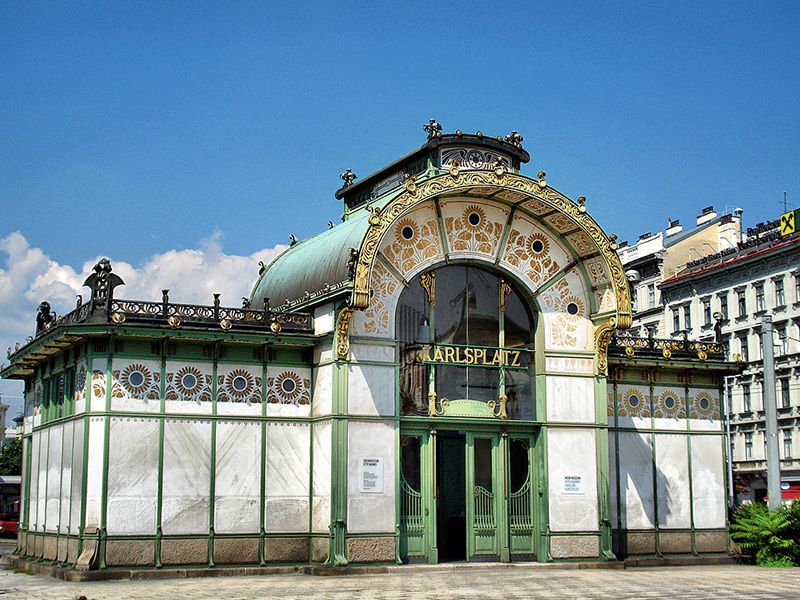
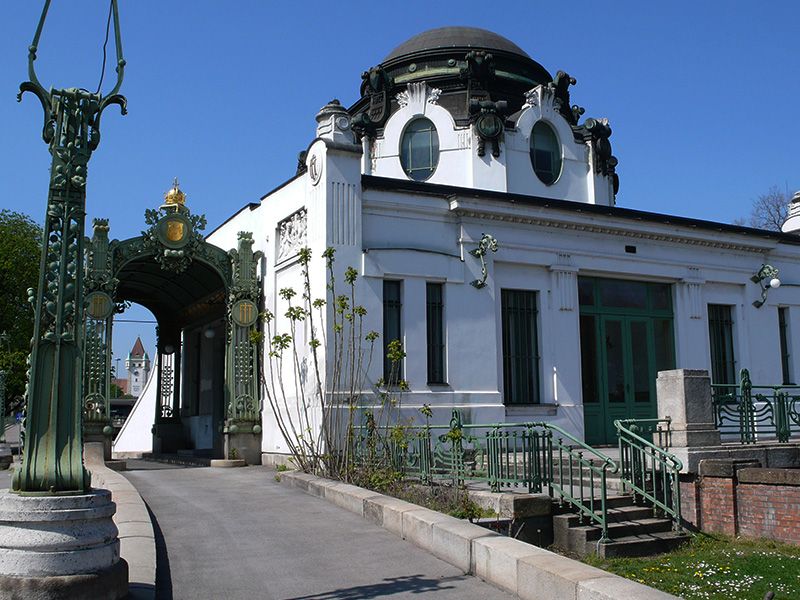
The opening stop is the Otto Wagner Pavilion at Karlsplatz. Its pale green and white decoration, metal details, and orderly structure introduce the main visual language of the tour. This small building once served Vienna’s city railway, and it now contains a compact museum when open.
This is a smart place to begin because it gives you a basic vocabulary before the route becomes more complicated. Your guide can point out Wagner’s use of repeated patterns, strong geometry, decorated surfaces, and modern materials. Once those details are in your head, you can spot them again at the other stations.
The pavilion museum is not always open. From April through October, when admission is available, general entry is €5. Seniors, students, Vienna Card holders, and people with disabilities pay €4. That fee is not included in the tour price.
Do not expect a large museum visit here. The value comes from seeing the building in person and using it as a starting point for the wider discussion. If you already know Wagner’s work, this part may feel brief. If Vienna is new to you, it helps set the tone for everything that follows.
Stadtpark station and the redirected Vienna River
From Karlsplatz, the route continues toward Stadtpark station. This is described as the best-preserved original metro station still in use, so it offers one of the clearest chances to see Wagner’s design in an active transport setting rather than behind museum glass.
The most unusual feature is not only the station itself. Nearby, the Vienna River was redirected when the city railway was built, and an artificial riverbed was created as part of the project. This detail shows why the tour works best when it treats architecture as part of city planning.
A decorative station can look like a self-contained object. The river channel reminds you that Wagner’s work had to fit into a functioning city. Rail lines, waterways, roads, public spaces, and buildings all had to meet in the same limited area. The tour uses that problem to explain how design choices were shaped by practical needs.
This is also one of the points where a good guide makes a major difference. The physical station is easy to see on your own, but the reason for the river work and the way it affected the city are less obvious. Guides such as Suzanne and Stefan have been praised for connecting architecture with Vienna’s wider development and for answering questions in detail.
Kettenbrücke, apartment houses, and the Secession
The next major section brings you to Kettenbrücke station, with the Secession building and two Otto Wagner apartment houses along the way. Here the tour shifts from railway infrastructure to the ideas behind Viennese Jugendstil.
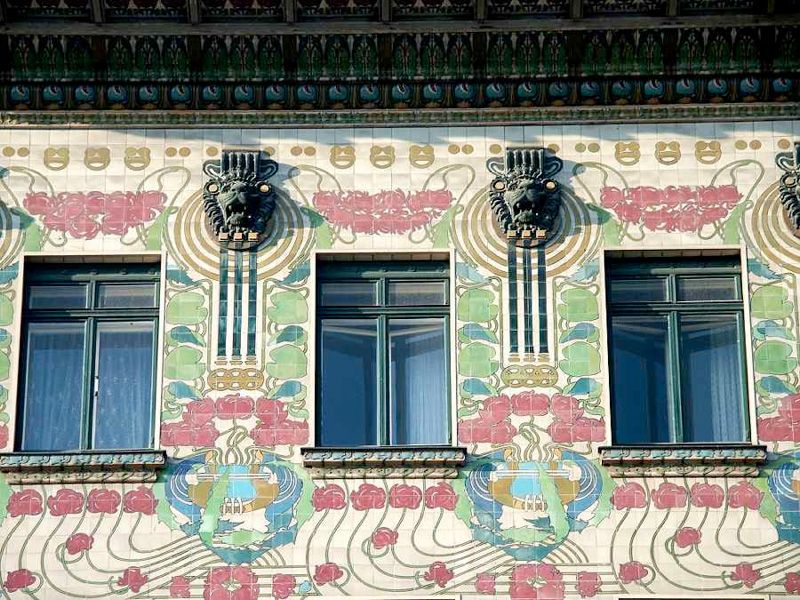
The Secession building is the visual star of this section. Its pale façade, dome of gilded laurel leaves, and clean geometric forms made it a bold statement when it opened. The building is closely tied to the Vienna Secession, a movement that sought artistic freedom outside the established exhibition system.
Your guide explains the symbols and materials that appear across the movement. You will look at how ornament is used, where modern design departs from older historic styles, and how Wagner’s apartment buildings express similar ideas in a more practical setting.
The two apartment houses matter because they show that Art Nouveau was not limited to civic monuments. Wagner’s designs brought decoration and structure together in buildings made for everyday urban life. The contrast with the Secession building helps you see how one period could produce both private housing and a symbolic art hall.
The Secession House usually requires a separate admission if you visit Tuesday through Sunday. Adults pay €9.50, while students and seniors pay €6. The guide helps with payment. The main extra reward is Gustave Klimt’s Beethoven Frieze, a famous work that gives the building a powerful interior counterpart to its exterior design.
If Klimt is a priority for you, confirm the operating day when booking. The tour itself is offered in English, and the guide can explain the frieze in context rather than leaving you to decipher it alone. If you are not especially interested in painting, the exterior and the discussion of the Secession movement may be enough, but the extra admission is easier to justify for art lovers.
A different sort of day out in Vienna:
- Vienna: Vivaldi’s Four Seasons Concert in Karlskirche
★ 4.7 · 14,951 reviews - Vienna: Skip-the-cashier-desk-line Giant Ferris Wheel Ride
★ 4.5 · 7,859 reviews - Vienna: Schönbrunn Palace & Gardens Skip-the-Line Tour
★ 4.7 · 7,739 reviews - Vienna: Light of Creation Votive Church Immersive Light Show
★ 4.8 · 6,779 reviews
The metro ride to the Emperor’s station
The route then uses the metro to reach the imperial station. This is one of the tour’s practical pleasures. You are not only studying Vienna’s transport history. You are using the system that made the city railway such an important part of modern urban life.
A guide can also help you feel more comfortable with Vienna’s public transport. One particularly useful result of the tour is learning how to navigate the city’s trains and stations. If you already have a day pass, bring it. The tour does not include food, drinks, hotel pickup, or drop-off, and transport tickets are not listed as included.
The final station was built outside Schönbrunn Palace for the Emperor alone. That purpose gives it a different mood from the public stations. It was a working railway structure, but it also carried a political message: the Emperor supported Vienna’s new metro line.
This is where the tour’s ideas come together. Earlier stations show Wagner applying an elegant but broadly accessible style to public transport. The imperial station takes those forms and gives them more ceremony. The guide can point out the familiar patterns and materials, then show how they were adjusted for imperial use.
The building is small, but its role was large. It was designed to impress and reassure at the same time. Critics of the metro could see that the Emperor backed the project, while the station itself presented modern transport as compatible with royal dignity.
What the guides add to the walk
The best part of this tour is the human explanation between the buildings. The stops are accessible on your own, but it takes a trained eye to connect them. A strong guide will help you notice repeated design features, explain why Wagner made certain choices, and place Vienna around 1900 in a clear social and artistic setting.
The guides associated with this experience have different strengths. Jan has been singled out for his passion for Vienna. Suzanne has adapted the route to a small private group and used the U4 to reduce walking and provide a warmer break on a cold day. Stefan has offered useful suggestions for places to eat and visit during the rest of a stay.
Ilse has been described as flexible and entertaining, while Angelina has made an effort to include everything a group wanted to see. Wolfgang Augsten has led tours focused on Vienna’s culture and architecture with a personal touch. The guide assigned to your departure may be different, so treat these names as examples rather than a guarantee.
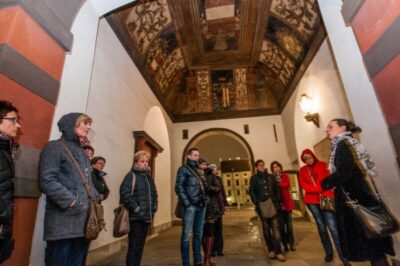
The guide’s flexibility is especially valuable when the group is small. With up to eight people, it is easier to pause for questions, adapt the amount of detail, or adjust the pace. Most people can take part, but you should still be ready for outdoor walking, station visits, and changes between sites.
Price, extra fees, and overall value
At $180.04 per person, this is not a bargain walking tour. The price reflects a professional English-speaking guide, a small maximum group, and a specialist subject. You are paying for interpretation and context rather than for a long list of included admissions.
The extra costs can affect the final value:
- The Otto Wagner Pavilion costs €5 for general admission when its museum is open, or €4 for seniors, students, Vienna Card holders, and people with disabilities.
- Secession House costs €9.50 for adults and €6 for students and seniors from Tuesday through Sunday.
- Food and drinks are not included.
- Hotel pickup and drop-off are not included.
For someone who simply wants to see Vienna’s major sights, the price will be hard to defend. You can view many exteriors independently. For an art, design, or architecture enthusiast, the calculation is different. The guide turns scattered buildings into one connected story, and the small group means you are not lost in a large crowd.
The rating is 4.9 from 21 reviews, with 95 percent recommending the experience. That is a strong signal, though the sample is not large. The repeated strengths are clear: guides who are passionate, flexible, prepared, and able to explain both art and Austrian history.
Weather, timing, and practical planning
This tour depends heavily on weather because much of it takes place outdoors. Cold and rain have not necessarily ruined the outing, but they can change how enjoyable it feels. Bring a rain jacket, dress in layers, and wear shoes suited to city walking.
The small group can help in poor weather. A guide may adjust the route or make practical choices, but no indoor substitute or private car ride is promised as a standard feature. Plan as if you will spend meaningful time outside.
The tour is offered in English and is near public transportation. Confirmation arrives at booking, and the maximum is eight people per booking. It is often reserved well ahead of time, with an average booking lead time of 36 days, so last-minute availability may be limited.
Free cancellation is available until 24 hours before the start time. Changes or cancellations inside that window are not accepted for a refund. The cutoff follows local Vienna time.
Who should book this Art Nouveau walk?
I would choose this tour if you care about architecture, design, painting, urban planning, or Vienna around 1900. It is also useful early in a stay because it gives you a better sense of the city’s transport system and points you toward other buildings you can explore later.
It suits repeat visitors especially well. Even if you have already seen the Secession building or admired Wagner’s stations, the connections between them may be new. A guide can also point out apartment houses and design details that are easy to pass without a second look.
I would think twice if your main goal is Vienna’s imperial palaces, classical art museums, or a relaxed stroll with little explanation. The tour is focused, fairly academic, and expensive for its length. You also need to budget extra for the optional museum entries.
Should you book it?
Book this tour if you want Vienna’s Art Nouveau explained rather than simply photographed. The strongest reasons are the small group, the unusual metro focus, the artificial Vienna River channel, and the final imperial station near Schönbrunn.
Skip it if you want a low-cost overview or prefer to explore at your own speed. For the right audience, though, this is a thoughtful way to see how Vienna’s modern identity took shape through railway stations, apartment houses, art movements, and imperial ambition.
FAQ
How long does the Vienna Art Nouveau Walking Tour last?
The tour lasts approximately two and a half hours. Some descriptions refer to it as a three-hour walking tour, so allow roughly that amount of time.
Where does the tour begin?
The meeting point is Operngasse 7, 1010 Vienna, Austria.
What sites are included?
The route includes the Otto Wagner Pavilion at Karlsplatz, Stadtpark station, Kettenbrücke station, the Secession building, two Otto Wagner apartment houses, and the imperial station near Schönbrunn.
Is admission to the museums included?
No. When open from April through October, the Otto Wagner Pavilion costs €5 for general admission and €4 for eligible reduced-rate visitors. Secession House costs €9.50 for adults and €6 for students and seniors from Tuesday through Sunday.
How many people can join the tour?
The maximum is eight people per booking, and the activity has a maximum group size of eight travelers.
Can I cancel for a full refund?
Yes, if you cancel at least 24 hours before the experience start time. Cancellations or changes made less than 24 hours in advance are not eligible for a refund.
Just reviewed in Vienna
- World War II History Vienna Old Town Private Walking Tour★ 4.8 · 9 reviews
- Vienna: Wine Tasting E-Bike Tour★ 4.9 · 46 reviews
- Vienna: Winery and Wine Tasting Tour with a Wine Expert★ 5.0 · 5 reviews
- Vienna: Unforgettable Private City Tour★ 5.0 · 7 reviews
- Vienna Urban Art Tour: Explore a different side of Vienna!★ 3.8 · 14 reviews
- Vienna: Concert by the Vienna Baroque Orchestra★ 4.6 · 56 reviews
- Vienna: Sunday Brunch Danube Cruise & Live Music★ 4.2 · 42 reviews
- Vienna Supreme Orchestra at Palais Niederösterreich★ 4.8 · 10 reviews
Walking Tours, compared.
Guided Walking Tour of City Highlights & Hidden Gems
Read our review →
Vienna Historic Center Small Group Walking Tour
Read our review →
Browse the lists this tour appears in