Reviewed · TOURS
The best of Vienna – Exclusive Tour (Max 9 people)
Vienna’s past comes at you quickly on this compact walk: imperial power at the Hofburg, Nazi history at Heldenplatz, coffee traditions at Café Landtmann, and the city’s grandest church at St. Stephen’s Cathedral. I like the route because it gives you both the polished center and the harder chapters behind the monuments. I also like the small private group, capped at nine, and the fact that the guide is a licensed Austria guide and professional art historian.
The main catch is price. At $211.19 per person for about two hours, this is a serious spend for a short walk, and entrance tickets, food, drinks, and tips are extra. You are paying for personal attention and a private format, not museum admission or an all-day tour.
Key points at a glance
- A private group of up to nine: You avoid the unwieldy crowds that can affect larger city walks.
- A thoughtful historical route: The walk moves from monarchy to Nazism, modern Austria, café customs, and cathedral legends.
- A strong first-day orientation: The central route helps you understand where Vienna’s major sights fit together.
- A licensed art historian guide: Expect more context around buildings, art, rulers, and public spaces than on a basic sightseeing stroll.
- No entrance tickets included: You see and discuss the exteriors and surroundings, but paid interiors require separate planning.
- An easy city-center finish: The walk ends near Stephansdom at Stephansplatz, close to public transportation.
Why this two-hour route works
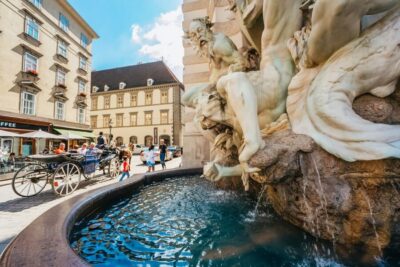
This tour is built as a city introduction rather than a museum visit. You walk through Vienna’s first district, where major sights sit close together and the streets themselves tell the story.
The sequence is useful. You begin near Helmut-Zilk-Platz, then pass the Albertina and Hofburg before reaching Heldenplatz. From there, the route shifts toward daily Viennese life, including coffeehouse customs and the elegant streets around Graben and Kohlmarkt. It finishes at St. Stephen’s Cathedral.
That progression gives you more than a list of monuments. You see how Vienna moved from imperial capital to modern republic, and how ceremony, art, politics, food, and religion still share the same city center.
The pace should suit most people who can take part in a normal walking tour. Each stop lasts about 10 to 20 minutes, so you are not expected to spend a long time at one location. The route can also be adapted to your group’s needs, an important advantage when you want more time at one sight or need a gentler rhythm.
Still deciding? These Vienna outings turn up in the same shortlists.
- Vienna: Vivaldi’s Four Seasons Concert in Karlskirche
★ 4.7 · 14,951 reviews - Vienna: Skip-the-cashier-desk-line Giant Ferris Wheel Ride
★ 4.5 · 7,859 reviews - Vienna: Schönbrunn Palace & Gardens Skip-the-Line Tour
★ 4.7 · 7,739 reviews
Helmut-Zilk-Platz and the Memorial Against War and Fascism
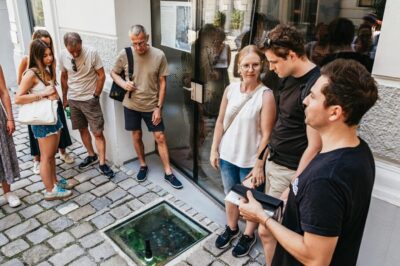
The meeting point is the Memorial Against War and Fascism on Helmut-Zilk-Platz. This is a meaningful place to begin, rather than a random corner near the center.
The memorial addresses the damage caused by war and dictatorship. It gives your guide a natural opening for Vienna’s 20th-century story before the walk moves back toward the imperial era.
You spend about 10 minutes here, with no admission charge. Since the memorial is outdoors, you can begin immediately without waiting for a ticket or entering a building.
Pay attention to the meeting instructions. The official starting point is Helmut-Zilk-Platz, 1010 Vienna, and the stop is specifically identified as the Memorial Against War and Fascism. In a city with several major squares and monuments, using the exact name will make the rendezvous easier.
Albertina, opera, and Vienna in quick focus
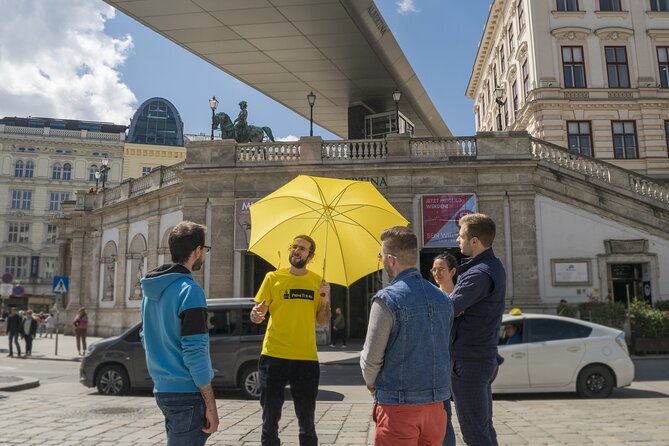
The Albertina stop lasts about 15 minutes. You will hear about the gallery, the Vienna State Opera area, and the city as a whole.
This is a short introduction, not a full Albertina visit. The admission ticket is not included, so plan a separate visit if you want to see the collection inside. The value here is orientation. Your guide can connect the cultural institution with the surrounding center and explain why this part of Vienna matters.
I like this early stop because it helps you place Vienna’s artistic identity beside its political one. The city is not only palaces and royal ceremony. It is also a major center for art, music, and public culture.
If you intend to visit the Albertina after the walk, ask your guide for practical timing advice. The tour itself does not include entry, and the 15-minute stop is not enough for a serious gallery visit.
The Hofburg and the Habsburg story
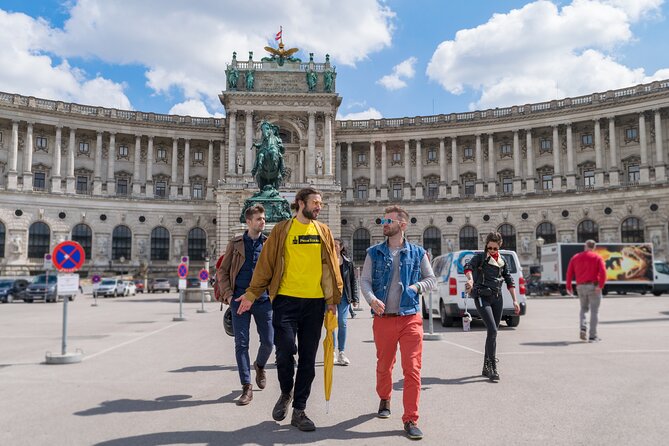
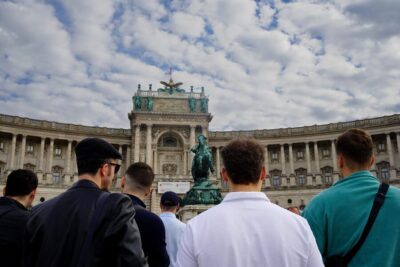
At the Hofburg, the focus shifts to the Habsburgs, the former royal palace, Princess Sisi, Emperor Josef, and the modern Austrian state. You spend about 20 minutes here, making it the longest stop on the route.
The Hofburg can be confusing if you only see it as one huge palace. It is a broad collection of buildings and courtyards tied to centuries of imperial rule. A guide helps you sort out the people and institutions connected with it.
The Sisi material will appeal to anyone curious about the famous empress, but the stop also places her story within the wider Habsburg system. That balance matters. Vienna’s imperial past is full of attractive palaces and familiar royal names, yet it also shaped government, class, architecture, and public life across much of Europe.
You will not receive admission to the palace interiors as part of this tour. If you want to see the Imperial Apartments or other paid sections, treat this walk as your introduction and arrange the interior visit separately.
A different sort of day out in Vienna:
- Vienna: Light of Creation Votive Church Immersive Light Show
★ 4.8 · 6,779 reviews - Vienna Spanish Riding School Guided Tour
★ 4.7 · 6,765 reviews - Vienna: Classical Concert in the World-Famous Musikverein
★ 4.6 · 6,673 reviews - Vienna: Skip-the-Line Sisi Museum, Hofburg and Gardens Tour
★ 4.8 · 5,918 reviews
Heldenplatz and Vienna’s difficult 20th century
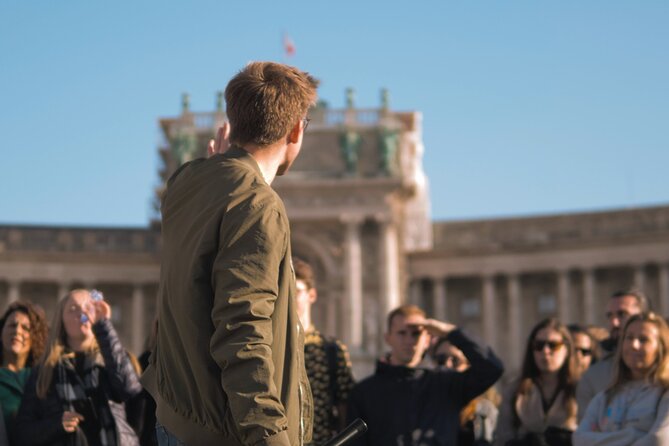
Heldenplatz provides one of the tour’s most serious moments. Your guide explains the giant gate and the place where the Nazis announced the Anschluss, the annexation of Austria into Nazi Germany.
This is a valuable inclusion. Many quick city walks stay with comfortable imperial stories and skip the political events that changed Vienna so sharply. Here, you are asked to look at the square in a wider context, including World War II and Austria’s experience under Nazism.
The stop lasts about 15 minutes. That is enough for an explanation and discussion, but not enough for a full study of the period. If this part of Vienna interests you most, ask the guide for suggestions on where to continue your learning after the tour.
I also appreciate the placement of Heldenplatz after the Hofburg. You first understand the square as part of the imperial center, then see how the same public space was used for a very different political message. That contrast makes the history easier to grasp.
Café Landtmann and the meaning of Melange
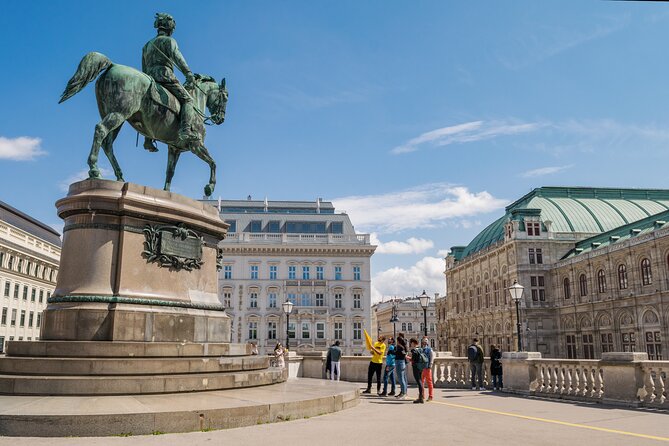
At Café Landtmann, the subject changes from politics to a small but important part of Viennese life: coffee culture. The guide explains what a Melange is, how it is traditionally enjoyed, and why cafés matter to local culture.
This stop lasts about 10 minutes, and food and drinks are not included. You are not promised a seated coffee break. Instead, you receive an explanation of the custom and the setting.
That distinction is worth noting before you book. If you want to order a Melange, you will need to pay separately and may need extra time after the tour. Still, the stop adds welcome texture to a route otherwise filled with grand monuments.
A café in Vienna is not simply a place to grab caffeine. The tradition is tied to conversation, reading, lingering, and the city’s intellectual and social life. Even a short explanation helps you understand why ordering coffee here can feel different from a quick takeaway stop.
Graben, Kohlmarkt, and Demel
The walk continues along Graben and Kohlmarkt, two of the most elegant streets in central Vienna. You spend about 15 minutes in this area, including an explanation of Demel, the well-known former royal café.
This section is a good chance to look beyond the palace walls. The streets connect shopping, architecture, cafés, and the old center in a compact area. Your guide can point out how Vienna’s public face was shaped by royal taste and urban development.
Demel is mentioned as a place of interest, but admission is not part of the tour. Food and drink are also excluded. If you want to stop inside, plan to do so before or after the walk rather than assuming the tour includes a table or tasting.
Graben and Kohlmarkt can be busy, especially at popular times, so staying close to your guide will help. The small group size should make this easier than joining a large general walk.
St. Stephen’s Cathedral and the end at Stephansplatz
The final stop is St. Stephen’s Cathedral, known locally as Stephansdom or Stefl. The tour spends about 20 minutes here, discussing its legends, stories, and unusual facts.
The cathedral is a fitting finish. After the imperial palace, political square, café, and grand shopping streets, you end with one of Vienna’s clearest symbols. Its location also makes the final stop practical. The tour ends near Stephansdom at Stephansplatz, in the center of the city and close to public transportation.
Admission to the tour stop is free, but this does not necessarily mean every interior area or special section is included. The experience is primarily a guided city walk, so confirm any separate cathedral entry plans if you want more than the outdoor explanation.
Finishing at Stephansplatz gives you choices. You can continue exploring on foot, find a café, use public transportation, or visit the cathedral on your own. It is also a useful place to begin a later visit to central Vienna because you will already understand how the main streets connect.
What the private format is worth
The maximum group size is nine, and only your group participates. That changes the feel of the walk.
A guide can answer questions without shouting across a crowd. You can ask for more detail about Sisi, Nazi Vienna, architecture, or coffee customs. The route can also be adjusted to your needs, within the limits of a two-hour experience.
This matters because larger walking tours can become hard to follow in busy streets. One earlier version of a related free walk reportedly grew far beyond its stated group size, with more than 50 people at one point. That is not the format here. The private booking and nine-person limit are central reasons to consider paying more.
The guide names associated with this experience include Rodrick, Michael, Stefen, Christopher, Patrick, Anita, Florian, Sven, and Elizabeth. Availability can vary by date, so you should not book expecting one particular person unless the provider confirms it.
The strongest guide qualities attached to this experience are clear historical explanations, enthusiasm, humor, and a good walking pace. Christopher, Anita, Florian, Sven, and the other named guides have different styles, so your experience may feel more formal, funny, or conversational depending on who leads it.
Is $211.19 per person a fair price?
The price is $211.19 per person. For a two-hour walk, that is expensive compared with a tip-based group walk or a standard shared city tour.
The calculation changes if you are traveling with a small private party and value personal attention. A group of friends or family can split the cost while keeping the guide focused on its interests. You are also paying for a licensed Austria guide, a professional art historian, local taxes, and a private format.
What you are not buying is an all-inclusive sightseeing package. Entrance tickets, food, drinks, alcoholic beverages, and tips are separate. The tour gives you explanation and orientation, not a sequence of paid interior visits.
I would consider it best value for a first visit when you want a clear overview in a short window, or when your group has specific questions and does not want to be folded into a large crowd. If you are mainly looking for inexpensive sightseeing, the price will be difficult to justify.
Practical details before you book
The tour lasts approximately two hours and is offered in English. Confirmation arrives at booking, and the meeting point is Helmut-Zilk-Platz in Vienna’s 1010 district.
Wear comfortable shoes. The route covers several central streets and squares, and the experience depends on walking between stops. The tour requires good weather. If poor conditions cause cancellation, you are offered another date or a full refund.
Most people can participate, and service animals are allowed. The route is near public transportation, and the end point at Stephansplatz makes onward plans easy.
You can cancel for a full refund up to 24 hours before the start time. Changes or cancellations made less than 24 hours before the start are not accepted for a refund.
Who should book this Vienna walk?
I would choose this tour for a first-time visitor who wants the main center explained without spending half a day inside museums. It also suits couples, families, and small groups who want to ask questions and set their own pace.
History-minded visitors will appreciate the move from Habsburg rule to the Anschluss and World War II. Art and culture fans will like the Albertina, opera, café, and Demel connections. You also get a quick introduction to Viennese coffee customs, which can help you make better choices during the rest of your stay.
I would hesitate if you want extensive interior visits, a relaxed café meal, or detailed time at each monument. Two hours passes quickly, and the tour does not include admission tickets. I would also compare the cost carefully if you are traveling alone.
Should you book it?
Book this walk if you want a private, tightly focused introduction to central Vienna and are willing to pay for a small group and a licensed guide. The route has a good mix of imperial history, difficult 20th-century events, art, coffee culture, elegant streets, and the cathedral.
Skip it if your priority is low-cost sightseeing or long visits inside the Albertina, Hofburg, or St. Stephen’s Cathedral. In that case, use the route as a self-guided outline and spend the money on individual admissions.
For the right group, the best feature is not the number of sights. It is the chance to connect them in a short time, with a guide who can explain why Vienna’s grand center looks the way it does.
FAQ
How long does the tour last?
The tour lasts approximately two hours.
How many people can join the private tour?
The group is limited to a maximum of nine people, and only your group participates.
What language is the tour offered in?
The tour is offered in English.
Where does the tour start and finish?
It starts at Helmut-Zilk-Platz, 1010 Vienna, at the Memorial Against War and Fascism. It finishes near Stephansdom at Stephansplatz.
Are entrance tickets included?
No. Entrance tickets are not included. Food, drinks, alcoholic beverages, and tips are also separate.
What happens if bad weather cancels the tour?
If the experience is canceled because of poor weather, you are offered a different date or a full refund.
Just reviewed in Vienna
- World War II History Vienna Old Town Private Walking Tour★ 4.8 · 9 reviews
- Vienna: Wine Tasting E-Bike Tour★ 4.9 · 46 reviews
- Vienna: Winery and Wine Tasting Tour with a Wine Expert★ 5.0 · 5 reviews
- Vienna: Unforgettable Private City Tour★ 5.0 · 7 reviews
- Vienna Urban Art Tour: Explore a different side of Vienna!★ 3.8 · 14 reviews
- Vienna: Concert by the Vienna Baroque Orchestra★ 4.6 · 56 reviews
- Vienna: Sunday Brunch Danube Cruise & Live Music★ 4.2 · 42 reviews
- Vienna Supreme Orchestra at Palais Niederösterreich★ 4.8 · 10 reviews
Tours, compared.

Skip-the-Line Sisi Museum, Hofburg and Gardens Tour
Read our review →
Guided Walking Tour of City Highlights & Hidden Gems
Read our review →