
Reviewed · VIENNA CITY SIGHTSEEING TOURS
Fall in Love with Vienna Tour- the best of Vienna on foot!
Vienna’s historic center is compact, but its stories are not. This three-hour walk links Mozart, the Habsburgs, Sisi, Beethoven, coffeehouse culture, imperial churches, and the grand Ringstrasse into one useful first look. I especially like the wide sweep of sights and the fact that you finish near the Opera, right where you can continue exploring.
I also like the practical help after the sightseeing. Guides such as Nicoletta, Nicoleta, Moritz, and Reka have helped people choose museums, restaurants, cafés, concerts, and even subway tickets. The main drawback is pace and sound: you may walk about 5 kilometers, and with up to 18 people, a guide can be hard to hear in crowded streets.
Key points to know
- Covers an impressive 25 or so central sights in roughly three hours, mostly from the outside.
- Best for first-time visitors who want orientation before choosing museums and paid attractions.
- Includes an extra 30-minute Viennese coffeehouse break from January through November.
- Guides can tailor the conversation, with Nicoletta, Nicoleta, Moritz, and Reka praised for warmth and useful advice.
- Expect around 5 kilometers of walking, mostly easy and flat, with some cobblestones and uneven footing.
- The $72.59 price buys orientation and local guidance, but museum admission, drinks, food, and tips cost extra.
Why this Vienna walk works as a first-day plan
This is not a tour built around long museum visits. It is a fast-moving introduction to central Vienna, with short stops at major buildings and time for stories, questions, photographs, and recommendations.
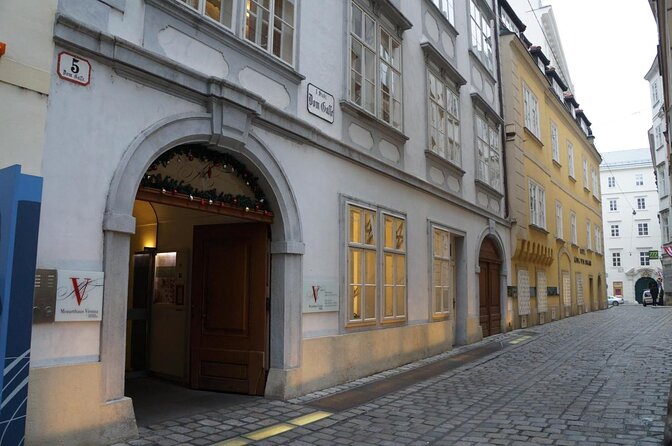
You begin at Mozarthaus Vienna on Domgasse, near the heart of the old city. You finish at Herbert-von-Karajan-Platz in front of the Vienna State Opera. That route gives you a useful mental map of Vienna’s central district, from Stephansdom and the Hofburg to the cafés, palaces, gardens, and Ringstrasse.
I would book it near the start of your stay. After three hours, you will know which places deserve a second visit and which museums fit your interests. Several people used the walk to plan the rest of their time, which is exactly how a good orientation tour should work.
Morning and afternoon departures are offered. The early start has a practical edge: one person found the tour finished before the city became as busy. Afternoon departures may suit you if you arrive late or prefer a slower start to the day.
More sightseeing tours of Vienna:
- Vienna: Hop-On Hop-Off Sightseeing Bus Tour in 19 Languages
★ 4.2 · 4,518 reviews - Vienna PASS: All incl. Sightseeing Pass for 85+ Attractions
★ 4.3 · 3,067 reviews - Vienna: Guided Walking Tour of City Highlights & Hidden Gems
★ 4.9 · 2,180 reviews
Mozart, wafers, and Stephansdom in the old city
The first stop is Mozarthaus Vienna, where the guide talks about Mozart and his life in Vienna. The visit begins outside, with free admission to the tour stop itself. If you want to see the interior museum, you will need to pay separately.
From there, the walk passes a central wafer and candy shop near Saint Stephen’s Cathedral. This is a quick food-oriented pause rather than a formal tasting, but it adds a pleasant Viennese detail. You can look at Neapolitan-style wafers and other sweets, and it may help you choose a small edible souvenir later.
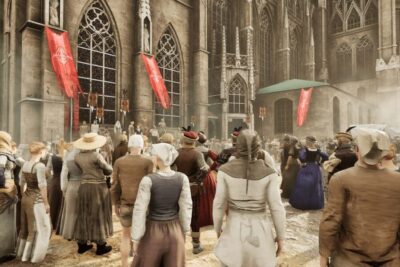
Stephansdom is one of the city’s essential sights. The cathedral’s origins reach back to the 11th century, and its position in the center makes it a natural anchor for understanding Vienna. The schedule allows only about five minutes here, so think of this as an introduction and photo stop, not a cathedral tour.
The short timing is both a strength and a weakness. You see a lot without spending 20 minutes at every stop, but you will not get a full interior visit at each church or palace. If Stephansdom interests you, return later with more time.
Baroque churches and the story of Viennese coffee
The Pestsäule, or Plague Column, brings you into Vienna’s high-Baroque world. Emperor Leopold II ordered the memorial as an expression of gratitude after the plague epidemic. Your guide explains the symbolism, and the column gives you an early lesson in how religion, imperial power, and public art meet in Vienna.
Nearby Peterskirche looks almost like an art gallery inside. The present Roman Catholic church was built after the earlier structure was destroyed in the 16th century. The planned stop is brief, but it is a useful reminder that Vienna’s grand style is not limited to palaces.
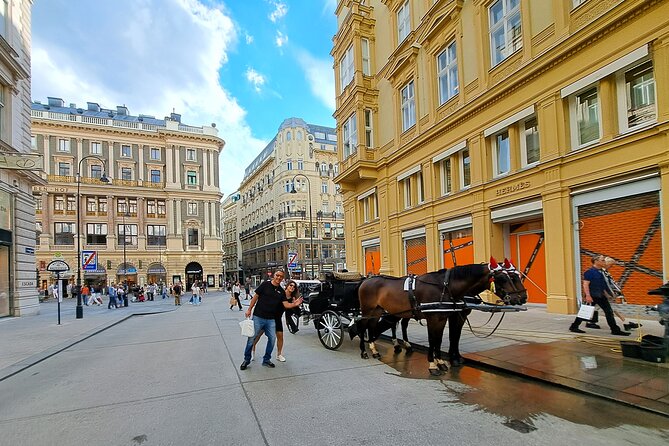
The route then turns toward the city’s coffee culture, with a stop near Julius Meinl on Kohlmarkt. The guide explains how coffee became part of Viennese life. You should not assume this is a full café visit, because the included 30-minute coffee break is described separately and applies from January through November.
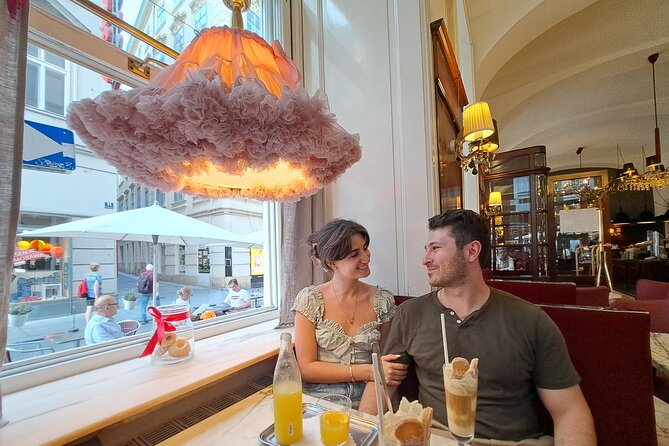
That break is one of the tour’s nicest touches. You can sit down, ask questions, and hear recommendations while taking a rest from the pavement. Food and drinks are not included in the price, so budget for your own coffee or strudel.
St. Michael’s Church dates to the 12th century and adds another layer to the old center. The tour gives you the broad story rather than a long architectural lecture, which suits the walk’s quick pace.
The Hofburg and Vienna’s imperial family
The Hofburg is the heart of the tour. Here, the guide explains where Elisabeth, Franz, and Maria Theresa lived, how the palace grew, and what daily life was like for both the Habsburg family and the people who served them.
This is where a good guide can make a complex royal story easier to follow. You will hear about the palace’s roughly 700 years of Habsburg rule, along with personal habits, family tensions, passions, and odd details. The tour does not include admission to the palace museums, so plan a separate visit if you want the Imperial Apartments or other interiors.
The Sisi Museum is connected with the Emperor’s Apartments and focuses on Empress Elisabeth. The scheduled explanation lasts about 10 minutes, enough to give you the outline and decide if you want to return for the full museum visit.
Heldenplatz is the grand approach to the Winter Palace. It includes several museums and the palace’s largest ballroom. The square is an excellent place for the guide to explain how Vienna’s imperial stage was designed for ceremony, power, and public display.
Do not expect to enter every building along this part of the route. The value is in seeing how the spaces connect, then choosing the interior that best matches your interests.
A different sort of day out in Vienna:
- Vienna: Vivaldi’s Four Seasons Concert in Karlskirche
★ 4.7 · 14,951 reviews - Vienna: Skip-the-cashier-desk-line Giant Ferris Wheel Ride
★ 4.5 · 7,859 reviews - Vienna: Schönbrunn Palace & Gardens Skip-the-Line Tour
★ 4.7 · 7,739 reviews - Vienna: Light of Creation Votive Church Immersive Light Show
★ 4.8 · 6,779 reviews
Roses, Athena, and the Ringstrasse
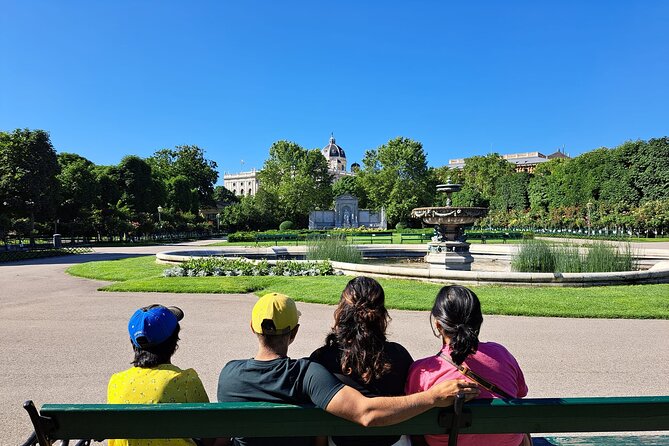
Volksgarten offers a change of mood after the palace squares. Created in 1821, it is known as the Garden of the 1,000 Roses. The garden provides a pleasant place for photographs and a little breathing room during a packed walking route.
Inside the park is a Greek-style temple, another reminder of the Habsburg fascination with classical Greece. The stop is short, but the contrast is useful: Vienna can move from imperial ceremony to a garden path and then to a classical monument within a few minutes.
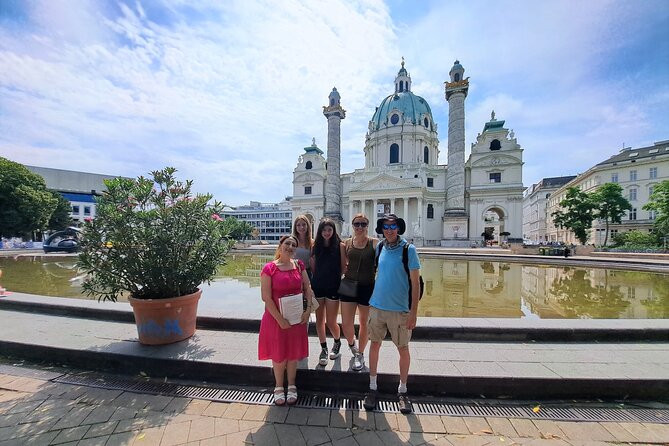
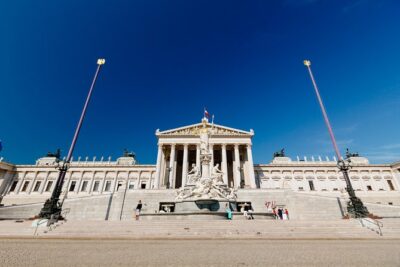
Next comes the Pallas-Athene-Brunnen in front of the Austrian Parliament. The fountain shows the goddess Athena and offers a chance to discuss the meaning of the figures she holds. The Parliament building and fountain work well as a pair, showing how public architecture in Vienna uses ancient symbols to express modern government.
The route continues past Vienna City Hall, known for its neo-Gothic design. The guide also points out its role as a venue for festivals and the city’s large Christmas market. If you visit during the holiday season, this orientation can help you return later when the square is in full use.
The Burgtheater follows. Empress Maria Theresa built the royal theater in the 18th century, and the stop connects Vienna’s political center with its long love of music and performance.
Coffeehouses and Beethoven’s Vienna
Café Landtmann is associated with Sigmund Freud, giving the route another angle on Viennese intellectual life. You will see the famous coffeehouse from the outside unless you choose to return later.
Café Central is the most famous café on the walk. Located in an old palace, it is one of Vienna’s best-known places for coffee, pastries, and atmosphere. The tour may help you decide if the experience is worth your time, but it does not include a reserved table or food.
Demel, just outside the Winter Palace, is linked with Empress Elisabeth and is known for chocolates, pancakes, and cakes. If you have a sweet tooth, this is a useful stop to mark for later. The tour’s schedule allows about 10 minutes, so it is not designed as a leisurely dessert visit.
Palais Ferstel adds another architectural highlight. You can pass through its arcade and see its fountain, cafés, restaurants, and shops. It is an easy place to revisit after the walk because you already know where it is.
Beethoven Pasqualatihaus is another short exterior stop, connected to one of Beethoven’s Vienna residences and now a museum. Music lovers may want to return for the interior, while everyone else can use the stop to understand how closely Vienna’s composer story is tied to ordinary city streets.
The Spanish Riding School and imperial hearts
The Spanish Riding School is one of the tour’s most distinctive subjects. Your guide explains its origins under Emperor Maximilian, its military purpose, and the training of its famous horses.
The stop does not include a riding performance or entrance ticket. That distinction matters. If you want to see the horses in action, ask the guide for current options or arrange a separate ticket. The tour can also help with concert suggestions if you ask, though concert admission is not included.
Augustinerkirche contains one of Vienna’s more unusual imperial details. A small chapel holds the hearts of 50 Austrian emperors and empresses, kept there since the 17th century. The church is modest compared with the Hofburg, but this unusual tradition gives the imperial story a more personal edge.
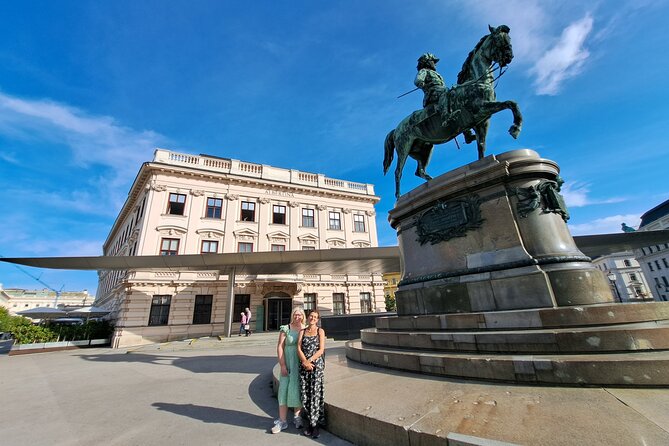
The walk then reaches Albertinaplatz, near the Albertina museum, a memorial for Vienna’s Jewish community, and the city’s main tourist information office. This is a useful final section because it brings art, memory, and practical visitor services together.
Sacher cake and the Vienna State Opera
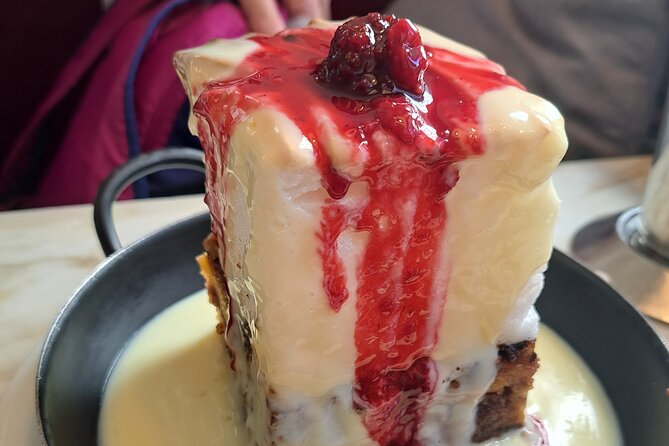
Hotel Sacher is the birthplace of Sacher cake, one of Vienna’s best-known desserts. The guide explains the story behind it, but your tour price does not include a slice. You can return later if tasting the original is high on your list.
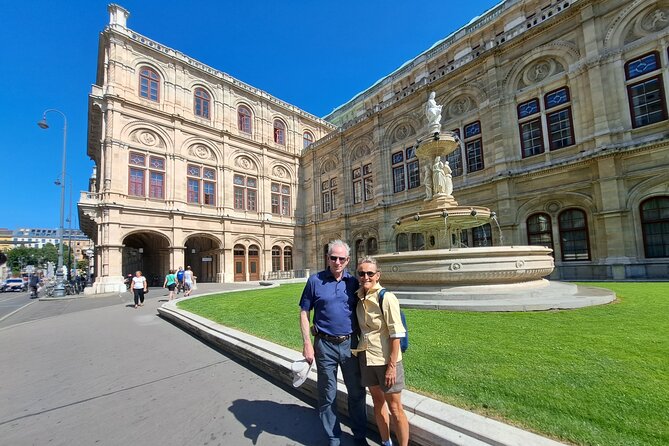
The last major stop is the Vienna State Opera, built in 1869 on the Ringstrasse. The tour ends in front of the Opera, which makes the location convenient for continuing into the city, finding public transport, or choosing a nearby café.
Ending here also gives the route a satisfying shape. You begin with Mozart in the old city and finish with Vienna’s continuing musical identity. Along the way, the tour ties together palaces, churches, composers, cafés, gardens, and public monuments.
What the three-hour pace feels like
The walking is generally easy and flat, but it is not a short stroll. One account puts the total distance at about 5 kilometers. Cobblestones and uneven footing are possible, so wear supportive walking shoes.
Most stops last five to ten minutes. That format keeps the group moving and lets you see many parts of Vienna, but it may feel rushed if you want detailed architecture at every building. You will get more from the tour if you accept that it is an overview, then return on your own to the places that catch your attention.
The advertised maximum is 18 people. That is smaller than a large coach-style group, but it is not always intimate. A group of 17 was reported during the busiest season, and crowded streets made the guide harder to hear. Stay close, ask the guide to repeat anything you miss, and consider an early departure if you prefer quieter streets.
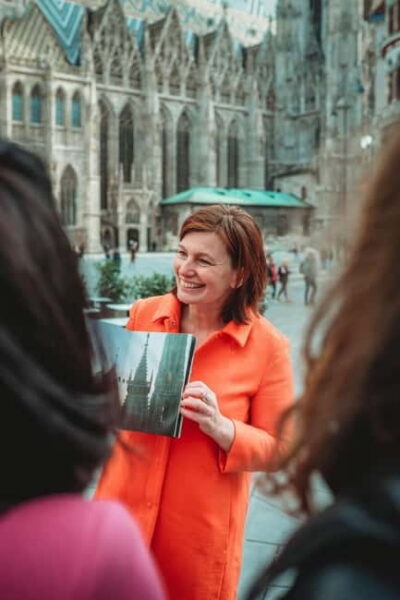
The guides are one of the strongest parts of the experience. Nicoletta and Nicoleta receive especially warm praise for personal attention, photos, local suggestions, and answers to questions. Moritz has been flexible with slower walkers, and Reka has also been singled out for her friendly manner. Guides can change, so booking does not guarantee a particular person.
Is $72.59 good value?
At $72.59 per person, this is not the cheapest way to see Vienna. You are paying for three hours with an English-speaking guide, a planned route through the center, a printed Vienna information package, a city map, and practical advice that can save time later.
The value is strongest if you are visiting Vienna for the first time or have only a short stay. You can see many major sights without paying separate entry fees at every stop. The cost is less compelling if you prefer to move slowly, enter museums, or explore independently with a guidebook.
Remember to allow extra money for museum admission, café purchases, concert tickets, and a tip. The included coffeehouse break from January through November is a useful rest, but your coffee and pastry are not included.
Free cancellation is available up to 24 hours before the start time for a full refund. Changes or cancellations within 24 hours are not accepted for a refund. Poor weather or too few bookings can lead to a cancellation, in which case you are offered another date or experience, or a full refund.
Who should book this Vienna walking tour?
I would choose it for a first visit, a short city break, or the first morning of a longer stay. It suits you if you want the big picture, enjoy stories about people and places, and like having a local person point out cafés, museums, restaurants, and concert venues.
It also works well for families with older children who can manage several hours on foot. The route has no major hills, but the distance and cobblestones still require a moderate level of fitness.
I would think twice if you dislike group walking, need every stop to be quiet, or want extensive interior visits. In that case, a private guide or self-guided museum plan may suit you better.
Should you book Fall in Love with Vienna?
Book it if you want to get your bearings fast and use the rest of your stay wisely. The mix of imperial buildings, music sites, churches, coffeehouses, and food stops gives you a strong first framework for Vienna.
Skip it if your ideal day means lingering inside one museum or sitting for a long time at each café. For most first-time visitors, though, the route offers a useful amount of Vienna for three hours, especially when the guide adds personal recommendations and helps you choose what deserves a second look.
FAQ
How long does the Fall in Love with Vienna Tour last?
The guided walking tour lasts approximately three hours. From January through November, an extra 30-minute break in a traditional Viennese coffeehouse is included.
What is the tour price?
The listed price is $72.59 per person.
Where does the tour begin?
The meeting point is Mozarthaus Vienna, Mozarthaus, Domgasse 5, 1010 Vienna.
Where does the tour end?
The walk ends on Ringstrasse in front of the Vienna State Opera, at Herbert-von-Karajan-Platz.
Is the tour offered in English?
Yes. The experience is offered in English and includes an English-speaking guide.
Are museum entrance fees included?
No. Entrance fees to museums are not included. The listed stops are sightseeing points, and you may need separate tickets if you choose to enter museums or paid attractions.
How large is the group?
The tour has a maximum of 18 travelers and is described as a small-to-medium group experience.
How much walking is involved?
The tour requires a moderate level of physical fitness. One account describes the route as about 5 kilometers, with mostly easy walking but some cobblestones and uneven footing.
Just reviewed in Vienna
- World War II History Vienna Old Town Private Walking Tour★ 4.8 · 9 reviews
- Vienna: Wine Tasting E-Bike Tour★ 4.9 · 46 reviews
- Vienna: Winery and Wine Tasting Tour with a Wine Expert★ 5.0 · 5 reviews
- Vienna: Unforgettable Private City Tour★ 5.0 · 7 reviews
- Vienna Urban Art Tour: Explore a different side of Vienna!★ 3.8 · 14 reviews
- Vienna: Concert by the Vienna Baroque Orchestra★ 4.6 · 56 reviews
- Vienna: Sunday Brunch Danube Cruise & Live Music★ 4.2 · 42 reviews
- Vienna Supreme Orchestra at Palais Niederösterreich★ 4.8 · 10 reviews
Vienna City Sightseeing Tours, compared.
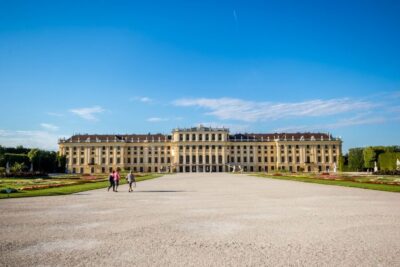
Vienna PASS: All incl. Sightseeing Pass for 85+ Attractions
Read our review →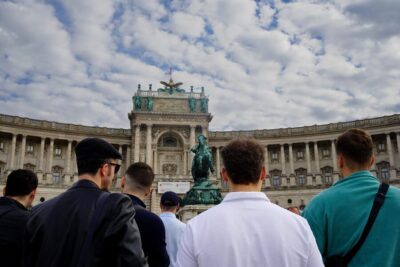
Guided Walking Tour of City Highlights & Hidden Gems
Read our review →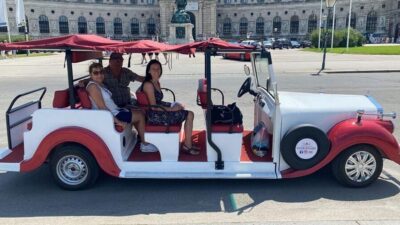
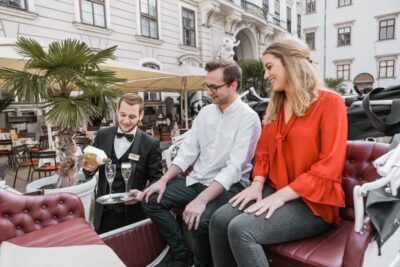
Skip-the-Line Schonbrunn Palace Guided Tour and Vienna Historical City Tour
Read our review →
Browse the lists this tour appears in