
Reviewed · HISTORICAL TOURS
Vienna: Time Travel and Magic Vienna History Tour
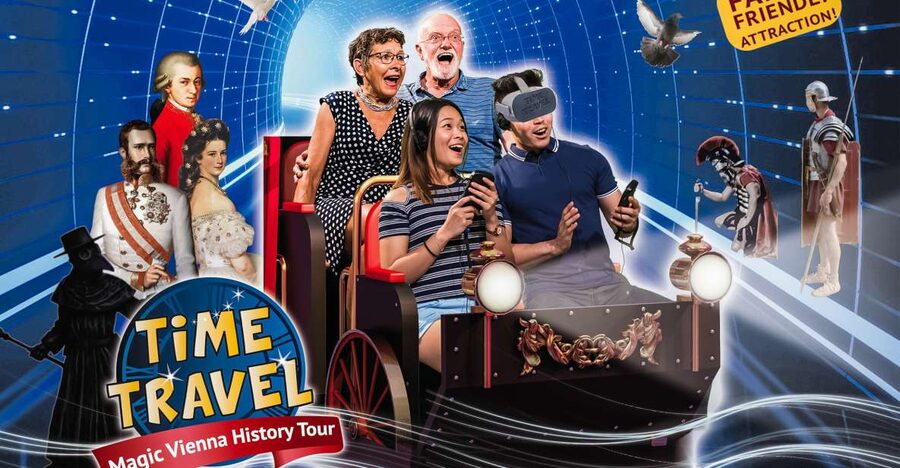
Vienna Time Travel turns 2,000 years of city history into a fast-moving show beneath St. Michael’s monastery. You move from Roman Vindobona to the Habsburg court, wartime Vienna, and the present day through sets, film, sound, special effects, and virtual reality. I like the clear one-hour format and the way each room changes the mood. I also like that the experience gives children a foothold in Vienna’s story before they tackle palaces and museums.
The main drawback is that this is a staged entertainment experience, not a traditional guided walk or serious museum visit. The five-dimensional film and VR sections are the stars, while the historical detail is necessarily broad. You also need to manage about 50 steps, with no elevator, so the attraction is not suitable for wheelchair users or people with mobility impairments.
Key points at a glance
- Two thousand years in one hour: Move from the Roman camp of Vindobona to modern Vienna without committing half a day.
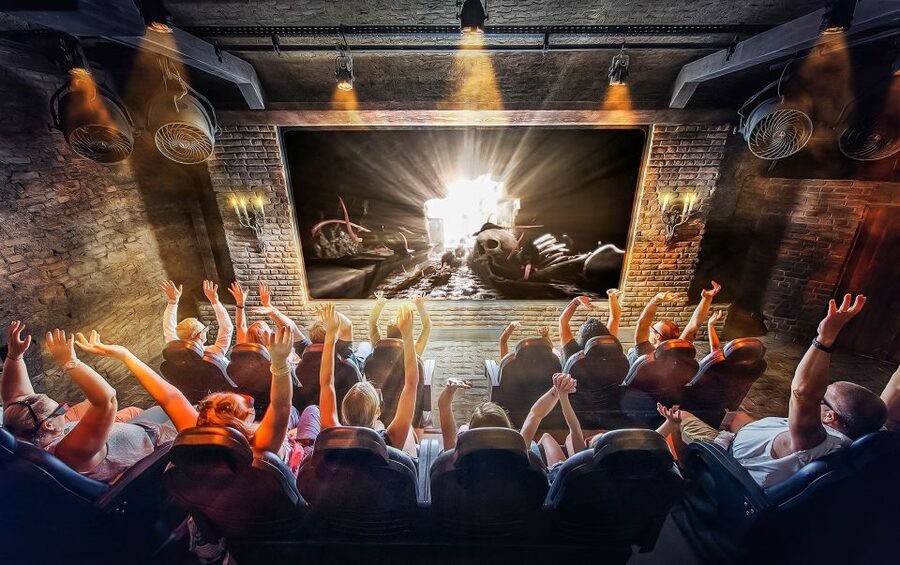
- Several different formats: Portrait figures, themed rooms, a 5D cinema, VR glasses, sound, motion, and other special effects keep the pace lively.
- A useful first-day activity: The broad overview can help you make sense of Vienna’s imperial buildings, music, and wartime memorials later in your trip.
- Strong family appeal: Children get changing rooms and physical effects instead of a long lecture.
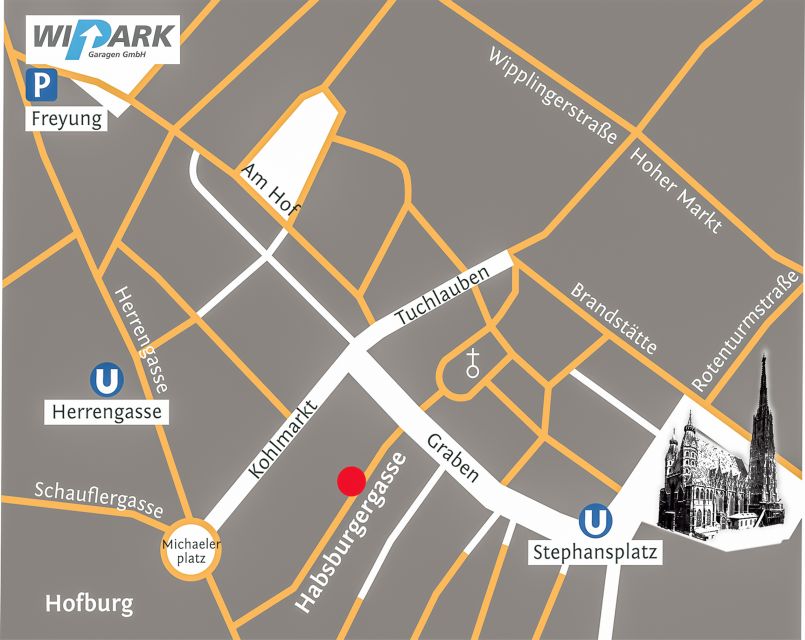
- Central location: The entrance at Habsburgergasse 10A is about 200 meters from the Hofburg and close to Graben, Kohlmarkt, and Stephansplatz.
- Important access warning: There are roughly 50 steps across two levels, no elevator, and no wheelchair access.
Starting beneath St. Michael’s monastery
The attraction begins at Habsburgergasse 10A in Vienna’s historic center. You are close enough to the Hofburg, Graben, Kohlmarkt, and Stephansplatz to fit this into a morning of sightseeing without a special trip across town. U1 to Stephansplatz and U3 to Herrengasse are the simplest underground connections.
The setting matters. Instead of entering a modern cinema or a large museum hall, you go down into the extensive cellars of St. Michael’s monastery. The old stone surroundings give the first part a sense of place, even though the tour itself relies on modern screens, audio, and special effects.
You follow a set route through several rooms. A multilingual audio guide provides the narration, while the displays and films do much of the visual work. Staff members help organize the movement between sections, and the experience is designed to keep the group moving rather than leaving you to browse at your own pace.
That format makes the timing dependable. Plan on about one hour from beginning to end. It is short enough to fit between the Hofburg and St. Stephen’s Cathedral, but long enough to give you a basic framework for Vienna.
More history walks in Vienna:
- Vienna: World War II Historical Walking Tour
★ 4.8 · 1,772 reviews - Vienna Historic Center Small Group Walking Tour
★ 5.0 · 1,746 reviews - Time Travel-Magic Vienna History Tour Ticket
★ 4.5 · 1,099 reviews
Roman Vindobona and the city’s early story
The first part reaches back to the ancient Roman camp of Vindobona, the settlement that occupied the site of present-day Vienna. You are not getting a detailed archaeological lecture here. Instead, the attraction uses visual scenes and narration to establish the city’s early role and then moves quickly through the centuries.
I find this broad opening useful because Vienna can otherwise feel like a city that begins with the Habsburgs. The Roman chapter reminds you that the city’s location and importance predate the imperial palaces by many centuries.
The pace is part of the appeal, especially for families. You do not need to remember a long list of dates before moving on. The rooms give you a series of impressions, allowing you to place later sights in a larger timeline.
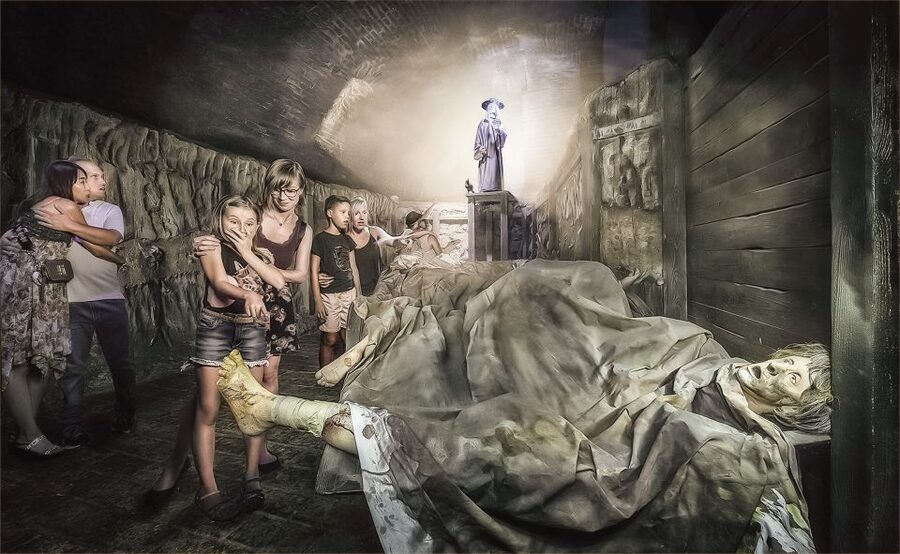
One early sequence presents the Black Plague in Vienna. It is designed to make the subject feel immediate, and the atmosphere can be intense for younger children. This section is brief, but it gives you a sense of how sharply city life could change before modern medicine and public health.
Meeting Vienna’s famous faces
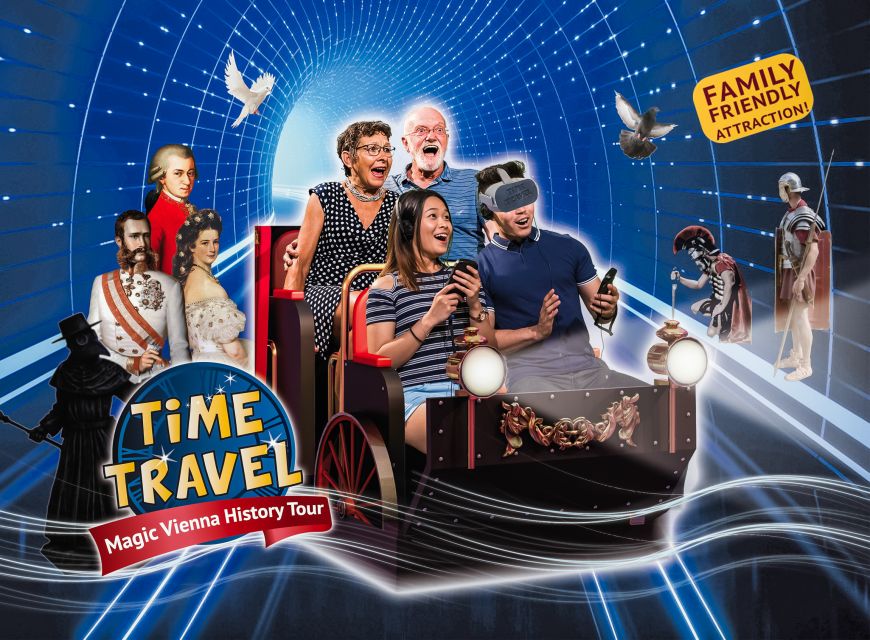
A portrait gallery introduces important people from Viennese history. Instead of reading labels beside static portraits, you hear historical figures speak through the presentation. This is one of the attraction’s more accessible ideas: complex personalities become easier to remember when they are attached to a face and a voice.
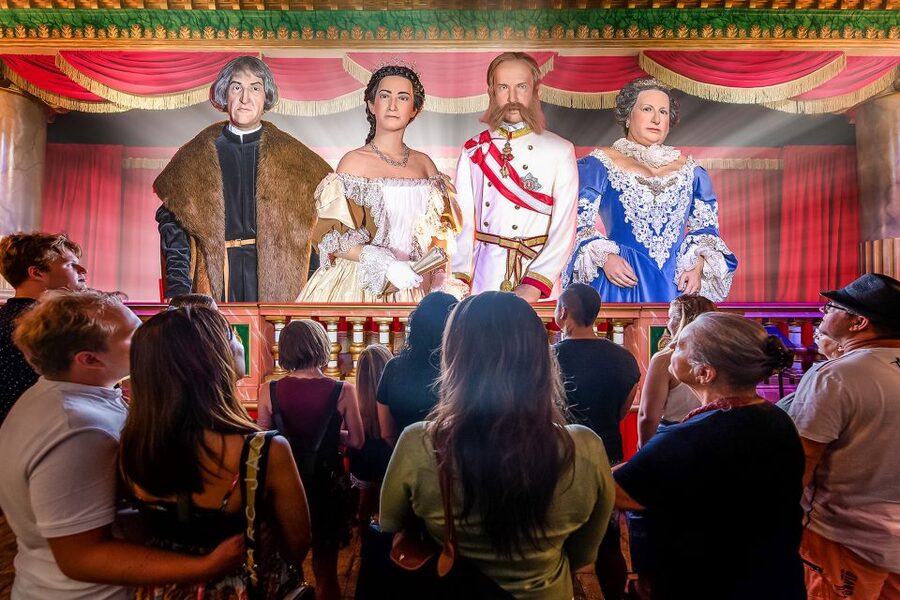
The same approach continues with the Habsburgs. You meet the imperial family and get a quick explanation of why the dynasty mattered to Vienna and the wider region. The presentation helps explain the architecture you will see outside, from formal palace courtyards to the grand buildings around the Ringstrasse.
Do not expect the depth of the Imperial Treasury or the detail of a palace tour. The Habsburg section compresses a large subject into a few minutes. That is its strength and its limit. You get context before seeing Schönbrunn, the Hofburg, or the museums, but you will need a more focused visit if you want family relationships, political decisions, or daily court life explained in detail.
The visual treatment also gives children something to follow. A younger visitor may not retain every name, but the imperial characters and changing rooms create a basic picture of how Vienna became a major European capital.
The 5D cinema and the feel of old Vienna
The 5D cinema is the main burst of action in the first half. Film, motion, sound, and physical effects are combined to make you feel as if you are moving through earlier periods of the city. The exact effect is more important than the technology label: you are watching history while also feeling part of the scene.
Many visitors consider this one of the most enjoyable sections, though it is relatively short. That is worth knowing before you book. If you expect a long film, you may find the cinema portion over quickly. If you see it as one chapter in a varied hour, it works well.
The attraction uses several formats rather than asking you to stand in front of one screen for the entire visit. You move from room to room, and the changes in scale and mood help prevent the presentation from feeling like a lecture.
I especially like this for a first visit to Vienna. The show will not replace a walk through the old center, but it can make the city’s buildings feel less random. You begin to see the churches, palaces, and public squares as parts of a long story instead of a collection of grand facades.
A different sort of day out in Vienna:
- Vienna: Vivaldi’s Four Seasons Concert in Karlskirche
★ 4.7 · 14,951 reviews - Vienna: Skip-the-cashier-desk-line Giant Ferris Wheel Ride
★ 4.5 · 7,859 reviews - Vienna: Schönbrunn Palace & Gardens Skip-the-Line Tour
★ 4.7 · 7,739 reviews - Vienna: Light of Creation Votive Church Immersive Light Show
★ 4.8 · 6,779 reviews
Vienna’s music history through VR glasses
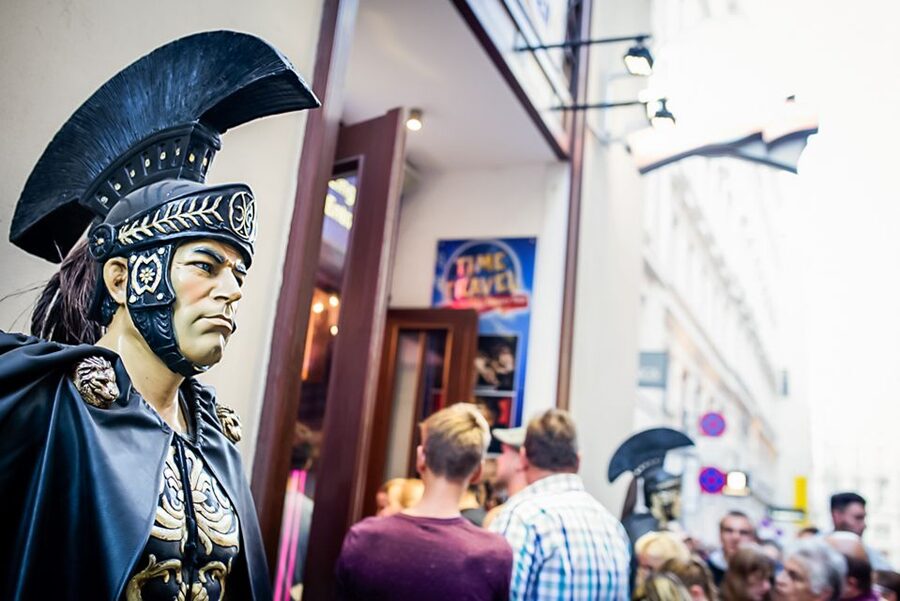
The music section uses virtual reality glasses to trace Vienna’s musical past. Vienna’s connection with classical music is so famous that it can become a cliché. This presentation gives you a more direct way to experience that tradition, even if it does not offer the detail of a dedicated music museum or concert.
The VR sequence is one of the strongest reasons to bring children or teenagers. The technology changes the rhythm of the visit and gives the group a shared activity. It also provides a break from the portrait and historical sections, which can feel more passive.
You should keep your expectations in check. This is a simulated journey through music history, not a live performance and not a full biography of Vienna’s composers. Its job is to create interest and atmosphere. If it sends you toward a concert, the House of Music, or another music-focused sight, it has done its work.
The experience can also suit adults who are not classical music specialists. You do not need prior knowledge to follow the sequence, and the multilingual audio guide helps make the presentation accessible to an international audience.
War, the bomb shelter, and the postwar speech
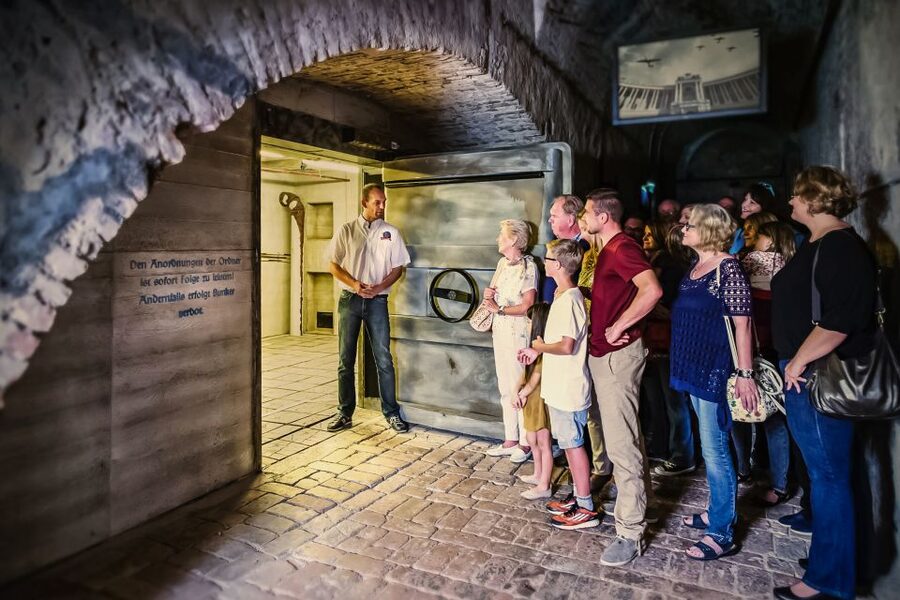
The mood turns darker in the World War II section. In Enemy Aircraft!, you are placed inside a bomb shelter while the sounds and effects suggest an air raid around you. This is not a substitute for a serious wartime museum, but it gives you a physical sense of fear and confinement that a written panel cannot provide.
The scene may be uncomfortable for very young children or anyone sensitive to loud effects. Parents should be ready for a sudden change from playful historical storytelling to a tense wartime sequence.
The next section focuses on Austria’s return to freedom. You hear Chancellor Leopold Figl’s moving speech amid the battered remains of Vienna. This moment provides an important emotional turn. The presentation moves from destruction and uncertainty toward relief, helping you understand why postwar memory remains important in Austria.
I appreciate that the tour does not stop with imperial glamour. Vienna is often sold through palaces, coffeehouses, and classical music, but the city’s twentieth-century story also includes war, damage, occupation, and rebuilding. The treatment is brief, yet it gives you a reason to look more closely at memorials and damaged historic sites elsewhere in the city.
Finishing with a flight over present-day Vienna
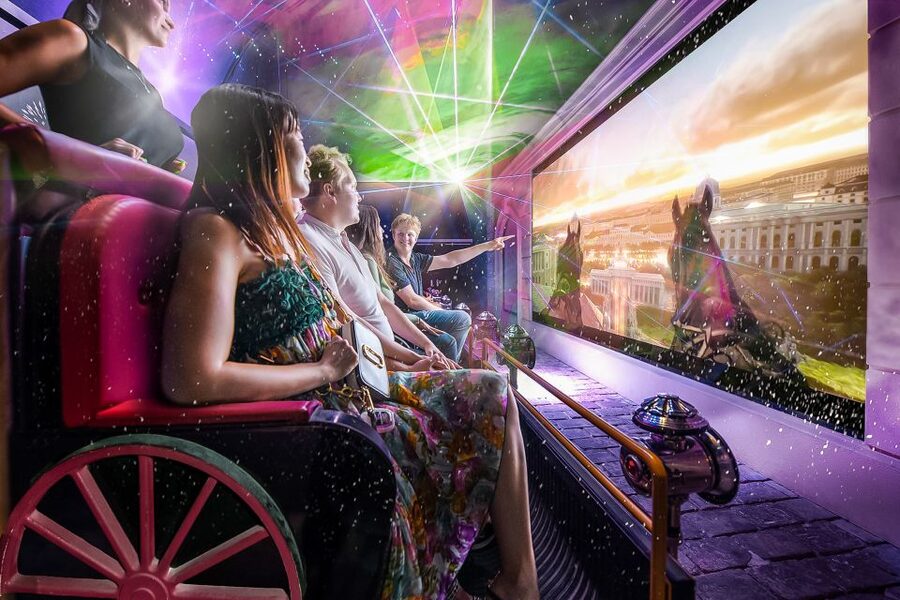
The final sequence lightens the mood again with a simulated flight over Vienna. You finish with a virtual horse-drawn carriage ride above the roofs of the modern city. The effect provides a pleasant visual farewell and brings the journey back to the Vienna you can explore on foot.
This closing scene is less about new facts than orientation. From above, you get a playful sense of the city as a whole. After seeing Roman, imperial, musical, and wartime chapters, the modern skyline feels like the latest layer of a long story.
The changing atmosphere is one of the tour’s best design choices. You move from early settlement to plague, court life, music, war, liberation, and present-day Vienna. No single section lasts long enough to become tedious, and the final carriage ride leaves the experience on an upbeat note.
What the one-hour format means for value
At about $27 per person, this is not the cheapest way to learn about Vienna. You can see many historic streets and churches for free, and a traditional museum ticket may offer more depth. The value here comes from the variety and the convenience.
In one hour, you receive a multilingual audio guide, a structured route, several themed rooms, a 5D cinema, VR, wartime effects, and a city overview. If you are visiting with children, the changing formats can make the price easier to justify because you are paying for both historical background and entertainment.
I would be less likely to choose it for a solo adult who wants detailed political history or extended time with original objects. The attraction uses replicas, film, sound, and simulations rather than a large collection of artifacts. Its strength is storytelling through technology, not close study of physical objects.
The short duration also improves the value for a busy itinerary. You can pair it with the Hofburg, which is about 200 meters away, or with a walk along Graben and Kohlmarkt. Several hours in the old center can easily include this experience without sacrificing a major museum.
Who will get the most from it
I would recommend Time Travel most strongly to families, first-time visitors, and anyone who wants a quick introduction before exploring Vienna in greater detail. Children can follow the action, while adults get useful reminders about the city’s major turning points.
It also suits a mixed-age group. One person may enjoy the Habsburg material, another the VR music sequence, and someone else the old-city flight. The variety means you do not need a single shared interest.
It is a good rainy-day choice as well, since the entire presentation takes place indoors in the historic center. The underground location and the lack of an elevator are important practical limits, though. Two levels include about 50 steps, and wheelchair users cannot enter because of the building’s structural restrictions.
The attraction may also work well near the start of your visit. You will not leave with a specialist’s command of Vienna, but you will have a simple mental map for later sights. The Habsburgs, music, wartime Vienna, and the old center will each have a little more context.
Some people will prefer a live actor. The recorded and technological format is efficient, but it lacks the personal exchange of a walking guide. There is no chance to ask a question during the route, and the narration follows a fixed pace.
Practical details before you go
The entrance is at Habsburgergasse 10A, 1010 Vienna. From Stephansplatz, you are only about 100 meters from Graben, Kohlmarkt, and the surrounding central streets. U1 serves Stephansplatz, while U3 serves Herrengasse. If you drive, reduced parking is available at the Freyung garage.
Reservations are strongly recommended. Last admission is at 19:00, so do not arrive at the end of the day without checking the available start time. The attraction allows free cancellation up to 24 hours before the visit, and you can reserve now and pay later, which is useful when your Vienna schedule is still changing.
Pets are not allowed, and video recording is prohibited. Discounts apply only if you can show the required identification.
If you want to combine nearby attractions, Sisi’s Amazing Journey is across the street. That can make sense if you want a second presentation focused on the imperial world after completing the broader city timeline. I would avoid packing too many similar indoor attractions into one afternoon, though. Give yourself time outside to connect the stories with the actual streets and buildings.
Should you book Vienna Time Travel?
Book it if you want a lively, family-friendly introduction to Vienna that fits neatly into one hour. The best parts are the changing rooms, the 5D cinema, the VR music sequence, the wartime shelter scene, and the central location. It gives you a useful starting point without asking for a long attention span.
Skip it if you want original artifacts, a detailed academic account, or a personal conversation with a guide. The presentation is brisk and theatrical, and the history is simplified to keep the action moving.
For most first-time visitors with children, I think the $27 price is reasonable, especially on a rainy day or at the beginning of a Vienna stay. Just plan around the stairs, arrive before last admission, and treat the attraction as an entertaining city primer rather than a replacement for Vienna’s real palaces, churches, museums, and streets.
FAQ
How long does Vienna Time Travel last?
The experience lasts about one hour. Starting times vary, so check availability when booking.
What does the ticket include?
The ticket includes entry to the attraction and a multilingual audio guide.
Where is Vienna Time Travel located?
The meeting point is Habsburgergasse 10A in Vienna’s 1010 district. It is about 200 meters from the Hofburg and about 100 meters from Graben, Kohlmarkt, and Stephansplatz.
How can I reach the attraction by underground?
You can use U1 to Stephansplatz or U3 to Herrengasse.
Is the attraction suitable for children?
Yes. The presentation is designed for families and uses changing rooms, films, special effects, and VR. The World War II bomb shelter sequence may feel intense for some young children.
Is Vienna Time Travel wheelchair accessible?
No. The route covers two levels with about 50 steps, there is no elevator, and wheelchair users cannot be accepted because of the building’s structural restrictions.
Are pets allowed?
No. Pets are not allowed inside the attraction.
Can I record video during the experience?
No. Video recording is not allowed.
What is the latest admission time?
Last admission is at 19:00. You should arrive in time for your reserved entry.
Can I cancel my booking?
Yes. You can cancel up to 24 hours in advance for a full refund. A reserve now and pay later option is also available.
Just reviewed in Vienna
- World War II History Vienna Old Town Private Walking Tour★ 4.8 · 9 reviews
- Vienna: Wine Tasting E-Bike Tour★ 4.9 · 46 reviews
- Vienna: Winery and Wine Tasting Tour with a Wine Expert★ 5.0 · 5 reviews
- Vienna: Unforgettable Private City Tour★ 5.0 · 7 reviews
- Vienna Urban Art Tour: Explore a different side of Vienna!★ 3.8 · 14 reviews
- Vienna: Concert by the Vienna Baroque Orchestra★ 4.6 · 56 reviews
- Vienna: Sunday Brunch Danube Cruise & Live Music★ 4.2 · 42 reviews
- Vienna Supreme Orchestra at Palais Niederösterreich★ 4.8 · 10 reviews
Historical Tours, compared.
Vienna Historic Center Small Group Walking Tour
Read our review →
Time Travel-Magic Vienna History Tour Ticket
Read our review →
Skip-the-Line Schonbrunn Palace Guided Tour and Vienna Historical City Tour
Read our review →
Vienna Mozart Concert in Historical Costumes at the Musikverein
Read our review →
Historical Hitler Walking Tour of Vienna
Read our review →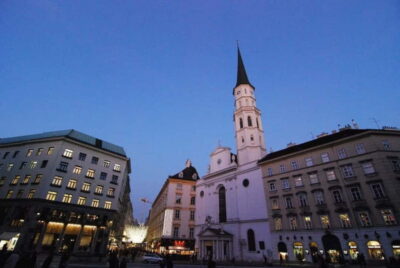
Browse the lists this tour appears in