
Reviewed · VIENNA CITY SIGHTSEEING TOURS
Vienna: Time Traveling Virtual Reality Sightseeing Tour
Vienna’s past becomes a moving picture on this virtual reality walking tour, which places you in six moments from the city’s long story. You walk through the old town, stop at the real locations, then put on a headset to see processions, sieges, plague, imperial life, opera culture, and wartime destruction as if the streets had briefly turned back the clock.
I like the strong sense of place. You are not watching history in a dark room, but standing near the Hofburg, the Opera, and St. Stephen’s Square while the audio and 360-degree scenes connect the past to what you see today. I also like the easy 3.2-kilometer route over flat ground, plus the chance to hear guides such as Julian or Dr. Reiner explain the equipment and the city.
The main thing to keep in mind is that the tour is still mostly a guided walk with audio commentary. The VR scenes are memorable, but one scene may look rough or blurry, and some people may want more action inside the headset. Bilingual groups can also mean pauses while the guide shifts between English and German.
Key points at a glance
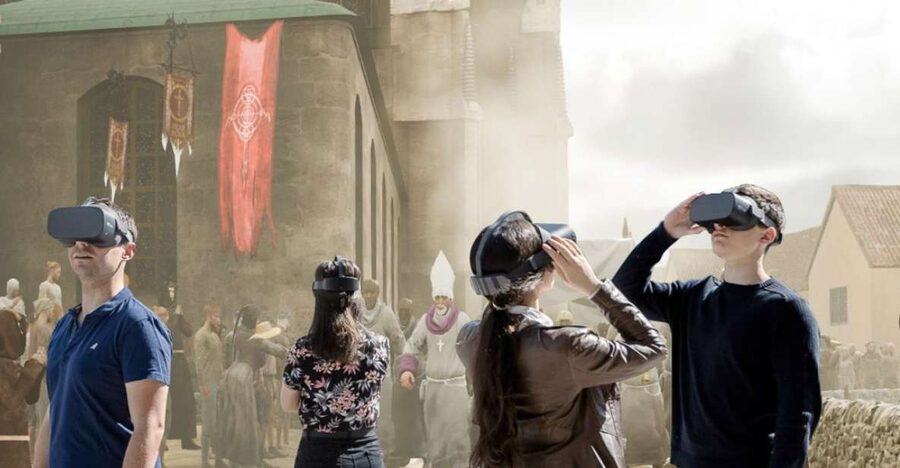
- Six time-travel scenes: See Vienna in 1483, during the 1683 Ottoman siege, during the plague, in the age of Sisi and Franz Joseph, in the 1920s, and at the end of World War II.
- A real old-town route: Walk 3.2 kilometers from Neuer Markt to the Albertina, with the city streets providing the setting for the virtual scenes.
- A 360-degree view: The headset gives you an all-around look rather than a flat film, so you can turn and inspect the recreated surroundings.
- Useful for a first day: The tour gives you a quick orientation to central Vienna while adding dates, stories, and local anecdotes.
- Several language choices: The live guide speaks English or German, while the audio guide is available in English, Spanish, Dutch, French, Italian, and Russian.
- Plan around the weather: Heavy rain or storms can lead to a last-minute cancellation, so avoid making this your only fixed plan on an unsettled day.
Starting at Neuer Markt and learning the headset
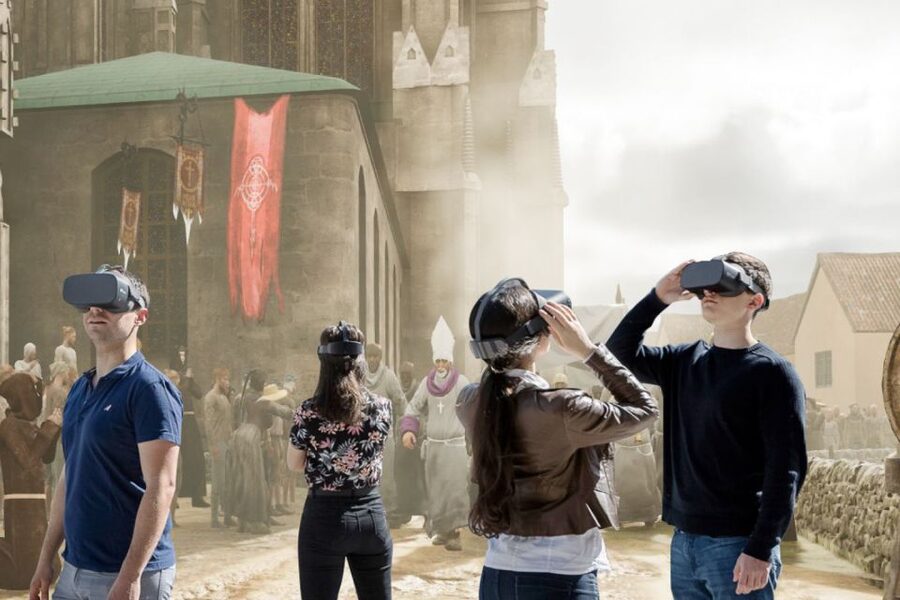
Meet at Neuer Markt 6 and arrive 15 minutes early. Look for the turquoise entrance, an especially useful detail if you are arriving in central Vienna for the first time and do not want to search the square at the last moment.
The tour begins indoors, which matters in cold weather. You can get set up without waiting on a chilly street, and the staff can explain the VR glasses and earphones before the walking starts. The equipment is included, so you do not need to bring anything special.
The route lasts about 100 minutes, though the guided portion is also described as roughly 105 minutes. Either way, set aside close to two hours once you allow time to arrive early and get comfortable with the headset.
The walking itself covers 3.2 kilometers on flat ground. That makes it manageable for most people who are comfortable walking through the old town, and the route is wheelchair accessible. The headset adds a technical element, but the guide handles the basic instructions before the first scene.
The live guide speaks English or German. The audio guide adds English, Spanish, Dutch, French, Italian, and Russian, giving you a useful choice if you prefer to listen privately rather than follow every spoken explanation from the guide.
More sightseeing tours of Vienna:
- Vienna: Hop-On Hop-Off Sightseeing Bus Tour in 19 Languages
★ 4.2 · 4,518 reviews - Vienna PASS: All incl. Sightseeing Pass for 85+ Attractions
★ 4.3 · 3,067 reviews - Vienna: Guided Walking Tour of City Highlights & Hidden Gems
★ 4.9 · 2,180 reviews
White Sunday in 1483
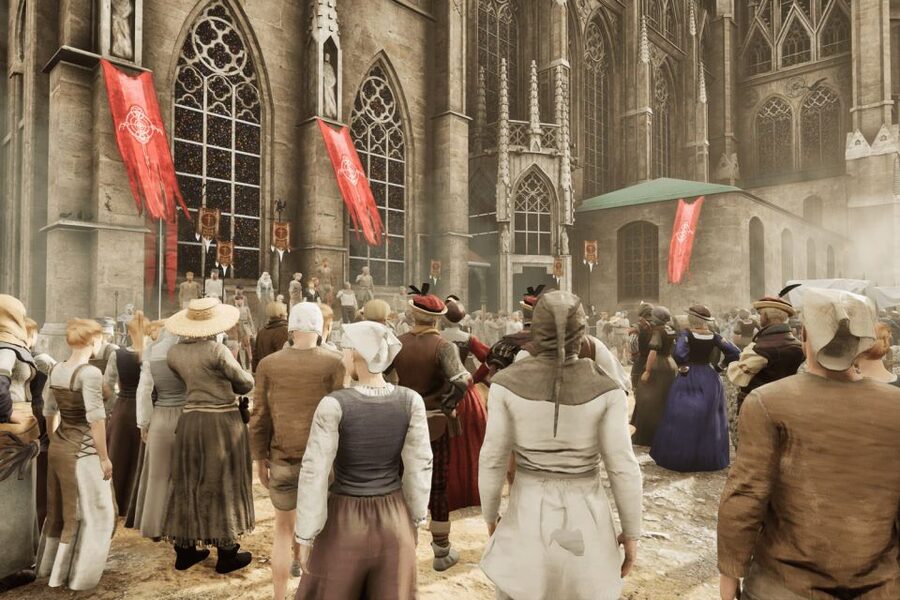
The first historical scene takes you to White Sunday in 1483. This was one of the rare occasions when religious ornaments were brought out and shown publicly, giving the virtual sequence a ceremonial quality.
This stop works well because the VR image is tied to the actual setting around you. Instead of hearing only that Vienna had elaborate religious traditions, you get a visual sense of a procession moving through the city.
The scene also sets the pattern for the tour. You walk through modern Vienna, pause at a landmark, put on the glasses, and look around a recreated past. The 360-degree view means you should turn your head instead of staring straight ahead. Some of the interest is likely to be behind or beside you.
If you want a tour built around long visits inside churches or museums, this is not that. The historical moments are short set pieces within a walking tour. Their value comes from linking the street under your feet with an event from centuries ago.
The 1683 Ottoman siege
The next major scene puts you inside Vienna during the second Ottoman siege in 1683. You take cover as the city faces bombardment, a sharp change from the ceremony of the earlier sequence.
This is one of the clearest examples of what the technology adds. A traditional guide can explain the siege, but the headset lets you see the danger from within a street-level setting. The experience is designed to give you a sense of the pressure on the city rather than simply hand you another date to remember.
The sequence also helps explain why Vienna’s location and fortifications mattered. You are not studying a battle map. You are seeing the city as a place under threat, which gives the story a more immediate feel.
The VR quality is not perfect. Some images can look slightly blurred, and faces may not be sharply defined. If you expect modern video-game graphics, you may find the production dated. If you treat the scenes as a visual aid for the guide’s storytelling, the roughness is less troublesome.
Plague, Augustin, and Vienna’s dark humor
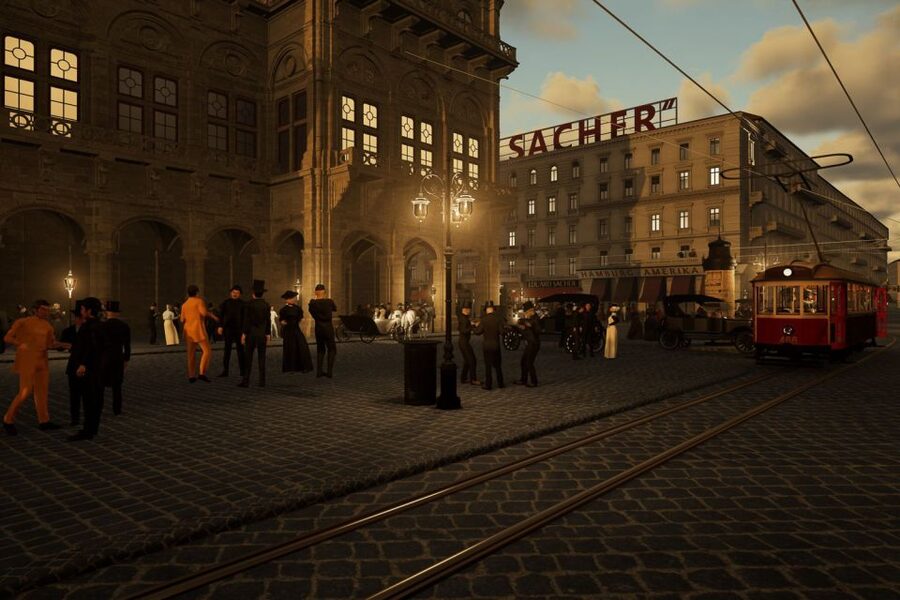
The plague scene changes the mood again. You experience the darkness of a disease that killed half of Europe and hear about Augustin, a singer remembered for showing that Vienna could answer terrible times with humor and music.
This is an important part of the route because it moves beyond palaces and famous rulers. Vienna’s past also includes fear, illness, and ordinary people trying to keep going. Augustin gives the scene a human focus and a distinctly Viennese touch.
The virtual setting is described as dystopian, so do not expect a light or polished postcard view of the city. This stop is meant to feel unsettling. It gives the tour emotional range and prevents the history from becoming a string of grand buildings and imperial names.
The audio guide helps here. You can listen in your chosen language while taking in the scene, and the guide adds context as you move between stops. Since the group may include English and German speakers together, the audio option can make the information easier to follow at your own pace.
A different sort of day out in Vienna:
- Vienna: Vivaldi’s Four Seasons Concert in Karlskirche
★ 4.7 · 14,951 reviews - Vienna: Skip-the-cashier-desk-line Giant Ferris Wheel Ride
★ 4.5 · 7,859 reviews - Vienna: Schönbrunn Palace & Gardens Skip-the-Line Tour
★ 4.7 · 7,739 reviews - Vienna: Light of Creation Votive Church Immersive Light Show
★ 4.8 · 6,779 reviews
Sisi, Franz Joseph, and a sunny Hofburg scene
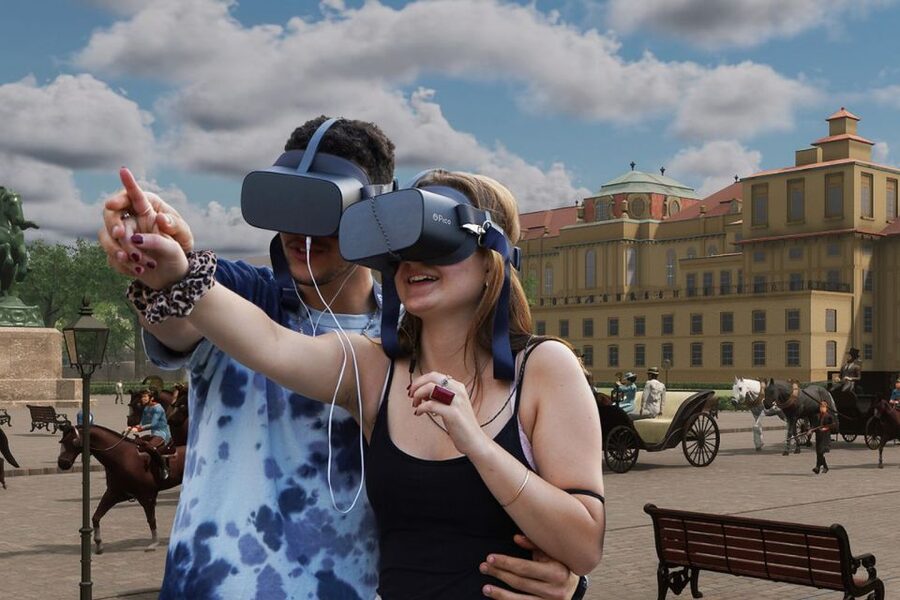
Near the Hofburg, the tone becomes lighter. On a sunny day, you see Empress Sisi and Emperor Franz Joseph II on a hunting trip. The playful instruction is to wink as they pass because you are standing close to the road.
This scene gives you a glimpse of imperial Vienna without turning the whole tour into a formal palace lecture. Sisi and Franz Joseph appear as people moving through daily life, not only as painted figures in a museum.
The Hofburg setting makes the sequence especially useful for first-time visitors. You can connect the virtual carriage scene with the real imperial complex around you. Even if you later visit the palace interiors, this stop adds a street-level story.
Do not expect a detailed account of every Habsburg ruler. The tour uses selected scenes to show how Vienna changed, and this one focuses on imperial life and public display. It is a brief encounter, not a full biography of Sisi.
Vienna at the Opera in the golden 1920s
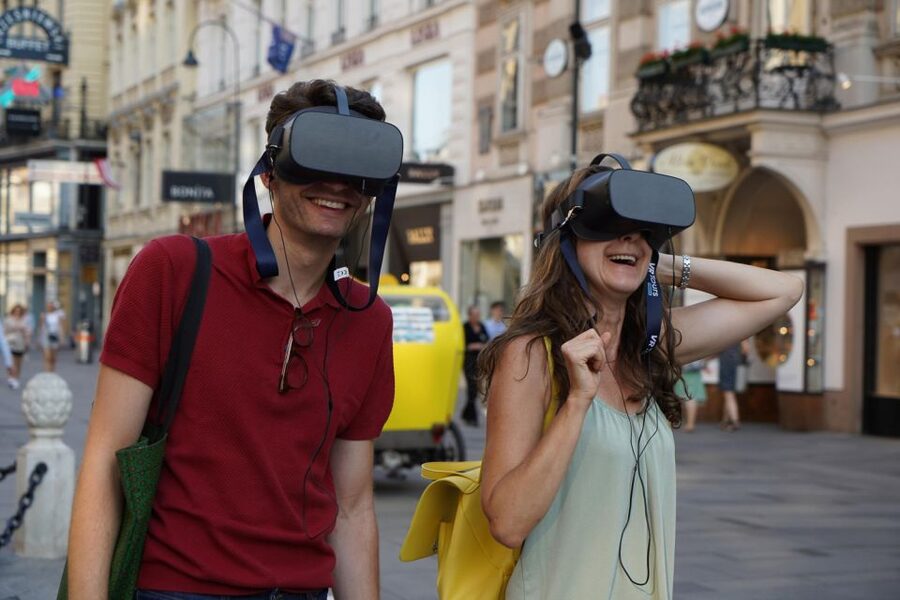
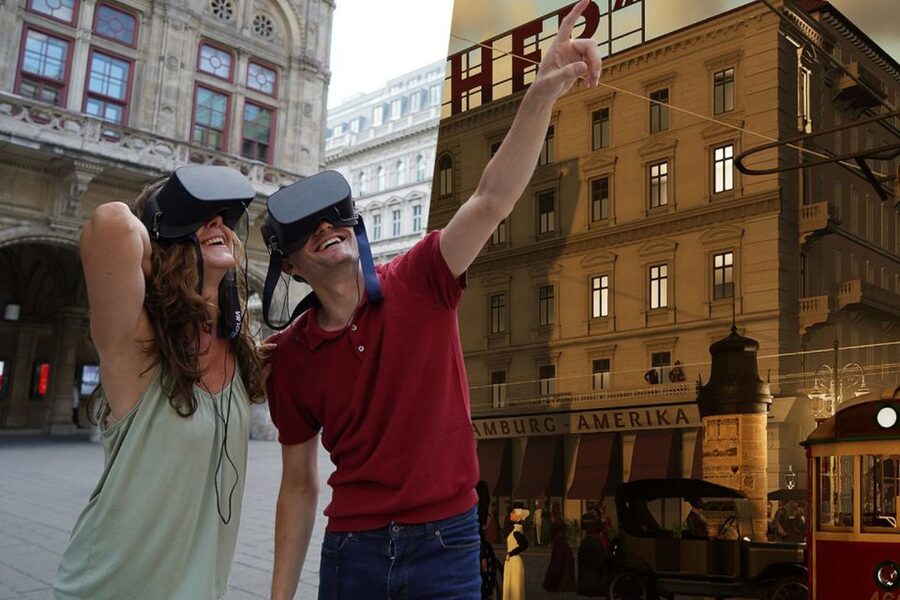
At the Opera, the tour shifts to Vienna in the golden 1920s. You see how people prepared for an opera performance and get a glimpse of the social world around one of the city’s best-known institutions.
This is a clever stop because the Opera is not only a grand building. It represents performance, fashion, public life, and the way Viennese culture reached beyond the stage. The scene helps you picture the people arriving for an evening out.
This is also where your expectations should stay practical. The virtual sequence may not show as much movement as you hope. One part of the scene has been described as lacking dancing and clear views of period evening clothes. So the value is in the atmosphere and context, not in a fully animated theatrical production.
For me, that makes the live guide important. The guide can explain what you are seeing and fill in the gaps if the digital image is less detailed. A good guide such as Julian can make the transition between the real Opera surroundings and the 1920s recreation feel more useful.
St. Stephen’s Square and the end of World War II
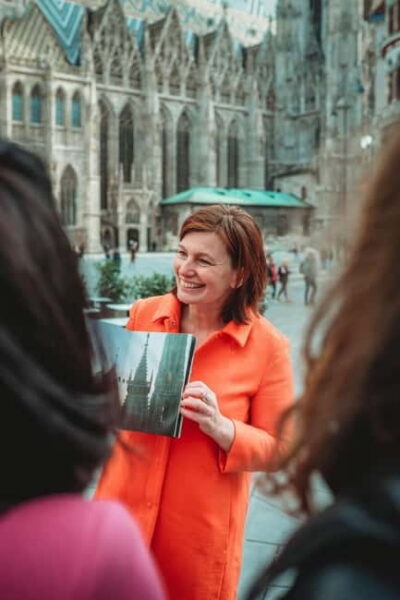
The final scene takes place at St. Stephen’s Square. You see the cathedral burning during the last month of World War II and witness the Soviet army driving the last German soldiers from the city.
This is the most sobering stop. St. Stephen’s Cathedral is one of Vienna’s central symbols, so seeing it damaged gives the war story a direct connection to the building in front of you.
The scene also closes the tour with a major turning point. You have moved from medieval ceremony through siege, plague, empire, and modern cultural life to the destruction and political change of 1945. Vienna’s present begins to look less fixed and more like the result of repeated shocks and rebuilding.
The images may again feel a little soft compared with current VR standards. Even so, the combination of the square, the cathedral, and the wartime scene gives this final stop weight. It is not just a dramatic ending for effect. It explains why the city you see today carries so many layers.
How much does the $45 price buy you?
At $45 per person, this is more expensive than a basic old-town walk, but it offers more than a standard audio tour. You pay for a live guide, the headset, earphones, a 100-minute route, and six specially placed historical scenes.
The value is strongest if you are curious about how places changed over time and enjoy trying new technology. You also get a quick orientation to central Vienna, which can be useful at the start of a trip. One participant described it as a strong introduction to the city, and that is a fair way to think about its role.
The value is weaker if you mainly want detailed architecture, long stops inside monuments, or polished cinema-quality VR. Much of the tour is walking and listening, with the headset used at selected points. You are not wearing it continuously.
I would compare the cost with what you want from a city tour. For a history-minded visitor, the combination of real streets and recreated scenes can justify the price. For someone who prefers a traditional guide, the same money might be better spent on a specialist museum or palace visit.
Weather, comfort, and who should book
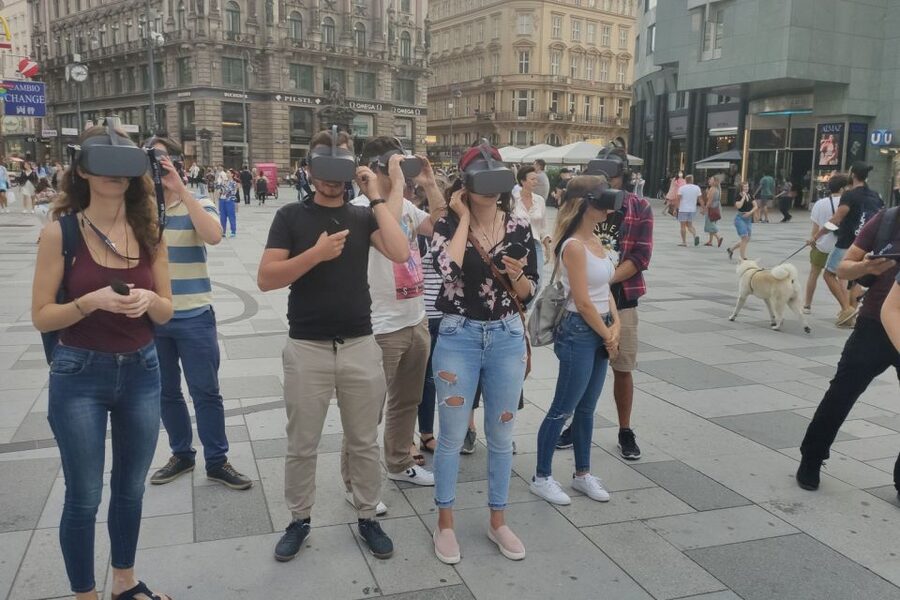
The route is flat and wheelchair accessible, but it is outdoors for much of the time. Heavy rain or a storm can cause cancellation, and the decision may come late if conditions change quickly. Keep a flexible plan for the day and do not place a must-see reservation immediately afterward.
Children under eight are not allowed, and the activity is not suitable for people with epilepsy. The headset and audio equipment are central to the experience, so those restrictions matter rather than being minor booking notes.
I would recommend this for a first or second day in Vienna, especially if you want a broad look at the city before choosing which palaces, churches, or museums to visit. It also suits visitors who have already seen the usual sights but want a different way to connect them.
The tour can work well for families with older children, history fans, and anyone who likes visual storytelling. It may frustrate visitors who want quiet time at each monument or who dislike wearing electronic equipment while walking.
Should you book the Vienna VR tour?
Book it if you want a practical city orientation with a strong visual twist. The best parts are the clear route, the six carefully chosen time periods, and the way the headset places past events at real Vienna landmarks.
Go in expecting a guided walk first and a VR show second. The imagery can be rough, some scenes may feel less active than hoped, and bilingual groups may move more slowly. Still, the mix of the Ottoman siege, Augustin during the plague, Sisi near the Hofburg, the 1920s Opera, and wartime St. Stephen’s Square gives you stories that a standard sightseeing loop may miss.
With a 4.6 rating from 672 bookings, the experience has a strong record, but the right choice depends on your style. If you want an unusual, informative start to Vienna and can accept a few technical limits, the $45 price is reasonable. If you want a polished VR production or a deep architectural tour, choose something more traditional.
FAQ
Where does the tour start?
It starts at Neuer Markt 6 in Vienna. Look for the turquoise entrance and arrive 15 minutes before the tour begins.
Where does the tour finish?
The tour finishes at the Albertina.
How long does the experience last?
The activity lasts about 100 minutes. The guided sightseeing portion is also listed as approximately 105 minutes, so allow close to two hours with early arrival and setup.
How far do you walk?
The route covers 3.2 kilometers over flat terrain.
Which languages are available?
The live guide speaks English or German. The audio guide is available in English, Spanish, Dutch, French, Italian, and Russian.
What equipment is included?
Virtual reality glasses and earphones for the audio guide are included.
Is the tour wheelchair accessible?
Yes, the activity is wheelchair accessible, and the route is over flat terrain.
Can children join the tour?
Children under eight years old are not permitted to take part.
Can weather cancel the tour?
Yes. Heavy rain or a storm may lead to cancellation, and the decision can be made at the last minute if weather conditions change quickly.
Just reviewed in Vienna
- World War II History Vienna Old Town Private Walking Tour★ 4.8 · 9 reviews
- Vienna: Wine Tasting E-Bike Tour★ 4.9 · 46 reviews
- Vienna: Winery and Wine Tasting Tour with a Wine Expert★ 5.0 · 5 reviews
- Vienna: Unforgettable Private City Tour★ 5.0 · 7 reviews
- Vienna Urban Art Tour: Explore a different side of Vienna!★ 3.8 · 14 reviews
- Vienna: Concert by the Vienna Baroque Orchestra★ 4.6 · 56 reviews
- Vienna: Swarovski DIY Workshop Experience★ 5.0 · 9 reviews
- Vienna: Sunday Brunch Danube Cruise & Live Music★ 4.2 · 42 reviews
Vienna City Sightseeing Tours, compared.
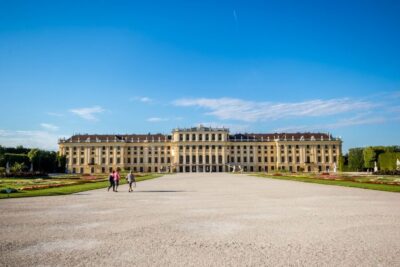
Vienna PASS: All incl. Sightseeing Pass for 85+ Attractions
Read our review →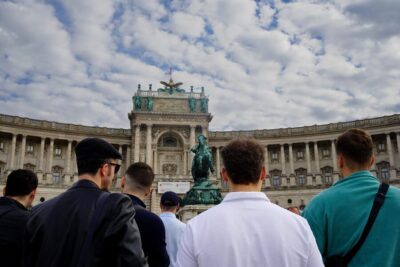
Guided Walking Tour of City Highlights & Hidden Gems
Read our review →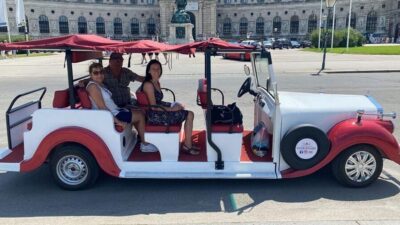
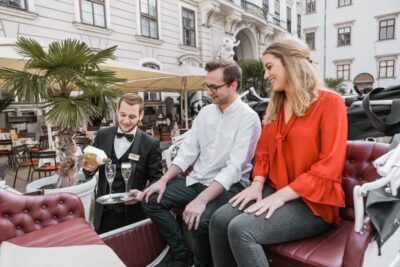

Skip-the-Line Schonbrunn Palace Guided Tour and Vienna Historical City Tour
Read our review →
Browse the lists this tour appears in