Reviewed · GUIDED
Vienna – the making of a Weltstadt – guided Citytour
Vienna’s center makes more sense when you see it as a city built layer by layer. This two-hour walk connects a Roman fort, Habsburg court life, grand squares, musicians, churches, and modern Vienna instead of treating each sight as a separate photo stop. Guide Christian Grausam is especially good at tying buildings to the eras that shaped them.
I like the clear historical arc, from Roman Vindobona to the imperial city of Franz Josef and Elisabeth. I also like the practical advice built into the walk, which can help you decide what to do next. The main drawback is simple: the tour is in German only, and its compact two-hour schedule means most interiors are viewed from outside.
Key points to know
- Two thousand years in two hours: The route explains how a Roman settlement grew into a major Central European capital.
- A local guide with a lively approach: Christian Grausam leads the tour and links dates, buildings, rulers, art, and music.
- The Hofburg is treated as a working center of power: You learn why Vienna became a residential city for its rulers.
- St. Stephen’s Cathedral anchors the walk: The cathedral is presented as both Vienna’s geographic and emotional center.
- The route mixes famous places and quieter corners: Expect Schottenkirche, Freyung, Am Hof, Franziskanerplatz, and Domgasse alongside major sights.
- Plan for city walking, not museum touring: The tour runs rain or shine, lasts two hours, and does not allow large bags.
Vienna in one walk, from Roman fort to imperial capital
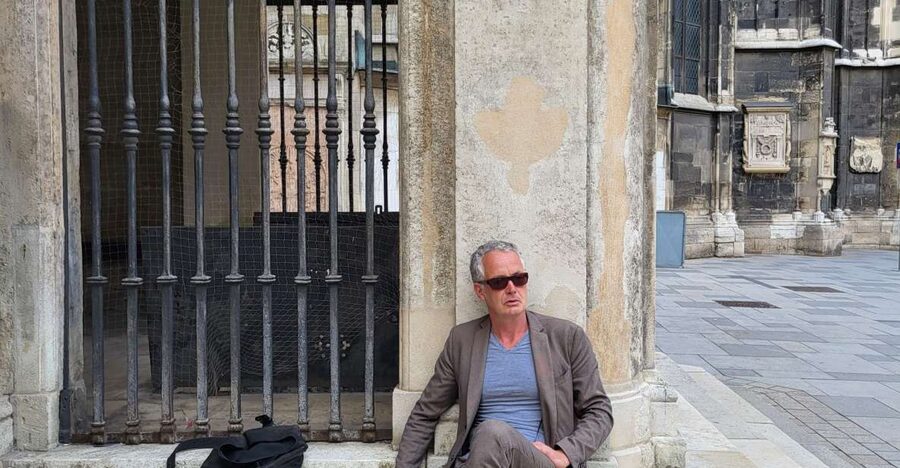
This is a city orientation tour with a strong historical spine. You walk through central Vienna while moving across roughly two millennia, beginning with the small Roman fort that helped shape the city and ending at St. Stephen’s Cathedral, where Vienna’s past and present meet.
I like this approach because Vienna can otherwise feel like a collection of grand facades. The Hofburg points to Habsburg power, the cathedral points to medieval Vienna, and the elegant streets suggest the 19th-century metropolis. Without context, those pieces do not always fit together. The guide’s job is to show how they do.
The emphasis is not just on rulers and dates. You also hear about architecture, music, art, and daily city life. Mozart and Beethoven worked in Vienna. Josef Haydn composed a melody that later became important to Germany. The walk connects these cultural figures to the streets where Vienna’s public identity took shape.
The pace should suit you if you want a strong first look at central Vienna. You will not spend time in every palace room or church interior, but you should leave with a better sense of what to return to.
A few more Vienna outings worth weighing up
- Vienna Spanish Riding School Guided Tour
★ 4.7 · 6,765 reviews - Vienna: Guided Walking Tour of City Center Highlights
★ 4.7 · 4,989 reviews - Vienna: Vienna Central Cemetery Guided Walking Tour
★ 4.8 · 3,307 reviews
Schottenkirche, Freyung, and the older city center
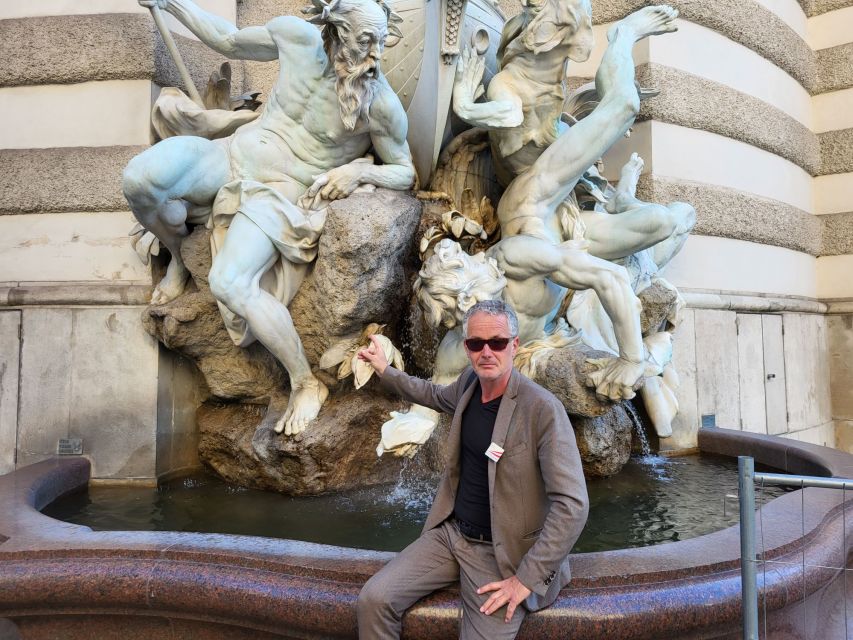
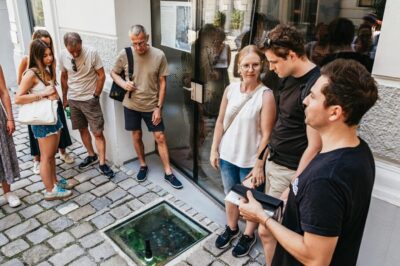
Depending on the option booked, the walk may begin at Freyung, with Schottenkirche nearby. This part of central Vienna helps establish the city’s earlier layers before the route moves toward the imperial buildings.
Freyung is one of those places where Vienna’s history is easier to grasp when someone points out the connections. You may find yourself looking less at one isolated building and more at the shape of the square, the surrounding streets, and the way religious and civic life developed close together.
Schottenkirche adds a useful medieval and religious note to the opening. The walk is not designed as a church tour, so expect explanation rather than a long interior visit. That is a fair trade on a short city walk, especially if your aim is to understand Vienna’s basic structure before exploring on your own.
This is also where a local guide can add value beyond a standard list of sights. Christian Grausam’s role is to make the sequence easy to follow, so the city’s changes feel connected rather than random. His approach has been described as lively and pleasant, with historical information tied directly to the buildings around you.
Am Hof and Kohlmarkt, where Vienna turns imperial
From Freyung, the route continues toward Am Hof and Kohlmarkt. These streets and squares help show how Vienna shifted from a medieval settlement into a court city with European influence.
Am Hof is a useful stop for understanding the older civic center. Kohlmarkt then leads you toward the Hofburg district, where the city’s imperial identity becomes more obvious. The route is short enough to keep you moving, but it gives you time to notice how the streets change as you approach the former royal residence.
I like this part of the tour because it explains the reason behind Vienna’s formal appearance. The grand center was not created simply to look impressive. It reflected the power, ceremony, administration, and residence of rulers who made Vienna their base.
You will hear about major figures from Charles V to Franz Josef and Elisabeth. The point is not to memorize a family tree. It is to understand why Vienna mattered as a residential city, and why so much political and cultural life gathered here.
If you prefer tours with long stops and plenty of time for photographs, this section may feel brisk. If you want a useful introduction before a longer independent visit, the pace works well.
Michaelerplatz and the Hofburg’s many roles
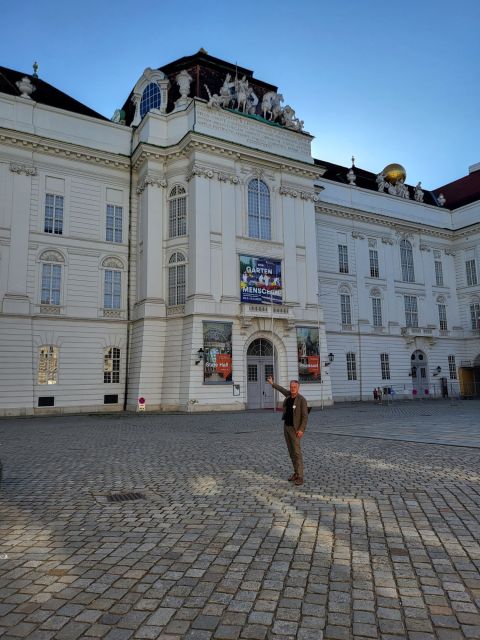
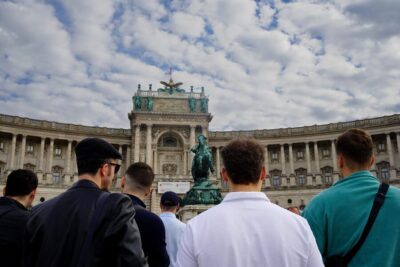
Michaelerplatz brings you to one of the clearest visual gateways into the Hofburg. Here, the question is not simply what the palace looks like. It is why Vienna needed such a large imperial complex in the first place.
The Hofburg developed over centuries, so it does not read as one single building with one clean design. Different periods left their mark. The tour uses that mixture to explain how Vienna grew as the seat of rulers, officials, artists, and court institutions.
This is one of the strongest parts of the experience for first-time visitors. You may already know the Hofburg as a palace, but the walk helps you understand it as a city within the city. It was tied to residence, administration, ceremony, and the public image of the Habsburg monarchy.
The emphasis on Franz Josef and Elisabeth gives the imperial story a more personal side, but the tour does not stop with palace glamour. It places their era within the longer development of Vienna, from Roman beginnings through medieval memories and the 19th-century expansion of the city.
At $35 per person, this kind of context is where the value lies. You are paying for a guide who can make a familiar palace district easier to read, not for admission to a palace collection. If you already plan to visit the Hofburg interiors, this walk can serve as a useful introduction, though it does not replace that visit.
A different sort of day out in Vienna:
- Vienna: Vivaldi’s Four Seasons Concert in Karlskirche
★ 4.7 · 14,951 reviews - Vienna: Skip-the-cashier-desk-line Giant Ferris Wheel Ride
★ 4.5 · 7,859 reviews - Vienna: Schönbrunn Palace & Gardens Skip-the-Line Tour
★ 4.7 · 7,739 reviews - Vienna: Light of Creation Votive Church Immersive Light Show
★ 4.8 · 6,779 reviews
Heldenplatz, Burggarten, and Josefsplatz
The route continues through Heldenplatz, Burggarten, and Josefsplatz. These spaces show different sides of the former court district, from public ceremony to gardens and quieter architectural settings.
Heldenplatz is closely tied to Vienna’s imperial image. The broad open space makes more sense when you understand how rulers used architecture and ceremony to project authority. This is a good place to listen rather than rush, since the scale of the square is part of its message.
Burggarten offers a change of mood. Its presence reminds you that the imperial center was not only offices and formal public spaces. There were also gardens and places connected to court life. The route does not turn this into a garden-focused visit, but it adds balance to the palace story.
Josefsplatz brings you back toward the formal core. The sequence of these stops is useful because it lets you compare open ceremonial spaces, cultivated gardens, and tightly planned palace surroundings within a short walk.
You should wear comfortable shoes. Two hours on central Vienna’s streets is not an exhausting hike for most people, but the tour is a continuous walk and is not suited to people with mobility impairments. There is no promise of a weather break, since the tour operates rain or shine.
Albertina and the city’s artistic character
The Albertina section adds art to a tour that could otherwise lean heavily toward rulers and architecture. Vienna is not only a former imperial capital. It is also a major center of European art and music.
You should expect the Albertina to be discussed as part of the city route, not toured as a museum interior. That distinction matters if you are comparing this walk with an art-focused visit. The benefit here is the connection between cultural institutions and the broader city story.
Vienna’s artistic life developed alongside court power, religious foundations, wealthy patrons, and the growth of the 19th-century metropolis. The tour gives you a framework for understanding why music and art became such a strong part of the city’s identity.
The music thread is especially useful. Mozart and Beethoven lived and worked in Vienna, while Haydn composed a melody later used as Germany’s national anthem. These references help turn famous names into part of the city’s physical story, rather than leaving them as isolated facts in a guidebook.
If classical music is your main reason for visiting Vienna, you may want a separate concert, museum visit, or composer-focused walk. This experience gives you the citywide setting, not an extended biography of each musician.
The Capuchin Crypt and the Habsburg memory
The Capuchin Crypt represents another side of imperial Vienna. It is associated with the Habsburg family and provides a more intimate counterpoint to the grand spaces around the Hofburg.
The tour’s treatment of the crypt helps place rulers within a tradition of family memory, death, and dynastic continuity. It is an important reminder that the imperial story was not only about public ceremonies and palaces. It also involved generations of family history.
Since the activity lasts two hours, you should not assume that the crypt visit includes a detailed interior tour or entry ticket. The provided route lists the Capuchin Crypt as a stop, but the experience is primarily a guided city walk. If entering the crypt is high on your list, check the exact option and meeting details before booking.
That limitation is worth accepting if you want the wider picture. A short walk can show how the crypt relates to the Hofburg, the old city, and the city’s changing sense of power. A dedicated visit gives you more time inside.
Franziskanerplatz and Domgasse, a quieter turn
Franziskanerplatz and Domgasse bring the tour into a more intimate part of central Vienna. These streets help break up the grand imperial sequence and make room for smaller-scale urban history.
This is where the walk’s promise of busy places and less obvious corners becomes useful. You are still in the historic center, but the setting feels different from the broad spaces near Heldenplatz. The shift helps you see that Vienna is more than its monumental avenues.
Domgasse also fits naturally with the music story, since Mozart lived and worked in Vienna. The route uses these kinds of locations to connect cultural history with actual streets, rather than presenting music as a separate subject.
I appreciate this part of the itinerary because it gives the walk texture. Big palaces explain power. Smaller streets help you picture the city as a place where people lived, worked, composed, worshipped, and moved through daily routines.
The exact amount of time at each stop can vary with the guide, the group, and the walking conditions. The main goal is a connected explanation, not a long stop at every address.
St. Stephen’s Cathedral, the final anchor
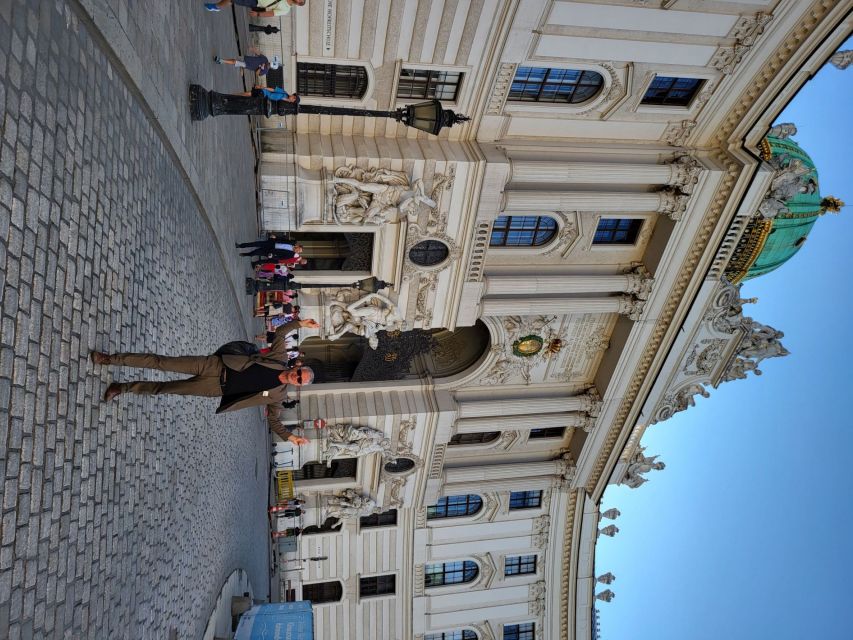
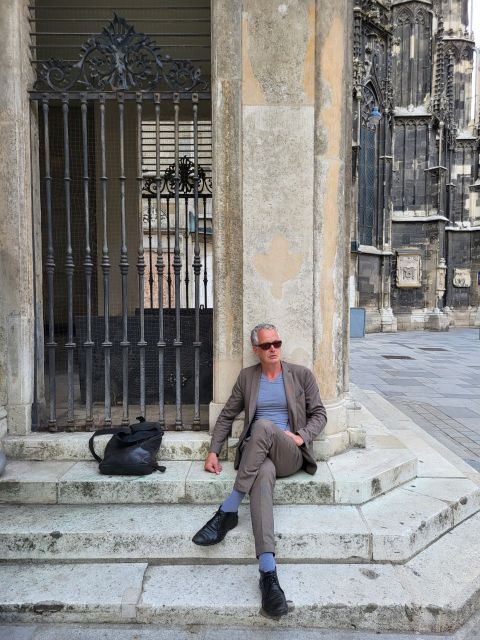
The walk ends at St. Stephen’s Cathedral, Vienna’s geographical and emotional center. That is a fitting finish because the cathedral brings together several strands of the city’s story: medieval memory, religious life, civic identity, and the modern center.
The cathedral is not simply another famous building on a checklist. Its position helps you understand how central Vienna is organized. After passing through the Hofburg district and the streets of the old city, arriving here gives the route a clear focal point.
You should expect an exterior-oriented conclusion unless your chosen option says otherwise. The value is in understanding why the cathedral matters and how it fits into Vienna’s development. If you want to climb, attend a service, or explore the interior at length, plan that separately.
Ending here also gives you a practical advantage. You can continue exploring the surrounding center after the tour, return to a museum, find a restaurant, or use the cathedral as a reference point for the rest of your day.
What $35 buys you in practical terms
At $35 per person, the tour is reasonably priced for a two-hour walk led by a certified local guide. The value depends on what you want. If you need museum admission, palace interiors, or a long specialist lecture, this is not that product. If you want a clear map of Vienna’s main story, the price is easier to justify.
I like that the tour gives you more than a string of famous names. It explains why the Hofburg matters, how the city changed over time, and why art and music belong in a history of Vienna. The guide’s local perspective can also help you choose what to do next.
The tour is conducted in German. That is the most important booking consideration. You will get the most from it if you are comfortable following spoken German for two hours. The activity information does not list another language option.
Meeting points vary by the option booked. If your selection begins at Freyung, the route includes Schottenkirche, Freyung, Am Hof, Kohlmarkt, Michaelerplatz, and the Hofburg before continuing through the rest of the center. Arrive 10 minutes early, since the walk is scheduled and the starting point may differ.
Large bags and luggage are not allowed. The walk takes place in all weather, so bring suitable clothing and shoes. Free cancellation is available up to 24 hours before the start, and you can reserve now and pay later if you want to keep your schedule flexible.
Who should book this Vienna city walk?
I would choose this tour if you are in Vienna for the first time and want the city’s main story before visiting individual museums and palaces. It also suits you if you enjoy architecture, rulers, classical music, and the way political history shapes an urban center.
It is a good fit for anyone who wants a local guide rather than a self-guided list of dates. Christian Grausam has been praised for making historical periods connect naturally with the buildings around him, and for keeping the walk informative without making it dull.
I would think twice if you need an English-language tour, have difficulty walking for two hours, or want extensive interior visits. The experience is a guided overview on foot, not a palace admission package or a museum tour.
Should you book it?
Book it if you want to understand Vienna before you explore it in detail. The strongest reasons are the clear Roman-to-imperial-to-modern timeline, the links between the Hofburg and Habsburg power, and the way music and art are woven into the route.
Skip it if German is not suitable for you, if you need a slower accessible route, or if your priority is spending time inside the Hofburg, Capuchin Crypt, Albertina, or St. Stephen’s Cathedral. For the right audience, $35 buys a useful two-hour framework that can make the rest of your Vienna visit far more rewarding.
FAQ
Where does the Vienna city tour meet?
The meeting point varies according to the option you book. If the meeting point is Freyung, the route includes Schottenkirche and Freyung at the beginning.
How long does the tour last?
The guided city walk lasts two hours.
What language is the tour conducted in?
The tour is conducted in German with a live guide.
Who leads the experience?
The experience provider is Christian Grausam. The tour includes a local certified tourist guide.
What places does the route include?
The route can include Schottenkirche, Freyung, Am Hof, Kohlmarkt, Michaelerplatz, the Hofburg, Heldenplatz, Burggarten, Josefsplatz, the Albertina, the Capuchin Crypt, Franziskanerplatz, Domgasse, and St. Stephen’s Cathedral.
Does the tour operate in bad weather?
Yes. The tour takes place rain or shine.
How early should I arrive?
You should arrive at the meeting point 10 minutes before the tour starts.
Can I bring luggage or a large bag?
No. Luggage and large bags are not allowed.
Can I cancel the booking?
Yes. You can cancel up to 24 hours in advance for a full refund. Reserve now and pay later is also available.
Just reviewed in Vienna
- World War II History Vienna Old Town Private Walking Tour★ 4.8 · 9 reviews
- Vienna: Wine Tasting E-Bike Tour★ 4.9 · 46 reviews
- Vienna: Winery and Wine Tasting Tour with a Wine Expert★ 5.0 · 5 reviews
- Vienna: Unforgettable Private City Tour★ 5.0 · 7 reviews
- Vienna Urban Art Tour: Explore a different side of Vienna!★ 3.8 · 14 reviews
- Vienna: Concert by the Vienna Baroque Orchestra★ 4.6 · 56 reviews
- Vienna Supreme Orchestra at Palais Niederösterreich★ 4.8 · 10 reviews
- Vienna: Swarovski DIY Workshop Experience★ 5.0 · 9 reviews
Guided, compared.
Guided Walking Tour of City Highlights & Hidden Gems
Read our review →