
Reviewed · VIENNA CENTRAL CEMETERY TOURS
Vienna: Private Walking Tour of the Central Cemetery
Vienna’s Central Cemetery turns a visit to the dead into a sharp lesson in the city’s character. Grand tombs sit beside sobering memorials, and the cemetery church gives the wide grounds a clear focal point. You’ll hear stories that connect old Vienna with modern burial customs.
I like the private group format, which lets your party set the pace and ask questions without competing with a crowd. I also like the mix of famous names, tragic events, architecture, and present-day funerary practice. The main consideration is that the tour is in German, and the cemetery’s subject matter may not suit every visitor.
Key points to know before you go
- Meet at the second gate: After entering, look to the right for the guide beside the water hydrant.
- See more than famous graves: The route covers memorials to the Ringtheater fire victims and Soviet soldiers killed in 1945.
- Visit a Viennese Art Nouveau church: Admission to the cemetery church is included.
- Expect a private walk for up to 10 people: The price is $217 per group, not per person.
- Hear local humor and history: Guide Christian Pacic is praised for his Viennese wit and lively explanations.
- Plan for an extra site charge: A solidarity contribution of 3 euros per person is paid before the tour.
Why Vienna Central Cemetery is worth two hours

Central Cemetery is not a quiet corner with a few old headstones. It is Vienna’s most significant burial place and one of the largest cemeteries in Europe, described as the second largest on the continent. The scale changes the feel of the visit. You are not simply looking at individual graves. You are walking through a record of Vienna’s social rank, faith, politics, disasters, wars, and changing ideas about death.
The cemetery was once heavily criticized. Today, it is regarded as one of Vienna’s most beautiful and impressive burial grounds. That change tells you something about the city. Vienna often gives ceremony and style to difficult subjects, and here even death has its own architecture, etiquette, and public memory.
The tour’s title promises a morbid encounter, but the experience is not only gloomy. Expect a mix of serious stories, unusual details, architectural commentary, and the dry humor often associated with Vienna. Christian Pacic has been praised for combining historical knowledge with a friendly manner and Wiener Schmäh, the local style of teasing, charm, and understatement.
That tone matters. A cemetery tour can become heavy if every stop is treated with solemn formality. A good guide gives the tragic stories their proper weight, then helps you see the human oddities and social customs that make the cemetery feel like part of the living city.
More Central Cemetery walks:
- Vienna: Vienna Central Cemetery Guided Walking Tour
★ 4.8 · 3,307 reviews - Vienna: Guided Walking Tour of the Central Cemetery
★ 4.8 · 392 reviews - 3-Hour Walking Tour of Vienna Central Cemetery
★ 4.7 · 71 reviews
Meeting Christian at the second gate
The exact meeting point is the cemetery’s second gate. After you enter, turn right and look for the guide at the water hydrant. This is a useful detail because Central Cemetery is large, and wandering around the entrance area looking for your group would waste part of a two-hour tour.
The experience is private, with your own party and guide. The maximum group size is 10 people. That is a practical limit: large enough for a family or small group of friends, but small enough to keep the walk personal and make questions easy.
The tour is offered in German. If you understand German well, this gives you direct access to the guide’s humor and phrasing. If you do not, you should not book this particular format unless your group has a way to translate, since the value depends on the stories and explanations rather than simply seeing the graves.
The walk is listed as wheelchair accessible. That is helpful for visitors who need step-free access, though a cemetery of this size can still involve a good amount of walking. You should be comfortable spending two hours moving between different parts of the grounds.
Monumental graves and Vienna’s social order
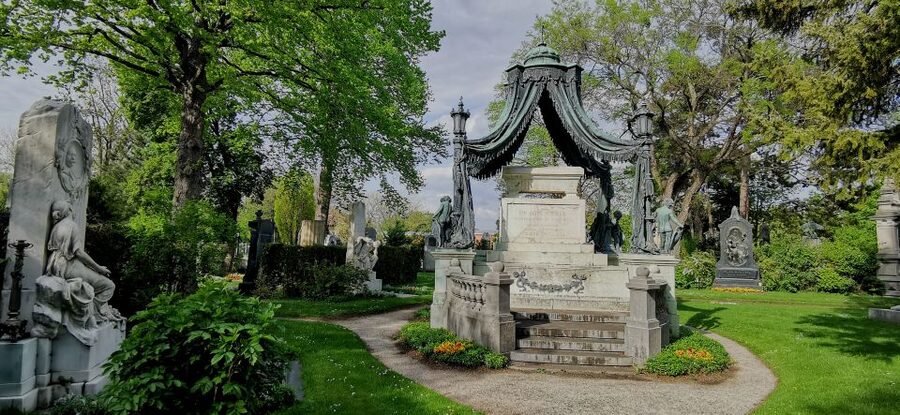
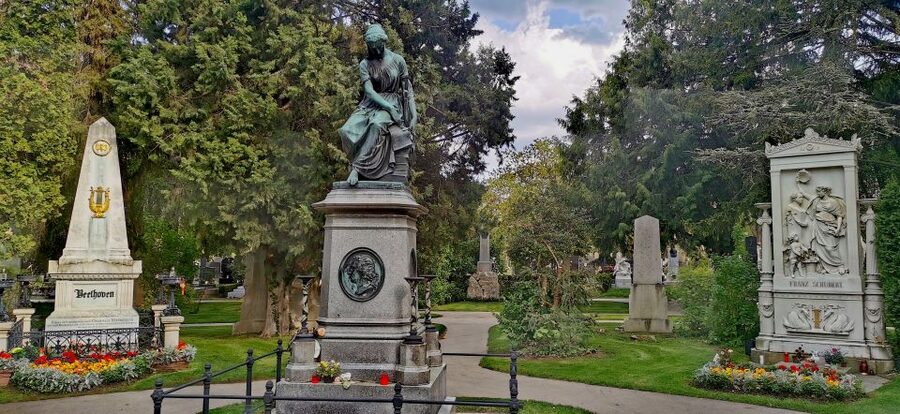
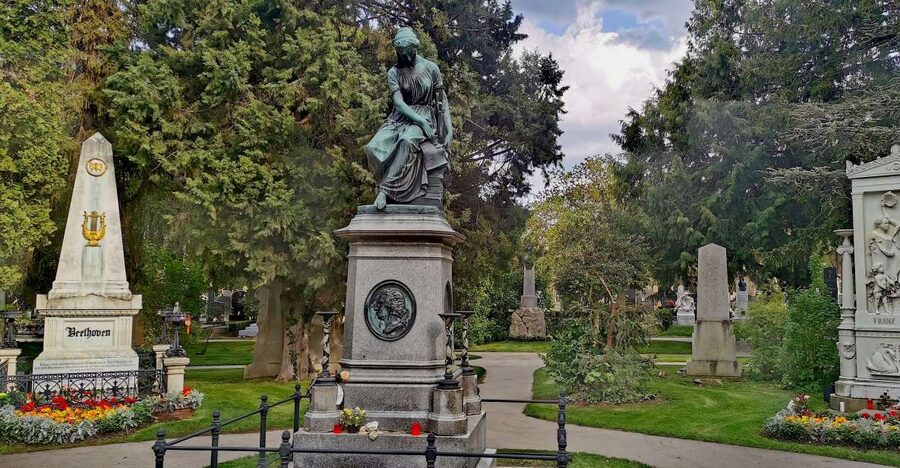
One of the tour’s central ideas is that the old saying everyone is equal in death is only partly true here. Underground, people may share the same fate. Above ground, status, wealth, reputation, and family pride can remain visible in stone.
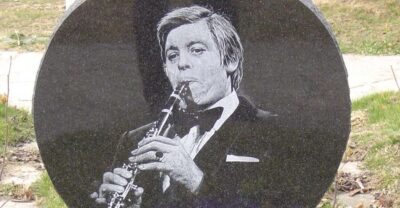
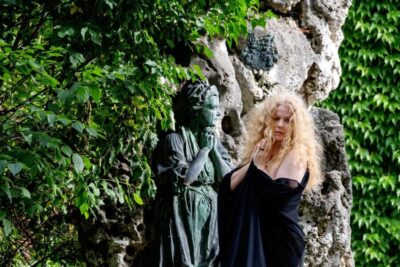
You will see monumental tombs connected with famous people. The point is not just to collect names. These graves show how Vienna chose to remember its artists, public figures, and influential citizens. Some memorials are modest. Others make a very clear statement about the person’s place in society.
I find this part especially useful because it turns a cemetery into a lesson in public memory. A grave is not only where someone is buried. It can also show what a family wanted future generations to admire, what a city wanted to preserve, and how social standing continued after death.
The route can also help you understand the contrast between the grand and the ordinary. Even when a tomb is ornate, the guide’s role is to connect it to a human story. Expect the focus to move between architecture, reputation, and the personalities behind the names.
Do not expect a complete survey of every famous person buried in Vienna. Two hours is enough for a focused walk, not an exhaustive catalog. The private format makes the time more useful because you can ask about the people or themes that interest you most.
Memorials to the Ringtheater fire victims
The graves for the victims of the Ringtheater fire in 1881 bring a darker public tragedy into the tour. These memorials are not simply decorative. They remind you how a single disaster can remain part of a city’s memory for generations.
A stop here gives the cemetery a wider role. It is not only a place for prominent individuals and family tombs. It also holds collective grief. The memorial preserves the names and loss of people connected by one event, allowing the cemetery to function as a place of warning as well as remembrance.
The information provided for the tour describes memorials like these as both eternal reminders and warnings against senseless death. That distinction is important. The story is not presented as old history with no connection to the present. It asks you to think about how cities respond to catastrophe and how the dead are represented in public places.
This section may be difficult for some visitors, especially if you prefer light sightseeing. The guide’s humor can make the overall walk more approachable, but the subject itself remains serious.
More walking tours in Vienna:
- Vienna: Guided Walking Tour of City Center Highlights
★ 4.7 · 4,989 reviews - Vienna: Guided Walking Tour of City Highlights & Hidden Gems
★ 4.9 · 2,180 reviews - Vienna: Viennese Underworld Guided Walking Tour
★ 4.7 · 1,865 reviews - Vienna: World War II Historical Walking Tour
★ 4.8 · 1,772 reviews
The Soviet soldiers and the Battle of Vienna
Another important stop is the graves of Soviet soldiers who died during the Battle of Vienna in 1945. These graves place the cemetery within the events of the Second World War and the violent end of the war in the city.
The memorial is valuable because it widens the story beyond Vienna’s celebrated residents. Here, the cemetery records military death and the political forces that shaped the city. You are asked to consider how a place of burial can hold several layers of memory at once: personal loss, national conflict, and the long afterlife of war.
A guide can make this kind of stop much clearer than a quick look at a marker. The meaning of a memorial is often not obvious from its shape or inscription. Christian’s role is to connect the site with the event and explain why it matters within Vienna’s past.
This is also a reason to choose a guided visit instead of walking alone. You could see the graves independently, but you would miss the links between the memorials, the city’s political history, and the way Vienna remembers tragedy.
The cemetery church and its Art Nouveau design
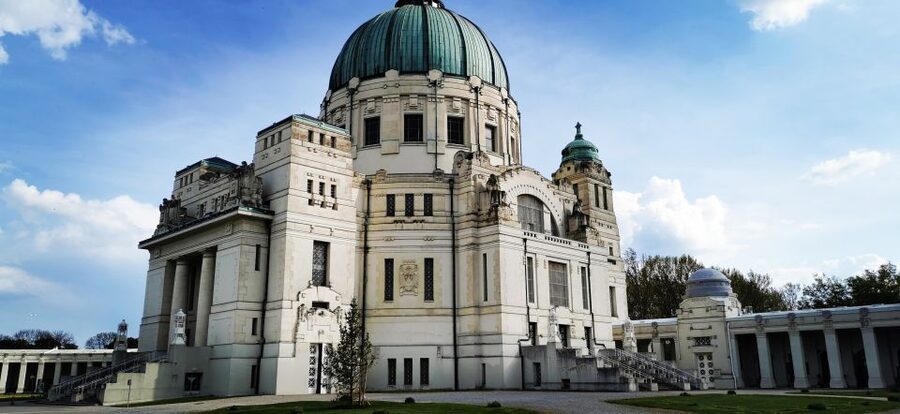
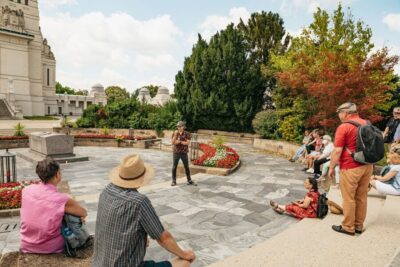
Near the center of the grounds is the magnificent cemetery church, built in the Viennese Art Nouveau style. Its central position gives the cemetery a strong visual and symbolic anchor. After walking among graves and memorials, you reach a building that expresses Vienna’s love of ornament, design, and formal ceremony.
A guided look at the church is included, along with free admission. The focus is on its architectural history, so this is not simply a quick photo stop. You will hear how the building fits into Vienna’s Art Nouveau tradition and why its design is important within the cemetery.
The church is one of the strongest reasons to choose this tour if you enjoy architecture. It gives you a change of pace from the outdoor memorials and offers a clear example of how Vienna brought artistic ambition into a place associated with grief.
The phrase structure that rules the entire Central Cemetery makes sense once you understand its position and scale. The church acts as the visual center of the grounds. It helps organize the experience, turning a vast cemetery into a place with a recognizable heart.
The forest cemetery and modern burial
The final part of the tour visits the forest cemetery. This section shows that the Central Cemetery is not frozen in the past. Modern burial practices have arrived here, alongside the older monumental tombs and historic memorials.
That contrast is one of the most interesting parts of the route. You move from grand statements about family name and public reputation to a more contemporary approach to remembrance. The forest cemetery suggests a different relationship with death, one that is less focused on monumental stone and more connected with a natural setting.
The tour does not treat Vienna’s cemetery as a museum. It shows a working place that continues to change. This matters if you want to understand present-day Vienna rather than only admire old architecture.
For me, the modern section gives the walk a good ending. It prevents the experience from becoming a tour of the past alone. You finish by seeing how burial customs continue to adapt, and how the city makes room for new ideas while preserving older memorial traditions.
Christian Pacic’s guiding style
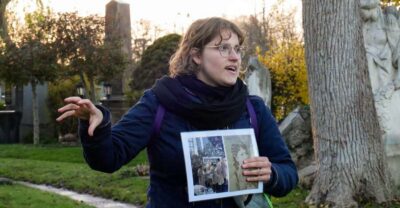
The strongest praise attached to this experience centers on the guide’s delivery. Christian Pacic is described as friendly, entertaining, and full of historical information. His Viennese humor is mentioned repeatedly, along with his ability to make the walk informative without making it stiff.
That balance is important in a cemetery. A guide who only recites dates could make the two hours drag. A guide who jokes constantly could seem disrespectful. The reported tone here is more useful: serious when the subject calls for it, but warm and lively enough to keep the group engaged.
The private setup should help Christian adjust the emphasis. If your group is drawn to architecture, he can spend more time on the church. If you care about wartime memorials, famous graves, or modern burial, you can ask for more explanation in those areas.
The experience is offered in German, so your language ability is the main factor in judging the guide’s value. If you can follow German conversation, the local humor is likely to add a lot. If you cannot, choose a tour with a language that works for you instead.
Is $217 good value for a private group?
The listed price is $217 for a group of up to 10 people. That makes the price structure important. Ten people would bring the cost to about $22 per person before the required 3 euro solidarity contribution. A couple or small family would pay more per person, but they would still have a private guide rather than joining a large group.
For a private two-hour tour, the value depends on how much you want explanation and conversation. The cemetery itself can be visited without this tour, but the memorials, graves, and church are far more meaningful when someone explains the connections between them.
The included church admission adds a small practical benefit. The 3 euro contribution per person is paid on site before the tour, so include it in your budget. It is separate from the advertised group price.
I would call this good value for a group of friends, a family with older children, or a company outing. It is less economical for one or two people who are happy to explore independently and read limited information on their own.
Timing, cancellation, and practical details
The tour lasts two hours. Starting times depend on availability, so check the date you want before making firm plans. Two hours is long enough to see the main themes without turning the cemetery visit into an all-day commitment.
You can cancel up to 24 hours in advance for a full refund. The reserve now and pay later option also helps if your Vienna plans are still shifting. These policies are useful in a city where weather, train schedules, and museum bookings can change your day.
Headsets are included for groups from 15 people, but this private experience allows no more than 10 participants. You should therefore not expect headsets to be part of your small-group setup. The group limit itself should make it easier to hear the guide.
From January 1, 2024, only accredited tour guides may offer commercial trade tours of Vienna’s cemeteries. This tour uses a state-certified Austrian guide, which provides a clear answer to a practical concern about official guiding in the cemetery.
Who should book this cemetery walk?
I would recommend it if you have already seen Vienna’s grand palaces and want a different view of the city. The walk connects architecture, public memory, war, tragedy, social status, and current burial practice in one place.
It is also a good choice for repeat visitors. You do not need another standard city-center overview. Instead, you get a focused look at a site that many people skip, despite its scale and importance.
History fans will find plenty to discuss, especially at the Ringtheater and Soviet memorials. Architecture fans will appreciate the cemetery church. Groups that enjoy local character should value Christian’s Viennese humor and personal delivery.
I would hesitate if your group dislikes discussions of death, fire, war, or funerals. I would also hesitate if you need an English-language tour, since this experience is offered in German. And if your main goal is to see Vienna’s famous central sights, the cemetery requires a different priority.
Should you book the Vienna Central Cemetery tour?
Book it if you want a thoughtful, unusual look at Vienna and can follow German. The private format, central church, tragic memorials, famous tombs, and forest cemetery create a well-shaped two-hour experience rather than a random walk among graves.
The best value comes when you share the $217 group price with several people and take advantage of the chance to ask questions. Bring an open mind, meet at the second gate beside the water hydrant, and budget the extra 3 euros per person.
Skip it if you want only cheerful sightseeing or if your group cannot use a German-language guide. For the right audience, though, this is a memorable way to see how Vienna gives form, humor, beauty, and warning to the subject of death.
FAQ
Where does the Vienna Central Cemetery tour meet?
The meeting point is at the second gate. After entering, look to the right for the guide beside the water hydrant.
How long does the private cemetery tour last?
The tour lasts two hours.
What language is the tour conducted in?
The live tour guide speaks German.
How many people can join the private group?
The private group can include up to 10 people.
Who is the guide?
The experience provider is Christian Pacic. The tour information and participant comments identify Christian as the guide praised for his historical explanations and Viennese humor.
Is admission to the cemetery church included?
Yes. Free admission to the cemetery church is included.
Is the tour wheelchair accessible?
Yes. The activity is listed as wheelchair accessible.
Is there an extra charge on site?
Yes. From January 1, 2024, a solidarity contribution of 3 euros per person is charged on site before the tour.
Can I cancel the tour for a refund?
Yes. You can cancel up to 24 hours in advance for a full refund.
Just reviewed in Vienna
- World War II History Vienna Old Town Private Walking Tour★ 4.8 · 9 reviews
- Vienna: Wine Tasting E-Bike Tour★ 4.9 · 46 reviews
- Vienna: Winery and Wine Tasting Tour with a Wine Expert★ 5.0 · 5 reviews
- Vienna: Unforgettable Private City Tour★ 5.0 · 7 reviews
- Vienna Urban Art Tour: Explore a different side of Vienna!★ 3.8 · 14 reviews
- Vienna: Concert by the Vienna Baroque Orchestra★ 4.6 · 56 reviews
- Vienna: Sunday Brunch Danube Cruise & Live Music★ 4.2 · 42 reviews
- Vienna Supreme Orchestra at Palais Niederösterreich★ 4.8 · 10 reviews
Vienna Central Cemetery Tours, compared.
Vienna Central Cemetery Walking Tour with Transfers
Read our review →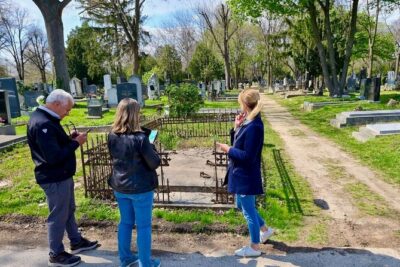
Browse the lists this tour appears in