
Reviewed · WALKING TOURS
Vienna: Private Guided Walking Tour
Vienna’s historic center is best understood on foot, where a grand palace can give way to a quiet courtyard, a Roman excavation, or a lane that still hints at medieval life. This private tour lets you shape the walk around your interests, with the Hofburg, St. Stephen’s Cathedral, the State Opera, and Habsburg stories all in play.
I especially like the private format, which gives you room to ask questions and set the pace. I also like the mix of famous sights and smaller details, such as the old courtyards, the story of Mozart’s death, and the unusual burial customs in the Imperial Crypt.
The main consideration is that this is an outdoor walking tour in the city center, not a full museum tour. Entrance fees are extra, the walk takes place in all weather, and people with mobility impairments may find the route difficult.
Key points to know before you book
- Private group up to 10: You get the guide to yourself, with time for questions and personal requests.
- A flexible central route: The walk can include Stephansplatz, the Hofburg, Heldenplatz, Josefsplatz, the Albertina, the Imperial Crypt, and more.
- History with odd little stories: Expect Habsburg politics, Roman remains, Mozart, Richard the Lionheart, Sacher Torte, and a few darker episodes.
- English or German guiding: Herbert Stojaspal’s guide service is the provider, and Herbert S. is praised for clear English and a friendly manner.
- Two to four hours: A shorter walk can cover the main imperial center, while a longer version allows time for side streets and extra stops.
- Bring sensible clothing: Tours run in all weather. Large bags, luggage, smoking, skating, and audio recording are not allowed.
Starting at Stephansplatz, Vienna’s best orientation point
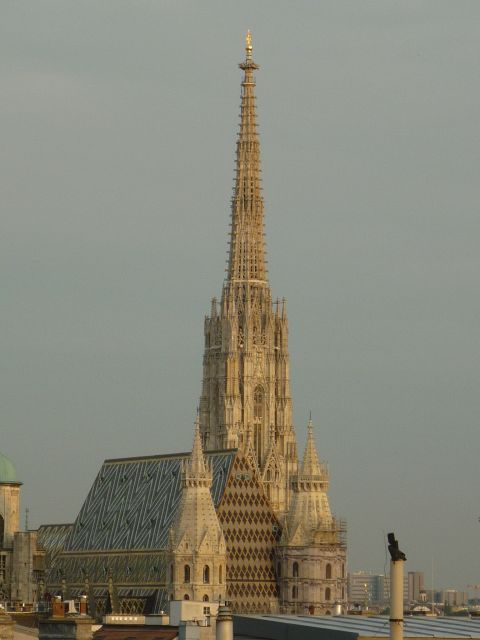
The meeting point is at Stephansplatz 8A, near the corner of Jasomirgottstrasse and next to the Lindt Chocolate Store. That puts you beside St. Stephen’s Cathedral, the city’s great Gothic landmark and an easy place to begin finding your way around central Vienna.
The square is served by the U1 and U3 subway lines at Stephansplatz, with the relevant exit marked Stephansplatz. Several buses also stop nearby. Hotel pickup is available only for hotels in postal zone 1010, so most people will meet at the square.
Starting here makes practical sense. You are already at the center of Vienna’s old town, and the route can move in several directions without wasting time on transport. If you are staying in the inner district, you can also treat the meeting point as a useful first landmark for the rest of your visit.
St. Stephen’s Cathedral is included as a sight on the walk, but do not assume the tour includes a full interior visit. Entrance fees are not included, and the exact indoor stops depend on the route and your booking.
More walking tours in Vienna:
- Vienna: Guided Walking Tour of City Center Highlights
★ 4.7 · 4,989 reviews - Vienna: Vienna Central Cemetery Guided Walking Tour
★ 4.8 · 3,307 reviews - Vienna: Guided Walking Tour of City Highlights & Hidden Gems
★ 4.9 · 2,180 reviews
Graben and Kohlmarkt, Vienna’s imperial showpiece
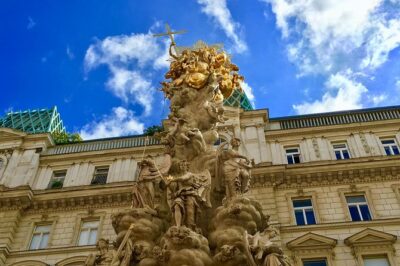
From Stephansplatz, the walk reaches the Graben, one of Vienna’s grandest pedestrian streets. Its broad scale reflects the city’s imperial ambitions, while the Pestsäule, or Plague Column, provides a chance to hear about the plague, Catholic devotion, and the stories tied to King Richard the Lionheart.
The route then continues toward Kohlmarkt, a polished boulevard leading toward the Hofburg. This is where Vienna’s imperial center shifts from busy city street to palace district. You will also pass Demel, the famous pastry shop, a useful stop if your sightseeing priorities include cream cakes and old café traditions.
I like this opening section because it gives you the city in layers. You get a major public square, a ceremonial boulevard, a religious monument, and the practical pleasure of learning where to pause for coffee or pastry. Your guide can also explain how Vienna’s center grew from a medieval town into the Habsburg capital.
Michaelerplatz and the Spanish Riding School
Michaelerplatz offers one of the tour’s most revealing contrasts. Roman and medieval excavations sit below the present-day square, showing that Vienna’s story did not begin with the Habsburgs. The remains are a useful reminder that modern streets often cover many earlier cities.
St. Michael’s Church may also be part of the visit. If you want to see the interior, confirm how that fits into your chosen route, since admission and exact access are not included in the tour price.
Nearby, the Spanish Riding School connects Vienna with its long equestrian tradition. You can hear about the institution and its place within the Hofburg complex, while seeing the elegant setting used by the famous Lipizzaner horses. This is primarily an exterior sightseeing stop unless you arrange something more.
The guide’s role matters here. A quick look at a palace facade tells you little. A good explanation can connect the riding school to court ceremony, the Habsburg household, and the way imperial life was staged for both rulers and the public.
The Hofburg, Heldenplatz, and Josefsplatz
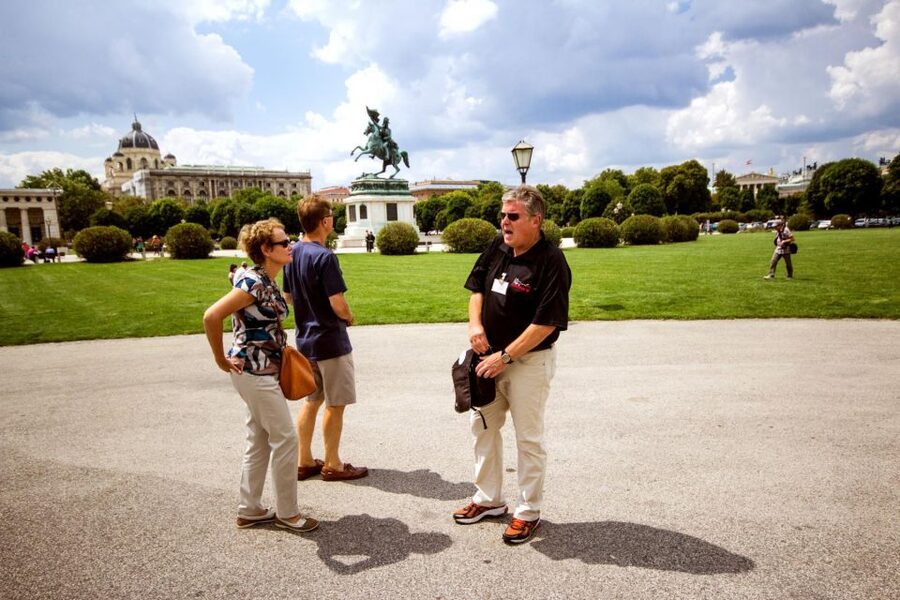
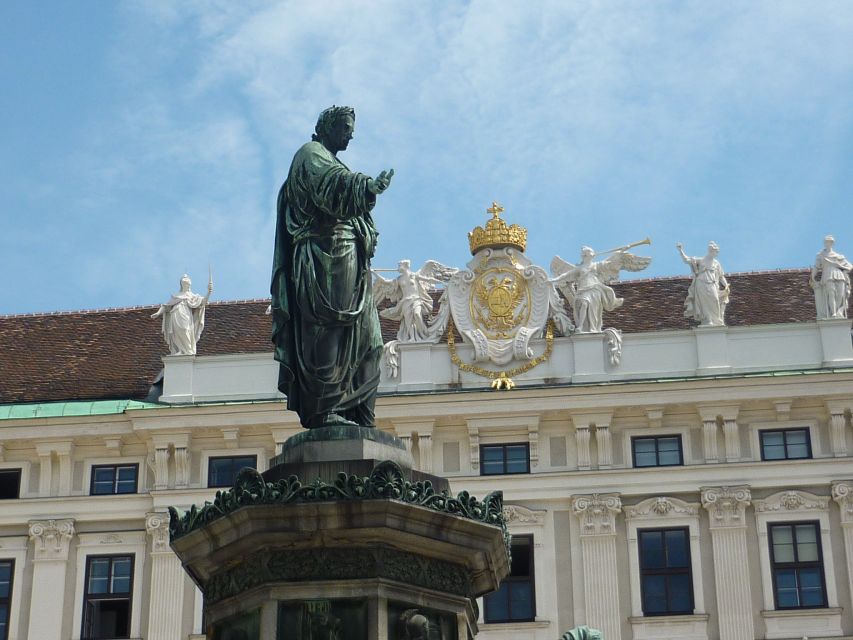
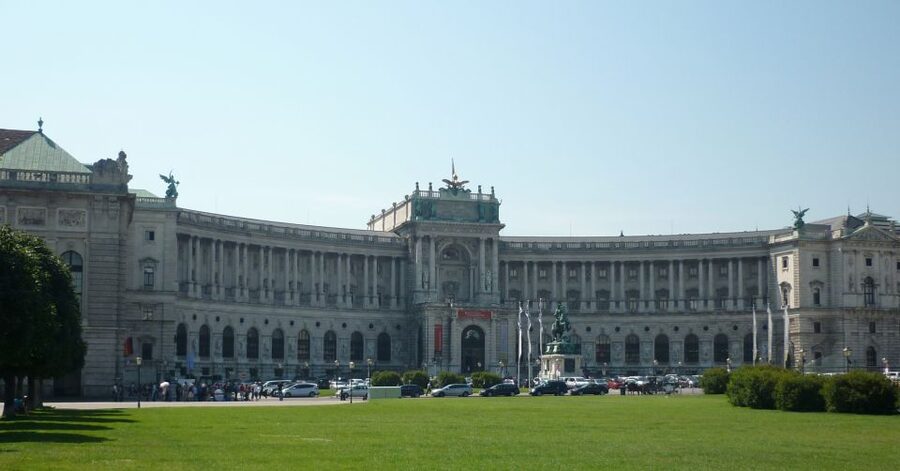
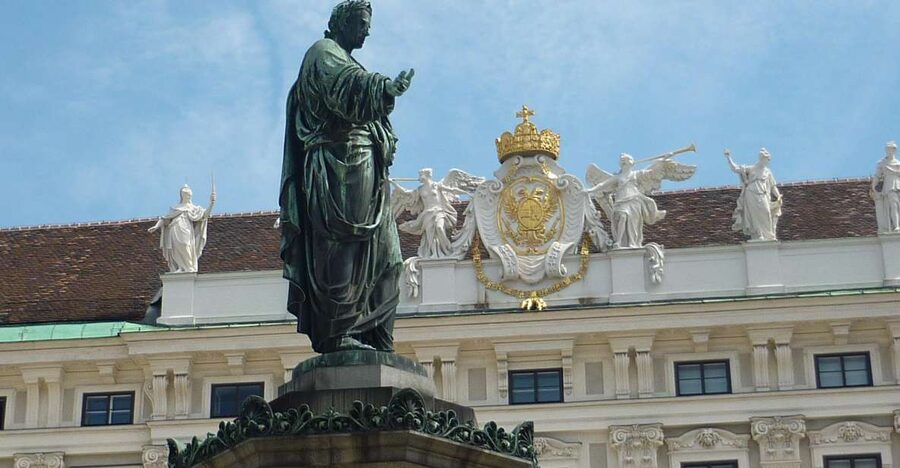
The Hofburg Palace is the heart of the route. This vast complex served as the Habsburg residence and now contains several institutions, courtyards, chapels, museums, and government buildings. From outside, it can seem like a collection of disconnected facades, so a guide helps you understand how the pieces fit together.
The walk includes stories about Empress Elisabeth, better known as Sisi. Her glamorous public image is only part of the story, and the guide can place her life within the strict rules and political pressures of the imperial court. If you want to visit Hofburg interiors, budget separately for admission.
Heldenplatz, or Heroes’ Square, opens up the palace district. The broad space is tied to Austrian military history and national memory. Here you can hear about the figures honored as Austrian heroes and how the square has been used over time.
At Josefsplatz, the focus shifts toward Emperor Joseph II and the institutions around him. The Austrian National Library, the Augustinian Church, and the Spanish Riding School all help explain how the Habsburg court mixed religion, scholarship, administration, and ceremony.
This is the section where a two-hour tour can feel tight. You can see the main facades quickly, but the stories deserve time. A three or four-hour booking is the better choice if you want to stop for questions or add interior visits on your own.
A few more Vienna outings worth weighing up
- Vienna: Private Walking Tour with a Local Guide
★ 4.6 · 1,420 reviews - Vienna: Private Walking Tour with a Guide
★ 4.7 · 962 reviews - Vienna: Wine Tasting Experience in a Private Wine Cellar
★ 4.8 · 413 reviews - Private Day Tour Trip Salzburg Hallstatt and Melk from Vienna
★ 5.0 · 388 reviews
The Albertina, the opera, and Vienna’s stranger stories
The Albertina is known for its enormous graphic art collection, described here as the largest in the world. The walking tour takes you past the museum rather than including admission, but the exterior stop helps you place it within the former palace district.
Nearby, you will see the Monument Against War and Fascism. It adds a sober modern note to an otherwise imperial route. The monument is a useful reminder that Vienna is not only a city of emperors, composers, and pastry shops. Its public spaces also carry the memory of war and political violence.
The State Opera brings another story, this one involving its architect and the tragic circumstances surrounding his suicide. It is a darker detail, but it gives the grand building a human edge. The tour also explores the story of Sachertorte, including where it was invented and what previously occupied the site of Hotel Sacher.
These details are exactly why a guided walk can be more useful than a map. You may pass the opera and the hotel on your own, but you are less likely to connect the building, the dessert, and the people behind them without local context.
Neuer Markt and the Imperial Crypt
Neuer Markt is the setting for one of the tour’s most memorable subjects: the burial customs of the Habsburg family. The Imperial Crypt, beneath the Capuchin Church, contains the tombs of many members of the dynasty.
The unusual tradition involved separate resting places for different parts of the body, including the heart and internal organs. It is a strange, formal practice, and it says a lot about the Habsburg view of dynasty, religion, and ceremonial identity.
Again, the walking tour does not include entrance fees. You can visit the Imperial Crypt separately if you want to see the tombs inside. The guide can give you the background before you decide if an additional visit fits your schedule.
The area also connects with Mozart’s final days. You can learn where he died, adding a personal and melancholy note to the imperial material. This balance between royal ceremony and individual lives keeps the route from becoming a parade of palace names.
Side streets, courtyards, and ordinary Vienna
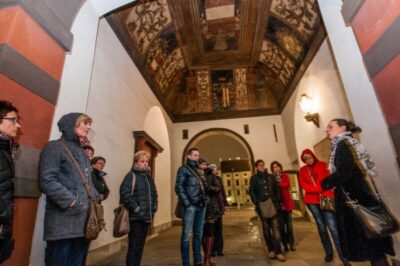
One of the best features of a private route is the chance to move beyond the postcard sights. The walk can include Franziskanerplatz, Blutgasse, the old university district, the Greek quarter, and St. Rupert’s Church.
Franziskanerplatz brings a quieter architectural mood and stories about the importance of the houses around it. Blutgasse offers a look at how people in Vienna lived in earlier periods and how the area functions today. You may see old courtyards and passageways that are easy to miss when you stay on the main streets.
The Greek quarter adds another layer to the city’s past. St. Rupert’s Church is described as Vienna’s oldest church, giving the route a chance to discuss Roman beginnings and the long presence of Jewish communities in the city.
These stops are especially valuable if you have already seen the Hofburg or plan to visit the major museums. They make the city feel less like an imperial stage set and more like a place where people have worked, worshipped, traded, and lived for centuries.
What the guide can add to the experience
This tour depends heavily on the guide, and the strongest feedback centers on Herbert S. His English has been praised as excellent, and his approach combines solid historical information with humor and personal attention.
One especially memorable example involved a historic photograph of a guest’s accommodation. The guide had found that the building had once been a brothel and used the image to give the group a surprising connection to the past. That kind of preparation is unusual and shows how a private tour can become more personal than a standard city walk.
The tone may not suit everyone. One German-language booking described the approach as factual rather than theatrical, despite enjoying the courtyards and information. If you want a guide who performs constantly, this may feel restrained. If you prefer clear explanations and room for conversation, that style may work well.
You can also request an alternative start time when booking. The published details allow tours in English or German, with other languages not available. If language is important for your group, confirm it before paying.
Price, timing, and what you actually receive
The listed price is $270 for a private group of up to 10 people. That works out to $27 per person for a full group, though the per-person price rises sharply for two or three people.
For a family or group of friends, I see good value in the arrangement. You are paying for a private guide, not ten separate admissions, and you can ask questions without holding up strangers. A small group also makes it easier to adjust the emphasis toward architecture, Habsburg history, churches, food stories, or local streets.
The price is less attractive for a solo visitor or couple unless you place a high value on private attention. A shared group tour may cost less, but it will not offer the same control over the pace or route.
The advertised duration is two to four hours, while shorter arrangements may be available when you check times. Two hours should cover the central imperial sights at a steady pace. Choose three or four hours if you want the side streets, more discussion, or time to decide on an interior visit.
Entrance fees, personal expenses, and gratuity are not included. Wear weather-appropriate clothing because the tour runs in all weather. Large bags and luggage are not allowed, and photography inside is prohibited. The route is not considered suitable for people with mobility impairments.
Who should book this Vienna walking tour?
I would recommend it most strongly to a first-time visitor who wants a clear introduction to the central district without joining a large group. It also fits families, colleagues, and friends who want to keep the route private and ask plenty of questions.
History fans will enjoy the range of subjects, from Roman remains and Habsburg burial rituals to Sisi, Joseph II, Mozart, and the city’s Jewish and Greek communities. Architecture fans get a useful mix of Gothic, Baroque, imperial, and modern memorial sites.
You should think twice if your priority is entering every major attraction. This is a guided outdoor walk with optional interior visits, not a package that includes the Hofburg museums, the Albertina, or the Imperial Crypt.
The tour also asks for a reasonable walking pace. Narrow streets, grand boulevards, courtyards, and historic paving can be part of the appeal, but they may be tiring for anyone with limited mobility.
Should you book it?
Book this tour if you want Vienna explained through both its famous buildings and its odd, human details. The private format, flexible focus, and strong praise for Herbert S.’s English and personal style make it a useful choice for a small group.
Choose the longer version if you can. Two hours will give you the imperial center, but three or four hours create room for Blutgasse, Franziskanerplatz, St. Rupert’s Church, the old university district, and the stories that make the city feel lived-in.
Skip it if you need admission to several museums included in one price, or if you cannot manage a substantial walk. For everyone else, this is a sensible way to get oriented, learn the big story, and collect enough local details to make the rest of your Vienna visit more rewarding.
FAQ
How long does the private Vienna walking tour last?
The listed duration is two to four hours. Shorter arrangements may be available, so check the available start times and request an alternative time if needed.
How many people can join the private group?
The tour is private for your group and can include up to 10 people.
Is the tour offered in English?
Yes. The tour is available in English or German.
Where does the tour begin?
The usual meeting point is St. Stephen’s Square, at 1010 Vienna, Stephansplatz 8A, at the corner of Jasomirgottstrasse beside the Lindt Chocolate Store.
Is hotel pickup available?
Hotel pickup is available only when the hotel is in postal zone 1010. For other postal zones, meet at St. Stephen’s Square.
Are entrance fees included?
No. Entrance fees, personal expenses, and gratuity are not included in the tour price.
Does the tour run in bad weather?
Yes. Tours take place in all weather conditions, so bring clothing suited to the forecast.
Just reviewed in Vienna
- World War II History Vienna Old Town Private Walking Tour★ 4.8 · 9 reviews
- Vienna: Winery and Wine Tasting Tour with a Wine Expert★ 5.0 · 5 reviews
- Vienna: Wine Tasting E-Bike Tour★ 4.9 · 46 reviews
- Vienna: Unforgettable Private City Tour★ 5.0 · 7 reviews
- Vienna Urban Art Tour: Explore a different side of Vienna!★ 3.8 · 14 reviews
- Vienna: Concert by the Vienna Baroque Orchestra★ 4.6 · 56 reviews
- Vienna: Sunday Brunch Danube Cruise & Live Music★ 4.2 · 42 reviews
- Vienna Supreme Orchestra at Palais Niederösterreich★ 4.8 · 10 reviews
Walking Tours, compared.
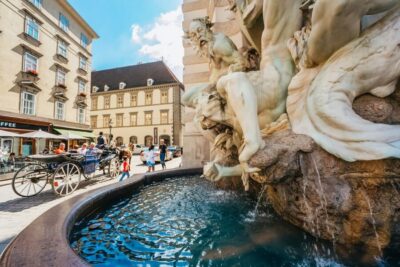
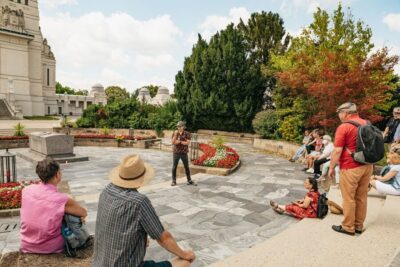
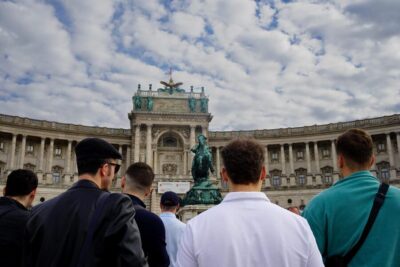
Guided Walking Tour of City Highlights & Hidden Gems
Read our review →
Vienna Historic Center Small Group Walking Tour
Read our review →
Browse the lists this tour appears in