
Reviewed · WALKING TOURS
Vienna Highlight Tour – yue walk
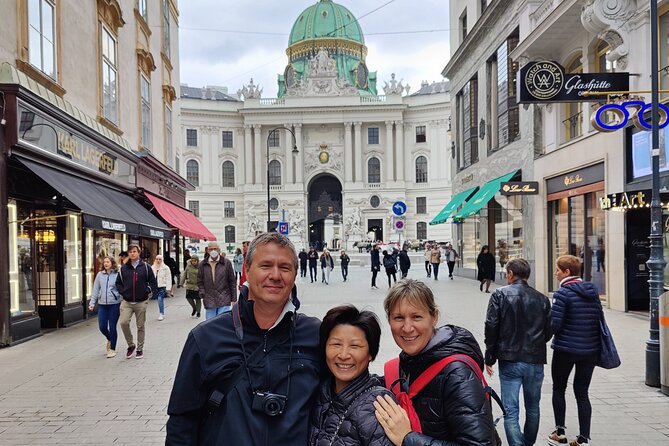
Vienna’s center is packed with imperial buildings, grand squares, and small details that are easy to miss. This two-hour walking tour with Yue Mayr links the Opera, Hofburg, Heldenplatz, Graben, and St. Stephen’s Cathedral into one clear route, giving you a useful first look at the city.
I like the small maximum of six people, which makes it easier to ask questions and keep pace with the guide. I also like the way the tour mixes major sights with human stories, from Sacher Torte and Johann Strauss to Empress Elisabeth and the Lipizzaner horses.
The main drawback is pace. You cover a lot of ground in about two hours, and several stops last only five minutes. This is an orientation walk, not a long museum visit, so you’ll need extra time later if you want to go inside the palaces, museums, or cathedral.
Key points at a glance
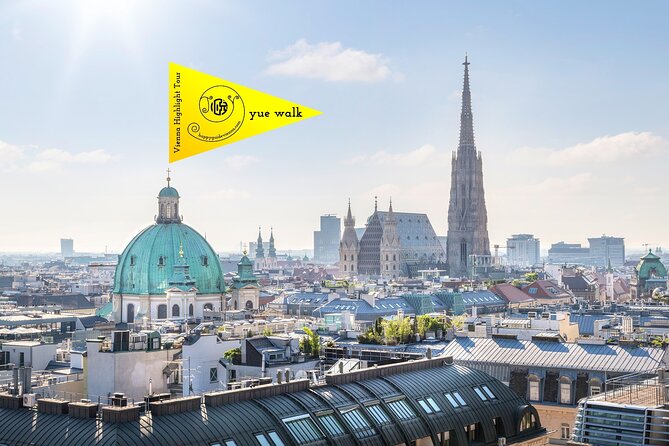
- A compact route through Vienna’s imperial center: You move from the State Opera to St. Stephen’s Cathedral through the city’s main historic quarters.
- A group capped at six people: The format feels more personal than a large coach or flag-following tour.
- Yue Mayr brings stories, not just dates: Her style combines Habsburg history, humor, practical advice, and answers to questions.
- Useful for a first day in Vienna: The route helps you understand where the main sights are before choosing what deserves a longer visit.
- Most admission fees are not included: The tour focuses on exterior viewing, with a brief interior visit to Augustinian Church.
- Good value for a short visit, with one condition: At $106.20 per person, it makes the most sense if you value a very small group and focused guidance.
Starting beneath the Vienna State Opera
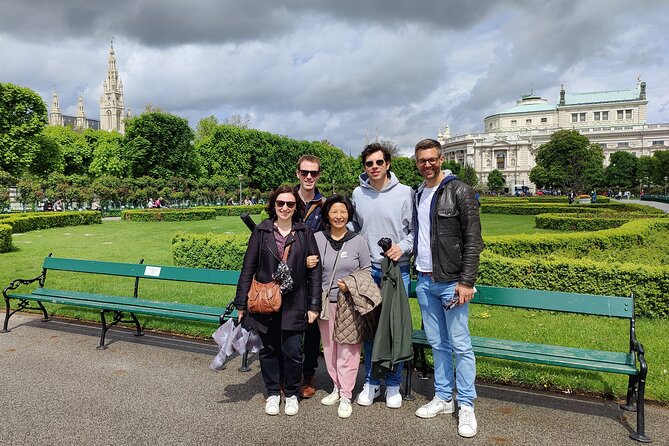
The tour begins at 10 a.m. at Herbert-von-Karajan-Platz, beside the Vienna State Opera. This is a sensible meeting point because the Opera sits at the edge of Vienna’s historic center, close to the Hofburg, Kärntner Straße, and the Ringstrasse.
The Opera’s neo-Renaissance building dates from 1869. You’ll hear about its place in Vienna’s musical life, then look beyond the main facade toward the Palais Todesco and the Hotel Sacher. Palais Todesco carries a connection to Johann Strauss, who is said to have stolen his first wife there. The Sacher Hotel gives the stop a more edible angle, thanks to its famous Sacher Torte.
These details help turn a row of grand buildings into a street with personalities and gossip. You will not enter the Opera or Hotel Sacher as part of the tour, so treat this as an introduction and a chance to mark places for later.
More walking tours in Vienna:
- Vienna: Guided Walking Tour of City Center Highlights
★ 4.7 · 4,989 reviews - Vienna: Vienna Central Cemetery Guided Walking Tour
★ 4.8 · 3,307 reviews - Vienna: Guided Walking Tour of City Highlights & Hidden Gems
★ 4.9 · 2,180 reviews
War, memory, and Vienna’s harder stories
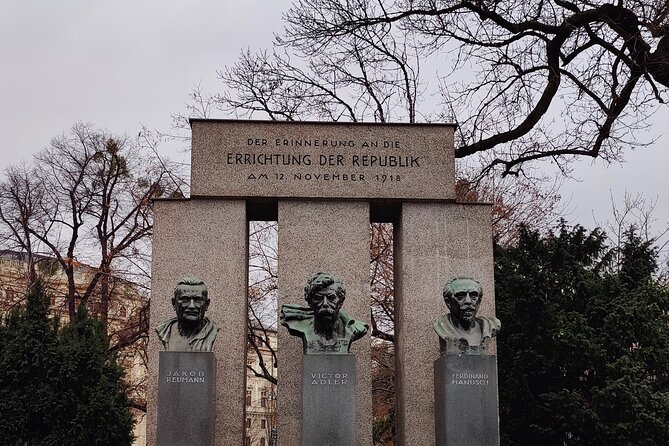
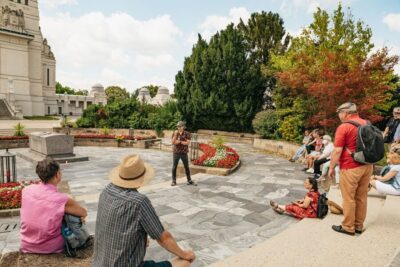
The next stop is the Memorial Against War and Fascism. This is a useful pause in a route otherwise filled with palaces and imperial ceremony. The monument includes a Jewish statue, the Gate of Hell, and an Independence Declaration Stone.
The short stop matters because Vienna’s story is not only about emperors, music, and polished facades. The memorial brings war, fascism, and Jewish experience into the center of the walk. Yue’s broader European history helps connect this site with the political changes that shaped Austria.
You’ll have about five minutes here. That is enough to see the main elements and hear their purpose, but not enough for a long, quiet reading of every detail. If memorials are important to you, return later on your own.
Lobkowitzplatz and the city’s artistic side
Lobkowitzplatz gathers several different layers of Vienna in one small area. The route points out the Albertina Palace and Museum, the tower of Augustinian Church, Lobkowitz Palace, and an Art Deco building linked to architect Otto Wagner.
This is one of the more useful stops for understanding Vienna’s visual mix. Baroque palace design, church architecture, museum culture, and early modern city design sit close together. The buildings are not presented as isolated sights. Instead, you get a sense of how Vienna changed over time while keeping its old center intact.
The Albertina is especially important to note for later. It is not an included admission stop, so the tour gives you the location and context rather than a museum visit. If you plan to see its art collection, save a separate block of time.
Josefsplatz and the Habsburg court
Josefsplatz is one of the tour’s strongest history stops. Here you see Augustinian Church, the statue of Emperor Joseph II, the Court Library, Pallavicini Palace, and the Spanish Riding School.
The itinerary includes a visit inside Augustinian Church, although the stop remains brief at about 15 minutes. That extra interior look gives the route a little more depth than a walk made entirely of exterior photo stops.
This square also helps explain how the Habsburg court worked. The buildings around it were not random grand residences. They supported worship, scholarship, royal ceremony, and court life. Yue’s strength, based on the tour’s format and feedback, is explaining how places relate to one another instead of treating each building as a separate fact.
The Spanish Riding School is nearby, but a performance or stable visit is not part of this walk. You may hear about the Lipizzaner horses and see the setting, but do not book this tour expecting a horse show.
A different sort of day out in Vienna:
- Vienna: Vivaldi’s Four Seasons Concert in Karlskirche
★ 4.7 · 14,951 reviews - Vienna: Skip-the-cashier-desk-line Giant Ferris Wheel Ride
★ 4.5 · 7,859 reviews - Vienna: Schönbrunn Palace & Gardens Skip-the-Line Tour
★ 4.7 · 7,739 reviews - Vienna: Light of Creation Votive Church Immersive Light Show
★ 4.8 · 6,779 reviews
Stallburg and the Lipizzaner connection
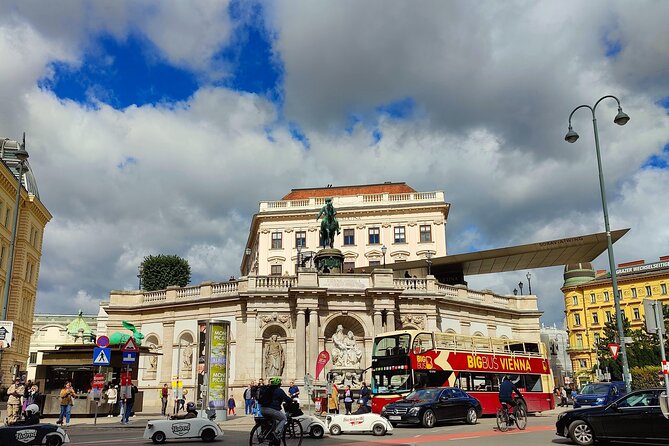
At Stallburg, the focus shifts to the Lipizzaner horses. This short stop is best understood as a glimpse into Vienna’s court traditions rather than a full equestrian experience.
The listing does not include admission here. That distinction matters. You may see the building and learn why the horses are tied to the imperial court, but any separate visit or performance would require its own ticket and time.
For families, this can be a welcome change from palace facades and political history. Children may connect more readily with the horses than with another royal wing. The stop is only about five minutes, so keep your expectations modest.
Court music, the Treasury, and the Hofburg complex
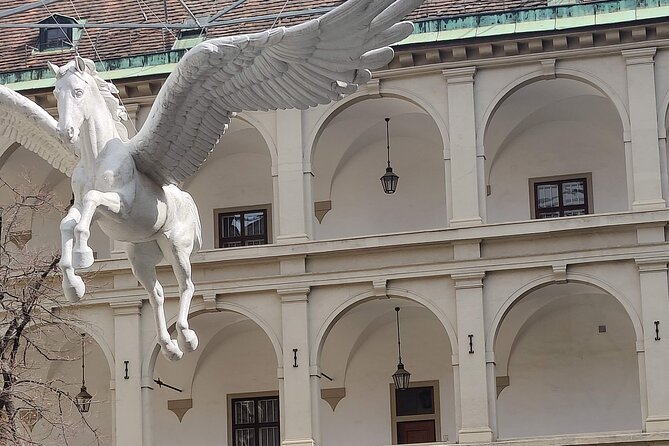
The Wiener Hofmusikkapelle stop brings together the Court Music Chapel, the Imperial Treasury Museum, and a Renaissance Gate. It is another compact look at the institutions that supported imperial life.
Vienna’s court was not simply a residence. Music, religion, ceremony, military power, and art all worked together. A short explanation here can make the Hofburg feel less like one huge palace and more like a working center of government and culture.
Admission to the Treasury and Court Music Chapel is not included. This is a recurring theme throughout the tour: you get a guided map of the center, then decide which interiors deserve your own time and money.
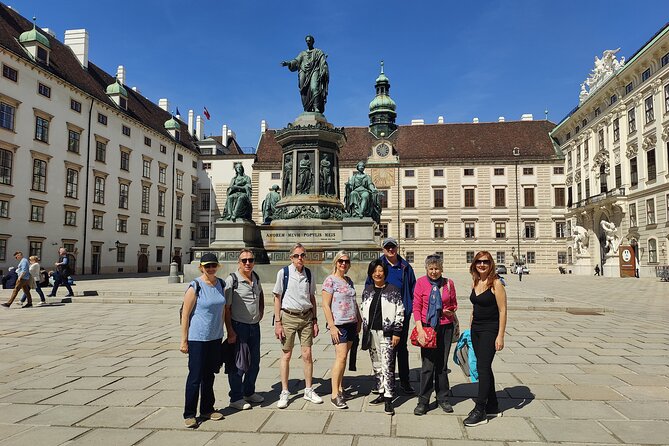
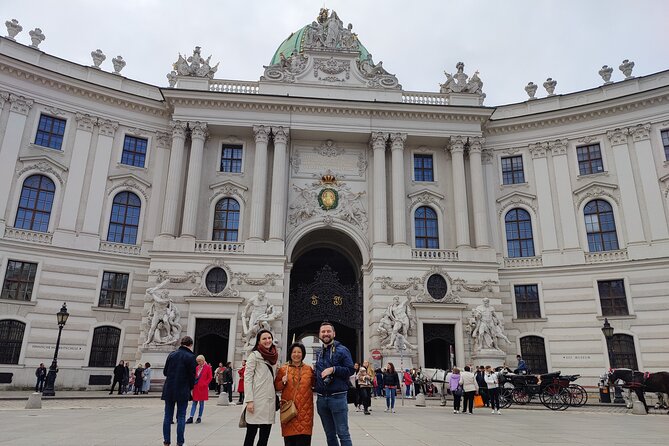
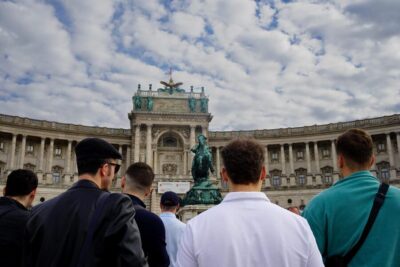
The Hofburg itself follows, with the Inner Court, the statue of Franz II and I, the Amalien Wing, Leopoldinischer Wing, and Reichskanzlei Wing. The names can sound like a blur, but seeing the wings in sequence gives you a practical layout of the complex.
This is where a guide earns her keep. Without context, the Hofburg can feel like an endless set of similar cream-colored buildings. With a clear explanation, you can begin to see which sections served different rulers and purposes.
Heldenplatz and Vienna’s public stage
Heldenplatz opens the Hofburg complex toward the Ringstrasse. The square includes statues of Karl and Prince Eugene, along with views toward the National Library, the OSCE, the Burgtor, City Hall, and Parliament.
This is one of the best places on the route for big-picture orientation. You can connect the old court to the later civic city, then understand how Vienna’s public buildings spread outward from the imperial core.
The stop lasts about 10 minutes. That allows time for photographs and a concise explanation, but the number of buildings mentioned means you will not get a full tour of each one. I would use this stop to decide which buildings you want to revisit later, rather than trying to absorb every name at once.
Maria Theresa Square and the power of one empress
Maria Theresa Square is built around the imposing statue of Empress Maria Theresa. The square is framed by the museums of art and natural history, which give the area an unusually grand sense of balance.
The historical focus here is Maria Theresa’s power and her effect on the Habsburg state. She was one of the most important female rulers in European history, and the tour uses her story to show how one person’s decisions could affect government, family alliances, education, and imperial policy.
This stop should appeal to anyone who prefers people and personalities to lists of dates. The buildings provide the setting, but the explanation of Maria Theresa gives the square its meaning.
Sisi Museum and the personal side of royalty
The Sisi Museum introduces Empress Elisabeth, one of the most recognizable figures of the Habsburg era. Her public image has become an Austrian symbol, but her private personality and difficult relationship with court life make her story more complicated than a pretty portrait.
The tour gives about 10 minutes to the subject. That is enough for an introduction to her character and fate, not a full museum visit. Admission is not included, so you can return later if you want to explore the exhibits in detail.
I like this part of the route because it balances Maria Theresa’s political strength with Elisabeth’s more personal story. Together, the two women show different ways female identity and power operated within the Habsburg family.
Michaelerplatz and the old city beneath your feet
Michaelerplatz is one of Vienna’s most layered spaces. The stop includes Michaelerkirche, the Michaeler Gate, the Loos House, and archaeological excavations.
Here you can see the tension between imperial decoration and modern architecture. The Loos House is notably spare compared with the ornate buildings around it, while the excavations reveal that Vienna’s story reaches below the present street level.
The stop takes about five minutes. That is enough to point out the contrast and explain the square’s importance. It is not enough to study the excavations in detail, so take mental notes and come back if this part of the city interests you.
Kohlmarkt, Demel, and elegant city streets
Kohlmarkt leads into Vienna’s luxury shopping district. The famous Café Demel is the main named stop, but the larger point is the street itself, with splendid buildings and a long connection to the city’s refined public life.
This is a good moment to shift from rulers and wars to everyday pleasures. Demel gives you another connection to Vienna’s cake culture, while Kohlmarkt offers a practical sense of where to browse after the tour.
The tour does not include a café stop or tasting. You’ll want to return on your own if you plan to try Demel’s pastries. Since the walking route ends near St. Stephen’s Cathedral, you can also use this area as a starting point for further exploring.
Graben’s plague column and the final walk to St. Stephen’s
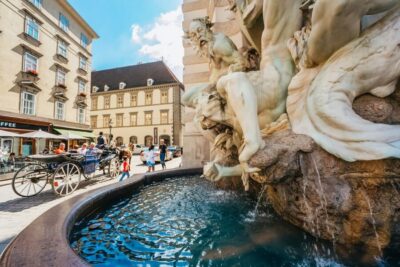
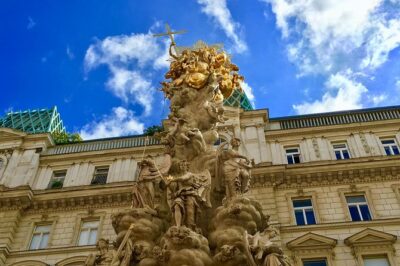
At the Colonna della Peste, or Plague Column, the route returns to public memory and religious art. The monument commemorates the plague and anchors the Graben, one of Vienna’s best-known central streets.
Nearby, the tour points out Grabenhof and Ankerhaus. These buildings help fill in the street scene, while the surrounding luxury shops show how the historic center functions today.
The final major stop is St. Stephen’s Cathedral. The cathedral’s building history runs from the 12th through the 16th century, and its tallest tower remains a defining feature of central Vienna. The stop is listed as free, but it lasts only about five minutes, so the focus is on seeing the exterior and understanding its place in the city.
The walk ends at the Virgilkapelle area by Stephansplatz U-Bahn station, near the cathedral and looking toward its highest south tower. That is a useful finish. You are left in one of Vienna’s most central areas, with public transport close by and many options for continuing your day.
What $106.20 buys you
At $106.20 per person, this is not a bargain-priced city stroll. The value depends on what you want from a guide.
You are paying for a licensed guide, a very small group capped at six, and a route that covers a large part of Vienna’s central historic district in about two hours. If Yue is guiding only your party, the experience can feel close to a private walk. The maximum group size still means you should not assume complete privacy unless your booking confirms it.
The price makes more sense for a first visit, a short stay, or a day when you want the city explained rather than simply photographed. It makes less sense if you mainly want to enter museums and palaces, since most admission fees are separate.
The strongest value is the time saved. You get a working map of the center, a list of places to revisit, and historical connections that are difficult to pick up while walking alone. Several people also valued Yue’s restaurant, shopping, and sightseeing suggestions after the formal route ended.
Yue’s guiding style and who will enjoy it
Yue Mayr is repeatedly described as warm, funny, energetic, and easy to question. Her style appears to lean toward stories and connections rather than a dry roll call of dates. She also takes photographs for the group and offers practical ideas for the rest of your Vienna visit.
That personal approach suits families, first-time visitors, and anyone who likes to ask questions. One particularly useful strength is her ability to explain how buildings and events fit together, instead of giving you disconnected facts.
The format also works well for people with limited time. You see the major center sights in a short period and can then choose between the Albertina, Sisi Museum, Imperial Treasury, Court Music Chapel, or other places for a longer visit.
There is one clear caution. One unhappy booking involved a last-minute request for German while other guests were booked in English. The advertised language is English, so you should book this tour expecting English commentary. If you need another language, confirm that before booking.
Practical details before you reserve
The tour starts at 10 a.m. and runs for approximately two hours. It is offered in English, uses a mobile ticket, and operates near public transportation. Service animals are allowed, and most people can participate.
Wear shoes suitable for steady city walking. The route includes many short stops and covers the historic center, with limited time to linger at each sight. If you want photographs, take them promptly and listen for the next meeting point.
Only a licensed tour guide is included. Admission is not included for the Vienna State Opera, Stallburg, the Imperial Treasury, Court Music Chapel, or Sisi Museum. Augustinian Church is listed as an interior visit, while most other stops are exterior views or free public spaces.
You receive confirmation when booking. Free cancellation is available up to 24 hours before the start time. Changes or cancellations within 24 hours are not refunded, and poor weather may lead to a different date or a full refund.
Should you book the Vienna Highlight Tour?
Book it if you want a small, guided introduction to central Vienna and prefer stories, orientation, and conversation over long indoor visits. It is especially useful on your first day, when you want to understand the city’s layout before choosing which museums and palaces deserve your afternoon.
Skip it if you want a slow architectural study, a full tour of the Hofburg, or included access to several museums. At $106.20, the cost is easiest to justify when you value Yue’s personal guidance and the six-person limit.
For most first-time visitors with only a few days in Vienna, this is a practical way to get your bearings fast, hear the Habsburg story in human terms, and finish beside St. Stephen’s Cathedral with a clear plan for what to see next.
FAQ
How long is the Vienna Highlight Tour?
The walking tour lasts approximately two hours.
What time does the tour start?
The scheduled start time is 10 a.m.
Where does the tour begin?
It begins at Herbert-von-Karajan-Platz beside the Vienna State Opera in Vienna’s 1010 district.
Where does the tour end?
It ends at the Wien Museum Virgilkapelle area beside Stephansplatz U-Bahn station, near St. Stephen’s Cathedral.
What language is the tour offered in?
The tour is offered in English.
How many people can join the tour?
The maximum group size is six travelers.
Are admission tickets included?
Only the licensed tour guide is included. Admission is not included for the Vienna State Opera, Stallburg, the Imperial Treasury, Court Music Chapel, or Sisi Museum. The Augustinian Church visit and several public exterior stops are listed as free.
Can I cancel for a full refund?
Yes. You can cancel at least 24 hours before the start time for a full refund. Cancellations or changes made less than 24 hours before the tour are not refunded, and poor weather may result in a different date or a full refund.
Just reviewed in Vienna
- World War II History Vienna Old Town Private Walking Tour★ 4.8 · 9 reviews
- Vienna: Winery and Wine Tasting Tour with a Wine Expert★ 5.0 · 5 reviews
- Vienna: Wine Tasting E-Bike Tour★ 4.9 · 46 reviews
- Vienna: Unforgettable Private City Tour★ 5.0 · 7 reviews
- Vienna Urban Art Tour: Explore a different side of Vienna!★ 3.8 · 14 reviews
- Vienna: Concert by the Vienna Baroque Orchestra★ 4.6 · 56 reviews
- Vienna: Sunday Brunch Danube Cruise & Live Music★ 4.2 · 42 reviews
- Vienna Supreme Orchestra at Palais Niederösterreich★ 4.8 · 10 reviews
Walking Tours, compared.
Guided Walking Tour of City Highlights & Hidden Gems
Read our review →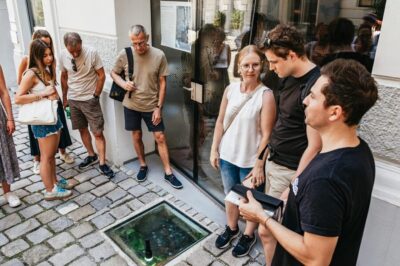
Vienna Historic Center Small Group Walking Tour
Read our review →
Browse the lists this tour appears in