
Reviewed · VIENNA CLASSICAL CONCERTS
Vienna Private Walking Tour including State Opera
Vienna’s story comes into focus on foot, from Roman Vindobona and medieval walls to the Habsburg court, grand opera, and the birth of modern Austria. This private three-hour route links the State Opera with Stephansplatz, the Hofburg, Michaelerkirche, Graben, and St. Peter’s Church.
I like the focused route and the private format, which lets your guide adjust the pace for your group. I also like the mix of music, art, politics, and archaeology rather than a tour devoted only to palaces. The big caution is the opera visit: the tour title suggests more than the experience may deliver, and some arrangements include only the lobby or require an additional fee.
Key points to know before booking
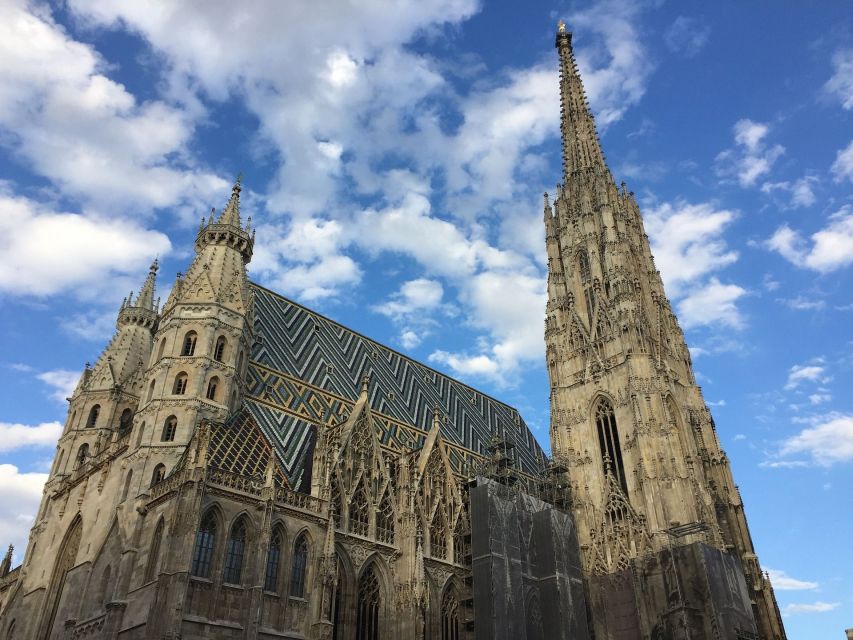
- The route begins at Stephansplatz 8A, a central meeting point beside Vienna’s cathedral.
- The State Opera is the headline stop, but confirm exactly what your booking includes before you pay.
- The three-hour walk covers Roman, medieval, Habsburg, imperial, and modern Austrian history.
- You’ll see major landmarks from the outside, including the Hofburg and the Art History Museum.
- English and German tours are available, with a private group of up to 15 people.
- Comfortable shoes matter, and the tour is not suitable for people with mobility impairments.
Starting at Stephansplatz and the State Opera
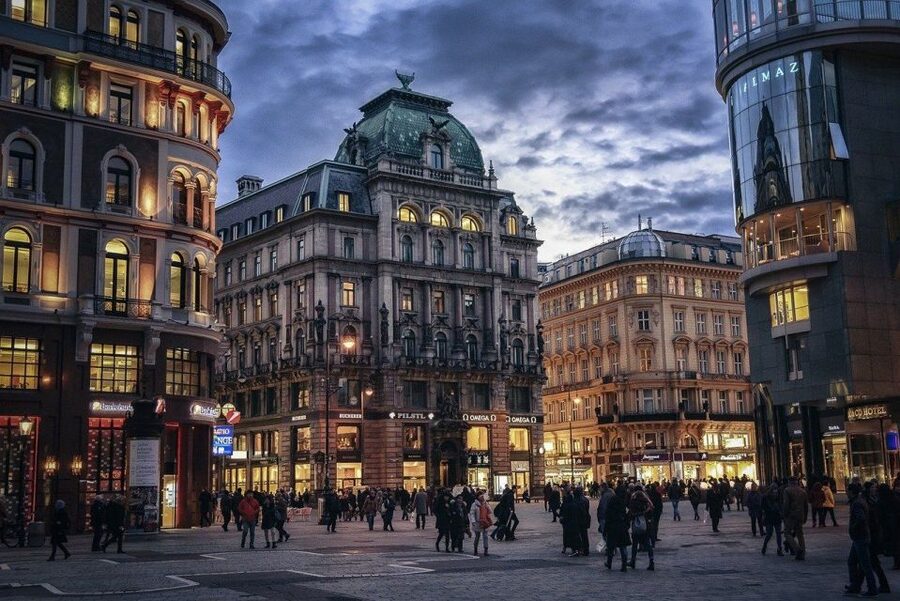
The tour begins at Stephansplatz 8A, in Vienna’s 1010 district. That puts you in the city center, close to Stephansdom and within easy reach of the State Opera. It is a sensible place to start because Vienna’s central streets are not a collection of isolated sights. They form a connected story, with the cathedral, imperial court, shopping streets, churches, and opera house all within walking distance.
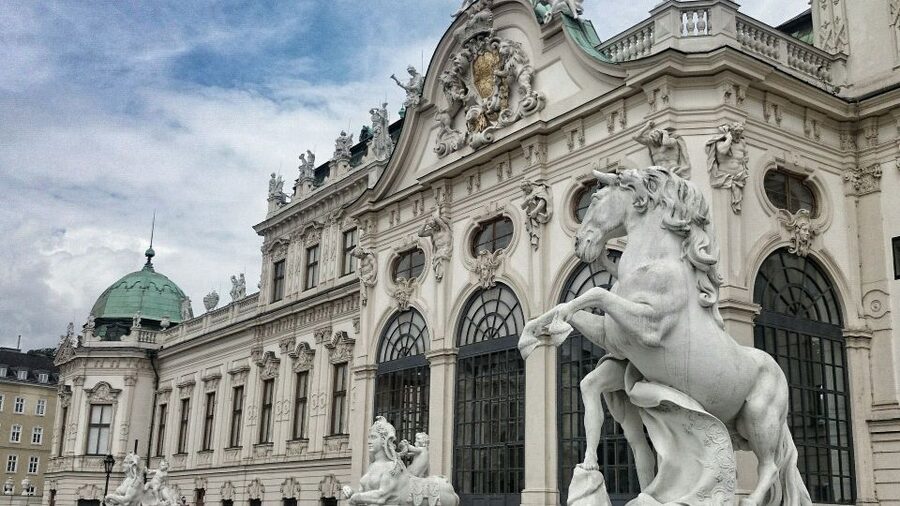
The State Opera is the natural opening subject. Built in the 1860s, it first operated as the Vienna Court Opera. Its name changed in 1920, as the Habsburg monarchy gave way to the early Austrian Republic. That small change in wording reflects a major political shift: the building remained, but the world around it had changed.
You’ll hear about the opera’s connection to composers and conductors such as Mozart, Haydn, Beethoven, Schubert, Johann Strauss, Brahms, Mahler, Herbert von Karajan, and Claudio Abbado. The house is associated with works including La Traviata, La Clemenza di Tito, and Verdi’s Don Carlo.
Here is the point where you should ask a clear question before booking: Does the price include a proper State Opera tour, and is there an additional entrance charge? The published details say the State Opera is included, but the fee section says entrance fees are not included. One account also describes the opera portion as a lobby visit only, while another says a fuller opera tour had to be arranged and paid for separately.
That is not a minor technicality. If you are booking this mainly to see the opera house interior, confirm the exact arrangement in writing. If your main goal is a broad introduction to Vienna, the opera stop can still work as an important historical and musical starting point.
More classical concerts in Vienna:
- Vienna: Vivaldi’s Four Seasons Concert in Karlskirche
★ 4.7 · 14,951 reviews - Vienna: Classical Concert in the World-Famous Musikverein
★ 4.6 · 6,673 reviews - Vienna: Mozart Concert at the Golden Hall
★ 4.6 · 3,986 reviews
Mozart, imperial facades, and the Hofburg
From the opera area, the route brings you toward the Mozart Monument and the Hofburg complex. You’ll also see the impressive facades of the Art History Museum. These buildings help explain Vienna’s old power structure: art, ceremony, religion, and government were gathered around the imperial center.
The Hofburg served as the Habsburg seat for centuries. It is not a single palace in the tidy sense. It is a large collection of courtyards, wings, offices, churches, and ceremonial spaces shaped over time. A walking guide can help you read the complex from the street, pointing out how the architecture expressed imperial authority.
You should expect an exterior-focused visit at several of these stops. The itinerary promises views of the buildings and historical explanation, not entry into every museum or palace room. That keeps the walk moving, but it also means you should not book this as a substitute for the Hofburg’s interior museums.
The Art History Museum adds another layer. Vienna’s imperial collections were not simply decoration. They helped present the Habsburgs as patrons of European culture. The building’s grand exterior gives you a quick sense of that ambition, even if you do not go inside.
Michaelerplatz and Vienna’s older layers
The Michaeler Gate, or Michaeler Tor, leads toward the Hofburg and the Church of St. Michael. Michaelerkirche served for many years as the official church of the emperors. The stop gives your guide a chance to connect court life with religious ceremony, two parts of Habsburg rule that were closely tied together.
Michaelerplatz is also one of the best places on this route for seeing Vienna’s past in layers. Roman ruins appear in the center of the square, while medieval walls and remnants of the old Burg Theatre point to later periods. You are not looking at a single preserved age. You are seeing traces of a city repeatedly rebuilt around its older foundations.
The Roman connection reaches back to Vindobona, the settlement that occupied this part of the Danube frontier. The tour also links the city’s early story with the medieval period and the Holy Roman Empire. That broad sweep is useful if you are new to Austrian history, since Vienna’s role changed from Roman frontier settlement to medieval city, imperial residence, and modern capital.
A guide’s skill matters here. The ruins can look modest beside the Hofburg’s grand facades. The value comes from understanding what they represent and where they fit in the city’s growth.
Graben, St. Peter’s, and the road to Stephansdom
The route continues along Graben, one of Vienna’s best-known central streets. Its name and early use reach back to the Roman period, when the area was connected with the city’s defensive ditch. The route description also links Graben with Richard the Lionheart’s entry into Vienna, a reminder that medieval politics could bring famous figures through the city’s gates.
Today, Graben is much more polished than its early purpose suggests. The contrast is part of the appeal. A defensive feature became an urban street, and the street became one of the city center’s major public spaces.
You’ll also see Peterskirche, or St. Peter’s Church. The church is associated with the fourth century, giving the route another early Christian marker before it reaches the cathedral. The supplied details do not promise entry into St. Peter’s, so treat this as an exterior sight unless your guide says otherwise.
The walk ends at Stephansplatz and Stephansdom, Vienna’s cathedral. Stephansdom is a Roman-Gothic masterpiece and one of the tallest churches in the world. Its scale gives the tour a strong finish, especially after the smaller Roman remains and medieval fragments encountered along the way.
The cathedral also provides a useful summary of Vienna itself. Roman foundations, medieval Christianity, Habsburg ceremony, imperial music, war, and the modern republic all meet in the same compact center. You can see why a walking tour works well here: the important changes are often only a few minutes apart.
More walking tours in Vienna:
- Vienna: Guided Walking Tour of City Center Highlights
★ 4.7 · 4,989 reviews - Vienna: Vienna Central Cemetery Guided Walking Tour
★ 4.8 · 3,307 reviews - Vienna: Guided Walking Tour of City Highlights & Hidden Gems
★ 4.9 · 2,180 reviews - Vienna: Viennese Underworld Guided Walking Tour
★ 4.7 · 1,865 reviews
From the Habsburg Empire to modern Austria
The tour is not limited to architecture. It covers the Holy Roman Empire, the Austro-Hungarian Empire, the World Wars, and the formation of the Second Republic. That is a lot for three hours, so you should expect a brisk overview rather than a specialist seminar.
Still, this wider frame gives the buildings more meaning. The Habsburg story was not only about palaces and uniforms. It involved a long political system that shaped Central Europe, and Vienna was its key stage for centuries. The later transition through war, the end of the monarchy, and the creation of the Austrian Republic explains why the State Opera changed its official name in 1920.
The modern sections require care and accuracy. The route includes the Jewish quarter and wartime history, subjects that deserve plain language and proper context. One account describes deeply troubling comments by a guide about Jewish victims of the Holocaust and modern political issues. I would treat that as a serious warning about guide quality and ask for the assigned guide’s approach to sensitive history before booking.
A tour about Vienna’s past should clearly explain systematic murder during the Holocaust, not soften it with vague wording. It should also keep present-day political opinions separate from the historical facts you paid to learn. If the guide turns the walk into a personal political speech, the experience loses its value.
What the music theme adds
Vienna’s music story is one of the best reasons to choose this route. The city’s connection to Mozart, Haydn, Beethoven, Schubert, the Strauss family, Brahms, and Mahler is not limited to concert halls. Music formed part of court life, public identity, and Vienna’s image around the world.
The opera stop gives that story a physical anchor. You can connect the building’s nineteenth-century origins with its later role in the republic. You can also place famous conductors such as Mahler, Karajan, and Abbado within the institution’s long history.
Do not expect a concert. This is a walking tour with an opera visit, not an evening performance or a behind-the-scenes production tour. If you want a full interior visit, ask about the route, duration, and fee before reserving.
For many people, the music material will be most useful as a framework. You may not remember every name, but you’ll better understand why Vienna treats classical music as part of its civic identity rather than as a niche interest.
Private group value and pace
The price is $323 per group of up to 15 people. For a full group, that works out to about $22 per person before any separate entrance fee. For two people, the same price becomes roughly $162 each, so the value depends heavily on group size.
A private tour can be worthwhile if you have several people who want the same pace and language. You are not tied to a large public group, and you can ask questions about the subjects that matter most to you. The advertised languages are English and German.
The three-hour length is long enough to connect the major stops without taking up your entire day. It is also short enough that the guide must keep moving. One strong account describes the guide as very competent, with a lively three hours and time left to look around. That is the sort of pacing you want here: enough explanation to make the buildings meaningful, but not so much detail that every square becomes a lecture.
The group limit of 15 is worth noting. Fifteen people is still a fairly large private party for narrow streets and busy public spaces. If your group is smaller, the experience should feel easier to manage, but the advertised rate does not become cheaper just because fewer people attend.
Wear comfortable shoes. The tour is a walking route through central Vienna, and it is specifically not suitable for people with mobility impairments. The supplied details do not promise transport, seating, or step-free access.
What I like, and what gives me pause
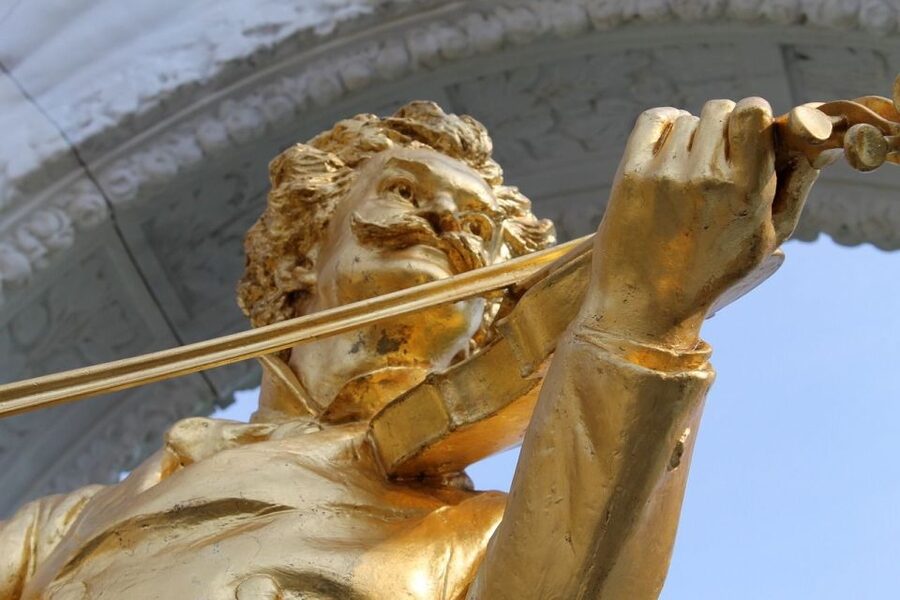
I like the route’s range. In one walk, you get Roman remains, medieval defenses, Habsburg power, major churches, fine arts, classical music, wartime history, and modern Austria. That is a useful first look at Vienna, especially if you have only a short stay.
I also like the private format and the fact that the tour is not limited to the most polished imperial sights. The Roman ruins at Michaelerplatz and the older story of Graben give you a better sense of how Vienna developed over time.
The weak point is the unclear State Opera promise. A title that emphasizes the opera can create the expectation of a meaningful interior tour. The available information indicates that some arrangements may include only the lobby, while a fuller visit may cost extra. Confirm this before you commit.
Guide quality is the other important consideration. A German-language account praises the guide’s competence and the easy pace, while another account names Franziska Pfisker and describes political and insensitive comments. The published score is 3.2 out of 5 from seven ratings, which suggests an uneven experience rather than a dependable standard.
Who should book this Vienna walk?
I would consider it if you want a private introduction to central Vienna and care about the connections between architecture, monarchy, music, and politics. It suits first-time visitors who want the main historic center explained in one sitting, especially those traveling with family or a small group.
It is less suitable if you want extensive time inside museums, a full palace visit, or a guaranteed behind-the-scenes opera experience. You should also think twice if mobility is limited or if you prefer a tour with a firmly defined interior itinerary.
FAQ
Where does the tour meet?
The meeting point is Stephansplatz 8A, 1010 Vienna, Austria.
How long does the tour last?
The tour lasts three hours.
What languages are available?
The tour is offered in English and German.
Is this a private tour?
Yes. It is arranged for a private group of up to 15 people.
Is admission to the State Opera included?
The activity information says the State Opera is included, but also says entrance fees are not included. Details from the experience indicate that the visit may be limited to the lobby and that a fuller opera tour may require a separate booking and payment. Confirm the exact arrangement before booking.
Is the tour suitable for people with mobility impairments?
No. The activity is listed as unsuitable for people with mobility impairments. Comfortable shoes are recommended.
Should you book it?
Book this tour if you want a compact, private walk through Vienna’s imperial center and you value the history behind the buildings as much as the buildings themselves. The route is strong, the three-hour format is practical, and the full-group price can be fair.
Before paying, ask two direct questions: who will guide the tour, and exactly what State Opera access is included. If the answers are clear and your group wants a broad introduction to Vienna, this can be a useful first-day orientation. If the opera interior is your main reason for booking, choose only after that detail is confirmed.
Just reviewed in Vienna
- World War II History Vienna Old Town Private Walking Tour★ 4.8 · 9 reviews
- Vienna: Wine Tasting E-Bike Tour★ 4.9 · 46 reviews
- Vienna: Winery and Wine Tasting Tour with a Wine Expert★ 5.0 · 5 reviews
- Vienna: Unforgettable Private City Tour★ 5.0 · 7 reviews
- Vienna Urban Art Tour: Explore a different side of Vienna!★ 3.8 · 14 reviews
- Vienna: Concert by the Vienna Baroque Orchestra★ 4.6 · 56 reviews
- Vienna: Sunday Brunch Danube Cruise & Live Music★ 4.2 · 42 reviews
- Vienna Supreme Orchestra at Palais Niederösterreich★ 4.8 · 10 reviews
Vienna Classical Concerts, compared.
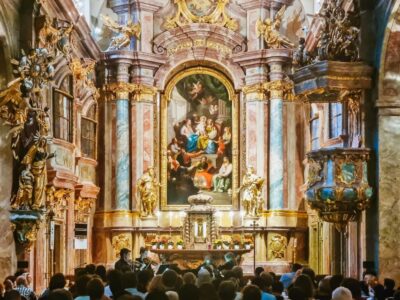
Classical Concert in St. Anne’s Church (Annakirche)
Read our review →
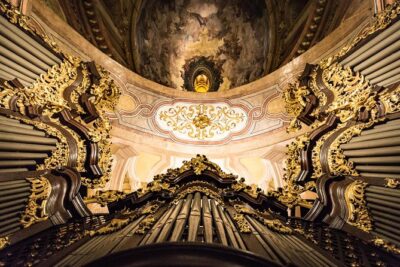
Vienna Classical Concert at St. Peter’s Church
Read our review →Classical Concert in St. Anne’s Church (Annakirche)
Read our review →Browse the lists this tour appears in