
Reviewed · HOFBURG PALACE AND SISI MUSEUM TICKETS
Vienna: Imperial Treasury in the Hofburg Palace
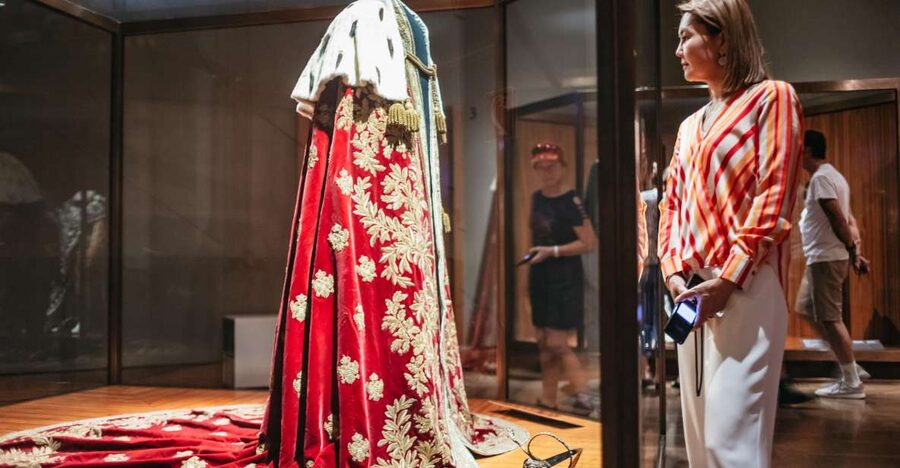
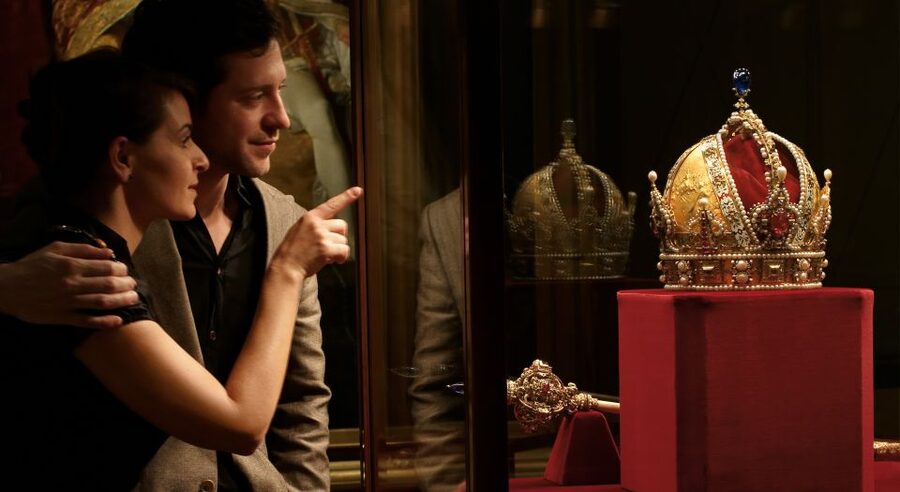
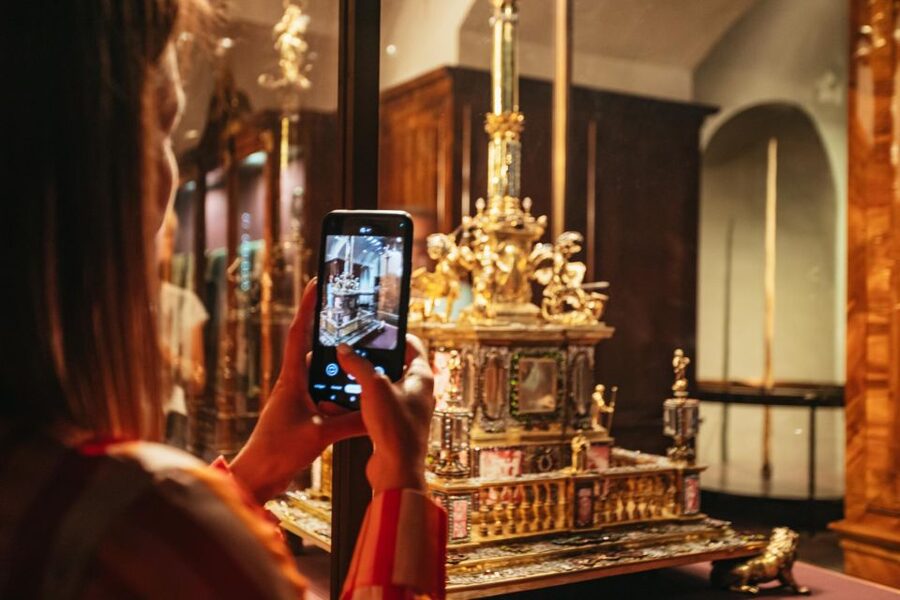
The most arresting objects here are not paintings or statues, but the symbols of power that once traveled with Europe’s ruling family. In the Hofburg’s Swiss Wing, you’ll see the Austrian Imperial Crown, Holy Roman Empire regalia, enormous jewels, sacred relics, and objects linked to centuries of Habsburg rule.
I like the remarkable variety, from the Order of the Golden Fleece to Empress Elisabeth’s jewelry and the famous agate bowl called the Holy Grail. I also like the manageable size: you can see the main collection in about an hour, though careful reading and an audio guide can stretch the visit to two hours or more.
The main drawback is practical rather than historical. The ticket requires a printed voucher, and several people have had to exchange a digital booking code at the counter. The displays can also feel confusing without an audio guide or human guide.
Key points to know before you go
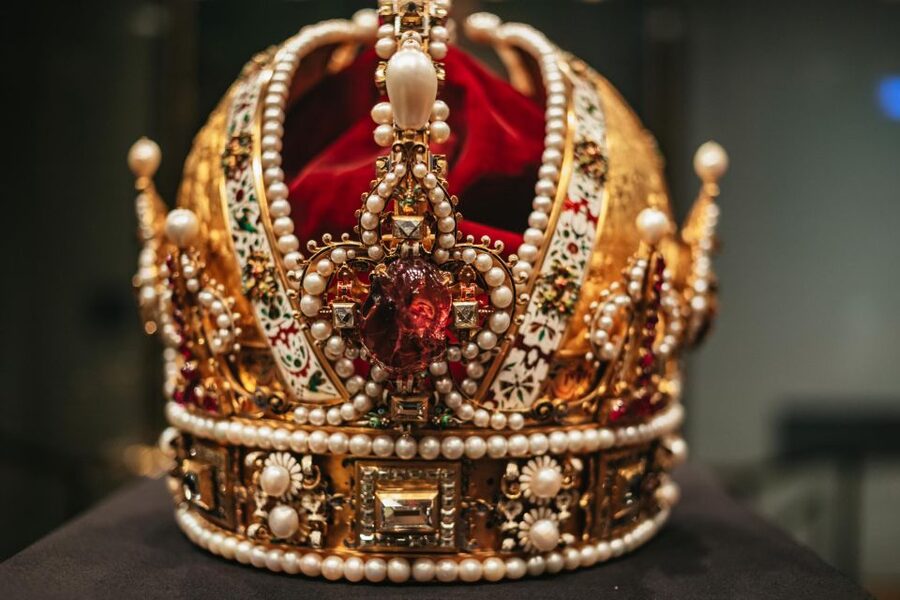
- The Imperial Crown is the star: See the crown jewels of the Holy Roman Empire and the Austrian Imperial Crown in their original setting.
- The collection goes beyond royal jewelry: Expect religious relics, ceremonial clothing, keys, tabards, Burgundy treasures, and dynastic objects.
- Some objects are legendary by tradition: The Holy Lance, the agate bowl known as the Holy Grail, and the horn of a unicorn all invite questions about belief and power.
- Plan on one to two hours: A quick visit takes about an hour, while close reading and audio commentary can take much longer.
- Guidance makes a difference: An audio guide adds useful context, and guides such as Petee and Alex have provided strong explanations of the Habsburg family and its objects.
- The ticket is not quite skip-the-line: Bring a printed voucher and allow time to exchange it for an admission ticket.
Entering the Swiss Wing of the Hofburg
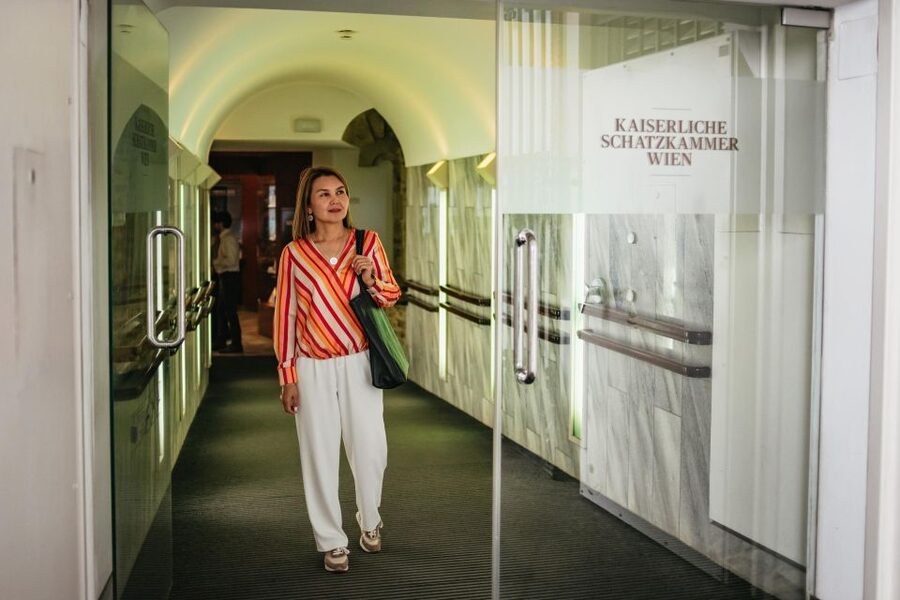
The Imperial Treasury is in the oldest part of the Hofburg Palace, the Swiss Wing. That setting matters. You are not entering a modern gallery set apart from Vienna’s imperial center. You are entering one part of the palace complex where the Habsburgs kept objects that represented dynastic authority, religious devotion, military legitimacy, and family status.
The experience is self-guided unless you arrange your own guide. The entrance ticket covers admission, but the audio guide and guided tour are not included in the stated price. The information panels help, though the sequence can feel less clear than it should. I recommend deciding before arrival how much context you want, rather than assuming the objects will explain themselves.
The ticket is listed at $18 per person, which is a fair price if you care about royal history, ceremonial art, or unusual objects. It is less convincing if you are rushing through the Hofburg and want only a quick look at the famous crown. In that case, the admission takes up a modest part of your budget but still requires enough time to feel worthwhile.
Bring the required printed voucher. A digital QR code may not be enough for direct entry, and you may need to exchange it at the ticket counter. That process has caused confusion, especially for people who booked shortly before arriving. Children and young people under 19 generally enter free, though school groups under 19 must register through the museum’s booking department.
More Hofburg and Sisi Museum tickets:
- Vienna: Skip-the-Line Sisi Museum, Hofburg and Gardens Tour
★ 4.8 · 5,918 reviews - Vienna: Hofburg and Empress Sisi Museum Guided Tour
★ 4.7 · 1,460 reviews - Vienna: Skip-the-Line Hofburg and Empress Sisi Museum Tour
★ 4.8 · 801 reviews
The Austrian Imperial Crown and Holy Roman Empire regalia
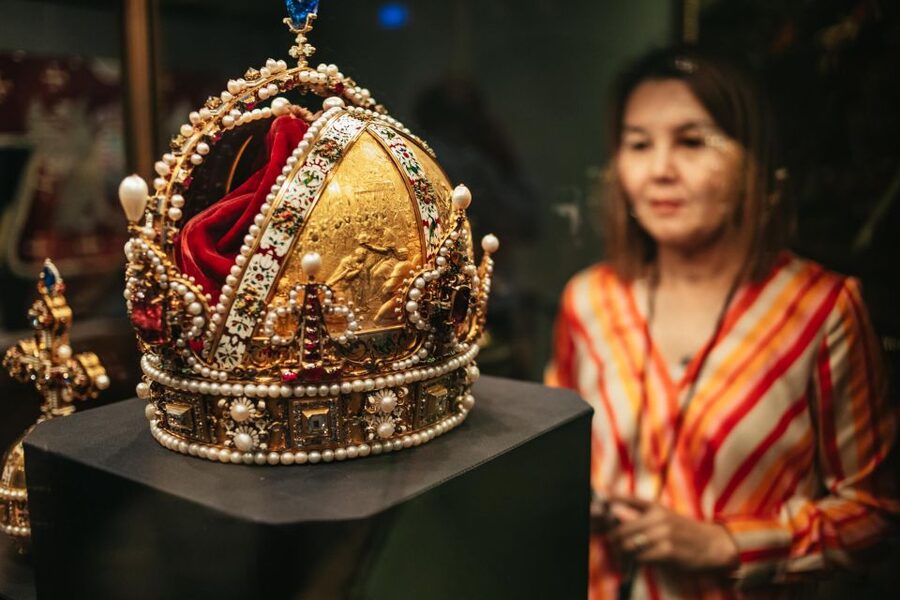
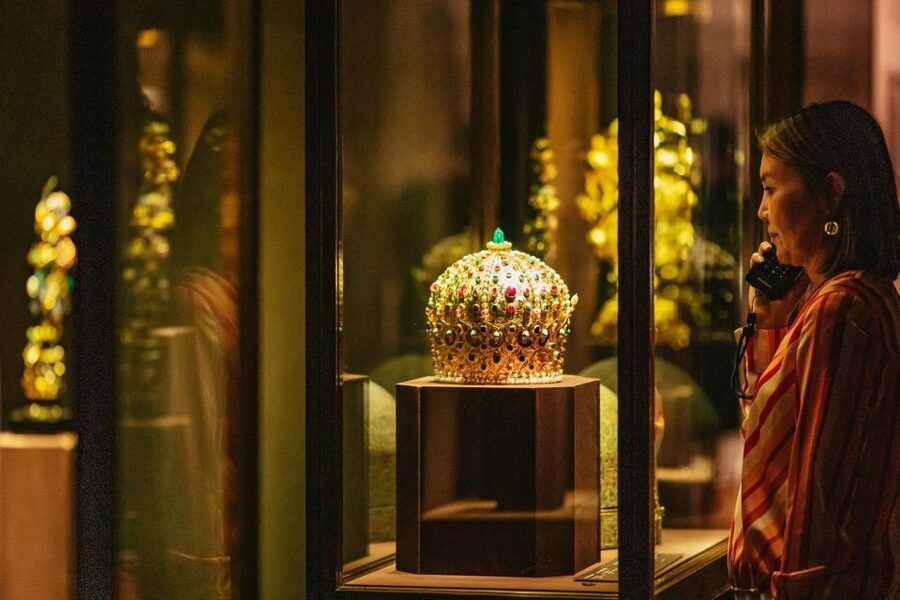
Begin with the crowns and regalia. These are the objects most people picture when they hear Imperial Treasury, and they reward a slow look. The Austrian Imperial Crown is the visual centerpiece, with its formal shape, detailed metalwork, and unmistakable sense of ceremony.
Nearby, the crown jewels of the Holy Roman Empire connect the collection to a wider political world. The Holy Roman Empire was not a modern nation-state with one simple royal line. Its rulers needed symbols that could express authority across a complicated realm. Crowns, scepters, orbs, robes, and ceremonial objects did that work.
You can admire the craftsmanship, but the better question is what these things were meant to communicate. A crown was never only expensive headwear. It made a claim about who had the right to rule, who had been recognized by religious and political institutions, and how a family wanted to be remembered.
The collection is not huge in the way some palace interiors are huge. That is good news. You can stand in front of the major crowns without being swept along by a crowd, then return to details you missed. Several people find that the main route takes about an hour, but you should allow more time if you read every panel or use the audio commentary.
Habsburg jewels and the huge emerald
The jewelry rooms offer a different view of royal life. Instead of public authority, you see wealth worn close to the body. Habsburg empresses and princesses used jewelry to project status, mark important occasions, and display the family’s access to rare materials.
One of the strongest stops is the collection of emeralds, including one of the largest emeralds in the world. Large stones can be surprisingly difficult to judge in photographs. In person, their scale and color make the point clearly: these were not ordinary ornaments purchased for private pleasure. They were objects of state wealth.
Look also for the surviving pieces associated with Empress Elisabeth, widely known as Sisi. These objects give the collection a more personal angle. The crowns and regalia are formal and public, while the jewelry linked to Elisabeth suggests the habits, image, and presentation of a particular woman within the imperial family.
Do not expect a room devoted only to Sisi. Her jewelry is part of a broader Habsburg collection. If you arrive mainly for Elisabeth, you may find the selection smaller than the palace’s reputation suggests. If you come ready to compare the jewelry with the ceremonial objects, it fits into the visit much better.
The Order of the Golden Fleece and ceremonial dress
The treasure of the Order of the Golden Fleece adds another layer to the story. Orders of chivalry were not simply decorative clubs. They helped rulers reward loyalty, bind influential men to the court, and present an image of shared religious and political purpose.
The regalia connected with the order can seem less immediately familiar than a crown, but I find it rewarding because it shows how power operated day to day. The Habsburgs ruled through ceremonies, alliances, offices, marriage connections, and carefully staged displays. A medal or garment could carry that message as firmly as a throne room.
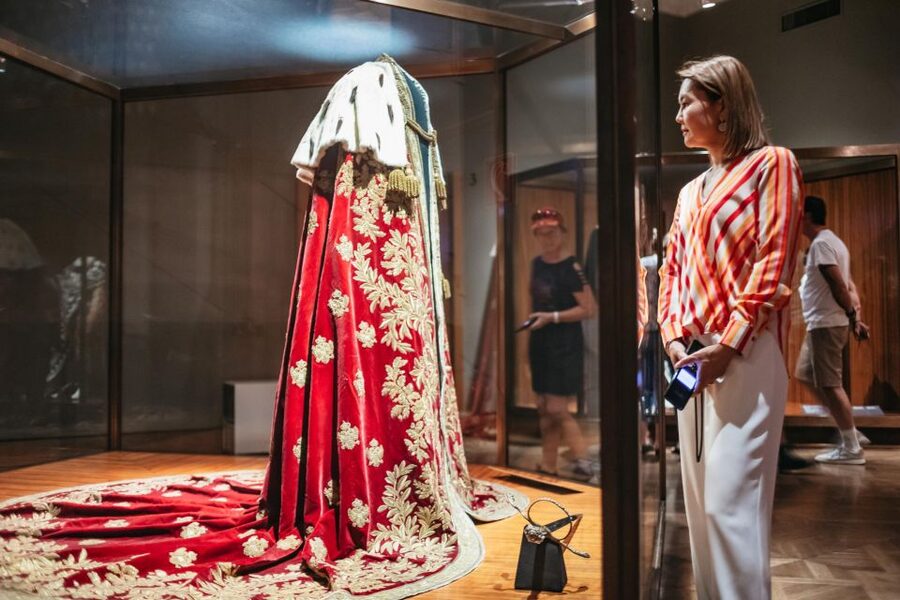
Keep an eye out for the tabards and the chamberlains’ keys. These may not be the objects you expect to remember, but they help explain court life. Clothing identified rank, while keys suggested access and responsibility within the palace. They are practical signs of a system built on hierarchy.
This is one place where a guide can help. An explanation from Petee, who has been praised for giving a clear overview of the Habsburgs and adding context about Franz Joseph and Sisi, would make such objects easier to place. Alex has also been singled out for strong explanations. Guides are not automatically part of this admission, so check the arrangement you choose.
A different sort of day out in Vienna:
- Vienna: Vivaldi’s Four Seasons Concert in Karlskirche
★ 4.7 · 14,951 reviews - Vienna: Skip-the-cashier-desk-line Giant Ferris Wheel Ride
★ 4.5 · 7,859 reviews - Vienna: Schönbrunn Palace & Gardens Skip-the-Line Tour
★ 4.7 · 7,739 reviews - Vienna: Light of Creation Votive Church Immersive Light Show
★ 4.8 · 6,779 reviews
Burgundy, royal childhood, and the family story
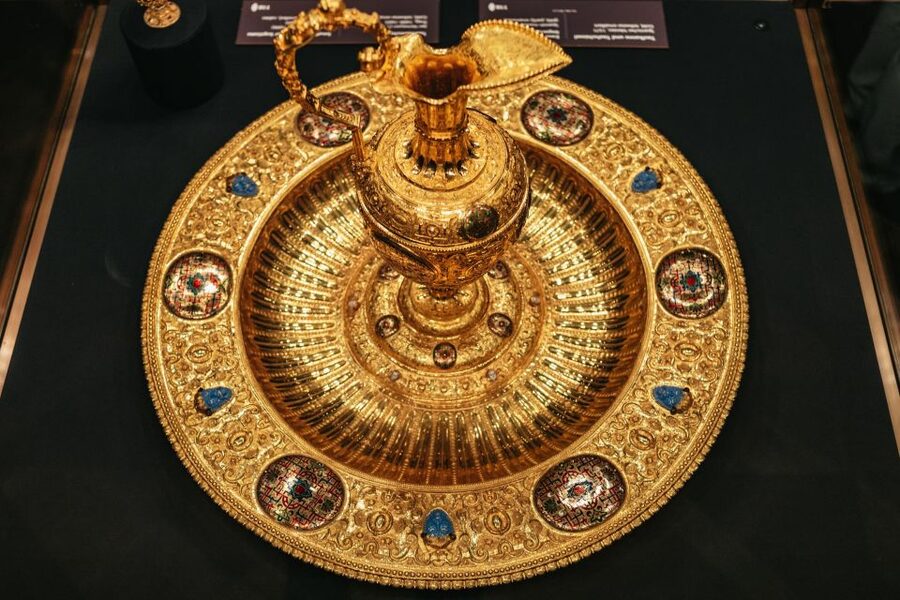
The Treasury includes collections connected with 15th-century Burgundy. This material broadens the visit beyond Austria. The Habsburg story grew through inheritance, marriage, and political alliances, and Burgundy helps show how objects and claims moved into the family’s orbit.
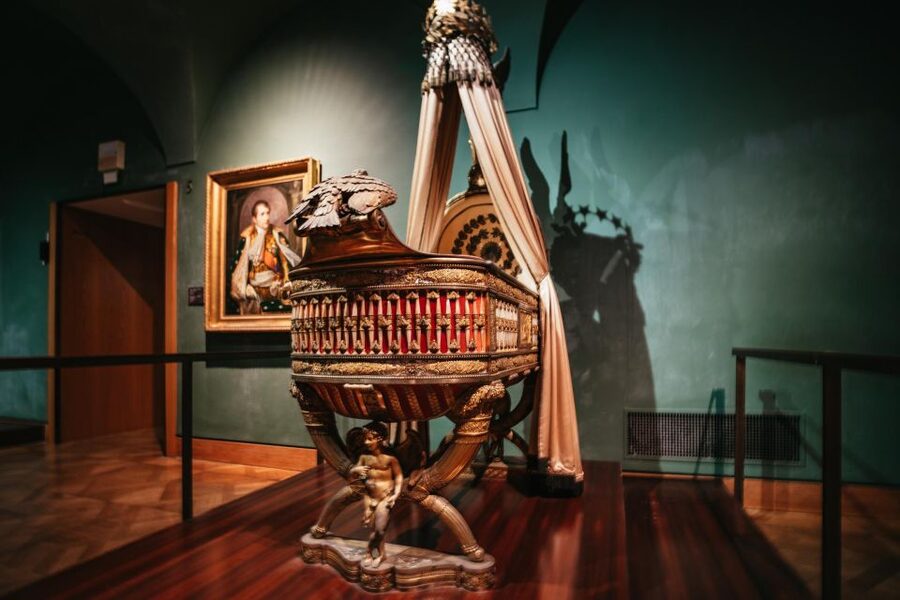
You will also see the cradle of the King of Rome, the title used for Napoleon II. It is a small and personal object compared with a crown, but that is precisely its value. The Treasury is not only a parade of precious materials. It also preserves reminders of childhood, succession, and the hopes placed on royal children.
These quieter objects can be easy to miss if you rush from one major display to the next. Give yourself time to move past the obvious jewels. The collection works best when you compare the public image of empire with the private and ceremonial details that supported it.
The story is not always presented in a perfectly straightforward sequence. One section may emphasize religious objects, another a dynasty, and another the use of regalia. I suggest reading the room labels first, then choosing a few objects for closer attention rather than trying to memorize everything.
Sacred relics and the objects called legendary
The religious holdings are among the most unusual parts of the Treasury. You may see the Holy Lance, described here as dating from the 8th century, along with reliquaries and other sacred objects. These were not collected merely because they were old. Their importance came from the belief, ceremony, and authority attached to them.
The agate bowl known as the Holy Grail is another headline object. The name reflects a long tradition and a powerful story, not a simple museum label saying that this is the bowl from medieval legend. Its appeal comes from the way royal collections gathered objects that connected the dynasty with Christian tradition and sacred history.
Then there is the horn of a unicorn. The object is best understood as evidence of an earlier age’s beliefs and collecting habits. It is strange, memorable, and a useful reminder that an imperial treasury could include items valued for symbolic or legendary reasons, not just items that can be scientifically explained.
These displays reward curiosity, but they can also raise questions that a label cannot fully answer. If you want to understand why medieval and early modern rulers treasured relics, an audio guide or personal guide will add much more than simply walking past the cases.
How long to spend and how to see it well
For a fast visit, allow about one hour. That is enough to see the major crowns, jewelry, religious objects, and ceremonial pieces without stopping for every detail. If the Imperial Treasury is one of your main reasons for visiting the Hofburg, allow 90 minutes to two hours.
An audio guide can make the visit longer. That is not a problem if you like detailed explanation, but it changes the pace. You may spend several minutes with an object that would otherwise receive only a glance. Check the current audio guide arrangement before booking because it is not included in the admission described here, even though some visits have included access to audio equipment.
The layout is generally easy enough to follow, but it can feel confusing at first. Look for the beginning of the exhibition route and avoid assuming that the largest case is the next stop. If you need a break, staff have allowed people to leave and return with ease, although you should confirm the current procedure at the entrance.
Photography and lighting are practical concerns to keep in mind. Some older displays have been criticized for dim lighting, and dark cases can make fine details harder to see. Move slowly, wait for your eyes to adjust, and use the labels rather than relying only on a quick glance.
Who will enjoy the Imperial Treasury most
I would put this near the top of the list for anyone interested in:
- Habsburg rulers, Sisi, Franz Joseph, or the old imperial court
- Crowns, jewelry, heraldry, and ceremonial dress
- Medieval and Christian relics
- The political use of royal objects
- Unusual historical claims and legendary treasures
- A focused museum visit rather than an all-day palace tour
Families can manage the visit because it is not an enormous museum, and admission is generally free for children and young people under 19. Younger children may respond most strongly to the crown, emerald, cradle, and unicorn horn. Older children and teenagers will get more from the religious and political background.
You should consider a guide if you prefer stories to labels. A guide can explain why the Golden Fleece mattered, how the Habsburgs used marriage and ceremony, and why a relic could carry political weight. If you prefer to set your own pace, the self-guided route works well, but plan to read carefully.
The experience is also a good early stop in Vienna. Objects and personalities connected with the Habsburgs appear throughout the city. Seeing the regalia first can give later palace rooms, monuments, and Sisi-related sights more meaning.
Price, booking, and the small practical catches
At $18, the admission is reasonable for the quality and rarity of the collection. You are paying to see objects that cannot be replaced by a general palace walk-through. The value is strongest when you give the Treasury enough time and use some form of explanation.
The small-group limit is listed as 10 participants, but this is primarily an entrance experience rather than a standard guided group tour. Do not assume a guide will be waiting for you. You may bring your own guide, and state-certified tourist guides generally receive free admission.
Adult groups of more than 10 can receive one free guide place when the guide accompanies the group. Groups of fewer than 10 do not receive that free guide place and the guide is charged as a paying participant. School groups under 19 must register through the museum’s booking department.
The booking terms are flexible: cancellation is allowed up to 24 hours in advance for a full refund, and reserve-now-pay-later booking is available. The ticket is valid for one day, with entry times based on availability. The museum is wheelchair accessible.
Should you book the Imperial Treasury?
Book it if you want more than the familiar Hofburg rooms. The Imperial Treasury gives you crowns, jewels, robes, relics, and oddities in a relatively contained visit. Its best quality is range: one room can show royal ceremony, another private jewelry, and another the beliefs that shaped imperial collecting.
I would not book it as a rushed add-on between two tightly scheduled sights. The voucher exchange can take time, the layout may require a moment to understand, and the objects deserve more than a quick photograph. Print the voucher, allow at least 60 to 90 minutes, and consider an audio guide or personal guide.
At $18, this is a strong choice for history-minded visitors and anyone fascinated by the material side of monarchy. If you want only a grand palace interior, choose another Hofburg experience. If you want to see what imperial power looked like when reduced to crowns, keys, jewels, relics, and ceremonial objects, this is one of Vienna’s most useful stops.
FAQ
Where is the Imperial Treasury located?
It is in the Swiss Wing, the oldest part of Vienna’s Hofburg Palace.
What does the admission ticket include?
The ticket includes entrance to the Imperial Treasury. An audio guide and guided tour are not included in the stated admission.
How long should I allow for the visit?
You can see the collection in about one hour, but allow 90 minutes to two hours if you want to read the descriptions or use an audio guide.
Do I need a printed voucher?
Yes. A printed voucher is required. A digital QR code may need to be exchanged at the ticket counter for an admission ticket.
Are children admitted free?
Children and young people under 19 generally receive free admission. School groups under 19 must register through the museum’s booking department.
Is the Imperial Treasury wheelchair accessible?
Yes, the experience is listed as wheelchair accessible.
Just reviewed in Vienna
- World War II History Vienna Old Town Private Walking Tour★ 4.8 · 9 reviews
- Vienna: Winery and Wine Tasting Tour with a Wine Expert★ 5.0 · 5 reviews
- Vienna: Wine Tasting E-Bike Tour★ 4.9 · 46 reviews
- Vienna: Unforgettable Private City Tour★ 5.0 · 7 reviews
- Vienna Urban Art Tour: Explore a different side of Vienna!★ 3.8 · 14 reviews
- Vienna: Concert by the Vienna Baroque Orchestra★ 4.6 · 56 reviews
- Vienna: Sunday Brunch Danube Cruise & Live Music★ 4.2 · 42 reviews
- Vienna Supreme Orchestra at Palais Niederösterreich★ 4.8 · 10 reviews
Hofburg Palace and Sisi Museum Tickets, compared.

Skip-the-Line Sisi Museum, Hofburg and Gardens Tour
Read our review →
Skip-the-Line Hofburg and Empress Sisi Museum Tour
Read our review →
Combo Ticket: Kunsthistorisches Museum & Imperial Treasury
Read our review →
“Sisi’s Amazing Journey” Virtual Reality Experience
Read our review →
Imperial Treasury & New Hofburg Palace Combo Ticket
Read our review →
New Hofburg Palace Audio-Guided Tour & Entry Ticket
Read our review →
Skip-the-Line Sisi Museum, Hofburg and Gardens Tour Vienna
Read our review →Browse the lists this tour appears in