
Reviewed · VIENNA GHOST AND DARK HISTORY TOURS
Vienna: The Great Plague Exploration Game
Vienna’s Great Plague Exploration Game turns the old city center into a smartphone scavenger hunt, with clues leading from a 13-century church to medieval carvings, a nail-studded tree, St. Stephen’s Cathedral, and the Hofburg. The route mixes famous sights with details you could easily walk past.
I like the freedom to stop for coffee or spend longer at a church, café, or museum. I also like the price: at $7.23 per person, it is a low-cost way to give a family or small group some structure without paying for a private guide. The catch is that you are on your own with the app, and a few people have had trouble entering answers or getting the game started.
Key points at a glance
- A private city game: Only your party takes part, so you can set the pace and stop when you like.
- A route through central Vienna: The game links St. Rupert’s Church, Griechenbeisl, Bäckerstrasse, Stephansplatz, St. Stephen’s Cathedral, the Albertina, and the Hofburg.
- Good for families: Children who lose interest on standard walking tours get clues, tasks, and a clear reason to keep moving.
- No guide required: You need your own smartphone, with audio stories and directions supplied through the game.
- Free for children: This can make the total cost especially attractive for families.
- A few app concerns: Incorrect formatting, such as missing capital letters or a required word, has caused frustration for some players.
Why this Vienna game works better than a standard walk
This is not a plague museum visit or a guided lecture. It is a story-led walk in which you reach the next stop by solving a question or puzzle. The route covers roughly 90 minutes at its planned pace, though the format lets you take much longer.
I like that the game makes you look closely. At St. Rupert’s Church, you are not simply told that the building is old. You search for an answer while taking in a church built partly from stone connected with an ancient Roman settlement. At Stock im Eisen, you have a reason to inspect the nailed tree trunk rather than glance at it and continue toward the main square.
The game also gives you permission to wander. One family used it as a loose afternoon plan, getting sidetracked by other places along the way. That is the right mindset. Treat the route as a framework, not a race. If a courtyard catches your eye or a coffeehouse looks inviting, pause the game and return when ready.
The main limitation is the level of information. The clues introduce each place, but this is not designed to replace a history tour. If you want long explanations about Vienna’s plague years, Habsburg politics, or Gothic architecture, you may find the audio stories too brief. The game’s appeal is discovery and movement, not a sustained historical lecture.
More self-guided walks and audio tours:
- Vienna: Tickets for Mozarthaus Vienna with Audio Guide
★ 4.2 · 2,344 reviews - Vienna: Schlumberger Wine Cellar Guided or Self-Guided Tour
★ 4.8 · 285 reviews - Vienna: Scavenger Hunt Self-Guided Tour
★ 4.7 · 83 reviews
Starting at St. Rupert’s Church
Begin at Ruprechtsplatz, at St. Rupert’s Church. The church is about 13 centuries old and is associated with the earliest layers of Vienna. Its stone is linked with an ancient Roman settlement, giving you an immediate reminder that the city reaches far beyond the imperial buildings most people picture first.
Inside, look for the old stained-glass window in the vaulted apse. It shows Christ on the cross, with the Madonna and Child below, and dates from the 13th century. The church is also known for its old bells and its connection to St. Rupert of Salzburg, patron saint of salt merchants on the Danube.
The game asks you to look around and find an answer before moving on. That simple task changes your attention. Instead of taking a quick photograph and leaving, you inspect the building for a detail that matters to the story.
Allow about 10 minutes here. Admission is free. Check the opening situation before setting out, since a church can have services or other limits that are not part of the game’s control.
Griechenbeisl and the old tavern story
The next stop is Griechenbeisl, one of Vienna’s oldest restaurants. Its name means Greek Inn, a nod to Greek merchants and Levant travelers who once lived and traded in this part of town.
The restaurant is also tied to Vienna’s musical past. Mozart, Beethoven, and Schubert are associated with the tavern, and the Mark Twain room contains framed signatures connected with well-known diners, including Luciano Pavarotti and Johnny Cash.
You do not need to buy a meal to take part in the game. The clue sends you to inspect the place and answer a question. Still, the stop works well as a possible break point if you want food or a drink. The route is flexible, so you can stop and continue later.
Plan on about 15 minutes for the game task. Admission is free, but food and drinks are your own expense. This is a good example of the game’s balance: you get a prompt to notice a historic site, then decide for yourself how much time and money to spend there.
Bäckerstrasse and the odd backgammon mural
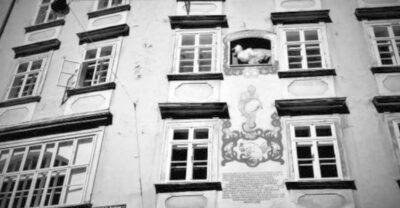
Bäckerstrasse offers one of the route’s most unusual details. At No. 2, look for an old mural on the Hasenaus, or Hare House. It shows a wolf and a cow wearing spectacles while playing backgammon.
The image has several possible readings. It may belong to an earlier scene of medieval life, or it may refer to the religious conflict between Protestants and Catholics. The game does not require you to settle that question. It asks you to find the detail and use it to proceed.
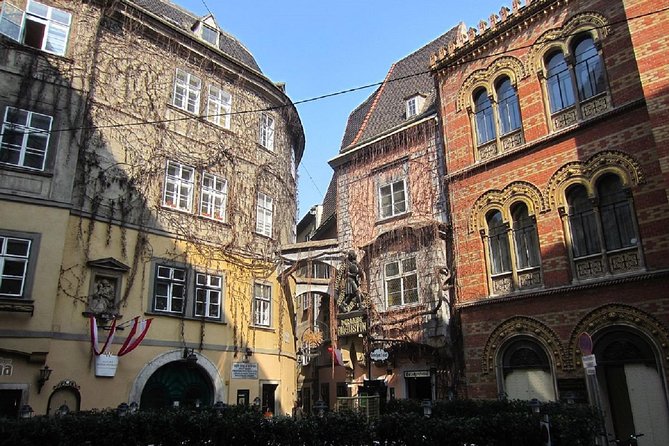
Give this stop about five minutes, but take time to look at the street itself. Bäckerstrasse has 17th and 18th century façades, along with courtyards and older architectural fragments. No. 2 has a 17th-century tower. No. 8 was the Palace of Count Seilern, built in 1722, and No. 16 has a Renaissance courtyard.
This is one of the better sections for anyone who likes small details. It also shows why the route is more than a checklist of major landmarks. You are sent into a street where the reward is a strange image and the surrounding architecture.
More dark history and ghost walks:
- Vienna: 1.5-Hour Underground Walking Tour
★ 4.9 · 1,146 reviews - Vienna: Ghosts and Legends Guided Nighttime Walking Tour
★ 4.4 · 1,088 reviews - “The Third Man” Film Location Tour
★ 4.9 · 315 reviews - Vienna: Spooky Ghost Tour in English
★ 4.8 · 209 reviews
Stephansplatz and the Stock im Eisen tree
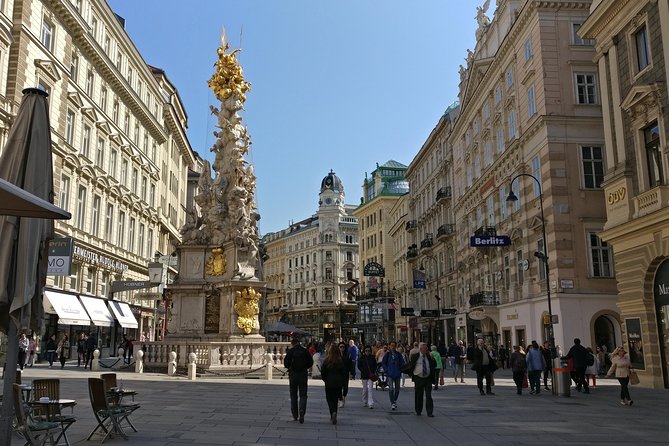
The route then brings you to Stephansplatz by way of another clue. The square is one of Vienna’s main public spaces, but the game keeps your attention on the task as you cross it.
Near the corner of Kärntner Strasse, you find Stock im Eisen, sometimes called Vienna’s Nails Tree. The object is the middle section of a medieval tree trunk, mounted on a roughly 1.5-meter pedestal and surrounded by an iron ring.
The hundreds of nails driven into the trunk reflect an old good-luck tradition. People once believed that hammering a nail into the tree would bring good fortune. Before that explanation became familiar, the strange object was even blamed on Satan.
This is a short stop, about 10 minutes, and you can spend as long as you wish before taking the next clue. I like that pause built into the route. You are not pushed away from an object simply because the planned schedule says it is time to go.
St. Stephen’s Cathedral, Vienna’s great landmark
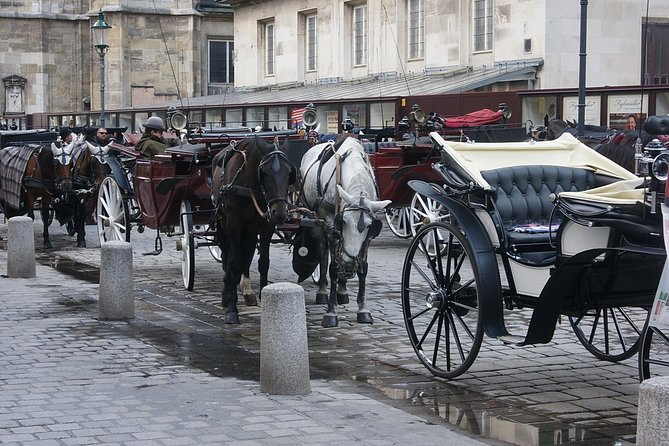
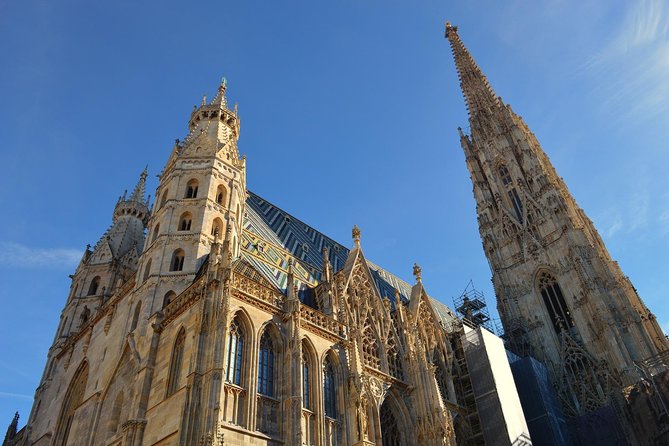
St. Stephen’s Cathedral is the route’s biggest landmark. The cathedral dates from the 12th century and is one of Austria’s major Gothic buildings. Even if you have seen photographs, the colored roof is worth a close look.
The roof rises about 38 meters and uses roughly 230,000 glazed tiles arranged in patterns. The mosaics include the double-headed eagle associated with the Habsburg Empire. Two other eagles on the north side carry the arms of Vienna and the Republic of Austria.
The game gives you a question to answer by looking around. This is useful because the cathedral contains more detail than most people can absorb in a quick visit. You may notice the roof, towers, or interior features more carefully because the clue tells you what to seek.
The planned game time is about 15 minutes. Admission to the cathedral is not included, and any paid areas, such as tower access, are separate. The information provided for the experience does not set out those entrance prices, so check directly if you want more than the free portion.
A coffeehouse option at Frauenhuber
The route also points you toward Café Frauenhuber on Rauhensteingasse. It dates to 1746 and is described as Vienna’s oldest coffeehouse. Mozart and Beethoven are associated with performances there for dining customers between 1782 and 1791.
This is not listed as one of the numbered puzzle stops, so treat it as an optional pause rather than a required task. That makes it especially useful for families or groups with mixed energy levels. One person can have a coffee while another checks the next clue.
The café adds a different side of Vienna. After churches, medieval objects, and imperial buildings, you get a chance to sit in the coffeehouse setting that has shaped the city’s social life for centuries. Food and drinks are not part of the $7.23 game price.
The Albertina connects art with imperial Vienna
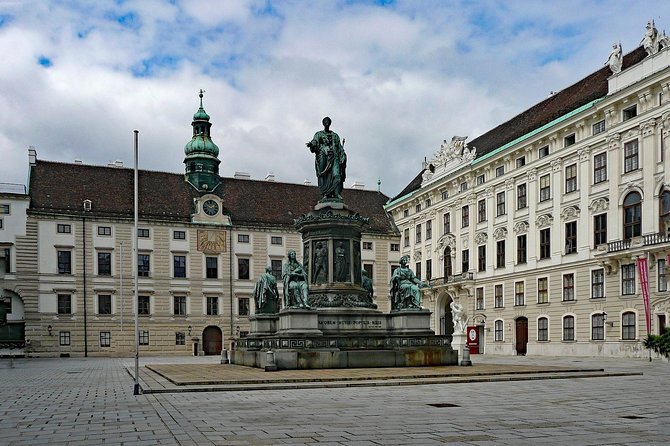
The Albertina is another major point on the route. It occupies part of the former Habsburg residential palace and has been connected with Vienna’s cultural life since 1805.
Its collections include modern art, graphic art, architecture, and photography. The museum holds more than 50,000 drawings and over one million master prints, shown on a rotating basis. Works associated with Impressionism, Fauvism, German Expressionism, and the Russian avant-garde are part of its displays, including Monet’s Water Lily Pond.
The game gives you about 10 minutes of puzzle time here. Museum admission is not included. You should not expect to see the full Albertina during the quest. Instead, use the stop as a prompt to decide if you want to return for a longer visit.
That distinction matters. The game is good at showing you where to look, but it cannot provide the full experience of a museum in a few minutes. If you have limited time in Vienna, you might keep the game moving and plan a separate Albertina visit.
Ending at the Hofburg Palace
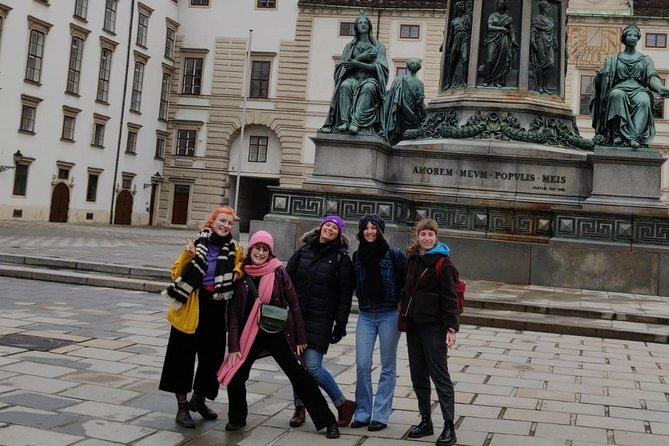
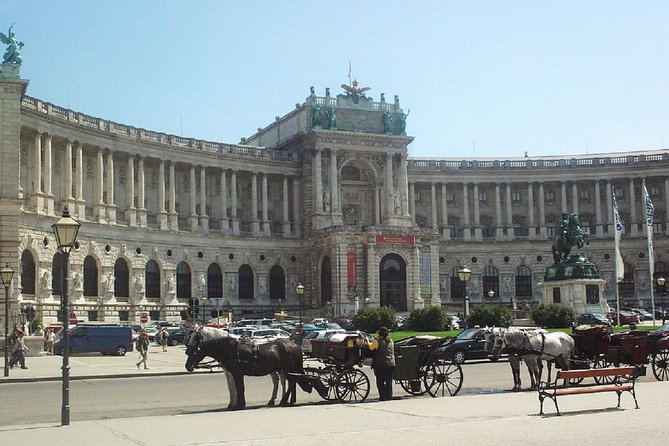
The final stop is the Hofburg, the former home and seat of government of the Habsburg emperors until 1918. It remains the workplace and residence of Austria’s president and continues to shape the center of Vienna.
The complex includes the Imperial Apartments, the Sisi Museum, the Silver Collections, and the Austrian National Library. The Hall of Ceremonies is still used for Viennese balls. The game ends here after another short search and question, leaving you free to continue exploring.
The Hofburg is a fitting finish because it gathers many of the themes introduced along the way: power, religion, art, music, and daily city life. As with the Albertina, the game only gives you a taste. Admission to the palace attractions is not included, so plan extra time and a separate ticket if you want to go inside.
How the app and puzzle system work
You receive confirmation at booking and can play at any time within the stated operating period, from 7:00 a.m. to 10:00 p.m. The game is offered in English and includes audio stories.
There is no physical guide. You need your own smartphone, and the activity is played privately by your group. Larger parties are asked to make multiple bookings if they exceed 15 people.
The flexibility is the strongest practical feature. You can start in the morning, stop for lunch, take a museum break, or finish another day within the allowed booking terms. The advertised duration is about 90 minutes, but the route naturally stretches if you stop at Frauenhuber, Griechenbeisl, the Albertina, or the Hofburg.
Take care when entering answers. Some questions appear to require exact formatting, and a response can fail if a capital letter or connecting word is missing. If the app gives you trouble, support has resolved issues for some players in about 15 minutes, but I would still install and open everything before reaching the starting point.
Value, timing, and who should book
At $7.23 per person, this is inexpensive for a private activity in central Vienna. The value is strongest for two people, families, or friends who want a plan without committing to a fixed guided tour. Children are free, which can make the cost especially attractive for parents.
I would not choose it as my only introduction to Vienna’s history. The clues and audio stories are concise, and one person who expected fuller historical explanations found the experience too light. The game works best when you want to walk, notice odd details, and let the city provide part of the entertainment.
The route is also a good fit for easily distracted children. Every stop offers a task, and the next destination gives the walk a sense of purpose. Older children and teenagers may enjoy the independence, while younger children will need an adult to manage the smartphone and interpret some clues.
You should also be comfortable with walking through busy central streets while looking at a phone. The route is near public transportation, and most people can take part. Service animals are allowed.
Free cancellation is available up to 24 hours before the start time. Within 24 hours, the payment is not refunded, and changes are not accepted.
Should you book Vienna’s Great Plague Exploration Game?
Book it if you want a low-cost, flexible city walk that mixes puzzles with churches, cafés, medieval objects, art, and imperial buildings. It is particularly useful for families, first-time visitors who like self-guided activities, and repeat visitors who want to notice smaller details in familiar streets.
Skip it if you want a guide speaking at length about Vienna’s past or if you dislike app-based puzzles. The occasional answer-format problem can be annoying, and the historical background is lighter than a traditional tour.
For the right person, the game gives you a playful route through the old center without taking control of your day. You get a story, a set of clues, and plenty of room to stop when Vienna offers something better.
FAQ
How long does the Vienna Great Plague Exploration Game take?
The planned duration is approximately 1 hour and 30 minutes. You can take longer because the game allows breaks and flexible pacing.
Is there a live tour guide?
No. This is a self-guided experience played on your smartphone. It includes audio stories but no physical guide.
Where does the game begin?
It begins at St. Rupert’s Church, at Ruprechtsplatz 1, 1010 Vienna.
Where does the game end?
The final stop is the Hofburg in central Vienna.
What language is the game offered in?
The experience is offered in English.
Are museum and cathedral admissions included?
No. Admission is not included for St. Stephen’s Cathedral, the Albertina, or the Hofburg attractions. The listed church, street, and outdoor stops have free admission.
Can children take part?
Yes. The activity is free for children and is described as a good choice for families, including children who may lose interest during standard sightseeing tours.
Can I stop and continue later?
Yes. You can play at any hour within the stated 7:00 a.m. to 10:00 p.m. operating hours, take a break, have coffee, and continue.
What is the cancellation policy?
You can cancel for a full refund up to 24 hours before the experience start time. Cancellations and changes made within 24 hours are not accepted and are not refunded.
Just reviewed in Vienna
- World War II History Vienna Old Town Private Walking Tour★ 4.8 · 9 reviews
- Vienna: Wine Tasting E-Bike Tour★ 4.9 · 46 reviews
- Vienna: Winery and Wine Tasting Tour with a Wine Expert★ 5.0 · 5 reviews
- Vienna: Unforgettable Private City Tour★ 5.0 · 7 reviews
- Vienna Urban Art Tour: Explore a different side of Vienna!★ 3.8 · 14 reviews
- Vienna: Concert by the Vienna Baroque Orchestra★ 4.6 · 56 reviews
- Vienna: Sunday Brunch Danube Cruise & Live Music★ 4.2 · 42 reviews
- Vienna Supreme Orchestra at Palais Niederösterreich★ 4.8 · 10 reviews
Vienna Ghost and Dark History Tours, compared.

Browse the lists this tour appears in