
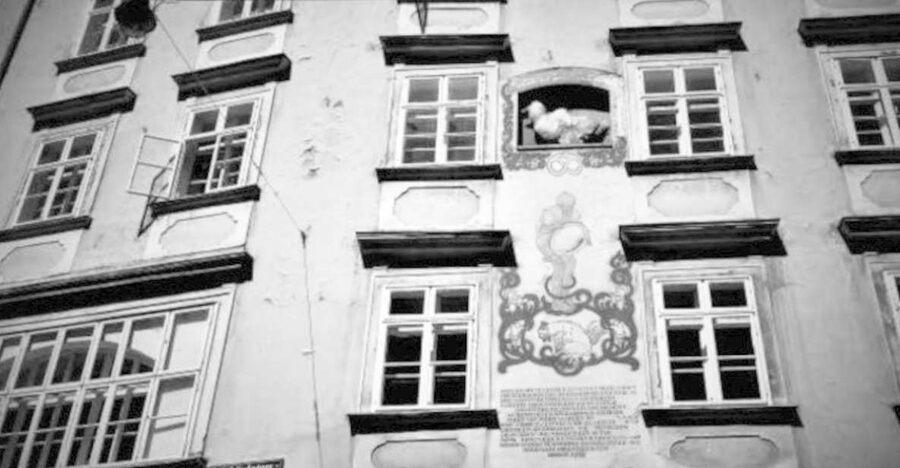
Reviewed · VIENNA GHOST AND DARK HISTORY TOURS
Vienna: Spooky Ghost Tour in English
Vienna’s grand center has a darker script. On this 90-minute walk, you’ll hear how many bodies Countess Bathory supposedly needed to fill a bathtub with blood, who may be buried beneath St. Stephen’s Cathedral, and why Vienna has two phantoms of the opera. It is history with the lights turned low, not a haunted-house show.
I like the energetic storytelling and the way the route links famous sights to odd, less polished tales. I also like that guides such as Lisa bring in practical tips for the rest of your stay. The main drawback is the price: $28 is fair for a lively guided walk, but it may feel high if you want only jump scares or a quick stroll.
Key points to know before you go
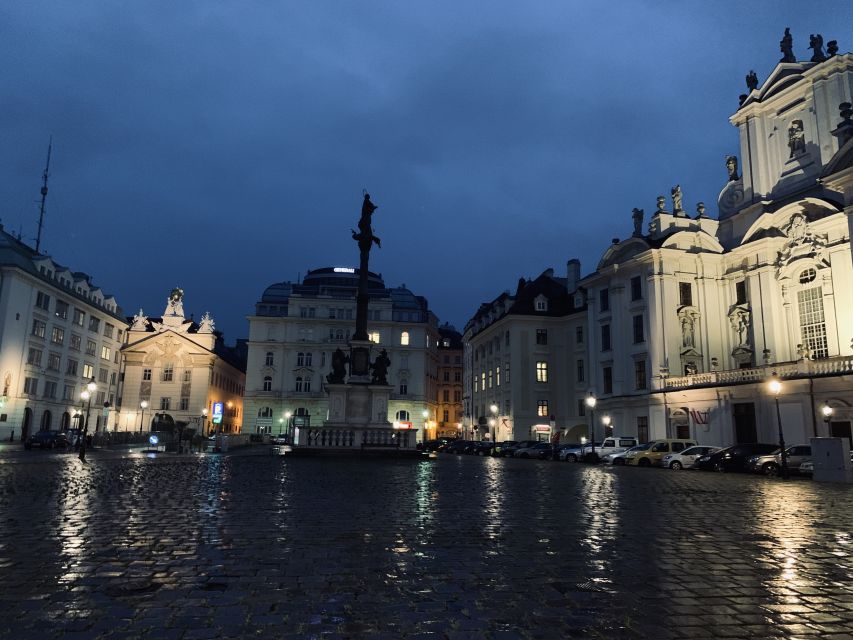
- The 90-minute route begins at Helmut Zilk Square and finishes at St. Stephen’s Cathedral in Vienna’s first district.
- Lisa is a particularly lively guide, with Trim and Luis also praised for clear, engaging storytelling.
- The tone is spooky but family-friendly, with children as young as seven and ten enjoying the walk according to the supplied experience details.
- The stories mix folklore, murder, executions, music, imperial power, and church history, so you get more than ghost tales.
- The route uses cobblestone streets, and the tour runs in rain or shine, so wear sensible shoes and bring weather protection.
- Wheelchair and stroller access is offered, though the cobblestones can make the route less smooth.
Vienna’s dark side begins in the old center
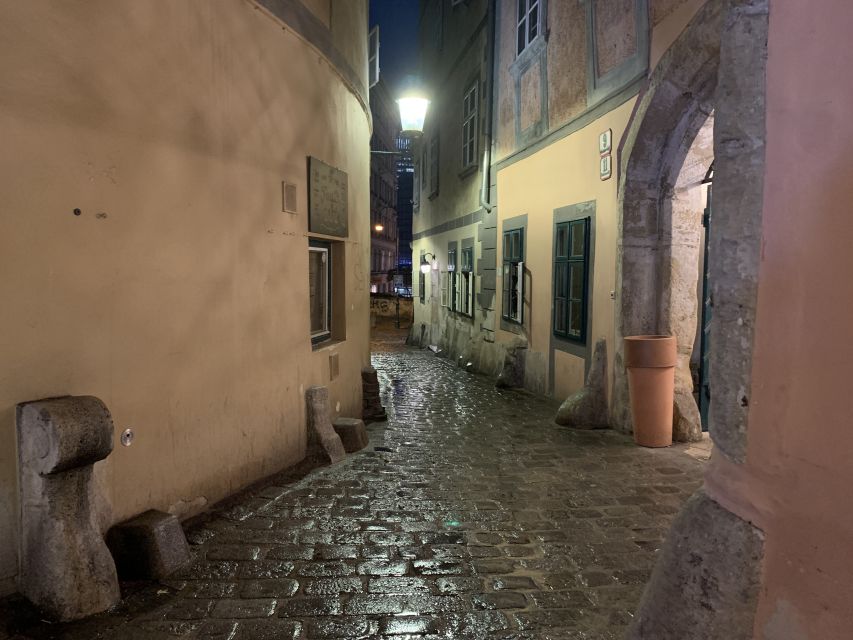
Vienna is usually sold through music, palaces, coffeehouses, and imperial ceremony. This walk takes those same landmarks and asks less comfortable questions. Who died here? Who was punished here? Which legends survived because they were true, and which survived because they were too entertaining to lose?
That change in focus is the tour’s main appeal. You are not being led to isolated ruins on the edge of town. You are walking through the center, past places you might already plan to see, while learning the gruesome stories tucked behind the polished facades.
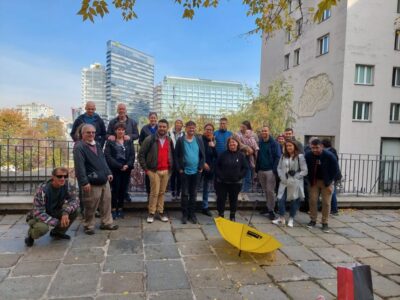
The tour starts at Helmut Zilk Square, at the memorial against war and fascism. Look for the red-and-white-striped umbrella. The meeting point is easy to identify, but allow enough time to find it without rushing, especially if you are arriving by public transport or crossing the busy central streets.
From there, the route heads through Vienna’s historic center. The exact order and emphasis can vary with the guide, but the advertised path includes cobblestoned lanes, the imperial palace area, St. Stephen’s Cathedral, Blood Alley, and other central landmarks.
More dark history and ghost walks:
- Vienna: 1.5-Hour Underground Walking Tour
★ 4.9 · 1,146 reviews - Vienna: Ghosts and Legends Guided Nighttime Walking Tour
★ 4.4 · 1,088 reviews - “The Third Man” Film Location Tour
★ 4.9 · 315 reviews
Why the guide matters more than the ghosts
A ghost walk depends less on scenery than on delivery. Vienna has no shortage of grand buildings, but a flat recital of dates would drain the life from even the best legend. Here, the strongest part of the experience is the guide’s energy and ability to tell a story while keeping a group together outdoors.
Lisa receives especially strong praise in the supplied material. She is described as upbeat, funny, warm, and highly engaging. She also makes room for questions and speaks to people in the group rather than treating everyone as a silent audience. That matters on a walking tour, where a good guide must hold attention while moving from one street to the next.
Trim and Luis are also named as effective guides. Luis is described as professional and pleasant, while Trim is praised for showing places in Vienna that you might not normally visit. You cannot request a particular guide based on the information provided, so book this as a tour led by an English-speaking Austria Guide, not as a guaranteed Lisa performance.
The guide’s role also extends beyond ghost stories. Several comments point to extra suggestions for spooky places, restaurants, and other things to do in Vienna. If this is your first evening in town, keep a note on your phone. The walk can help you choose what to see next.
The imperial center after dark
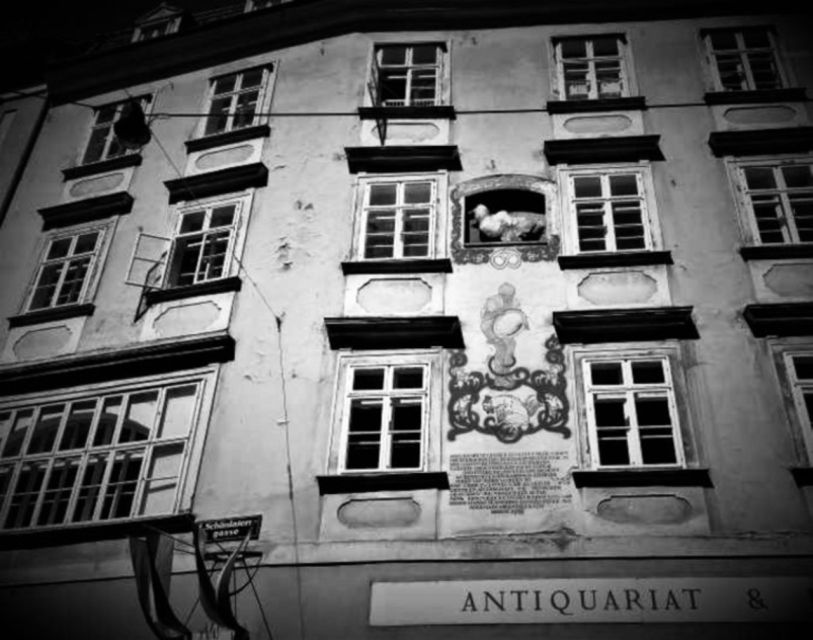
The imperial palace area gives the tour a useful contrast. By day, the Hofburg and nearby streets project order, ceremony, and power. After dark, the same setting becomes a backdrop for stories about rulers, servants, death, punishment, and the people who lived beneath the official version of court life.
You will hear legends tied to famous citizens and buildings rather than receiving a general lecture on Austrian history. That makes the information easier to remember. The stories give you a reason to look again at a doorway, square, or ornate facade you might otherwise pass without a second thought.
The tour is not a palace interior visit. You should expect an outdoor walk around central landmarks, not access to private rooms or restricted parts of the Hofburg. That is worth keeping in mind if you want a museum tour or a detailed architectural explanation.
Still, the setting does real work. Vienna’s center is compact, and moving between locations lets the city’s layout become part of the story. The distance is manageable for most people, though the tour does involve steady walking and plenty of standing while the guide speaks.
Blood Alley and the city’s grisly tales
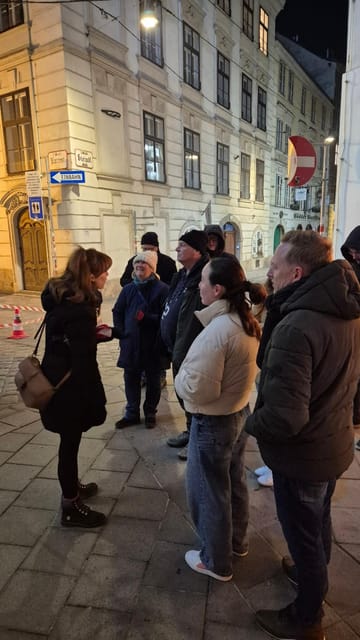
Blood Alley is one of the route’s memorable names, and it sets the tone. This is the part of Vienna that polite sightseeing often leaves out: murders, executions, disturbing punishments, and stories of bodies treated in ways that now seem shocking.
The Countess Bathory question is a good example of the tour’s approach. The story is famous for its claim that she bathed in blood, but the guide uses the gruesome detail as a starting point for discussing how legends grow around historical figures. You get the macabre image, then the wider context.
Other stories mentioned in the experience include a murder in a bakery, the mixing up of Mozart’s bones with those of another musician, and a bell used to check if someone was truly dead. These are not polished palace anecdotes. They show how fears about burial, illness, crime, and death shaped daily life.
The tone stays playful rather than oppressive. Guides use humor to keep the material accessible, and the supplied comments repeatedly describe the walk as suitable for families. That does not mean the content is free of gore. If your child is sensitive to murder, blood, or death, use your judgment before booking.
A different sort of day out in Vienna:
- Vienna: Vivaldi’s Four Seasons Concert in Karlskirche
★ 4.7 · 14,951 reviews - Vienna: Skip-the-cashier-desk-line Giant Ferris Wheel Ride
★ 4.5 · 7,859 reviews - Vienna: Schönbrunn Palace & Gardens Skip-the-Line Tour
★ 4.7 · 7,739 reviews - Vienna: Light of Creation Votive Church Immersive Light Show
★ 4.8 · 6,779 reviews
St. Stephen’s Cathedral and what lies below
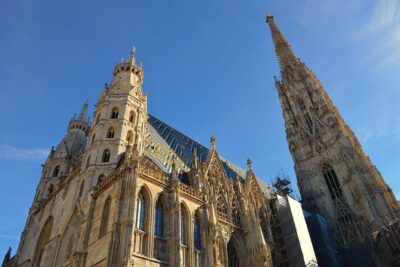
The tour ends at St. Stephen’s Cathedral, Vienna’s best-known Gothic landmark. The cathedral is impressive in daylight, but the dark stories connected with it give the final stop a different weight.
One of the tour’s central questions asks who is buried beneath the cathedral. The answer leads into the building’s underground history and the way churches once served as places of burial. You should expect a story about the site and its dead, not a guaranteed visit inside the crypt or a formal cathedral tour.
Ending here works well because the cathedral is both a major sight and a place loaded with memory. It also gives you an easy landmark from which to continue your evening. You can take photographs outside, explore nearby streets, or use the central location to reach dinner and public transport.
The route’s second music-related mystery concerns Vienna’s two phantoms of the opera. The city’s musical reputation usually brings Mozart, concerts, and grand theaters to mind. This story adds a stranger note to that familiar image, reminding you that fame and performance have their own legends.
What the walk feels like in practice
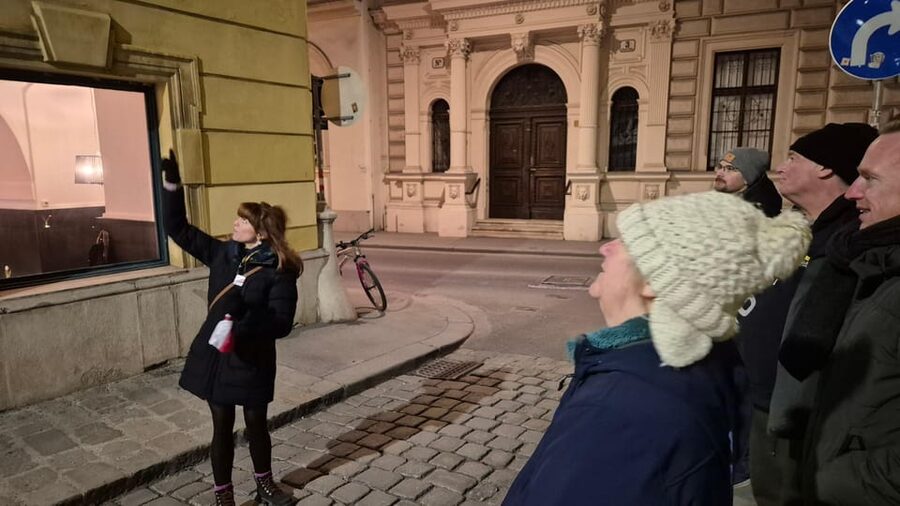
The pace is described as comfortable, with the guide waiting until everyone arrives before beginning the next story. That is important in a group walk. You do not want to hear half a tale while trying to catch up over uneven paving.
The supplied details also mention small groups and welcome questions. Group size can affect the feel of any guided walk, and a smaller gathering generally makes it easier to hear the guide and take part. Since no fixed maximum group size is provided, do not book on the assumption that every departure will be intimate.
English is the only listed language. Guides are expected to speak English fluently, and the comments specifically praise clear delivery. If someone in your party needs frequent translation, plan extra time between stops. One family used the pauses to translate the stories for relatives, and still found the experience enjoyable.
You should wear walking shoes. Vienna’s cobblestones are part of the setting, but they can be tiring and awkward in thin soles. The tour runs in all weather, so bring an umbrella and dress for the forecast. Evening temperatures can make a big difference, especially when you are standing still at story stops.
The tour is listed as wheelchair and stroller friendly. That is useful, but the cobblestones are an important qualification. The route may be accessible, yet not perfectly smooth, so anyone using wheels should prepare for a rougher ride than a flat paved promenade.
Is $28 a good value?
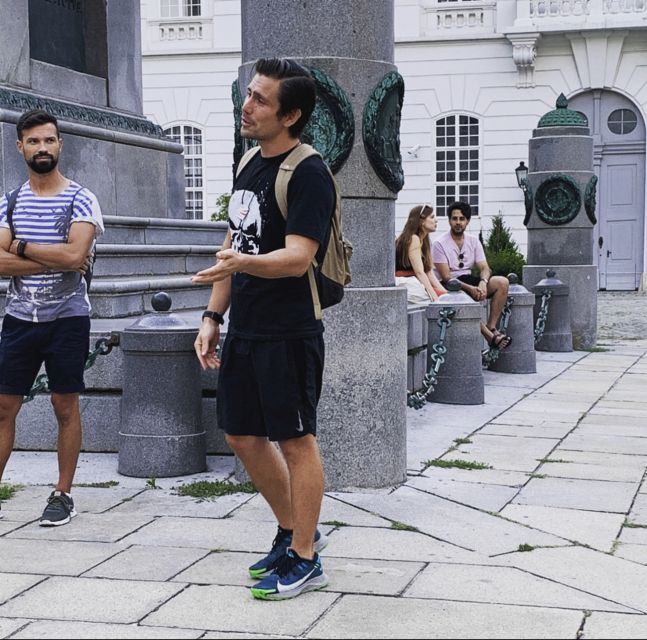
At $28 per person, this is not the cheapest way to see Vienna. You can walk through the center on your own for free, and many of the buildings on the route are visible without a guide.
The value comes from the storytelling, the unusual subject, and the way the guide connects separate locations. If you enjoy ghost walks, the price is reasonable for 90 minutes with a state-certified Austria Guide. You are paying for interpretation and atmosphere, not entry tickets.
It is also a useful first-evening activity. The route introduces central streets, points out places you might otherwise overlook, and can give you ideas for the rest of your stay. Several people specifically liked receiving extra tips for other sights and spooky locations.
The value is weaker if you want a serious historical seminar, a long visit inside the cathedral, or theatrical actors in costume. This is an outdoor walking tour with a lively guide. The stories are unusual, but the experience remains a city walk rather than a staged horror performance.
One supplied comment calls the price quite high despite enjoying the tour. That is a fair warning. If you are traveling on a tight budget or have already taken several Vienna walking tours, compare what you want from this one before booking.
Who should book this ghost tour?
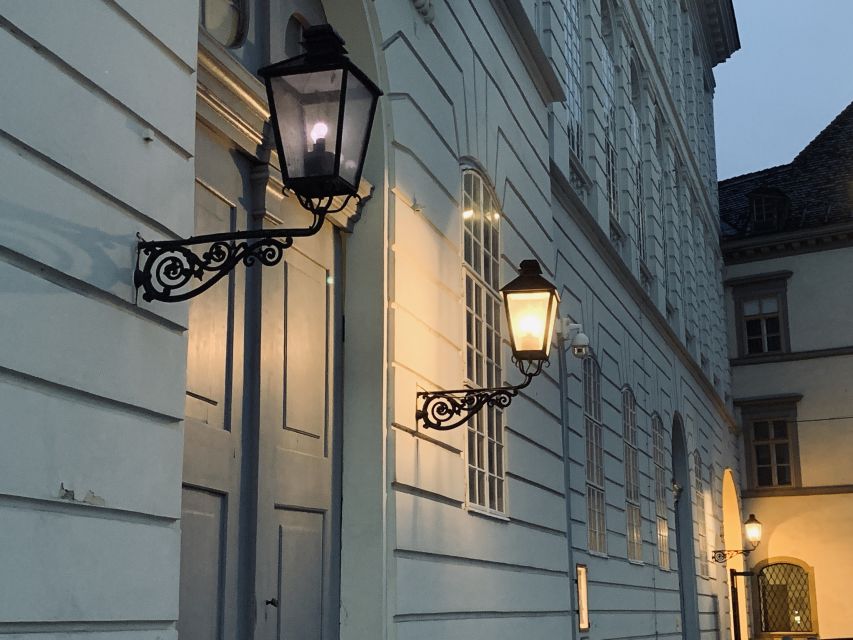
I would recommend it to adults and families who like history with a morbid edge. The tour has enough local detail for people who want more than standard sightseeing, yet the cheerful presentation keeps it from becoming grim.
It suits first-time visitors especially well. The walk offers orientation in the inner city while introducing the Hofburg area, Blood Alley, St. Stephen’s Cathedral, and side streets that may not appear on a basic daytime route.
It is also a good choice for repeat visitors. If you have already seen Vienna’s palaces and museums, this gives familiar places a new angle. Even local residents have found unexpected details in the stories.
You may want to skip it if you dislike walking on cobblestones, need a fully seated activity, or want only verified historical facts. Ghost tours naturally include legends and folklore, so keep an open mind and listen for the difference between documented events and popular tales.
Children can attend, and the tone is described as family-friendly, but the subject matter includes murder, death, blood, and executions. Parents should decide based on the age and temperament of their own children.
Practical details before you book
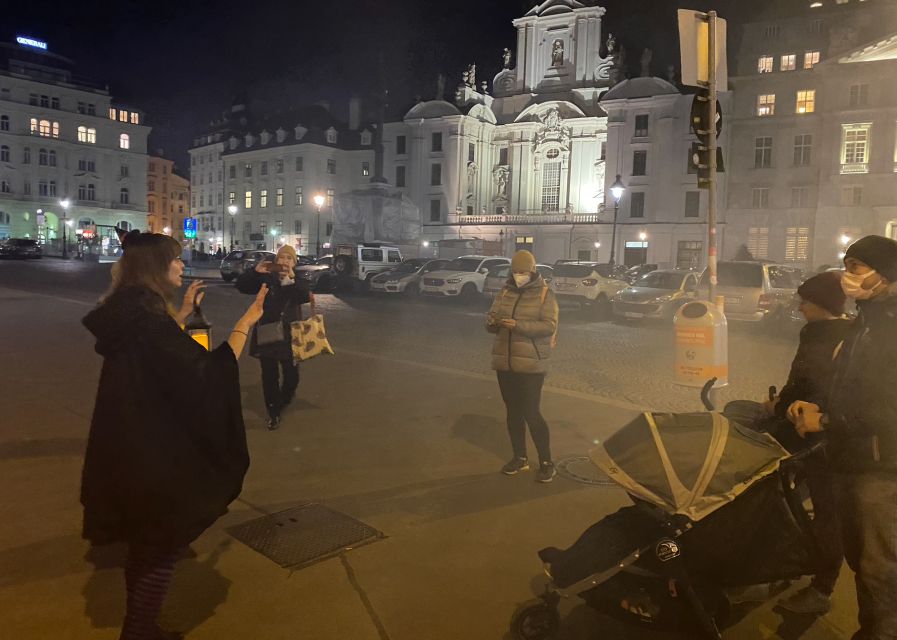
The meeting point is Helmut Zilk Platz, 1010 Vienna, in front of the memorial against war and fascism on the left side. The red-and-white umbrella is the visual marker.
The tour lasts 90 minutes and finishes at St. Stephen’s Cathedral. Starting times vary, so check availability for your date. The tour is in English and led by a live guide.
You can cancel up to 24 hours before departure for a full refund, and the reserve-now, pay-later option lets you hold a place without paying at once. These policies make the tour easier to fit around changing plans.
Bring comfortable shoes, suitable clothing, and an umbrella if rain is possible. The tour goes ahead in poor weather, and the old center’s cobbles can be slippery or tiring.
Should you book it?
Book this tour if you want Vienna’s famous center served with a side of blood, bones, legends, and dark humor. The strongest reason to go is the guide-led storytelling, with Lisa particularly noted for her energy, warmth, and ability to make unusual history easy to follow.
Skip it if the $28 price feels high for an outdoor walk or if you want a strictly academic account of Vienna. For most curious visitors, though, the combination of central sights, odd local tales, family-friendly humor, and practical city advice makes this a memorable way to spend an evening.
FAQ
Where does the Vienna ghost tour start?
It starts at Helmut Zilk Platz, 1010 Vienna, in front of the memorial against war and fascism on the left side. Look for a red-and-white-striped umbrella.
Where does the tour finish?
The walk finishes at St. Stephen’s Cathedral in Vienna’s historic center.
How long does the ghost tour last?
The tour lasts 90 minutes.
What language is the tour in?
The tour is conducted in English by a live guide.
How much does the tour cost?
The listed price is $28 per person.
What places are included on the route?
The route covers Vienna’s historic center and includes Helmut Zilk Square, cobblestoned lanes, the imperial palace area, Blood Alley, St. Stephen’s Cathedral, and other central locations.
Is the tour suitable for children?
The tour is described as family-friendly and appropriate for all ages. The subject includes ghosts, blood, murder, executions, and death, so parents should consider how comfortable their children are with spooky material.
Is the tour wheelchair and stroller accessible?
Yes, the tour is listed as wheelchair and stroller friendly. There are many cobblestones, which may make the route less smooth.
Does the tour run in bad weather?
Yes. It operates rain or shine, so bring suitable clothing, comfortable shoes, and an umbrella when needed.
Can I cancel the booking?
You can cancel up to 24 hours in advance for a full refund. A reserve-now, pay-later option is also available.
Just reviewed in Vienna
- World War II History Vienna Old Town Private Walking Tour★ 4.8 · 9 reviews
- Vienna: Wine Tasting E-Bike Tour★ 4.9 · 46 reviews
- Vienna: Winery and Wine Tasting Tour with a Wine Expert★ 5.0 · 5 reviews
- Vienna: Unforgettable Private City Tour★ 5.0 · 7 reviews
- Vienna Urban Art Tour: Explore a different side of Vienna!★ 3.8 · 14 reviews
- Vienna: Concert by the Vienna Baroque Orchestra★ 4.6 · 56 reviews
- Vienna: Swarovski DIY Workshop Experience★ 5.0 · 9 reviews
- Vienna: Sunday Brunch Danube Cruise & Live Music★ 4.2 · 42 reviews
Vienna Ghost and Dark History Tours, compared.

The Great Plague Exploration Game
Read our review →Browse the lists this tour appears in