
Reviewed · MUSEUMS
Sigmund Freud Museum Ticket
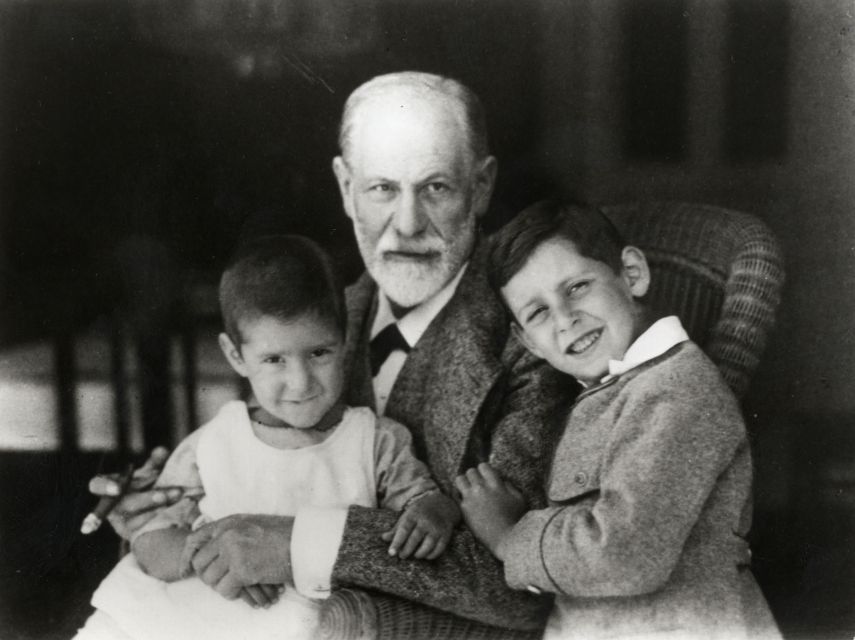
Sigmund Freud’s former home at Berggasse 19 is more than a museum about psychoanalysis. It is the actual address where Freud lived, worked, treated patients, raised a family, and built ideas that changed how the modern world thinks about the mind. I like the mix of personal rooms and serious intellectual material, especially the rare recordings and 1930s family films. I also like the way the museum addresses Freud’s escape from Vienna and the fate of his sisters.
The main drawback is that much of the original furniture left with Freud when he fled Vienna, so you will not see the famous couch in its original place. Some rooms can feel dark, and the museum contains plenty of reading, which may test younger children. Still, at $18 per person, it offers a substantial visit rather than a quick celebrity stop.
Key points
- Enter through Freud’s historic doorway: Use the same entrance once used by Freud and his patients, then follow the original route into the family rooms.
- Hear Freud and Anna Freud: Audio recordings give the museum a human voice that display cases alone cannot provide.
- Use the AR installation: Point your phone at the spot where the couch once stood to learn what happened to it.
- See the Freud family beyond the famous name: Private rooms, family films, correspondence, and biographical displays show Freud as a father, husband, collector, brother, and physician.
- Face the darker history of Berggasse 19: A dedicated section covers the Nazi period, Freud’s flight to London, and the murder of his four sisters.
- Plan for a serious museum visit: Most people should allow at least 1.5 hours, while readers who stop for every display can spend close to 3 hours.
Why Berggasse 19 matters
Freud is often reduced to a handful of familiar ideas: dreams, the unconscious, childhood, and the couch. At Berggasse 19, those ideas become tied to a real home and a real working life.
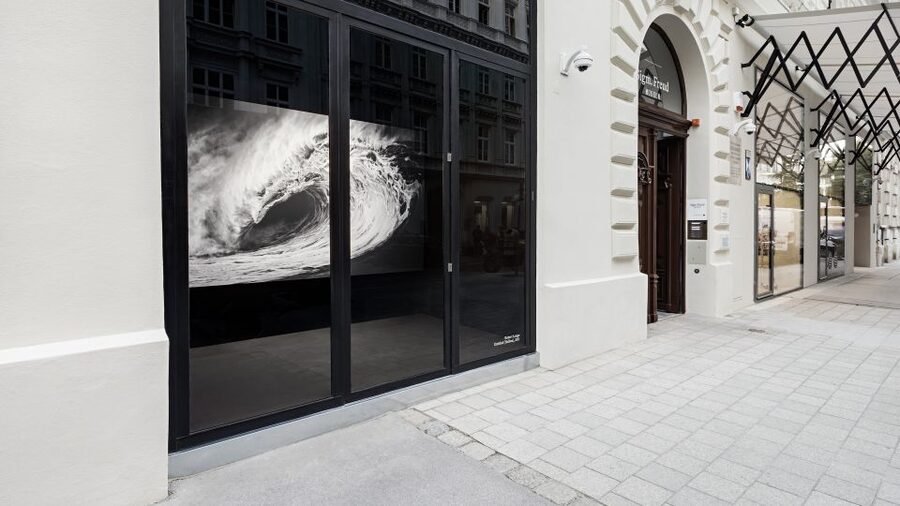
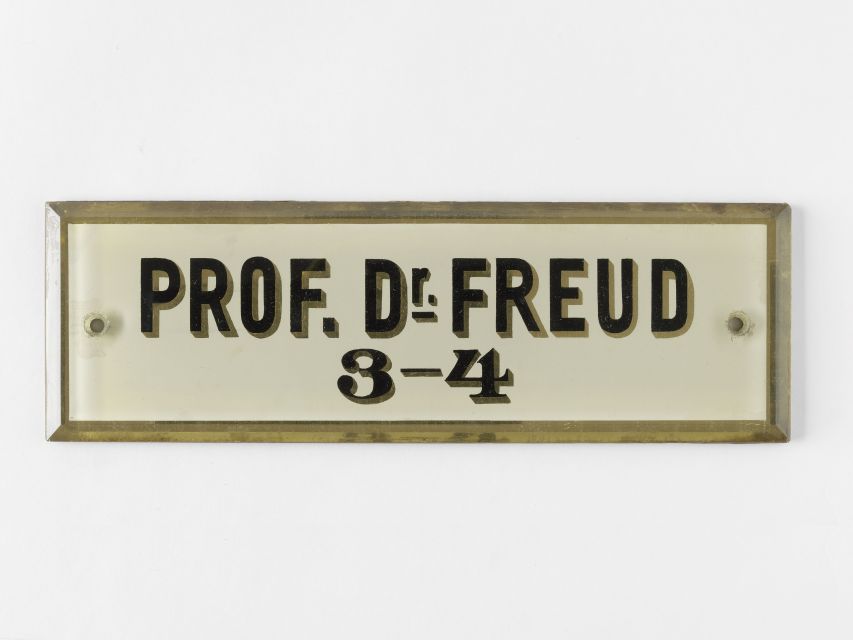
You enter through the same main entrance Freud and his patients used. That small detail matters. Instead of beginning with a detached biography, you begin in the setting where psychoanalysis developed and where Freud met the people who helped shape his thinking.
The museum covers both the professional and private sides of his life. You see where he worked, but you also move through the rooms connected with the Freud family. This helps correct the usual portrait of Freud as only a famous thinker. The displays present him as a doctor, writer, father, husband, brother, collector, and a man caught in the political disaster that forced him out of Austria.
I find that balance one of the museum’s strongest features. You do not need to be a psychologist to appreciate the family material, and you do not need to know much about Freud before arriving.
More museums and galleries in Vienna:
- Vienna: Skip-the-Line Sisi Museum, Hofburg and Gardens Tour
★ 4.8 · 5,918 reviews - Vienna Kunsthistorisches Museum Day Admission Ticket
★ 4.6 · 3,690 reviews - Tickets for the Albertina Exhibitions
★ 4.7 · 2,126 reviews
From the entrance to the family rooms
The visit begins at the museum’s main entrance on Berggasse 19. Present your ticket voucher there, then take the historic stairs toward the mezzanine, where the Freud family lived.
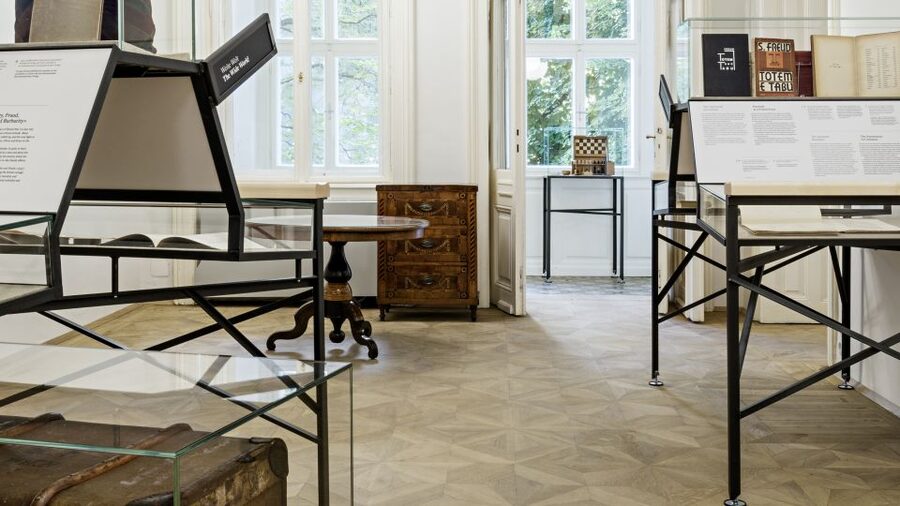
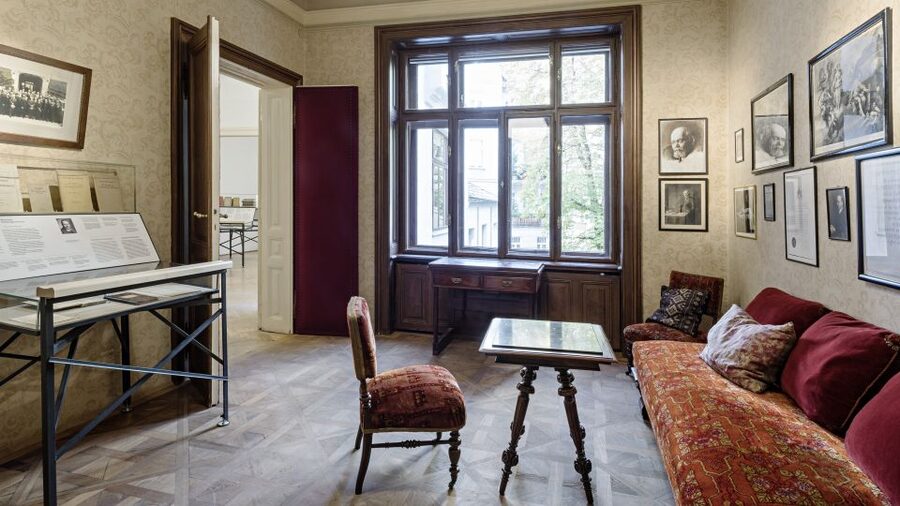
The private rooms are important because they give the visit its sense of place. A collection of books and documents can explain Freud’s work, but rooms connected with daily life help you picture the family behind the public figure. You will find displays about Freud’s relatives, correspondence, travels, and home life alongside information about his medical practice.
Do not expect a fully restored period apartment with every room dressed as it looked in Freud’s day. Much of the original furniture was removed when Freud left Vienna, including the famous couch. The museum does not hide this absence. Instead, it explains the loss and uses documents, photographs, recordings, art, and digital material to fill out the story.
That approach may disappoint you if you mainly want historic interiors. If you come to understand Freud’s life and work, the lack of furniture becomes part of the story rather than simply a shortcoming.
Freud’s practice and the birth of psychoanalysis
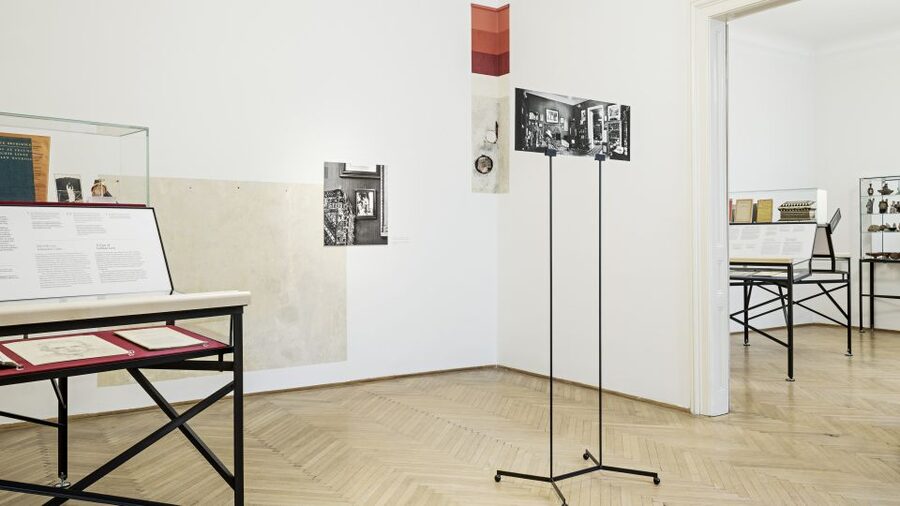
The museum explains Freud’s professional life through objects, text panels, film material, and rare printed works. You can see material connected with the development of psychoanalysis, including first editions, special printings, offprints, and presentation copies.
The displays also outline five major developments in psychoanalysis. That is useful if Freud’s theories feel familiar only in fragments. You can connect the ideas to the stages of his professional life instead of meeting them as a list of famous terms.
I would read the museum in sections rather than rush from room to room. There is a lot of text, and the captions provide useful background on Freud’s medical training, work, correspondence, and intellectual development. English translations are available for much of the material, which makes the visit easier for international visitors.
One small weakness is the flow. The rooms do not always guide you through Freud’s life in a clear chronological order. You may move from his early medical studies to later ideas, then back to family or professional material. If chronology matters to you, take your time with the dates and headings, or use the rooms as separate chapters rather than expecting one smooth timeline.
The voices of Sigmund and Anna Freud
One of the most affecting parts of the museum is hearing recordings of Sigmund Freud and Anna Freud. A voice gives a historical figure a presence that photographs cannot match.
The audio material helps break through the formal tone of books and display cases. You are not only reading about Freud’s theories. You are hearing the people connected with this home and family.
Some audio exhibits may not always be working, so do not build your whole visit around every recording. Still, when the material is available, it adds a personal layer to the museum. It is especially valuable for anyone interested in Anna Freud, who grew up at Berggasse 19 and later became an important figure in child psychoanalysis.
A few more Vienna outings worth weighing up
- Vienna: Classic Ensemble Vienna in St. Peter’s Church Ticket
★ 4.7 · 4,819 reviews - Vienna: Tickets for Mozarthaus Vienna with Audio Guide
★ 4.2 · 2,344 reviews - Vienna: Skip-the-Line Entrance Ticket to the Danube Tower
★ 4.5 · 2,303 reviews - Vienna: St. Stephen’s Cathedral & Dom Museum Wien Tickets
★ 4.5 · 1,652 reviews
The missing couch and the phone-based AR display
Freud’s couch is probably the object most people expect to see. It is not here. Freud took much of his practice with him when he left Vienna, and the original couch is elsewhere.
The museum handles this gap with an augmented reality installation called Sigmund Freud’s Couch. Use your phone at the place where the couch once stood, and the installation explains its whereabouts and restores a sense of the room’s former arrangement.
This will not satisfy anyone hoping to photograph the actual couch, but it is a clever use of technology. The display turns an absence into a question: what happened to the object, why is it gone, and what does its disappearance tell you about Freud’s hurried departure?
Bring a charged phone and be ready to use it during this section. The AR feature is one of the museum’s more unusual touches, and it gives younger visitors something active to do in a museum otherwise built around reading and looking.
Film, photographs, and rare printed works
The museum includes unique film material from the 1930s, along with photographs and documents from Freud’s family and professional life. These films help you see the family as people rather than as names in a biography.
The printed collection is also worth time. Rare first editions and presentation copies show how Freud’s ideas circulated and developed. You can see the connection between a theoretical work and the physical books that carried it into the wider world.
This section rewards patience. It is not a fast, image-heavy attraction where you can understand everything in ten minutes. I would allow extra time if you enjoy letters, books, historical documents, or the development of ideas through writing.
The staircase and Berggasse 19 under Nazi rule
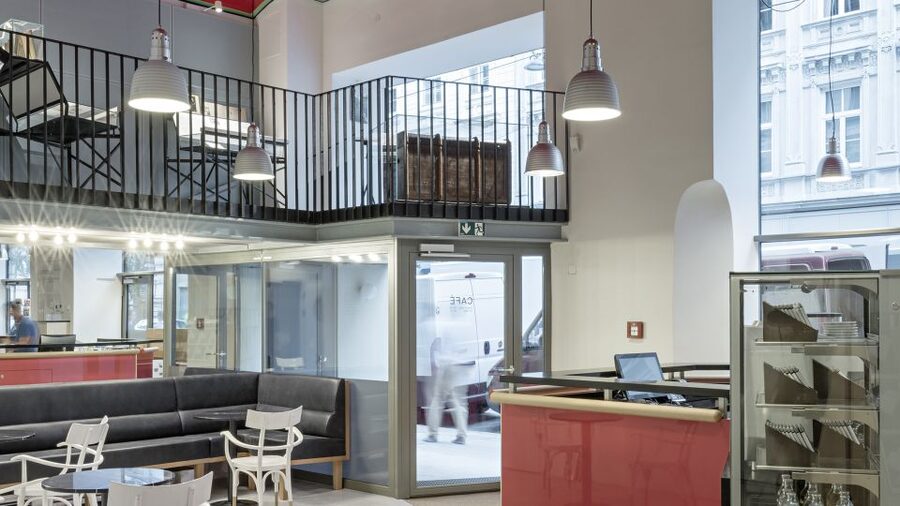
A new staircase connects the museum’s floors and gives the building a second story, one that reaches beyond Freud’s career.
The displays explain the history of the house and its occupants after Freud’s expulsion from Vienna. They also describe the Nazi persecution that took place at Berggasse 19, including the forced collection of Jewish people at the address.
This section changes the mood of the visit. The museum is not only about an influential doctor leaving Vienna. It is also about the people who could not escape, and about the violence that reshaped the building and its residents.
The account of Freud’s flight to London includes his closest family, his brother Alexander, and his sisters Rosa, Marie, Pauline, and Adolfine. Freud and his immediate family reached safety, while his four sisters were murdered in Nazi extermination camps.
That history is presented as part of the house’s story rather than as a separate footnote. I consider it essential. It places Freud’s departure in its political setting and keeps the museum from turning his life into a simple success story.
Contemporary art in Freud’s former office
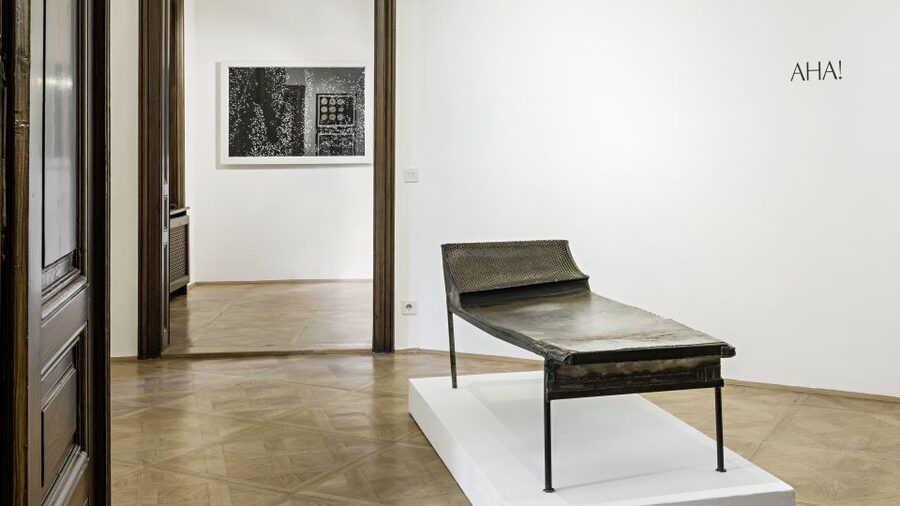
Freud’s former office now contains the permanent exhibition Hidden Thoughts of a Visual Nature. It presents selected works from the museum’s conceptual art collection, including pieces by John Baldessari, Joseph Kosuth, Susan Hiller, Franz West, Haim Steinbach, and others.
The art creates a modern counterpoint to the historical displays. It asks you to consider how Freud’s interest in thought, perception, language, and the unseen continues to influence artists.
You may find this section more abstract than the family rooms and biographical exhibits. If you want only original Freud objects, it may feel like a detour. If you enjoy contemporary art or like museums that connect past ideas with present work, it adds another useful layer.
The contrast also prevents the visit from becoming a shrine. The museum presents Freud as a historical figure whose ideas are still being examined, adapted, questioned, and challenged.
How long should you spend here?
The ticket is valid for one day, but this is not a one-day attraction in the sense of needing endless hours. Plan on 1.5 hours for a solid visit. If you read every panel, watch the films, listen to the recordings, and spend time with the art and family history, 2 to 3 hours is realistic.
An 11 a.m. visit can be a good choice if you want a quieter start. The museum may become busier later, and early arrival is useful if you prefer to read without standing behind other people.
The rooms can become warm, particularly during hot weather. Dress comfortably and remember that much of the experience involves standing and reading. The museum is wheelchair accessible, and lockers and a toilet are available.
You can reach the museum easily by public transport. A tram stop is about a four-minute walk away, and the area is well connected. The museum itself is not a guided walking tour, so you can set your own pace and move through the displays in an order that suits you.
Is $18 a fair price?
At $18, this is not the cheapest small museum in Vienna. The value depends on how you visit it.
If you race through the rooms in 30 minutes, you may feel the price is high, especially because several original furnishings are missing. If you spend 1.5 to 3 hours with the films, documents, family history, audio, AR display, and contemporary art, the admission is easier to justify.
I see the ticket as good value for people with a clear interest in psychology, history, medicine, Jewish history, Vienna, or Freud’s family. It is also a strong choice for mental health professionals and students. The museum offers more than a room with a famous name on the door.
The bookshop and café add value to the visit. You can browse books and gifts, then stop for Viennese coffee and cake or a Viennese wine. The shop leans heavily toward books, so do not expect a large range of souvenirs and general gifts.
Who will enjoy the museum most?
You should book this museum if you want to understand Freud as a person as well as a theorist. The private rooms, family films, and material about Anna Freud are particularly useful for that.
It also suits you if you enjoy museums that ask you to read and think. The exhibits are serious, and the amount of text is part of the experience. Psychology fans, clinicians, historians, and people interested in early twentieth-century Vienna will get the most from the visit.
Families can visit, but very young children may lose interest in the reading-heavy sections. The AR couch feature and puzzle stickers hidden around the rooms can give children something to look for, and an 8-year-old may enjoy that search. Still, the museum’s main rewards are historical and intellectual.
You may want to skip it if you are looking for a furnished historic apartment or a quick photo stop. The museum cannot recreate everything Freud left behind, and some areas are dimly lit. Its strength is the story, not a perfect period interior.
Should you book the Sigmund Freud Museum?
Book it if Freud’s work interests you, but also book it if you want a thoughtful account of Vienna’s intellectual life and its destruction under Nazi rule. The strongest parts are the actual address, the private family rooms, the recordings, the 1930s films, and the honest treatment of the missing furniture and the family’s fate.
I would reserve a place during a busy Vienna visit because the admission is flexible, cancellation is allowed up to 24 hours before the visit, and you can pay later when booking under the available terms. Check the current opening hours before setting out, since they can change.
At $18, this is a worthwhile museum for a focused 1.5 to 3-hour visit. Go for the full story, not just the couch. You will leave with a better sense of the man, his family, his ideas, and the troubled city that shaped them.
FAQ
Where is the Sigmund Freud Museum?
The museum is at Berggasse 19 in Vienna, Austria. Present your ticket voucher at the main entrance.
What does the $18 ticket include?
The ticket includes admission to the Sigmund Freud Museum. It covers the former home and practice, family rooms, historical exhibits, recordings, films, the AR installation, the contemporary art display, and the museum’s connected sections.
How long should I allow for the visit?
Allow about 1.5 hours for a thorough visit. If you read the displays carefully and spend time with the films, recordings, and art, you could spend close to 3 hours.
Is the famous Freud couch in the museum?
No. The original couch is not in the museum. You can use your phone to activate the AR installation Sigmund Freud’s Couch in the place where it once stood and learn what happened to it.
Can I hear Sigmund Freud’s voice?
Yes. The museum includes recordings of Sigmund Freud and Anna Freud. Some audio exhibits may occasionally be out of order.
Is the museum wheelchair accessible?
Yes. The museum is wheelchair accessible.
Can I take photographs inside?
Photography is allowed only without flash. Flash photography is not permitted.
Are the museum’s opening hours fixed?
Opening hours are subject to change. Check the current hours before your visit.
Can I cancel the ticket?
Yes. You can cancel up to 24 hours in advance for a full refund. The available booking terms also allow you to reserve now and pay later.
Just reviewed in Vienna
- World War II History Vienna Old Town Private Walking Tour★ 4.8 · 9 reviews
- Vienna: Winery and Wine Tasting Tour with a Wine Expert★ 5.0 · 5 reviews
- Vienna: Wine Tasting E-Bike Tour★ 4.9 · 46 reviews
- Vienna: Unforgettable Private City Tour★ 5.0 · 7 reviews
- Vienna Urban Art Tour: Explore a different side of Vienna!★ 3.8 · 14 reviews
- Vienna: Concert by the Vienna Baroque Orchestra★ 4.6 · 56 reviews
- Vienna: Sunday Brunch Danube Cruise & Live Music★ 4.2 · 42 reviews
- Vienna Supreme Orchestra at Palais Niederösterreich★ 4.8 · 10 reviews
Museums, compared.

Skip-the-Line Sisi Museum, Hofburg and Gardens Tour
Read our review →
Vienna Kunsthistorisches Museum Day Admission Ticket
Read our review →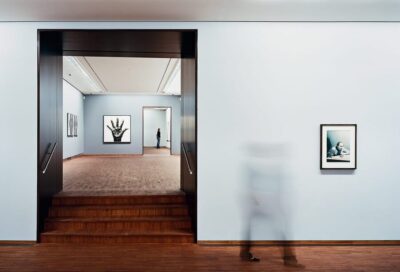
St. Stephen’s Cathedral & Dom Museum Wien Tickets
Read our review →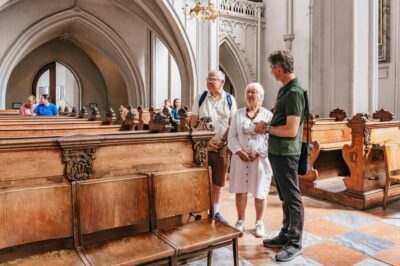
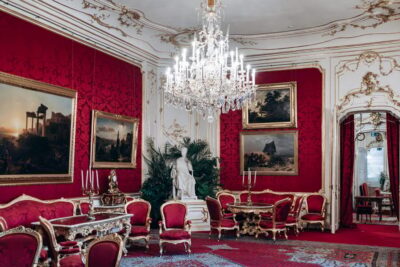
Skip-the-Line Hofburg and Empress Sisi Museum Tour
Read our review →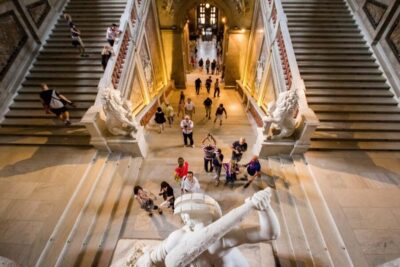
Combo Ticket: Kunsthistorisches Museum & Imperial Treasury
Read our review →
Browse the lists this tour appears in