
Reviewed · MUSEUMS
Vienna: Tickets for Kunst Haus Wien: Museum Hundertwasser
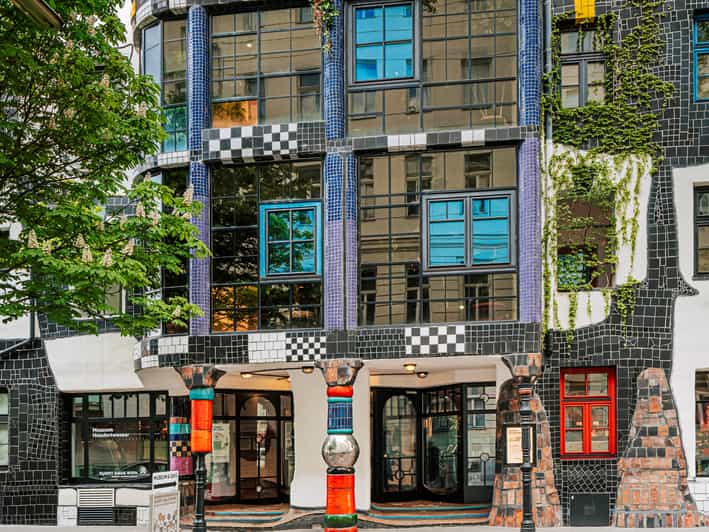
KunstHausWien is more than a museum about an artist. The building itself is part of the artwork, with uneven forms, strong color, and a clear rejection of the straight lines found in ordinary city design. Inside, you follow Friedensreich Hundertwasser from early paintings to practical ideas about homes, cities, and nature.
I especially like the link between art and ecological thinking, and the chance to visit the temporary exhibitions on the upper floors. The main drawback is that information beside individual paintings may be limited, so the optional audio guide can make a real difference. Also, the booking details are not fully consistent about whether the audio guide and all exhibition areas are included, so check your ticket carefully.
Key points before you go
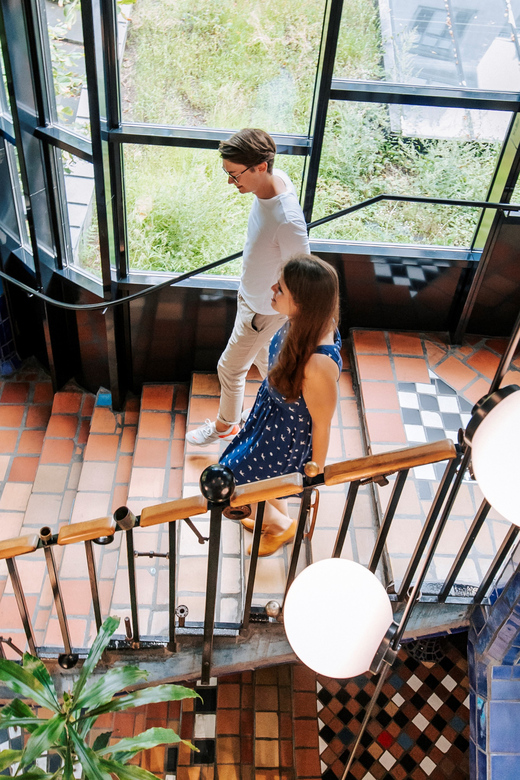
- Hundertwasser’s own museum building: Explore a colorful, irregular structure designed around his artistic and ecological ideas.
- Two floors on Hundertwasser: See paintings, models, and explanations of his life, work, and approach to nature.
- Temporary art upstairs: The top floors host changing contemporary exhibitions, including a garage display focused on ecology, sustainability, and urban life.
- Café Friedlich and the courtyard: Leave time for a drink, sweet treat, or savory food in the museum’s leafy setting.
- Good value for a flexible visit: The ticket costs about $18 and is valid for one day, with free cancellation up to 24 hours before the visit.
- Allow extra time for interpretation: An audio guide is listed at €4 in the ticket details, though another section describes an audio guide as included. Confirm before booking.
Why Hundertwasser matters in Vienna
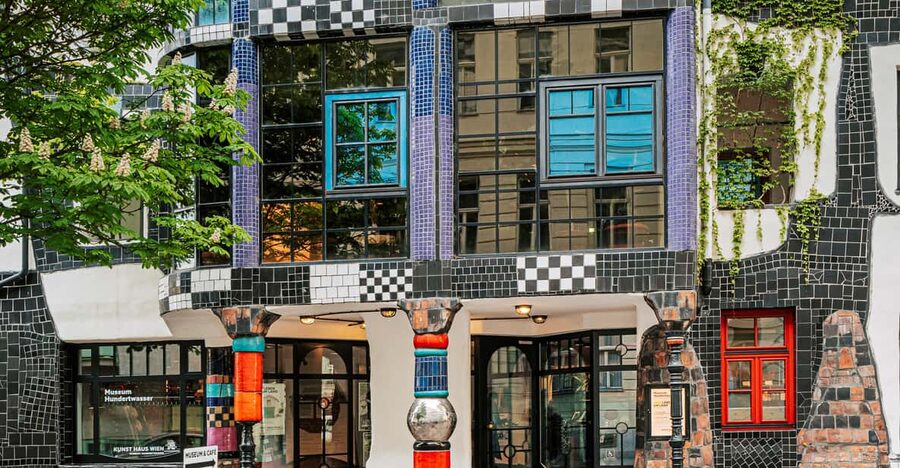
Friedensreich Hundertwasser is best known for bright color, curved forms, uneven floors, and buildings that appear to grow rather than sit rigidly on a street. His art can look playful at first glance, but the ideas behind it are serious. He questioned standard architecture and argued for a closer relationship between people, buildings, and the natural world.
That makes this museum useful even if you know little about him. You are not simply walking past paintings in a white gallery. The building, the displays, and the subject all point in the same direction. Hundertwasser wanted people to rethink what a home, a street, and a city could be.
I like that the museum presents both sides of his work. You see the imaginative artist, with bold colors and unusual images, but you also meet the practical thinker who considered planted roofs, natural forms, and more humane buildings. The result is livelier than a standard biography and easier to remember.
More museums and galleries in Vienna:
- Vienna: Skip-the-Line Sisi Museum, Hofburg and Gardens Tour
★ 4.8 · 5,918 reviews - Vienna Kunsthistorisches Museum Day Admission Ticket
★ 4.6 · 3,690 reviews - Tickets for the Albertina Exhibitions
★ 4.7 · 2,126 reviews
Entering the KunstHausWien building
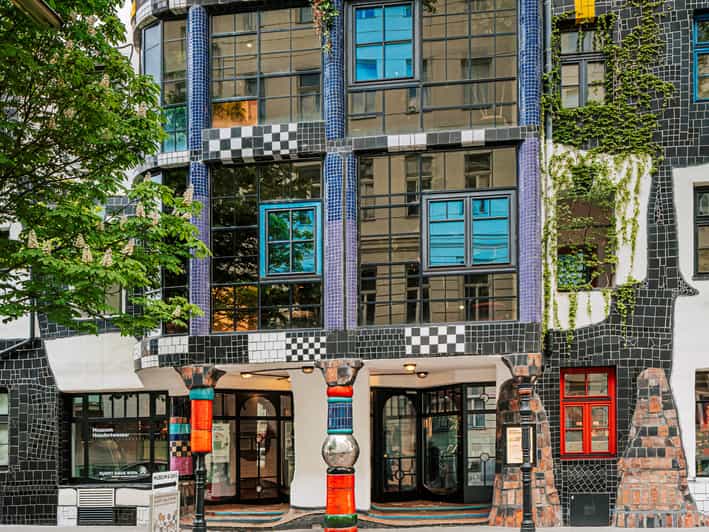
The first thing to notice is the architecture. KunstHausWien was created through the remodeling of a former building, using Hundertwasser’s principles rather than conventional museum design. Expect irregular shapes, strong color contrasts, organic patterns, and a setting that feels deliberately different from Vienna’s grand imperial museums.
This is not a place for visitors who want calm, uniform galleries. The interior has its own character, and the design helps explain the artist before you reach the main displays. You can begin to see why straight lines and strict order bothered Hundertwasser. The building asks you to accept a little visual surprise.
The architecture also gives the visit a useful focus. Instead of treating Hundertwasser’s ecological ideas as a separate lesson, the museum makes them part of your surroundings. You are looking at his ideas while standing inside an example of them.
The first two floors: Hundertwasser’s art and ideas
The permanent exhibition occupies the first two floors. It traces Hundertwasser’s development from early picturesque visions through paintings, models, and later applications of his design philosophy.
His use of color is one of the easiest places to begin. Strong reds, blues, yellows, and greens give the work an immediate lift, but the paintings are not only decorative. The forms often feel symbolic, and the lack of straight lines reflects his belief that nature should guide human design.
You will also see how his art connects to his activism. The displays explain his commitment to living in harmony with nature and show how his ideas moved from canvas into architecture. Building models help bridge that gap. They give you a way to understand what his proposals might look like when turned into actual structures.
This is where the audio guide may be worth the additional cost. One practical weakness is that there may not be much information next to each painting. If you already know Hundertwasser’s work, you may be content to look and think for yourself. If you are meeting him for the first time, the audio commentary can help explain why a particular image, shape, or color matters.
The ticket information lists an audio guide in English, French, and German, and also lists it separately at €4. Because those details conflict, confirm what your selected ticket includes. Do not assume the guide is part of the basic price.
The upper floors and changing exhibitions
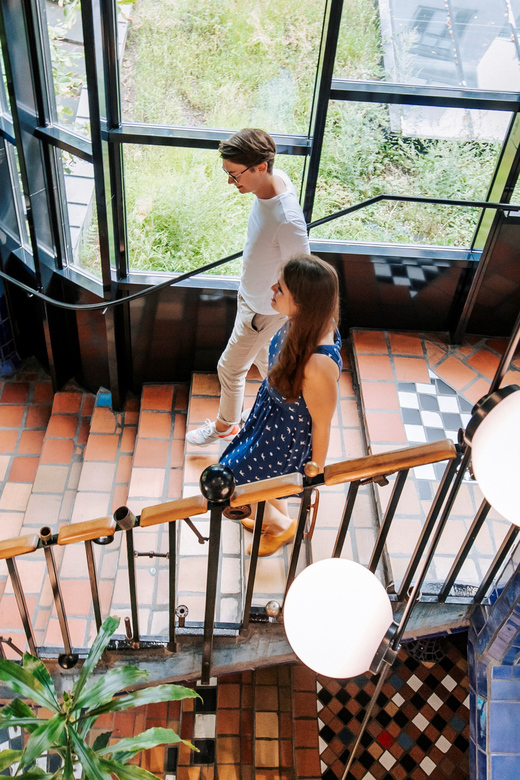
The top two floors are used for temporary exhibitions. These displays bring contemporary art into the same building as Hundertwasser’s permanent collection, giving you a chance to compare his ideas with newer work.
The exact content changes, so the temporary portion will depend on the date of your visit. One current area is described as a garage exhibition focused on ecology, sustainability, and urbanity. That subject fits the museum well. It extends the conversation beyond one artist and asks how cities can respond to environmental pressures.
I would make time for these upper floors rather than treating them as an optional extra. The permanent display explains Hundertwasser’s principles, while the temporary exhibitions show how questions about nature, public space, and city life continue to matter. The contrast can make the entire visit feel more current.
The booking information says the ticket includes access to the contemporary art exhibition and the current garage exhibition. Another note says you can visit the permanent exhibition, one special exhibition, or buy a combination ticket for both. Since the wording is not perfectly clear, check that your chosen ticket covers the areas you want to see.
A few more Vienna outings worth weighing up
- Vienna: Classic Ensemble Vienna in St. Peter’s Church Ticket
★ 4.7 · 4,819 reviews - Vienna: Tickets for Mozarthaus Vienna with Audio Guide
★ 4.2 · 2,344 reviews - Vienna: Skip-the-Line Entrance Ticket to the Danube Tower
★ 4.5 · 2,303 reviews - Sigmund Freud Museum Ticket
★ 4.6 · 1,668 reviews
A museum visit that works at your own pace
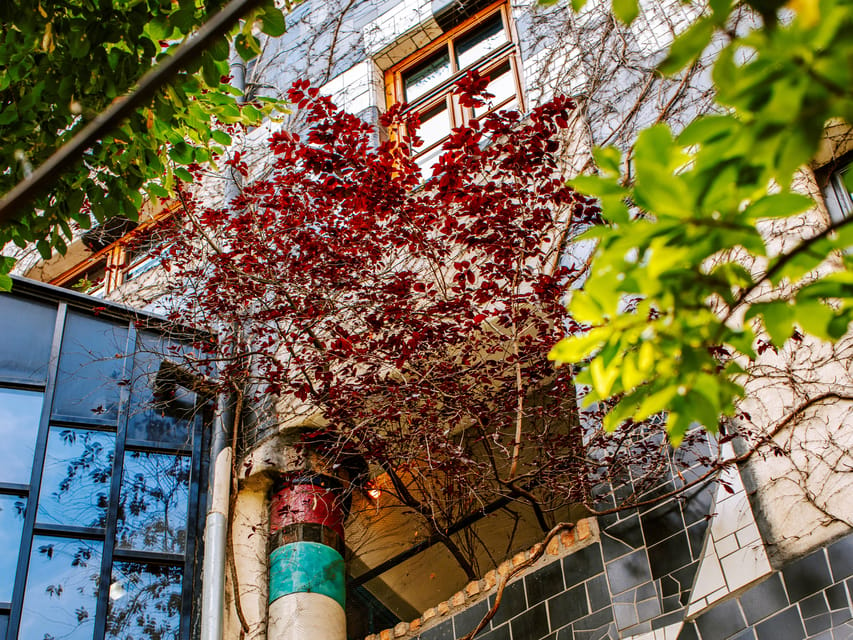
This is a one-day ticket rather than a tightly timed guided tour. That makes it easier to fit into a Vienna sightseeing plan. You can visit after exploring the city center, spend a quiet afternoon here, or use it as a break from larger historic attractions.
The listed price is about $18 per person. That is fair if you use the ticket for the permanent collection and the temporary displays, especially since the museum offers more than a small selection of paintings. The value is strongest when you take time with the architecture, models, exhibition explanations, and upper-floor displays.
If you only want a quick look at the building, the price may feel less attractive. This is not a huge museum, and people looking for several hours of large-scale collections may find it modest. Its appeal comes from the unity of the experience rather than sheer size.
Plan on moving slowly. The colorful presentation can make you want to photograph everything, but the models and ecological material reward closer attention. The visit is also suitable for different age groups. The unusual building and bold art give younger visitors something immediate to notice, while the environmental ideas offer more serious material for adults.
Finding the museum by public transport
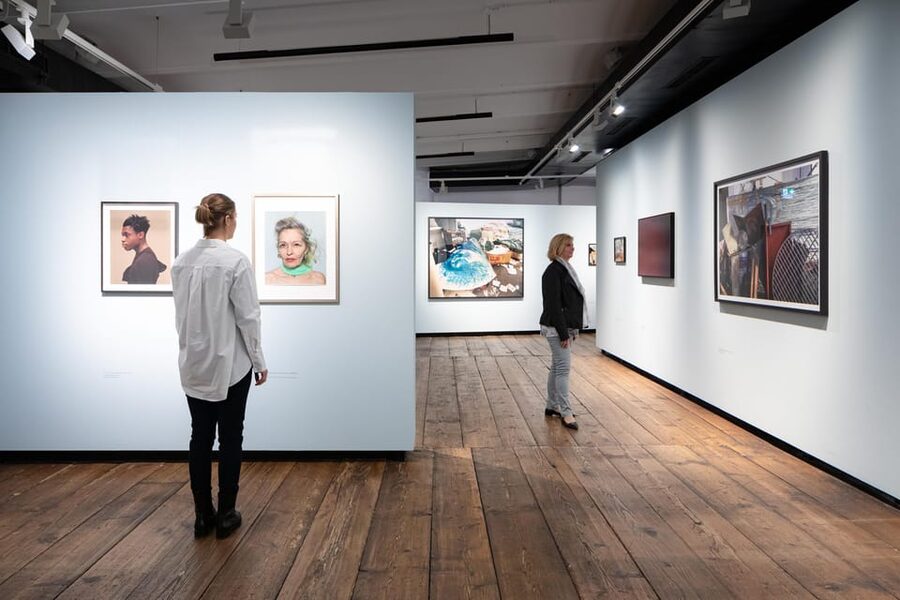
The museum is reached by tram from central Vienna. From Schwedenplatz, take the U1 or U4, then continue on tram line 1 toward Prater Hauptallee and get off at Radetzkyplatz.
From Landstraße or Wien Mitte, take the U3 or U4, then transfer to tram line O toward Praterstern and get off at Radetzkyplatz. These instructions are useful because the museum is not presented as a major central landmark like St. Stephen’s Cathedral. Give yourself a little time to make the tram connection, especially if you are fitting the visit between other bookings.
The meeting point information is straightforward, but it does not give a detailed walking route from the tram stop. Have the destination map or booking app ready. The digital ticket system can send a reminder and map, which is handy when you are moving around Vienna without a printed plan.
The museum is wheelchair accessible. That matters here because the experience is spread across several floors, and accessibility should be confirmed as part of your planning rather than left to chance.
Café Friedlich and the green courtyard
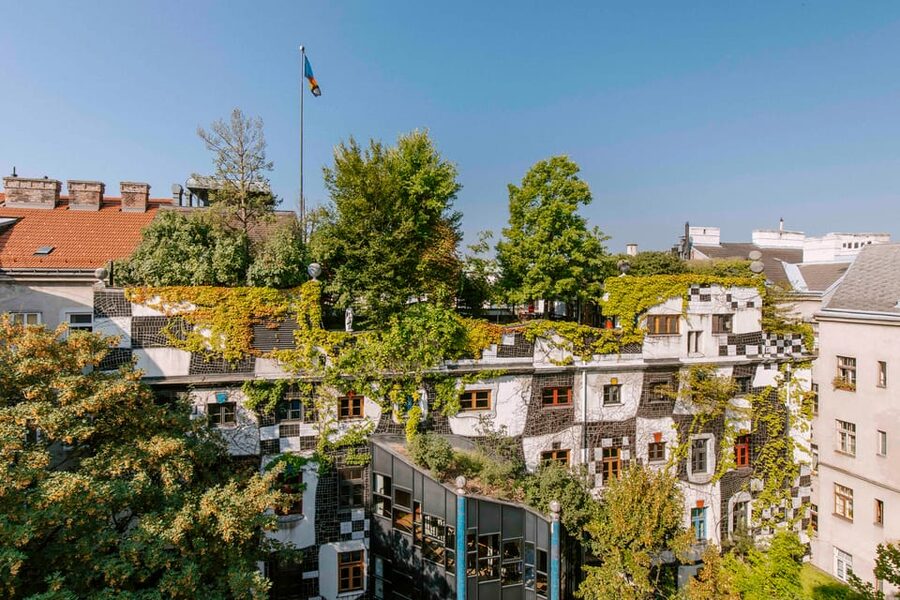
Do not rush away after the exhibitions. Café Friedlich gives you a natural pause, and the courtyard adds another layer to the museum’s relationship with nature.
The café offers both savory and sweet choices, making it useful for more than a coffee stop. You can use it for a light meal, a dessert, or a quiet rest after the galleries. The setting is part of the attraction. After looking at Hundertwasser’s buildings and ecological principles, sitting among greenery makes the ideas feel less abstract.
The café is also a practical reason to allow more time than the bare minimum. You do not need to treat the museum as a quick indoor stop. A visit followed by food in the courtyard can make a good half-day plan, particularly if you want something calmer after walking through Vienna.
The museum shop is another small plus. It carries creative souvenirs, and some items are described as surprisingly affordable. That gives you a chance to take home something connected to the artist without assuming every museum shop will be expensive.
What the visit does particularly well
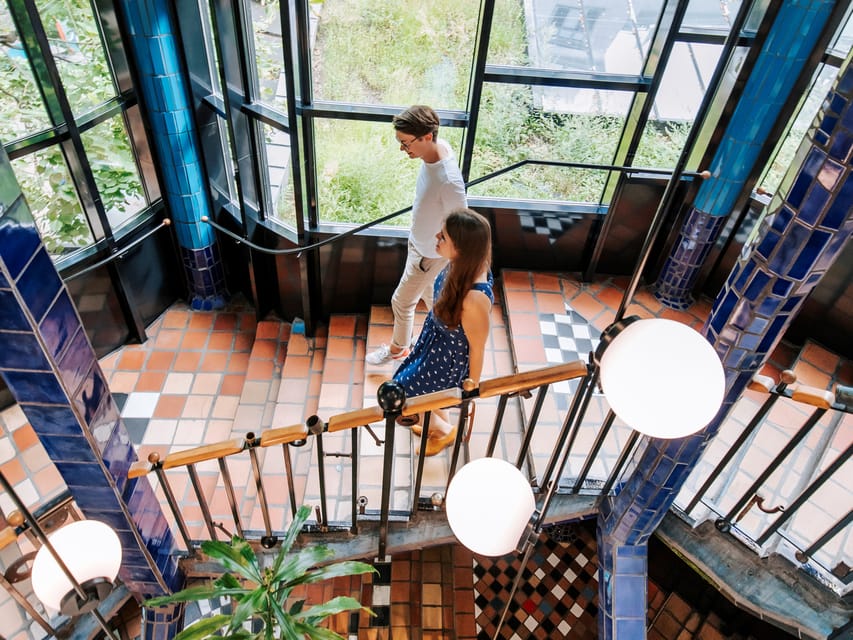
The strongest part of KunstHausWien is its consistency. The paintings, building, models, environmental material, and courtyard all support the same central question: how should people build and live?
I also like that the museum presents Hundertwasser as more than a colorful eccentric. His work can seem whimsical, but the displays show a determined artist and activist who wanted architecture to feel more humane and closer to nature. That context adds weight to the bright colors and unusual shapes.
The visit is also friendly to first-time art museum visitors. You do not need a background in modern art to respond to the colors or the odd forms. At the same time, people who already admire Hundertwasser can expect to find familiar works alongside material that explains his architectural and ecological thinking.
The temporary exhibitions add variety, but they are also the least predictable part of the visit. Their quality and subject will change. Check what is showing on your date if contemporary art is a major reason for booking.
Things to consider before paying
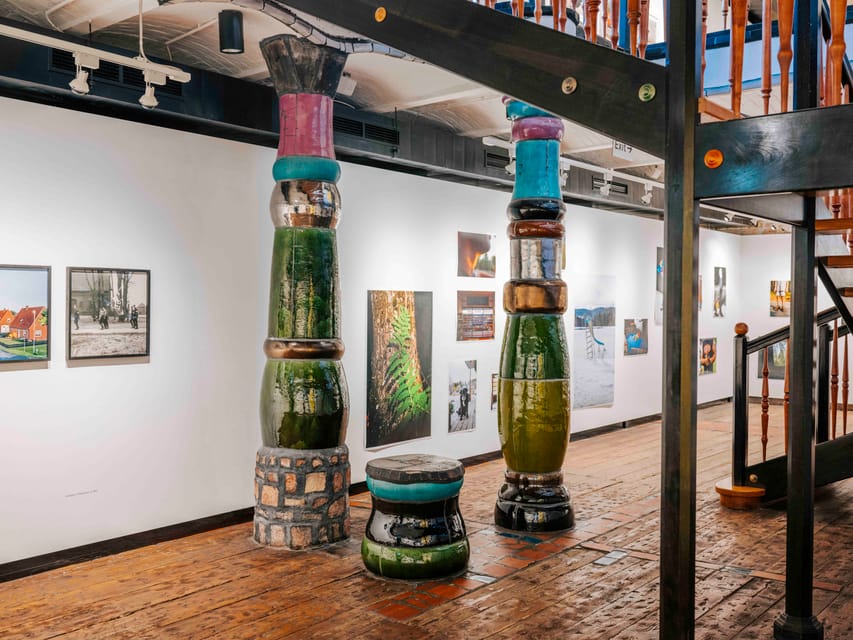
The biggest practical question is the audio guide. Some information lists it as included in English, French, and German, while the ticket details also list the Hundertwasser Museum audio guide as an extra €4. Since one visitor found it essential because the paintings lacked enough nearby explanation, I would budget for it unless your booking clearly confirms inclusion.
A second consideration is the ticket type. The information describes access to the permanent collection, contemporary exhibition, and garage exhibition, but also says that some visitors may choose a single section or a combo ticket. Read the exact option before payment so you do not pay for areas you do not plan to visit, or miss an exhibition you expected to see.
Finally, do not confuse a small museum with a thin experience. KunstHausWien is compact compared with Vienna’s major art institutions, but its architecture and subject give it a clear identity. If you prefer grand halls packed with famous works, this may not be your first choice. If you like unusual buildings, bold art, and ideas about how cities should work, it is a smart addition to your Vienna plans.
Should you book KunstHausWien?
Book it if you want an art visit with a strong sense of place. The museum suits anyone interested in Hundertwasser, experimental architecture, ecological design, colorful modern art, or a relaxed stop with a café and courtyard.
I would especially recommend it to first-time visitors who want something different from Vienna’s imperial interiors, and to families who need an attraction with visual appeal at several levels. The $18 price is reasonable when your ticket includes the permanent and temporary exhibitions, but confirm the ticket combination and audio guide details first.
Skip it only if your schedule is very tight or you want a large museum with hundreds of major works. For most people with room for a thoughtful half-day, the unusual building, clear environmental message, and Café Friedlich make this a worthwhile choice.
FAQ
Where is KunstHausWien located?
KunstHausWien is in Vienna, Austria. From Schwedenplatz, take tram line 1 toward Prater Hauptallee to Radetzkyplatz. From Landstraße or Wien Mitte, take tram line O toward Praterstern to Radetzkyplatz.
How much does admission cost?
The listed price is $18 per person. The final value depends on which exhibition areas and add-ons are included in your selected ticket.
What does the permanent exhibition cover?
The first two floors cover Friedensreich Hundertwasser’s art, life, artistic principles, ecological commitment, building models, and architectural ideas.
Where are the temporary exhibitions?
The temporary exhibitions are on the top two floors. These include contemporary art displays and a garage exhibition focused on ecology, sustainability, and urbanity.
Is an audio guide available?
An audio guide is available in English, French, and German. The information lists it as a €4 extra in one place and as included in another, so check the exact ticket terms before booking.
Can I cancel my ticket?
You can cancel up to 24 hours in advance for a full refund. The ticket is valid for one day, and reserve-now-pay-later booking is available according to the activity details.
Just reviewed in Vienna
- World War II History Vienna Old Town Private Walking Tour★ 4.8 · 9 reviews
- Vienna: Wine Tasting E-Bike Tour★ 4.9 · 46 reviews
- Vienna: Winery and Wine Tasting Tour with a Wine Expert★ 5.0 · 5 reviews
- Vienna: Unforgettable Private City Tour★ 5.0 · 7 reviews
- Vienna Urban Art Tour: Explore a different side of Vienna!★ 3.8 · 14 reviews
- Vienna: Concert by the Vienna Baroque Orchestra★ 4.6 · 56 reviews
- Vienna: Sunday Brunch Danube Cruise & Live Music★ 4.2 · 42 reviews
- Vienna Supreme Orchestra at Palais Niederösterreich★ 4.8 · 10 reviews
Museums, compared.

Skip-the-Line Sisi Museum, Hofburg and Gardens Tour
Read our review →
Vienna Kunsthistorisches Museum Day Admission Ticket
Read our review →
St. Stephen’s Cathedral & Dom Museum Wien Tickets
Read our review →
Skip-the-Line Hofburg and Empress Sisi Museum Tour
Read our review →
Combo Ticket: Kunsthistorisches Museum & Imperial Treasury
Read our review →Browse the lists this tour appears in