
Reviewed · VIENNA CLASSICAL CONCERTS
Vienna: Romantic Classics Piano, Violin, and Cello Concert
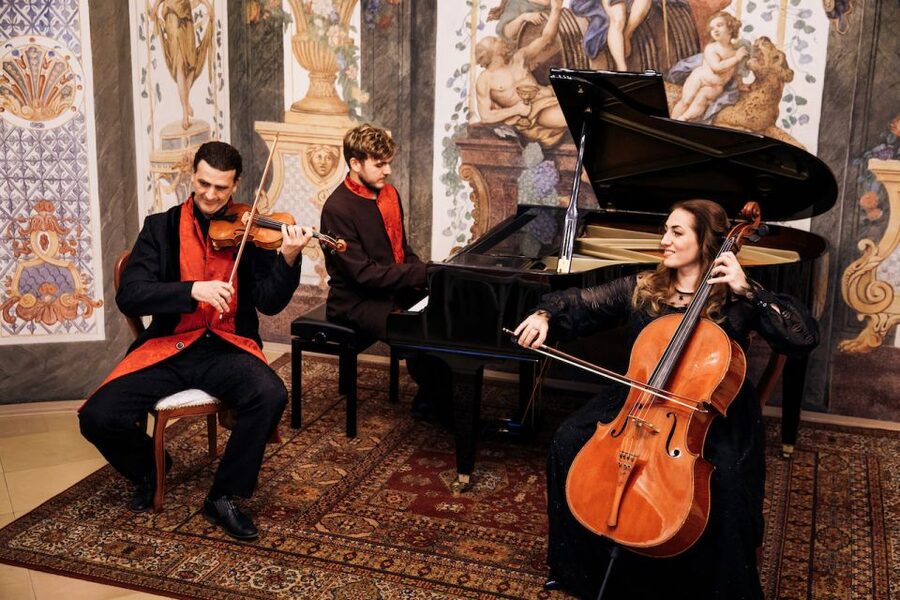
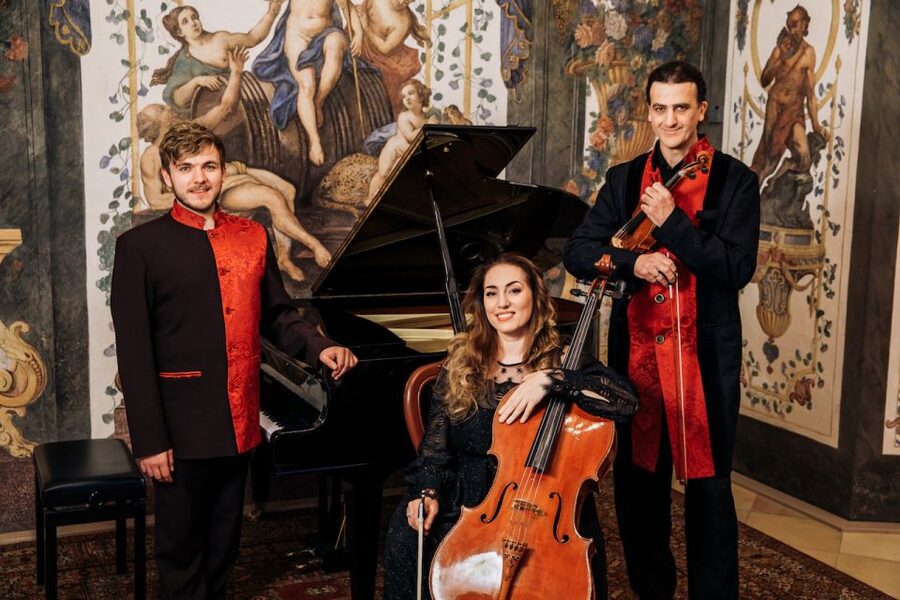
Vienna’s Romantic Classics concert puts famous melodies in a small, historic room rather than a huge concert hall. Inside the frescoed Sala Terrena, you sit close to the piano, violin, and cello as the program moves from Beethoven’s Moonlight Sonata to Schubert’s gentle Trio in E-flat Major.
I like the 90-minute length, which fits neatly into an evening of sightseeing, and I like the musical range. You get familiar favorites such as Chopin, Mozart, Liszt, and Saint-Saëns, along with shorter works that keep the program moving. The main caution is practical: refreshments during the break are not included, and cash may be needed if you want to buy one outside the room.
Key points
- Historic Sala Terrena setting: Hear the concert among expressive frescoes in a venue only 150 meters from St. Stephen’s Cathedral.
- A broad Viennese program: The music includes Beethoven, Mozart, Chopin, Liszt, Schubert, Brahms, Haydn, Bach, Paganini, Saint-Saëns, and Massenet.
- Three seating levels: Pick a student ticket, a back-row ticket, or a seat closer to the performers.
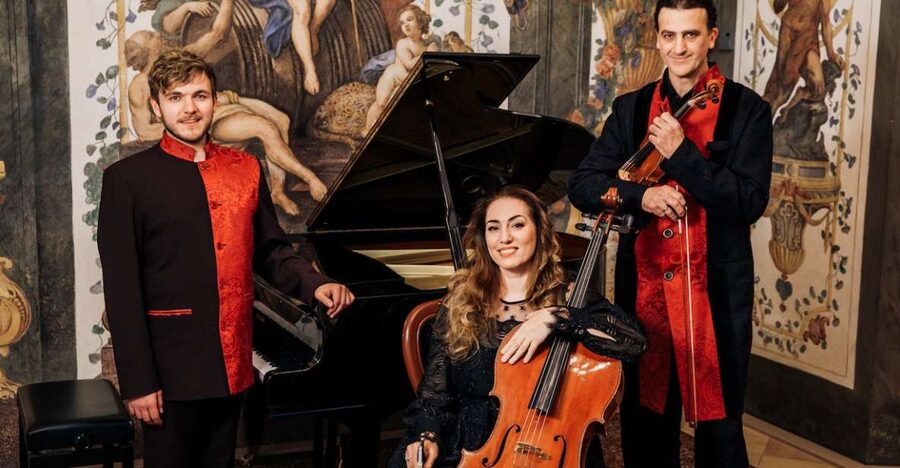
- Named performers: Violinist Claudio Bentes appears with piano virtuoso Dushan Sretovic and soloist Teodora Miteva.
- Simple city-center access: Enter through the Deutschordenskirche gate and look for the Concerts in the Mozarthaus poster stand.
- Flexible booking: Cancellation is free up to 24 hours before the concert, and you can reserve now and pay later.
A Small Room With a Big Viennese Sound
The appeal begins with the room. The Sala Terrena is known for its expressive frescoes, and its intimate scale keeps the performers within easy sight. This is not a distant stage where the orchestra becomes a blur of black coats and moving bows. You can watch the musicians work through each phrase.
The venue is also easy to add to a central Vienna day. It sits only 150 meters from St. Stephen’s Cathedral, so you can pair the concert with a walk through the old center. The meeting point is at the Deutschordenskirche gate, where a poster stand identifies concerts connected with Mozarthaus.
Give yourself at least 15 minutes before the start. That buffer matters in Vienna’s old center, where a short distance can still involve a courtyard, gate, or entrance that is easy to miss. You will also have time to find the cloakroom and settle into your seat without rushing.
The small room has a clear advantage for chamber music. One detailed assessment of the event praised the acoustics, noting that each note could be heard with clarity and depth. That is exactly what you want from piano, violin, and cello: not sheer volume, but the sound of separate instruments answering one another.
More classical concerts in Vienna:
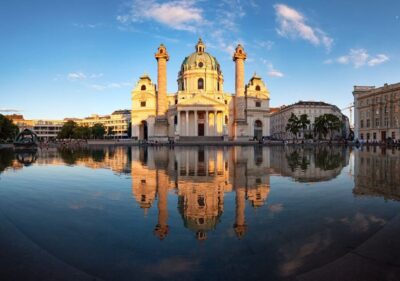
- Vienna: Vivaldi’s Four Seasons Concert in Karlskirche
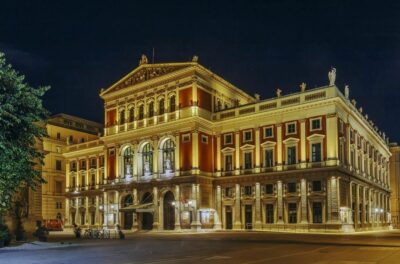
★ 4.7 · 14,951 reviews - Vienna: Classical Concert in the World-Famous Musikverein
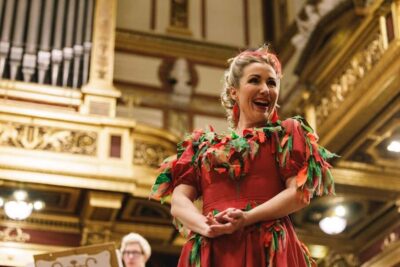
★ 4.6 · 6,673 reviews - Vienna: Mozart Concert at the Golden Hall
★ 4.6 · 3,986 reviews
What the 90-Minute Program Gives You
The title Romantic Classics is broad, and the program is broad too. It is not a single composer portrait or a narrow survey of one musical period. Instead, it strings together well-known pieces and short works, giving you many recognizable moments in one sitting.
The concert begins with Joseph Haydn’s Trio all’ungarese, Hob XV:25. Its three sections, Andante, Poco Adagio, and Finale, Rondo, provide a proper chamber-music opening. The finale brings a lighter, more active close to the first work, after the calmer middle section.
Beethoven follows with the Adagio from his Moonlight Sonata. This is one of the most familiar piano pieces in the classical repertory, and the quiet pace rewards close listening. In a small room, the soft, repeated figures can feel more personal than they do in a large concert setting.
Mozart’s La tartine de beurre, also known as Das Butterbrot, adds a playful turn. The short piece is a useful change of mood after Beethoven’s solemn opening. It also reminds you that famous composers did not write only grand, serious works.
The first half continues with Beethoven’s Sonata Op. 2, Allegro con brio. Compared with the Moonlight Sonata excerpt, this movement is more energetic and direct. The contrast gives the piano part room to show both delicacy and speed.
Franz Liszt’s Un sospiro brings the program back to a lyrical, polished style. Liszt is often linked with technical fireworks, but this piece depends on flowing lines and a singing quality. It should appeal to you if you want the emotional side of Romantic piano music without an entire evening devoted to Liszt.
Chopin, Bach, Paganini, and the Art of Short Pieces
Chopin receives two important entries: the Nocturne in C minor, Op. 48, No. 1, and the Étude Op. 10, No. 1 in C major. Together they show two sides of Chopin’s writing.
The Nocturne has the reflective mood many people expect from Chopin, while the Étude is built around demanding piano technique. Hearing both in the same program lets you compare melody and virtuosity rather than treating Chopin as a single style.
The program then shifts to Johann Sebastian Bach’s Cello Suite in G major, BWV 1007, Allegro. A cello suite reduces the musical texture to one instrument, so the performance depends heavily on phrasing and tone. In the Sala Terrena, you can focus on the cello’s line without a large ensemble filling the room.
Niccolò Paganini’s Caprice 13 brings the violin into sharper focus. Paganini’s caprices are associated with demanding violin technique, and this selection adds a bright burst of virtuoso playing after Bach’s more measured solo writing.
Camille Saint-Saëns supplies The Swan, one of the program’s most familiar lyrical pieces. Jules Massenet’s Thaïs, Meditation, follows with another graceful melody. These works are short, recognizable, and easy to appreciate even if you do not know much about classical music.
That mix is one of the concert’s strongest features. You do not need to prepare by listening to an entire symphony or learning a composer’s life story. The selections give you a series of musical entry points, with enough variety to keep the 90 minutes from feeling repetitive.
The Final Schubert Trio
The program closes with Schubert’s Trio in E-flat Major, Op. 100, Andante con moto. This is a more substantial ending than another short encore-like piece, and its warm, flowing character gives the concert a thoughtful finish.
Schubert’s chamber music is especially suited to a small venue. Piano, violin, and cello share the musical conversation, and the appeal comes from how the parts support and interrupt one another. You are not simply listening to a melody over accompaniment. You are following three instruments as they pass the musical idea around.
The final selection also brings the concert back to the trio format used at the start with Haydn. That gives the full program a sense of shape: an opening trio, a central sequence of solo and shorter works, then a longer trio to close.
A different sort of day out in Vienna:
- Vienna: Skip-the-cashier-desk-line Giant Ferris Wheel Ride
★ 4.5 · 7,859 reviews - Vienna: Schönbrunn Palace & Gardens Skip-the-Line Tour
★ 4.7 · 7,739 reviews - Vienna: Light of Creation Votive Church Immersive Light Show
★ 4.8 · 6,779 reviews - Vienna Spanish Riding School Guided Tour
★ 4.7 · 6,765 reviews
The Musicians You Will Hear
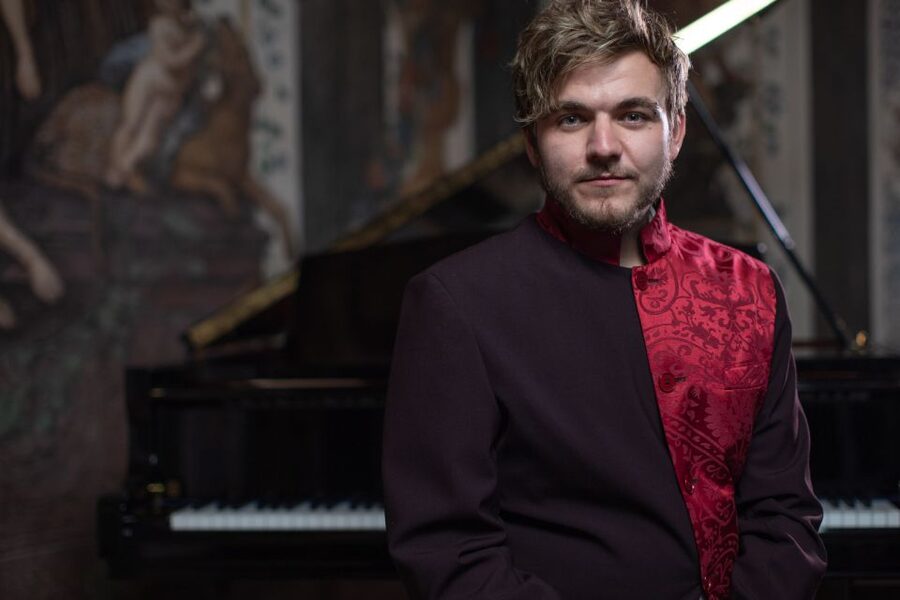
The advertised performers include violinist Claudio Bentes, piano virtuoso Dushan Sretovic, and soloist Teodora Miteva. Dushan Sretovic is noted for international performances and Chopin interpretations, making the two Chopin selections a natural point of interest.
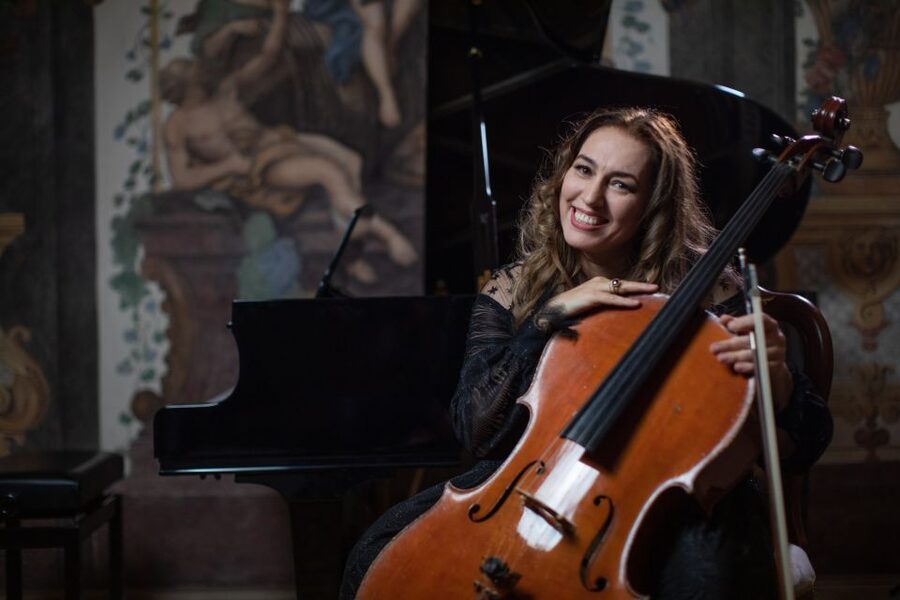
Claudio Bentes is the violinist named for the series, while Teodora Miteva is described as an award-winning soloist who has taken part in numerous international competitions. The supplied details do not assign every listed piece to a particular musician, so you should think of the evening as a shared chamber performance rather than a single-artist recital.
The intimate room changes how you watch the music. You can see the physical work behind a fast étude or Paganini caprice, then notice the quieter control needed for The Swan or Schubert’s Andante con moto. One of the most praised features of the experience is the closeness to the musicians, which adds to the sense of connection.
The setting also helps with balance. A small venue can expose a weak performance, but it can also make precise playing more rewarding. The available assessment of the concert specifically praised the performers as accurate, expressive, and well coordinated.
Seats, Sightlines, and Sound
You can choose among student tickets, back-row tickets, and seats closer to the performers. The best choice depends on what you value.
A closer seat makes sense if you want to watch bow movement, hand position, and facial expression. It is also the better choice if the room’s visual atmosphere matters as much to you as the music. The back row may suit you if you prefer a wider view of the Sala Terrena and want to spend less.
The student ticket offers a lower-cost route, though eligibility requirements are not stated in the supplied details. Check the conditions when booking rather than assuming every student qualifies.
At $69 per person, the concert is not the cheapest classical-music option in Vienna. Still, the price includes the performance and cloakroom, and the 90-minute format gives you a focused cultural activity in a central historic venue. You are paying for the room, the location, the live musicians, and the chance to hear a carefully selected program without committing to a much longer evening.
The value improves if you already plan to be around St. Stephen’s Cathedral. There is no need to make a separate trip across the city, and the concert can provide a calm change of pace after a day spent walking through Vienna.
What to Know About the Break
The practical information suggests a break during the performance. Restrooms are available, but signage may not be especially clear, so ask staff if you cannot find them quickly.
Refreshments are not built into the ticket. Drinks may be available for purchase outside during the break, but cash is required according to the supplied details. I would not count on a drink being included, and I would carry some cash if that matters to you.
This is a minor issue, but it is worth knowing before you arrive. A concert in a historic room often has fewer modern conveniences than a large commercial venue. The atmosphere is part of the appeal, while the tradeoff can be less obvious signage and fewer included extras.
Who Will Enjoy This Concert Most
I would recommend this concert to anyone who wants a compact classical-music evening in central Vienna. It suits first-time listeners because the program includes many famous melodies, yet it offers enough range for people who already know Beethoven, Chopin, or Schubert.
It is also a good choice if you care about atmosphere. The frescoes and close seating make the room part of the experience rather than a plain container for the music. If you want the grand scale of a symphony orchestra, however, this is not the right format. The program is built around piano, violin, cello, and selected solo works.
Families with older children may find the 90-minute length manageable, though the supplied information does not specify an age policy. Students should check the student-ticket conditions before booking.
The event is wheelchair accessible. English and German are available, and the host or greeter can communicate in either language. That helps with arrival, seating, and basic questions even if you do not speak German.
Arrival Tips for Deutschordenskirche
Plan to reach the area 15 minutes before the scheduled start. Enter through the gate at Deutschordenskirche, not simply the nearest entrance you spot on a map.
Look for the poster stand connected with concerts at Mozarthaus. The location is close to St. Stephen’s Cathedral, but the exact gate matters. Arriving early gives you time to orient yourself, use the cloakroom, and find the Sala Terrena.
Starting times vary, so check availability for the date you want. The duration is fixed at 90 minutes, but the beginning time is not one universal daily schedule.
The booking terms are helpful for a changing itinerary. You can cancel up to 24 hours in advance for a full refund, and the reserve-now, pay-later option lets you hold a place without paying at the time of booking.
Should You Book the Romantic Classics Concert?
Book it if you want familiar classical music in an intimate historic room, especially if you are already sightseeing near St. Stephen’s Cathedral. The combination of frescoes, close seating, and a program that moves from Mozart and Beethoven to Chopin and Schubert gives you a lot in 90 minutes.
I would choose a closer seat if this is a special musical evening for you. Choose the back row if you mainly want the atmosphere and a lower price. Bring cash for any break-time refreshment, and do not expect drinks to be part of the ticket.
Skip it if your priority is a full orchestra, a large concert hall, or a long formal production. For a compact chamber concert with strong acoustics, central access, and a wide selection of famous works, the $69 price is reasonable.
FAQ
Where does the concert take place?
The concert takes place in the Sala Terrena in Vienna.
How far is the venue from St. Stephen’s Cathedral?
The venue is 150 meters from St. Stephen’s Cathedral.
Where should I meet for the concert?
Enter through the gate at Deutschordenskirche, where you will find a poster stand for concerts at Mozarthaus.
How early should I arrive?
You should arrive 15 minutes before the concert begins.
How long does the concert last?
The concert lasts 90 minutes.
Which musicians are named for the performance?
The named performers are violinist Claudio Bentes, pianist Dushan Sretovic, and soloist Teodora Miteva.
Which composers are included in the program?
The program includes Haydn, Beethoven, Mozart, Liszt, Chopin, Bach, Paganini, Saint-Saëns, Massenet, and Schubert. Brahms is also included in the advertised description of the musical selection.
What seating choices are available?
You can choose a student ticket, a back-row ticket, or a ticket closer to the performers.
Is the concert wheelchair accessible?
Yes, the activity is wheelchair accessible.
Can I cancel for a refund?
Yes. You can cancel up to 24 hours before the concert for a full refund.
Can I reserve without paying immediately?
Yes. A reserve-now, pay-later option is available.
What languages are available?
The host or greeter can communicate in English and German.
Is a cloakroom included?
Yes, cloakroom use is included with the concert.
Are refreshments included?
No. Refreshments are not included in the ticket, and purchases during the break may require cash.
Just reviewed in Vienna
- World War II History Vienna Old Town Private Walking Tour★ 4.8 · 9 reviews
- Vienna: Wine Tasting E-Bike Tour★ 4.9 · 46 reviews
- Vienna: Winery and Wine Tasting Tour with a Wine Expert★ 5.0 · 5 reviews
- Vienna: Unforgettable Private City Tour★ 5.0 · 7 reviews
- Vienna Urban Art Tour: Explore a different side of Vienna!★ 3.8 · 14 reviews
- Vienna: Concert by the Vienna Baroque Orchestra★ 4.6 · 56 reviews
- Vienna: Sunday Brunch Danube Cruise & Live Music★ 4.2 · 42 reviews
- Vienna Supreme Orchestra at Palais Niederösterreich★ 4.8 · 10 reviews
Vienna Classical Concerts, compared.
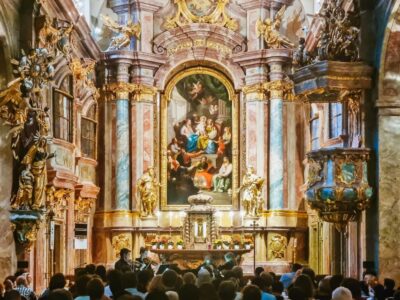
Classical Concert in St. Anne’s Church (Annakirche)
Read our review →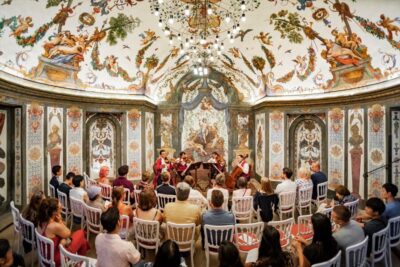
Vienna Classical Concert at St. Peter’s Church
Read our review →Classical Concert in St. Anne’s Church (Annakirche)
Read our review →Browse the lists this tour appears in