
Reviewed · VIENNA BIKE AND SEGWAY TOURS
Vienna by Bike 3-Hour All-In-One City Bike Tour in English
Vienna’s grand center makes more sense from a bicycle seat. In three hours, you can move from the Opera House and Hofburg to the Prater Ferris wheel, covering ground that would take much longer on foot. The route mixes imperial boulevards with modern Vienna, oddball architecture, and quieter stretches beside the Danube Canal.
I like the easy pace and the number of stops. You ride enough to feel that you are seeing the city, but you also pause for photos and short talks. I also like the guides’ personal touch. Lisa, Marco, Jan, Horst, Robert, and Karl have all been praised for adding humor, local tips, and clear history rather than simply reciting dates.
The main consideration is the route itself. This is a city overview, not a deep tour of Vienna’s old town interiors. You will see many major buildings from the outside, but you do not spend much time inside museums, churches, or palaces. A larger group can also make questions harder to ask.
Key points to know before you book
- Three hours on mostly easy routes: The ride is largely flat, with safe, well-surfaced paths and a relaxed pace.
- A wide sweep of Vienna: You cover the Ringstrasse, Heroes’ Square, Karlskirche, Hundertwasserhaus, the Danube Canal, and Prater Park.
- Comfortable bikes: Modern city bikes and helmets are provided. E-bikes have been available on some departures.
- Strong guide reports: Guides including Lisa, Marco, Jan, Horst, Robert, and Karl are often praised for humor, history, and care at crossings.
- Weather is not a deal breaker: The tour runs in rain, and ponchos are provided, though a wet ride can still be less pleasant.
- Good first-day choice: The route helps you decide which central sights deserve more of your time later.
Why a bicycle works so well in Vienna
Vienna is a large city with a compact historic core, but its most interesting sights are spread beyond the pedestrian center. On foot, you can easily spend a whole afternoon moving between the Opera House, Rathaus, Parliament, Karlskirche, and the Prater. By bike, those pieces fit into one clear picture.
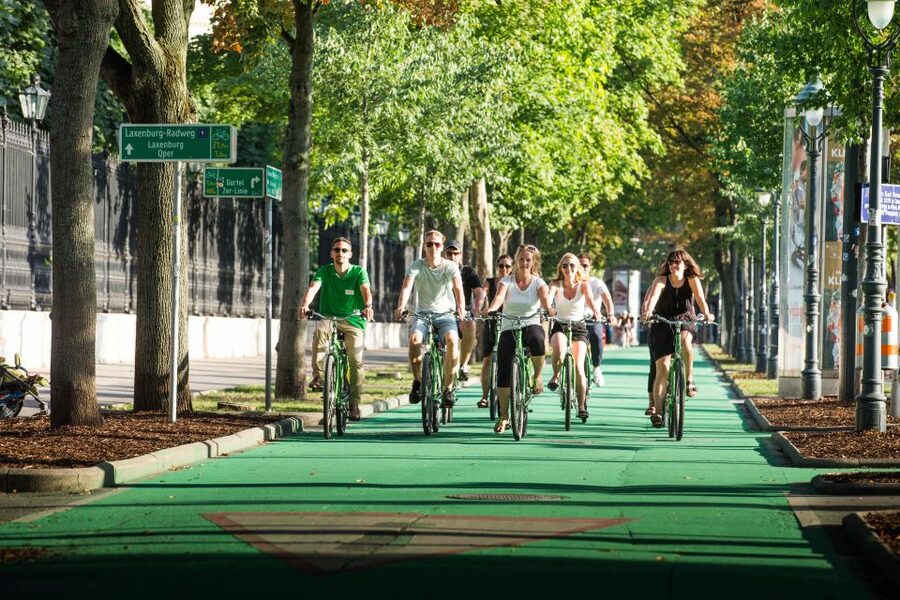
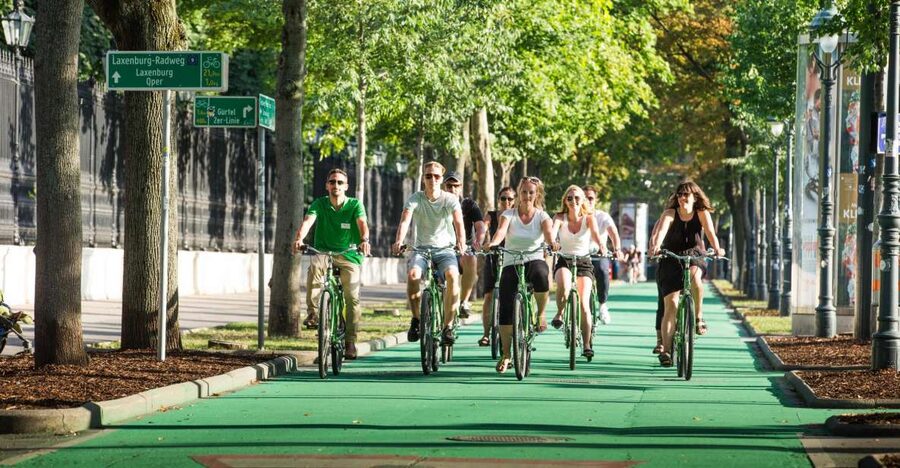
The tour uses bike lanes, cycle paths, and calm, well-surfaced streets where possible. You still need to watch traffic, crossings, pedestrians, and other cyclists, but the pace is set for sightseeing rather than speed. Guides have been praised for keeping an eye on both older riders and younger children at intersections.
The route is also mostly flat. That matters more than it may sound. You do not need to be a serious cyclist, and the comfortable city bikes make the ride approachable for casual riders. One family even managed the outing with a restless 12-year-old, while another rider with a sore foot used an e-bike and found the route manageable.
At $55 per person, the value comes from the amount of ground covered and the live commentary. You are paying for a guide, a bike, a helmet, route planning, and three hours of sightseeing. If you would otherwise use taxis or public transport to reach the Prater and the canal, the price becomes easier to justify. If you mainly want to explore the old town on foot, you may find a walking tour more focused and better suited to you.
More bike and segway rides around Vienna:
- Classic Vienna: 3-Hour Guided Bike Tour
★ 4.7 · 1,846 reviews - Wachau Valley Wine Tasting Bike Tour from Vienna
★ 5.0 · 829 reviews - Vienna City Segway Tour
★ 4.8 · 638 reviews
Starting at Franz Josefs Kai
The meeting point is at Franz Josefs Kai 45 in the first district. Schottenring station, served by the U2 and U4, is the nearest subway stop.
The beginning of the ride is useful for getting settled. You choose a bike, adjust yourself to the traffic, and learn how the group will move through the city. Arriving early makes sense, especially if you need a different bike size or want to ask about an e-bike.
The guide usually sets a steady rhythm rather than rushing from one sight to the next. Introductions can help the group feel less anonymous, and some guides use them to learn what people want from the ride. That is helpful in a mixed group, where one person may care about Habsburg politics and another mainly wants good photographs.
The tour is offered in English, with an English-speaking live guide. The provider also lists English and German-speaking guide support, so check the departure details when booking if language matters to you.
Ringstrasse: Vienna’s imperial showcase
The Ringstrasse is the backbone of the ride. This grand boulevard follows the line of Vienna’s former city walls, which were removed in the 19th century as the imperial city expanded and modernized.
Cycling here gives you a useful sense of scale. Instead of seeing the buildings as separate postcard stops, you watch them unfold along one long civic display. The route includes the Opera House, Rathaus, Vienna University, Parliament, the Hofburg area, and other buildings tied to the Habsburg Empire.
The Vienna State Opera is a Neo-Renaissance landmark and one of the city’s best-known performance buildings. You will admire it from outside, rather than attend a performance or tour the interior, but the stop gives your guide a chance to explain Vienna’s musical identity and the role of the boulevard in imperial city life.
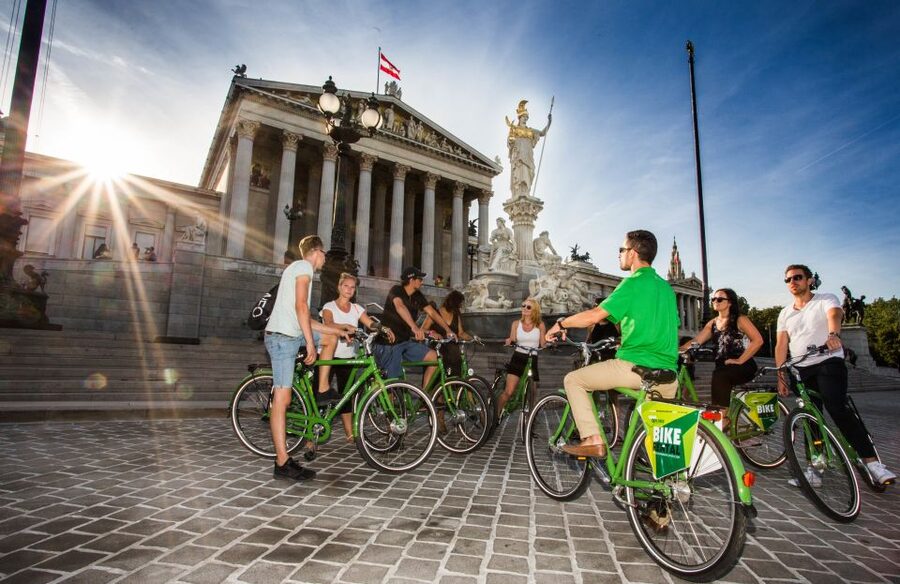
Rathaus brings a different mood. Its Gothic façade, towers, and ornate details make it one of the Ringstrasse’s most striking buildings. The Parliament buildings, designed in the 19th century, reflect the political ambitions of the Austro-Hungarian period. These stops are especially useful if you are new to Vienna because the architecture provides a fast lesson in how the empire presented power.
The advantage of seeing the Ringstrasse by bike is movement. You do not stand in one place listening to a long lecture. You hear a short explanation, take pictures, and then ride onward to the next building. Guides such as Jan, Marco, and Robert have been praised for explaining history in a way that does not become a flood of dates.
Heroes’ Square and the difficult 20th century
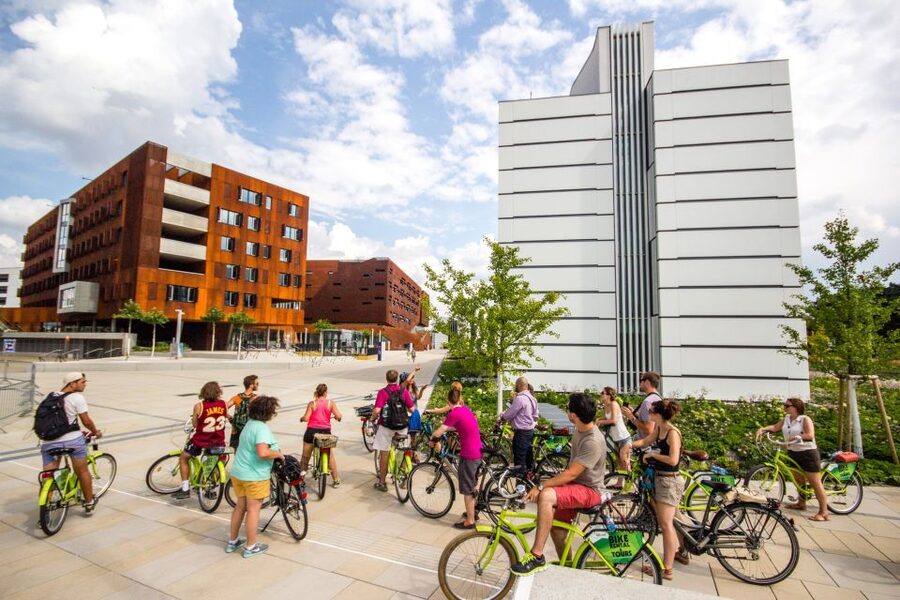
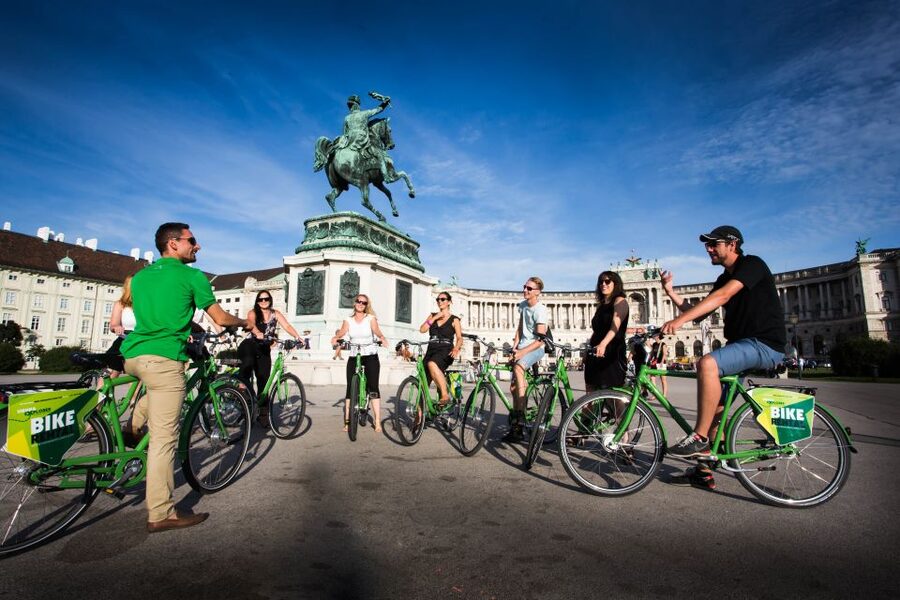
The ride continues toward Heroes’ Square, or Heldenplatz, near the Hofburg. The open space is framed by imperial buildings and monumental equestrian statues, but it also carries a darker political memory.
In 1938, Adolf Hitler delivered his Anschluss speech here after Nazi Germany annexed Austria. The stop offers a chance to connect Vienna’s imperial past with the political trauma that followed. Guides have also discussed Austria’s wartime history, the occupation of Hungary by the National Socialists, and family experiences connected with the war.
This part of the tour is valuable because it avoids presenting Vienna as only a city of palaces, waltzes, and coffeehouses. The history is treated as part of the city itself. The depth may vary with the guide and the time available, but several guides are known for handling difficult subjects with care.
You should expect an outdoor explanation, not a museum visit. If you want a detailed study of Nazism, Austria’s postwar politics, or the Hofburg collections, plan a separate visit. On this ride, the goal is to place major events on the map.
A different sort of day out in Vienna:
- Vienna: Vivaldi’s Four Seasons Concert in Karlskirche
★ 4.7 · 14,951 reviews - Vienna: Skip-the-cashier-desk-line Giant Ferris Wheel Ride
★ 4.5 · 7,859 reviews - Vienna: Schönbrunn Palace & Gardens Skip-the-Line Tour
★ 4.7 · 7,739 reviews - Vienna: Light of Creation Votive Church Immersive Light Show
★ 4.8 · 6,779 reviews
Karlskirche and the view at Karlsplatz
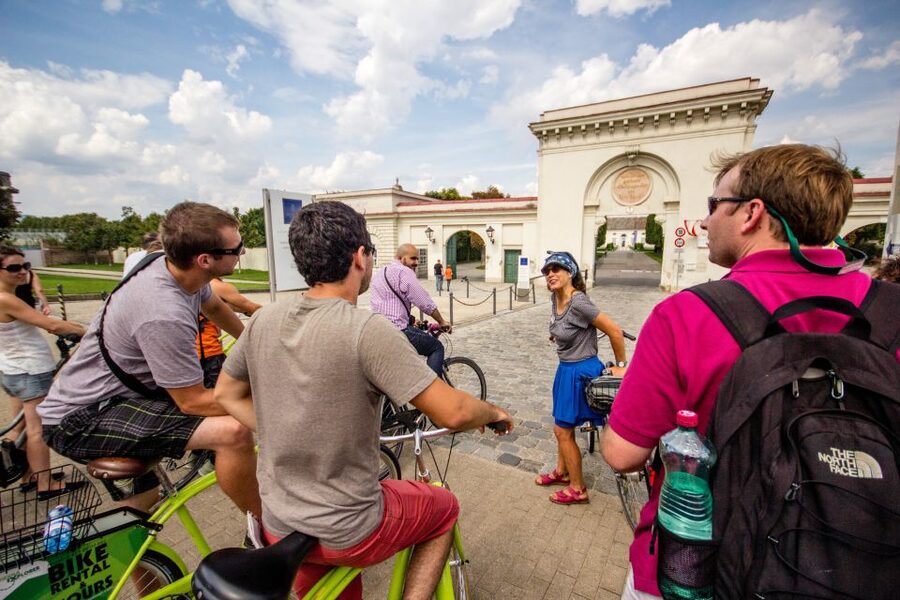
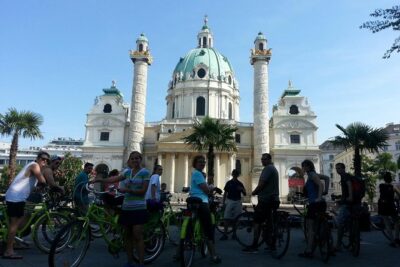
Karlskirche, on Karlsplatz, gives the tour one of its grandest architectural moments. Its large dome and paired columns are easy to recognize, and the church sits in a broad urban setting that makes a good photo stop.
The building also shows how Vienna’s rulers used architecture to express authority and faith. You can admire the exterior without spending time inside, which keeps the tour moving. If the church interests you, mark it as a place to return to later.
That is one of the smart uses of this ride. You get a quick look at a wide range of places, then you can choose where to spend more time. On a short Vienna visit, this can save you from guessing which sights deserve a closer look.
Hundertwasserhaus: Vienna gets playful
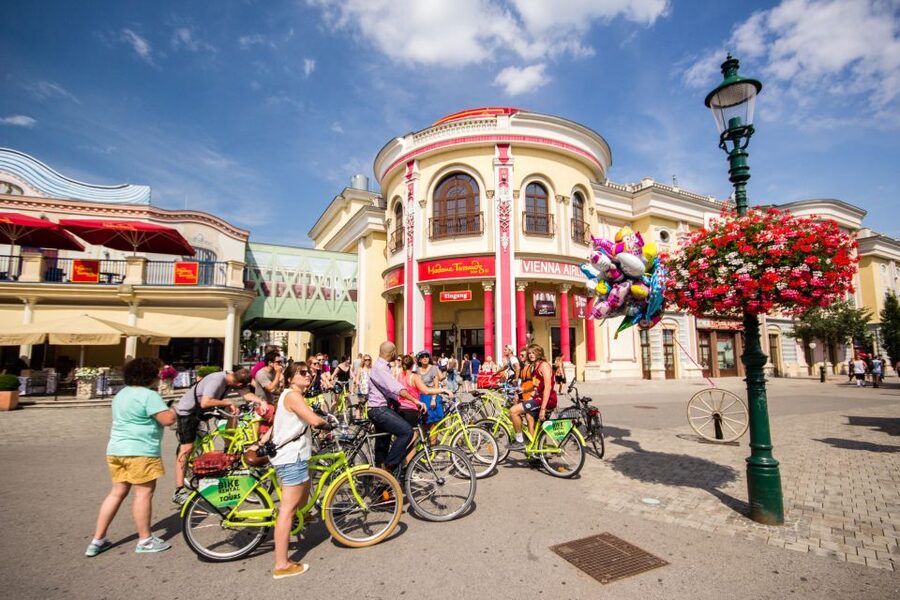
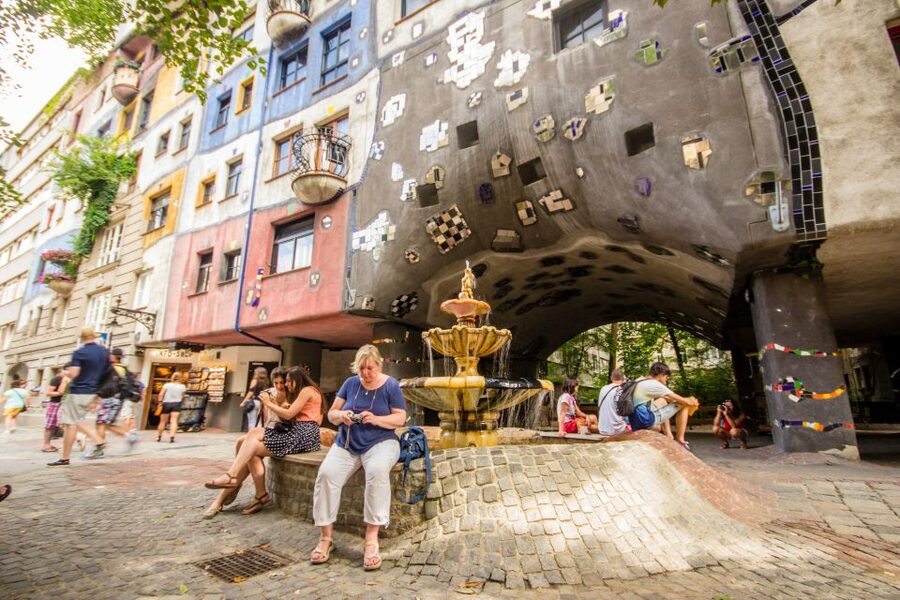
The Hundertwasserhaus is a sharp change from the formal Ringstrasse. Its uneven lines, bright colors, irregular windows, and plant-filled design reflect the work of Friedensreich Hundertwasser, whose architecture rejected strict uniformity.
The building is one of the tour’s most memorable stops because it looks unlike the imperial monuments seen earlier. You are not just moving through a sequence of grand facades. You are also seeing a more playful and experimental side of Vienna.
The stop works well for photographs, but keep your expectations clear. You view the exterior rather than enter private apartments. The nearby area adds to the appeal, and the guide can explain why the building matters within Vienna’s modern architectural story.
If you have already seen the Ringstrasse and old town, Hundertwasserhaus gives the ride welcome contrast. It is also a good reminder that Vienna’s identity did not end with the Habsburgs.
Along the Danube Canal
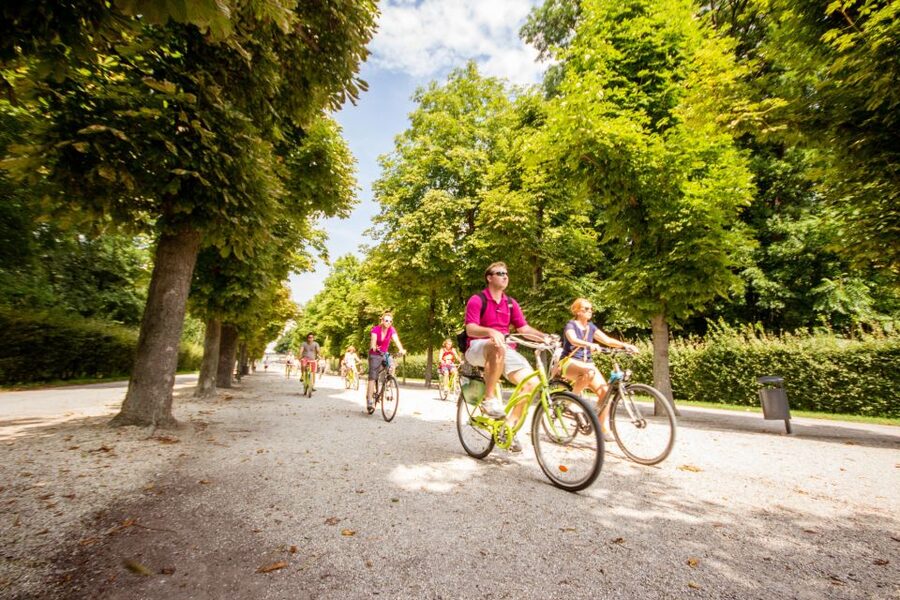
The ride beside the Danube Canal brings a quieter change of pace. You leave some of the formal city streets behind and cycle along the water, with time to enjoy the route rather than focus on one monumental building.
The canal is not the main Danube River, but it is an important urban waterway and a useful cycling corridor. This section helps break up the architecture-heavy part of the tour. You get a little air, a different view of the city, and a chance to keep pedaling between stops.
One guide has been praised for including museum-quarter views and the canal in the route, which shows that the exact order and emphasis can vary. The tour description promises the canal, but the guide may shape the ride around traffic, weather, and the group’s pace.
This is also where the physical side of the experience becomes noticeable. Three hours is not an intense workout, but it is more active than a bus tour. Wear comfortable clothes and bring water if you normally need it on a ride. The supplied instructions specifically call for comfortable clothing.
Prater Park and the giant Ferris wheel
The final major destination is the Prater, Vienna’s famous park, marked by its giant Ferris wheel. The wheel is one of the city’s most recognizable sights and gives the ride a satisfying finish.
The Prater also changes the feel of the city again. After the ceremonial Ringstrasse and the formal Hofburg district, you reach a large recreational space with a more relaxed mood. The guide may add local details here, including an explanation of why some parts of the park have trees but no bushes.
The Ferris wheel is a photo stop, not a ride included in this bicycle tour. If you want to ride it, plan that separately after the tour or on another day. The bike route gives you a first look and helps you understand where the park sits in relation to central Vienna.
After the Prater, you pedal back along the banks of a sidearm of the Danube. That return leg gives the tour a pleasant sense of closure and confirms how much more ground a bicycle can cover than a walking route.
Pace, group size, and guide quality
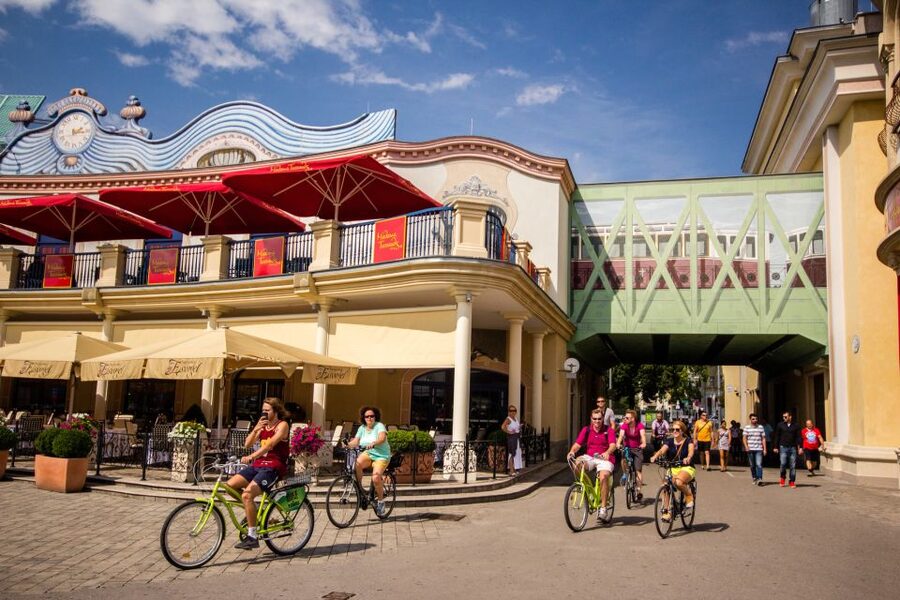
The strongest part of this experience is the guide. The names that come up repeatedly include Lisa, Marco, Jan, Horst, Robert, Karl, and others. Their styles differ, but the praised qualities are similar: clear English, humor, care at crossings, and an ability to answer questions.
Jan has been especially effective at combining architecture with history and looking after the youngest and oldest riders. Horst is known for funny stories and a lively way of explaining the city. Marco has handled questions ranging from Austrian politics to small details seen along the route. Lisa has been praised for keeping energy high even in wet weather.
A guide makes a big difference on a city ride. Without one, the Ringstrasse can become a string of impressive buildings with little connection between them. With one, you learn why the boulevard was created, how the buildings relate to imperial power, and how Vienna changed in the 20th century.
Group size is worth considering. One outing had 14 people, which is not enormous but is large enough for the guide to spend less time with each person. A few people have found it harder to ask questions when one or two riders hold the guide’s attention. If a small group matters to you, ask the operator about the departure size before booking.
The ride generally includes plenty of stops. One three-hour outing covered more than 10 kilometers, while still keeping an easy pace. You get a real bike ride, not a stop-start route where the bicycle feels like a prop.
Weather, bikes, and practical comfort
The tour runs in all weather conditions. Rain ponchos are provided when it is wet, which is a useful safety net, but a poncho does not make a rainy ride dry or warm. Check the forecast and dress for the conditions. In hot weather, an afternoon route may offer more shade, though that will depend on the day and the exact route.
The bikes are modern city bikes described as comfortable and easy to ride. Helmets are available, and several riders have praised both the bike condition and seat comfort. A small mechanical issue has occurred on at least one outing, but it was fixed quickly.
The route is not presented as difficult, yet you should be comfortable cycling for three hours with stops. Children have enjoyed it, and families have found the pace manageable. Still, the guide cannot remove every city-cycling risk, so follow instructions at intersections and stay with the group.
Free cancellation is available up to 24 hours before departure, and you can reserve now and pay later. Starting times vary, so check availability for the date you want. The meeting point is easy to reach by subway, with Schottenring nearby.
Who should book this Vienna bike tour?
I would choose this ride on a first or second day in Vienna. It gives you a map in your head, shows you the main imperial buildings, and points out places you may want to revisit. It is especially useful if you have only a couple of days.
You should book it if you like history with movement, want to cover more ground than walking allows, or enjoy seeing a city from ordinary streets rather than only from grand interiors. It also suits families and mixed-age groups who can manage a steady three-hour ride.
You may want another type of tour if your priority is entering the Hofburg, touring the Opera House, or spending long periods inside churches and museums. The old town is not the main focus, and some stops are brief exterior visits.
Should you book it?
Yes, if you want a lively introduction to Vienna and are comfortable on a bike. For $55, the combination of equipment, guide, history, and distance covered is fair, especially when you use the ride to plan the rest of your stay.
Book for the first part of your visit if possible. Bring comfortable clothes, arrive early at Franz Josefs Kai, and treat the tour as both sightseeing and orientation. Choose this experience for the Ringstrasse, the Prater, the canal, and the chance to understand how Vienna’s imperial, political, modern, and everyday sides fit together.
FAQ
How long is the Vienna bike tour?
The tour lasts three hours.
What language is the tour conducted in?
The live tour guide speaks English. The provider also lists English and German-speaking guide support.
Where does the tour meet?
Meet at Franz Josefs Kai 45, 1010 Vienna. The nearest subway station is Schottenring, served by the U2 and U4.
What sights are included?
The route includes the Ringstrasse, Vienna Opera House, Rathaus, Parliament buildings, the Hofburg area, Heroes’ Square, Karlskirche, Hundertwasserhaus, the Danube Canal, and Prater Park with its giant Ferris wheel.
Are bicycles provided?
Yes. Comfortable, modern city bikes are included.
Are helmets available?
Yes. Helmets are available for the ride.
Does the tour operate in rainy weather?
Yes. The tour operates in all weather conditions, and rain ponchos are provided in wet weather.
What should I wear?
Wear comfortable clothes suitable for cycling.
Can I cancel for a full refund?
Yes. You can cancel up to 24 hours in advance for a full refund.
Can I reserve now and pay later?
Yes. The booking option allows you to reserve your spot and pay later.
More 3-Hour Experiences in Vienna
- The unknown Vienna City- a guided walking tour in 3 hours
★ 4.7 · 137 reviews - Highlights of Vienna in a Historical & Cultural 3h Walking Tour
★ 5.0 · 74 reviews - 3-Hour Walking Tour of Vienna Central Cemetery
★ 4.7 · 71 reviews - Vienna: Tour RAXI (electric rickshaw) 3 hours in Vienna
★ 4.9 · 42 reviews
Just reviewed in Vienna
- World War II History Vienna Old Town Private Walking Tour★ 4.8 · 9 reviews
- Vienna: Wine Tasting E-Bike Tour★ 4.9 · 46 reviews
- Vienna: Winery and Wine Tasting Tour with a Wine Expert★ 5.0 · 5 reviews
- Vienna: Unforgettable Private City Tour★ 5.0 · 7 reviews
- Vienna Urban Art Tour: Explore a different side of Vienna!★ 3.8 · 14 reviews
- Vienna: Concert by the Vienna Baroque Orchestra★ 4.6 · 56 reviews
- Vienna: Sunday Brunch Danube Cruise & Live Music★ 4.2 · 42 reviews
- Vienna Supreme Orchestra at Palais Niederösterreich★ 4.8 · 10 reviews
Vienna Bike and Segway Tours, compared.
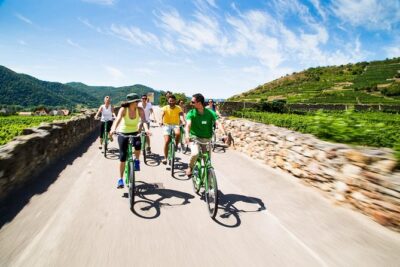
Wachau Valley Wine Tasting Bike Tour from Vienna
Read our review →
Browse the lists this tour appears in