Reviewed · PRIVATE
Semi-Private Tour: Central Europe &Balkans from Vienna to Athens
A 21-day road journey from Vienna to Athens gives you something few standard European tours can match: ten countries in one long sweep, moving from Austrian vineyards and Danube cities into Serbia, Bosnia, Montenegro, Kosovo, Albania, North Macedonia, and Greece. The route is packed with castles, old bazaars, monasteries, wine regions, and mountain towns.
I like the small maximum group of 10, which should make hotel pickups, border crossings, and sightseeing far easier than on a large coach. I also like the food angle, especially the farm visit near Shkoder, the cooking lesson at Kruja Castle, and the chance to try Albanian byrek, qofte, gjize, olive oil, wine, and raki.
The main caution is pace. You cover a huge amount of ground, and some days include several countries or long drives. At $7,315.17 per person, the value depends on how much you appreciate private transport, 3-star hotels, included breakfasts, and a guide handling the complicated logistics.
Key points to know before booking
- Vienna to Athens in 21 days: You cross ten countries, ending in Athens or at Igoumenitsa Port for a ferry to Corfu.
- Small-group road travel: The group is limited to 10 people, with private transport, hotel pickup, road costs, fuel, and international car insurance included.
- Food and wine are central: Expect Serbian, Albanian, Hungarian, Austrian, and Greek specialties, along with wine tasting, olive oil, and raki.
- Major UNESCO sights: The route includes Budapest, Mostar, Kotor, Ohrid, Berat, Gjirokaster, Meteora, and other protected historic sites.
- A guide can make or break the trip: One particularly praised guide is named Sokol, who is described as handling the journey smoothly and warmly.
- Bring energy for walking: Old towns, fortresses, cobbled streets, uneven ground, and hilltop monuments are part of the daily routine.
Vienna to Bratislava: a gentle start through wine country
The tour begins with hotel pickup in Vienna at 11 a.m. That is useful if you want to spend time in Vienna before the road trip begins, rather than rushing straight from an airport.
The first stop is Rust in Austria’s Burgenland wine region. The drive passes hilly vineyards and views toward Lake Neusiedl, a UNESCO protected area. Rust itself is a pleasant introduction to the smaller towns on this route, with colorful houses, flower boxes, old streets, and shops selling handmade items connected to wine production.
You have time to walk through the old center and visit vineyards overlooking the lake. This is an easy first day, but it also sets the pattern for the trip: short guided walks, scenic drives, and free time for food or shopping.
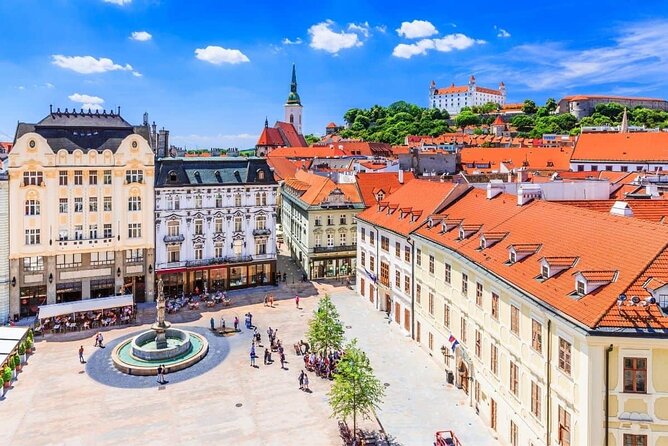
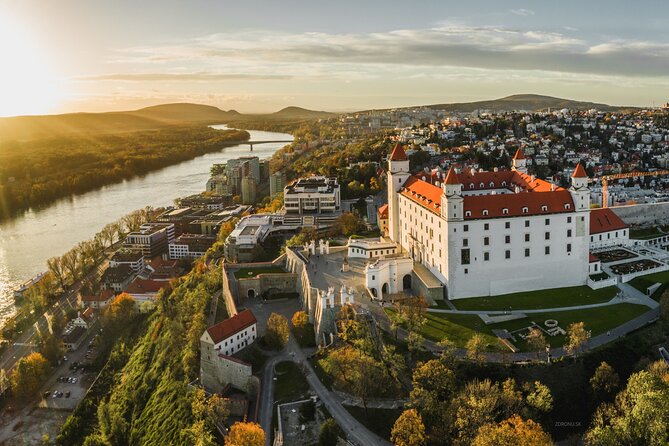
Bratislava follows, with an overnight stay in the Slovak capital. On day two, you explore the Old Town Hall, Michael’s Gate, and Bratislava Castle. The castle sits above the Danube and gives you a fine city view. Later, you have time for one of Bratislava’s traditional coffeehouses.
The sightseeing is not exhaustive. You will see the main central sights, but the schedule leaves only limited independent time. That is a fair trade for a long-distance tour, though you should not expect the same depth as a dedicated Bratislava city break.
A few more Vienna outings worth weighing up
- Vienna: Private Walking Tour with a Local Guide
★ 4.6 · 1,420 reviews - Vienna: Private Walking Tour with a Guide
★ 4.7 · 962 reviews - Vienna: Wine Tasting Experience in a Private Wine Cellar
★ 4.8 · 413 reviews
Győr and Budapest: grand architecture beside the Danube
Győr is a compact stop in Hungary, known for its baroque buildings, churches, and rivers. The Town Hall, with its 59-meter tower and green roof, is an easy landmark to spot. You also visit or pass near the Cathedral of the Virgin Mary and the old synagogue, then have time on Baross Gabor pedestrian street.
This is a good place to try Hungarian food, and the itinerary specifically points to local beer and cafés. The stop is short, so think of Győr as a taste of western Hungary, not a full historical visit.
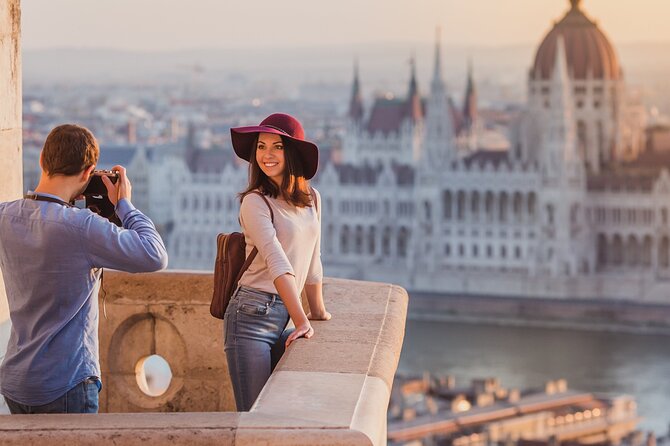
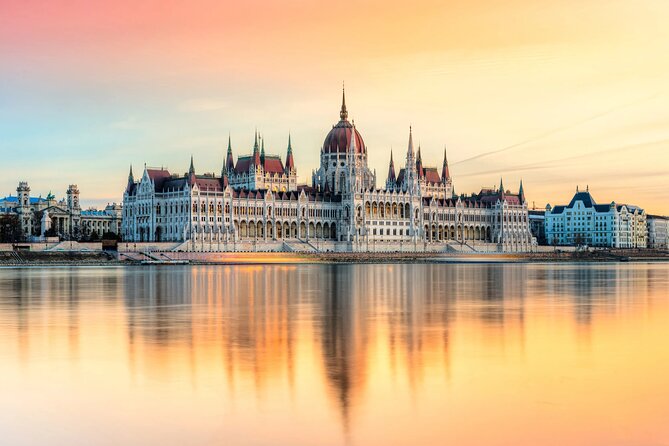
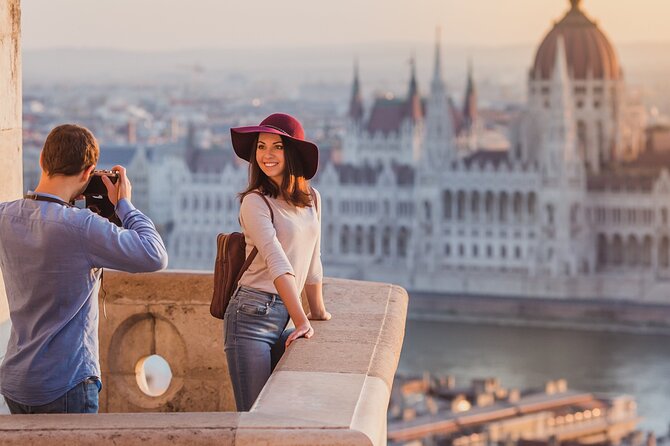
Budapest receives more attention. You see St. Stephen’s Basilica, the Opera, Parliament, Heroes’ Square, Fisherman’s Bastion, Buda Castle, and the bridges over the Danube. The tour explains the contrast between Buda and Pest, which helps you understand why the city feels like two different places joined by water.
The free evening is important. Budapest is a city best enjoyed after the formal sightseeing ends, when you can choose your own café, restaurant, or riverside walk. The itinerary gives you only about two hours of structured city touring, so your independent evening is the chance to add more.
Subotica, Novi Sad, and Serbian wine country
After Budapest, the route enters Serbia and stops in Subotica. This border city is known for colorful Austro-Hungarian buildings and a multicultural past. The City Hall dominates the main square, surrounded by fountains and a park.
You also see the Cathedral of St. Teresa of Avila and the synagogue. The day leaves room for coffee and local food, but entry fees and personal meals are generally your responsibility.
Novi Sad receives a longer visit. The city has Austro-Hungarian and Ottoman influences, with pedestrian streets, baroque architecture, and the Petrovaradin Fortress above the Danube. You walk through Zmaj Jovina and Dunavska streets, then have free time to explore.
The nearby town of Sremski Karlovci adds a strong wine element. This small baroque town was an important Serbian cultural center in the 18th century and remains known for its wine cellars. You can sample regional wines while looking toward the vineyards. The Four Lions fountain even comes with a local legend: drink from it and you will supposedly return and marry in Karlovci.
The Serbian section is one of the more relaxed parts of the route. The towns are close enough to make the driving manageable, and you get more time to walk rather than simply photograph a monument from the vehicle.
Belgrade, Sarajevo, and Mostar: history at street level
Belgrade begins with the fortress and Kalemegdan Park, set where the Sava and Danube meet. The high viewpoint gives you a strong sense of the city’s position and scale. You then walk along Knez Mihailova toward Republic Square, the social center of the capital.
The route continues into Bosnia and Herzegovina, with a stop in Zvornik beside the Drina River. This is mainly a lunch and walking break, useful after a long drive but not a major sightseeing stop.
Sarajevo is one of the trip’s most meaningful visits. The walking tour moves through Ottoman and Austro-Hungarian parts of the city, past mosques, churches, synagogues, markets, and reminders of the 1990s war. Bullet holes and cannon marks remain visible in parts of the city.
At the Latin Bridge, you learn about the assassination that helped trigger World War I. Sarajevo is also a good place to try meat dishes and desserts, though lunches and drinks are not included.
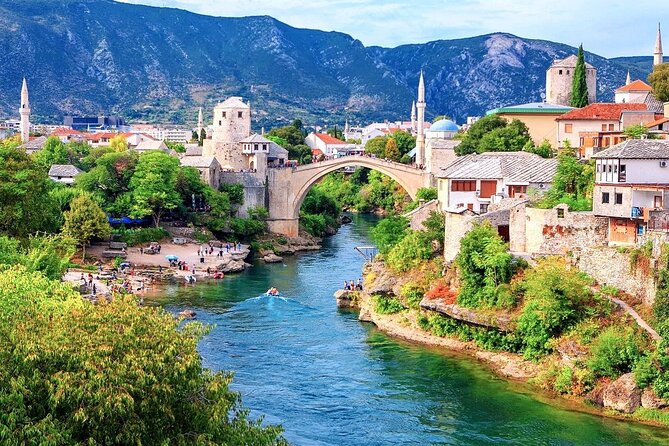
Mostar follows, with its famous Stari Most bridge, old bazaar, cobbled lanes, mosques, and Turkish-style shops. Stones marked Don’t Forget recall the city’s wartime destruction. You receive some free time here, which matters because Mostar rewards slow wandering more than a rushed checklist.
Expect uneven ground in Sarajevo and plenty of cobbles in Mostar. Comfortable shoes are not optional on this part of the journey.
A different sort of day out in Vienna:
- Vienna: Vivaldi’s Four Seasons Concert in Karlskirche
★ 4.7 · 14,951 reviews - Vienna: Skip-the-cashier-desk-line Giant Ferris Wheel Ride
★ 4.5 · 7,859 reviews - Vienna: Schönbrunn Palace & Gardens Skip-the-Line Tour
★ 4.7 · 7,739 reviews - Vienna: Light of Creation Votive Church Immersive Light Show
★ 4.8 · 6,779 reviews
Kotor, Budva, and Shkoder: the Adriatic turn
Kotor is one of the route’s visual highlights. Its old town is enclosed by stone walls and filled with narrow streets, old churches, and buildings marked with dates and former uses. The intentionally confusing street plan was designed to slow would-be attackers.
The tour visits St. Luke’s Church and leaves the afternoon open. That free time is useful because Kotor’s appeal comes from small discoveries: a quiet lane, a church doorway, or a shaded square.
Budva offers a different mood, with beaches, modern buildings, restaurants, and an older fortified center. The tour focuses on the old town and its churches, including St. Ivan and St. Mary.
At Sveti Stefan, you stop at a viewpoint rather than visiting the island. The former fishing village is now an exclusive resort, so the photograph from the coast is the practical option.
Crossing into Albania, you reach Shkoder and Rozafa Castle. The castle offers views toward the lake and the rivers running toward the Adriatic. Shkoder’s architecture also reflects Venetian influence, giving the city a different feel from the nearby Montenegrin coast.
Food, farms, and Kosovo’s old towns
Near Shkoder, Mrizi i Zanave is one of the trip’s strongest food stops. This agro-tourism farm grows, processes, and preserves local products. You see how old communist-era buildings were adapted for storage and food production, and you can buy farm goods or sit down for a traditional meal.
The farm is also presented as a major local employer, with work created for more than 400 people in the surrounding area. That makes the stop more than a tasting session. It shows how regional food can support a community.
Prizren, in Kosovo, combines old bridges, Ottoman buildings, religious sites, and a river through the center. You visit Sinan Pasha Mosque, then walk up to Kalaja Fortress for a view over the town. The afternoon is free, which gives you time to explore the bazaar and cafés at your own pace.
Gjakova is known for its rebuilt bazaar, where artisans sell handmade goods. The Monastery of Decan brings a different tradition, with white walls, Byzantine frescoes, Orthodox monks, and locally made food such as cheese.
The route also visits Rahovec Valley, where grapes have been grown since Illyrian times. If your dates match the annual festival in September, the wine region may be especially lively, but the festival is not guaranteed by the tour schedule.
Kruja and Tirana: Albania through food and memory
Kruja is one of the most characterful Albanian stops. Its old bazaar has wooden buildings, carpets, jewelry, and handmade souvenirs. The town’s castle sits on a rocky hill and is linked to Albania’s resistance against Ottoman expansion.
A guide-led walk through less obvious paths around the castle adds useful local context. The castle visit is also the setting for a cooking lesson, one of the most distinctive activities on the trip.
Tirana then shifts the focus from medieval Albania to daily city life. With a local companion, you start with byrek at a small neighborhood spot. This filled pastry may contain cheese, meat, or spinach, and it is a simple way to eat as locals do.
You continue through Çam Bazaar, street markets, pastry shops, and neighborhood cafés. Traditional Albanian coffee, qofte meatballs, freshly baked bread, and gjize cottage cheese are all part of the food walk. Raki is included in the tasting, but remember that alcoholic drinks elsewhere are not covered.
BUNK’ART 2 gives the day a serious final note. The former nuclear bunker was converted into a museum about the communist army and ordinary life under Enver Hoxha’s regime. It is a valuable stop because Albania’s recent past can otherwise be easy to overlook amid castles and mountain towns.
Ohrid and St. Naum: lakeside history
The road turns toward North Macedonia with a stop in Struga, where you have a drink near the source of the Drini River. Ohrid follows, with its lake, churches, mosque, viewpoints, and long connection to Orthodox Christianity.
Ohrid and Lake Ohrid are UNESCO protected, and the city is known for the claim that it once had 365 Orthodox churches, one for each day of the year. The itinerary includes St. John, St. Nicholas, and Halveti Hayati Tekke.
The next day brings St. Naum Monastery at the source of the Crni Drim River. The monastery sits within Galicica National Park, surrounded by clear spring water, trees, and mountain views. This is one of the quieter, more scenic stops on the route.
You then cross back into Albania for Tushemisht and Drilon National Park. Drilon has a small lake, willows, and calm water. These stops work well after many urban walks, although the schedule still keeps you moving.
Berat, Gjirokaster, and the final road to Greece
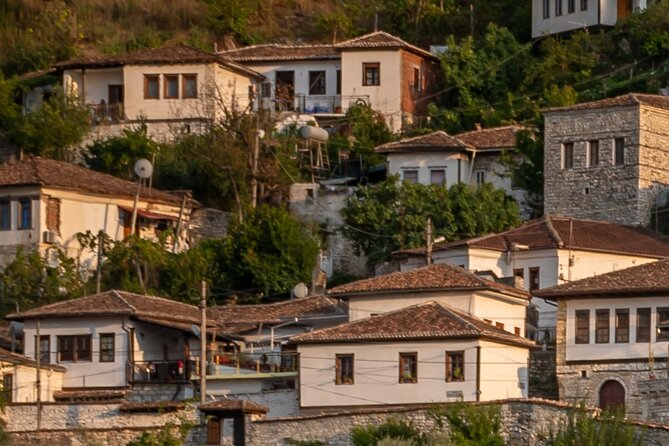
Berat is known for its many stacked windows on steep hillsides. Inside the castle walls, people still live among churches, mosques, museums, old houses, and remnants of Albania’s communist period.
The stone streets can be tiring, but the reward is a town that feels lived in rather than arranged only for sightseeing. Allow time to look closely at the houses and the old stone bridge instead of rushing from one landmark to another.
Gjirokaster, the Stone City, has another strong architectural identity. Its houses resemble small fortresses, and the old bazaar climbs along narrow stone streets. You visit Skenduli House, one of the best-preserved traditional homes, with original features still in place.
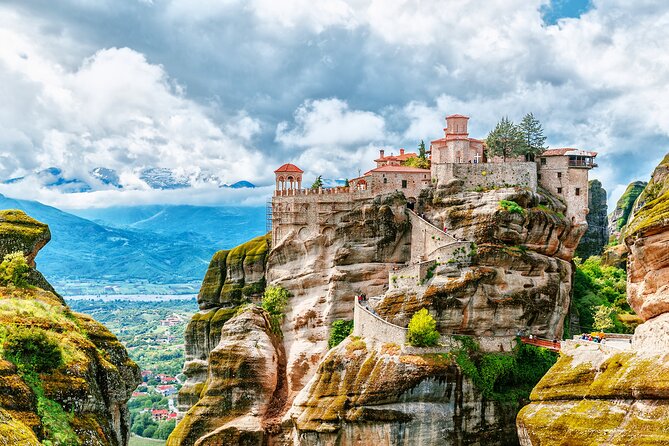
The final full sightseeing day takes you to Ioannina in Greece, where the Byzantine and Ottoman past remains visible in the old town and castle. Meteora follows, with monasteries built on top of striking rock formations. The sunset timing should make this one of the most memorable final stops, though the visit is brief.
What the $7,315.17 price really covers
The price includes private transport, a professional tour leader, hotel pickup, 20 breakfasts, tourist taxes, fuel, road taxes, international car insurance, and entry tickets for the listed included sights. Accommodation is based on double, twin, triple, or quadruple occupancy in 3-star hotels.
That is a substantial amount, but this is not an all-inclusive tour. You pay separately for lunches, dinners, drinks, snacks, souvenirs, personal spending, and anything not listed. Budget extra for frequent meals, wine tasting, coffee stops, and optional museum visits.
The strongest value is logistical. Ten countries mean repeated border crossings, different road systems, currencies, hotel arrangements, and driving distances. Having one company manage the vehicle, fuel, insurance, and route can save a great deal of effort.
The weaker value is accommodation level. If you normally choose boutique hotels or upscale properties, 3-star lodging may feel basic for this price. The cost makes more sense if you are paying for a private vehicle and a small group rather than luxury rooms.
Who should book this long Balkan road trip?
I would choose this tour if you want a broad first look at Central Europe and the Balkans, enjoy changing scenery, and prefer a guide to manage the hard parts. It suits curious eaters, history fans, photographers, and people who would rather see ten countries than spend a week in one city.
I would think twice if you dislike long drives, frequent hotel changes, uneven streets, or limited free time in major cities. You also need moderate physical fitness for castle paths, cobbles, hills, and walking tours.
The guide matters greatly. Sokol is specifically praised for keeping the 21-day adventure smooth and enjoyable. Before booking, confirm the current guide assignment, hotel list, room-sharing arrangement, and whether your final drop-off is Athens or Igoumenitsa Port.
Final verdict: a big route for an energetic explorer
This is an ambitious, culture-heavy road trip rather than a restful vacation. Its best moments come from the mix: Rust vineyards, Budapest at night, Serbian wine cellars, Sarajevo’s layered streets, Mostar’s bridge, Kotor’s lanes, Albanian farm food, Ohrid’s lake, and Meteora at sunset.
Book it if the idea of crossing borders and collecting very different places excites you. Skip it if you want slow travel, luxury accommodation, or complete control over every day. For an energetic explorer who values local food and a capable guide, the route offers an unusually broad introduction to this corner of Europe.
FAQ
How long is the tour?
The tour lasts approximately 21 days, beginning in Vienna and ending in Athens or at Igoumenitsa Port for the ferry to Corfu.
Where does the tour begin?
It begins in Vienna, Austria, with hotel pickup scheduled for 11 a.m.
Where can the tour end?
The tour can end with hotel drop-off in Athens or at Igoumenitsa Port. The Corfu option includes ferry tickets to Corfu port.
How large is the group?
The maximum group size is 10 people.
Is transportation included?
Yes. Private transport, fuel, road taxes, and international car insurance are included.
Are meals included?
Twenty breakfasts are included. Lunches, dinners, drinks, snacks, and personal food purchases are not included.
What type of accommodation is provided?
The price is based on double, twin, triple, or quadruple occupancy in 3-star hotels.
Are attraction entry fees included?
Entry tickets are included for the sites specifically marked as included, such as Bratislava Castle, St. Stephen’s Basilica, Sinan Pasha Mosque, Kalaja Fortress, Kruja Castle, BUNK’ART 2, St. Naum Monastery, and Skenduli House.
How physically demanding is the tour?
A moderate level of physical fitness is required. You should expect walking on cobbled streets, uneven ground, hills, castle paths, and old-town lanes.
Just reviewed in Vienna
- World War II History Vienna Old Town Private Walking Tour★ 4.8 · 9 reviews
- Vienna: Wine Tasting E-Bike Tour★ 4.9 · 46 reviews
- Vienna: Winery and Wine Tasting Tour with a Wine Expert★ 5.0 · 5 reviews
- Vienna: Unforgettable Private City Tour★ 5.0 · 7 reviews
- Vienna Urban Art Tour: Explore a different side of Vienna!★ 3.8 · 14 reviews
- Vienna: Concert by the Vienna Baroque Orchestra★ 4.6 · 56 reviews
- Vienna: Sunday Brunch Danube Cruise & Live Music★ 4.2 · 42 reviews
- Vienna Supreme Orchestra at Palais Niederösterreich★ 4.8 · 10 reviews
Private, compared.
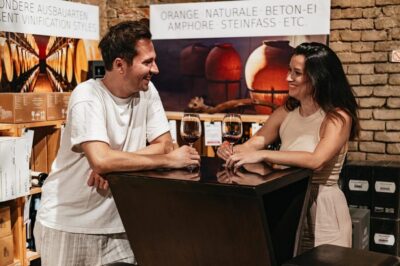
Wine Tasting Experience in a Private Wine Cellar
Read our review →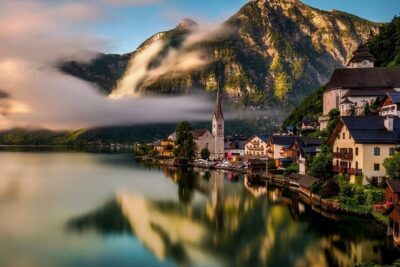
Private Day Tour Trip Salzburg Hallstatt and Melk from Vienna
Read our review →
Private Day Tour of Hallstatt and Salzburg from Vienna
Read our review →
Private Hidden Vienna Walk — Stories Behind Quiet Corners
Read our review →
Vienna Private Walking Tour with a Local
Read our review →
Vienna at First Glance a Private Walking Tour for First Timers
Read our review →