
Reviewed · VIENNA ART MUSEUM TICKETS
Leopold Museum Vienna Entrance Ticket
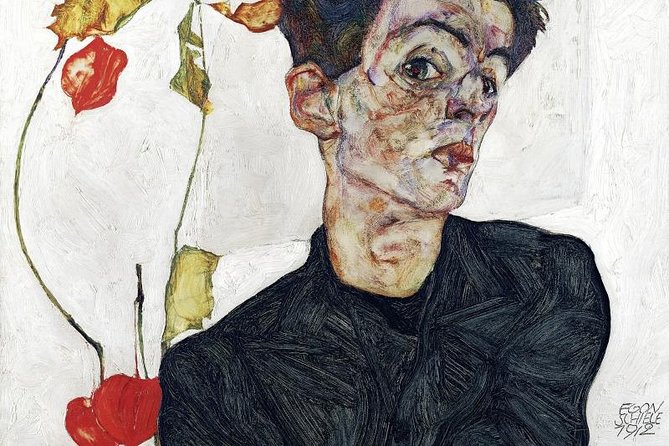
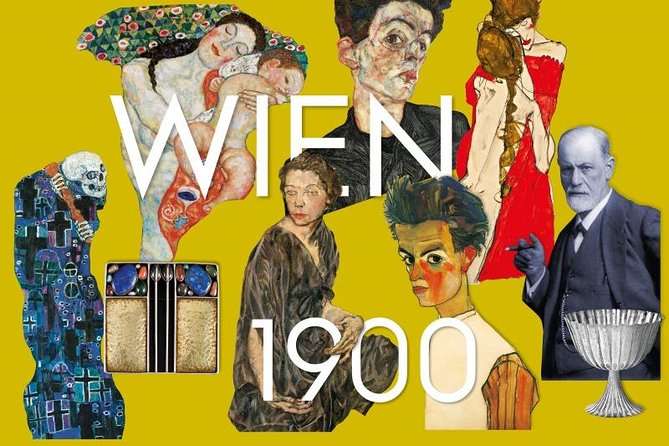
The main reason to visit the Leopold Museum is its exceptional collection of Austrian modern art, especially the world’s largest group of Egon Schiele works. You’ll also find Gustav Klimt, Oskar Kokoschka, Otto Wagner, Koloman Moser, and other artists who shaped Vienna around 1900.
I like the freedom to arrive when it suits your plans and explore without a guide setting the pace. I also like the museum’s broad view of Austrian art, from late 19th-century painting to Jugendstil, the Wiener Werkstätte, Expressionism, and the interwar period. The drawback is that the museum may feel small if you expect room after room of Klimt. Many visitors finish the main art displays in about two hours.
Key points to know before you go
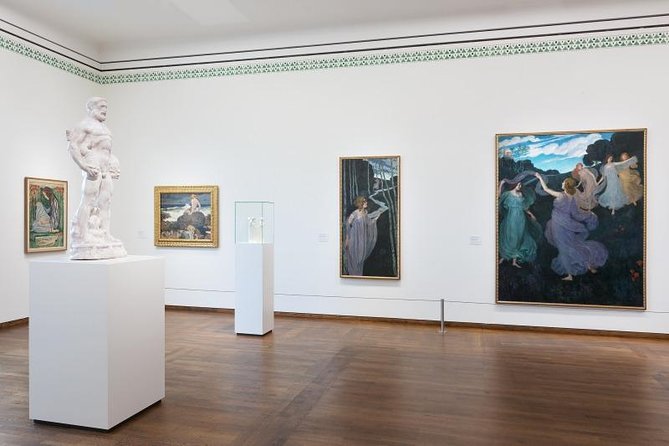
- The Schiele collection is the star: Expect the largest collection of Egon Schiele art in the world, including paintings and drawings.
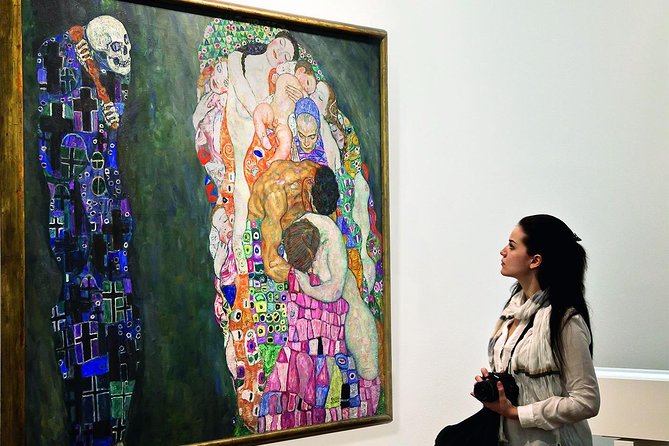
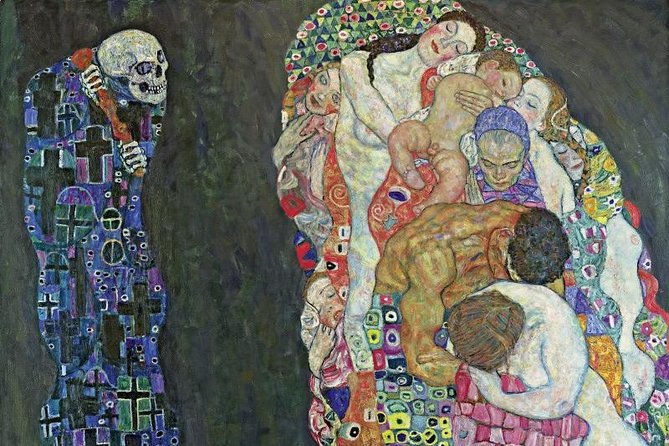
- Klimt is represented by major work, not quantity: His important Death and Life is here, but this is not a museum filled with dozens of Klimt paintings.
- You explore independently: There is no guide included, and you decide where to pause and how long to stay.
- The ticket includes exhibitions: Your admission covers the permanent collection and current exhibitions on the day of your visit.
- Allow two to three hours: The museum is easy to cover at a thoughtful pace, though serious art lovers may stay longer.
- The windows are part of the visit: Look toward Maria Theresa Square and the Hofburg Palace before leaving.
Why the Leopold Museum matters in Vienna
Vienna is full of grand palaces, imperial rooms, and ornate historic buildings. The Leopold Museum offers a different side of the city. It focuses on the moment when Austrian art moved away from strict Historicism and toward the bold, uneasy modern art associated with Vienna around 1900.
That shift happened quickly. The old Habsburg artistic order gave way to the Vienna Secession, Jugendstil design, Expressionist painting, and the experimental work of artists such as Schiele, Klimt, Kokoschka, and Richard Gerstl.
I find the museum useful because it lets you see those changes in one place. You are not simply looking at famous names in isolation. You can trace how artists reacted to one another and how Vienna’s interest in architecture, furniture, graphic design, portraiture, and psychology shaped its art.
The collection began with Rudolf and Elisabeth Leopold, who gathered more than 5,000 objects over five decades. In 1994, the collection became part of the Leopold Museum Private Foundation, created with support from the Republic of Austria and the Austrian National Bank.
You do not need to know that institutional background to enjoy the museum. Still, it helps explain why the collection feels focused. This is not a general European art museum. It is a concentrated look at Austrian art, with particular strength in the years around the turn of the 20th century.
More art museum tickets in Vienna:
- Vienna Kunsthistorisches Museum Day Admission Ticket
★ 4.6 · 3,690 reviews - Tickets for the Albertina Exhibitions
★ 4.7 · 2,126 reviews - Combo Ticket: Kunsthistorisches Museum & Imperial Treasury
★ 4.7 · 785 reviews
Entering the bright Museum Quarter building
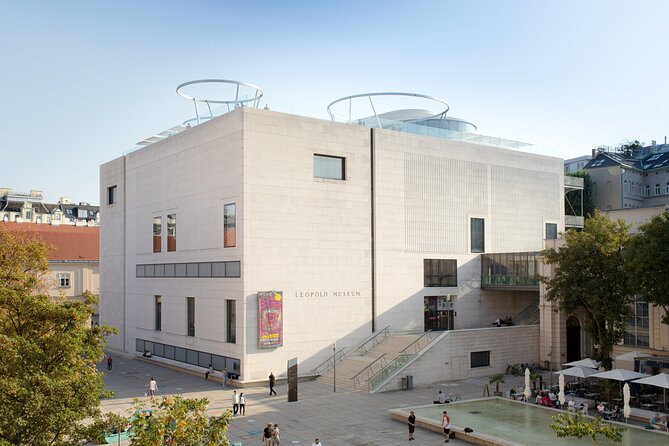
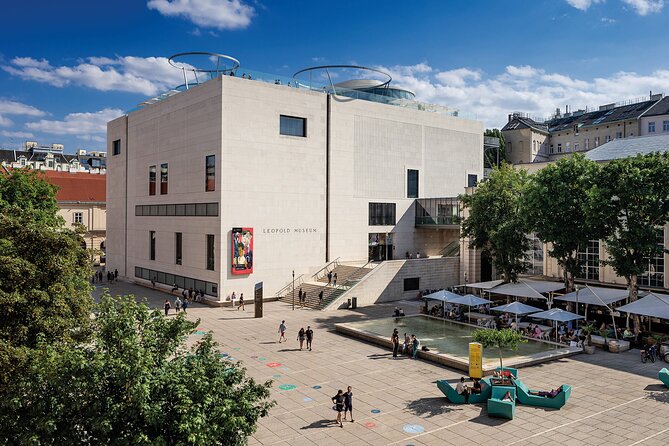
The museum sits in Vienna’s Museum Quarter, one of the city’s main cultural areas. Its modern architecture makes a sharp change from the imperial buildings nearby. The exterior can feel cold and severe, but the interior is known for its light and open feel.
I would not judge the museum from the street. The inside is the better part of the building, with galleries arranged for a fairly easy visit. You can move from room to room without having to follow a set route or keep pace with a group.
Your prepaid ticket is meant to reduce the risk of arriving and finding admission unavailable. The booking information says to present the Viator voucher at the cashier desk to exchange it for the current ticket, and it specifically advises printing the voucher. That detail matters because the experience is also described as a mobile ticket, so I would bring the voucher on your phone and a printed copy if possible.
The museum is listed as open on Mondays from 10 a.m. to 6 p.m. The information supplied for this experience does not give a full weekly schedule, so check the date-specific hours before setting out.
The main collection, from Waldmüller to Schiele
The Leopold collection is strongest when you take time to follow its story rather than rush straight to the famous works. It includes Austrian art from the 19th century, the Fin de siècle period, the interwar years, and parts of the postwar generation.
Earlier works by artists such as Ferdinand Georg Waldmüller, Friedrich Gauermann, August von Pettenkofen, Anton Romako, Emil Jakob Schindler, and Carl Schuch help establish the older Austrian tradition. These paintings give you a useful starting point before the museum turns toward the more radical experiments of the modern period.
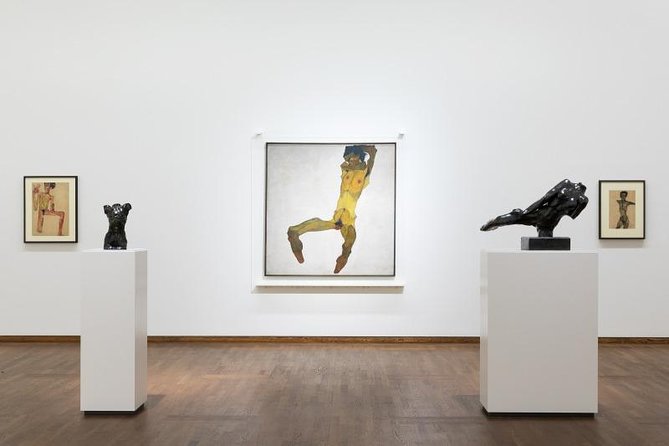
The biggest draw is Egon Schiele. His paintings and drawings can be spare, angular, intimate, and disturbing. The work often rewards close attention, but it may not be the best choice if you want a light, decorative museum visit.
The collection’s size gives you a better sense of Schiele than a single famous painting in a general museum could provide. You can compare his handling of the body, line, faces, and self-portraiture across many works.
The museum also presents Oskar Kokoschka, Richard Gerstl, Koloman Moser, and Herbert Boeckl. Each artist adds a different note to the story of Austrian modernism. Kokoschka’s work brings emotional force, Moser links painting with design, Gerstl pushes portraiture toward psychological tension, and Boeckl connects the early modern period with Austrian art between the wars.
Plan to slow down in this section. A quick visit can leave you with only the famous names, while a little more time shows how varied Austrian modern art really was.
Klimt’s Death and Life and the Vienna Secession
Gustav Klimt is one of the names most people associate with Vienna. The Leopold Museum does not offer a large Klimt display, so adjust your expectations before you arrive.
Its major Klimt work is Death and Life, a large figurative painting and one of the collection’s prized pieces. It gives you a reason to visit, but it does not turn the museum into a Klimt-only stop.
I like seeing Klimt in this setting because the surrounding collection explains the artistic climate in which he worked. The museum connects painting with the Vienna Secession, a movement that challenged academic rules and promoted new approaches to art and design.
If your priority is seeing many Klimt paintings, you may find this museum limited. If you want to understand Klimt as part of a wider Viennese movement, the Leopold makes a stronger case.
For a first visit to Vienna, I would pair this museum with other art stops rather than treating it as the city’s complete Klimt experience. The value comes from the comparison between Klimt, Schiele, Kokoschka, Moser, and the designers connected with the Wiener Werkstätte.
More museums and galleries in Vienna:
- Vienna: Skip-the-Line Sisi Museum, Hofburg and Gardens Tour
★ 4.8 · 5,918 reviews - Sigmund Freud Museum Ticket
★ 4.6 · 1,668 reviews - Vienna: St. Stephen’s Cathedral & Dom Museum Wien Tickets
★ 4.5 · 1,652 reviews - Vienna: Hofburg and Empress Sisi Museum Guided Tour
★ 4.7 · 1,460 reviews
Jugendstil, Wiener Werkstätte, and everyday design
The Leopold Museum is not only about paintings and drawings. Its displays also include modern objects from the Fin de siècle, making it easier to understand how Vienna’s artistic ideas reached daily life.
Otto Wagner, Adolf Loos, Dagobert Peche, Josef Hoffmann, and Koloman Moser are important names here. The founders of the Wiener Werkstätte, especially Hoffmann and Moser, helped bring modern design into furniture, interiors, decorative objects, and graphic work.
This section adds useful balance to the Schiele rooms. After looking at intense, often unsettling paintings, you can see a different side of the period: clean lines, carefully designed objects, and the idea that ordinary surroundings should be made with artistic purpose.
You might find the museum’s design material especially interesting if you have already visited Vienna’s Secession Building or admired Otto Wagner’s architecture elsewhere in the city. The museum helps connect those visual styles, even if you are not an art specialist.
A two-hour visit or a slower afternoon?
Most people can see the main art displays in about two hours. The supplied experience recommends allowing two to three hours, which feels sensible if you want to read labels, pause with Schiele, and include the temporary exhibitions.
The museum is not enormous. The building includes two floors used for photographs and the museum shop, with three floors devoted to artwork according to the practical visitor information provided. That arrangement means you should not expect the scale of a huge national museum.
I would allow two hours for a focused visit and closer to three if you are a serious admirer of Austrian modernism. Add more time if a temporary exhibition catches your interest or if you plan to use the café.
The ticket gives you unlimited access to the permanent collection and exhibitions during your visit. That is useful if you prefer a short first pass followed by a slower return to favorite rooms.
Because you are not tied to a group, you can also fit the Leopold Museum around the rest of your day in the Museum Quarter. You might visit in the morning, take a break nearby, and return to a section that deserves another look.
The views from Maria Theresa Square
Do not leave without looking out from the museum windows. The view reaches across Maria Theresa Square toward the Hofburg Palace and central Vienna.
The view is not the main reason to buy the ticket, but it gives the museum a stronger sense of place. You have just seen art born from Vienna’s cultural world, and the city outside helps connect the paintings to the imperial setting that shaped them.
The museum’s position also makes it easy to combine with other central sights. You can treat the Leopold as a focused art stop rather than a full-day commitment.
Café Leopold and a practical pause
Café Leopold provides a place to sit and review what you have seen. Food and drinks are not included, so plan to pay separately.
The café can be useful after the Schiele rooms, especially if the art feels intense. One practical note from the visitor information is that staff may enforce rules about items such as a water bottle in a handbag. Keep your belongings manageable and follow the museum’s instructions rather than assuming every item can come into the galleries.
The café has received especially warm praise for its food, but you should see it as an optional add-on. The ticket’s value comes from the collection, not from a meal.
Ticket value, timing, and the audio guide
At $22.98 per person, this is a reasonable price if you care about Schiele, Klimt, or Austrian modernism. It is less compelling if you are looking for a large museum with hundreds of internationally famous paintings.
The price includes admission to the permanent collection and exhibitions, and you can explore at your own pace. That makes it more useful than a quick timed entry if you want to read, pause, or revisit a room.
There is no guide included. An audio guide is available for an additional €4 in German, English, French, or Italian. If you want background information but prefer not to join a group, the audio guide may be worth the extra cost.
The booking is typically made about 16 days ahead, which suggests planning is common. I would reserve ahead during a busy Vienna visit, particularly if this is one of your main art stops. Free cancellation is available if you cancel at least 24 hours before the start time. Changes or cancellations inside that period are not accepted for a refund.
Who should book the Leopold Museum?
I would recommend this museum to you if you enjoy modern art, want a serious Schiele collection, or want to understand Vienna’s artistic break with the imperial past. It also suits independent visitors who dislike being hurried through galleries.
Families can visit, but children must be accompanied by an adult. Reduced child tickets require the relevant identification card.
You may want to choose another museum if your main goal is a large number of Klimt paintings, a guided interpretation, or a broad survey of European art. The Leopold is focused, and some of its art can feel austere or emotionally heavy.
Should you book this experience?
Book it if Egon Schiele is high on your Vienna list. The collection is the museum’s strongest reason to visit, and the combination of Schiele, Klimt’s Death and Life, Viennese modernism, and design makes the $22.98 admission worthwhile for art lovers.
If you have only a short time in Vienna, allow two hours and use the museum as a compact Museum Quarter stop. Bring your voucher, check the opening hours for your date, and consider the €4 audio guide if you want more context.
Skip it if you expect a grand, wide-ranging museum or a long list of Klimt masterpieces. For the right visitor, though, the Leopold offers a close look at the artists who made Vienna’s modern age so compelling.
FAQ
How long does a visit to the Leopold Museum take?
The suggested visit lasts about two to three hours. You can see the main artwork displays in around two hours if you take your time, though temporary exhibitions and a slower visit may require longer.
What is included with the Leopold Museum ticket?
The ticket includes admission to the Leopold Museum, the permanent collection, and exhibitions available during your visit. Food, drinks, a guide, and the audio guide are not included.
Is an audio guide available?
Yes. An audio guide can be purchased for an additional €4. It is available in German, English, French, and Italian.
Does the museum have Egon Schiele artwork?
Yes. The Leopold Museum houses the largest Egon Schiele collection in the world, with paintings and drawings by the artist.
Is Gustav Klimt represented at the museum?
Yes. The museum displays Klimt’s Death and Life. The collection does not contain a large number of Klimt paintings, so visitors mainly come for this major work alongside the broader Austrian modern art collection.
Can I cancel the ticket for a refund?
Yes. You can cancel for a full refund if you do so at least 24 hours before the experience start time. Cancellations and changes made less than 24 hours in advance are not accepted for a refund.
Just reviewed in Vienna
- World War II History Vienna Old Town Private Walking Tour★ 4.8 · 9 reviews
- Vienna: Wine Tasting E-Bike Tour★ 4.9 · 46 reviews
- Vienna: Winery and Wine Tasting Tour with a Wine Expert★ 5.0 · 5 reviews
- Vienna: Unforgettable Private City Tour★ 5.0 · 7 reviews
- Vienna Urban Art Tour: Explore a different side of Vienna!★ 3.8 · 14 reviews
- Vienna: Concert by the Vienna Baroque Orchestra★ 4.6 · 56 reviews
- Vienna: Sunday Brunch Danube Cruise & Live Music★ 4.2 · 42 reviews
- Vienna Supreme Orchestra at Palais Niederösterreich★ 4.8 · 10 reviews
Vienna Art Museum Tickets, compared.
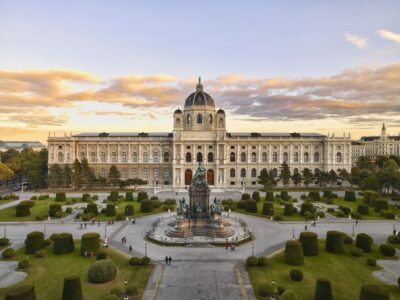
Vienna Kunsthistorisches Museum Day Admission Ticket
Read our review →
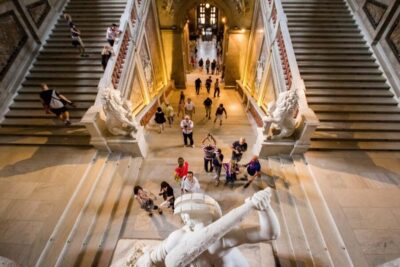
Combo Ticket: Kunsthistorisches Museum & Imperial Treasury
Read our review →
Skip the Line: Kunsthistorisches Museum Vienna Entrance Ticket
Read our review →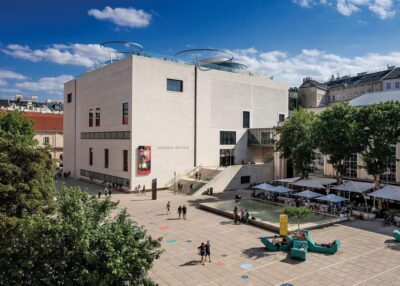
Kunsthistorisches Museum Vienna and Imperial Treasury of Vienna
Read our review →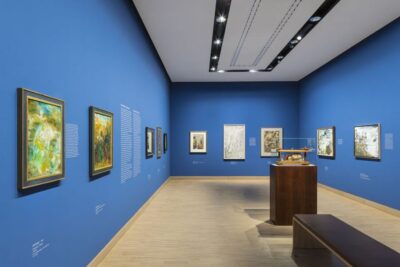
Albertina Modern at Künstlerhaus Entry Ticket
Read our review →
Kunsthistorisches Museum Guided Tour incl. admission
Read our review →Browse the lists this tour appears in