
Reviewed · VIENNA
Freud – Inside the mind of a Genius
Sigmund Freud’s Vienna is more than a museum address. This walk connects the University of Vienna, the old medical quarter, and the apartment where Freud lived and worked, showing how Belle Époque Vienna shaped a controversial thinker. I like the route because it gives you a city setting for ideas that can otherwise feel abstract.
I also like the small group limit of 10 people and the personal focus on Freud’s colleagues, friends, neighbors, and family. Guide Lisa Marie is praised for making the subject lively and clear. The main drawback is that the museum ticket costs extra, so the $45.38 price is for the guided walk rather than a complete admission package.
Key points at a glance
- Freud’s Vienna in two hours: Walk from the University of Vienna to Berggasse 19 with a clear connection between place and biography.
- A compact group: Numbers are capped at 10, making it easier to hear the guide and ask questions.
- Medicine before psychoanalysis: The old university quarter helps explain the medical world Freud entered.
- Personal stories beyond the famous theories: Friends, colleagues, neighbors, and family give the walk a human focus.
- Museum visit at your own expense: The tour ends at the Sigmund Freud Museum, but admission is not included.
- A good choice for curious minds: It suits people interested in psychology, medicine, Vienna, and intellectual history.
Freud’s Vienna starts at the University of Vienna
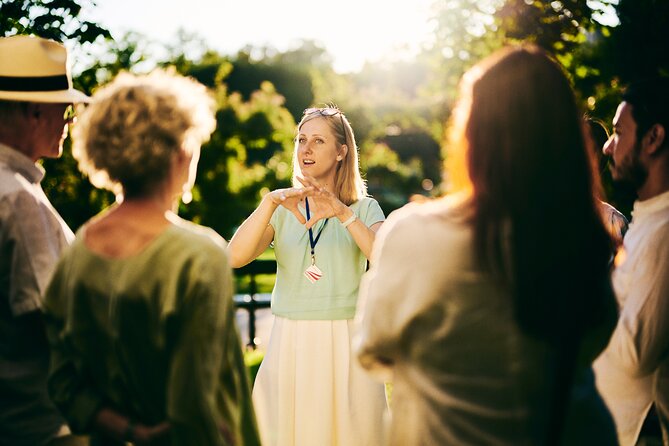
The tour begins at 2 p.m. outside the University of Vienna at Universitätsring 1. That meeting point puts you in the right setting from the first minute: Freud’s story begins not in a modern clinic, but in the academic and medical world of late-19th-century Vienna.
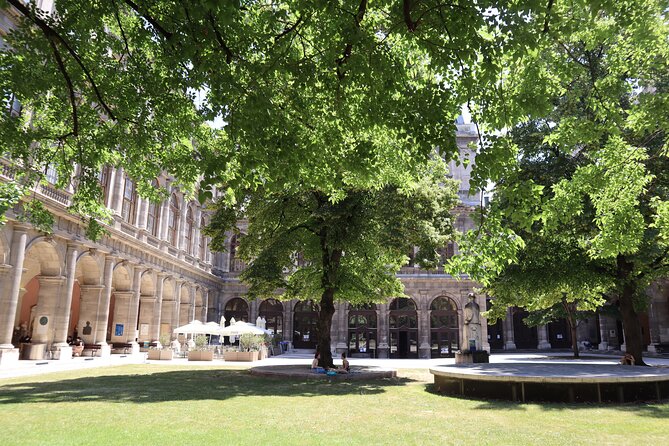
The first stop is the university courtyard, where you spend about 15 minutes. The courtyard gives the guide a useful stage for explaining the Vienna Freud knew as a student and young doctor. You are not simply hearing a list of dates. You are being placed in a city where medicine, scholarship, social circles, and new ideas met in close quarters.
I like this opening because it avoids starting with Freud’s most famous theories. Instead, it asks you to consider the young man before he became the founder of psychoanalysis. That approach can make his later work easier to understand, especially if you know Freud mainly through a few familiar terms and not through his personal development.
Admission to the university stop is free. The walk is outdoors, so wear shoes that are comfortable for city streets and be ready to walk between the four stops. The activity calls for a moderate level of physical fitness.
Still deciding? These Vienna outings turn up in the same shortlists.
- Vienna: Vivaldi’s Four Seasons Concert in Karlskirche
★ 4.7 · 14,951 reviews - Vienna: Skip-the-cashier-desk-line Giant Ferris Wheel Ride
★ 4.5 · 7,859 reviews - Vienna: Schönbrunn Palace & Gardens Skip-the-Line Tour
★ 4.7 · 7,739 reviews
Votivkirche and the people around Freud
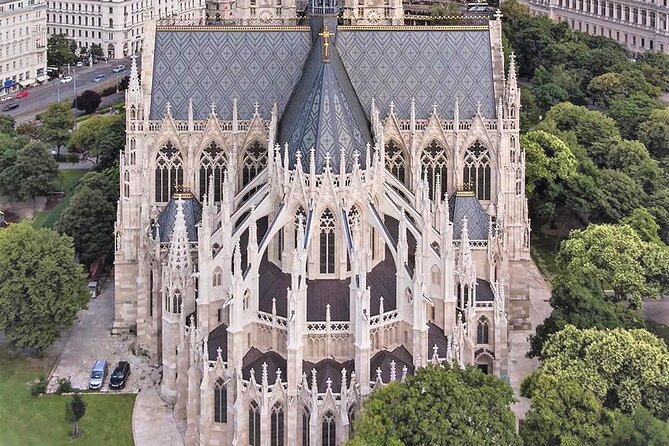
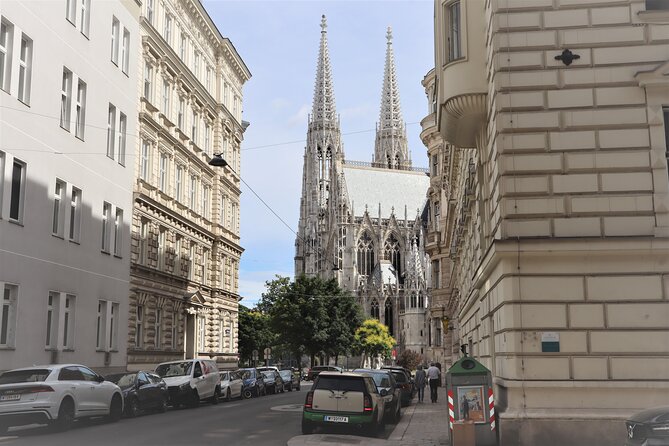
The second stop is Votivkirche, reached through the neighborhood where Freud found friends and other bright minds. The stop lasts about 10 minutes, but its value comes from the questions it raises: Who influenced Freud? Who did he meet? How did his social world affect his work?
This part of the experience helps keep Freud from becoming a lone genius figure. His ideas developed within a network of colleagues, friends, and neighbors. A walking tour can make those connections feel more concrete because you are moving through the same broad district rather than hearing about them in isolation inside a museum room.
The supplied feedback gives special attention to Lisa Marie, described as well informed and entertaining. That is important here. A neighborhood stop depends heavily on the guide’s ability to turn streets and buildings into useful context. Lisa Marie appears to bring energy to the subject without losing sight of its more difficult sides.
The tour also presents Freud as a controversial figure. That balance matters. You are not being asked to treat every theory as settled fact. Instead, the walk looks at how Freud’s troubled mind and personal experiences shaped his work, while leaving room to consider why his ideas remain debated.
The old university quarter and medicine in Freud’s time
The third stop takes you into the old university quarter, where Freud studied. You spend about 15 minutes here, looking at the kind of medicine practiced before modern psychology and psychiatry took their current forms.
This is one of the most useful stops for anyone who wants more than a biographical tour. Freud did not invent his ideas in a vacuum. He trained within the medical culture of his era, and that culture helps explain both the reach and the limits of his thinking.
You can expect the guide to discuss what medical study and treatment looked like in late-19th-century Vienna. The provided details do not specify every subject covered, so you should not expect a technical lecture or a full survey of Viennese medicine. The purpose is more focused: to show the setting in which Freud formed his professional outlook.
I especially like this part for psychology students, doctors, and anyone interested in the history of medicine. One direct account comes from a psychologist who wanted to visit Vienna to understand Freud’s background and the challenges he faced while developing and expressing his theories. That is a useful reason to choose this walk over a standard city tour. It links the places to the formation of ideas.
Berggasse 19 and Freud’s final Vienna home
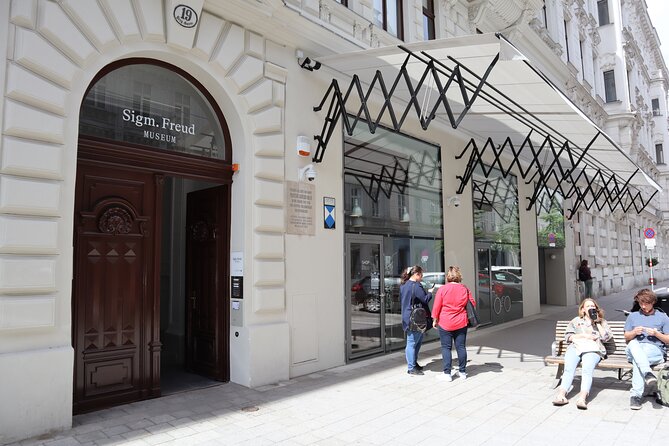
The walk ends at Berggasse 19, now the Sigmund Freud Museum. Freud and his family lived there for many years, and the address gives the experience its strongest personal focus.
The guide explores why Freud had to leave Vienna and what happened to his family. Those questions bring the political and personal stakes into the story. You are not only following the career of a famous doctor. You are also considering a family forced to abandon its home.
The museum visit is not included in the $45.38 price. You can finish the guided portion at the entrance, then decide whether to buy your own ticket and continue inside. This arrangement gives you some flexibility, but it also means you need to budget separately if seeing the museum is important to you.
The supplied tour information lists 20 hours for this final stop, which clearly conflicts with the advertised two-hour duration. Treat the full experience as approximately two hours, with the museum stop forming the ending rather than a 20-hour visit. The museum admission itself remains at your own expense.
A different sort of day out in Vienna:
- Vienna: Light of Creation Votive Church Immersive Light Show
★ 4.8 · 6,779 reviews - Vienna Spanish Riding School Guided Tour
★ 4.7 · 6,765 reviews - Vienna: Classical Concert in the World-Famous Musikverein
★ 4.6 · 6,673 reviews - Vienna: Skip-the-Line Sisi Museum, Hofburg and Gardens Tour
★ 4.8 · 5,918 reviews
What the small group changes
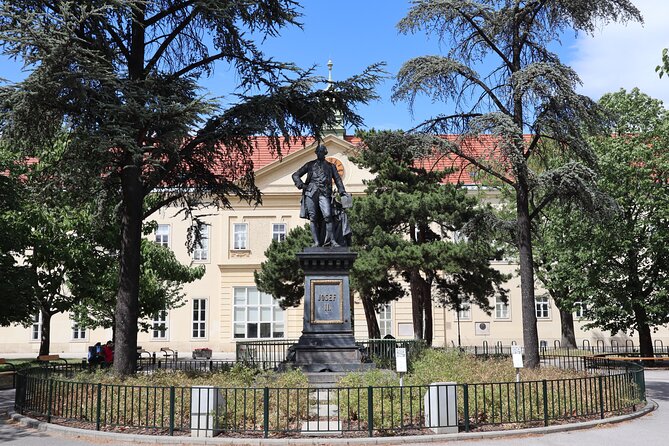
A maximum of 10 people is a real advantage on a walking tour built around questions and discussion. You should have a better chance of hearing the guide near the university courtyard, Votivkirche, and Berggasse 19 than you would in a large group.
The small format also suits Freud’s subject matter. This is not just a sightseeing route with quick facts delivered while the group moves on. The tour deals with personal relationships, medical ideas, family history, and controversy. A smaller group can make it easier to ask about a particular theory, person, or period.
The tradeoff is that a small-group tour is still dependent on the guide. Lisa Marie receives especially warm attention for her clear and entertaining style, but no specific guide is guaranteed in the tour details. If the subject matters greatly to you, arrive ready with a few questions so you can make the most of the limited time.
Is $45.38 a fair price?
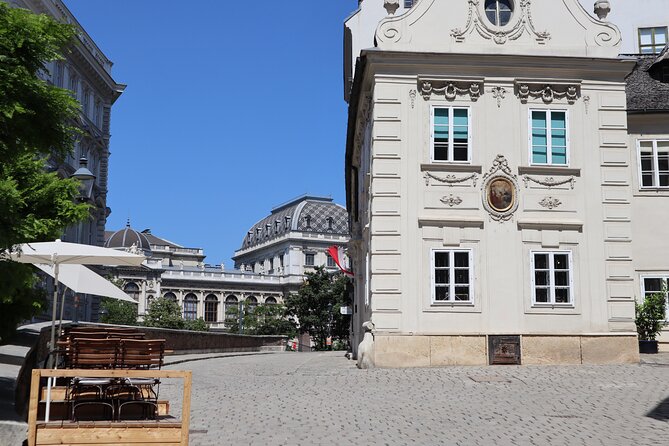
At $45.38 per person, this is not a bargain-basement walk, but the value depends on your interest in Freud. You are paying for a focused guide-led experience across several connected locations, not for general sightseeing around central Vienna.
The price includes the guide’s interpretation and the route between the university, Votivkirche, old university quarter, and Freud’s former home. It does not include admission to the Freud Museum. That extra cost is the key point to consider when comparing this tour with visiting the museum on your own.
I think the price makes sense if you want a clear narrative and personal context. A museum can show you objects, rooms, and displays, but this walk explains why these addresses matter and how they fit together. If you are only mildly curious about Freud, the cost may feel high for a two-hour activity, especially after adding museum admission.
The walk is also a good use of an afternoon. It starts at 2 p.m. and ends at Berggasse 19, so you finish in a different part of Vienna from where you began. That route gives you a reason to see more of the city while following one coherent subject.
Who should book this Freud walking tour?
I would recommend it most strongly to people with a specific interest in psychology, psychiatry, medicine, or intellectual history. It should also appeal to anyone who wants a Vienna experience built around one person rather than a broad list of monuments.
It is a good match for:
- Psychology and medical students
- Readers interested in Freud’s theories and personal life
- Visitors who want a small, discussion-friendly group
- People seeking a less standard Vienna walking tour
- Anyone planning to visit the Sigmund Freud Museum
- Curious visitors who enjoy biography tied to real places
You may want to skip it if your main goal is grand architecture, art collections, or a general introduction to Vienna. The route visits important locations, but the subject remains tightly focused on Freud and the intellectual world around him.
Practical details before you go
The meeting point is Universität Wien Studienzulassung, Universitätsring 1, in Vienna’s 1010 district. The endpoint is the Sigmund Freud Museum at Berggasse 19 in the 1090 district. Since the start and finish are different, plan your next activity from the museum rather than returning to the university.
The tour is near public transportation, and service animals are allowed. Confirmation is provided at booking. The activity is designed for a maximum of 10 people and requires moderate physical fitness.
You can cancel for a full refund if you do so at least 24 hours before the 2 p.m. start time. Cancellations or changes made less than 24 hours before the start are not refunded or accepted. Since cut-off times use Vienna local time, keep that in mind if you are booking from another time zone.
Should you book it?
Book this tour if you want Freud’s story placed in the streets, university buildings, and neighborhood where his life unfolded. Its strongest features are the compact group, the focus on Freud’s personal circle, and the explanation of the medical world that shaped his work.
The extra museum ticket and the two-hour length are the main considerations. For someone deeply interested in Freud, the guided context should justify the price. For a casual visitor, visiting the museum alone may be enough. If you do book, arrive at the University of Vienna ready to listen for the links between Freud’s education, his colleagues, his family, and the city that formed him.
FAQ
Where does the Freud walking tour start?
It starts at Universität Wien Studienzulassung, Universitätsring 1, 1010 Vienna, Austria.
What time does the tour begin?
The tour starts at 2 p.m.
Where does the tour end?
It ends at the Sigmund Freud Museum at Berggasse 19, 1090 Vienna.
How long does the experience last?
The advertised duration is approximately two hours.
Is admission to the Sigmund Freud Museum included?
No. The museum ticket is not included and must be paid for separately.
How many people can join the tour?
The group is limited to a maximum of 10 people.
What locations are visited?
The route includes the University of Vienna courtyard, Votivkirche, the old university quarter, and the Sigmund Freud Museum.
Is the tour suitable for people with limited fitness?
The tour requires a moderate level of physical fitness.
Can I cancel for a full refund?
Yes. You can receive a full refund if you cancel at least 24 hours before the experience start time. Cancellations or changes made less than 24 hours before the start are not accepted or refunded.
Just reviewed in Vienna
- World War II History Vienna Old Town Private Walking Tour★ 4.8 · 9 reviews
- Vienna: Wine Tasting E-Bike Tour★ 4.9 · 46 reviews
- Vienna: Winery and Wine Tasting Tour with a Wine Expert★ 5.0 · 5 reviews
- Vienna: Unforgettable Private City Tour★ 5.0 · 7 reviews
- Vienna Urban Art Tour: Explore a different side of Vienna!★ 3.8 · 14 reviews
- Vienna: Concert by the Vienna Baroque Orchestra★ 4.6 · 56 reviews
- Vienna: Sunday Brunch Danube Cruise & Live Music★ 4.2 · 42 reviews
- Vienna Supreme Orchestra at Palais Niederösterreich★ 4.8 · 10 reviews