
Reviewed · VIENNA BIKE AND SEGWAY TOURS
Vienna Highlights Small-Group Bike Tour
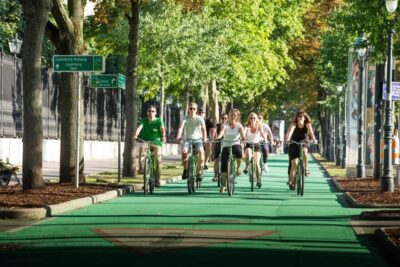
Vienna reveals itself quickly from a bicycle. In about three hours, you can link the grand Ringstrasse, Heroes’ Square, Prater, the Danube Canal, and Hundertwasserhaus without spending the day on foot. The route is mostly flat, uses bike paths and quieter streets where possible, and covers about 6 miles.
I like the way this tour gives you both the postcard sights and a few less obvious corners, especially the Prater and the colorful Hundertwasserhaus. I also like the range of guides, including Robert, Marco, Ava, Jan, and Clemens, who bring different personal styles to the historical commentary.
The main thing to consider is group size. The advertised maximum is 15 people, but that can still feel large on city streets, particularly at traffic lights. You should also be ready to ride in changing weather, since the tour operates in all conditions.
Key points to know before you book
- See more than on foot: The route covers roughly 10 kilometers, linking central Vienna with Prater and the Danube.
- Mostly easy cycling: Vienna is flat, and the pace is described as comfortable for ordinary bike riders.
- A useful first look: The tour helps you decide which palaces, museums, and neighborhoods deserve a longer visit.
- The city center is selective: You ride the Ringstrasse and pass major buildings, but you do not tour every narrow street in the historic center.
- Guides shape the experience: Robert, Marco, Ava, Jan, Horst, and Clemens are among the guides praised for humor, patience, and clear English.
- Weather matters: Rain, hail, and thunder do not automatically cancel the outing, so dress for the forecast.
Why a bicycle works so well in Vienna
Vienna is a large city, but many of its main sights sit along a broad ring of roads and parks. Walking from the Opera House to Prater and then out toward the Danube would take much of a day. On a bike, you can make that crossing in one outing and still stop for photos and stories.
The route also gives you a better sense of how Vienna fits together. You see the monumental center, the formal Ringstrasse, the residential streets around Hundertwasserhaus, and the open space around Prater. That variety is more useful than a simple parade of palace facades.
This is not a racing tour. The supplied details describe easy cycling, and several riders found the pace manageable even without strong fitness. Still, three hours in the saddle is not the same as three hours walking through museums. You need to be comfortable riding a bicycle and managing occasional rough surfaces.
The tour is a good choice near the start of a Vienna visit. You can mark sights you want to revisit, learn the basic layout, and get practical ideas for the rest of your stay. It also works well for a short visit when you want a broad view in one morning or afternoon.
More bike and segway rides around Vienna:
- Classic Vienna: 3-Hour Guided Bike Tour
★ 4.7 · 1,846 reviews - Wachau Valley Wine Tasting Bike Tour from Vienna
★ 5.0 · 829 reviews - Vienna City Segway Tour
★ 4.8 · 638 reviews
Starting at Franz-Josefs-Kai
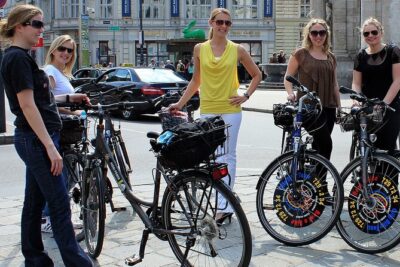
You meet at Vienna Explorer on Franz-Josefs-Kai 45 in the 1010 district, close to public transportation. The bicycle is included, as is a professional guide. Hotel pickup, food, and drinks are not included, so plan to arrive ready to ride.
The opening includes a short safety overview before the group sets off. Pay attention here, especially if you are not used to riding in a city group. One rider reported that the safety guidance was not clear enough, while another found large-group crossings stressful. Those comments point to a practical tip: stay close to the guide, watch traffic lights, and do not assume the rider behind you has seen every turn.
The route returns to the same meeting point. That makes the tour easy to fit between other plans, since you are not left across town looking for your next connection.
The Ringstrasse and Vienna’s grand public face
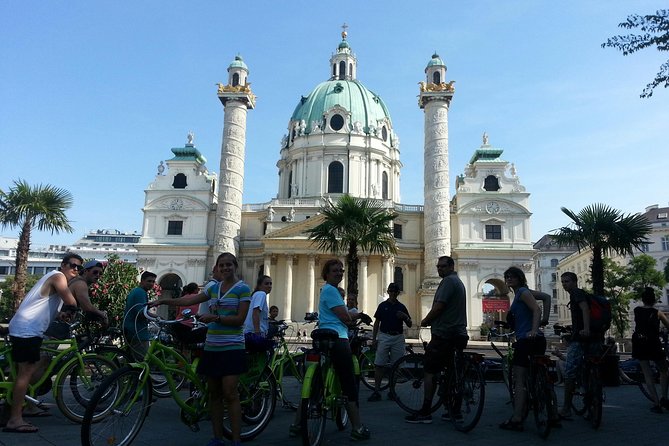
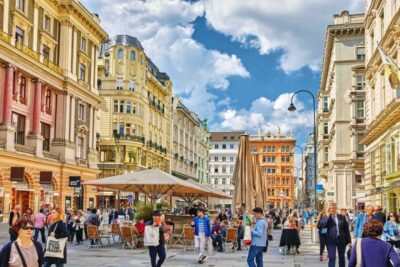
The first major stretch follows the Ringstrasse, Vienna’s famous boulevard around the old imperial center. This is where you see the city’s grand civic architecture in quick succession.
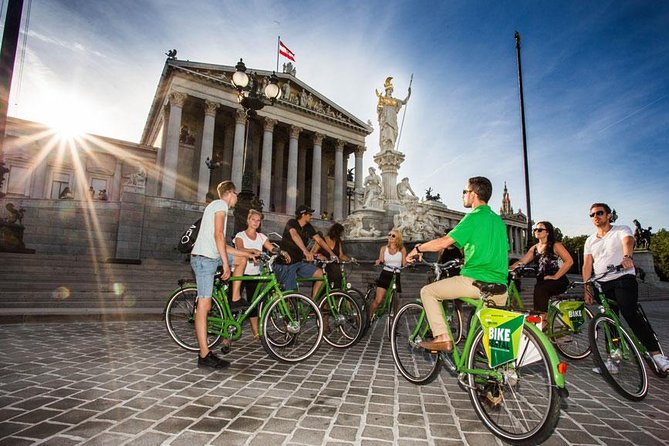
You pass the Vienna State Opera, City Hall, Vienna University, the Houses of Parliament, and the Hofburg Palace. The Opera House is a particularly good early stop, with about 20 minutes to look at its Neo-Classical design. The Hofburg was the center of Habsburg power and is linked with figures such as Marie Antoinette.
The Ringstrasse is valuable because it lets you read Vienna as a former imperial capital. The buildings are not isolated sights. Together they show how the city presented government, culture, education, and royal power along one formal route.
There is a limit to this part of the tour. You are riding past the buildings rather than entering them, and explanations happen during stops or beside the bikes. If you want palace rooms, art collections, or a full account of Vienna’s political past, you will need separate visits.
The route also does not promise a full ride through every lane of the old city center. One dissatisfied rider expected more time in the central core, but the operator explained that some central streets are not suitable for a group bike ride. That is worth understanding before you book: this is a city overview from the Ringstrasse outward, not an old-town walking tour on two wheels.
Heroes’ Square and Vienna’s difficult past
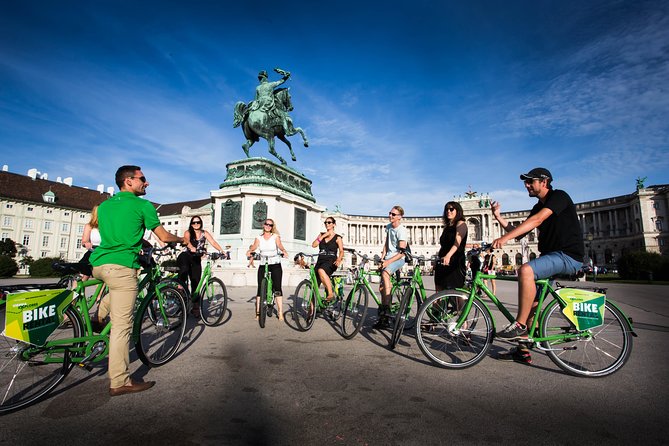
The ride through Heroes’ Square adds an important historical layer. The square is known for the 1938 speech Adolf Hitler gave announcing Austria’s annexation into Nazi Germany. A stop here gives the guide a chance to place the monumentality of imperial Vienna beside one of the darkest moments in the city’s modern story.
This is one of the better reasons to choose a guided ride rather than rent a bike alone. You can pedal past a grand square on your own, but without context, its political meaning may be easy to miss. The subject is serious, and the quality of the explanation will depend on the guide’s style, but the stop gives the route more weight than a simple architecture circuit.
A different sort of day out in Vienna:
- Vienna: Vivaldi’s Four Seasons Concert in Karlskirche
★ 4.7 · 14,951 reviews - Vienna: Skip-the-cashier-desk-line Giant Ferris Wheel Ride
★ 4.5 · 7,859 reviews - Vienna: Schönbrunn Palace & Gardens Skip-the-Line Tour
★ 4.7 · 7,739 reviews - Vienna: Light of Creation Votive Church Immersive Light Show
★ 4.8 · 6,779 reviews
Prater and the giant Ferris wheel
The ride continues to the Prater, Vienna’s best-known amusement park and recreation area. The main photo stop is the Riesenrad, the giant Ferris wheel that has become one of the city’s most recognizable sights.
Prater changes the rhythm of the tour. After the formal buildings of the Ringstrasse, you reach a more open, relaxed setting. The stop is mainly for photographs and orientation rather than a full amusement park visit, so do not book this expecting time for rides.
I like this part because it shows a side of Vienna that can be missed on a palace-heavy itinerary. You are still close to the center, but the mood is different. The bike makes the connection practical, since Prater is far enough from the Ring to feel inconvenient on foot yet easy to reach by bicycle.
Several riders valued seeing Prater and the Danube because they would not have reached those areas on a walking tour. If your Vienna plans already include the Opera House and Hofburg, Prater gives this outing a useful change of scenery.
Along the Danube Canal and the Danube
From Prater, the route includes cycling by blue Danube waters and a stretch along the Danube Canal, where you can see street art. The supplied description uses both the Danube and Danube Canal, so expect water views and urban riverside riding rather than a long countryside excursion.
This section is one of the reasons a bike tour can feel broader than a standard sightseeing circuit. You get away from the formal center and see how Vienna’s public spaces change near the water. The street art also breaks up the imperial architecture and gives you a more current view of the city.
The canal ride may be one of the easiest parts for riders who prefer a steady, open route. Even so, surfaces can vary. One rider specifically warned that cobbled streets became uncomfortable after a while. If you have sensitive wrists, a sore back, or little recent cycling practice, padded clothing and sensible posture will help.
Hundertwasserhaus and the Landstrasse neighborhood
The stop at Hundertwasserhaus is the tour’s most visually unusual pause. The apartment building was designed by Friedensreich Hundertwasser, a radical Viennese artist and designer known for rejecting straight, severe architectural lines.
You have about 20 minutes here. That is enough to look at the bright colors and irregular forms, take photographs, and hear why the building feels so different from the imperial streets around the Ringstrasse.
The stop also takes you through the Vorstadt Landstrasse neighborhood, adding a more local residential setting to the route. This is not just another famous facade. It helps show that Vienna’s architectural identity is not limited to palaces, opera houses, and government buildings.
Do keep expectations sensible. The tour stops outside, and the time is limited. If the design catches your interest, you may want to return independently for a slower look at the surrounding area.
Rathaus and the civic Ringstrasse
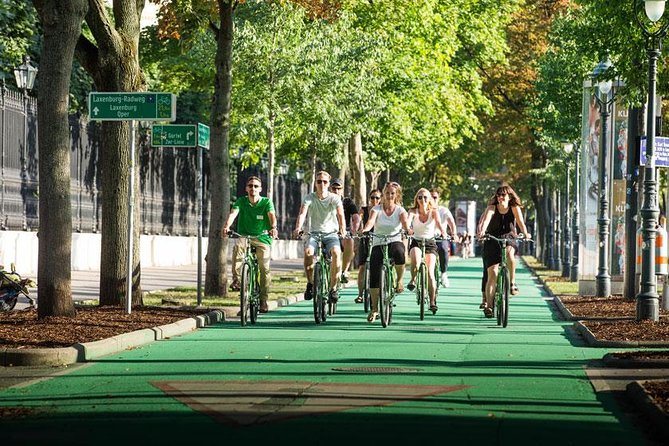
Vienna City Hall, or Rathaus, is another planned stop of about 20 minutes. Its Neo-Gothic design gives the Ringstrasse a more theatrical look, with towers and decorative details that contrast with the Opera House’s Neo-Classical style.
The guide uses Rathaus to explain Vienna’s civic life and the role of the Ring road in shaping the city. It is a good place to pause because the building is large enough to appreciate from outside, and the surrounding space allows the group to gather.
This stop will appeal most to anyone who enjoys architecture and city planning. If you are mainly interested in food markets, museums, or everyday neighborhoods, the commentary may feel more formal. That is part of the tradeoff in a highlights tour: you receive a broad civic and historical framework, but not much time for one theme.
How hard is the ride?
The tour covers about 6 miles, or 10 kilometers, over roughly three hours. That distance is modest for regular cyclists, and Vienna’s flat terrain keeps hills from being the main challenge.
The real work comes from time in the saddle, city riding, stops, and occasional rough paving. One rider who was not especially fit felt a little tired near the end but managed the pace. Another found the full three hours longer than expected. Read the duration carefully and be honest about your comfort on a bicycle.
The pace is intended to suit a mixed group, and guides such as Karl were praised for keeping the ride pleasant and waiting for slower riders. That said, a mixed group can move only as quickly as its least confident members, while traffic lights can split the line.
Children can ride if they are comfortable on a bicycle, but the historical focus may not suit every child. One family found the tour less successful for children around ten and younger who were not interested in history or riding. For families, consider your child’s stamina and attention span, not just the flat terrain.
Guides, group size, and the feel of the outing
The guide is central to this experience. Robert is repeatedly associated with strong historical explanations and an easy sense of humor. Marco, Ava, Jan, Horst, Karl, Clemens, and Rob are also described as friendly, engaging, patient, or lively.
The best guide for you will be one who can make short stops count. You are not receiving a long lecture at each sight, so clear storytelling matters. Several comments praised guides who brought the past to life, added personal perspectives, and kept the pace relaxed.
The group limit is listed as 15 people, though the operator has also referred to a maximum of 16 in a response. Either way, this is not a private ride. It may be marketed as small-group, but it can feel substantial at junctions and traffic lights.
That does not automatically make it a poor choice. A guide can wait at crossings, and the price stays lower than a private tour. But if you want constant access to the guide, a quiet pace, or extra time at each sight, ask about a private bicycle option instead.
Is $56.86 a fair price?
At $56.86 per person, the tour costs more than renting a bicycle for several hours, but the comparison is not quite equal. The fee includes the bike and a guide who handles the route, gives historical context, and links sights that would take more planning to connect alone.
The strongest value comes from the distance covered. In three hours, you reach the Ringstrasse, Prater, the Danube area, Hundertwasserhaus, Rathaus, and Heroes’ Square. A solo rider could cover some of this, but would need to plan the route, watch navigation, and research the stories in advance.
The value is weaker if you want extended visits inside attractions. Admission is not included, though the listed stops are viewed from outside and have no admission charge. Food and drinks are also extra.
I would see this as a good orientation purchase, especially on a short Vienna visit. It is less compelling for a repeat visitor who already knows the city and wants a narrow subject such as music, museums, or imperial interiors.
Weather, clothing, and cancellation rules
The outing operates in all weather conditions, so bring clothing that matches the forecast. Raincoats may be available in poor weather, but do not count on a sunny-day ride. One booking group chose not to ride during rain, hail, and thunder and was not given a refund, since severe weather does not automatically cancel the tour.
You can cancel for a full refund up to 24 hours before the start time. Changes made within 24 hours are not accepted, and late cancellations are not refunded. If the provider cancels because the minimum number of participants is not reached, you are offered another date or experience, or a full refund.
Who should book this Vienna bike tour?
Book it if you want a fast, active introduction to Vienna and can comfortably ride for three hours. It suits first-time visitors, people on short stays, and anyone who wants to combine the imperial center with Prater and the Danube.
It is also useful if you like history but do not want to spend your whole day inside museums. The route gives you enough context to choose what to explore later.
Think twice if you dislike riding in groups, are uncomfortable on cobblestones, need a fully private experience, or expect to spend serious time inside the city center. Families with young children should also consider how well their children handle a steady ride and historical commentary.
Should you book it?
I would book this tour early in a short Vienna visit, especially if you want to get your bearings fast and see more than the central palaces. The flat route, included bicycle, and repeated praise for guides such as Robert, Marco, Ava, and Jan make it a practical way to cover ground.
Go in knowing what it is: a broad city ride, not a private tour and not a full exploration of Vienna’s old center. Stay near the guide, prepare for weather, and expect occasional traffic and rough paving. If those conditions suit you, this is a strong-value introduction to Vienna on two wheels.
FAQ
How long is the Vienna Highlights Small-Group Bike Tour?
The tour lasts approximately three hours.
How far do you cycle?
The total cycling distance is approximately 6 miles, or 10 kilometers.
Where does the tour start?
It starts at Vienna Explorer, Franz-Josefs-Kai 45, 1010 Vienna, Austria.
Where does the tour end?
The tour ends back at the original meeting point.
Is bicycle use included?
Yes. Bicycle use and a professional guide are included in the price.
Is the tour offered in English?
Yes. The tour is offered in English.
What sights are included?
The route includes the Ringstrasse, Vienna State Opera, Rathaus, Houses of Parliament, Vienna University, Hofburg Palace, Heroes’ Square, Prater and its Riesenrad Ferris wheel, the Danube area, the Danube Canal, and Hundertwasserhaus.
Is the tour suitable for children?
Children can take part if they are comfortable riding a bicycle, but the tour includes historical commentary and lasts about three hours. The experience may not suit younger children who do not enjoy cycling or history.
What happens if the weather is bad?
The tour operates in all weather conditions, so you should dress appropriately. A cancellation caused by the provider because the minimum number of participants is not reached may result in another date, another experience, or a full refund.
Just reviewed in Vienna
- World War II History Vienna Old Town Private Walking Tour★ 4.8 · 9 reviews
- Vienna: Wine Tasting E-Bike Tour★ 4.9 · 46 reviews
- Vienna: Winery and Wine Tasting Tour with a Wine Expert★ 5.0 · 5 reviews
- Vienna: Unforgettable Private City Tour★ 5.0 · 7 reviews
- Vienna Urban Art Tour: Explore a different side of Vienna!★ 3.8 · 14 reviews
- Vienna: Concert by the Vienna Baroque Orchestra★ 4.6 · 56 reviews
- Vienna: Sunday Brunch Danube Cruise & Live Music★ 4.2 · 42 reviews
- Vienna Supreme Orchestra at Palais Niederösterreich★ 4.8 · 10 reviews
Vienna Bike and Segway Tours, compared.
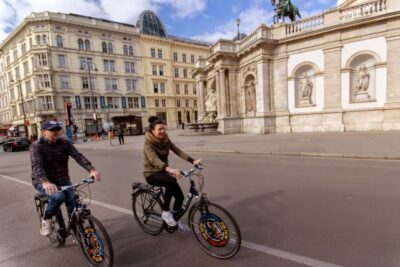
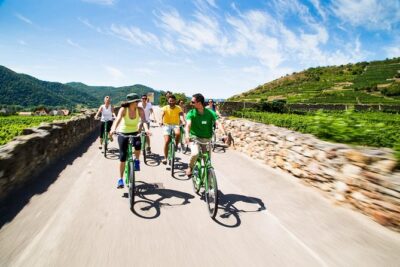
Wachau Valley Wine Tasting Bike Tour from Vienna
Read our review →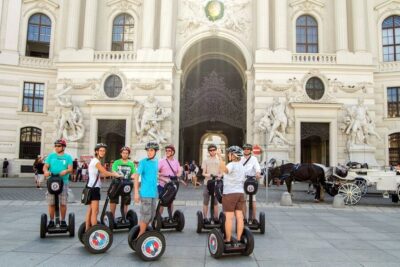
Vienna by Bike 3-Hour All-In-One City Bike Tour in English
Read our review →
Browse the lists this tour appears in