
Reviewed · VIENNA
‘Armenia In The Heart Of Vienna
Vienna’s Armenian story is tucked behind a modest address in the Neubau district. Inside the Mekhitarist Congregation, a 90-minute visit brings together ancient coins, manuscripts, rugs, folk costumes, books, and the unusual story of an Armenian religious order that helped carry Armenian culture into Central Europe. The visit also includes the Chatherine liquor story and a complimentary taste.
I like two things right away. First, the collection gives you something more substantial than a quick look at a church interior: you get a window into Armenian scholarship, printing, faith, and cultural preservation. Second, the liquor portion adds a warm, human touch, with family history and tasting rather than facts alone. The main consideration is that this is a compact, highly specific tour. If you want a broad survey of Vienna, this will feel too narrow. If you enjoy small museums and overlooked cultural corners, that focus is the point.
Key points at a glance
- A 90-minute visit inside the Mekhitarist Congregation: The tour stays focused on one important institution rather than rushing across several sights.
- Ancient and medieval objects: Expect manuscripts, coins, folk clothing, rugs, books, and periodicals connected with Armenian culture.
- The Chatherine liquor story: The tasting links a family product with its taste, background, and place in the congregation’s visitor experience.
- A small group of no more than 15 people: This is a more intimate format than a large city tour.
- English-language guiding: The experience is offered in English, with a mobile ticket for entry.
- A central Vienna meeting point: You meet at Mechitaristengasse 4 in the 1070 district and return there when the visit ends.
Why this small Armenian collection matters in Vienna
The Mekhitarist Congregation gives this experience its real purpose. The order has been connected with Armenian intellectual and scholarly work for nearly three centuries, and its role reaches beyond religious life. It helped preserve Armenian language and culture, while also building links with Austrian society.
That makes the visit useful for anyone trying to see Vienna beyond its imperial palaces and famous museums. Vienna is often presented through the Habsburg court, classical music, coffeehouses, and grand art collections. Here, you get a different angle: a community from the Armenian world working in the Austrian capital and shaping how Armenian culture was studied and remembered.
The congregation is also tied to the Armenian cultural renewal of the 19th century. You do not need specialist knowledge to appreciate that idea. Simply put, the order helped keep language, literature, religious material, and historical memory in circulation at a time when cultural preservation mattered greatly.
The tour also explains how the Mekhitarists became early carriers of Austrian culture in the Orient. That two-way connection is what makes the story more interesting than a simple account of an Armenian institution in Vienna. You are looking at a meeting point between Armenia and Austria, not an isolated collection.
Still deciding? These Vienna outings turn up in the same shortlists.
- Vienna: Vivaldi’s Four Seasons Concert in Karlskirche
★ 4.7 · 14,951 reviews - Vienna: Skip-the-cashier-desk-line Giant Ferris Wheel Ride
★ 4.5 · 7,859 reviews - Vienna: Schönbrunn Palace & Gardens Skip-the-Line Tour
★ 4.7 · 7,739 reviews
Inside the Mekhitarist Congregation at Mechitaristengasse 4
The tour begins at Mechitaristengasse 4, 1070 Wien. From there, the visit remains at the congregation, and it ends back at the same meeting point. That simple arrangement matters in Vienna, where a tightly timed tour can be easier to manage when you do not have to cross the city between stops.
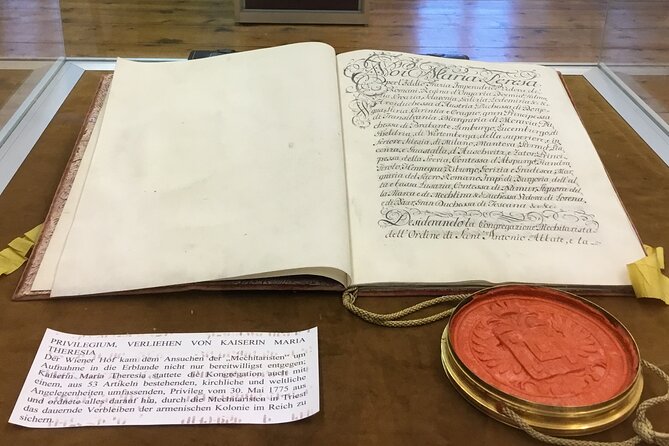
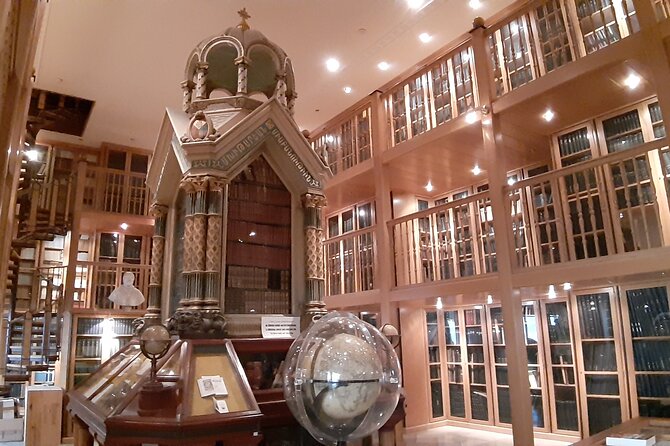
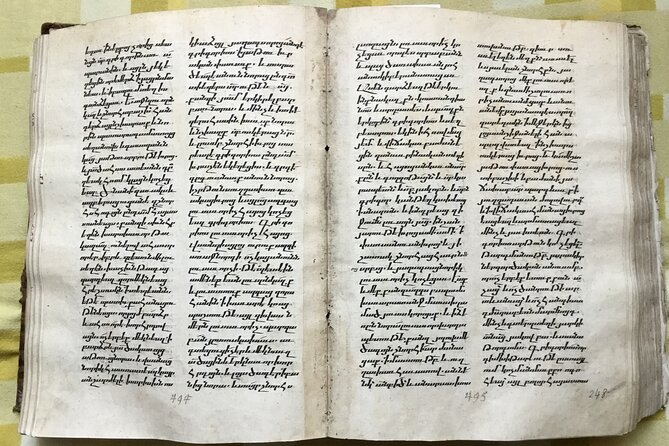
The main collection includes ancient and medieval coins, manuscripts, folk costumes, rugs, books, periodicals, and other objects. Each category gives you a different way into Armenian life.
Manuscripts and books point to the order’s scholarly work. They are not merely old objects behind glass. They show how writing, copying, collecting, and teaching helped preserve Armenian identity across generations and borders.
Coins offer a more physical connection with the past. They help place Armenian history in a wider regional setting, where trade, political power, and religious life were all connected. You may find the coins especially appealing if you like small objects that carry a large amount of historical information.
Folk costumes and rugs move the story away from formal scholarship and toward daily life and visual culture. Textiles can reveal taste, craft, regional identity, and social customs in ways that a written document cannot. The collection’s range is one of its strengths because it avoids presenting Armenia only through religious texts.
Books and periodicals bring the story closer to the modern era. They help show that the Mekhitarists were not simply guardians of an old tradition. Their work also involved publishing, research, and the wider spread of Armenian ideas.
The phrase Militarist Museum appears in the experience details, but the central stop is the Mekhitarist Congregation. You should expect an art and historical collection connected with the congregation, rather than a large military museum with extensive galleries. That distinction is worth keeping in mind when setting expectations.
The Chatherine liquor story and tasting
The Chatherine liquor section gives the tour a different rhythm. After looking at manuscripts and historical objects, you turn to taste, family, and production. The focus is not only on the drink itself but also on its background and the people connected with it.
The experience details describe the liquor’s taste, history, and family story. A complimentary liquor tasting is also highlighted, so this part appears to be included rather than an extra purchase. The exact amount or selection is not stated, so you should think of it as a small tasting connected with the visit, not a full bar experience.
I like this kind of addition when it is tied to the place. A drink can make cultural history easier to remember, especially when the explanation connects the product with a family and a tradition. It also gives the visit a more personal finish than a final list of dates and names.
One note of caution: you should be comfortable with alcohol to get the most from this part. The experience is not described as alcohol-free or as offering a nonalcoholic alternative. If you do not drink, the congregation’s collection and cultural story remain the main reasons to book.
The liquor has been praised in particularly strong terms, with one account calling it among the best in the world. Treat that as personal enthusiasm rather than an objective ranking. The useful point is that the tasting is considered memorable and adds something distinctive to a museum visit.
A closer look at the 90-minute format
An hour and a half is enough time for a focused introduction, but not enough for every object to receive a long explanation. That is a good match for the subject. You can gain a clear sense of the congregation, see the main categories of material, and hear the Armenian and Austrian connection without giving up half a day.
The short duration also makes this easy to pair with other Vienna plans. You could fit it between visits in the 7th district or use it as a change of pace after the city’s larger museums. Since the visit returns to the starting point, you do not need to plan around a distant end location.
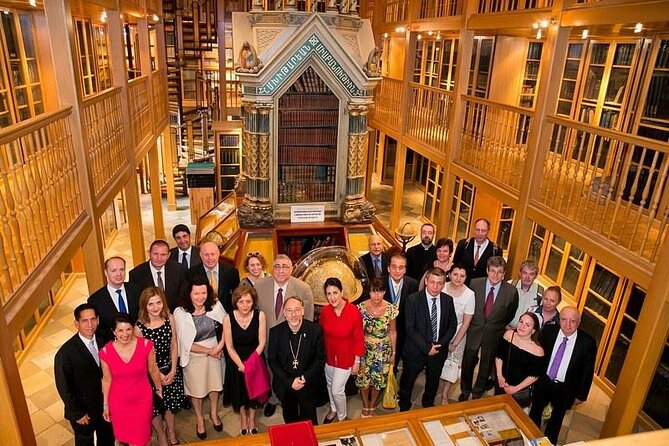
A small group of up to 15 people should help keep the visit personal. It is still large enough for a normal guided tour, but far less crowded than a coach excursion. You may have a better chance to hear the explanations clearly and ask a question, though the exact amount of discussion will depend on the guide and group.
No guide names are supplied, so you cannot choose the experience based on a particular presenter. The tour is offered in English, which makes the scholarly material more approachable for English-speaking visitors. A mobile ticket is provided, so you can keep the booking on your phone rather than arranging a printed voucher.
A different sort of day out in Vienna:
- Vienna: Light of Creation Votive Church Immersive Light Show
★ 4.8 · 6,779 reviews - Vienna Spanish Riding School Guided Tour
★ 4.7 · 6,765 reviews - Vienna: Classical Concert in the World-Famous Musikverein
★ 4.6 · 6,673 reviews - Vienna: Skip-the-Line Sisi Museum, Hofburg and Gardens Tour
★ 4.8 · 5,918 reviews
Who will get the most from this visit
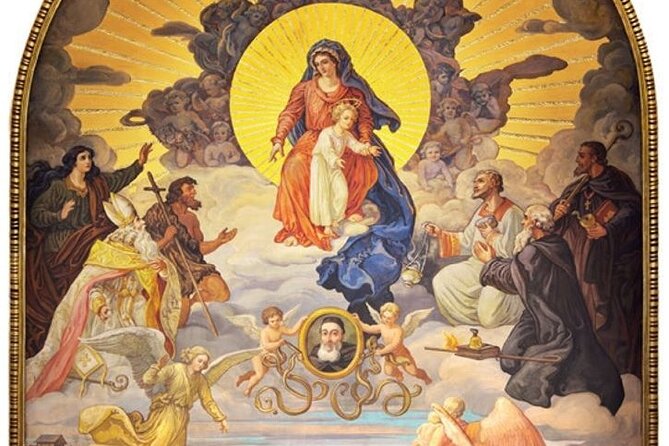
I would recommend this tour to you if you enjoy cultural institutions that are smaller, specialized, and tied to a living community. It suits people who want to understand how Armenian culture has been preserved outside Armenia, and those who appreciate books, manuscripts, textiles, and religious history.
It is also a good choice for repeat visitors to Vienna. Once you have seen the major imperial sights, a place like this can add a new layer to your understanding of the city. You are not simply ticking off another famous building. You are learning how an international community helped shape Vienna’s intellectual life.
The experience should also appeal to anyone interested in Armenian culture but unsure where to begin. The collection offers several entry points, from coins and costumes to literature and liquor. You do not need prior knowledge to follow the basic story.
Families with older children may find it worthwhile if the children enjoy objects and stories rather than hands-on activities. The available information does not describe special children’s programming, interactive displays, or a playful format. For younger children, the quiet collection and scholarly subject may feel slow.
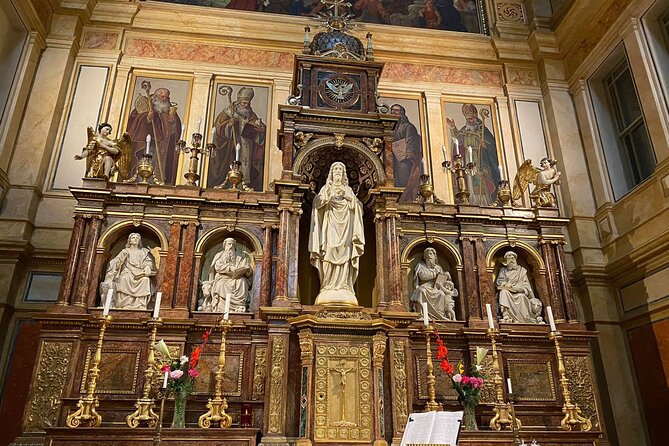
If your priority is architecture, grand interiors, or a long museum visit, this may not be your best choice. The value comes from the subject and the guide’s explanation, not from the scale of the building or the number of rooms.
Is $89.36 a fair price?
At $89.36 per person, this is not a cheap stop-in museum visit. The price needs to be judged against what you are buying: an English-language guided experience, admission to the congregation’s collection, a small-group setting capped at 15 people, and the liquor portion.
For a normal museum entry, that amount would feel high. For a specialized guided visit in a small group, the price is easier to defend. You are paying for access, context, and a concentrated explanation of a subject that is unlikely to be covered in a standard Vienna sightseeing tour.
The value will be strongest if you actively want this topic. If you are curious about Armenian history, religious orders, manuscripts, or cultural links between Armenia and Austria, the narrow focus makes the price more reasonable. If you are mainly looking for general sightseeing, you may find better value in one of Vienna’s larger public museums.
The complimentary liquor tasting helps, but it should not be the main reason to book. A small sample cannot justify the full price by itself. The collection and the story of the Mekhitarists are the real center of the experience.
Practical details before you book
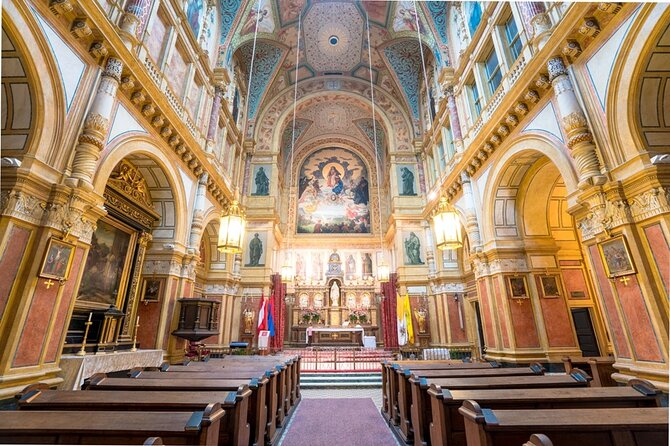
You meet at Mechitaristengasse 4, 1070 Wien, Austria. The location is near public transportation, and the activity ends at the same address. Check the meeting point carefully before setting out, especially if you are coming from another part of Vienna.
The ticket is mobile, and confirmation is provided when you book. The experience is offered in English. Most people can participate, according to the supplied information, but no detailed accessibility notes are provided, so contact the provider if you need specific information about entrances, stairs, or seating.
The group can contain a maximum of 15 people. That limit is useful to know because it tells you this is designed as a guided cultural visit rather than an open museum admission with an occasional explanation.
Free cancellation is available if you cancel at least 24 hours before the start time. Cancellations or changes made inside that window are not refunded or accepted. The activity also requires a minimum number of participants, so if that minimum is not reached, you are offered another date or experience, or a full refund.
Should you book Armenia in the Heart of Vienna?
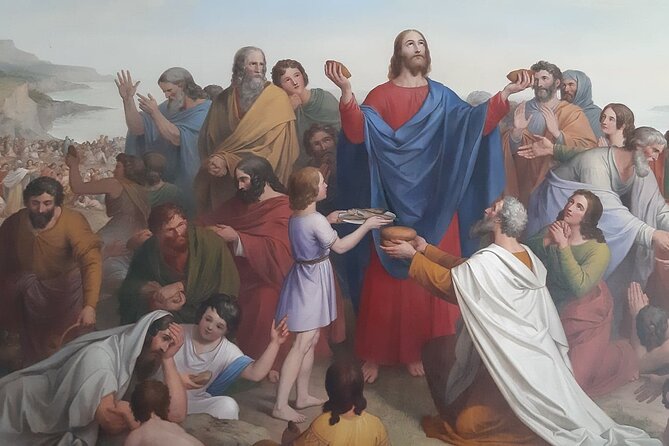
Book it if you want a compact, specialist visit with a clear cultural purpose. The Mekhitarist Congregation’s collection gives you access to Armenian manuscripts, coins, textiles, books, and other material in a setting directly connected with the story. The Chatherine liquor tasting adds a memorable human touch.
Skip it if you want a broad Vienna overview, a large museum, or a long list of famous sights. At $89.36, the tour makes sense only when the subject genuinely interests you.
For the right visitor, this is a thoughtful way to spend 90 minutes. You leave with more than a quick look at old objects: you gain a better understanding of how Armenian culture was preserved, studied, and shared in the heart of Austria.
FAQ
Where does the tour begin?
The tour begins at Mechitaristengasse 4, 1070 Wien, Austria.
Where does the activity end?
The activity ends back at the meeting point.
How long does the tour last?
The tour lasts approximately 1 hour and 30 minutes.
What language is the tour offered in?
The tour is offered in English.
How many people can join the tour?
The maximum group size is 15 people.
What is included in the visit?
The visit includes admission to the Mekhitarist Congregation collection, where you can see manuscripts, coins, folk costumes, rugs, books, periodicals, and other items. The experience also covers the Chatherine liquor story and includes a complimentary liquor tasting.
Can I cancel for a full refund?
Yes. You can cancel at least 24 hours before the experience start time for a full refund. Cancellations or changes made less than 24 hours before the start time are not accepted or refunded.
Just reviewed in Vienna
- World War II History Vienna Old Town Private Walking Tour★ 4.8 · 9 reviews
- Vienna: Wine Tasting E-Bike Tour★ 4.9 · 46 reviews
- Vienna: Winery and Wine Tasting Tour with a Wine Expert★ 5.0 · 5 reviews
- Vienna: Unforgettable Private City Tour★ 5.0 · 7 reviews
- Vienna Urban Art Tour: Explore a different side of Vienna!★ 3.8 · 14 reviews
- Vienna: Concert by the Vienna Baroque Orchestra★ 4.6 · 56 reviews
- Vienna: Sunday Brunch Danube Cruise & Live Music★ 4.2 · 42 reviews
- Vienna Supreme Orchestra at Palais Niederösterreich★ 4.8 · 10 reviews