
Reviewed · SCHöNBRUNN PALACE TOURS
Schönbrunn Palace and Gardens Tour
Schönbrunn Palace is where Vienna’s imperial story feels most personal. In Maria Theresa’s music room, you stand where six-year-old Mozart performed for the court, then move through grand rooms tied to Maria Theresa, Franz Joseph, and Empress Elisabeth, known as Sisi. The small group makes it easier to ask questions and keep a steady pace.
I like the mix of formal gardens and palace interiors, since you see both the public image of Habsburg power and the rooms where family life unfolded. I also like the historian-led approach. Guides such as Biljana, Katarina, Kristina, and Elisabeth have been praised for explaining people and personalities, not just dates. The main drawback is clear: at $181.41 per person, palace and park admission is extra, so the total cost is higher than the headline price.
Key points to know before booking
- Mozart’s six-year-old performance: Visit the music room where the young prodigy played before Maria Theresa and the imperial court.
- Small-group format: The tour is designed for a very small party, with the maximum listed as eight people and the main description describing groups of six.
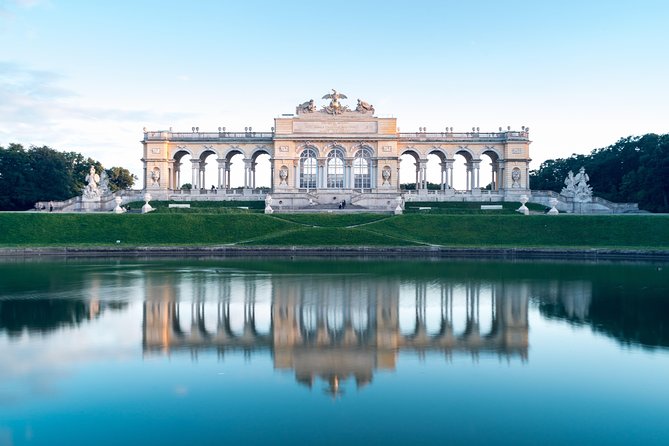
- Gardens before the palace: You begin outside, seeing the Baroque grounds and Gloriette before entering the state rooms.
- A people-focused history lesson: Franz Joseph, Sisi, and Maria Theresa are presented through their habits, family life, and court duties.
- Extra ticket cost: Your guide helps buy the Schönbrunn Palace and Park ticket, but admission is not included in the tour price.
- Two departure choices: You can select a 10 a.m. or 2 p.m. start, useful when fitting Schönbrunn around the rest of your Vienna plans.
Why Schönbrunn works best with a guide
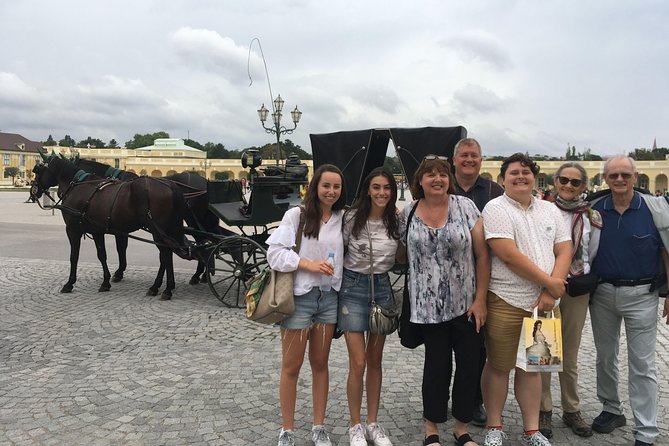
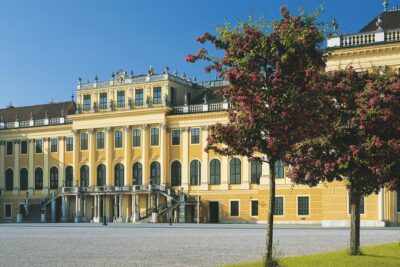
Schönbrunn is not a single room with a single story. It is a large imperial residence with formal gardens, ceremonial spaces, family apartments, and layers of decoration from different periods. An audio guide can tell you what a room is called. A good historian can explain why it mattered.
That difference is important here. The palace is full of names, marriages, military victories, court rituals, and family tragedies. Without some direction, the gilded rooms can blur together. Your guide gives each space a purpose and connects it to the people who used it.
The best guide style reported for this tour is conversational rather than mechanical. Biljana is praised for mixing fact, folklore, and royal gossip. Katarina is noted for making the stories feel alive and using time well. Kristina has been appreciated for discussing Habsburg personalities and offering useful suggestions for restaurants and other places in Vienna.
The tour is offered in English and usually runs for about two and a half to three hours. That is enough time for a serious introduction without consuming your entire day. The tour ends inside the palace, leaving you free to continue at your own pace.
More ways into Schonbrunn Palace:
- Vienna: Schönbrunn Palace & Gardens Skip-the-Line Tour
★ 4.7 · 7,739 reviews - Vienna: Skip-the-Line Schönbrunn Palace & Gardens Tour
★ 4.8 · 5,411 reviews - Vienna: Mozart and Strauss Concert at Schönbrunn
★ 4.5 · 2,364 reviews
Starting with the Baroque gardens
Your meeting point is the Group Center Schönbrunn at Schloss, 1130 Wien. Plan to arrive a little early. The brown building can be difficult to identify from across the street, and clear signs are not always obvious. This is one of those small Vienna details that can turn a relaxed start into a hurried one if you leave it until the last minute.
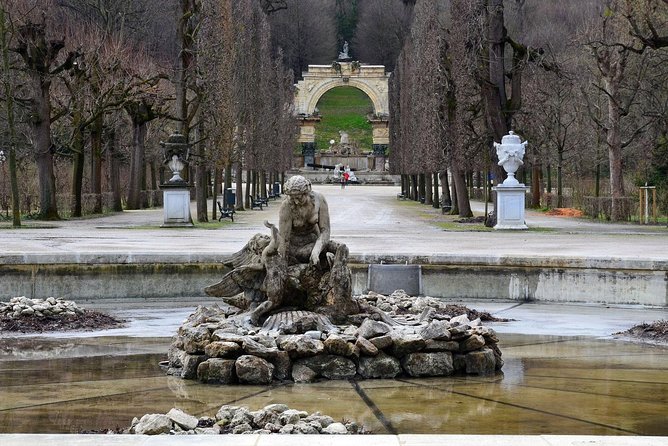
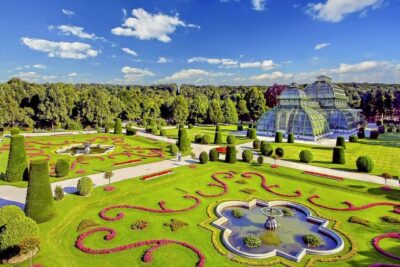
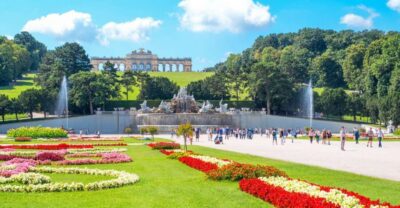
The first part takes you through the formal gardens. These grounds were designed as a statement of order, power, and control. Paths, plantings, fountains, and architectural features work together rather than appearing as separate decorations.
The walk toward the Gloriette gives the garden a larger meaning. The triumphal arch sits on a hill above the palace and offers views toward Vienna’s woods. It recalls the military successes associated with Maria Theresa’s reign, when the Habsburg court used Schönbrunn as a center of politics and family life.
The garden portion is one of the tour’s strengths, but it is also the part that needs the clearest expectations. The walk is described as lasting about 30 minutes, while the palace visit takes most of the remaining time. If the guide moves quickly through the grounds, you may want to ask about the Gloriette, the main viewpoints, and how much time you will have to explore after the guided portion.
The gardens can be rewarding even outside the peak flower season. They remain attractive in autumn, and the climb toward the Gloriette gives you a wider sense of the property than the interior visit alone. In winter, cold weather and bare plantings may make the outdoor section less appealing, so dress for the conditions and decide how much extra garden time you want after the tour.
The park was opened to the public in 1779. That detail helps explain Maria Theresa’s political skill. Schönbrunn was not only a private summer residence. It also presented the monarchy to ordinary people and offered a carefully managed view of imperial life.
Inside the palace: power, routine, and family life
The interior visit brings you into the rooms associated with several generations of Habsburg rule. You do not simply walk past decoration. You learn how different spaces were used and how the palace reflected the people who occupied it.
The Great Gallery is the grand public face of Schönbrunn. It was designed for ceremonies, receptions, and court life, so it gives you the clearest sense of imperial display. The Hall of Ceremonies adds a similar lesson through its large scale and scenes of royal celebrations.
The dining room shows another side of court life. Precious tableware and the famous imperial napkins point to the strict rituals surrounding meals. These details may seem small beside a grand gallery, but they help you understand how much daily behavior at court was governed by custom.
The Yellow Salon and Franz Joseph’s private suite shift the focus from public ceremony to personal routine. Franz Joseph ruled for decades, yet the rooms also help tell the story of a marriage shaped by duty. He married Elisabeth of Bavaria in 1854. Sisi disliked the formal demands and ornate surroundings of court life, a useful contrast to the palace’s public image of perfect order.
The tour also includes rooms tied to Maria Theresa. The Porcelain Room served as her office and is decorated to imitate precious china, with drawings connected to the imperial children. The room gives you a glimpse of the family side of the palace, even as the surrounding decoration reminds you that this was still a seat of power.
The rooms that make the visit memorable
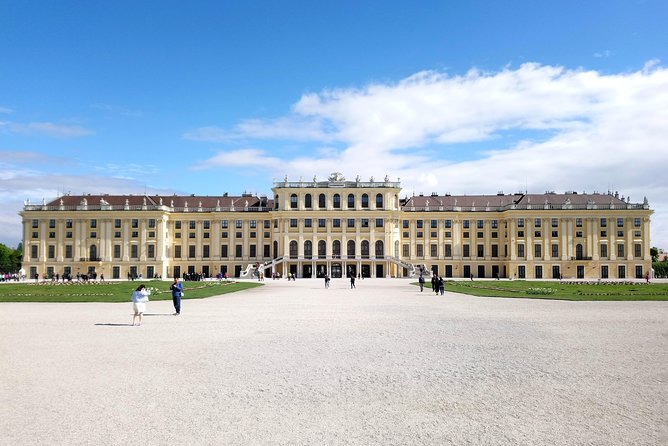
Several interiors are especially useful for understanding Rococo taste. The Gobelin Salon, Feketin Room, Hall of Ceremonies, and Millions Room show different ways the court used decoration to signal wealth and reach.
The Millions Room is named for the enormous price paid for its furnishings in gold ducats. Indo-Persian miniatures, Rococo frames, and carved rosewood from the Antilles combine European fashion with imported materials and art. You do not need to be a specialist in decorative arts to appreciate the point: the room expresses a court that wanted the rare, distant, and expensive close at hand.
The Hall of Ceremonies connects the interior to royal events, including the wedding of Crown Prince Joseph. Paintings by court artist Martin van Meytens record the kind of public spectacle that took place here. A guide can help you read these scenes as political theater rather than just colorful wall decoration.
The music room offers the most easily remembered human story. Mozart performed there at age six before royalty. Standing in that room gives the visit a strong personal hook, especially if large state rooms normally begin to feel alike.
Some guides add visual material, such as old photographs, maps, drawings, or extra images. That can help you picture how the palace and its occupants changed over time. Annelie, for example, has been praised for bringing maps, drawings, and photographs to support the explanation.
A different sort of day out in Vienna:
- Vienna: Vivaldi’s Four Seasons Concert in Karlskirche
★ 4.7 · 14,951 reviews - Vienna: Skip-the-cashier-desk-line Giant Ferris Wheel Ride
★ 4.5 · 7,859 reviews - Vienna: Light of Creation Votive Church Immersive Light Show
★ 4.8 · 6,779 reviews - Vienna Spanish Riding School Guided Tour
★ 4.7 · 6,765 reviews
A small group that can adjust to your interests
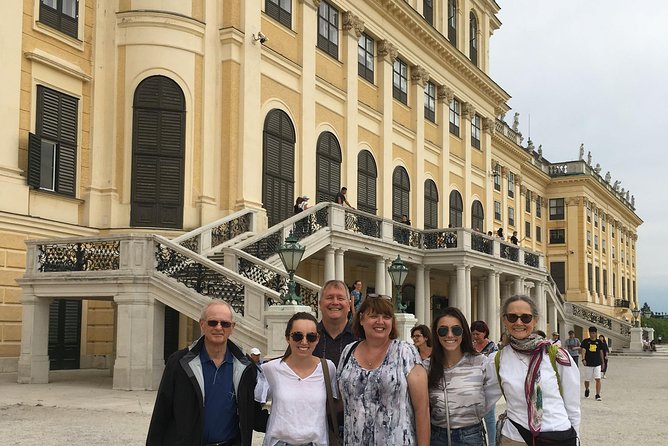
The tour’s small size is not just a marketing detail. With a group limited to six in the main description and eight in the additional information, you should have a better chance to hear the guide and ask questions than on a large coach tour.
The format also lets the guide adjust the emphasis. If you care about Maria Theresa, the Napoleonic period, Sisi, court etiquette, art, or family life, say so at the beginning. One guide is specifically noted for checking interests early and shaping the explanations around the group.
This flexibility matters for mixed-age parties. A 21-year-old can stay engaged when the story includes family tensions, folklore, and unusual details rather than only a list of rulers. Older visitors may appreciate a slower pace and room for questions. Biljana has been praised for keeping people moving while still listening carefully, and another guide was appreciated for adapting the speed for older participants.
There is one practical limitation. Small groups do not automatically guarantee perfect listening conditions. One person found it difficult to hear the guide inside the palace and felt an audio tour might have worked better. If you have hearing concerns, stand close to the guide and mention it at the start. The palace can be busy, and the quality of the experience depends heavily on where you are positioned.
What the $181.41 price really includes
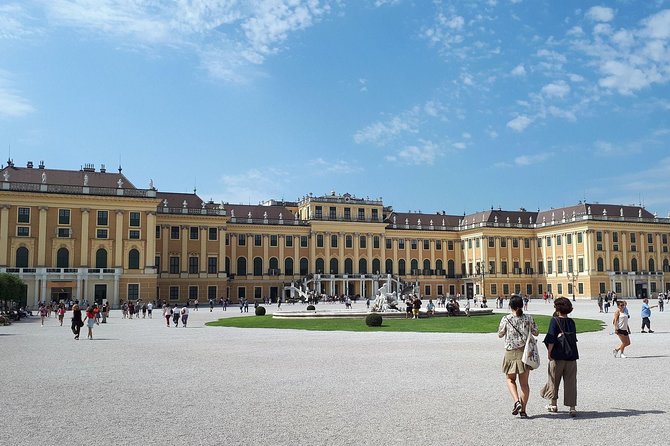
At $181.41 per person, this is a premium tour. The guide is included, but the Schönbrunn Palace and Park admission ticket is not. Your guide helps purchase the ticket, yet you should budget for that additional cost before comparing this experience with a standard palace entry.
The value comes from the small group and the historian-led interpretation. If you only want to enter the rooms and look around independently, the price may be hard to justify. If you want the Habsburg family story explained clearly in a short visit, the cost can make more sense.
The ticket arrangement requires attention. Do not assume that a Vienna Card or another discount will fit neatly into the group booking. One participant nearly received a later entry time after trying to use a Vienna Card separately. Follow the guide’s instructions and avoid buying a separate palace ticket in advance unless the operator confirms that it will work with the reservation.
The tour also offers group discounts, though the exact reduction is not specified. Ask about the current terms before booking if you are traveling with several people.
Choosing 10 a.m. or 2 p.m.
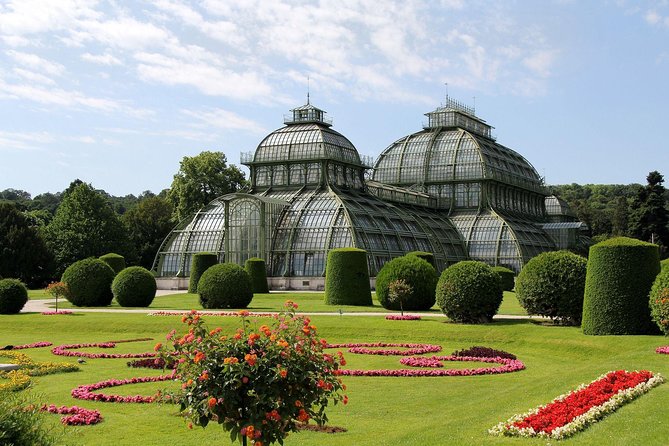
The 10 a.m. departure is useful if you want to spend the afternoon elsewhere in Vienna. After the tour, you can continue through the grounds independently or return toward the city center for museums, cafés, and the Hofburg area.
The 2 p.m. departure suits a slower morning and can work well if Schönbrunn is your main afternoon plan. Keep in mind that the garden experience may feel different depending on the season and daylight. The supplied details do not promise a sunset view or a special evening program, so choose the time for convenience rather than for a specific lighting effect.
The tour ends at the meeting point, although the guided palace portion itself concludes inside the palace. Hotel pickup and drop-off are not included. Schönbrunn is near public transportation, making it practical to reach without a private transfer.
Who should book this Schönbrunn tour?
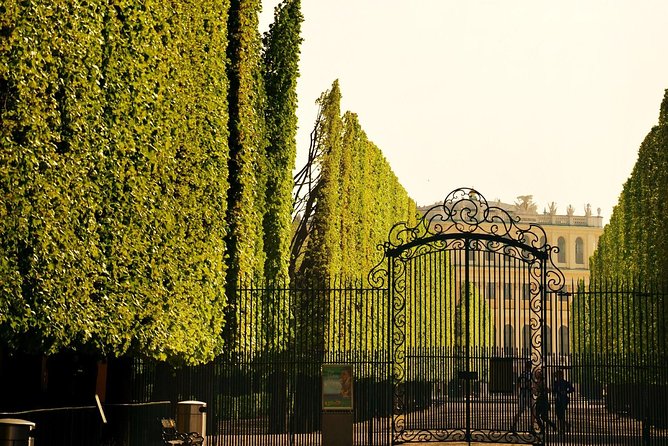
I would choose this experience if you want context, personal stories, and a manageable group. It is especially suited to first-time Vienna visitors who want to understand how Maria Theresa, Franz Joseph, and Sisi fit together. It also suits anyone who finds palace rooms easier to appreciate when someone explains their purpose.
Families can do well here, particularly if children or young adults respond to Mozart, royal gossip, family drama, and odd court customs. The guide’s ability to adjust the pace is helpful for older adults too.
I would hesitate if you dislike guided visits, want long free time in the gardens, or are watching every euro. The outdoor section may feel brief if your main goal is to wander the park and climb to the Gloriette at leisure. In that case, plan to return after the tour or choose a less expensive independent visit.
The tour is free to cancel up to 24 hours before the start time for a full refund. Changes or cancellations inside that window are not accepted, so keep your plans firm once the deadline passes.
Should you book it?
Book this Schönbrunn tour if you want the palace to make sense, not merely look grand. The strongest part is the guide: names such as Biljana, Katarina, Kristina, Elisabeth, Selin, Stephan, Wolfgang, and Annelie appear among the guide team praised for clear stories, personal attention, and useful local advice.
The extra admission cost keeps this from being a bargain. Still, the small group, the chance to ask questions, and the focus on people behind the rooms give it real value for history-minded visitors. If you follow the meeting instructions, arrive early, and treat the garden walk as an introduction rather than a full park exploration, this is a strong way to spend a half-day at Vienna’s most famous imperial residence.
FAQ
How long does the Schönbrunn Palace and Gardens Tour last?
The experience lasts approximately two and a half to three hours. The garden walk is listed as about 30 minutes, followed by the palace visit.
What time does the tour start?
You can choose between a 10 a.m. and a 2 p.m. departure.
Is palace admission included in the price?
No. Schönbrunn Palace and Park admission is not included. The guide helps you purchase the required entrance tickets.
Where does the tour begin?
The meeting point is the Group Center Schönbrunn at Schloss, 1130 Wien, Austria.
Where does the tour end?
The activity returns to the meeting point, although the guided portion concludes inside the palace.
How large is the group?
The tour is described as a small-group experience limited to six people, while the additional information lists a maximum of eight travelers.
Is the tour offered in English?
Yes. The tour is offered in English.
Does the tour include hotel pickup?
No. Hotel pickup and drop-off are not included.
Can most people participate?
Yes. The information states that most travelers can participate, and the meeting point is near public transportation.
Can I cancel for a refund?
Yes. You can cancel at least 24 hours before the local start time for a full refund. Cancellations or changes made less than 24 hours before the start time are not accepted.
Just reviewed in Vienna
- World War II History Vienna Old Town Private Walking Tour★ 4.8 · 9 reviews
- Vienna: Wine Tasting E-Bike Tour★ 4.9 · 46 reviews
- Vienna: Winery and Wine Tasting Tour with a Wine Expert★ 5.0 · 5 reviews
- Vienna: Unforgettable Private City Tour★ 5.0 · 7 reviews
- Vienna Urban Art Tour: Explore a different side of Vienna!★ 3.8 · 14 reviews
- Vienna: Concert by the Vienna Baroque Orchestra★ 4.6 · 56 reviews
- Vienna: Swarovski DIY Workshop Experience★ 5.0 · 9 reviews
- Vienna: Sunday Brunch Danube Cruise & Live Music★ 4.2 · 42 reviews
Schönbrunn Palace Tours, compared.
Skip the Line Schönbrunn Palace and Gardens Guided Tour
Read our review →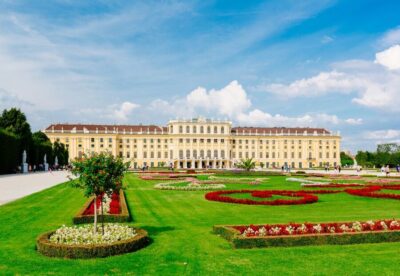
Schönbrunn Palace & Garden Skip-the-Line Guided Tour
Read our review →

Skip-the-Line Schonbrunn Palace Guided Tour and Vienna Historical City Tour
Read our review →Browse the lists this tour appears in