
Reviewed · VIENNA
Italian VIENNA
Vienna’s grand imperial image has an Italian accent. On this 2.5-hour walk, guide Mario Casalone connects the city’s churches, palaces, art, music, and political stories to the Italian artists and builders who helped shape them. You finish at St. Stephen’s Cathedral, with a fresh way to read Vienna’s center.
I like the clear theme and the lively storytelling. Mario is described as warm, witty, patient with questions, and skilled at mixing historical facts with everyday anecdotes. I also like that the tour begins at Minoritenkirche, the church of Vienna’s Italian community, rather than starting with only the usual imperial sights.
The main drawback is that this is a walking and listening experience, not a ticketed palace or museum visit. The listed stops are brief, and the tour requires good weather, so bring sensible shoes and have a backup plan if rain threatens.
Key points to know before booking
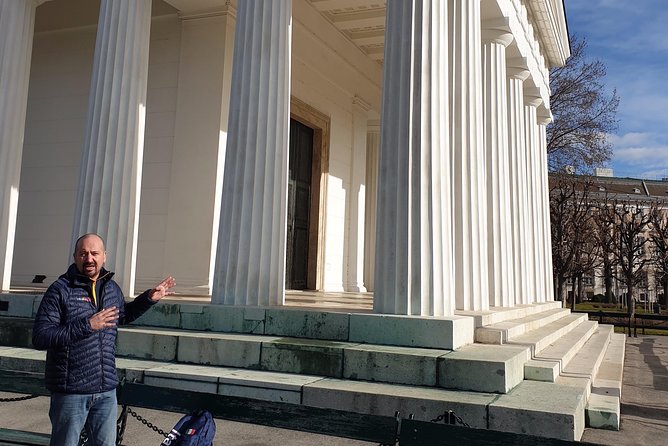
- Italian Vienna in one walk: Follow the influence of Italian artists, architects, builders, composers, preachers, adventurers, and military leaders.
- A meaningful starting point: Begin at Minoritenkirche, the church connected with Vienna’s Italian community.
- The Hofburg in context: See the Habsburg imperial palace and learn about the world of Francesco Giuseppe and Sissi.
- A guide-led experience: Mario Casalone uses facts, anecdotes, humor, and personal charm to keep the history moving.
- Central finish: The walk ends at Stephansplatz, the square in front of Vienna’s cathedral.
- Small enough to manage: The maximum group size is 30, with a mobile ticket and free cancellation up to 24 hours ahead.
Why Italian influence changes the way you see Vienna
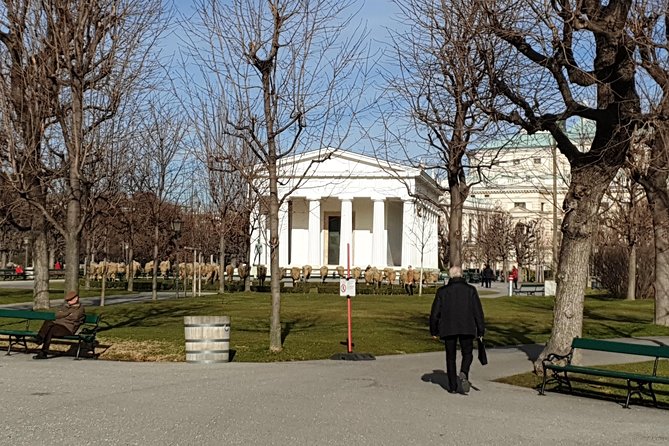
Most first visits to Vienna focus on the Habsburgs, classical music, coffeehouses, and monumental Baroque buildings. Those subjects make sense, but they can leave you with a city that feels entirely Austrian. This tour offers a different frame. It asks you to notice how much came from Italy, or was shaped by Italian people working in Vienna.
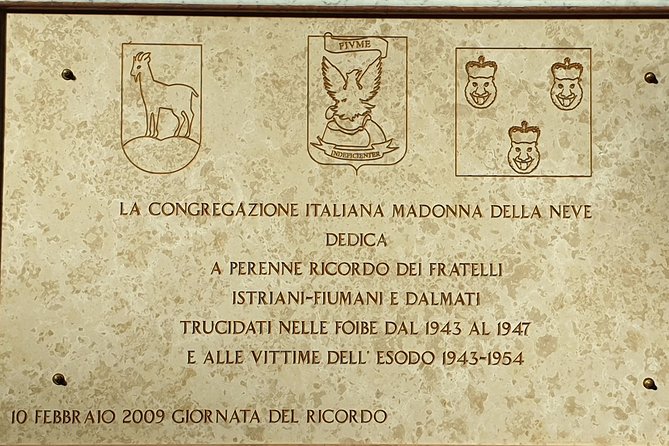
That does not mean the walk turns Vienna into a substitute for Rome or Florence. The point is the exchange between Italy and Austria. Italian architects and craftsmen helped give Vienna its grand visual style. Italian culture also reached the imperial court, the churches, the arts, and the stories told about the city.
I like this sort of theme because it gives familiar places a second layer. You may already have plans to see the Hofburg or St. Stephen’s Cathedral. With Mario, those places become part of a larger story about people, influence, ambition, and artistic ideas moving across borders.
The tour also appears to suit more than one kind of visitor. If you are especially interested in Italian art and architecture, the subject is obvious. If you are simply visiting Vienna and want a fresh angle on the center, the connections can make a standard sightseeing route feel new.
Still deciding? These Vienna outings turn up in the same shortlists.
- Vienna: Vivaldi’s Four Seasons Concert in Karlskirche
★ 4.7 · 14,951 reviews - Vienna: Skip-the-cashier-desk-line Giant Ferris Wheel Ride
★ 4.5 · 7,859 reviews - Vienna: Schönbrunn Palace & Gardens Skip-the-Line Tour
★ 4.7 · 7,739 reviews
Starting at Minoritenkirche, Vienna’s Italian church
The meeting point is Wiener Minoritenkirche at Minoritenplatz 2A in the first district. This is an especially fitting beginning because Minoritenkirche is identified as the church of Vienna’s Italian community. You are not starting with a generic landmark. You are starting with a place that gives the whole walk its cultural focus.
The church provides a useful entry into the idea of Italian Vienna. It links religious life, the Italian community, and the broader movement of Italian artistic influence into the Austrian capital. Mario can use this first stop to establish the people and subjects that will shape the rest of the walk.
The scheduled stop is about 15 minutes, and admission is free. That matters if you are comparing this with tours that include several paid attractions. Here, the cost is for the guide and the interpretation, not entry to a ticketed collection.
You should expect to spend much of the time listening rather than exploring at your own pace. That is not a flaw, but it is worth understanding. If you want a long, quiet visit inside the church, this format may feel short. If you want a focused introduction before continuing through central Vienna, the timing keeps the route moving.
Minoritenplatz is also a practical starting point. The tour is near public transportation, and the address is easy to enter into a phone map. Arrive with a few minutes to spare so you can find the church and identify the group without rushing.
The Hofburg and the world of Francesco Giuseppe and Sissi
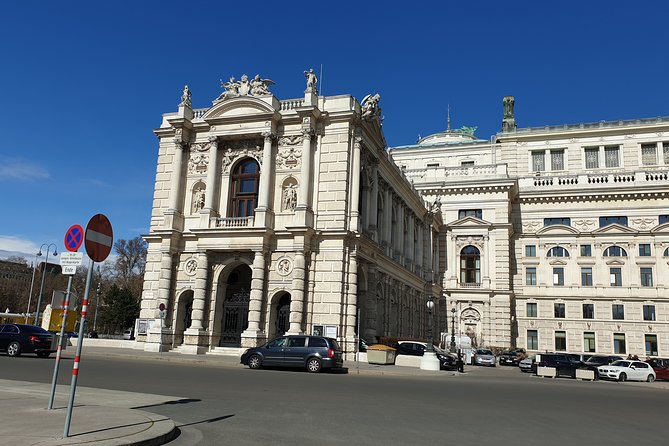
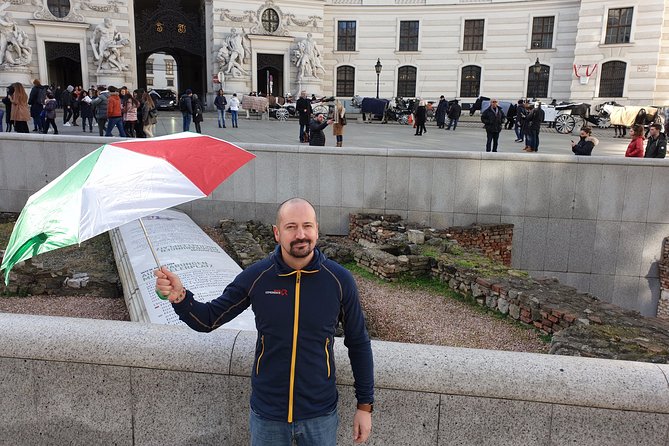
The next named stop is the Hofburg, the former imperial palace of the Habsburg family. This is where the apartments associated with Francesco Giuseppe and Sissi are located, making it one of Vienna’s most important places for understanding imperial life.
The Hofburg can be overwhelming. Its scale, courtyards, wings, and museums create a large complex rather than one simple monument. A guide can help you sort out what you are seeing and explain how Italian artists and architects fit into the palace’s story.
The listed stop lasts about 15 minutes, with free admission noted for the experience. Do not book this walk expecting a full interior tour of the imperial apartments. The information provided points to a guided stop at the Hofburg, not a separate ticket with extended access to every palace room.
That distinction is important for planning. If the apartments of Francesco Giuseppe and Sissi are high on your list, you may still want to visit them separately. This tour can give you context first, then you can decide how much additional palace time you want.
I like the pairing of Minoritenkirche and the Hofburg. One represents the Italian community and its religious setting. The other represents imperial power. Together, they show how Italian influence could touch both ordinary community life and the grand world of the Habsburg court.
The route to Stephansplatz
The walk ends at Stephansplatz, the cathedral square in front of St. Stephen’s Cathedral. That is a strong finish for a central Vienna tour. The cathedral is one of the city’s defining landmarks, and the square puts you in a useful position for continuing your own sightseeing.
The route between the named stops is part of the experience. Mario’s subject is not limited to two buildings. The description presents a journey through the most significant places of Italian Vienna, with stories about painters, architects, artists, builders, composers, preachers, adventurers, and military leaders. The supplied details do not provide a full stop-by-stop list, so you should think of this as a guided walk through the historic center rather than a fixed attraction checklist.
That flexibility can be a strength. A guide can connect one story to the next instead of treating each sight as an isolated photo stop. Mario’s style, based on the information provided, leans toward anecdotes and links between subjects. He also answers questions patiently, which can make the walk more useful if you want to explore a particular thread.
The finish at Stephansplatz is convenient, but it also means the tour does not return you to Minoritenplatz. Plan your day around that. Afterward, you are by the cathedral rather than back at the starting church.
A different sort of day out in Vienna:
- Vienna: Light of Creation Votive Church Immersive Light Show
★ 4.8 · 6,779 reviews - Vienna Spanish Riding School Guided Tour
★ 4.7 · 6,765 reviews - Vienna: Classical Concert in the World-Famous Musikverein
★ 4.6 · 6,673 reviews - Vienna: Skip-the-Line Sisi Museum, Hofburg and Gardens Tour
★ 4.8 · 5,918 reviews
Mario Casalone’s approach to guiding
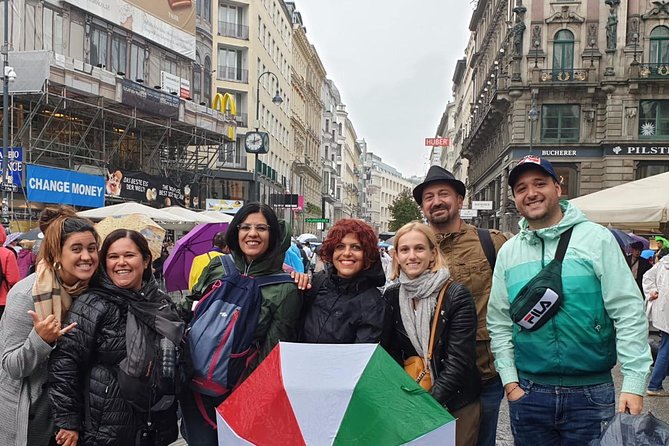
The guide is Mario Casalone, who operates as MarioViennaGuide. The strongest pattern in the available comments is his presentation style. He is described as friendly, welcoming, relaxed, eloquent, and well prepared. The repeated praise is not just for the facts he shares, but for the way he tells them.
That matters on a 2.5-hour walking tour. A subject built around architectural influence can become dry if it turns into a list of names and dates. Mario appears to avoid that by adding anecdotes, curiosities, and references that make you want to learn more.
I also like the reported balance between history and everyday life. The tour is not presented as a lecture delivered at you. It is meant to connect major historical events with human stories and recognizable places. One especially useful quality is his patience with questions, since a good walking tour often becomes more rewarding when you can stop and ask about a detail that catches your attention.
The tone seems to work across languages. Comments are provided in Italian and German, and Mario is described as an Italian guide speaking about Italian influence in Vienna. The exact departure language is not specified in the information provided, so confirm that before booking if language is important to you.
The group can include up to 30 people. That is not a private walk, and a group of that size may make it harder to hear in a noisy square or to ask many individual questions. Still, the cap gives the experience a defined limit instead of leaving the group size open-ended.
What the two and a half hours are really worth
The price is $33.20 per person. For that amount, you are paying for a guided interpretation of central Vienna rather than attraction admission, transportation, or a meal. The value depends on how much you want someone to connect the pieces for you.
I would consider it a fair price if you enjoy history, architecture, and cultural connections but do not want to research Italian artists and builders before arriving. Mario’s role is to make those links understandable while you walk through places you might otherwise see only as grand Austrian landmarks.
The price is less compelling if you only want a fast orientation to Vienna’s top sights. A standard city walk may cover more famous attractions in a shorter time. It is also not the best choice if you prefer to spend most of your time inside museums or palace rooms.
The strongest value comes from the theme. You are not merely walking from one postcard view to another. You are learning to spot an Italian thread in a city that many people first understand through the Habsburgs and classical music.
At 2 hours and 30 minutes, the tour is long enough to develop an idea without taking an entire day. You can schedule it alongside other central Vienna plans. Since the finish is at Stephansplatz, it pairs naturally with independent sightseeing around the cathedral, though the exact timing of your day will depend on the departure time you select.
Weather, walking, and practical planning
Good weather is required. If poor weather cancels the experience, you are offered another date or a full refund. This is worth taking seriously because the tour is outdoors and the format depends on walking and standing while listening.
Wear shoes you can use comfortably for two and a half hours. Bring a coat or rain protection even if the forecast looks uncertain, but remember that bad weather may still lead to cancellation. The available information does not specify the amount of walking, terrain, seating, or accessibility arrangements, so contact the provider if you have mobility concerns.
The tour uses a mobile ticket. Keep the confirmation easy to access on your phone, and check the starting address carefully: Wiener Minoritenkirche, Minoritenplatz 2A, 1010 Vienna.
Most people can participate, and the tour is near public transportation. You can cancel for a full refund up to 24 hours before the start time. Changes or cancellations inside that window are not accepted for a refund. The experience also requires a minimum number of participants, so a cancellation for that reason may result in another date, another experience, or a full refund.
Who will enjoy Italian Vienna most
I would recommend this tour to you if you have already seen some of Vienna’s major sights and want a new way to understand them. Returning to familiar places with a different theme can be surprisingly useful. The walk also suits anyone who likes architecture, art, church history, imperial politics, or the movement of ideas between countries.
It is a particularly natural choice for Italian-speaking visitors or anyone with a personal connection to Italy. The subject may also appeal if your Vienna plans changed and you are looking for an Italian link in the city rather than a standard Austrian program.
Families with older children may appreciate the stories and short stops, though the listing only says most participants can take part and does not provide a specific child program. People who prefer a relaxed guide with room for questions should also find the format appealing.
I would hesitate if your priority is a long interior visit at the Hofburg, detailed cathedral access, or a museum-heavy day. The named stops are brief, admission is not the main product, and the experience depends on Mario’s storytelling. You are buying a perspective, not a stack of entry tickets.
Should you book this Vienna walking tour?
Book it if you want Vienna’s famous center to make more sense through Italian art, architecture, community life, and personal stories. The combination of Minoritenkirche, the Hofburg, and Stephansplatz gives the walk a clear shape, while Mario Casalone’s relaxed, anecdotal approach appears to keep the subject lively.
Skip it if you want a purely general introduction to Vienna or prefer exploring indoors at your own pace. For everyone else, $33.20 is a reasonable price for a focused 2.5-hour walk, especially early in your visit when a strong theme can help you see the city with sharper eyes.
FAQ
How long is the Italian Vienna tour?
The tour lasts approximately 2 hours and 30 minutes.
Where does the tour begin?
It begins at Wiener Minoritenkirche, Minoritenplatz 2A, 1010 Vienna, Austria.
Where does the tour end?
The walk ends at Stephansplatz, the square in front of St. Stephen’s Cathedral.
Who leads the tour?
The experience is provided by Mario Casalone, operating as MarioViennaGuide.
Is admission included for the stops?
The listed stops at Minoritenkirche and the Hofburg show free admission for this experience. The information does not describe separate tickets for the imperial apartments or other attractions.
What happens if the weather is poor?
The experience requires good weather. If it is canceled because of poor weather, you will be offered another date or a full refund.
Just reviewed in Vienna
- World War II History Vienna Old Town Private Walking Tour★ 4.8 · 9 reviews
- Vienna: Wine Tasting E-Bike Tour★ 4.9 · 46 reviews
- Vienna: Winery and Wine Tasting Tour with a Wine Expert★ 5.0 · 5 reviews
- Vienna: Unforgettable Private City Tour★ 5.0 · 7 reviews
- Vienna Urban Art Tour: Explore a different side of Vienna!★ 3.8 · 14 reviews
- Vienna: Concert by the Vienna Baroque Orchestra★ 4.6 · 56 reviews
- Vienna: Sunday Brunch Danube Cruise & Live Music★ 4.2 · 42 reviews
- Vienna Supreme Orchestra at Palais Niederösterreich★ 4.8 · 10 reviews