
Reviewed · VIENNA CLASSICAL CONCERTS
Vienna: Strauss Classical Concert with Soprano & Light Show
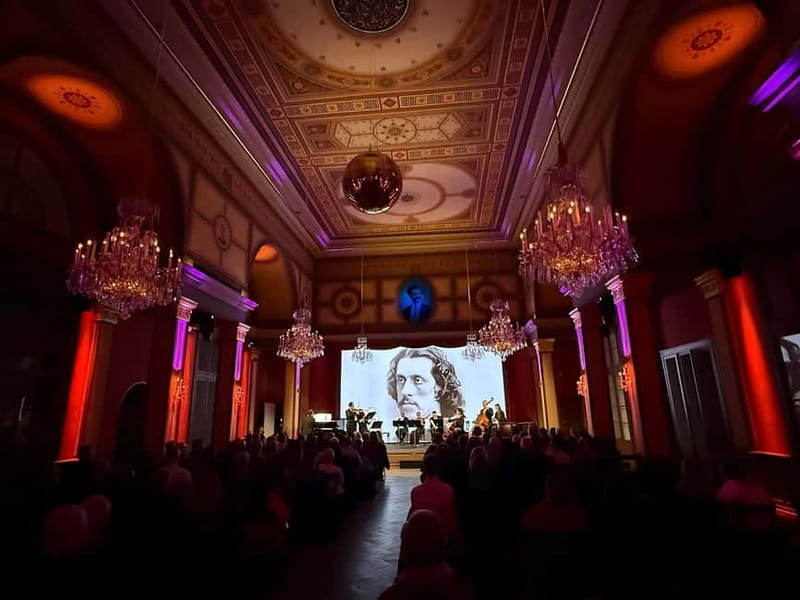
The clever part of this Vienna concert is that it gives classical music a visual frame. At the House of Strauss, you hear the original Strauss Capelle perform Strauss and Mozart while a soprano and timed light effects turn the music into a short theatrical story. It is less formal than a bare concert and more focused than a full stage production.
I like the museum visit before the music, since it gives you a quick look at the Strauss dynasty and Viennese musical life before the performance begins. I also like the sparkling wine reception, a small but fitting touch in the elegant octagon. The main consideration is that the light show may appeal more to first-time classical listeners than to purists who want a completely traditional concert setting.
Key details at a glance
- Music in the original Strauss setting: Hear Strauss and Mozart in the historic Strauss Hall, with the original Strauss Capelle providing the live orchestra.
- Three-part evening: The schedule runs from the museum at 7:00 PM to hall entry at 8:00 PM, then the concert from 8:30 to 9:30 PM.
- Soprano soloist: Live vocals add emotional weight to selected classical pieces and give the program more variety than an orchestral concert alone.
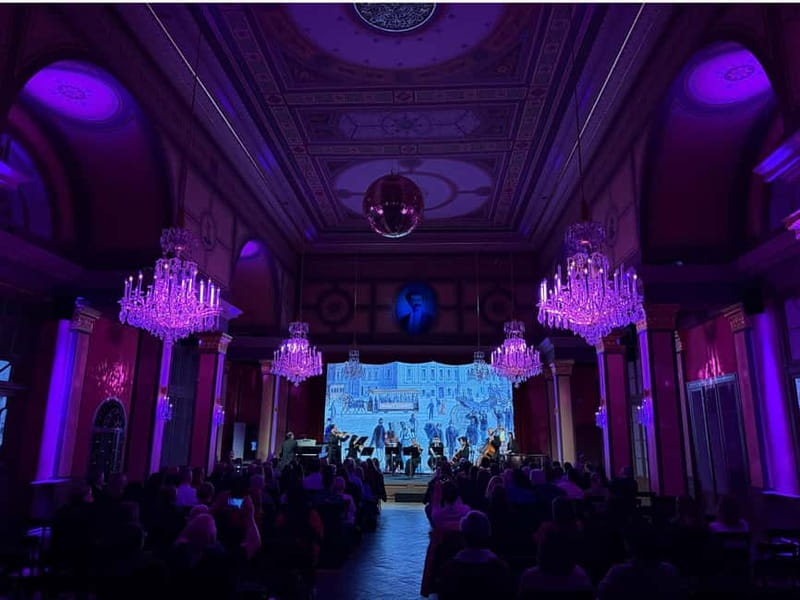
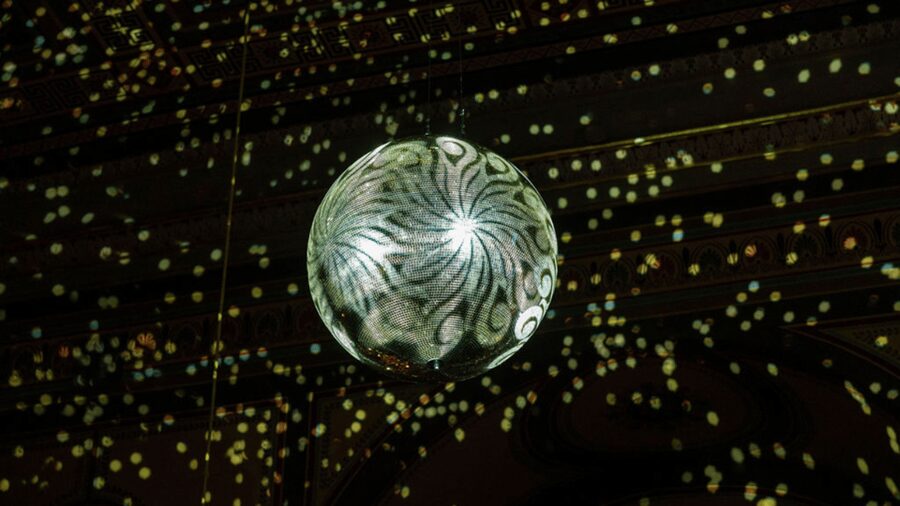
- Light and sparkle show: Visual effects are timed to the music and help explain its themes, emotions, and historical setting.
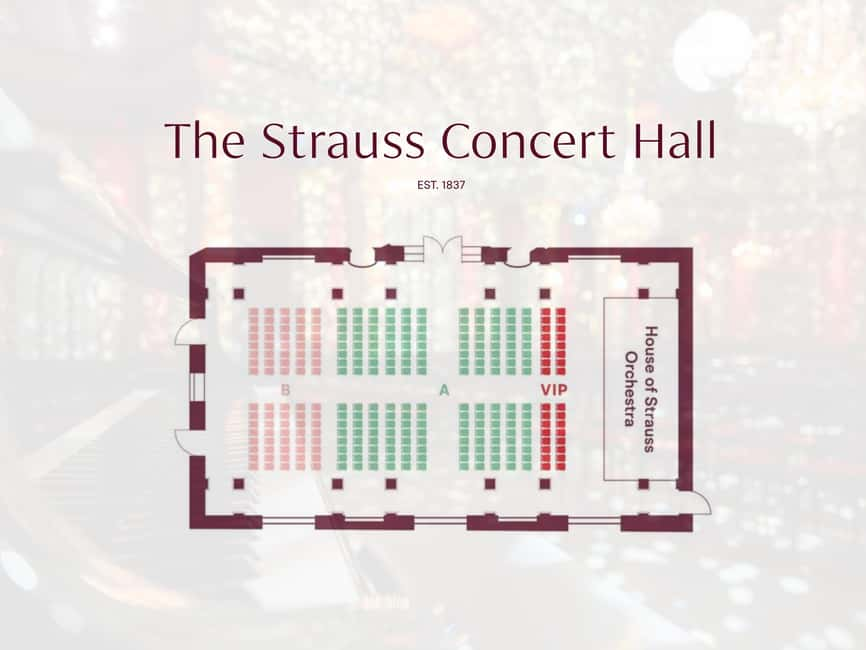
- Three seating levels: VIP covers rows 1 and 2, Category A rows 3 through 13, and Category B rows 14 through 18.
- Useful booking flexibility: The experience is wheelchair accessible, offered in German and English, and allows cancellation up to 24 hours before the event for a full refund.
Why this concert feels different from a standard Vienna recital
Vienna has no shortage of classical concerts. Many offer polished music in grand rooms, but this one adds a clear narrative structure. You do not simply take your seat and wait for the first downbeat. The evening begins with the House of Strauss Museum, continues with a sparkling wine reception, and ends with music, singing, theatrical touches, and projected light.
That format matters if you are new to Strauss or Mozart. A concert built only around unfamiliar pieces can leave you guessing about what you are hearing. Here, the museum and visual effects supply context, while the soprano gives the program a human voice.
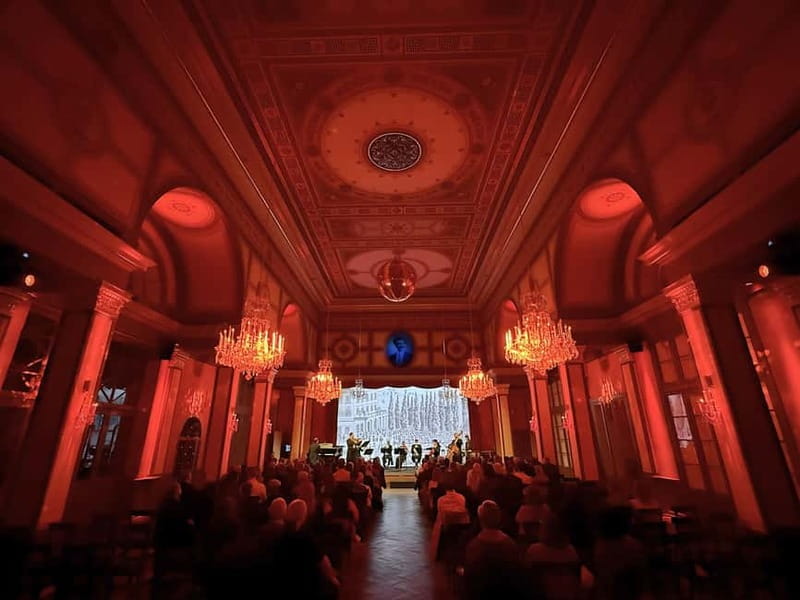
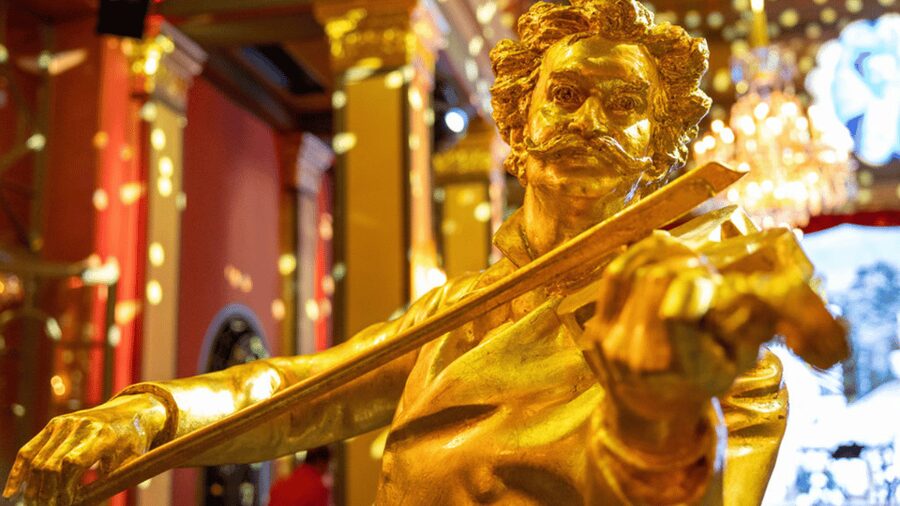
The setting also carries real weight. The House of Strauss presents the story of the Strauss family and its place in Vienna’s golden age of music. The concert takes place in the historic Strauss Hall, noted for its acoustics and connection to the Strauss name. The setting is not simply a decorative backdrop. It helps explain why waltzes and dance music became such a strong part of Vienna’s cultural identity.
You should know what this is not. It is not described as a full opera, and the soprano is one part of a larger program. It is also not a silent, strictly traditional recital, since the light show plays an active role. If you want a pure orchestral performance with no visual effects, you may prefer another venue. If you want an accessible first taste of Viennese classical music, the added staging is useful.
More classical concerts in Vienna:
- Vienna: Vivaldi’s Four Seasons Concert in Karlskirche
★ 4.7 · 14,951 reviews - Vienna: Classical Concert in the World-Famous Musikverein
★ 4.6 · 6,673 reviews - Vienna: Mozart Concert at the Golden Hall
★ 4.6 · 3,986 reviews
Arrive at 7:00 PM for the House of Strauss Museum
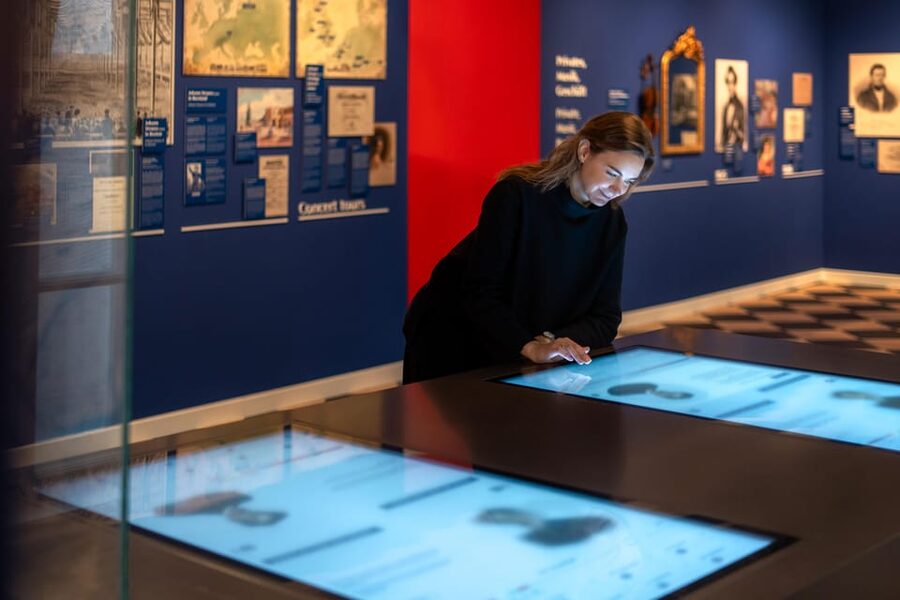
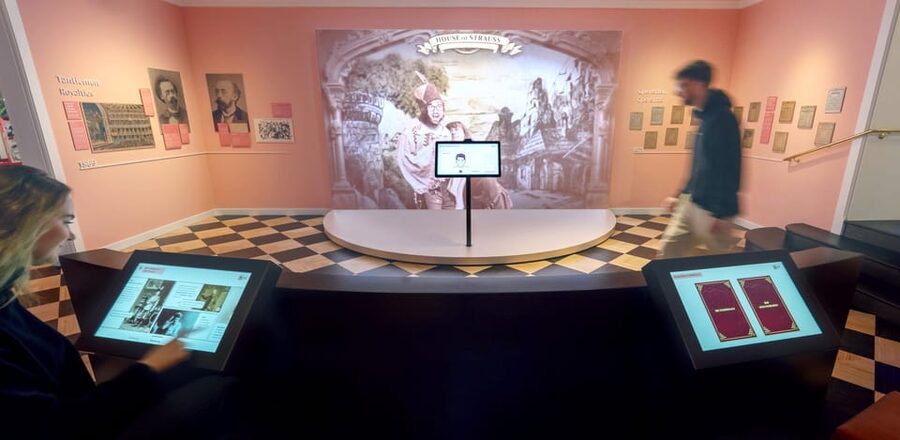
The evening begins with museum access from 7:00 PM. This gives you time to explore exhibits about the Strauss dynasty, its musical influence, and Vienna’s cultural life. The museum uses interactive and multimedia material, so expect more than rows of framed text.
I would arrive at the start of the museum period rather than treating it as an optional extra. The displays help put the concert into place. You can learn about the family and the period that produced the music before hearing the works performed in a nearby historic hall.
The museum portion is also a practical way to ease into the evening. A concert beginning at 8:30 PM can feel late if you have already spent the day walking around Vienna. The earlier opening lets you move at a relaxed pace, pause at the exhibits, and avoid rushing straight from dinner or sightseeing into your seat.
The available information does not give a precise museum visit length or name specific exhibits, so keep your expectations sensible. Think of this as a useful pre-concert exhibition, not a full-day museum. Its main value is the connection between the Strauss family, Vienna, and the music you are about to hear.
The 8:00 PM sparkling wine reception
At 8:00 PM, you enter the hall’s stylish octagon for a complimentary glass of Austrian sparkling wine. It is a simple inclusion, but it changes the mood. Instead of sitting in a dark room from the moment you arrive, you have a short social pause before the performance.
I like this part because it suits the music. Strauss is closely tied to balls, dancing, ceremony, and Viennese elegance. A glass of sparkling wine gives the evening a sense of occasion without requiring a formal dinner or expensive concert package.
The reception also creates a natural bridge between the museum and the music. You have just seen the historical material, and now you are in the concert setting with time to settle in. If you are attending with someone who is less interested in classical music, this lighter opening may make the experience feel more welcoming.
The inclusion is one reason the $74 price can make sense. You are paying for more than a one-hour performance. The package includes museum admission, the live concert, the soprano, the visual production, and the drink. Value will depend on your seating choice and how much you enjoy the added presentation, but the evening has several separate parts rather than one short concert alone.
The 8:30 PM Strauss and Mozart performance
The concert begins at 8:30 PM and runs until 9:30 PM. The program combines Strauss and Mozart, with waltzes, symphonies, and overtures described as part of the repertoire. The original Strauss Capelle provides the orchestra, giving the performance a direct connection to the venue’s musical identity.
The orchestral sound is central here. The historic hall is known for strong acoustics, and that is important in a program built around waltzes, overtures, and orchestral color. A good room lets you hear the contrast between a full ensemble and more delicate passages without relying only on visual effects.
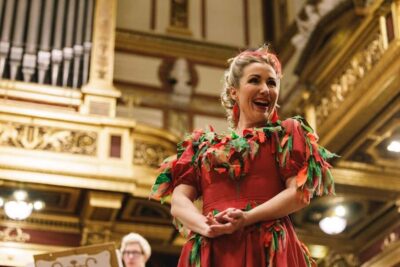
The soprano soloist adds another layer. Instead of hearing only instrumental music, you get a live vocal performance that brings intimacy and emotional force to selected pieces. This makes the program more varied and gives you a focal point beyond the orchestra.
The music is presented as a theatrical fusion, not as a concert with a lecture between pieces. Light, sparkle, and stage effects are part of the performance itself. That approach can help you follow the feeling of a piece even when you do not know its title or background.
A one-hour main concert is worth noting. It is long enough to feel like a proper evening performance, but shorter than many traditional classical programs. I see that as a benefit for first-time listeners and families with limited patience. Serious concertgoers may find it brief, especially when the full outing lasts about three hours because of the museum and reception.
More Strauss and waltz evenings:
- Vienna: Mozart and Strauss Concert at Schönbrunn
★ 4.5 · 2,364 reviews - Vienna: Johann Strauss Dinner Show at the Prater
★ 4.5 · 730 reviews - Strauss Dinner Show
★ 4.5 · 395 reviews - Vienna: Strauss and Mozart Concert at Hofburg Palace
★ 4.7 · 214 reviews
How the light show changes the experience
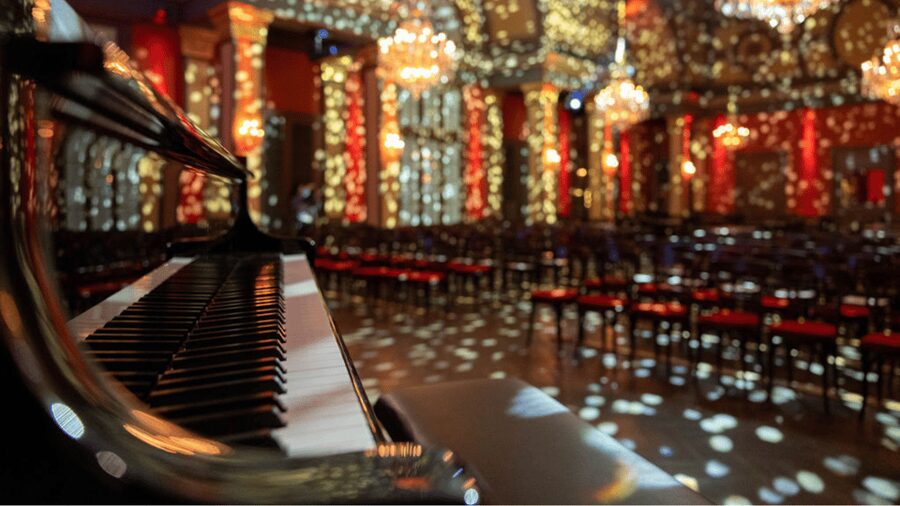
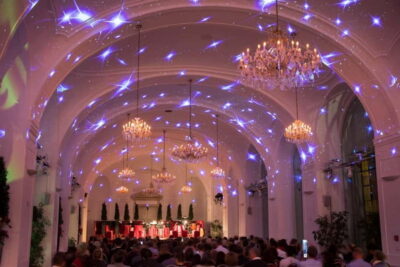
The light show is synchronized with each piece and is designed to suggest the emotions, themes, and historical setting behind the music. It may evoke grand Viennese balls, dramatic moments, or the mood of an aria. The goal is not simply to make the room brighter. It gives the music a visual storyline.
This works best if you enjoy seeing how a performance is built. You can listen to the orchestra, watch the soprano, and notice how the hall changes with the rhythm and tone. The result is more immediate than a conventional concert, particularly if you do not already know Strauss and Mozart well.
The visual effects also explain the strong reaction to the details of the light show and the hall’s atmosphere. The setting, original artwork, elegant design, and lighting all contribute to a feeling of occasion. The music does not sit in isolation. It is presented as part of Vienna’s cultural story.
There is a tradeoff. The light show can draw your eyes away from the musicians. If you attend mainly to watch the orchestra’s technique, you may find the visuals distracting at times. Category B seating is described as offering a full light show perspective, which suggests that a slightly wider view may suit people who want to appreciate the production as a whole.
Choosing between VIP, Category A, and Category B
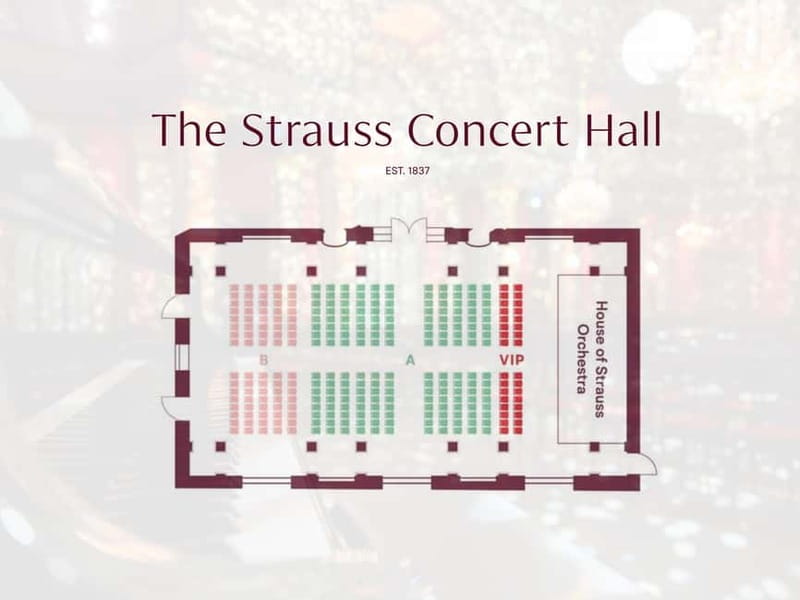
Your seat will shape the evening, especially because the show combines music, vocals, and lighting.
VIP seating covers rows 1 and 2. Choose it if the closest possible view is important to you and you want the strongest sense of being inside the performance. You should expect a more direct view of the soprano and orchestra, though the available information does not promise any special service beyond the seating position.
Category A covers rows 3 through 13. This is likely the middle ground for most people. You remain close enough for strong visibility and sound while avoiding the premium front rows. If you want to balance the live performance with a broad view of the room, this category is worth considering.
Category B covers rows 14 through 18. You sit farther back, but the description specifically points to a good perspective for the full light show. This may suit you if the visual design matters as much as seeing individual performers up close.
The best choice depends on what you value. Pick VIP for proximity, Category A for a balanced concert view, and Category B if you want to take in the full visual frame. Since the hall is central to the experience, do not assume the cheapest section means a poor evening. The sound and light presentation remain key parts of every category.
Price, timing, and practical value
At $74 per person, this is not a bargain-basement concert, but it is also not simply a one-hour ticket. The price includes the House of Strauss Museum, a complimentary Austrian sparkling wine, the concert, the soprano, the orchestra, and the light production.
I would compare it with the cost of separate museum admission, a concert ticket, and an evening drink in Vienna. The package is strongest for you if you want all those pieces in one planned outing. If you only want a serious recital and have no interest in museum displays or theatrical lighting, part of the price may pay for features you will not use.
The schedule is easy to plan around:
- Museum access begins at 7:00 PM.
- Entry to the Strauss Hall is at 8:00 PM.
- The concert runs from 8:30 PM to 9:30 PM.
- The full activity is listed as three hours.
Starting at the museum is important. If you arrive only for the concert, you miss one of the included elements and lose some of the historical context. I would allow the full evening rather than trying to squeeze this into a tight dinner reservation.
The activity is offered in German and English, and the ticket line can be skipped. It is wheelchair accessible. You can also reserve now and pay later, and cancellation is allowed up to 24 hours before the experience for a full refund. Those terms are useful if your Vienna schedule is still changing.
Who will enjoy the House of Strauss evening most
I would recommend this experience to first-time Vienna visitors who want a clear introduction to the city’s musical culture. You get names, history, setting, music, and atmosphere without having to understand a full opera or read a long program beforehand.
It also suits couples looking for an elegant night out. The museum, sparkling wine, historic hall, soprano, and lighting give the evening more shape than a standard concert ticket.
Families and mixed-interest groups may find the format helpful. Someone who is not yet comfortable with classical music can follow the visuals and theatrical elements, while a more experienced listener can focus on the orchestra, soprano, and acoustics.
I would be more cautious if you are a strict classical purist. The performance is designed as a multimedia event, and the lighting is not a minor decoration. It is part of the presentation. You may prefer a concert built around uninterrupted music in a traditional recital setting.
The rating supplied for the experience is 4.1 from 14 reviews, with especially strong praise for the orchestra, acoustics, historic hall, artwork, elegant design, and light show. Those are the areas I would focus on when deciding. This is a setting and production choice as much as it is a music choice.
Should you book this Strauss and Mozart concert?
Book it if you want an approachable Vienna evening that combines music, place, and visual storytelling. The museum gives you context, the sparkling wine adds a graceful start, and the live soprano and orchestra provide the heart of the night. The light show makes the program easier to follow and gives the experience a distinctive identity.
Skip it if you want a purely traditional recital or a longer concert program. The one-hour performance is focused, and the multimedia effects may not suit every classical listener.
For most visitors, Category A looks like the sensible balance between proximity and price. Choose VIP if seeing the performers close up is your top priority, or Category B if the full light display matters most. Either way, arrive at 7:00 PM and use the museum time. That is where the evening’s historical thread begins.
FAQ
Where does the concert take place?
The concert takes place in the historic Strauss Hall at the House of Strauss in Vienna.
What time does the evening begin?
Museum access begins at 7:00 PM. Hall entry is at 8:00 PM, and the concert starts at 8:30 PM.
How long is the concert?
The main concert runs from 8:30 PM to 9:30 PM. The full activity is listed as three hours because it also includes the museum and reception.
What music is performed?
The program features music by Johann Strauss and Wolfgang Amadeus Mozart, including waltzes, symphonies, and overtures.
Is there a singer during the concert?
Yes. A soprano soloist performs with the orchestra and adds live vocal pieces to the program.
Is the sparkling wine included?
Yes. Each ticket includes a complimentary glass of Austrian sparkling wine during the reception in the hall’s octagon.
What seating categories are available?
VIP seating is in rows 1 and 2. Category A covers rows 3 through 13, and Category B covers rows 14 through 18.
Is the experience wheelchair accessible?
Yes. The activity is wheelchair accessible and is offered in German and English.
More Show in Vienna
- Vienna: Light of Creation Votive Church Immersive Light Show
★ 4.8 · 6,779 reviews - Vienna: Gerstner KuK Hofzuckerbäcker Baking Show & Tasting
★ 4.8 · 823 reviews - Vienna: Traditional Dinner Show at the Wiener Rathauskeller
★ 4.4 · 590 reviews - Mirage Vienna: Burlesque Spectacular – Dinner Show
★ 4.7 · 127 reviews
Just reviewed in Vienna
- World War II History Vienna Old Town Private Walking Tour★ 4.8 · 9 reviews
- Vienna: Wine Tasting E-Bike Tour★ 4.9 · 46 reviews
- Vienna: Winery and Wine Tasting Tour with a Wine Expert★ 5.0 · 5 reviews
- Vienna: Unforgettable Private City Tour★ 5.0 · 7 reviews
- Vienna Urban Art Tour: Explore a different side of Vienna!★ 3.8 · 14 reviews
- Vienna: Concert by the Vienna Baroque Orchestra★ 4.6 · 56 reviews
- Vienna: Swarovski DIY Workshop Experience★ 5.0 · 9 reviews
- Vienna: Sunday Brunch Danube Cruise & Live Music★ 4.2 · 42 reviews
Vienna Classical Concerts, compared.
Classical Concert in St. Anne’s Church (Annakirche)
Read our review →
Vienna Classical Concert at St. Peter’s Church
Read our review →Classical Concert in St. Anne’s Church (Annakirche)
Read our review →Browse the lists this tour appears in