
Reviewed · VIENNA STRAUSS CONCERTS
Vienna: House of Strauss Museum Entry Ticket
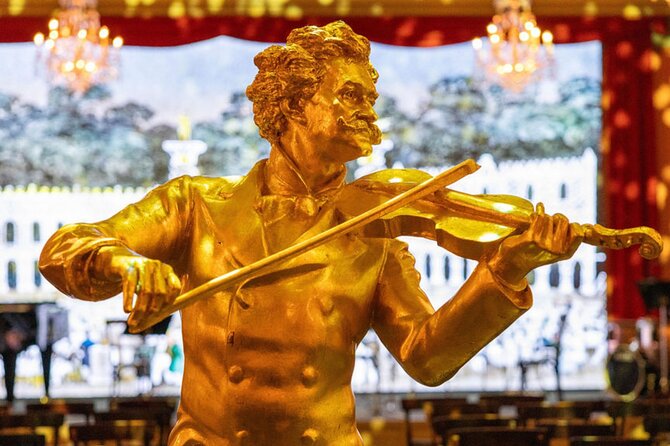
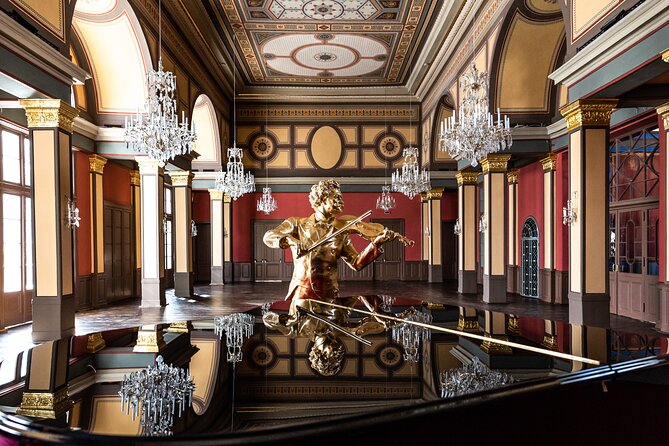
The House of Strauss takes you into the world of Vienna’s most famous musical family, with the grand Gartenpalais Zögernitz as your setting. The highlight is the Strauss Concert Hall, where Johann Strauss Jr. returns in a visual and musical presentation that gives the visit a clear finish.
I like the family story and the way the museum connects Johann Strauss with other composers, including Ziehrer and Lanner. I also like the guide app, which lets you move at your own pace rather than follow a fixed group. The main consideration is price: at $27.61 for roughly an hour to 90 minutes, this makes the most sense if Viennese music is a real interest.
Key points at a glance
- Gartenpalais Zögernitz: Explore a grand historic setting linked to Vienna’s musical world.
- 2,000 square meters of exhibits: Expect more than a small display of instruments or portraits.
- Strauss family story: Follow the family tree, personal stories, and musical careers across generations.
- Music from several composers: Hear works connected with Strauss, Ziehrer, and Lanner.
- Strauss Concert Hall finale: End with a visual and musical presentation featuring Johann Strauss Jr.
- Flexible visit: Use your mobile ticket and English guide app for a self-guided experience lasting about one to one and a half hours.
Entering the House of Strauss at Gartenpalais Zögernitz
The setting does much of the work before the exhibits begin. The House of Strauss occupies Gartenpalais Zögernitz, a grand Vienna palace whose rooms provide a fitting backdrop for music once associated with formal balls, elegant halls, and the city’s social life.
You receive a mobile ticket, so you can keep your admission on your phone rather than collect a paper ticket in advance. The ticket is described as skip-the-line access, which is useful when you want to fit the museum into a busy day of sightseeing. Still, skip-the-line does not mean the visit is guided from room to room. The experience is built around the museum’s app.
The museum is offered in English, making it a practical choice for visitors who want context without relying on German-language displays. Since the exhibition covers a large family story, the app matters. It helps connect the names, dates, music, and rooms into a single route instead of leaving you to guess why each object is important.
Your visit should take about one hour to 90 minutes. I would allow the longer time if you enjoy listening to the music and reading the family material. If you simply want the main story and the final presentation, you can probably move more quickly.
More Strauss and waltz evenings:
- Vienna: Mozart and Strauss Concert at Schönbrunn
★ 4.5 · 2,364 reviews - Vienna: Johann Strauss Dinner Show at the Prater
★ 4.5 · 730 reviews - Strauss Dinner Show
★ 4.5 · 395 reviews
Following the Strauss family through 2,000 square meters
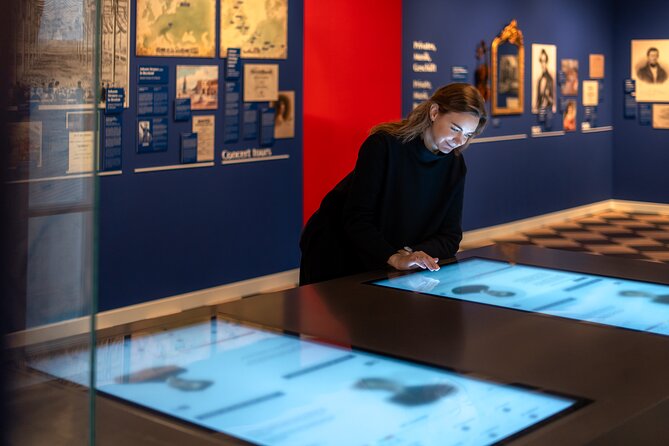
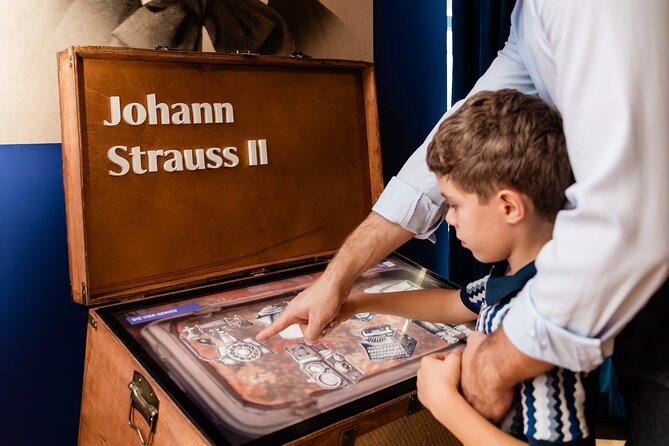
The central strength of the museum is its scale. You are not just looking at a few framed portraits of Johann Strauss Jr. The exhibition covers about 2,000 square meters and uses interactive displays to explain the Strauss family’s place in Vienna’s musical life.
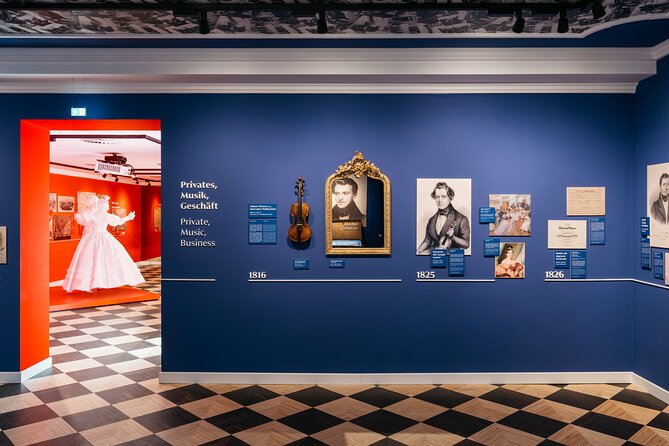
That family focus gives the visit a useful human angle. The story includes the family tree, the working lives of the musicians, and the way talent appeared at an early age. You get a sense of how several members of the family fit together rather than treating Johann Strauss Jr. as an isolated genius.
This is especially helpful if your knowledge begins and ends with The Blue Danube and the annual New Year’s concert. The museum puts the famous name into a wider family setting. You learn to distinguish the different Strauss figures and see how musical careers developed across generations.
The exhibition also helps explain the world around the music. Waltzes and ballroom dances were not simply concert pieces. They belonged to a social setting, with public performances, dance halls, musicians, and audiences who knew how to move to the music. The museum’s rooms and interactive material bring that setting closer to view.
I like this approach because it makes the music easier to understand. You are not required to arrive as a classical music expert. The family tree and broad historical account give you enough structure to recognize the main figures and follow the story.
The possible drawback is that the large subject can feel dense during a short visit. The Strauss family name appears in several forms, and the connections among composers can take time to sort out. Use the app rather than rushing from display to display. It is the best way to keep the names in order.
Hearing Strauss, Ziehrer, and Lanner
The sound of the museum is as important as what you see. Music from Strauss, Carl Michael Ziehrer, and Joseph Lanner accompanies the visit and places the family within Vienna’s wider dance-music tradition.
This is a valuable detail. If the museum only presented written information, the visit could feel like a formal biography. Hearing music as you move through the rooms keeps the subject active. You can connect the instruments, portraits, and stories with the sound that made these composers famous.
Lanner is important because he helps show the development of Viennese dance music before the Strauss family reached its greatest fame. Ziehrer adds another name from the same musical world. The result is a broader picture of Vienna’s waltz culture instead of a single-person tribute.
You should expect the music to shape the mood rather than function as a complete concert. The main performance element comes later in the Strauss Concert Hall. Until then, the music works as a guide through the exhibition.
This part suits you best if you enjoy learning through sound. It also works well for families and mixed groups, since you do not need to read every panel to get something from the visit. Someone interested in music can linger, while another person can move on after grasping the main point.
The Strauss Concert Hall finale
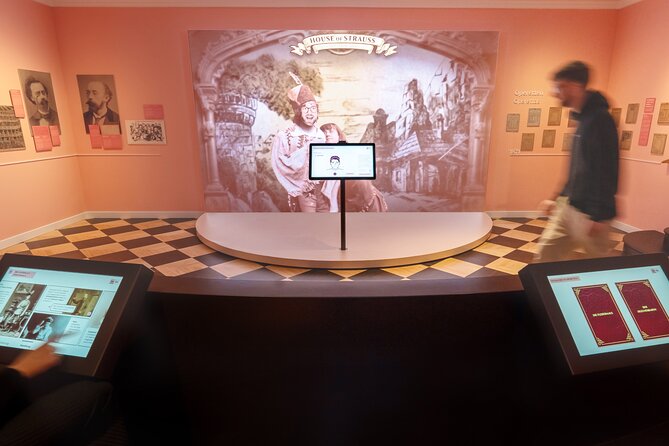
The final presentation takes place in the Strauss Concert Hall, and it gives the visit a strong sense of direction. Here, Johann Strauss Jr. is brought back through a visual and musical presentation centered on the Waltz King.
The finale is described as the high point of the experience, and that makes sense. The earlier rooms give you names, family connections, and background. The concert hall then turns those facts into a performance moment. You finish not with another label to read, but with the music and image of Johann Strauss Jr. at the center.
Think of this as a staged museum presentation rather than a full-length live concert. The supplied details do not promise a complete orchestra performance or a particular concert program, so you should not book the museum expecting a traditional evening concert. The value is the way the presentation closes the story.
For many people, this will be the most memorable part. It gives a little ceremony to the end of the visit and makes the price easier to judge. If you only want a quiet museum of objects and documents, the audiovisual finale may feel more theatrical than expected. If you want the music brought to life, it is a welcome finish.
More museums and galleries in Vienna:
- Vienna: Skip-the-Line Sisi Museum, Hofburg and Gardens Tour
★ 4.8 · 5,918 reviews - Vienna Kunsthistorisches Museum Day Admission Ticket
★ 4.6 · 3,690 reviews - Tickets for the Albertina Exhibitions
★ 4.7 · 2,126 reviews - Sigmund Freud Museum Ticket
★ 4.6 · 1,668 reviews
Is $27.61 good value for 60 to 90 minutes?
At $27.61 per person, this is not a casual bargain attraction. The cost is easier to justify because the admission includes a large exhibition, interactive material, the museum app, and the presentation in the Strauss Concert Hall.
I would compare the price with your interests rather than with the clock. A one-hour visit can be expensive if you are only passing through because the museum is nearby. A 90-minute visit with careful listening, family research, and time in the concert hall offers better value.
The museum is particularly worthwhile if you already plan to see Vienna through its music. It gives context to waltz performances, explains the Strauss family, and introduces composers who are less familiar to many English-speaking visitors. You leave with more than a famous tune in your head.
If your main goal is a long live concert, this ticket may not meet it. The experience includes a visual and musical presentation, but the available information does not describe it as a full concert evening. In that case, treat the museum as a cultural visit with a performance-style finale, not as a replacement for a concert ticket.
The museum has earned a 4.8 rating from 22 ratings, with 95 percent of people recommending it. Those figures suggest strong approval, but the small number of ratings means I would still match it to your interests before booking. The most praised feature is the combination of family history and the special presentation at the end.
Using the app without rushing the story
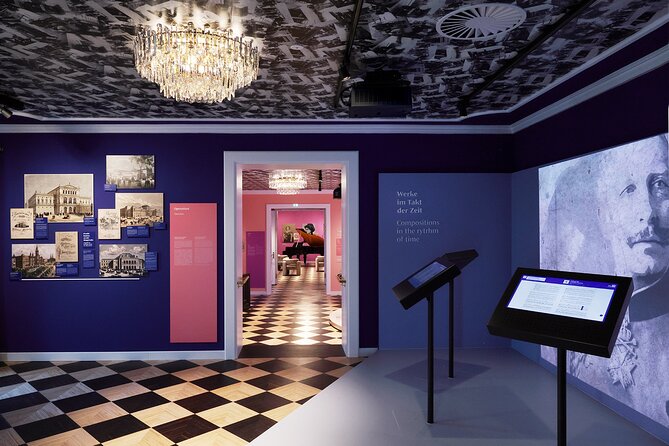
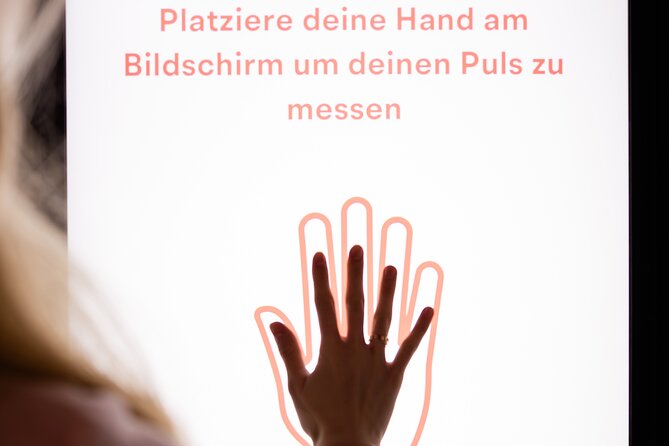
Your English guide app is central to the visit. It lets you explore the rooms at your own pace and should help you decide where to spend your limited time.
I would begin by getting a basic sense of the full route. Then return to the family material, especially if the different Strauss names start to blur together. The family tree is one of the most useful parts of the visit because it turns a famous surname into a group of related musicians with separate careers.
Listen for the differences among the music associated with Strauss, Ziehrer, and Lanner. Even if you cannot name every piece, the sound helps mark the change from one part of the story to another.
Save enough time for the concert hall. Do not assume the last room is just another display. The final presentation is intended as the payoff, so rushing through the earlier exhibits can make the ending feel disconnected.
The app also means this is not a conventional guided tour. You will not have a named guide answering questions as you walk. That offers freedom, but it also puts more responsibility on you to choose your pace and pay attention to the information.
Who will enjoy this museum most?
I would recommend the House of Strauss to several kinds of visitors:
- Classical music fans: You can connect the Strauss family with Lanner and Ziehrer while hearing the music in the exhibition.
- First-time Vienna visitors: The museum provides a clear introduction to the city’s waltz tradition.
- Families: The interactive format and family tree can make the story easier to follow than a wall of text.
- History-minded visitors: The exhibition links music with family life, performance, and ballroom culture.
- People with limited time: The one-hour to 90-minute length fits neatly between other Vienna sights.
It may be less suitable if you dislike self-guided museums, want a long live performance, or have little interest in music. The grand rooms are appealing, but the main reason to come is the Strauss story and the sound of Viennese dance music.
Most people can participate, and service animals are allowed. The museum is near public transportation, which helps you reach it without making a special transport plan. The supplied details do not specify step-free access, so you should ask the provider directly if that is important for your visit.
Planning your visit around the rest of Vienna
Because the visit lasts about one to one and a half hours, it works well as a focused stop rather than a full-day outing. You can use it as a break from larger museums, churches, and palace visits, especially if you want something built around music instead of paintings or architecture.
The mobile format makes last-minute planning easier, but this experience is often booked about 37 days in advance. That pattern suggests you should reserve ahead during a busy Vienna visit, especially if your schedule is tight.
Free cancellation is available if you cancel at least 24 hours before the local start time. Cancellations or changes made less than 24 hours ahead are not accepted for a refund. Keep that deadline in mind before fixing the museum into a packed day.
The activity is offered in English, and the admission is included in the ticket. There is no need to arrange a separate museum entry and concert-hall visit as part of this experience.
My verdict: book it for the music, not just the palace
I would book the House of Strauss if you want a focused look at Vienna’s waltz tradition, enjoy learning how a famous family worked, and like the idea of ending with a visual and musical presentation. The family tree, interactive exhibits, and music from Strauss, Ziehrer, and Lanner give the visit more substance than a simple display of memorabilia.
At $27.61, I would not add it automatically to every Vienna schedule. Book it when Johann Strauss Jr. interests you, when you want an English self-guided museum, or when a 60 to 90-minute cultural stop fits your day.
Make time for the final presentation, use the app rather than racing through the palace rooms, and expect a museum experience with a performance-style finish rather than a full concert. For the right audience, it is a compact and enjoyable way to hear Vienna’s musical identity explained inside a fitting setting.
FAQ
How long does the House of Strauss experience take?
The visit takes approximately one hour to one hour and 30 minutes, depending on how much time you spend with the interactive exhibits and music.
What does the ticket include?
The ticket includes admission to the House of Strauss, the museum exhibitions, the guide app experience, and the presentation in the Strauss Concert Hall.
Is the experience available in English?
Yes. The experience is offered in English, and the museum guide app supports the visit.
Can I use a mobile ticket?
Yes. A mobile ticket is available, and confirmation is provided when you book.
Is the museum near public transportation?
Yes. The House of Strauss is near public transportation.
What is the cancellation policy?
You can cancel for a full refund up to 24 hours before the experience starts. Cancellations or changes made less than 24 hours before the local start time are not accepted for a refund.
Just reviewed in Vienna
- World War II History Vienna Old Town Private Walking Tour★ 4.8 · 9 reviews
- Vienna: Wine Tasting E-Bike Tour★ 4.9 · 46 reviews
- Vienna: Winery and Wine Tasting Tour with a Wine Expert★ 5.0 · 5 reviews
- Vienna: Unforgettable Private City Tour★ 5.0 · 7 reviews
- Vienna Urban Art Tour: Explore a different side of Vienna!★ 3.8 · 14 reviews
- Vienna: Concert by the Vienna Baroque Orchestra★ 4.6 · 56 reviews
- Vienna: Sunday Brunch Danube Cruise & Live Music★ 4.2 · 42 reviews
- Vienna Supreme Orchestra at Palais Niederösterreich★ 4.8 · 10 reviews
Vienna Strauss Concerts, compared.
Vienna Residence Orchestra: Mozart and Strauss Concert
Read our review →
Vienna Classical Concert – Strauss in Historic 1837 Hall
Read our review →
Browse the lists this tour appears in