
Reviewed · SCHöNBRUNN PALACE TOURS
Skip the Line:Imperial Carriage Museum by Schönbrunn Kaiserliche Wagenburg Wien
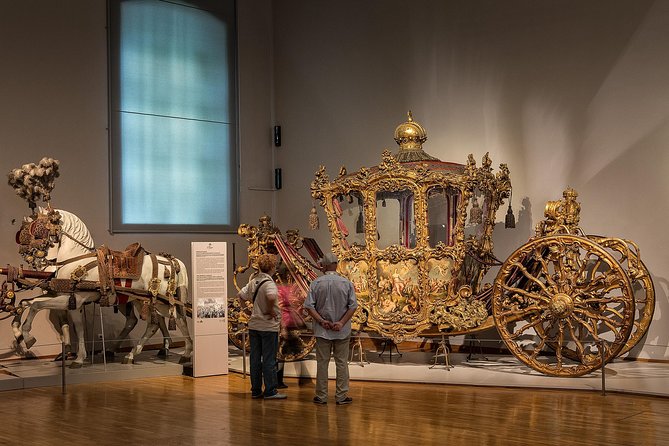
The most striking part of Vienna’s Imperial Carriage Museum is the scale of royal transport. The golden Imperial Coach is built for ceremony, while the huge black hearse used for Empress Elisabeth’s funeral gives the collection a darker, more human edge. This is not just a room of pretty vehicles. Each carriage explains how the Habsburg court traveled, celebrated, married, ruled, and mourned.
I like the clear self-guided format, which lets you linger over the objects that catch your eye. I also like the Sisi Trail, which connects carriages, portraits, clothing, and personal items into one readable story. The main drawback is that some display passages are narrow, and the museum can feel difficult to navigate when a larger group gathers around one carriage.
Key things to know before you go
- Sisi’s life is the museum’s strongest thread: Follow her from imperial bride to queen of Hungary, then to her tragic death and funeral.
- The collection is far larger than many people expect: It includes state coaches, traveling vehicles, children’s carriages, ceremonial transport, and funeral equipment.
- Your admission includes the museum entrance: The mobile ticket does not include transfers or a personal guide.
- The audio guide adds useful context: You can also read detailed explanations beside the exhibits and watch informational films.
- Plan more than 45 minutes if you enjoy museums: A quick visit is possible, but one to one and a half hours gives the collection room to breathe.
- The setting works well with Schönbrunn Palace: It is near public transport and makes a sensible addition after the palace or gardens.
Why the carriages tell a better story than you might expect
A carriage museum can sound like a specialist stop, something for royal-history fans and children who like wheels. The Imperial Carriage Museum is more engaging because the vehicles are tied to recognizable people and events.
You see how a ruler’s public image was built through ceremony. A coronation coach had to look imposing. A traveling coach had to offer comfort on long journeys. A child’s carriage tells you something about family life at court. A hearse reveals how monarchy presented grief to the public.
The museum also shows the practical side of power. Royal transport was not simply a matter of getting from one palace to another. The design, decoration, size, and use of each vehicle reflected rank and occasion. When you look closely, the collection becomes a record of court life in motion.
The displays are well organized, and explanations appear beside the vehicles. Informational films add another layer for anyone who wants more than a quick look. You can move at your own pace rather than follow a fixed tour schedule, which is useful if Schönbrunn Palace has already filled your day.
More ways into Schonbrunn Palace:
- Vienna: Schönbrunn Palace & Gardens Skip-the-Line Tour
★ 4.7 · 7,739 reviews - Vienna: Skip-the-Line Schönbrunn Palace & Gardens Tour
★ 4.8 · 5,411 reviews - Vienna: Mozart and Strauss Concert at Schönbrunn
★ 4.5 · 2,364 reviews
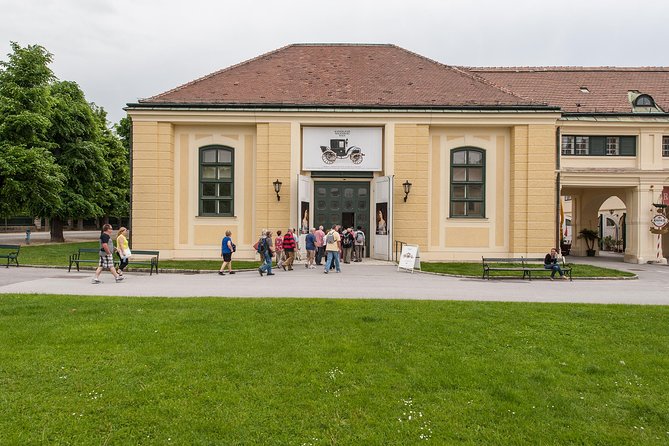
Entering the Imperial Carriage Museum beside Schönbrunn
The museum is located near Schönbrunn Palace, making it easy to pair with a palace visit or time in the gardens. Public transportation is nearby, and the attraction is open daily from 10 a.m. to 4 p.m. for the stated 2026 dates.
The included ticket is a mobile ticket, so keep it ready on your phone at the entrance. One practical point deserves attention: an occasional ticket-scanning problem has been reported, with a ticket requiring several exchanges before acceptance. This does not appear to be the normal experience, but I would still arrive with the voucher open and your booking confirmation available.
The admission covers the entrance only. You do not get transfers, and there is no named live guide included. You may bring a private guide, but most people will use the audio guide and the written explanations throughout the exhibition.
The booking has a maximum of 10 participants. That small limit should help compared with a large coach group, although the halls and display lanes can still feel tight when several people stop at the same object.
The baroque Imperial Coach sets the tone
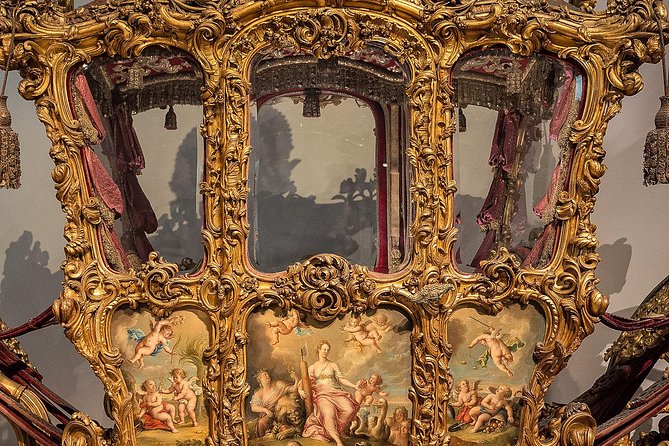
The first major impression comes from the ceremonial vehicles. The baroque Imperial Coach is the star attraction, and its size and decoration show how much effort went into making a public royal appearance unforgettable.
This is the sort of object that rewards a slow look. Rather than glance at the outside and move on, use the audio guide or nearby text to consider what the coach was designed to communicate. It was not only a vehicle. It was a moving stage for monarchy.
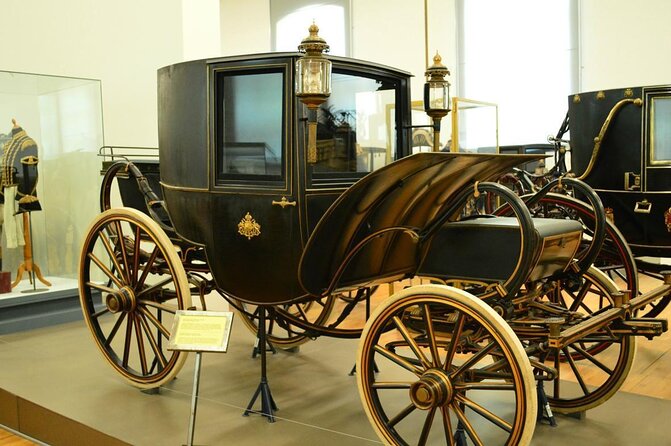
The state carriages offer a similar lesson on a different scale. They are formal, ornate, and intended for public occasions. Alongside them are more comfortable traveling coaches, which give the collection some welcome variety. The change from ceremony to everyday royal movement helps you picture the practical demands of court life.
The collection includes vehicles connected with Maria Theresia, Napoleon, and Franz Joseph. Those names give the museum a wider reach than a display devoted only to Schönbrunn or Sisi. You are looking at several periods of Austrian and European history through the way important people moved around.
The Sisi Trail follows an empress from wedding to funeral
The Sisi Trail is the museum’s most effective way to make the collection personal. It follows Empress Elisabeth from her marriage through her public life and finally to her assassination in Geneva and burial.
One of the most meaningful objects is the coach used when Elisabeth arrived as an imperial bride. It marks the beginning of her life at the Habsburg court, a role that looked glamorous from the outside but was not always easy to manage.
The trail then leads to the golden Imperial Coach used at her coronation as queen of Hungary. This is one of the collection’s grandest objects, built for a ceremony in which appearance mattered enormously. Its beauty is obvious, but the larger value lies in understanding the political theater around a royal coronation.
The final objects connected with Sisi are much more somber. The carriage from which she alighted only minutes before her assassination in Geneva links an ordinary movement with one of the most tragic moments in her life. The black hearse used to carry her to her final resting place closes the trail with a stark reminder that royal display also had a funeral side.
The sequence works because it avoids presenting Sisi as only a romantic figure. Her carriages show ceremony, family, travel, and death. You get a more complete sense of the person behind the famous image.
More Fiaker carriage rides:
- Vienna: 30-Minute Fiaker Ride in the Old Town
★ 4.5 · 1,092 reviews - Vienna: Secrets of the Fiaker & Horse-Drawn Carriage Ride
★ 4.8 · 743 reviews - Vienna: Imperial Carriage Museum in Schönbrunn Palace Ticket
★ 4.7 · 339 reviews - Vienna: Culinary Horse-Drawn Carriage Experience
★ 4.7 · 291 reviews
Look closely at Sisi’s personal objects
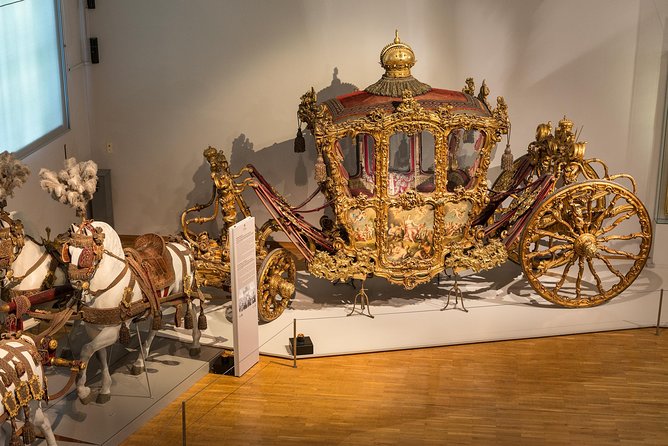
The museum’s appeal increases when you move beyond the vehicles. Portraits and paintings support the story, while original objects bring it closer to everyday life.
A black robe designed for Elisabeth by Fanny Scheiner around 1885 is particularly memorable. Its long train and narrow waist reflect the beauty standards associated with Sisi and help explain why her image became so powerful. The garment is also a physical object, not just another painted portrait, so you can consider the effort and discipline behind her public appearance.
You can also see the only surviving saddle used by the empress. Elisabeth was considered an exceptional horsewoman, and this saddle gives you a more active picture of her than the formal portraits do. It points to her interest in riding and the degree to which horses were part of her life.
Another unusual display is the reconstructed riding chapel, arranged with portraits of her favorite horses. It is a charming and slightly eccentric glimpse of personal taste inside an otherwise highly formal royal world.
These pieces are important because they break up the grand scale of the carriages. After seeing a vehicle built for an emperor or a coronation, a dress, saddle, or horse portrait brings the story back to one person.
Children’s carriages make the collection more approachable
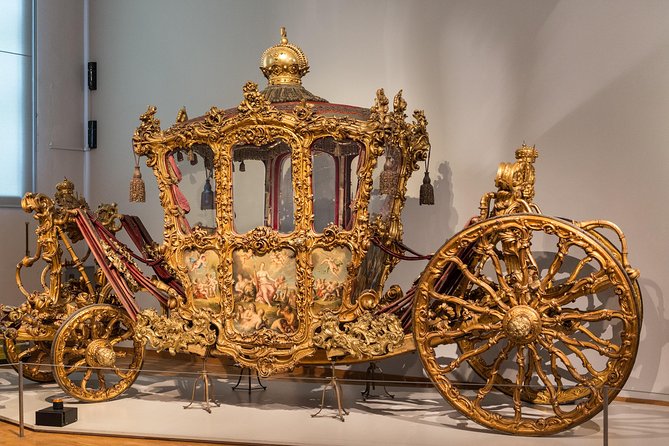
The children’s carriages are among the most appealing displays for families and for anyone who wants a softer counterpoint to the heavy ceremonial coaches. They belonged to Habsburg princes and princesses and show how court life began from childhood.
These small vehicles are attractive, but they are also useful historical evidence. They show that the imperial family was presented in stages, with special equipment and rituals for each age. The contrast with the enormous state coaches is immediate and easy to understand.
If you are visiting with children, this section may offer the quickest way into the museum. Young visitors can compare the small carriages with the grand ones, while adults can follow the family connections and court customs through the explanations.
The children’s displays also prevent the museum from becoming a nonstop parade of formal black, gold, and polished wood. There is more variety here than the name Imperial Carriage Museum might suggest.
How much time should you allow?
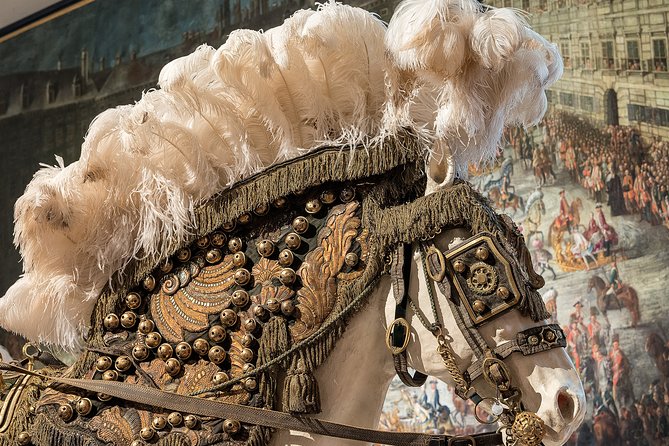
The experience is advertised at about 45 minutes, and that is enough for a brisk visit focused on the main carriages. If you have a tight Schönbrunn schedule, you can see the Imperial Coach, the Sisi Trail, and several important vehicles without spending the whole afternoon.
I would allow one to one and a half hours if the subject interests you. That gives you time to read the labels, use the audio guide, watch the films, and stop at the smaller personal objects. The collection rewards patience more than speed.
A visit late in the day may help if you prefer a quieter setting. The museum closes at 4 p.m., so do not leave it until the final minutes after a long palace visit. Arriving around 4 p.m. may also be too late to see everything comfortably, even if the time sounds convenient.
The halls can be narrow around popular objects. If you arrive as part of a larger organized group, you may need to wait for a clear view before reading the explanations. The booking limit of 10 is helpful, but it does not guarantee an empty gallery.
Is the $14.48 ticket good value?
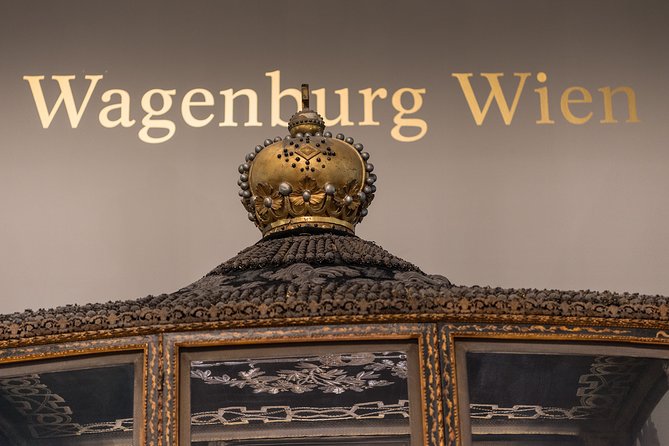
At about $14.48 per person, the ticket is reasonably priced for a specialist museum near one of Vienna’s most visited sights. The value depends on your interests and on how much time you give it.
For a quick 45-minute stop, the price buys access to an unusual collection that you will not find in a standard palace room. For a longer visit, the value improves because the exhibits include not only carriages but also films, portraits, clothing, riding equipment, and personal items.
You should also check what is included in any Schönbrunn pass you may already hold. One account specifically noted that the museum required an extra payment even with a Classic Plus pass. That means the $14.48 admission can be worthwhile, but you should avoid assuming it is covered by another palace ticket.
The ticket is less useful if you dislike court history, decorative objects, or self-guided museums. There is no transfer and no personal guide included, so you are paying for admission and the museum’s own audio and written interpretation.
Who will enjoy this museum most?
I would recommend it most strongly to people who enjoy European dynasties, Sisi, historic clothing, royal ceremony, or unusual museum collections. It is also a good choice for anyone who has already visited Schönbrunn and wants a quieter attraction nearby.
Families may find the children’s carriages appealing, especially when paired with the larger ceremonial vehicles. The displays are visual enough to work for a short family visit, although the written material will matter more to older children and adults.
It also suits you if you want a compact indoor stop on a busy sightseeing day. The museum gives you a change from palace rooms and gardens while keeping you close to Schönbrunn.
I would be more cautious if you want a guided tour with a historian speaking throughout. You can bring a private guide, but that is not included. The normal experience is self-guided, supported by an audio guide and exhibit explanations.
Booking, timing, and cancellation advice
Confirmation is provided at booking, and the mobile ticket is convenient for a planned visit. The experience is often reserved well in advance, with an average booking lead time of about 60 days. That does not mean you must always book two months ahead, but it does suggest planning early if your Vienna dates are fixed.
Free cancellation is available until 24 hours before the scheduled start time. Cancel at least 24 hours ahead for a full refund. Changes or cancellations inside that window are not accepted, and the cut-off follows local Vienna time.
Because the museum is open only from 10 a.m. to 4 p.m., place it carefully in your Schönbrunn day. A morning visit leaves the palace and gardens afterward. A midday visit can work well if you want a break from outdoor sightseeing, but keep enough time for the final galleries.
Should you book the Imperial Carriage Museum?
Book it if you want a focused, fairly priced museum with real royal objects, not just another ornate palace interior. The Sisi Trail is the strongest reason to go, especially if you want to follow Elisabeth’s life through her wedding coach, coronation coach, riding equipment, and funeral carriage.
I would also book it if you have an hour or more near Schönbrunn and enjoy unusual historical collections. The museum is easy to add to a palace day, and its smaller crowds can offer a welcome pause from the main palace route.
Skip it if your Vienna schedule is already packed and you have little interest in Habsburg court life. A 45-minute visit is possible, but the museum works best when you give it time to read and compare the objects. For the right audience, the admission is a sensible extra cost and one of the more distinctive stops near Schönbrunn.
FAQ
Where is the Imperial Carriage Museum located?
The museum is near Schönbrunn Palace in Vienna, Austria. It is also near public transportation.
What is included in the ticket?
The ticket includes entrance to the Imperial Carriage Museum. Transfers and a personal guide are not included.
Is an audio guide included?
The museum provides an audio guide for learning about the exhibits. Written explanations and informational films are also available.
How long does the visit take?
The stated duration is approximately 45 minutes. You can spend about one to one and a half hours if you want more time with the displays and explanations.
What are the main exhibits?
The museum displays the baroque Imperial Coach, state carriages, traveling coaches, children’s carriages, and vehicles linked with Maria Theresia, Napoleon, Franz Joseph, and Empress Elisabeth.
What is included on the Sisi Trail?
The Sisi Trail follows Empress Elisabeth from her wedding to her death. It includes her imperial bridal coach, coronation coach, children’s carriages, the carriage connected with her final moments in Geneva, her black funeral carriage, a formal robe, her surviving saddle, and a reconstructed riding chapel.
When is the museum open?
For the stated 2026 dates, the museum is open daily from 10 a.m. to 4 p.m.
Can I cancel the booking?
You can cancel for a full refund up to 24 hours before the experience start time. Cancellations and changes made less than 24 hours ahead are not accepted.
More skip-the-line tickets in Vienna
- Vienna: Skip-the-Line Entrance Ticket to the Danube Tower
★ 4.5 · 2,303 reviews - Vienna: Skip the Line Schönbrunn Palace and Gardens Guided Tour
★ 4.5 · 1,540 reviews - Vienna: Schönbrunn Palace & Garden Skip-the-Line Guided Tour
★ 4.1 · 1,240 reviews - Vienna: Skip-the-Line Schönbrunn Palace and Gardens Tour
★ 4.8 · 1,089 reviews
More museums and galleries in Vienna
- Vienna: Skip-the-Line Sisi Museum, Hofburg and Gardens Tour
★ 4.8 · 5,918 reviews - Vienna Kunsthistorisches Museum Day Admission Ticket
★ 4.6 · 3,690 reviews - Tickets for the Albertina Exhibitions
★ 4.7 · 2,126 reviews - Sigmund Freud Museum Ticket
★ 4.6 · 1,668 reviews
Just reviewed in Vienna
- World War II History Vienna Old Town Private Walking Tour★ 4.8 · 9 reviews
- Vienna: Wine Tasting E-Bike Tour★ 4.9 · 46 reviews
- Vienna: Winery and Wine Tasting Tour with a Wine Expert★ 5.0 · 5 reviews
- Vienna: Unforgettable Private City Tour★ 5.0 · 7 reviews
- Vienna Urban Art Tour: Explore a different side of Vienna!★ 3.8 · 14 reviews
- Vienna: Concert by the Vienna Baroque Orchestra★ 4.6 · 56 reviews
- Vienna: Sunday Brunch Danube Cruise & Live Music★ 4.2 · 42 reviews
- Vienna Supreme Orchestra at Palais Niederösterreich★ 4.8 · 10 reviews
Schönbrunn Palace Tours, compared.
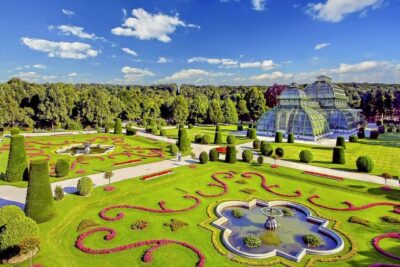
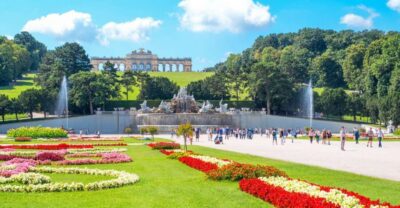
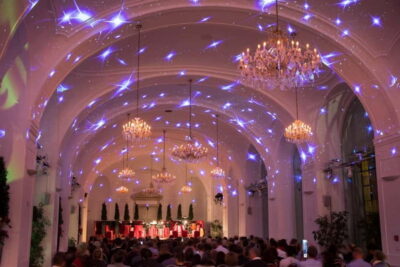
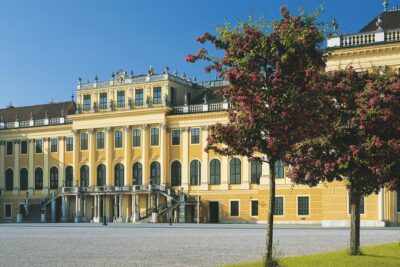
Skip the Line Schönbrunn Palace and Gardens Guided Tour
Read our review →
Schönbrunn Palace & Garden Skip-the-Line Guided Tour
Read our review →
Skip-the-Line Schonbrunn Palace Guided Tour and Vienna Historical City Tour
Read our review →Browse the lists this tour appears in