
Reviewed · SKIP THE LINE
Skip the Line: Weltmuseum Wien Ticket
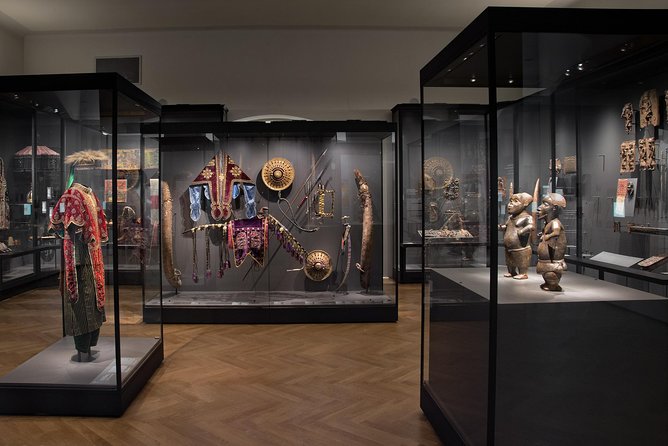
The most intriguing part of Vienna’s Weltmuseum is its range. Inside the Hofburg Palace, you move from Habsburg court collections to cultural objects from Mexico, Asia, Africa, Oceania, and other parts of the world. The museum offers a broad look at how European rulers collected, classified, and displayed the wider world.
I like the freedom to set your own pace and the convenience of a mobile ticket. I also like the chance to see several major collections in one stop, including the Mexican feather headdress, objects connected with James Cook, imperial armor, and instruments linked to Mozart, Haydn, and Beethoven.
The main consideration is that the museum can feel dense. Two hours is a sensible visit, but you may not see every object carefully in that time. Some captions can also be hard to read in the darker galleries, and the ticket does not include an audioguide.
Key points to know before you go
- Fourteen galleries cover cultures from around the world, with objects gathered by the Habsburgs over more than 500 years.
- The Hofburg setting adds real context, placing the museum inside the former imperial complex on Vienna’s Ringstrasse.
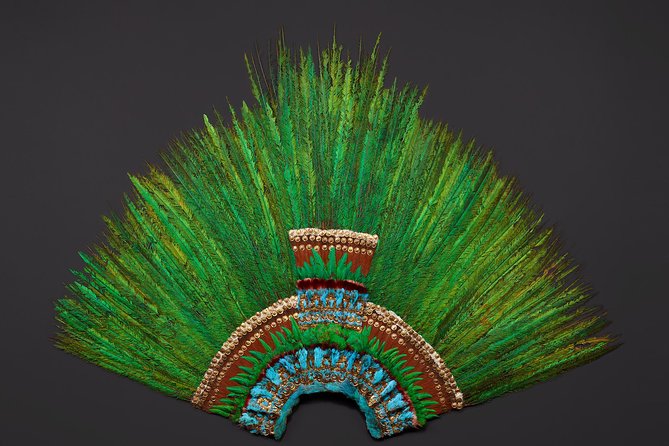
- The Mexican feather headdress is a major draw, along with objects from the Cabinet of Curiosities of Emperor Rudolf II.
- The Hall of Columns connects you with two additional collections, the Imperial Armoury and the Collection of Historic Musical Instruments.
- A two-hour visit works well, though the collection is large enough to reward a longer, slower visit.
- The $19.25 price buys convenience and admission, but its value depends on how much you want to see and how busy the entrance is.
Entering the Hofburg’s Weltmuseum
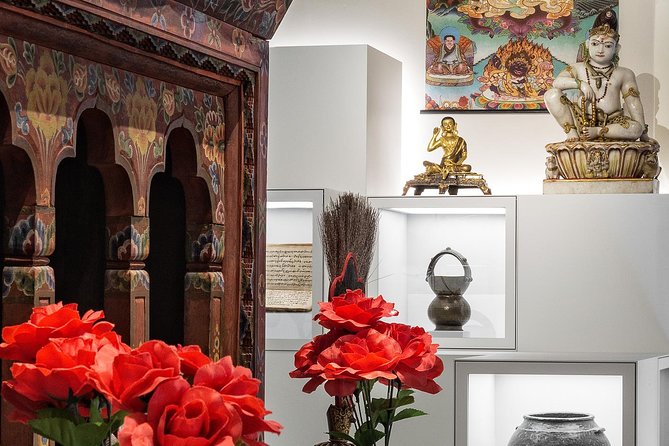
The museum occupies part of the Hofburg Palace, one of Vienna’s most important imperial sites. That location matters. You are not entering a separate modern museum building with no connection to the objects inside. You are seeing global collections in the former home of the Habsburg court, the dynasty that gathered many of these objects over centuries.
The museum sits on Vienna’s Ringstrasse and is near public transportation, so it fits easily into a day based around central Vienna. You can pair it with other Hofburg sights, though the collection deserves more than a rushed glance between appointments.
Your mobile ticket is designed to help you avoid a long ticket queue. The practical benefit is simple: you have admission arranged before arriving and can spend more of your limited sightseeing time inside the galleries. One important caution is that a skip-the-line ticket did not scan properly for one visitor, although entry was still allowed. Keep the ticket ready on your phone, but do not panic if the scanner needs staff assistance.
The stated price is $19.25 per person. That is a reasonable admission cost for a major museum in central Vienna, especially if you value advance planning. The savings are less clear on a quiet day, since you may not need to buy ahead to enter. In that case, you are paying partly for convenience and peace of mind rather than guaranteed time saved.
More skip-the-line tickets in Vienna:
- Vienna: Schönbrunn Palace & Gardens Skip-the-Line Tour
★ 4.7 · 7,739 reviews - Vienna: Skip-the-Line Sisi Museum, Hofburg and Gardens Tour
★ 4.8 · 5,918 reviews - Vienna: Skip-the-Line Schönbrunn Palace & Gardens Tour
★ 4.8 · 5,411 reviews
Fourteen galleries and five centuries of collecting
The Weltmuseum presents itself as an ethnographical museum, and that helps explain the visit. You are not following one narrow national story. Instead, you are moving through objects that reflect many cultures, places, and ways of life.
The collection grew through more than 500 years of Habsburg collecting. That long time span gives the museum unusual breadth, but it also creates a question for you as a visitor: how were these objects acquired, and how did imperial power shape the collection? The museum’s subject is not only the objects themselves. It is also the story of European collecting and the way cultures were presented to a court audience.
The galleries aim to make those subjects approachable rather than purely academic. You can expect objects selected for their visual appeal and cultural meaning, along with displays intended to explain the people and traditions connected with them. The amount of material is substantial, so it helps to choose a pace before you enter.
If you have two hours, allow time for the major highlights first. You can then return to galleries that catch your interest. Trying to read every caption and inspect every case will likely take longer than the advertised visit.
The Mexican feather headdress and Habsburg treasures
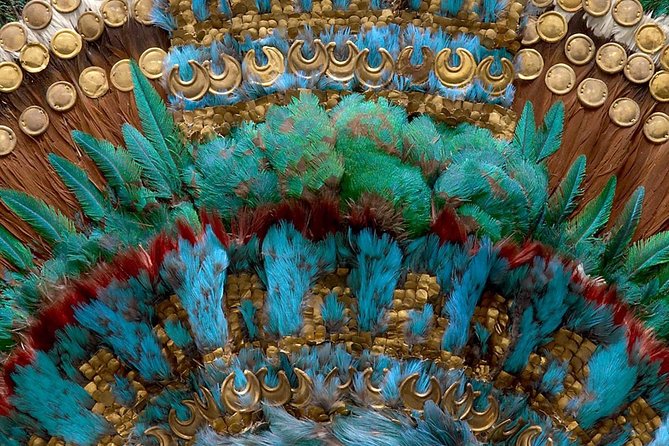
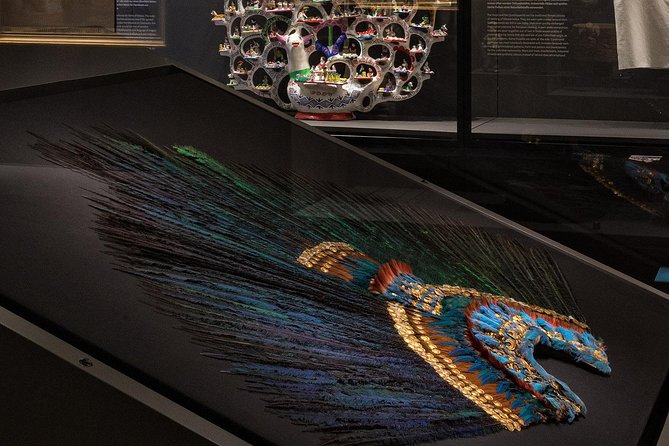
The Mexican feather headdress, known as the Penacho, is among the museum’s most famous objects. It gives the visit a clear focal point, especially if you are interested in Mexico or in the movement of important cultural objects into European royal collections.
The museum also displays objects connected with the Cabinet of Curiosities of Emperor Rudolf II. Cabinets of curiosities were collections designed to gather unusual, rare, and remarkable objects into one place. Here, that idea links personal royal collecting with the wider Habsburg habit of bringing objects from distant parts of the world into the imperial orbit.
These pieces help you see why the museum is more than a general display of antiques. The objects are visually striking, but they also raise useful questions about power, ownership, curiosity, and the way European courts understood other societies.
The Mexican material is especially rewarding if you want one part of the museum to anchor your visit. It gives you a memorable focus in a collection that otherwise covers a very large geographic and historical range.
James Cook and the voyages of discovery
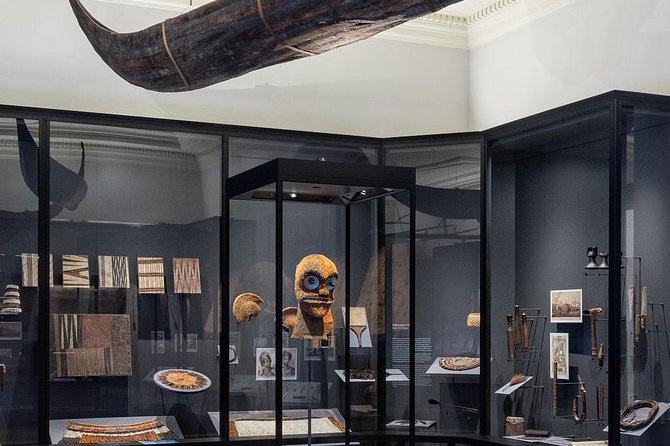
Another major section connects with James Cook and the era of voyages of discovery. The collection includes objects associated with Cook’s world-famous collection, as well as material from 19th-century voyages of research and exploration.
These displays show how travel, science, empire, and collecting overlapped. European expeditions often returned with objects that were then studied, classified, and displayed in royal or scholarly settings. Seeing those objects in the Hofburg lets you consider both the excitement of discovery and the unequal relationships behind many such journeys.
You might find this part especially interesting if you enjoy maritime history, exploration, or the development of European museums. It also gives families a useful way into the museum, since the idea of distant voyages and unusual discoveries is easy to grasp before you consider the more complicated questions behind them.
The museum’s wide subject matter means that one person may focus on the objects, while another pays more attention to how the collection was formed. Both approaches work. You do not need to know much about ethnography before arriving.
A few more Vienna outings worth weighing up
- Vienna: Classic Ensemble Vienna in St. Peter’s Church Ticket
★ 4.7 · 4,819 reviews - Vienna Kunsthistorisches Museum Day Admission Ticket
★ 4.6 · 3,690 reviews - Vienna: Tickets for Mozarthaus Vienna with Audio Guide
★ 4.2 · 2,344 reviews - Vienna: Skip-the-Line Entrance Ticket to the Danube Tower
★ 4.5 · 2,303 reviews
The Hall of Columns and two extra collections
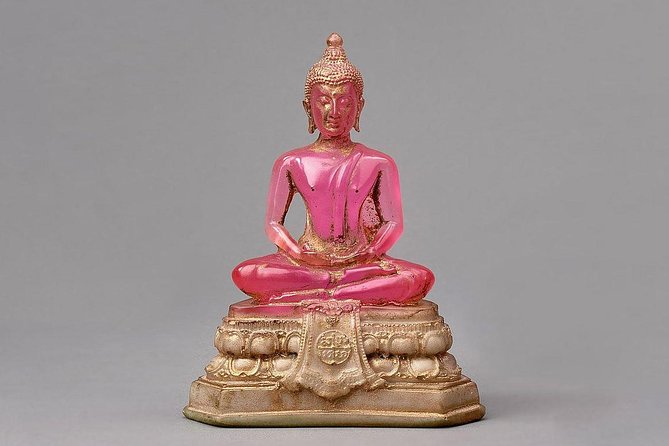
The Hall of Columns is one of the museum’s memorable architectural spaces. It also provides access to two collections connected with the Kunsthistorisches Museum Vienna: the Imperial Armoury and the Collection of Historic Musical Instruments.
The Imperial Armoury changes the mood of the visit. Instead of cultural objects from around the world, you find magnificent suits of armor and decorative weapons linked with chivalric values and important events at the Habsburg court. It is a strong stop if you enjoy military history, court ceremony, or craftsmanship.
The armor also helps explain the world in which the Weltmuseum’s main collections were gathered. These objects belonged to a powerful dynasty with carefully staged ideas about rank, honor, ceremony, and military identity.
The Collection of Historic Musical Instruments adds another useful contrast. It includes original instruments associated with major composers such as Mozart, Haydn, and Beethoven. If you have a strong interest in music, allow extra time for this section rather than treating it as a quick add-on.
Because the Hall of Columns links these collections, the visit can feel larger than a single museum ticket. Check the available access arrangements when you arrive, since the supplied information describes the collections as connected through the hall but does not give a separate schedule for each one.
How long should you spend inside?
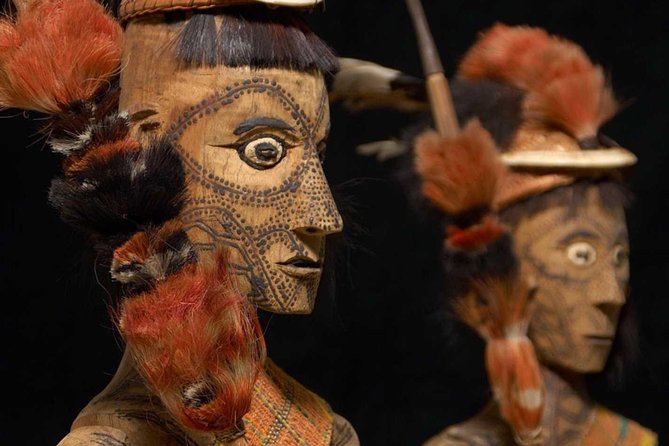
The advertised visit takes about two hours, and that is a good target for a focused first visit. In that time, you can see many of the major galleries, pause at the best-known objects, and include at least some time in the Armoury or musical instrument collection.
You may need more time if you read every caption or want to cover the entire museum. One visitor saw most of the collection but did not manage to see everything. That is not a flaw so much as a warning about scale. Fourteen galleries cover a wide subject, and even a visually quick visit can become slow once you start reading.
I would plan your visit around three priorities:
- Begin with the Mexican feather headdress and other Habsburg highlights.
- Reserve time for the Hall of Columns and the Armoury.
- Add the historic instruments if music is one of your interests.
The galleries may feel somewhat dark, and captions can be difficult to read in places. If you rely heavily on labels, give yourself more time and do not expect to absorb every detail in a fast two-hour circuit.
An audioguide is not included, so you should not arrive expecting a narrated tour. The museum provides maps, which help you get your bearings and choose your route. The lack of a fixed itinerary is an advantage if you prefer to follow your own interests, but it also means you need to make your own choices.
Is the $19.25 ticket good value?
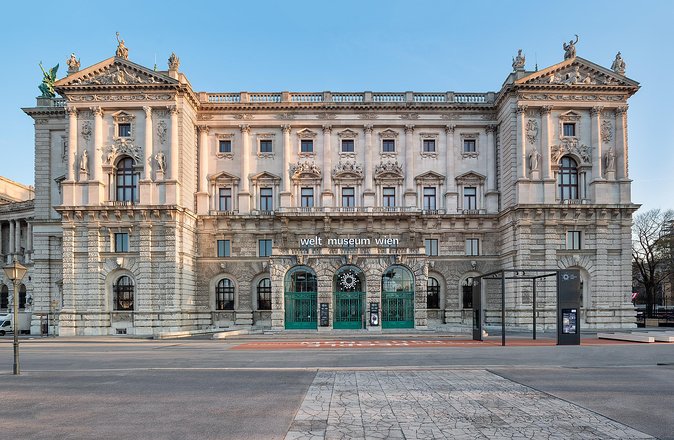
For $19.25, you receive entrance to a major central Vienna museum with a large international collection and access to notable Habsburg-related displays. I consider that fair value if you enjoy museums and want a self-guided visit without committing to a guide or fixed group schedule.
The price is less compelling if you are only interested in one famous object. You can spend two hours here, but the museum works best when you are willing to explore several subjects rather than rush directly to the Penacho.
The advance ticket adds value when your schedule is tight or when you want admission arranged before heading to the Hofburg. It may add less value on a quiet day, since advance purchase is not always necessary. Still, the current score is 4.7 from 14 ratings, and 93 percent recommend the experience, which suggests that the combination of convenience and collection quality is working well for most people who choose it.
A small cafe is also available, with a limited menu but notably good quality. It is useful for a short break, though you should not plan on a full restaurant meal there.
Who will enjoy this museum most?
I would recommend the Weltmuseum to anyone who likes cultural history, royal collections, anthropology, or museums that cover many parts of the world in one building. It is also a good choice for families, since the maps make it easy to get started and the objects offer plenty of visual variety.
The museum suits independent visitors particularly well. You can move quickly through familiar subjects, slow down in the galleries that interest you, and skip a section without holding up a group.
It may be less satisfying if you want a highly guided experience with a clear story from beginning to end. The lack of an included audioguide means you are responsible for shaping the visit. If detailed interpretation is important to you, bring extra time for the captions or arrange your own background reading before arriving.
Most people can participate, and the maximum group size is 99. Since this is an admission experience rather than a guided walking tour, the main issue is not keeping up with a guide. It is managing your own time inside a sizeable museum.
Booking, opening hours, and cancellation
The stated opening schedule lists Tuesday from 10:00 in the morning until 9:00 in the evening for both 2025 and 2026. Since the information provided only specifies Tuesday hours, check the current schedule for your intended date before setting out.
You receive confirmation at booking, and the ticket is mobile. Free cancellation is available if you cancel at least 24 hours before the experience start time. Changes or cancellations made less than 24 hours before the start are not accepted for a refund, and the cut-off follows local Vienna time.
I would book ahead if you are visiting during a packed sightseeing day, want a simple phone-based ticket, or have a fixed Hofburg schedule. If your plans are loose and you are visiting at a quiet time, buying in advance is more about convenience than necessity.
Should you book the Weltmuseum ticket?
Book it if you want a flexible museum visit in the Hofburg, appreciate collections from many cultures, and can give the museum about two hours. The Penacho, Habsburg treasures, James Cook material, armor, and historic instruments give you several strong reasons to enter rather than relying on a single highlight.
Skip it if your Vienna schedule is already crowded with museums or if you want a guided, highly structured tour. The collection is broad, some captions can be hard to read, and an audioguide is not included.
For most independent visitors, the $19.25 mobile ticket is a sensible purchase. You get a self-paced cultural stop in a central location, with enough variety to suit both first-time museum visitors and people who want a closer look at the Habsburgs’ worldwide collecting habits.
FAQ
Where is the Weltmuseum Wien located?
The museum is in the Hofburg Palace on Vienna’s Ringstrasse. It is near public transportation.
How much does the ticket cost?
The listed price is $19.25 per person.
How long does a visit take?
The experience lasts approximately two hours. You may need longer if you want to see all 14 galleries carefully.
What does the ticket include?
The ticket includes entrance fees to the museum. An audioguide is not included.
Is the ticket available on a mobile phone?
Yes. The experience provides a mobile ticket.
What are the listed opening hours?
The supplied schedule lists Tuesday opening hours from 10:00 AM to 9:00 PM for 2025 and 2026.
Can I cancel for a refund?
Yes. You can receive a full refund if you cancel at least 24 hours before the experience start time. Cancellations and changes made less than 24 hours before the start time are not accepted.
Just reviewed in Vienna
- World War II History Vienna Old Town Private Walking Tour★ 4.8 · 9 reviews
- Vienna: Wine Tasting E-Bike Tour★ 4.9 · 46 reviews
- Vienna: Winery and Wine Tasting Tour with a Wine Expert★ 5.0 · 5 reviews
- Vienna: Unforgettable Private City Tour★ 5.0 · 7 reviews
- Vienna Urban Art Tour: Explore a different side of Vienna!★ 3.8 · 14 reviews
- Vienna: Concert by the Vienna Baroque Orchestra★ 4.6 · 56 reviews
- Vienna: Swarovski DIY Workshop Experience★ 5.0 · 9 reviews
- Vienna: Sunday Brunch Danube Cruise & Live Music★ 4.2 · 42 reviews
Skip the Line, compared.


Skip-the-Line Sisi Museum, Hofburg and Gardens Tour
Read our review →

Skip the Line Schönbrunn Palace and Gardens Guided Tour
Read our review →
Schönbrunn Palace & Garden Skip-the-Line Guided Tour
Read our review →

Skip-the-Line Schonbrunn Palace Guided Tour and Vienna Historical City Tour
Read our review →Browse the lists this tour appears in